When Schedule Becomes a Risk Surface
The day’s third major session brought those concerns directly into the field.
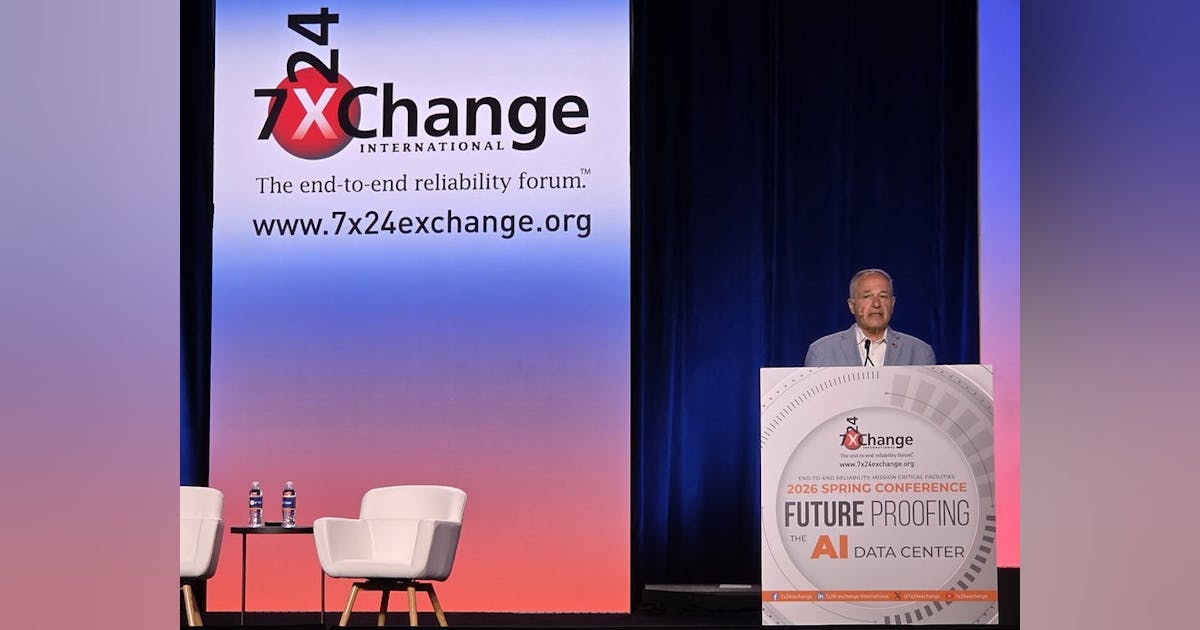
Moderated by Don Mitchell of Victaulic and the Open Compute Project, Schedule Is Risk: Rethinking Fabrication and Commissioning for AI Factories explored how schedule pressure is reshaping the realities of liquid cooling deployment.
Joining Mitchell were Terry Rodgers, Vice President of Design Engineering at T5 Data Centers; Justin Seter, Strategic Initiatives Officer at DLB Associates; and Vali Sorell, Senior Data Center Design Engineer at Oracle.
Collectively, the panel delivered perhaps the most vivid illustration of how AI’s growth is creating new operational bottlenecks.
“We have to get really comfortable doing things out of order,” Seter said.
The statement captured the reality many teams now face.
Equipment is increasingly being ordered before designs are finalized. Prefabricated assemblies are being manufactured before final IT requirements are fully understood. Infrastructure decisions must often be made months before software workloads and hardware configurations are known.
The reason is simple.
The economics of AI have fundamentally changed the cost of delay.
Panelists discussed scenarios in which large AI facilities can generate enormous business value immediately upon deployment, creating intense pressure to accelerate schedules whenever possible.
As one participant observed, spending millions to recover schedule may be entirely rational if the alternative is losing substantially more revenue through delayed deployment.
The result is an environment in which schedule increasingly dominates project decision-making.
“The only thing anybody cares about is schedule,” Seter observed. “Budget means less.”
Yet the panel repeatedly warned that schedule compression can create its own risks.
Those risks become particularly acute in liquid-cooled environments.
Traditional flushing and commissioning practices that once received relatively little attention are now becoming mission-critical activities. Stainless steel piping must be properly passivated. Fluid loops must be thoroughly cleaned. Contamination must be removed before expensive AI hardware is connected.
The process is far more complicated than many outside the liquid cooling ecosystem realize.
A single cooling loop may require multiple filling, flushing, filtering, draining, and testing stages before commissioning can begin. Load banks, temporary equipment, cooling distribution units, and piping systems must all meet stringent cleanliness requirements.
Even temporary equipment can become a source of contamination if not properly managed.
For operators deploying high-density AI systems, the stakes are substantial.
As Sorell noted, the value of the IT equipment often dwarfs the value of the supporting infrastructure itself. Protecting that hardware increasingly drives commissioning strategy, fluid management practices, and operational decision-making.
The discussion also highlighted a growing industry blind spot.
Chemical treatment specialists and water quality experts are often brought into projects late, sometimes buried several contractual layers below owners and engineering teams.
For AI facilities, panelists argued, those specialists need a seat at the table much earlier.
The future, they suggested, will likely require greater integration between engineering teams, contractors, commissioning providers, equipment manufacturers, chemical treatment experts, and IT organizations.
In many respects, the conversation mirrored Google’s earlier discussion about quality systems.
Both sessions described an industry attempting to industrialize itself while simultaneously reinventing itself.
The challenge is not merely building faster.
It is building faster without introducing new forms of risk.