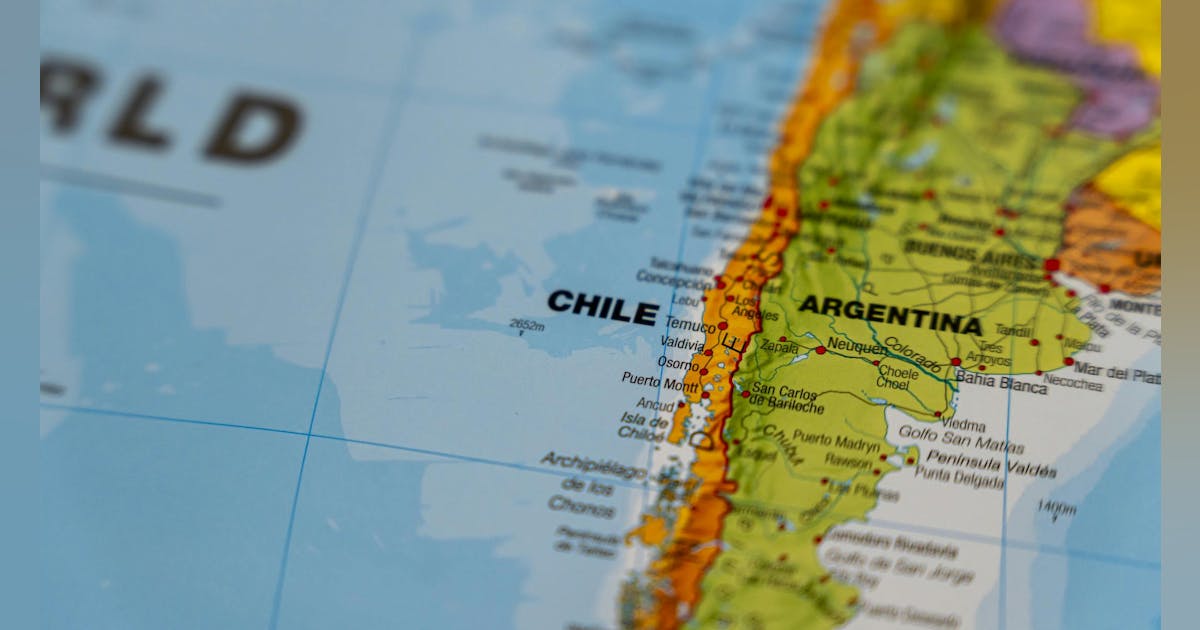
Chevron Corp. applied June 2 to join Argentina’s Large Investment Incentive Regime (RIGI) for a $13.8-billion unconventional oil development at its 100% operated El Trapial-Este block in northern Neuquén province.
Until recently, RIGI had attracted about $93 billion across 36 projects. Chevron’s application, which remains subject to government approval, is equivalent to almost one seventh of that total.
The filing, which does not consitute a final investment decision, is Chevron’s largest individual investment proposal in Argentina since it entered the country in 1999 and the second-largest project submitted under RIGI, behind YPF SA’s $25-billion LLL Oil development.
Chevron said it is targeting production of about 30,000 b/d from El Trapial-Este, subject to the availability of takeaway infrastructure. The block currently produces about 7,000 b/d.
Chevron tested the block with a 7-well pilot in 2021 and has been carrying out development since late 2022, using laterals of more than 3,000 m and techniques transferred from the US Permian basin. In 2023, Chevron committed $500 million to that phase.
During the company’s first-quarter earnings call on May 1, chief executive officer Mike Wirth anchored Chevron’s 2030 targets in “assets that are operating today.” El Trapial-Este was not explicitly identified among assets described as the main base for those targets. Wirth also said Chevron would not accelerate Permian production even with Brent above $100/bbl, preferring to manage that asset for free cash flow rather than volume.
In the same presentation, Wirth named Argentina among the sources of equity crude that feed Chevron’s global refining system, along with Tengiz, Guyana, the Permian, and Venezuela. The earnings call came weeks before the El proposal filing.
Vaca Muerta costs, takeaway capacity
Breakeven costs in Vaca Muerta’s best blocks are about $40/bbl at the wellhead, according to Rystad Energy, while normalized well productivity—adjusted for lateral length and fracture intensity—matches or exceeds that of the Permian. Drilling in Neuquén, however, remains 30-40% more expensive than in Midland, Tex., Rystad said.