Stay Ahead, Stay ONMINE

Inside Blackstone’s Electrification Push: From Shermco to the Power Backbone of AI Data Centers

According to the National Electrical Manufacturers Association (NEMA), U.S. energy demand is projected to grow 50% by 2050. Electrical manufacturers have invested more than $10 billion since 2021 in new technologies to expand grid and manufacturing capacity, also reducing reliance on materials from China by 32% since 2018. Power access, sustainable infrastructure, and land acquisition […]

According to the National Electrical Manufacturers Association (NEMA), U.S. energy demand is projected to grow 50% by 2050. Electrical manufacturers have invested more than $10 billion since 2021 in new technologies to expand grid and manufacturing capacity, also reducing reliance on materials from China by 32% since 2018.

Power access, sustainable infrastructure, and land acquisition have become critical factors shaping where and how data center facilities are built. As we previously reported in Data Center Frontier, investors realized this years ago, viewing these facilities both as technology assets and a unique convergence of real estate, utility infrastructure, and mission-critical systems that can also generate revenue.

One of those investors is global asset manager Blackstone, which through its Energy Transition Partners private equity arm, recently acquired Shermco Industries for $1.6 billion. Announced August 21, the deal is part of Blackstone’s strategy to invest in companies that support the growing demand for electrification and a more reliable power grid. The goal is to strengthen data center infrastructure reliability and expand critical electrical services.

Founded in 1974, Texas-based Shermco is one of the largest electrical testing organizations accredited by the InterNational Electrical Testing Association (NETA). The company operates in a niche yet important space: providing lifecycle electrical services, including maintenance, testing, commissioning, repair, and design, in support of data centers, utilities, and industrial clients. It has more than 40 service centers in the U.S. and Canada.

In addition to helping Blackstone support its electrification and power grid reliability goals, the Shermco purchase is also part of Blackstone’s strategy to increase scale and resources—revenue increases without a substantial increase in resources—thus expanding its footprint and capabilities within the essential energy services sector. 

As data centers expand globally, become more energy intensive, and are pressured to incorporate renewables and modernize grids, Blackstone’s leaders plan to leverage Shermco’s national footprint and technical depth to help meet these needs, especially as new capacity is added to the grid and legacy infrastructure is modernized.

In addition, Shermco’s recurring, mission-critical service model offers resilient cash flows even during economic downturns, according to AInvest. Blackstone has both capital and operational experience to drive Shermco’s expansion while extracting value across infrastructure and energy transition portfolios.

Meanwhile, Shermco leaders anticipate this partnership to fuel its growth trajectory so it can grow its operational footprint and service offerings. It likely will benefit from strong growth driven by the expansion of data centers, renewable energy facilities, and industrial electrification.

Blackstone’s Data Center Portfolio

Blackstone is investing, acquiring companies, and forming joint ventures spanning real estate, infrastructure, and credit, to diversify and grow its data center portfolio. The Shermco acquisition adds to a long list of recent investments Blackstone has made as part of its portfolio diversification.

For example, in August, leaders announced an agreement to acquire data analytics energy intelligence platform Enverus, which provides comprehensive data analytics platform for capital allocation and asset optimization. Blackstone’s Senior Managing Directors Eli Nagler and Bilal Khan said Enverus’ advanced analytics and technology will help customers navigate the AI-driven electricity demand growth and the broader energy transition.  

Other recent investments include the following:

• Joint venture with PPL Corp., announced in July, to build, own, and operate new gas-fired, combined-cycle generation stations to power data centers in Pennsylvania.

• Investment of more than $25 billion in Pennsylvania’s digital and energy infrastructure, plus accelerate an additional $60 billion investment, also announced in July.

• Significant growth investment in July into IT services provider NetBrain to expand network automation and AI solutions to global enterprises, at a $750 million valuation. NetBrain is a top IT services provider in Japan.

• Acquisition of Potomac Energy Center in January, a power infrastructure in Virginia supporting data centers and AI.

• The 2024 acquisition of SEVES Group, parent company of Sediver Group, a provider of specialized electrical glass insulator solutions for the high-voltage transmission grid. Sediver has more than 600 million insulators in service worldwide and plays a key role in electrical grid modernization.

• Acquisition of Trystar in 2024, which designs and manufactures critical electrical power solutions for data center, industrial, commercial, healthcare, and utility markets.

• A 2024 investment into a $600 million senior secured credit facility with technology infrastructure company Aligned Data Centers, financing the development of Aligned’s newest and largest data center in Utah.

• Acquisition of Asia-Pacific data center giant AirTrunk in 2024, in a deal valued at $24 billion.

• Acquisition of Power Grid Components, Inc. in December 2023 for $600 million. PCG design and manufactures components for protection, monitoring, and safety applications in electrical substations, essential for the electrical grid. Products include high voltage disconnect switchgear, porcelain and glass insulators, and instrument transformers for revenue metering and protective relaying to electric utilities.

• Acquisition of QTS Realty Trust for $10 billion in August 2021, marking a major step into the data center market, with hopes to build QTS into the fastest-growing data center company in the world.

Other Investment Firms in the Game

As AI-driven cloud computing, grid modernization, and the electrification of manufacturing continues to escalate, firms are investing in data centers, power generation, and renewable energy transition to profit from the huge and growing energy market. Leaders at these firms see long-term infrastructure investment opportunities.

And Blackstone isn’t the only investment firm carving out a piece of the data center and energy markets. Companies like Apollo Global Management, DigitalBridge Group, KKR & Co. Inc., CBRE Group, Cushman & Wakefield, Jones Lang LaSalle Inc. (JJL), Newmark, and others are investing in and acquiring organizations that support the data center and energy demand growth, including:

• Data centers.

• Data center builders and operators.

• IT service providers.

• Power companies.

• Power generation stations.

• Power product suppliers.

• Renewable energy and datacenter financing and banking firms.

• Electrification, power and digital infrastructures providers.

Because data centers are the backbone of the digital revolution and a primary driver of increased power needs, investment firms will continue to look for opportunities to support the sector.

Shape
Shape
Stay Ahead

Explore More Insights

Stay ahead with more perspectives on cutting-edge power, infrastructure, energy,  bitcoin and AI solutions. Explore these articles to uncover strategies and insights shaping the future of industries.

Shape

Aker BP, Höegh Evi secure EU funding for Atlas CCS project

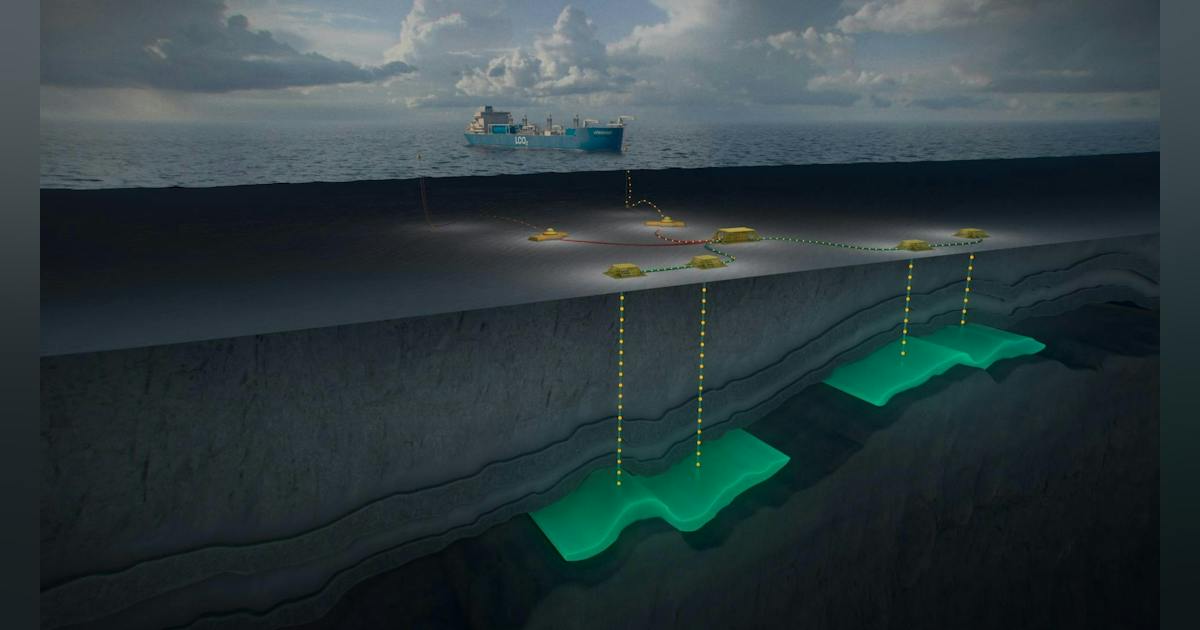
Aker BP and Höegh Evi have been awarded €223 million (about US$250 million) from the European Union Innovation Fund to support development of the Atlas carbon capture and storage (CCS) project in Norway. The Atlas project is designed as a large-scale CCS network linking industrial CO2 emitters in Europe with

Read More »

Extreme wants to use idle network compute capacity for local AI

“We’ve spent decades building networks that reach every corner of the enterprise, and those networks hold a lot of idle compute. Exchange zones will put that compute to work, letting AI run locally on infrastructure customers already own. That delivers sovereignty, local inferencing, and better economics than sending everything to

Read More »

Equinor lets Wisting FPSO topsides FEED contract to Aibel

@import url(‘https://fonts.googleapis.com/css2?family=Inter:wght@100..900&display=swap’); .ebm-page__main h1, .ebm-page__main h2, .ebm-page__main h3, .ebm-page__main h4, .ebm-page__main h5, .ebm-page__main h6 { font-family: Inter; } body { line-height: 150%; letter-spacing: 0.025em; } button, .ebm-button-wrapper { font-family: Inter; } .label-style { text-transform: uppercase; color: var(–color-grey); font-weight: 600; font-size: 0.75rem; } .caption-style { font-size: 0.75rem; color: color-mix(in srgb, currentColor 60%, transparent); } <!–> Equinor Energy AS awarded Aibel a front-end engineering and design (FEED) study contract covering topside modules for the proposed floating production, storage, and offloading (FPSO) vessel for Wisting field development in the Barents Sea. The contract includes FEED work and further maturation of the FPSO topsides design to support the Wisting partners’ project execution decision. It also contains an option for engineering, procurement, and project management (EPma) services. Any contract for fabrication of the topside modules would be awarded later, Equinor said. Work will begin immediately and is scheduled for completion in late 2027. The FEED study will form part of the basis for the Wisting license partners’ planned investment decision in late 2027. Equinor and partners plan to decide on concept selection and the project’s further progression by yearend 2026. “We are at an early stage in the development of Wisting, and considerable work remains to develop a project that is profitable and feasible,” said Trond Bokn, Equinor’s senior vice-president for project development. ]–> <!–> –> <!–> Dec. 2, 2019 ]–> <!–> –> <!–> April 22, 2024 ]–> <!–> –> <!–> May 21, 2026 ]–> Wisting Wisting, discovered in 2013 in the Hoop area of the Barents Sea about 310 km north of Hammerfest, is the largest oil discovery on the Norwegian continental shelf yet to be developed. The field contains estimated recoverable resources of just under 500 MMboe. Water depths across the development area are 390-418 m. In July, Equinor submitted for public consultation

Read More »

Oil prices climb as Saudi attacks heighten supply concerns

Oil prices rose sharply Oct. 23 as escalating attacks on Saudi Arabian energy infrastructure and mounting threats to Middle East shipping heightened concerns over further supply disruptions. Oil prices rose more than 3% on Oct. 23, with Brent crude futures climbing above $117/bbl, their highest level since late April, while US benchmark West Texas Intermediate (WTI) advanced above $103/bbl. Brent was on track for a third consecutive weekly gain, reflecting a growing geopolitical risk premium amid continued regional hostilities. Market concerns intensified following attacks by Yemen’s Houthi movement on Saudi targets, including energy infrastructure and airports. On Oct. 21, Saudi air defenses intercepted a drone targeting a processing plant at Saudi Aramco’s Shaybah oil field. Falling debris caused a fire in a contractor’s vehicle, killing two people and injuring two others, according to the Saudi Energy Ministry. Operations at the field were unaffected. Saudi Aramco also instructed employees to evacuate its headquarters in Dhahran and work remotely as regional hostilities escalated, Reuters reported Oct. 22, citing people familiar with the matter. Although the latest incident at Shaybah did not interrupt production, continued attacks have raised concerns about the security of Saudi energy infrastructure and the reliability of regional supplies. Shipping risks have added to market uncertainty. October has recorded the highest number of attacks on commercial vessels in the Strait of Hormuz and surrounding waterways since tracking began in 2017, according to data compiled by the Washington Institute for Near East Policy. Although Middle Eastern crude exports have recovered strongly from earlier disruptions, the escalation in maritime attacks has raised questions about whether those flows can be sustained. The United Arab Emirates (UAE) also reported an oil spill from a tanker off Umm Al Quwain on Oct. 23. Authorities did not identify the vessel or establish the cause of the

Read More »

INGAA appoints Chris Schindler as 2026-2027 chair

The board of directors for the Interstate Natural Gas Association of America (INGAA) has appointed Chris Schindler to serve as chairman of the organization for a 1-year term. Schindler serves as executive vice-president, general counsel, corporate secretary, and chief compliance officer of Southern Star Central Gas Pipeline, which transports natural gas through about 5,800 miles of pipeline in the Midwest and Mid-Continent regions of the United States. Schindler joined Southern Star in June 2019 following a 25-year legal career at Hogan Lovells, in Washington, DC. He handled regulatory matters before the Federal Energy Regulatory Commission (FERC), Commodity Futures Trading Commission (CFTC), and state commissions; executed regulatory strategies for energy infrastructure projects; litigated FERC rate cases; and was a frequent national speaker on FERC and CFTC regulatory issues. INGAA also appointed Rob Johnson, president of WBI Energy Inc., as first vice chair, and David Brast, president of US Natural Gas Pipelines, TC Energy, as second vice chair.

Read More »

Energy Department Authorizes Strategic Petroleum Reserve Exchange to Support Fuel Supply Stability

WASHINGTON— The U.S. Department of Energy (DOE) today announced the authorization of an emergency exchange of up to 400,000 barrels of crude oil from the Strategic Petroleum Reserve (SPR) to address a crude oil supply disruption affecting the Phillips 66 Lake Charles Refinery in Louisiana. Under the terms of the exchange, all borrowed crude oil will be returned with additional premium barrels, helping replenish and strengthen the SPR at no additional cost to taxpayers.  “With this exchange, the Energy Department is taking definitive action to support refinery operations, maintain stable fuel supplies, and ensure all Americans continue to have access to the affordable, reliable, and secure energy they rely on every day,” said DOE Under Secretary of Energy Kyle Haustveit. “This emergency exchange helps alleviate supply disruption and requires Phillips 66 to return more barrels to the SPR than are currently being withdrawn, saving hardworking taxpayers millions of dollars and delivering on the Trump Administration’s commitment to strengthen and safeguard America’s energy security.” The Energy Department has authorized the exchange of up to 400,000 barrels for the Phillips 66 Lake Charles Refinery from the West Hackberry SPR site for immediate delivery. The supply will help offset temporary disruptions affecting crude oil deliveries to the refinery and support continued production of transportation fuels serving Louisiana and surrounding markets.  DOE will continue working with industry partners to help ensure stability across the fuel supply chain and stands ready to utilize available authorities, as appropriate, to support the reliable delivery of energy supplies and protect U.S. energy security.  For more information on the SPR, please visit DOE’s SPR website. 

Read More »

Energy Department Designates Helium as Critical Material to Strengthen American Manufacturing and Supply Chain Security

WASHINGTON—The U.S. Department of Energy (DOE) today announced that Secretary of Energy Chris Wright has designated helium as a critical material under the Energy Act of 2020. The designation advances the Trump Administration’s commitment to freeing America from reliance on foreign sources of critical materials, strengthening domestic manufacturing, supporting American jobs, and securing the materials essential to U.S. economic and national security.  “President Trump is bringing back America’s manufacturing industry, and that means making sure we have the materials needed to build things in America again,” said U.S . Secretary of Energy Chris Wright. “Helium is essential to producing the semiconductors and advanced technologies that power our economy. By designating helium as a critical material, we are taking another step toward securing our supply chains, creating American jobs, and ensuring the United States leads the world in energy and technological innovation.” DOE determined that helium meets the statutory definition of a critical material due to its essential role in American manufacturing and growing exposure to supply chain risks. Helium’s unique properties make it indispensable to semiconductor production, with no viable substitutes in many critical applications. The United States has significant domestic deposits of helium-rich natural gas to support growing industrial demand. “The U.S. Department of Energy is committed to strengthening our country’s supply chain of critical materials that are essential to continued economic and job growth, energy dominance, and U.S. leadership in cutting-edge technologies such as SI and semiconductors,” said Assistant Secretary of Energy Audrey Robertson. “Under Secretary Wright’s leadership, DOE is taking decisive action to ensure American manufacturers have reliable access to helium as a critical resource they need.” Global demand for helium is growing faster than production, increasing supply risks for American manufacturers. Despite the nation’s abundant helium resources, limited refining capacity and lengthy permitting timelines continue to

Read More »

Energy Department to Use Defense Production Act Funding to Restart American Refinery and Expand Refining Capacity

WASHINGTON—President Donald J. Trump today announced plans to provide up to $150 million in Defense Production Act (DPA) Title III funding to expand domestic petroleum production, storage, and logistics at refineries across the United States.  By leveraging DPA authorities, DOE will help increase domestic production of gasoline, diesel, jet fuel, and other petroleum products, strengthening America’s fuel supply and lowering prices for American families and businesses. Together, this funding is expected to increase U.S. refining output by millions of gallons per day.  “After 17 years of Democrat leaders enacting energy subtraction policies that led to the closure of refineries and more expensive refined oil products, the Trump Administration is taking action to expand our nation’s refining capacity and strengthen our energy security,” said U.S. Secretary of Energy Chris Wright. “Thanks to President Trump, America is producing more oil and gas than ever before and thanks to President Trump, we will soon be producing more refined products as well. These Defense Production Act funds will be used strategically and in partnership with private industry to rapidly bolster America’s existing energy infrastructure. By restoring energy addition policies, we will continue to unleash American energy dominance and lower costs for the American people.” The investment supports President Trump’s commitment to ensuring all Americans have access to affordable, reliable, and secure energy while strengthening energy infrastructure critical to national defense. Thanks to the Working Families Tax Cuts, $1 billion in federal funding has been appropriated for energy-related projects deemed critical to national security. Presidential Determination No. 2026-11 identifies domestic petroleum production, refining, and logistics capacity as essential to national defense. The selection process is ongoing and will be announced in the near future.

Read More »

Hyperscalers allow more scrutiny of controversial data center plans

Hyperscalers are getting decidedly twitchy about citizens’ reactions to their secretive data center construction plans, and are looking for ways to de-escalate some of the conflicts. Earlier this month, Amazon announced its Data Center Commitment which, among other things, would disclose more information about energy and water use and consider a moratorium asking government officials to sign non-disclosure agreements covering their planning applications. Amazon is not alone in this. Earlier this week, Meta said that it was reviewing its use of NDAs after the company was widely criticized for its secrecy in proposing Hyperion, a Louisiana data center in July.

Read More »

Google will pay people to use less electricity so its data centers can use more

Google has an answer to some of the electricity supply problems that data center construction is causing: It has signed an agreement with energy supplier Voltus to build what it’s calling a 1-gigawatt virtual power plant, expanding on an earlier 100 megawatt deal the two signed earlier this year. This power plant is virtual in the sense that it doesn’t generate any electricity itself, but aggregates so-called flexible grid capacity into one central resource that can be deployed at times of peak demand. This flexible capacity can be in the form of batteries or of load-shedding: asking others to temporarily stop consuming electricity by shutting down industrial processes or adjusting tens of thousands of smart thermostats at once, effectively moving their electricity usage to a time when there is less demand. Voltus operates by offering incentives to companies to reduce their power consumption temporarily, and also offers inducements to electricity resellers that they can pass on to their customers.

Read More »

Big Tech’s Next Nuclear Bet: More Power From Reactors Already Running

The next wave of nuclear power for AI data centers may come not from new reactors, but from generating stations that have been operating for decades. In a pair of agreements announced just a week apart, Google and Amazon committed to long-term electricity purchases supporting approximately 1,080 MW of additional nuclear generating capacity from Constellation Energy’s existing fleet. The transactions follow earlier commitments by Meta to support reactor upgrades at operating nuclear facilities in Ohio, Pennsylvania and Illinois, establishing a broader commercial model in which hyperscale technology companies help finance increases in nuclear output. Under its October 6 agreement with Google, Constellation plans to invest more than $4.3 billion in equipment and technology upgrades at 11 operating reactor units across Illinois, Pennsylvania and New Jersey. The 20-year power purchase agreement supports 890 MW of new generating capacity, with the first upgrades expected to begin delivering additional electricity in 2028. A separate 15-year agreement covers 2,700 MW of existing nuclear generation, underscoring the distinction between securing today’s electricity supply and financing additional capacity. Amazon’s September 30 agreement similarly supports 190 MW of new generation at Maryland’s Calvert Cliffs nuclear station, alongside purchases of existing output. Together, the two arrangements underpin more than $7 billion in planned infrastructure investment. Unlike proposed advanced reactors, these facilities already have operating licenses, grid connections, established workforces and decades of operating experience. Increasing their output avoids some of the cost, permitting and construction challenges associated with building entirely new nuclear plants, although significant upgrades still require extensive engineering, equipment modifications and regulatory approval. The potential scale is substantial. According to the Nuclear Regulatory Commission’s current application schedule, the agency anticipates 31 applications for reactor power uprates through 2032, representing approximately 2,421 MW of potential additional electrical generating capacity. That is roughly equivalent to the output of

Read More »

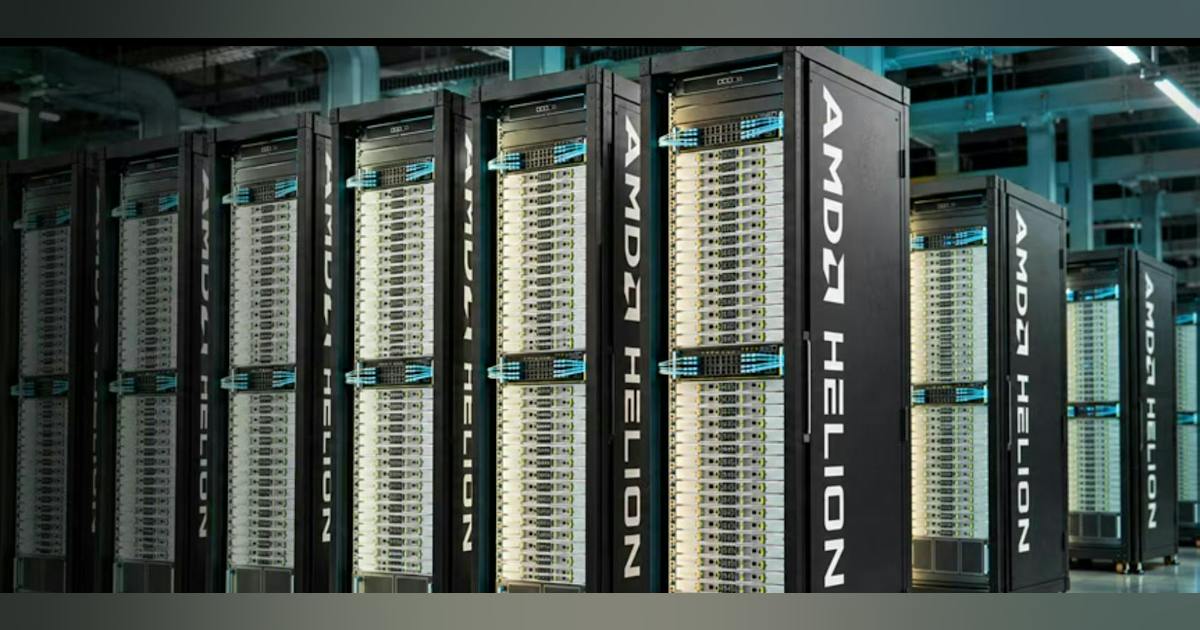
AMD Helion Puts CPU Density at the Center of Agentic AI Infrastructure

AMD expects the growth of agentic applications to substantially increase demand for server CPUs alongside GPU infrastructure. During her October 12 OCP keynote, CEO Lisa Su said the company now projects the server CPU market will exceed $200 billion by 2030, a significant upward revision from its earlier $120 billion estimate. While that remains AMD’s market forecast rather than an independent measure of future demand, it underscores the company’s conviction that general-purpose computing will play a much larger role in AI infrastructure. Two Rack Designs for Different Markets Helion’s two principal configurations reflect different approaches to deploying and managing agentic workloads. For hyperscale operators, the architecture emphasizes high-density CPU infrastructure dedicated to agent execution, with model inference handled by separate GPU-accelerated systems. This separation allows operators to expand CPU and GPU capacity independently, potentially improving resource utilization as the balance between agent activity and inference demand changes. The approach also introduces infrastructure considerations. Agents may communicate repeatedly with models hosted elsewhere in a data center or across distributed environments, making network performance, latency and workload orchestration important factors in overall system efficiency. The ability to scale computing resources independently is an architectural advantage, but realizing that benefit will depend on how effectively those resources are connected and managed. For enterprise deployments, Helion takes a more integrated approach, combining EPYC CPU blades, Instinct MI350P GPU blades and general-purpose computing resources within the same rack. The reference design accommodates up to 16 MI350P accelerators in two independent eight-GPU servers, each occupying five rack units. These GPU nodes operate separately rather than through a common rack-level scale-up fabric, reflecting the architecture’s emphasis on enterprise inference rather than the tightly coupled accelerator environments used for frontier-model training. The enterprise configuration also accommodates dedicated resources for databases, storage and technical computing, supporting the broader range

Read More »

AI’s Fragmented Regulatory Landscape Becomes a Data Center Design Challenge

Designing for Verifiable Operations For an operator serving tenants across jurisdictions, a claim about where a workload runs must be one that the responsible service provider can substantiate. That means identifying who can administer the workload, how data moves between regions, where backups are maintained, and which records document those arrangements. A tenant promising to run a workload within a particular jurisdiction needs assurance that its data, backups, and access arrangements satisfy the applicable requirements. Workload placement alone cannot establish where a backup resides or from where an administrator can access a system. Those questions must be addressed across compute, storage, network paths, security controls, and third-party access, with responsibilities established during procurement and verified before service begins. Not all of those controls necessarily reside with the data center operator. A colocation provider may be responsible for physical access, facility security, and designated infrastructure services, while a tenant or cloud provider controls the applications, storage configuration, backup locations, and logical access to workloads. The operating agreement must distinguish between what the facility provider can verify directly and what remains within the tenant’s systems. The EU AI Act makes that division of responsibility particularly important. Its requirements for covered high-risk AI systems include logging, documentation, human oversight, robustness, and cybersecurity, subject to the law’s applicable implementation dates. These obligations attach to the relevant providers and deployers of AI systems, rather than automatically to every company hosting them. A data center operator may nevertheless be required by contract to provide physical-access records, security evidence, or information about infrastructure location so that a tenant can substantiate its own compliance. A further distinction concerns data residency. The AI Act is not itself a general requirement to keep all AI workloads or associated data within the European Union. Geographic restrictions may instead arise from data-protection

Read More »

Microsoft exits UK AI data center project over electricity delays

“We remain committed to both the Loughton project and the UK, and we are exploring alternative power sources for the site, as well ​as other expansion sites in the UK,” Nscale added. “This decision relates to a single ​site,” a Microsoft spokesperson said of its termination of an agreement for the data ​center in Loughton, Essex, where Nscale had faced delays, with electricity grid ⁠officials telling the AI company they did not expect to supply power to the site ​until the 2030s. “Our relationship with Microsoft remains strong and long-term, and this unfortunate London-wide grid ​issue has no impact on our other contracts,” a spokesperson for Nscale told Reuters.

Read More »

Microsoft will invest $80B in AI data centers in fiscal 2025

And Microsoft isn’t the only one that is ramping up its investments into AI-enabled data centers. Rival cloud service providers are all investing in either upgrading or opening new data centers to capture a larger chunk of business from developers and users of large language models (LLMs).  In a report published in October 2024, Bloomberg Intelligence estimated that demand for generative AI would push Microsoft, AWS, Google, Oracle, Meta, and Apple would between them devote $200 billion to capex in 2025, up from $110 billion in 2023. Microsoft is one of the biggest spenders, followed closely by Google and AWS, Bloomberg Intelligence said. Its estimate of Microsoft’s capital spending on AI, at $62.4 billion for calendar 2025, is lower than Smith’s claim that the company will invest $80 billion in the fiscal year to June 30, 2025. Both figures, though, are way higher than Microsoft’s 2020 capital expenditure of “just” $17.6 billion. The majority of the increased spending is tied to cloud services and the expansion of AI infrastructure needed to provide compute capacity for OpenAI workloads. Separately, last October Amazon CEO Andy Jassy said his company planned total capex spend of $75 billion in 2024 and even more in 2025, with much of it going to AWS, its cloud computing division.

Read More »

John Deere unveils more autonomous farm machines to address skill labor shortage

Join our daily and weekly newsletters for the latest updates and exclusive content on industry-leading AI coverage. Learn More Self-driving tractors might be the path to self-driving cars. John Deere has revealed a new line of autonomous machines and tech across agriculture, construction and commercial landscaping. The Moline, Illinois-based John Deere has been in business for 187 years, yet it’s been a regular as a non-tech company showing off technology at the big tech trade show in Las Vegas and is back at CES 2025 with more autonomous tractors and other vehicles. This is not something we usually cover, but John Deere has a lot of data that is interesting in the big picture of tech. The message from the company is that there aren’t enough skilled farm laborers to do the work that its customers need. It’s been a challenge for most of the last two decades, said Jahmy Hindman, CTO at John Deere, in a briefing. Much of the tech will come this fall and after that. He noted that the average farmer in the U.S. is over 58 and works 12 to 18 hours a day to grow food for us. And he said the American Farm Bureau Federation estimates there are roughly 2.4 million farm jobs that need to be filled annually; and the agricultural work force continues to shrink. (This is my hint to the anti-immigration crowd). John Deere’s autonomous 9RX Tractor. Farmers can oversee it using an app. While each of these industries experiences their own set of challenges, a commonality across all is skilled labor availability. In construction, about 80% percent of contractors struggle to find skilled labor. And in commercial landscaping, 86% of landscaping business owners can’t find labor to fill open positions, he said. “They have to figure out how to do

Read More »

2025 playbook for enterprise AI success, from agents to evals

Join our daily and weekly newsletters for the latest updates and exclusive content on industry-leading AI coverage. Learn More 2025 is poised to be a pivotal year for enterprise AI. The past year has seen rapid innovation, and this year will see the same. This has made it more critical than ever to revisit your AI strategy to stay competitive and create value for your customers. From scaling AI agents to optimizing costs, here are the five critical areas enterprises should prioritize for their AI strategy this year. 1. Agents: the next generation of automation AI agents are no longer theoretical. In 2025, they’re indispensable tools for enterprises looking to streamline operations and enhance customer interactions. Unlike traditional software, agents powered by large language models (LLMs) can make nuanced decisions, navigate complex multi-step tasks, and integrate seamlessly with tools and APIs. At the start of 2024, agents were not ready for prime time, making frustrating mistakes like hallucinating URLs. They started getting better as frontier large language models themselves improved. “Let me put it this way,” said Sam Witteveen, cofounder of Red Dragon, a company that develops agents for companies, and that recently reviewed the 48 agents it built last year. “Interestingly, the ones that we built at the start of the year, a lot of those worked way better at the end of the year just because the models got better.” Witteveen shared this in the video podcast we filmed to discuss these five big trends in detail. Models are getting better and hallucinating less, and they’re also being trained to do agentic tasks. Another feature that the model providers are researching is a way to use the LLM as a judge, and as models get cheaper (something we’ll cover below), companies can use three or more models to

Read More »

OpenAI’s red teaming innovations define new essentials for security leaders in the AI era

Join our daily and weekly newsletters for the latest updates and exclusive content on industry-leading AI coverage. Learn More OpenAI has taken a more aggressive approach to red teaming than its AI competitors, demonstrating its security teams’ advanced capabilities in two areas: multi-step reinforcement and external red teaming. OpenAI recently released two papers that set a new competitive standard for improving the quality, reliability and safety of AI models in these two techniques and more. The first paper, “OpenAI’s Approach to External Red Teaming for AI Models and Systems,” reports that specialized teams outside the company have proven effective in uncovering vulnerabilities that might otherwise have made it into a released model because in-house testing techniques may have missed them. In the second paper, “Diverse and Effective Red Teaming with Auto-Generated Rewards and Multi-Step Reinforcement Learning,” OpenAI introduces an automated framework that relies on iterative reinforcement learning to generate a broad spectrum of novel, wide-ranging attacks. Going all-in on red teaming pays practical, competitive dividends It’s encouraging to see competitive intensity in red teaming growing among AI companies. When Anthropic released its AI red team guidelines in June of last year, it joined AI providers including Google, Microsoft, Nvidia, OpenAI, and even the U.S.’s National Institute of Standards and Technology (NIST), which all had released red teaming frameworks. Investing heavily in red teaming yields tangible benefits for security leaders in any organization. OpenAI’s paper on external red teaming provides a detailed analysis of how the company strives to create specialized external teams that include cybersecurity and subject matter experts. The goal is to see if knowledgeable external teams can defeat models’ security perimeters and find gaps in their security, biases and controls that prompt-based testing couldn’t find. What makes OpenAI’s recent papers noteworthy is how well they define using human-in-the-middle

Read More »