This week I’ve been thinking about babies. Healthy ones. Perfect ones. As you may have read last week, my colleague Antonio Regalado came face to face with a marketing campaign in the New York subway asking people to “have your best baby.”
The company behind that campaign, Nucleus Genomics, says it offers customers a way to select embryos for a range of traits, including height and IQ. It’s an extreme proposition, but it does seem to be growing in popularity—potentially even in the UK, where it’s illegal.
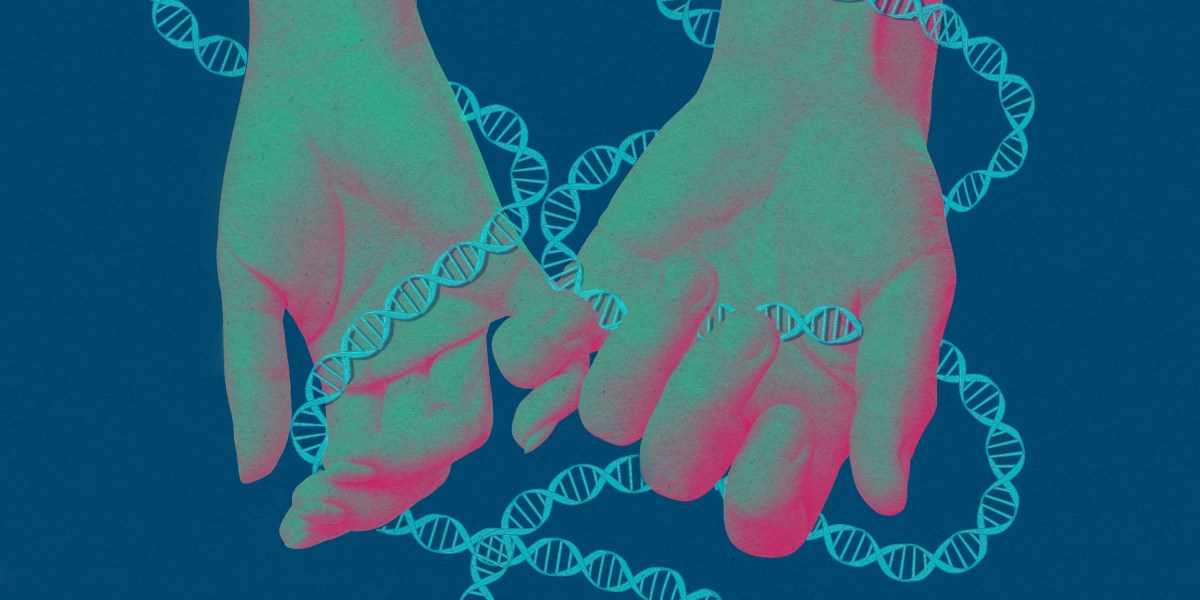
The other end of the screening spectrum is transforming too. Carrier screening, which tests would-be parents for hidden genetic mutations that might affect their children, initially involved testing for specific genes in at-risk populations.
Now, it’s open to almost everyone who can afford it. Companies will offer to test for hundreds of genes to help people make informed decisions when they try to become parents. But expanded carrier screening comes with downsides. And it isn’t for everyone.
That’s what I found earlier this week when I attended the Progress Educational Trust’s annual conference in London.
First, a bit of background. Our cells carry 23 pairs of chromosomes, each with thousands of genes. The same gene—say, one that codes for eye color—can come in different forms, or alleles. If the allele is dominant, you only need one copy to express that trait. That’s the case for the allele responsible for brown eyes.
If the allele is recessive, the trait doesn’t show up unless you have two copies. This is the case with the allele responsible for blue eyes, for example.
Things get more serious when we consider genes that can affect a person’s risk of disease. Having a single recessive disease-causing gene typically won’t cause you any problems. But a genetic disease could show up in children who inherit the same recessive gene from both parents. There’s a 25% chance that two “carriers” will have an affected child. And those cases can come as a shock to the parents, who tend to have no symptoms and no family history of disease.
This can be especially problematic in communities with high rates of those alleles. Consider Tay-Sachs disease—a rare and fatal neurodegenerative disorder caused by a recessive genetic mutation. Around one in 25 members of the Ashkenazi Jewish population is a healthy carrier for Tay-Sachs. Screening would-be parents for those recessive genes can be helpful. Carrier screening efforts in the Jewish community, which have been running since the 1970s, have massively reduced cases of Tay-Sachs.
Expanded carrier screening takes things further. Instead of screening for certain high-risk alleles in at-risk populations, there’s an option to test for a wide array of diseases in prospective parents and egg and sperm donors. The companies offering these screens “started out with 100 genes, and now some of them go up to 2,000,” Sara Levene, genetics counsellor at Guided Genetics, said at the meeting. “It’s becoming a bit of an arms race amongst labs, to be honest.”
There are benefits to expanded carrier screening. In most cases, the results are reassuring. And if something is flagged, prospective parents have options; they can often opt for additional testing to get more information about a particular pregnancy, for example, or choose to use other donor eggs or sperm to get pregnant. But there are also downsides. For a start, the tests can’t entirely rule out the risk of genetic disease.
Earlier this week, the BBC reported news of a sperm donor who had unwittingly passed on to at least 197 children in Europe a genetic mutation that dramatically increased the risk of cancer. Some of those children have already died.
It’s a tragic case. That donor had passed screening checks. The (dominant) mutation appears to have occurred in his testes, affecting around 20% of his sperm. It wouldn’t have shown up in a screen for recessive alleles, or even a blood test.
Even recessive diseases can be influenced by many genes, some of which won’t be included in the screen. And the screens don’t account for other factors that could influence a person’s risk of disease, such as epigenetics, microbiome, or even lifestyle.
“There’s always a 3% to 4% chance [of having] a child with a medical issue regardless of the screening performed,” said Jackson Kirkman-Brown, professor of reproductive biology at the University of Birmingham, at the meeting.
The tests can also cause stress. As soon as a clinician even mentions expanded carrier screening, it adds to the mental load of the patient, said Kirkman-Brown: “We’re saying this is another piece of information you need to worry about.”
People can also feel pressured to undergo expanded carrier screening even when they are ambivalent about it, said Heidi Mertes, a medical ethicist at Ghent University. “Once the technology is there, people feel like if they don’t take this opportunity up, then they are kind of doing something wrong or missing out,” she said.
My takeaway from the presentations was that while expanded carrier screening can be useful, especially for people from populations with known genetic risks, it won’t be for everyone.
I also worry that, as with the genetic tests offered by Nucleus, its availability gives the impression that it is possible to have a “perfect” baby—even if that only means “free from disease.” The truth is that there’s a lot about reproduction that we can’t control.
The decision to undergo expanded carrier screening is a personal choice. But as Mertes noted at the meeting: “Just because you can doesn’t mean you should.”
This article first appeared in The Checkup, MIT Technology Review’s weekly biotech newsletter. To receive it in your inbox every Thursday, and read articles like this first, sign up here.