Stay Ahead, Stay ONMINE

The great AI hype correction of 2025

Some disillusionment was inevitable. When OpenAI released a free web app called ChatGPT in late 2022, it changed the course of an entire industry—and several world economies. Millions of people started talking to their computers, and their computers started talking back. We were enchanted, and we expected more. We got it. Technology companies scrambled to stay ahead, putting out rival products that outdid one another with each new release: voice, images, video. With nonstop one-upmanship, AI companies have presented each new product drop as a major breakthrough, reinforcing a widespread faith that this technology would just keep getting better. Boosters told us that progress was exponential. They posted charts plotting how far we’d come since last year’s models: Look how the line goes up! Generative AI could do anything, it seemed. Well, 2025 has been a year of reckoning.  This story is part of MIT Technology Review’s Hype Correction package, a series that resets expectations about what AI is, what it makes possible, and where we go next. For a start, the heads of the top AI companies made promises they couldn’t keep. They told us that generative AI would replace the white-collar workforce, bring about an age of abundance, make scientific discoveries, and help find new cures for disease. FOMO across the world’s economies, at least in the Global North, made CEOs tear up their playbooks and try to get in on the action. That’s when the shine started to come off. Though the technology may have been billed as a universal multitool that could revamp outdated business processes and cut costs, a number of studies published this year suggest that firms are failing to make the AI pixie dust work its magic. Surveys and trackers from a range of sources, including the US Census Bureau and Stanford University, have found that business uptake of AI tools is stalling. And when the tools do get tried out, many projects stay stuck in the pilot stage. Without broad buy-in across the economy it is not clear how the big AI companies will ever recoup the incredible amounts they’ve already spent in this race.  At the same time, updates to the core technology are no longer the step changes they once were. The highest-profile example of this was the botched launch of GPT-5 in August. Here was OpenAI, the firm that had ignited (and to a large extent sustained) the current boom, set to release a brand-new generation of its technology. OpenAI had been hyping GPT-5 for months: “PhD-level expert in anything,” CEO Sam Altman crowed. On another occasion Altman posted, without comment, an image of the Death Star from Star Wars, which OpenAI stans took to be a symbol of ultimate power: Coming soon! Expectations were huge. And yet, when it landed, GPT-5 seemed to be—more of the same? What followed was the biggest vibe shift since ChatGPT first appeared three years ago. “The era of boundary-breaking advancements is over,” Yannic Kilcher, an AI researcher and popular YouTuber, announced in a video posted two days after GPT-5 came out: “AGI is not coming. It seems very much that we’re in the Samsung Galaxy era of LLMs.” A lot of people (me included) have made the analogy with phones. For a decade or so, smartphones were the most exciting consumer tech in the world. Today, new products drop from Apple or Samsung with little fanfare. While superfans pore over small upgrades, to most people this year’s iPhone now looks and feels a lot like last year’s iPhone. Is that where we are with generative AI? And is it a problem? Sure, smartphones have become the new normal. But they changed the way the world works, too. To be clear, the last few years have been filled with genuine “Wow” moments, from the stunning leaps in the quality of video generation models to the problem-solving chops of so-called reasoning models to the world-class competition wins of the latest coding and math models. But this remarkable technology is only a few years old, and in many ways it is still experimental. Its successes come with big caveats. Perhaps we need to readjust our expectations. The big reset Let’s be careful here: The pendulum from hype to anti-hype can swing too far. It would be rash to dismiss this technology just because it has been oversold. The knee-jerk response when AI fails to live up to its hype is to say that progress has hit a wall. But that misunderstands how research and innovation in tech work. Progress has always moved in fits and starts. There are ways over, around, and under walls. Take a step back from the GPT-5 launch. It came hot on the heels of a series of remarkable models that OpenAI had shipped in the previous months, including o1 and o3 (first-of-their-kind reasoning models that introduced the industry to a whole new paradigm) and Sora 2, which raised the bar for video generation once again. That doesn’t sound like hitting a wall to me. AI is really good! Look at Nano Banana Pro, the new image generation model from Google DeepMind that can turn a book chapter into an infographic, and much more. It’s just there—for free—on your phone. And yet you can’t help but wonder: When the wow factor is gone, what’s left? How will we view this technology a year or five from now? Will we think it was worth the colossal costs, both financial and environmental?  With that in mind, here are four ways to think about the state of AI at the end of 2025: The start of a much-needed hype correction. 01: LLMs are not everything In some ways, it is the hype around large language models, not AI as a whole, that needs correcting. It has become obvious that LLMs are not the doorway to artificial general intelligence, or AGI, a hypothetical technology that some insist will one day be able to do any (cognitive) task a human can. Even an AGI evangelist like Ilya Sutskever, chief scientist and cofounder at the AI startup Safe Superintelligence and former chief scientist and cofounder at OpenAI, now highlights the limitations of LLMs, a technology he had a huge hand in creating. LLMs are very good at learning how to do a lot of specific tasks, but they do not seem to learn the principles behind those tasks, Sutskever said in an interview with Dwarkesh Patel in November. It’s the difference between learning how to solve a thousand different algebra problems and learning how to solve any algebra problem. “The thing which I think is the most fundamental is that these models somehow just generalize dramatically worse than people,” Sutskever said. It’s easy to imagine that LLMs can do anything because their use of language is so compelling. It is astonishing how well this technology can mimic the way people write and speak. And we are hardwired to see intelligence in things that behave in certain ways—whether it’s there or not. In other words, we have built machines with humanlike behavior and cannot resist seeing a humanlike mind behind them. That’s understandable. LLMs have been part of mainstream life for only a few years. But in that time, marketers have preyed on our shaky sense of what the technology can really do, pumping up expectations and turbocharging the hype. As we live with this technology and come to understand it better, those expectations should fall back down to earth.   02: AI is not a quick fix to all your problems In July, researchers at MIT published a study that became a tentpole talking point in the disillusionment camp. The headline result was that a whopping 95% of businesses that had tried using AI had found zero value in it.   The general thrust of that claim was echoed by other research, too. In November, a study by researchers at Upwork, a company that runs an online marketplace for freelancers, found that agents powered by top LLMs from OpenAI, Google DeepMind, and Anthropic failed to complete many straightforward workplace tasks by themselves. This is miles off Altman’s prediction: “We believe that, in 2025, we may see the first AI agents ‘join the workforce’ and materially change the output of companies,” he wrote on his personal blog in January. But what gets missed in that MIT study is that the researchers’ measure of success was pretty narrow. That 95% failure rate accounts for companies that had tried to implement bespoke AI systems but had not yet scaled them beyond the pilot stage after six months. It shouldn’t be too surprising that a lot of experiments with experimental technology don’t pan out straight away. That number also does not include the use of LLMs by employees outside of official pilots. The MIT researchers found that around 90% of the companies they surveyed had a kind of AI shadow economy where workers were using personal chatbot accounts. But the value of that shadow economy was not measured.   When the Upwork study looked at how well agents completed tasks together with people who knew what they were doing, success rates shot up. The takeaway seems to be that a lot of people are figuring out for themselves how AI might help them with their jobs. That fits with something the AI researcher and influencer (and coiner of the term “vibe coding”) Andrej Karpathy has noted: Chatbots are better than the average human at a lot of different things (think of giving legal advice, fixing bugs, doing high school math), but they are not better than an expert human. Karpathy suggests this may be why chatbots have proved popular with individual consumers, helping non-experts with everyday questions and tasks, but they have not upended the economy, which would require outperforming skilled employees at their jobs. That may change. For now, don’t be surprised that AI has not (yet) had the impact on jobs that boosters said it would. AI is not a quick fix, and it cannot replace humans. But there’s a lot to play for. The ways in which AI could be integrated into everyday workflows and business pipelines are still being tried out.    03: Are we in a bubble? (If so, what kind of bubble?) If AI is a bubble, is it like the subprime mortgage bubble of 2008 or the internet bubble of 2000? Because there’s a big difference. The subprime bubble wiped out a big part of the economy, because when it burst it left nothing behind except debt and overvalued real estate. The dot-com bubble wiped out a lot of companies, which sent ripples across the world, but it left behind the infant internet—an international network of cables and a handful of startups, like Google and Amazon, that became the tech giants of today.   Then again, maybe we’re in a bubble unlike either of those. After all, there’s no real business model for LLMs right now. We don’t yet know what the killer app will be, or if there will even be one.  And many economists are concerned about the unprecedented amounts of money being sunk into the infrastructure required to build capacity and serve the projected demand. But what if that demand doesn’t materialize? Add to that the weird circularity of many of those deals—with Nvidia paying OpenAI to pay Nvidia, and so on—and it’s no surprise everybody’s got a different take on what’s coming.  Some investors remain sanguine. In an interview with the Technology Business Programming Network podcast in November, Glenn Hutchins, cofounder of Silver Lake Partners, a major international private equity firm, gave a few reasons not to worry. “Every one of these data centers—almost all of them—has a solvent counterparty that is contracted to take all the output they’re built to suit,” he said. In other words, it’s not a case of “Build it and they’ll come”—the customers are already locked in.  And, he pointed out, one of the biggest of those solvent counterparties is Microsoft. “Microsoft has the world’s best credit rating,” Hutchins said. “If you sign a deal with Microsoft to take the output from your data center, Satya is good for it.” Many CEOs will be looking back at the dot-com bubble and trying to learn its lessons. Here’s one way to see it: The companies that went bust back then didn’t have the money to last the distance. Those that survived the crash thrived. With that lesson in mind, AI companies today are trying to pay their way through what may or may not be a bubble. Stay in the race; don’t get left behind. Even so, it’s a desperate gamble. But there’s another lesson too. Companies that might look like sideshows can turn into unicorns fast. Take Synthesia, which makes avatar generation tools for businesses. Nathan Benaich, cofounder of the VC firm Air Street Capital, admits that when he first heard about the company a few years ago, back when fear of deepfakes was rife, he wasn’t sure what its tech was for and thought there was no market for it. “We didn’t know who would pay for lip-synching and voice cloning,” he says. “Turns out there’s a lot of people who wanted to pay for it.” Synthesia now has around 55,000 corporate customers and brings in around $150 million a year. In October, the company was valued at $4 billion. 04: ChatGPT was not the beginning, and it won’t be the end ChatGPT was the culmination of a decade’s worth of progress in deep learning, the technology that underpins all of modern AI. The seeds of deep learning itself were planted in the 1980s. The field as a whole goes back at least to the 1950s. If progress is measured against that backdrop, generative AI has barely got going. Meanwhile, research is at a fever pitch. There are more high-quality submissions to the world’s major AI conferences than ever before. This year, organizers of some of those conferences resorted to turning down papers that reviewers had already approved, just to manage numbers. (At the same time, preprint servers like arXiv have been flooded with AI-generated research slop.) “It’s back to the age of research again,” Sutskever said in that Dwarkesh interview, talking about the current bottleneck with LLMs. That’s not a setback; that’s the start of something new. “There’s always a lot of hype beasts,” says Benaich. But he thinks there’s an upside to that: Hype attracts the money and talent needed to make real progress. “You know, it was only like two or three years ago that the people who built these models were basically research nerds that just happened on something that kind of worked,” he says. “Now everybody who’s good at anything in technology is working on this.” Where do we go from here? The relentless hype hasn’t come just from companies drumming up business for their vastly expensive new technologies. There’s a large cohort of people—inside and outside the industry—who want to believe in the promise of machines that can read, write, and think. It’s a wild decades-old dream.  But the hype was never sustainable—and that’s a good thing. We now have a chance to reset expectations and see this technology for what it really is—assess its true capabilities, understand its flaws, and take the time to learn how to apply it in valuable (and beneficial) ways. “We’re still trying to figure out how to invoke certain behaviors from this insanely high-dimensional black box of information and skills,” says Benaich. This hype correction was long overdue. But know that AI isn’t going anywhere. We don’t even fully understand what we’ve built so far, let alone what’s coming next.


Some disillusionment was inevitable. When OpenAI released a free web app called ChatGPT in late 2022, it changed the course of an entire industry—and several world economies. Millions of people started talking to their computers, and their computers started talking back. We were enchanted, and we expected more.

We got it. Technology companies scrambled to stay ahead, putting out rival products that outdid one another with each new release: voice, images, video. With nonstop one-upmanship, AI companies have presented each new product drop as a major breakthrough, reinforcing a widespread faith that this technology would just keep getting better. Boosters told us that progress was exponential. They posted charts plotting how far we’d come since last year’s models: Look how the line goes up! Generative AI could do anything, it seemed.

Well, 2025 has been a year of reckoning. 


This story is part of MIT Technology Review’s Hype Correction package, a series that resets expectations about what AI is, what it makes possible, and where we go next.


For a start, the heads of the top AI companies made promises they couldn’t keep. They told us that generative AI would replace the white-collar workforce, bring about an age of abundance, make scientific discoveries, and help find new cures for disease. FOMO across the world’s economies, at least in the Global North, made CEOs tear up their playbooks and try to get in on the action.

That’s when the shine started to come off. Though the technology may have been billed as a universal multitool that could revamp outdated business processes and cut costs, a number of studies published this year suggest that firms are failing to make the AI pixie dust work its magic. Surveys and trackers from a range of sources, including the US Census Bureau and Stanford University, have found that business uptake of AI tools is stalling. And when the tools do get tried out, many projects stay stuck in the pilot stage. Without broad buy-in across the economy it is not clear how the big AI companies will ever recoup the incredible amounts they’ve already spent in this race. 

At the same time, updates to the core technology are no longer the step changes they once were.

The highest-profile example of this was the botched launch of GPT-5 in August. Here was OpenAI, the firm that had ignited (and to a large extent sustained) the current boom, set to release a brand-new generation of its technology. OpenAI had been hyping GPT-5 for months: “PhD-level expert in anything,” CEO Sam Altman crowed. On another occasion Altman posted, without comment, an image of the Death Star from Star Wars, which OpenAI stans took to be a symbol of ultimate power: Coming soon! Expectations were huge.

And yet, when it landed, GPT-5 seemed to be—more of the same? What followed was the biggest vibe shift since ChatGPT first appeared three years ago. “The era of boundary-breaking advancements is over,” Yannic Kilcher, an AI researcher and popular YouTuber, announced in a video posted two days after GPT-5 came out: “AGI is not coming. It seems very much that we’re in the Samsung Galaxy era of LLMs.”

A lot of people (me included) have made the analogy with phones. For a decade or so, smartphones were the most exciting consumer tech in the world. Today, new products drop from Apple or Samsung with little fanfare. While superfans pore over small upgrades, to most people this year’s iPhone now looks and feels a lot like last year’s iPhone. Is that where we are with generative AI? And is it a problem? Sure, smartphones have become the new normal. But they changed the way the world works, too.

To be clear, the last few years have been filled with genuine “Wow” moments, from the stunning leaps in the quality of video generation models to the problem-solving chops of so-called reasoning models to the world-class competition wins of the latest coding and math models. But this remarkable technology is only a few years old, and in many ways it is still experimental. Its successes come with big caveats.

Perhaps we need to readjust our expectations.

The big reset

Let’s be careful here: The pendulum from hype to anti-hype can swing too far. It would be rash to dismiss this technology just because it has been oversold. The knee-jerk response when AI fails to live up to its hype is to say that progress has hit a wall. But that misunderstands how research and innovation in tech work. Progress has always moved in fits and starts. There are ways over, around, and under walls.

Take a step back from the GPT-5 launch. It came hot on the heels of a series of remarkable models that OpenAI had shipped in the previous months, including o1 and o3 (first-of-their-kind reasoning models that introduced the industry to a whole new paradigm) and Sora 2, which raised the bar for video generation once again. That doesn’t sound like hitting a wall to me.

AI is really good! Look at Nano Banana Pro, the new image generation model from Google DeepMind that can turn a book chapter into an infographic, and much more. It’s just there—for free—on your phone.

And yet you can’t help but wonder: When the wow factor is gone, what’s left? How will we view this technology a year or five from now? Will we think it was worth the colossal costs, both financial and environmental? 

With that in mind, here are four ways to think about the state of AI at the end of 2025: The start of a much-needed hype correction.

01: LLMs are not everything

In some ways, it is the hype around large language models, not AI as a whole, that needs correcting. It has become obvious that LLMs are not the doorway to artificial general intelligence, or AGI, a hypothetical technology that some insist will one day be able to do any (cognitive) task a human can.

Even an AGI evangelist like Ilya Sutskever, chief scientist and cofounder at the AI startup Safe Superintelligence and former chief scientist and cofounder at OpenAI, now highlights the limitations of LLMs, a technology he had a huge hand in creating. LLMs are very good at learning how to do a lot of specific tasks, but they do not seem to learn the principles behind those tasks, Sutskever said in an interview with Dwarkesh Patel in November.

It’s the difference between learning how to solve a thousand different algebra problems and learning how to solve any algebra problem. “The thing which I think is the most fundamental is that these models somehow just generalize dramatically worse than people,” Sutskever said.

It’s easy to imagine that LLMs can do anything because their use of language is so compelling. It is astonishing how well this technology can mimic the way people write and speak. And we are hardwired to see intelligence in things that behave in certain ways—whether it’s there or not. In other words, we have built machines with humanlike behavior and cannot resist seeing a humanlike mind behind them.

That’s understandable. LLMs have been part of mainstream life for only a few years. But in that time, marketers have preyed on our shaky sense of what the technology can really do, pumping up expectations and turbocharging the hype. As we live with this technology and come to understand it better, those expectations should fall back down to earth.  

02: AI is not a quick fix to all your problems

In July, researchers at MIT published a study that became a tentpole talking point in the disillusionment camp. The headline result was that a whopping 95% of businesses that had tried using AI had found zero value in it.  

The general thrust of that claim was echoed by other research, too. In November, a study by researchers at Upwork, a company that runs an online marketplace for freelancers, found that agents powered by top LLMs from OpenAI, Google DeepMind, and Anthropic failed to complete many straightforward workplace tasks by themselves.

This is miles off Altman’s prediction: “We believe that, in 2025, we may see the first AI agents ‘join the workforce’ and materially change the output of companies,” he wrote on his personal blog in January.

But what gets missed in that MIT study is that the researchers’ measure of success was pretty narrow. That 95% failure rate accounts for companies that had tried to implement bespoke AI systems but had not yet scaled them beyond the pilot stage after six months. It shouldn’t be too surprising that a lot of experiments with experimental technology don’t pan out straight away.

That number also does not include the use of LLMs by employees outside of official pilots. The MIT researchers found that around 90% of the companies they surveyed had a kind of AI shadow economy where workers were using personal chatbot accounts. But the value of that shadow economy was not measured.  

When the Upwork study looked at how well agents completed tasks together with people who knew what they were doing, success rates shot up. The takeaway seems to be that a lot of people are figuring out for themselves how AI might help them with their jobs.

That fits with something the AI researcher and influencer (and coiner of the term “vibe coding”) Andrej Karpathy has noted: Chatbots are better than the average human at a lot of different things (think of giving legal advice, fixing bugs, doing high school math), but they are not better than an expert human. Karpathy suggests this may be why chatbots have proved popular with individual consumers, helping non-experts with everyday questions and tasks, but they have not upended the economy, which would require outperforming skilled employees at their jobs.

That may change. For now, don’t be surprised that AI has not (yet) had the impact on jobs that boosters said it would. AI is not a quick fix, and it cannot replace humans. But there’s a lot to play for. The ways in which AI could be integrated into everyday workflows and business pipelines are still being tried out.   

03: Are we in a bubble? (If so, what kind of bubble?)

If AI is a bubble, is it like the subprime mortgage bubble of 2008 or the internet bubble of 2000? Because there’s a big difference.

The subprime bubble wiped out a big part of the economy, because when it burst it left nothing behind except debt and overvalued real estate. The dot-com bubble wiped out a lot of companies, which sent ripples across the world, but it left behind the infant internet—an international network of cables and a handful of startups, like Google and Amazon, that became the tech giants of today.  

Then again, maybe we’re in a bubble unlike either of those. After all, there’s no real business model for LLMs right now. We don’t yet know what the killer app will be, or if there will even be one. 

And many economists are concerned about the unprecedented amounts of money being sunk into the infrastructure required to build capacity and serve the projected demand. But what if that demand doesn’t materialize? Add to that the weird circularity of many of those deals—with Nvidia paying OpenAI to pay Nvidia, and so on—and it’s no surprise everybody’s got a different take on what’s coming. 

Some investors remain sanguine. In an interview with the Technology Business Programming Network podcast in November, Glenn Hutchins, cofounder of Silver Lake Partners, a major international private equity firm, gave a few reasons not to worry. “Every one of these data centers—almost all of them—has a solvent counterparty that is contracted to take all the output they’re built to suit,” he said. In other words, it’s not a case of “Build it and they’ll come”—the customers are already locked in. 

And, he pointed out, one of the biggest of those solvent counterparties is Microsoft. “Microsoft has the world’s best credit rating,” Hutchins said. “If you sign a deal with Microsoft to take the output from your data center, Satya is good for it.”

Many CEOs will be looking back at the dot-com bubble and trying to learn its lessons. Here’s one way to see it: The companies that went bust back then didn’t have the money to last the distance. Those that survived the crash thrived.

With that lesson in mind, AI companies today are trying to pay their way through what may or may not be a bubble. Stay in the race; don’t get left behind. Even so, it’s a desperate gamble.

But there’s another lesson too. Companies that might look like sideshows can turn into unicorns fast. Take Synthesia, which makes avatar generation tools for businesses. Nathan Benaich, cofounder of the VC firm Air Street Capital, admits that when he first heard about the company a few years ago, back when fear of deepfakes was rife, he wasn’t sure what its tech was for and thought there was no market for it.

“We didn’t know who would pay for lip-synching and voice cloning,” he says. “Turns out there’s a lot of people who wanted to pay for it.” Synthesia now has around 55,000 corporate customers and brings in around $150 million a year. In October, the company was valued at $4 billion.

04: ChatGPT was not the beginning, and it won’t be the end

ChatGPT was the culmination of a decade’s worth of progress in deep learning, the technology that underpins all of modern AI. The seeds of deep learning itself were planted in the 1980s. The field as a whole goes back at least to the 1950s. If progress is measured against that backdrop, generative AI has barely got going.

Meanwhile, research is at a fever pitch. There are more high-quality submissions to the world’s major AI conferences than ever before. This year, organizers of some of those conferences resorted to turning down papers that reviewers had already approved, just to manage numbers. (At the same time, preprint servers like arXiv have been flooded with AI-generated research slop.)

“It’s back to the age of research again,” Sutskever said in that Dwarkesh interview, talking about the current bottleneck with LLMs. That’s not a setback; that’s the start of something new.

“There’s always a lot of hype beasts,” says Benaich. But he thinks there’s an upside to that: Hype attracts the money and talent needed to make real progress. “You know, it was only like two or three years ago that the people who built these models were basically research nerds that just happened on something that kind of worked,” he says. “Now everybody who’s good at anything in technology is working on this.”

Where do we go from here?

The relentless hype hasn’t come just from companies drumming up business for their vastly expensive new technologies. There’s a large cohort of people—inside and outside the industry—who want to believe in the promise of machines that can read, write, and think. It’s a wild decades-old dream

But the hype was never sustainable—and that’s a good thing. We now have a chance to reset expectations and see this technology for what it really is—assess its true capabilities, understand its flaws, and take the time to learn how to apply it in valuable (and beneficial) ways. “We’re still trying to figure out how to invoke certain behaviors from this insanely high-dimensional black box of information and skills,” says Benaich.

This hype correction was long overdue. But know that AI isn’t going anywhere. We don’t even fully understand what we’ve built so far, let alone what’s coming next.

Shape
Shape
Stay Ahead

Explore More Insights

Stay ahead with more perspectives on cutting-edge power, infrastructure, energy,  bitcoin and AI solutions. Explore these articles to uncover strategies and insights shaping the future of industries.

Shape

ExxonMobil bumps up 2030 target for Permian production

ExxonMobil Corp., Houston, is looking to grow production in the Permian basin to about 2.5 MMboe/d by 2030, an increase of 200,000 boe/d from executives’ previous forecasts and a jump of more than 45% from this year’s output. Helping drive that higher target is an expected 2030 cost profile that

Read More »

WoodMac Says Eni Find Reinforces Kutei as One of Hottest Plays

Eni’s latest discovery in Indonesia reinforces the Kutei Basin’s reputation as one of the hottest global exploration plays of recent years. That’s what Andrew Harwood, Wood Mackenzie (WoodMac) Vice President, Corporate Research, said in a statement sent to Rigzone, adding that the find “will add to Indonesia’s gas resources when the country increasingly focuses on gas availability”. “It provides options for Indonesia as the nation balances domestic demand needs with future export opportunities,” Harwood said. Harwood noted that the Konta-1 discovery “adds momentum to Eni’s existing plans to invest in and develop new gas sources for the currently underutilized Bontang LNG plant”. “The Konta-1 discovery lies in the northern Muara Bakau area, close to Eni’s pre-FID Kutei North Hub. It provides future tie-back upside and offers Plan B for Eni if the un-appraised Geng North underperforms initial expectations,” he added. Harwood also said Eni’s latest find encourages the company’s ongoing exploration campaign, which he pointed out runs into 2026. “Wood Mackenzie’s pick of prospects in line for drilling is Geliga, which holds multi trillion cubic foot potential,” he stated. Harwood went on to note that 2026 “looks exciting for Eni’s Indonesian portfolio with several major milestones ahead”. “These include exploration campaign results, a final investment decision on the Northern hub development, and the launch of ‘NewCo’ – the strategic satellite venture between Eni and Petronas,” he highlighted. In a statement sent to Rigzone recently, Eni announced a “significant gas discovery” in the Konta-1 exploration well off the coast of East Kalimantan in Indonesia. “Estimates indicate 600 billion cubic feet of gas initially in place (GIIP) with a potential upside beyond one trillion cubic feet,” Eni said in the statement. “Konta-1 was drilled to a depth of 4,575 meters [15,009 feet] in 570 meters [1,870 feet] water depth, encountering gas in

Read More »

China Fossil Fuel Generation Set for First Drop in Decade

China’s fossil fuel power plants are on track to chart their first annual drop in generation in a decade as renewables flood the grid to meet rising demand.  Thermal electricity output fell 4.2 percent in November, according to data published by the National Bureau of Statistics on Monday. Generation from coal and gas-fired plants is down 0.7 percent this year, on track for the first annual decline since 2015 unless there’s a sharp jump in December. China’s massive fleet of coal power stations is the world’s leading source of greenhouse gases fueling global warming. Even though the nation is continuing to build more of the plants, their use is plateauing as huge investments in renewables meet growing consumption needs.  Wind power jumped 22 percent in November from the previous year, while large solar farms saw a 23 percent rise in generation, additional data released Monday showed.  Even as power-sector emissions in China drop, they’ve been largely offset by rising pollution from a growing fleet of chemicals and plastics factories, according to the Centre for Research on Energy and Clean Air.  The nation’s coal output fell on an annual basis for a fifth month, while oil and natural gas continued to rise toward annual production records. What do you think? We’d love to hear from you, join the conversation on the Rigzone Energy Network. The Rigzone Energy Network is a new social experience created for you and all energy professionals to Speak Up about our industry, share knowledge, connect with peers and industry insiders and engage in a professional community that will empower your career in energy.

Read More »

Smart growth, lower costs: How fuel cells support utility expansion

As utilities work to expand capacity and modernize aging infrastructure to meet growing demand, they face a new imperative: doing more with every dollar invested. Analysts project capital expenditures by U.S. investor-owned electric utilities will reach $1.4 trillion between 2025 and 2030, nearly twice the amount spent during the entire previous decade.  To maintain today’s investment momentum and strengthen reliability and resilience, utilities have an opportunity to look beyond cost control and pursue strategies that deliver broader long-term value. That means seeking systems that maximize output, efficiency and uptime.  In today’s energy landscape, fuel cells are becoming increasingly relevant. They provide modular, reliable power that helps utilities extract more value from their investments while addressing rising demand and aging infrastructure. With high electrical efficiency, modular design and exceptional reliability, advanced fuel cell systems enable utilities to generate more value from their assets and streamline their day-to-day operations. Powering More with Less: Fuel Cells Redefine Efficiency Fuel cells outperform traditional combustion-based generators by converting fuel into electricity through an electrochemical reaction, rather than by burning it. This translates into roughly 15% to 20% higher efficiency than most open-cycle gas turbines or reciprocating engines. That improved conversion efficiency means each kilowatt-hour requires less fuel, increasing energy productivity and reducing exposure to fuel-price swings.  Among the various types of fuel cells, solid oxide fuel cells(SOFCs) offer the greatest advantages. Operating at high temperatures and utilizing a solid ceramic electrolyte, rather than relying on precious metals, corrosive acids or molten materials, SOFCs are a modern technology that converts fuels such as natural gas or hydrogen into electricity with exceptional efficiency and durability. Conversion efficiencies can reach up to 65% and when integrated with combined heat and power (CHP) configurations, the total system efficiency can exceed 90%.  Meeting Demand Faster with Fuel Cells With demand surging,

Read More »

What’s ahead for utilities: Navigating demand, AI and customer affordability

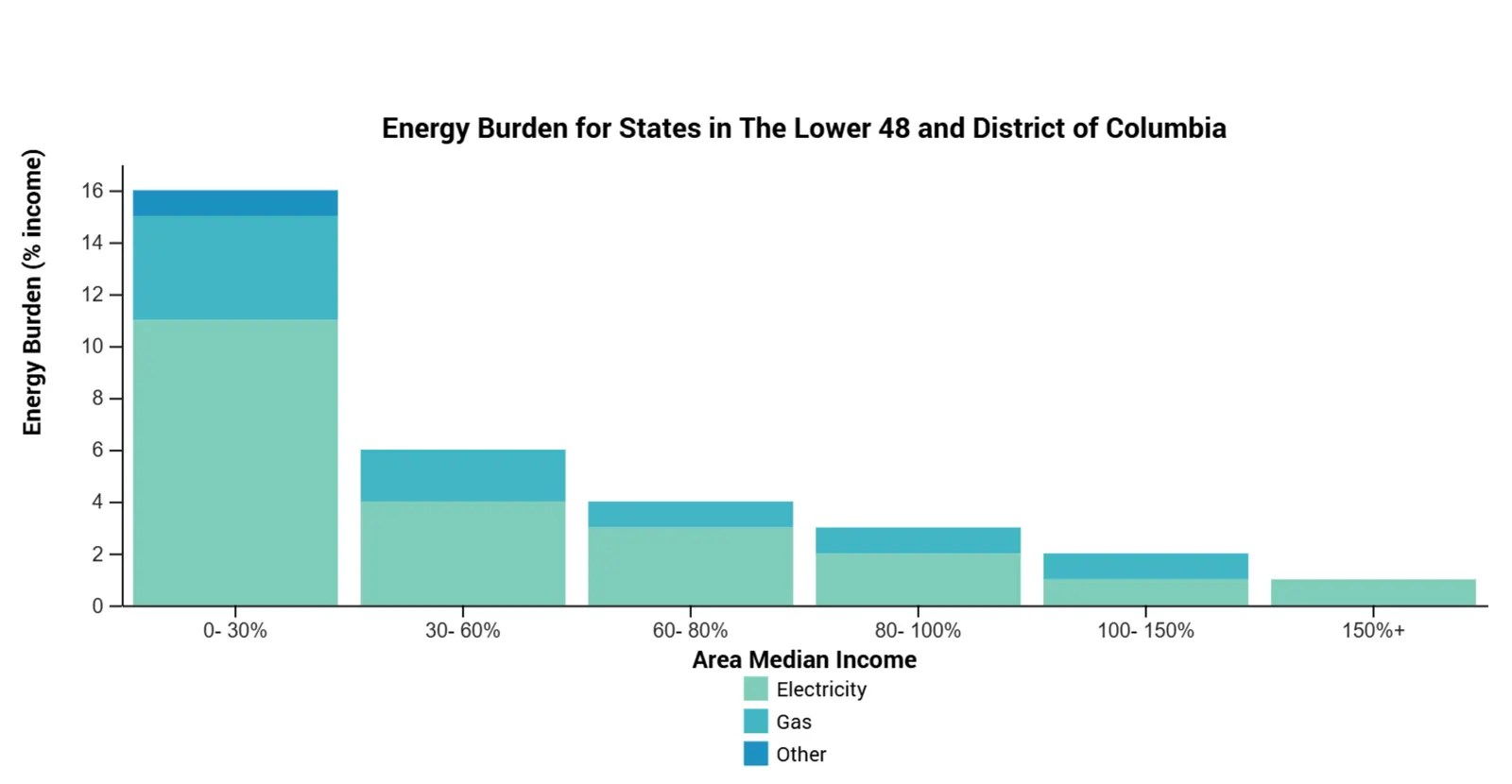
Utilities are entering a transformative year, with surging demand, affordability concerns, cybersecurity challenges and the increasing integration of artificial intelligence reshaping the industry. Utilities that thrive in this complex environment will need to adopt disciplined, analytics-driven strategies to ensure resilience, reliability and affordability. The forces driving change are significant and utilities must act decisively to navigate these challenges while building trust with customers and regulators. For a comprehensive analysis of the trends and strategies driving the future of utilities, download the full report. Surging Demand Requires Proactive Grid Management One of the most pressing issues is the unprecedented demand growth fueled by data centers, AI workloads and advanced manufacturing. Global power demand from data centers alone is expected to rise by 165% by 2030, with AI-driven workloads accounting for nearly a third of that increase. This surge in demand is straining transmission and distribution grids, which are already hampered by regulatory and permitting delays. Utilities must rethink traditional planning cycles and adopt predictive load forecasting tools to anticipate new energy use patterns with greater accuracy. Advanced transmission technologies, such as dynamic line ratings and topology optimization, can help increase grid capacity and efficiency, ensuring utilities remain competitive. Modernizing interconnection processes is also vital, as delays in connecting new loads to the grid can hinder progress. By deploying digital workflow tools and creating public-facing hosting capacity maps, utilities can streamline interconnection requests and enable developers to make informed decisions about project siting. Customer Affordability at a Tipping Point Massive grid investments to support electrification, data centers and climate resilience are driving rates higher, while inflation continues to strain household budgets. Since 2021, electricity prices have risen by 30%, leaving nearly 80 million Americans struggling to pay their utility bills. Utilities must adopt customer-centric solutions to address these concerns. Predictive analytics can

Read More »

Equinor Greenlights Johan Castberg Tieback

Equinor ASA and its partners have agreed to proceed with the first project to be connected to the Johan Castberg field. Johan Castberg started production in March as only the third development on Norway’s side of the Barents Sea, according to information on government website Norskpetroleum.no. The other two, Snøhvit and Goliat, came online 2007 and 2016 respectively. “Recoverable oil in the new subsea development [the Isflak discovery] is estimated at 46 million barrels, and start-up is planned as early as the fourth quarter of 2028”, the Norwegian primarily state-owned company said in an online statement. Isflak, the first of several discoveries planned to be tied back to Johan Castberg, was discovered 2021. Its development is estimated to cost over NOK 4 billion, according to the statement. “A rapid development is possible because we can copy standardized solutions from Johan Castberg. The reservoir is in the same license and is similar to the discoveries we have developed previously, which means that we can copy equipment and well solutions. Johan Castberg has been developed as a future hub in the area”, said Equinor senior vice president for project development Trond Bokn. Equinor said, “The development solution for the Isflak discovery consists of two wells in a new subsea template tied back to existing subsea facilities via pipelines and umbilicals, and all new infrastructure is located within the current Johan Castberg license”. “Equinor has therefore applied to the Ministry of Energy for confirmation that Equinor has fulfilled the impact assessment obligation and exemption from the requirement for a plan for development and operation”, it said. “Global combustion emissions have been assessed in line with new practice”. Johan Castberg has raised Norway’s production capacity by up to 220,000 barrels per day, with estimated recoverable volumes of 450-650 million barrels, according to Equinor. The

Read More »

TotalEnergies, Repsol, HitecVision Form UK North Sea Leader

TotalEnergies SE and NEO NEXT Energy Ltd, recently created by Repsol UK Ltd and HitecVision AS, have entered into a deal to combine their exploration and production assets in the United Kingdom and thereby create what they say would be the top producer in the UK North Sea. France’s TotalEnergies would own 47.5 percent of the resulting company, to be called NEO NEXT+. Norway-based HitecVision, a capital investor in Europe’s energy sector, and Repsol UK will retain 28.88 percent and 23.63 percent respectively, according to online statements by the parties. Repsol UK is 75 percent owned by Spanish integrated energy company Repsol SA and 25 percent owned by the United States’ EIG Global Energy Partners, which acquired a 25 percent stake in Repsol SA’s entire upstream portfolio in 2023 for $4.8 billion. HitecVision and Repsol UK had merged their North Sea assets into NEO NEXT earlier this year with interests of 55 percent and 45 percent respectively. NEO NEXT+ would “encompass a large and diverse asset portfolio including notably NEO Energy’s [HitecVision subsidiary] and Repsol UK’s interests in the Elgin/Franklin complex and the Penguins, Mariner, Shearwater and Culzean fields, enriched by TotalEnergies’ UK upstream assets, notably including its interests in the Elgin/Franklin complex and the Alwyn North, Dunbar and Culzean fields”, TotalEnergies said in a statement on its website. “With TotalEnergies as its leading shareholder, NEO NEXT+ will become the largest independent oil and gas producer in the UK with a production over 250,000 barrels of oil equivalent per day in 2026, ideally positioned to maximize the value of its portfolio, deliver strong financial returns and ensure a long-term sustainable and resilient future for its oil and gas business”, TotalEnergies said. TotalEnergies’ upstream portfolio in the UK averaged 121,000 barrels of oil equivalent a day (boed) last year, accounting for about 27 percent of the

Read More »

Executive Roundtable: Converging Disciplines in the AI Buildout

At Data Center Frontier, we rely on industry leaders to help us understand the most urgent challenges facing digital infrastructure. And in the fourth quarter of 2025, the data center industry is adjusting to a new kind of complexity.  AI-scale infrastructure is redefining what “mission critical” means, from megawatt density and modular delivery to the chemistry of cooling fluids and the automation of energy systems. Every project has arguably in effect now become an ecosystem challenge, demanding that electrical, mechanical, construction, and environmental disciplines act as one.  For this quarter’s Executive Roundtable, DCF convened subject matter experts from Ecolab, EdgeConneX, Rehlko and Schneider Electric – leaders spanning the full chain of facilities design, deployment, and operation. Their insights illuminate how liquid cooling, energy management, and sustainable process design in data centers are now converging to set the pace for the AI era. Our distinguished executive panelists for this quarter include: Rob Lowe, Director RD&E – Global High Tech, Ecolab Phillip Marangella, Chief Marketing and Product Officer, EdgeConneX Ben Rapp, Manager, Strategic Project Development, Rehlko Joe Reele, Vice President, Datacenter Solution Architects, Schneider Electric Today: Engineering the New Normal – Liquid Cooling at Scale  Today’s kickoff article grapples with how, as liquid cooling technology transitions to default hyperscale design, the challenge is no longer if, but how to scale builds safely, repeatably, and globally.  Cold plates, immersion, dielectric fluids, and liquid-to-chip loops are converging into factory-integrated building blocks, yet variability in chemistry, serviceability, materials, commissioning practices, and long-term maintenance threatens to fragment adoption just as demand accelerates.  Success now hinges on shared standards and tighter collaboration across OEMs, builders, and process specialists worldwide. So how do developers coordinate across the ecosystem to make liquid cooling a safe, maintainable global default? What’s Ahead in the Roundtable Over the coming days, our panel

Read More »

DCF Trends Summit 2025: AI for Good – How Operators, Vendors and Cooling Specialists See the Next Phase of AI Data Centers

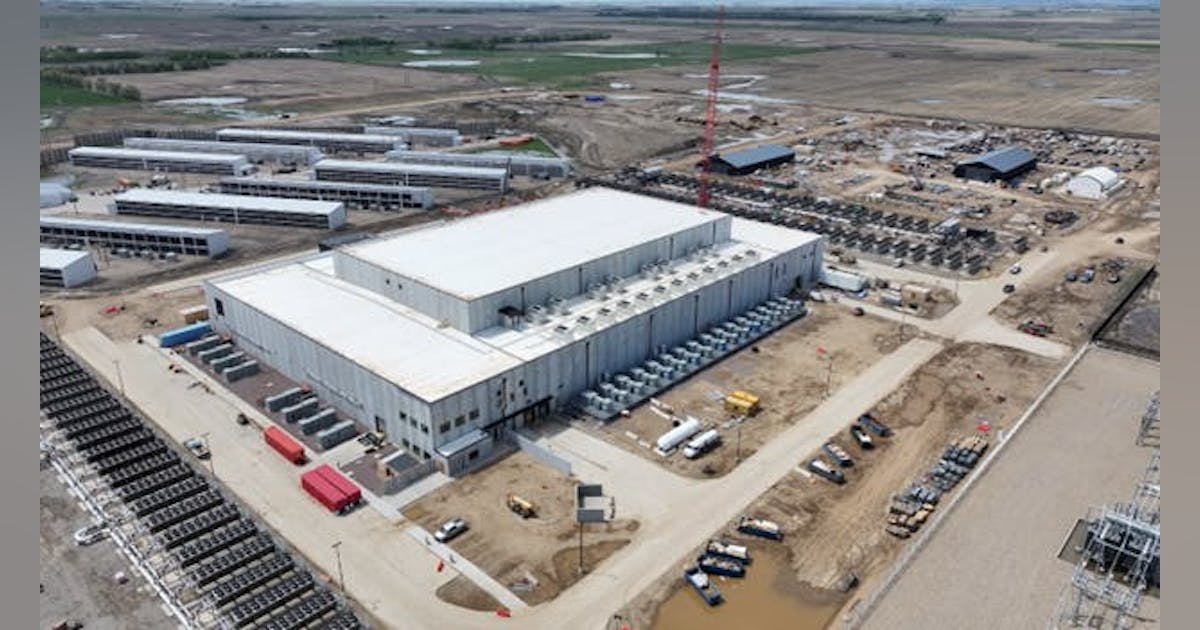
At the 2025 Data Center Frontier Trends Summit (Aug. 26-28) in Reston, Va., the conversation around AI and infrastructure moved well past the hype. In a panel sponsored by Schneider Electric—“AI for Good: Building for AI Workloads and Using AI for Smarter Data Centers”—three industry leaders explored what it really means to design, cool and operate the new class of AI “factories,” while also turning AI inward to run those facilities more intelligently. Moderated by Data Center Frontier Editor in Chief Matt Vincent, the session brought together: Steve Carlini, VP, Innovation and Data Center Energy Management Business, Schneider Electric Sudhir Kalra, Chief Data Center Operations Officer, Compass Datacenters Andrew Whitmore, VP of Sales, Motivair Together, they traced both sides of the “AI for Good” equation: building for AI workloads at densities that would have sounded impossible just a few years ago, and using AI itself to reduce risk, improve efficiency and minimize environmental impact. From Bubble Talk to “AI Factories” Carlini opened by acknowledging the volatility surrounding AI investments, citing recent headlines and even Sam Altman’s public use of the word “bubble” to describe the current phase of exuberance. “It’s moving at an incredible pace,” Carlini noted, pointing out that roughly half of all VC money this year has flowed into AI, with more already spent than in all of the previous year. Not every investor will win, he said, and some companies pouring in hundreds of billions may not recoup their capital. But for infrastructure, the signal is clear: the trajectory is up and to the right. GPU generations are cycling faster than ever. Densities are climbing from high double-digits per rack toward hundreds of kilowatts. The hyperscale “AI factories,” as NVIDIA calls them, are scaling to campus capacities measured in gigawatts. Carlini reminded the audience that in 2024,

Read More »

FinOps Foundation sharpens FOCUS to reduce cloud cost chaos

“The big change that’s really started to happen in late 2024 early 2025 is that the FinOps practice started to expand past the cloud,” Storment said. “A lot of organizations got really good at using FinOps to manage the value of cloud, and then their organizations went, ‘oh, hey, we’re living in this happily hybrid state now where we’ve got cloud, SaaS, data center. Can you also apply the FinOps practice to our SaaS? Or can you apply it to our Snowflake? Can you apply it to our data center?’” The FinOps Foundation’s community has grown to approximately 100,000 practitioners. The organization now includes major cloud vendors, hardware providers like Nvidia and AMD, data center operators and data cloud platforms like Snowflake and Databricks. Some 96 of the Fortune 100 now participate in FinOps Foundation programs. The practice itself has shifted in two directions. It has moved left into earlier architectural and design processes, becoming more proactive rather than reactive. It has also moved up organizationally, from director-level cloud management roles to SVP and COO positions managing converged technology portfolios spanning multiple infrastructure types. This expansion has driven the evolution of FOCUS beyond its original cloud billing focus. Enterprises are implementing FOCUS as an internal standard for chargeback reporting even when their providers don’t generate native FOCUS data. Some newer cloud providers, particularly those focused on AI infrastructure, are using the FOCUS specification to define their billing data structures from the ground up rather than retrofitting existing systems. The FOCUS 1.3 release reflects this maturation, addressing technical gaps that have emerged as organizations apply cost management practices across increasingly complex hybrid environments. FOCUS 1.3 exposes cost allocation logic for shared infrastructure The most significant technical enhancement in FOCUS 1.3 addresses a gap in how shared infrastructure costs are allocated and

Read More »

Aetherflux joins the race to launch orbital data centers by 2027

Enterprises will connect to and manage orbital workloads “the same way they manage cloud workloads today,” using optical links, the spokesperson added. The company’s approach is to “continuously launch new hardware and quickly integrate the latest architectures,” with older systems running lower-priority tasks to serve out the full useful lifetime of their high-end GPUs. The company declined to disclose pricing. Aetherflux plans to launch about 30 satellites at a time on SpaceX Falcon 9 rockets. Before the data center launch, the company will launch a power-beaming demonstration satellite in 2026 to test transmission of one kilowatt of energy from orbit to ground stations, using infrared lasers. Competition in the sector has intensified in recent months. In November, Starcloud launched its Starcloud-1 satellite carrying an Nvidia H100 GPU, which is 100 times more powerful than any previous GPU flown in space, according to the company, and demonstrated running Google’s Gemma AI model in orbit. In the same month, Google announced Project Suncatcher, with a 2027 demonstration mission planned. Analysts see limited near-term applications Despite the competitive activity, orbital data centers won’t replace terrestrial cloud regions for general hosting through 2030, said Ashish Banerjee, senior principal analyst at Gartner. Instead, they suit specific workloads, including meeting data sovereignty requirements for jurisdictionally complex scenarios, offering disaster recovery immune to terrestrial risks, and providing asynchronous high-performance computing, he said. “Orbital centers are ideal for high-compute, low-I/O batch jobs,” Banerjee said. “Think molecular folding simulations for pharma, massive Monte Carlo financial simulations, or training specific AI model weights. If the job takes 48 hours, the 500ms latency penalty of LEO is irrelevant.” One immediate application involves processing satellite-generated data in orbit, he said. Earth observation satellites using synthetic aperture radar generate roughly 10 gigabytes per second, but limited downlink bandwidth creates bottlenecks. Processing data in

Read More »

Here’s what Oracle’s soaring infrastructure spend could mean for enterprises

He said he had earlier told analysts in a separate call that margins for AI workloads in these data centers would be in the 30% to 40% range over the life of a customer contract. Kehring reassured that there would be demand for the data centers when they were completed, pointing to Oracle’s increasing remaining performance obligations, or services contracted but not yet delivered, up $68 billion on the previous quarter, saying that Oracle has been seeing unprecedented demand for AI workloads driven by the likes of Meta and Nvidia. Rising debt and margin risks raise flags for CIOs For analysts, though, the swelling debt load is hard to dismiss, even with Oracle’s attempts to de-risk its spend and squeeze more efficiency out of its buildouts. Gogia sees Oracle already under pressure, with the financial ecosystem around the company pricing the risk — one of the largest debts in corporate history, crossing $100 billion even before the capex spend this quarter — evident in the rising cost of insuring the debt and the shift in credit outlook. “The combination of heavy capex, negative free cash flow, increasing financing cost and long-dated revenue commitments forms a structural pressure that will invariably finds its way into the commercial posture of the vendor,” Gogia said, hinting at an “eventual” increase in pricing of the company’s offerings. He was equally unconvinced by Magouyrk’s assurances about the margin profile of AI workloads as he believes that AI infrastructure, particularly GPU-heavy clusters, delivers significantly lower margins in the early years because utilisation takes time to ramp.

Read More »

New Nvidia software gives data centers deeper visibility into GPU thermals and reliability

Addressing the challenge Modern AI accelerators now draw more than 700W per GPU, and multi-GPU nodes can reach 6kW, creating concentrated heat zones, rapid power swings, and a higher risk of interconnect degradation in dense racks, according to Manish Rawat, semiconductor analyst at TechInsights. Traditional cooling methods and static power planning increasingly struggle to keep pace with these loads. “Rich vendor telemetry covering real-time power draw, bandwidth behavior, interconnect health, and airflow patterns shifts operators from reactive monitoring to proactive design,” Rawat said. “It enables thermally aware workload placement, faster adoption of liquid or hybrid cooling, and smarter network layouts that reduce heat-dense traffic clusters.” Rawat added that the software’s fleet-level configuration insights can also help operators catch silent errors caused by mismatched firmware or driver versions. This can improve training reproducibility and strengthen overall fleet stability. “Real-time error and interconnect health data also significantly accelerates root-cause analysis, reducing MTTR and minimizing cluster fragmentation,” Rawat said. These operational pressures can shape budget decisions and infrastructure strategy at the enterprise level.

Read More »

Microsoft will invest $80B in AI data centers in fiscal 2025

And Microsoft isn’t the only one that is ramping up its investments into AI-enabled data centers. Rival cloud service providers are all investing in either upgrading or opening new data centers to capture a larger chunk of business from developers and users of large language models (LLMs).  In a report published in October 2024, Bloomberg Intelligence estimated that demand for generative AI would push Microsoft, AWS, Google, Oracle, Meta, and Apple would between them devote $200 billion to capex in 2025, up from $110 billion in 2023. Microsoft is one of the biggest spenders, followed closely by Google and AWS, Bloomberg Intelligence said. Its estimate of Microsoft’s capital spending on AI, at $62.4 billion for calendar 2025, is lower than Smith’s claim that the company will invest $80 billion in the fiscal year to June 30, 2025. Both figures, though, are way higher than Microsoft’s 2020 capital expenditure of “just” $17.6 billion. The majority of the increased spending is tied to cloud services and the expansion of AI infrastructure needed to provide compute capacity for OpenAI workloads. Separately, last October Amazon CEO Andy Jassy said his company planned total capex spend of $75 billion in 2024 and even more in 2025, with much of it going to AWS, its cloud computing division.

Read More »

John Deere unveils more autonomous farm machines to address skill labor shortage

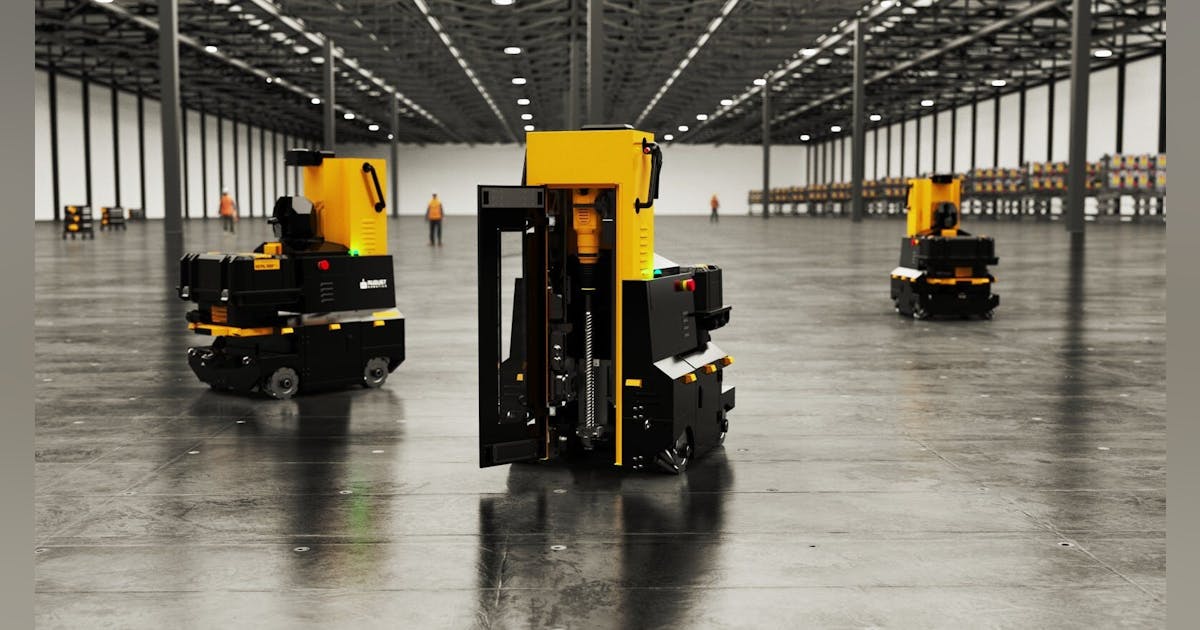
Join our daily and weekly newsletters for the latest updates and exclusive content on industry-leading AI coverage. Learn More Self-driving tractors might be the path to self-driving cars. John Deere has revealed a new line of autonomous machines and tech across agriculture, construction and commercial landscaping. The Moline, Illinois-based John Deere has been in business for 187 years, yet it’s been a regular as a non-tech company showing off technology at the big tech trade show in Las Vegas and is back at CES 2025 with more autonomous tractors and other vehicles. This is not something we usually cover, but John Deere has a lot of data that is interesting in the big picture of tech. The message from the company is that there aren’t enough skilled farm laborers to do the work that its customers need. It’s been a challenge for most of the last two decades, said Jahmy Hindman, CTO at John Deere, in a briefing. Much of the tech will come this fall and after that. He noted that the average farmer in the U.S. is over 58 and works 12 to 18 hours a day to grow food for us. And he said the American Farm Bureau Federation estimates there are roughly 2.4 million farm jobs that need to be filled annually; and the agricultural work force continues to shrink. (This is my hint to the anti-immigration crowd). John Deere’s autonomous 9RX Tractor. Farmers can oversee it using an app. While each of these industries experiences their own set of challenges, a commonality across all is skilled labor availability. In construction, about 80% percent of contractors struggle to find skilled labor. And in commercial landscaping, 86% of landscaping business owners can’t find labor to fill open positions, he said. “They have to figure out how to do

Read More »

2025 playbook for enterprise AI success, from agents to evals

Join our daily and weekly newsletters for the latest updates and exclusive content on industry-leading AI coverage. Learn More 2025 is poised to be a pivotal year for enterprise AI. The past year has seen rapid innovation, and this year will see the same. This has made it more critical than ever to revisit your AI strategy to stay competitive and create value for your customers. From scaling AI agents to optimizing costs, here are the five critical areas enterprises should prioritize for their AI strategy this year. 1. Agents: the next generation of automation AI agents are no longer theoretical. In 2025, they’re indispensable tools for enterprises looking to streamline operations and enhance customer interactions. Unlike traditional software, agents powered by large language models (LLMs) can make nuanced decisions, navigate complex multi-step tasks, and integrate seamlessly with tools and APIs. At the start of 2024, agents were not ready for prime time, making frustrating mistakes like hallucinating URLs. They started getting better as frontier large language models themselves improved. “Let me put it this way,” said Sam Witteveen, cofounder of Red Dragon, a company that develops agents for companies, and that recently reviewed the 48 agents it built last year. “Interestingly, the ones that we built at the start of the year, a lot of those worked way better at the end of the year just because the models got better.” Witteveen shared this in the video podcast we filmed to discuss these five big trends in detail. Models are getting better and hallucinating less, and they’re also being trained to do agentic tasks. Another feature that the model providers are researching is a way to use the LLM as a judge, and as models get cheaper (something we’ll cover below), companies can use three or more models to

Read More »

OpenAI’s red teaming innovations define new essentials for security leaders in the AI era

Join our daily and weekly newsletters for the latest updates and exclusive content on industry-leading AI coverage. Learn More OpenAI has taken a more aggressive approach to red teaming than its AI competitors, demonstrating its security teams’ advanced capabilities in two areas: multi-step reinforcement and external red teaming. OpenAI recently released two papers that set a new competitive standard for improving the quality, reliability and safety of AI models in these two techniques and more. The first paper, “OpenAI’s Approach to External Red Teaming for AI Models and Systems,” reports that specialized teams outside the company have proven effective in uncovering vulnerabilities that might otherwise have made it into a released model because in-house testing techniques may have missed them. In the second paper, “Diverse and Effective Red Teaming with Auto-Generated Rewards and Multi-Step Reinforcement Learning,” OpenAI introduces an automated framework that relies on iterative reinforcement learning to generate a broad spectrum of novel, wide-ranging attacks. Going all-in on red teaming pays practical, competitive dividends It’s encouraging to see competitive intensity in red teaming growing among AI companies. When Anthropic released its AI red team guidelines in June of last year, it joined AI providers including Google, Microsoft, Nvidia, OpenAI, and even the U.S.’s National Institute of Standards and Technology (NIST), which all had released red teaming frameworks. Investing heavily in red teaming yields tangible benefits for security leaders in any organization. OpenAI’s paper on external red teaming provides a detailed analysis of how the company strives to create specialized external teams that include cybersecurity and subject matter experts. The goal is to see if knowledgeable external teams can defeat models’ security perimeters and find gaps in their security, biases and controls that prompt-based testing couldn’t find. What makes OpenAI’s recent papers noteworthy is how well they define using human-in-the-middle

Read More »