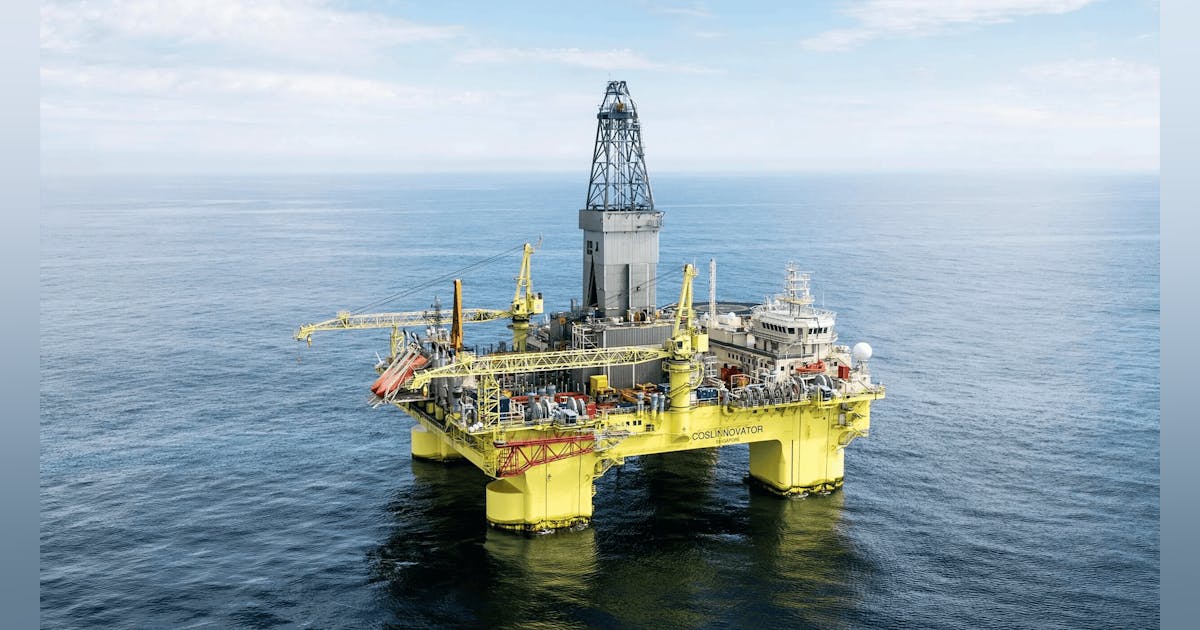
Woodside Energy Group Ltd said Tuesday the Scarborough Energy Project’s floating production unit (FPU) had arrived at the project site offshore Western Australia.
The project includes the development of the Scarborough gas field off the coast of Karratha, the construction of a second gas processing train for Pluto LNG with a capacity of five MMtpa and modifications to Pluto Train 1, according to Woodside. The FPU, built in China by Houston, Texas-headquartered McDermott International Ltd, will process gas from the field.
Excluding train 1 modifications, Scarborough Energy was 91 percent complete at the end of the third quarter, according to Woodside’s quarterly report October 22, 2025.
“Our focus now shifts to the hook-up and commissioning phase in preparation for production, and ultimately, first LNG cargo which is on track for the second half of this year”, Woodside acting chief executive Liz Westcott said in a statement on the company’s website Tuesday.
Woodside called the FPU “one of the largest semisubmersible facilities ever constructed”. The vessel totals about 70,000 metric tons, according to Woodside.
“It features advanced emissions-reduction systems and is designed to treat and compress gas for export through the trunkline”, the statement said. “It can also accommodate future tie-ins to support the development of nearby fields”.
The Perth-based company expects the project to produce up to eight million metric tons a year of liquefied natural gas and supply 225 terajoules per day to the Western Australian market.
Court Clearance
Last year Australia’s Federal Court upheld regulatory approval of the environmental plan (EP) for Scarborough Energy, in a challenge put up by Doctors for the Environment (Australia) Inc (DEA).
In a statement August 22, 2025, about the court win, Woodside noted the EP, approved by the National Offshore Petroleum Safety and Environmental Management Authority (NOPSEMA) in February 2025, represented the last federal environmental approval for the connection and operation of the FPU.
In the case, the DEA argued the EP had not included assessments required under the Offshore Petroleum and Greenhouse Gas Storage (Environment) Regulations 2023 and that proposed emission mitigation measures were vague and lacking.
The court ruled, in a decision penned by Justice Shaun McElwaine, “[T]he regulations do not (explicitly or implicitly) prescribe any methodology that must be implemented to demonstrate that the environmental impacts and risks of the activity will be reduced to as low as reasonably practicable and will be of an acceptable level”.
“It follows that it is open to a titleholder to address each criterion by postulating a hypothetical worst-case scenario to demonstrate that the environmental impacts and risks of all GHG emissions will be of an acceptable level, even if there is no displacement effect”, added the judgment, shared on the court’s website.
“A titleholder may proceed in that way as an alternative analysis even if, as in this case, it concludes that the hypothetical is unlikely to occur. Whether proceeding in that way is satisfactory or sufficient is a matter for NOPSEMA to determine”.
The ruling also said it was not the court’s role “to examine the merits of what is the central concern of DEA: the release of materially more GHG into the atmosphere is likely to be catastrophic for the environment and human health”.
The EP, as noted by the ruling, acknowledged estimated Scope 3 emissions of “162 MtCO2-e over the five-year period of the EP and 778 MtCO2-e over the expected combined life of the project”.
“This court is purely concerned to exercise its constitutional function to determine on the case as formulated by DEA whether NOPSEMA erred in law or committed jurisdictional error in purporting to be reasonably satisfied that the EP met the environment plan acceptance criteria in the Regulations”, the ruling said.
“It is not for this court to adjudicate on the existential threat posed by climate change caused by anthropogenic CO2 emissions to the atmosphere”.
“The proceeding must be dismissed”, the court ruled.
DEA executive director Dr Kate Wylie said in a statement on the court ruling, “After today’s decision, it is clear that Australia’s offshore gas regulations are not living up to the broader public interest”.
“DEA’s legal action took place in the broader context of a global climate emergency. This crisis has had profoundly harmful consequences for the health of billions of people around the world, and the impacts are becoming worse”, Wylie added.
“[T]he least our governments can do is to ensure such projects are subjected to thorough scrutiny to ensure proposals address climate impacts in a meaningful way”, Wylie said.
NOPSEMA said in response to a comment request by Rigzone at the time, “We acknowledge the Federal Court’s decision and welcome the clarity it brings to NOPSEMA’s regulatory assessment and decision-making processes”.
To contact the author, email [email protected]