Stay Ahead, Stay ONMINE

Var Energi Raises Estimates for New Barents Sea Oil Discovery

An appraisal well has confirmed Vår Energi ASA’ Zagato oil discovery in the Goliat area on Norway’s side of the North Sea, with preliminary estimated recoverable resources of 21-25 million barrels of oil equivalent (MMboe), the Norwegian Offshore Directorate (NOD) said. That is equivalent to 3.3-11.9 million standard cubic meters of oil equivalent (MMscmoe), up […]

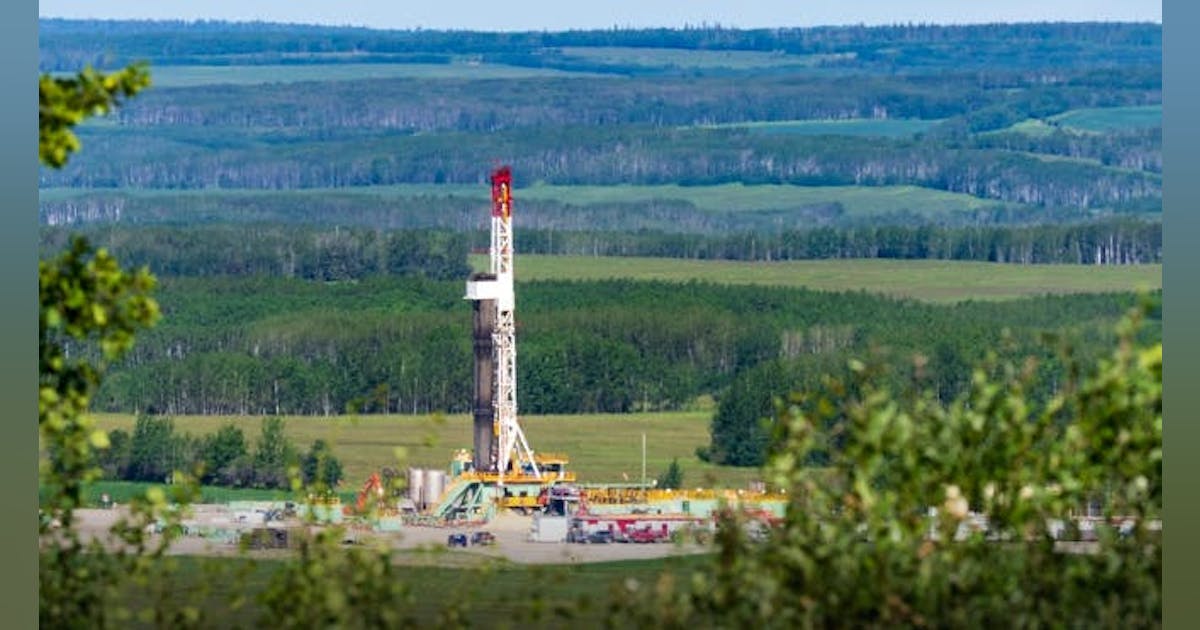
An appraisal well has confirmed Vår Energi ASA’ Zagato oil discovery in the Goliat area on Norway’s side of the North Sea, with preliminary estimated recoverable resources of 21-25 million barrels of oil equivalent (MMboe), the Norwegian Offshore Directorate (NOD) said.

That is equivalent to 3.3-11.9 million standard cubic meters of oil equivalent (MMscmoe), up from the previous estimate of 2.8-10.1 MMscmoe before appraisal well 7122/8-3 A was drilled, the upstream regulator said in a press release.

The latest target represents the 14th exploration well drilled in production license 229, awarded under the Barents Sea Project in 1997, the NOD noted.

Var Energi said separately, “The latest well tested two intervals with each showing maximum flow rates of more than 4,000 barrels of oil per day, confirming reservoir quality”.

“The production tests confirmed good quality reservoirs and oil quality similar to the Goliat field”, Vår Energi said. Goliat, discovered 2000, started producing 2016 and expanded with the startup of the Snadd and Goliat West accumulations in 2017 and 2021 respectively, according to field information on government website Norskpetroleum.no.

Operator Vår Energi (65 percent) and partner Equinor ASA (35 percent) have now drilled five wells in the Goliat Ridge, Vår Energi noted. “Including the latest well, the Goliat Ridge is estimated to contain gross discovered recoverable resources of 35-138 MMboe, and with additional prospective resources taking the total gross potential to over 200 MMboe”, it said.

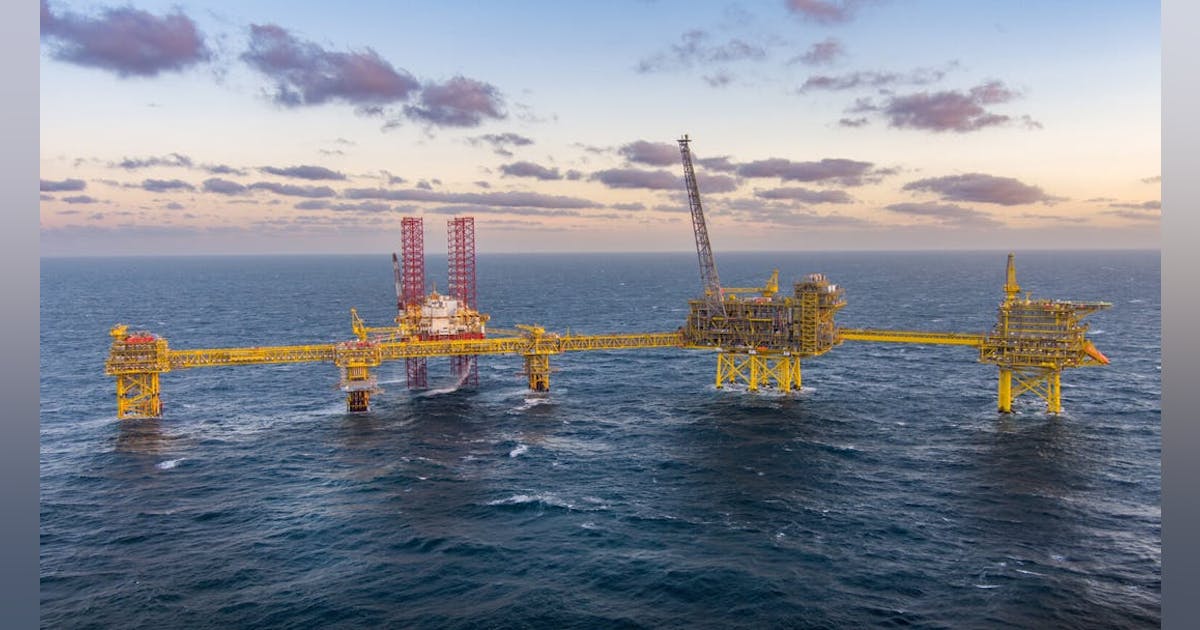
“A tie-back to the nearby Goliat FPSO [floating production, storage and offloading vessel] is being planned, targeting first production in 2019.

“Vår Energi was recently awarded an adjacent license to the Goliat field in the 2025 Awards in Predefined Areas, which offers additional prospectivity on trend with the Goliat Ridge discovery”.

Norskpetroleum.no says plans for Goliat include a connection to the Equinor-operated gas liquefaction facility on Melkøya island.  

“The recent discoveries reinforce Vår Energi’s position as a leading exploration company on the Norwegian continental shelf and continue to strengthen our ability to sustain high-value production of 350,000-400,000 boe per day beyond 2030”, said Vår Energi chief operating officer Torger Rød.

New Equinor Discovery

The NOD announced a separate discovery on Monday in the Equinor-operated production license 124 B in the Norwegian Sea.

Preliminary estimates for the Othello South prospect or wildcat well 6507/8-12 S, four kilometers (2.49 miles) north of Equinor’s producing Heidrun field, indicate 0.95-12.6 MMboe of recoverable resources, the NOD said.

“The licensees will assess the discovery with a view toward further developing the northern part of the Heidrun field”, it said.

The discovery is the first exploration well drilled in license 124 B, carved out of production license 124 in 2024, according to the NOD.

Equinor operates 124 B with a 25.69 percent stake. ConocoPhillips has 27.91 percent. Norway’s state-owned Petoro AS owns 36.4 percent. Vår Energi holds 10 percent.

To contact the author, email [email protected]

What do you think? We’d love to hear from you, join the conversation on the

Rigzone Energy Network.

The Rigzone Energy Network is a new social experience created for you and all energy professionals to Speak Up about our industry, share knowledge, connect with peers and industry insiders and engage in a professional community that will empower your career in energy.


MORE FROM THIS AUTHOR

Shape
Shape
Stay Ahead

Explore More Insights

Stay ahead with more perspectives on cutting-edge power, infrastructure, energy,  bitcoin and AI solutions. Explore these articles to uncover strategies and insights shaping the future of industries.

Shape

AWS European cloud service launch raises questions over sovereignty

There are examples of similar scenarios in recent years. The International Criminal Court’s chief prosecutor was reportedly shut out of Microsoft applications following the imposition of US sanctions, for example. Other instances include Adobe cutting off Venezuelan customers in compliance with US sanctions against that country in 2019, while Microsoft

Read More »

IP Fabric 7.9 boosts visibility across hybrid environments

Multicloud and hybrid network viability has also been extended to include IPv6 path analysis, helping teams reason about connectivity in dual-stack and hybrid environments. This capability addresses a practical challenge for enterprises deploying IPv6 alongside existing IPv4 infrastructure. Network teams can now validate that applications can reach IPv6 endpoints and

Read More »

Why Is the USA Natural Gas Price Rising Today?

Why is the U.S. natural gas price rising today? That was the question Rigzone asked Ole R. Hvalbye, a commodities analyst at Skandinaviska Enskilda Banken AB (SEB), in an exclusive interview on Monday. Responding to the question, Hvalbye highlighted to Rigzone that Henry Hub was trading around $3.5 per million British thermal units (MMBtu) today, “up from [around] … $3.1 per MMBtu before the weekend”, and noted that “the drivers look fairly straightforward and well known rather than structural”. “Short-term forecasts turned colder across parts of the U.S., lifting heating demand expectations and supporting front-end prices,” Hvalbye told Rigzone. “Feedgas flows remain elevated and firm, reinforcing near-term demand for U.S. gas and tightening the spot balance marginally,” he added. “After the recent sell-off, the market was relatively short, so colder weather and steady LNG demand triggered short-covering rather than fresh long positioning,” he continued. Hvalbye went on to state that, “on the supply side, there’s no disruption story”. “U.S. production remains strong, storage is still comfortable, and nothing suggests a sudden structural tightening from my data – i.e., a reason why the move looks tactical rather than fundamental,” he pointed out. Hvalbye highlighted to Rigzone that today’s price increase “isn’t a clean breakout”, adding that prices “are roughly back to where they were a week ago, so part of today’s move is simply retracing last week’s dip”. “In short: weather plus LNG demand plus positioning explain today’s strength. It’s a bounce, not a regime shift,” he added. In a separate exclusive interview with Rigzone on Monday, Art Hogan, Chief Market Strategist at B. Riley Wealth, said U.S. natural gas “is bouncing off a 13-week low of $3.10 last week after the weather outlook for late January shifted colder”. “The colder than normal outlook is expected to drive strong heating demand

Read More »

Var Energi Raises Estimates for New Barents Sea Oil Discovery

An appraisal well has confirmed Vår Energi ASA’ Zagato oil discovery in the Goliat area on Norway’s side of the North Sea, with preliminary estimated recoverable resources of 21-25 million barrels of oil equivalent (MMboe), the Norwegian Offshore Directorate (NOD) said. That is equivalent to 3.3-11.9 million standard cubic meters of oil equivalent (MMscmoe), up from the previous estimate of 2.8-10.1 MMscmoe before appraisal well 7122/8-3 A was drilled, the upstream regulator said in a press release. The latest target represents the 14th exploration well drilled in production license 229, awarded under the Barents Sea Project in 1997, the NOD noted. Var Energi said separately, “The latest well tested two intervals with each showing maximum flow rates of more than 4,000 barrels of oil per day, confirming reservoir quality”. “The production tests confirmed good quality reservoirs and oil quality similar to the Goliat field”, Vår Energi said. Goliat, discovered 2000, started producing 2016 and expanded with the startup of the Snadd and Goliat West accumulations in 2017 and 2021 respectively, according to field information on government website Norskpetroleum.no. Operator Vår Energi (65 percent) and partner Equinor ASA (35 percent) have now drilled five wells in the Goliat Ridge, Vår Energi noted. “Including the latest well, the Goliat Ridge is estimated to contain gross discovered recoverable resources of 35-138 MMboe, and with additional prospective resources taking the total gross potential to over 200 MMboe”, it said. “A tie-back to the nearby Goliat FPSO [floating production, storage and offloading vessel] is being planned, targeting first production in 2019. “Vår Energi was recently awarded an adjacent license to the Goliat field in the 2025 Awards in Predefined Areas, which offers additional prospectivity on trend with the Goliat Ridge discovery”. Norskpetroleum.no says plans for Goliat include a connection to the Equinor-operated gas liquefaction facility on Melkøya island.   “The recent discoveries reinforce Vår Energi’s position as a leading exploration company on the Norwegian continental shelf and continue to strengthen our ability to sustain high-value production of

Read More »

Where Will the WTI Oil Price Land in 2026 and 2027?

According to the U.S. Energy Information Administration’s (EIA) latest short term energy outlook (STEO) which was published on January 13, the West Texas Intermediate (WTI) spot price average will drop in 2026 and 2027. The EIA projected in this STEO that the WTI spot price will come in at $52.21 per barrel this year and $50.36 per barrel next year. The commodity averaged $65.40 per barrel in 2025, the EIA’s January STEO showed. A quarterly breakdown included in the outlook forecast that the WTI spot price will come in at $54.93 per barrel in the first quarter of 2026, $52.67 per barrel in the second quarter, $52.03 per barrel in the third quarter, $49.34 per barrel in the fourth quarter, $49.00 per barrel in the first quarter of 2027, $50.66 per barrel in the second quarter, $50.68 per barrel in the third quarter, and $51.00 per barrel in the fourth quarter of next year. In its previous STEO, which was released in December, the EIA projected that the WTI spot price would average $65.32 per barrel in 2025 and $51.42 per barrel in 2026. That STEO did not offer an average WTI spot price forecast for 2027. The EIA’s November STEO saw the WTI spot price averaging $65.15 per barrel in 2025 and $51.26 per barrel in 2026. A chart hosted on the EIA’s website, which was last updated on January 14 and displayed the annual average Cushing, OK, WTI spot price, on a free on board basis, from 1986 to 2025, showed that this commodity hit a peak in 2008, at $99.67 per barrel. The commodity saw its lowest price, between 1986 and 2025, in 1986, at $15.05 per barrel, the chart highlighted. The highest price the commodity has seen this decade came in 2022, at $94.90 per barrel,

Read More »

Leviathan Partners Approve Expansion Project

Chevron Corp and its local partners have agreed on a $2.36-billion final investment decision (FID) for stage 1 of a project to raise production in the Leviathan natural gas and condensate field offshore Israel. Expected to start operation in the second half of 2029, the first stage of Phase 1B aims to increase capacity to about 21 billion cubic meters (741.61 billion cubic feet) a year, consortium member NewMed Energy LP said in a stock filing on Friday. On August 21, 2025, it said the Energy and Infrastructures Ministry had approved Phase 1B. Leviathan, discovered 2010 off the coast of Haifa city, went onstream December 2019 under Phase 1A, which has a capacity of about 12 Bcm per annum, according to NewMed Energy. Chevron upstream president Clay Neff said in a separate statement issued online by the United States energy giant, “Chevron is a leading energy player in the Eastern Mediterranean, where we are focused on natural gas production and exports”. “Our decision to invest in the expansion of Leviathan’s production capacity reflects our confidence in the future of energy in the region”, Neff added. Neff claimed, “Pragmatic U.S. and regional energy policies are helping to strengthen energy security across the Eastern Mediterranean and foster an environment that encourages investment in the Middle East and globally”. “This milestone demonstrates our ongoing commitment to partner with the state of Israel to develop natural gas resources and provide essential energy to millions of people in Israel, Egypt and Jordan”, said Jack Baker, Chevron managing director for the Eastern Mediterranean.  NewMed Energy’s regulatory disclosure said, “According to the development plan, Stage One of the Expansion Project includes the drilling and completion of three additional production wells, the addition of supplementary subsea systems and expansion of the processing systems on the platform, with the aim

Read More »

Philippines Makes Discovery Near Dwindling Malampaya

The Philippines has discovered a new natural gas source for the first time in over a decade, extending the life of its depleting gas field as the nation seeks to cut its dependence on coal. The discovered reservoir in Malampaya East-1, near the existing Malampaya gas field, is estimated to contain around 98 billion cubic feet of gas, equivalent to almost 14 billion kilowatt hours of electricity per year, President Ferdinand Marcos Jr. said in a video message on Monday. “This helps Malampaya’s contribution and strengthens our domestic gas supply for many years to come,” Marcos said. Initial testing showed that the well flowed at 60 million cubic feet per day, indicating it has the potential to produce more and confirming it’s a rich resource comparable to the original Malampaya wells, he added. The latest gas find could help the Southeast Asian nation reduce its dependence on coal but it will need to continue importing liquefied natural gas to meet its growing energy needs.  Yet it pales in comparison with the massive gas assets in neighboring Indonesia and Malaysia, which are in the trillions of cubic feet. Malaysia’s state-owned gas company produces 7 billion cubic feet per day, while Indonesia’s oil firm has output at 2.8 billion cubic feet per day. Shares in Philippine energy firms climbed following the announcement. PXP Energy Corp. surged as much as 20.8 percent while Oriental Petroleum rose as much as 8.3 percent and First Gen Corp., which sources gas from Malampaya, jumped by up to 10.2 percent. The discovery could help secure long-term gas supply and eventually benefit companies like First Gen and San Miguel Corp., said Luis Limlingan, head of sales at Regina Capital Development Corp. in Manila. “But any real impact may take time as infrastructure and development need to catch up,” he said. Malampaya has

Read More »

Azerbaijan Starts Sending Gas to Austria, Germany via TAP Pipeline

Azerbaijan this month began supplying natural gas to Germany and Austria via Italy using the Trans-Adriatic Pipeline, the State Oil Company of Azerbaijan Republic (SOCAR) said. “Consequently, the number of countries buying Azerbaijani gas has reached 16”, SOCAR said in a brief statement on its website. “SOCAR in accordance with the gas strategy of the Republic of Azerbaijan established under the leadership of the President Ilham Aliyev continues to consistently expand its gas marketing activities across Europe and the Middle East to broaden its portfolio of cooperation with buyers from various countries and to further strengthen Azerbaijan’s position as a reliable energy supplier”. Part of the Southern Gas Corridor, TAP carries gas from the Shah Deniz field on Azerbaijan’s side of the Caspian Sea to Europe. The 877-kilometer (544.94 miles) pipeline connects with the Trans Anatolian Pipeline on the Turkiye-Greece border, then crosses Northern Greece, Albania and the Adriatic Sea before landing in Southern Italy. Deliveries to European markets are via exit points in Greece and Italy, as well as interconnectors, according to TAP, which has become a fully fledged transmission system operator after launching into commercial operation December 2020. Last year Germany’s state-owned SEFE Securing Energy for Europe GmbH signed up for a 10-year gas supply from SOCAR. The first delivery was scheduled for that same year. “The annual quantity will gradually increase to 15 terawatt hours, which is approximately 1.5 billion cubic meters [52.97 billion cubic feet]”, SEFE said in a press release June 10, 2025. “This partnership will support investments in production and infrastructure such as gas compressors, increasing the amount of pipeline gas coming to Europe and thus ensuring the continent’s security of supply”. About four years ago Azerbaijan and the European Union agreed to double the capacity of the Southern Gas Corridor to supply the

Read More »

NVIDIA’s Rubin Redefines the AI Factory

The Architecture Shift: From “GPU Server” to “Rack-Scale Supercomputer” NVIDIA’s Rubin architecture is built around a single design thesis: “extreme co-design.” In practice, that means GPUs, CPUs, networking, security, software, power delivery, and cooling are architected together; treating the data center as the compute unit, not the individual server. That logic shows up most clearly in the NVL72 system. NVLink 6 serves as the scale-up spine, designed to let 72 GPUs communicate all-to-all with predictable latency, something NVIDIA argues is essential for mixture-of-experts routing and synchronization-heavy inference paths. NVIDIA is not vague about what this requires. Its technical materials describe the Rubin GPU as delivering 50 PFLOPS of NVFP4 inference and 35 PFLOPS of NVFP4 training, with 22 TB/s of HBM4 bandwidth and 3.6 TB/s of NVLink bandwidth per GPU. The point of that bandwidth is not headline-chasing. It is to prevent a rack from behaving like 72 loosely connected accelerators that stall on communication. NVIDIA wants the rack to function as a single engine because that is what it will take to drive down cost per token at scale. The New Idea NVIDIA Is Elevating: Inference Context Memory as Infrastructure If there is one genuinely new concept in the Rubin announcements, it is the elevation of context memory, and the admission that GPU memory alone will not carry the next wave of inference. NVIDIA describes a new tier called NVIDIA Inference Context Memory Storage, powered by BlueField-4, designed to persist and share inference state (such as KV caches) across requests and nodes for long-context and agentic workloads. NVIDIA says this AI-native context tier can boost tokens per second by up to 5× and improve power efficiency by up to 5× compared with traditional storage approaches. The implication is clear: the path to cheaper inference is not just faster GPUs.

Read More »

Power shortages, carbon capture, and AI automation: What’s ahead for data centers in 2026

“Despite a broader use of AI tools in enterprises and by consumers, that does not mean that AI compute, AI infrastructure in general, will be more evenly spread out,” said Daniel Bizo, research director at Uptime Institute, during the webinar. “The concentration of AI compute infrastructure is only increasing in the coming years.” For enterprises, the infrastructure investment remains relatively modest, Uptime Institute found. Enterprises will limit investment to inference and only some training, and inference workloads don’t require dramatic capacity increases. “Our prediction, our observation, was that the concentration of AI compute infrastructure is only increasing in the coming years by a couple of points. By the end of this year, 2026, we are projecting that around 10 gigawatts of new IT load will have been added to the global data center world, specifically to run generative AI workloads and adjacent workloads, but definitely centered on generative AI,” Bizo said. “This means these 10 gigawatts or so load, we are talking about anywhere between 13 to 15 million GPUs and accelerators deployed globally. We are anticipating that a majority of these are and will be deployed in supercomputing style.” 2. Developers will not outrun the power shortage The most pressing challenge facing the industry, according to Uptime, is that data centers can be built in less than three years, but power generation takes much longer. “It takes three to six years to deploy a solar or wind farm, around six years for a combined-cycle gas turbine plant, and even optimistically, it probably takes more than 10 years to deploy a conventional nuclear power plant,” said Max Smolaks, research analyst at Uptime Institute. This mismatch was manageable when data centers were smaller and growth was predictable, the report notes. But with projects now measured in tens and sometimes hundreds of

Read More »

Google warns transmission delays are now the biggest threat to data center expansion

The delays stem from aging transmission infrastructure unable to handle concentrated power demands. Building regional transmission lines currently takes seven to eleven years just for permitting, Hanna told the gathering. Southwest Power Pool has projected 115 days of potential loss of load if transmission infrastructure isn’t built to match demand growth, he added. These systemic delays are forcing enterprises to reconsider fundamental assumptions about cloud capacity. Regions including Northern Virginia and Santa Clara that were prime locations for hyperscale builds are running out of power capacity. The infrastructure constraints are also reshaping cloud competition around power access rather than technical capabilities. “This is no longer about who gets to market with the most GPU instances,” Gogia said. “It’s about who gets to the grid first.” Co-location emerges as a faster alternative to grid delays Unable to wait years for traditional grid connections, hyperscalers are pursuing co-location arrangements that place data centers directly adjacent to power plants, bypassing the transmission system entirely. Pricing for these arrangements has jumped 20% in power-constrained markets as demand outstrips availability, with costs flowing through to cloud customers via regional pricing differences, Gogia said. Google is exploring such arrangements, though Hanna said the company’s “strong preference is grid-connected load.” “This is a speed to power play for us,” he said, noting Google wants facilities to remain “front of the meter” to serve the broader grid rather than operating as isolated power sources. Other hyperscalers are negotiating directly with utilities, acquiring land near power plants, and exploring ownership stakes in power infrastructure from batteries to small modular nuclear reactors, Hanna said.

Read More »

OpenAI turns to Cerebras in a mega deal to scale AI inference infrastructure

Analysts expect AI workloads to grow more varied and more demanding in the coming years, driving the need for architectures tuned for inference performance and putting added pressure on data center networks. “This is prompting hyperscalers to diversify their computing systems, using Nvidia GPUs for general-purpose AI workloads, in-house AI accelerators for highly optimized tasks, and systems such as Cerebras for specialized low-latency workloads,” said Neil Shah, vice president for research at Counterpoint Research. As a result, AI platforms operating at hyperscale are pushing infrastructure providers away from monolithic, general-purpose clusters toward more tiered and heterogeneous infrastructure strategies. “OpenAI’s move toward Cerebras inference capacity reflects a broader shift in how AI data centers are being designed,” said Prabhu Ram, VP of the industry research group at Cybermedia Research. “This move is less about replacing Nvidia and more about diversification as inference scales.” At this level, infrastructure begins to resemble an AI factory, where city-scale power delivery, dense east–west networking, and low-latency interconnects matter more than peak FLOPS, Ram added. “At this magnitude, conventional rack density, cooling models, and hierarchical networks become impractical,” said Manish Rawat, semiconductor analyst at TechInsights. “Inference workloads generate continuous, latency-sensitive traffic rather than episodic training bursts, pushing architectures toward flatter network topologies, higher-radix switching, and tighter integration of compute, memory, and interconnect.”

Read More »

Cisco’s 2026 agenda prioritizes AI-ready infrastructure, connectivity

While most of the demand for AI data center capacity today comes from hyperscalers and neocloud providers, that will change as enterprise customers delve more into the AI networking world. “The other ecosystem members and enterprises themselves are becoming responsible for an increasing proportion of the AI infrastructure buildout as inferencing and agentic AI, sovereign cloud, and edge AI become more mainstream,” Katz wrote. More enterprises will move to host AI on premises via the introduction of AI agents that are designed to inject intelligent insight into applications and help improve operations. That’s where the AI impact on enterprise network traffic will appear, suggests Nolle. “Enterprises need to host AI to create AI network impact. Just accessing it doesn’t do much to traffic. Having cloud agents access local data center resources (RAG etc.) creates a governance issue for most corporate data, so that won’t go too far either,” Nolle said.  “Enterprises are looking at AI agents, not the way hyperscalers tout agentic AI, but agents running on small models, often open-source, and are locally hosted. This is where real AI traffic will develop, and Cisco could be vulnerable if they don’t understand this point and at least raise it in dialogs where AI hosting comes up,” Nolle said. “I don’t expect they’d go too far, because the real market for enterprise AI networking is probably a couple years out.” Meanwhile, observers expect Cisco to continue bolstering AI networking capabilities for enterprise branch, campus and data centers as well as hyperscalers, including through optical support and other gear.

Read More »

Microsoft tells communities it will ‘pay its way’ as AI data center resource usage sparks backlash

It will work with utilities and public commissions to set the rates it pays high enough to cover data center electricity costs (including build-outs, additions, and active use). “Our goal is straightforward: To ensure that the electricity cost of serving our data centers is not passed on to residential customers,” Smith emphasized. For example, the company is supporting a new rate structure Wisconsin that would charge a class of “very large customers,” including data centers, the true cost of the electricity required to serve them. It will collaborate “early, closely, and transparently” with local utilities to add electricity and supporting infrastructure to existing grids when needed. For instance, Microsoft has contracted with the Midcontinent Independent System Operator (MISO) to add 7.9GW of new electricity generation to the grid, “more than double our current consumption,” Smith noted. It will pursue ways to make data centers more efficient. For example, it is already experimenting with AI to improve planning, extract more electricity from existing infrastructure, improve system resilience, and speed development of new infrastructure and technologies (like nuclear energy). It will advocate for state and national public policies that ensure electricity access that is affordable, reliable, and sustainable in neighboring communities. Microsoft previously established priorities for electricity policy advocacy, Smith noted, but “progress has been uneven. This needs to change.” Microsoft is similarly committed when it comes to data center water use, promising four actions: Reducing the overall amount of water its data centers use, initially improving it by 40% by 2030. The company is exploring innovations in cooling, including closed-loop systems that recirculate cooling liquids. It will collaborate with local utilities to map out water, wastewater, and pressure needs, and will “fully fund” infrastructure required for growth. For instance, in Quincy, Washington, Microsoft helped construct a water reuse utility that recirculates

Read More »

Microsoft will invest $80B in AI data centers in fiscal 2025

And Microsoft isn’t the only one that is ramping up its investments into AI-enabled data centers. Rival cloud service providers are all investing in either upgrading or opening new data centers to capture a larger chunk of business from developers and users of large language models (LLMs).  In a report published in October 2024, Bloomberg Intelligence estimated that demand for generative AI would push Microsoft, AWS, Google, Oracle, Meta, and Apple would between them devote $200 billion to capex in 2025, up from $110 billion in 2023. Microsoft is one of the biggest spenders, followed closely by Google and AWS, Bloomberg Intelligence said. Its estimate of Microsoft’s capital spending on AI, at $62.4 billion for calendar 2025, is lower than Smith’s claim that the company will invest $80 billion in the fiscal year to June 30, 2025. Both figures, though, are way higher than Microsoft’s 2020 capital expenditure of “just” $17.6 billion. The majority of the increased spending is tied to cloud services and the expansion of AI infrastructure needed to provide compute capacity for OpenAI workloads. Separately, last October Amazon CEO Andy Jassy said his company planned total capex spend of $75 billion in 2024 and even more in 2025, with much of it going to AWS, its cloud computing division.

Read More »

John Deere unveils more autonomous farm machines to address skill labor shortage

Join our daily and weekly newsletters for the latest updates and exclusive content on industry-leading AI coverage. Learn More Self-driving tractors might be the path to self-driving cars. John Deere has revealed a new line of autonomous machines and tech across agriculture, construction and commercial landscaping. The Moline, Illinois-based John Deere has been in business for 187 years, yet it’s been a regular as a non-tech company showing off technology at the big tech trade show in Las Vegas and is back at CES 2025 with more autonomous tractors and other vehicles. This is not something we usually cover, but John Deere has a lot of data that is interesting in the big picture of tech. The message from the company is that there aren’t enough skilled farm laborers to do the work that its customers need. It’s been a challenge for most of the last two decades, said Jahmy Hindman, CTO at John Deere, in a briefing. Much of the tech will come this fall and after that. He noted that the average farmer in the U.S. is over 58 and works 12 to 18 hours a day to grow food for us. And he said the American Farm Bureau Federation estimates there are roughly 2.4 million farm jobs that need to be filled annually; and the agricultural work force continues to shrink. (This is my hint to the anti-immigration crowd). John Deere’s autonomous 9RX Tractor. Farmers can oversee it using an app. While each of these industries experiences their own set of challenges, a commonality across all is skilled labor availability. In construction, about 80% percent of contractors struggle to find skilled labor. And in commercial landscaping, 86% of landscaping business owners can’t find labor to fill open positions, he said. “They have to figure out how to do

Read More »

2025 playbook for enterprise AI success, from agents to evals

Join our daily and weekly newsletters for the latest updates and exclusive content on industry-leading AI coverage. Learn More 2025 is poised to be a pivotal year for enterprise AI. The past year has seen rapid innovation, and this year will see the same. This has made it more critical than ever to revisit your AI strategy to stay competitive and create value for your customers. From scaling AI agents to optimizing costs, here are the five critical areas enterprises should prioritize for their AI strategy this year. 1. Agents: the next generation of automation AI agents are no longer theoretical. In 2025, they’re indispensable tools for enterprises looking to streamline operations and enhance customer interactions. Unlike traditional software, agents powered by large language models (LLMs) can make nuanced decisions, navigate complex multi-step tasks, and integrate seamlessly with tools and APIs. At the start of 2024, agents were not ready for prime time, making frustrating mistakes like hallucinating URLs. They started getting better as frontier large language models themselves improved. “Let me put it this way,” said Sam Witteveen, cofounder of Red Dragon, a company that develops agents for companies, and that recently reviewed the 48 agents it built last year. “Interestingly, the ones that we built at the start of the year, a lot of those worked way better at the end of the year just because the models got better.” Witteveen shared this in the video podcast we filmed to discuss these five big trends in detail. Models are getting better and hallucinating less, and they’re also being trained to do agentic tasks. Another feature that the model providers are researching is a way to use the LLM as a judge, and as models get cheaper (something we’ll cover below), companies can use three or more models to

Read More »

OpenAI’s red teaming innovations define new essentials for security leaders in the AI era

Join our daily and weekly newsletters for the latest updates and exclusive content on industry-leading AI coverage. Learn More OpenAI has taken a more aggressive approach to red teaming than its AI competitors, demonstrating its security teams’ advanced capabilities in two areas: multi-step reinforcement and external red teaming. OpenAI recently released two papers that set a new competitive standard for improving the quality, reliability and safety of AI models in these two techniques and more. The first paper, “OpenAI’s Approach to External Red Teaming for AI Models and Systems,” reports that specialized teams outside the company have proven effective in uncovering vulnerabilities that might otherwise have made it into a released model because in-house testing techniques may have missed them. In the second paper, “Diverse and Effective Red Teaming with Auto-Generated Rewards and Multi-Step Reinforcement Learning,” OpenAI introduces an automated framework that relies on iterative reinforcement learning to generate a broad spectrum of novel, wide-ranging attacks. Going all-in on red teaming pays practical, competitive dividends It’s encouraging to see competitive intensity in red teaming growing among AI companies. When Anthropic released its AI red team guidelines in June of last year, it joined AI providers including Google, Microsoft, Nvidia, OpenAI, and even the U.S.’s National Institute of Standards and Technology (NIST), which all had released red teaming frameworks. Investing heavily in red teaming yields tangible benefits for security leaders in any organization. OpenAI’s paper on external red teaming provides a detailed analysis of how the company strives to create specialized external teams that include cybersecurity and subject matter experts. The goal is to see if knowledgeable external teams can defeat models’ security perimeters and find gaps in their security, biases and controls that prompt-based testing couldn’t find. What makes OpenAI’s recent papers noteworthy is how well they define using human-in-the-middle

Read More »