Stay Ahead, Stay ONMINE

Customers, don’t expect electric bill relief in 2026: ‘The cake is baked.’

Listen to the article 16 min This audio is auto-generated. Please let us know if you have feedback. Rising energy demand, inflation, grid investment, extreme weather and volatile fuel costs are increasing the cost of electricity faster than many households can keep up, and there are no easy fixes, experts say. Mitigating the problem would […]

Rising energy demand, inflation, grid investment, extreme weather and volatile fuel costs are increasing the cost of electricity faster than many households can keep up, and there are no easy fixes, experts say.

Mitigating the problem would require threading a needle of policy alternatives, but even with the right policies, it will take time to reduce customer energy burdens. The U.S. Energy Information Administration puts the national average residential price per kilowatt hour in 2026 at 18 cents, up approximately 37% from 2020.

“I don’t see hidden costs that can be suddenly squeezed out of the system,” said Ray Gifford, managing partner of Wilkinson Barker Knauer’s Denver office and former chair of the Colorado Public Utilities Commission. “You are talking about an industry where most of the costs are fixed, and the assets are long-lived.”

Energy affordability has recently become politically salient, but for many low-income people, “the energy affordability crisis is not new,” said Joe Daniel, a principal on the Rocky Mountain Institute’s carbon free electricity team.

In 2017, 25% of all U.S. households — more than 30 million — faced a high energy burden, defined as paying more than 6% of income on energy bills, according to a report from the American Council for an Energy-Efficient Economy. For the poorest, it can be much higher. Households making less than 30% of area median income paid about 11% of their income for electricity alone, according to data from the Department of Energy covering the years 2018 to 2022. 
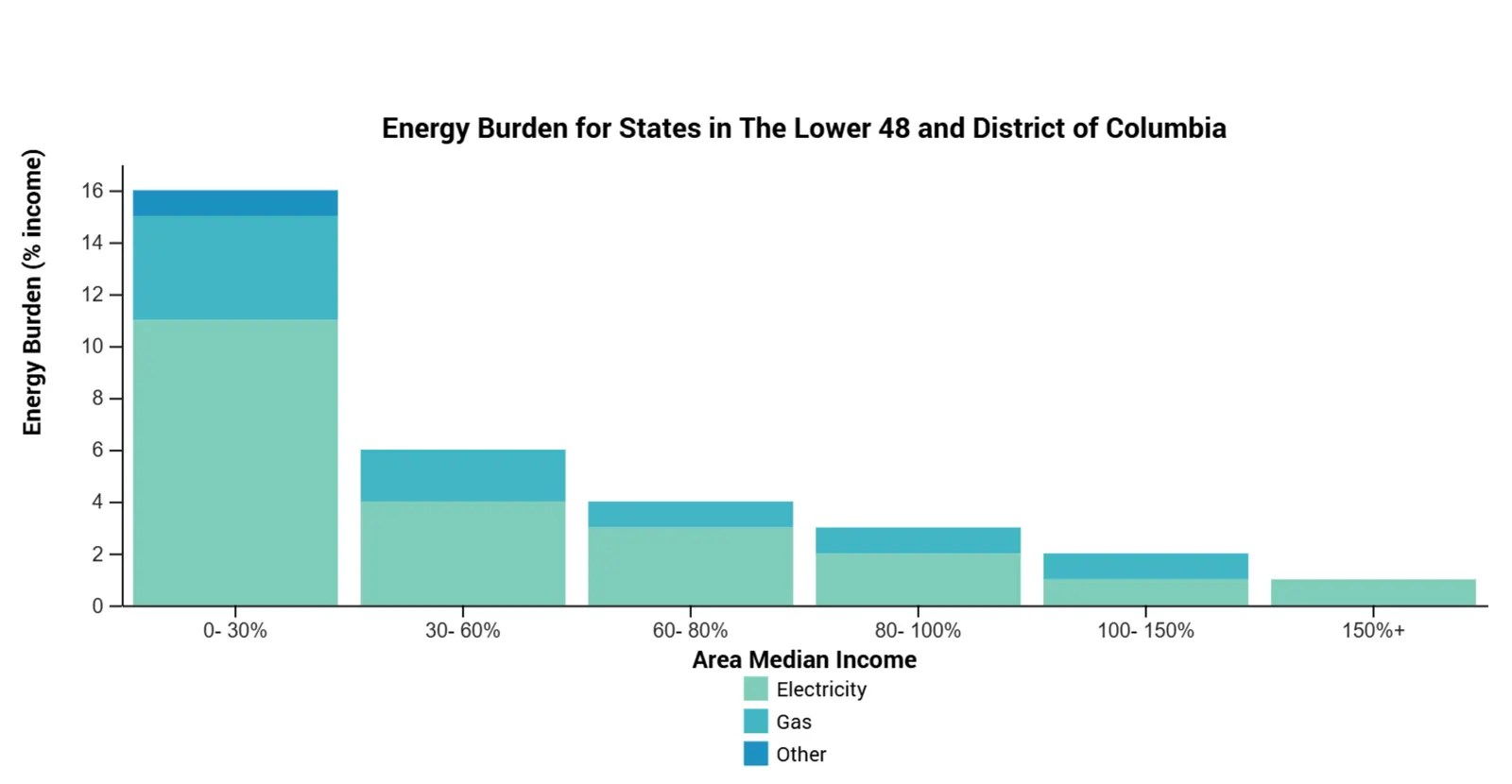
A chart showing energy burden

The Department of Energy’s Low-Income Energy Affordability Data Tool shows households’ energy burden in the lower 48 states and Washington, D.C. The data is based on the American Community Survey 5-year Estimates for 2018-2022.

Retrieved from Department of Energy.

“What is new is that because electricity prices have outpaced inflation, and, more importantly, dramatically outpaced wages, moderate- and middle-income families are starting to feel the squeeze,” Daniel said.

Between December 2023 and June 2025, household energy arrearages rose by about 31%, according to the National Energy Assistance Directors Association. Forced disconnections for nonpayment are also rising, from 3 million in 2023 to 3.5 million in 2024 and potentially 4 million in 2025, it said.

The increases in electricity prices have not been felt evenly across the country, and the reasons for their rise also vary by region. Still, residential rates have risen faster than those for commercial and industrial customers, and the prices charged by investor-owned utilities are higher and have risen faster than those charged by public power utilities, raising pressure on regulators and elected officials to try to rein in costs.

At least six states introduced legislation last year to limit utilities’ return on equity. California’s Public Utilities Commission recently lowered utilities’ ROE in that state by 0.3 percentage points. And newly elected New Jersey Governor Mikie Sherrill used her first day in office to issue executive orders seeking to freeze electricity cost increases and direct regulators to “modernize” the electric utility business model by making profits “less dependent on capital spending.”

Investors are spooked. Jefferies reported “considerable inbound concern from investors of all types” in January, ahead of Sherrill’s inauguration, related to the anticipated freeze.

But some consumer advocates question whether actions taken now will be too little, too late.

“They’re freezing rates at the highest they’ve ever been,” said Mark Wolfe, executive director of the National Energy Assistance Directors Association.

Low-income customers are “continually falling behind,” and utilities “spend considerable resources trying to collect,” he said. “I don’t think it works, especially as electricity gets more and more expensive, going up faster than incomes.”

Jay Griffin, a former utility regulator and executive chair for the Regulatory Assistance Project, recently wrote that utility business model reform “isn’t just an abstract policy debate, it’s a practical necessity.”

“By rewarding capital investment over outcomes, the model encourages utilities to ‘spend money to make money,’ while discouraging non-capital solutions like demand management and distributed energy resources,” he said. “This model creates risk for customers and investors alike.”

The electric utility sector says it is working to address affordability issues.

Last year, investor-owned utilities allocated about $7 billion to support customer programs, according to their trade group, the Edison Electric Institute. Those efforts included energy audits and weatherization education, usage-reduction programs for low-income households, bill assistance and payment plans, relief programs and referrals for community support.

Donald Trump stands before a sign that says "lower prices, bigger paychecks"

President Donald Trump takes the stage to speak during a rally at the Horizon Events Center on Jan. 27, 2026, in Clive, Iowa.  As a candidate, Trump promised to slash energy prices, including for electricity. 

Win McNamee via Getty Images

“As demand grows in our evolving economy, we will continue building on our long track record of delivering customer savings and supporting families facing financial hardships,” EEI said in an emailed statement.

Rising demand — does it hurt or help? 

The reasons for electricity price inflation are myriad and the mechanisms for determining price depend on the market, making it hard to generalize across the entire U.S. Grid investments, rising material and labor costs and natural disasters all play a role, but perhaps the issue that has attracted the most attention is that of large-load data centers and their unprecedented demands for power.

After decades of stagnant growth, the EIA expects demand from the commercial and industrial sectors to grow U.S. electricity consumption by 1% in 2026 and 3% in 2027, “marking the first four years of consecutive growth since 2005–07, and the strongest four-year period of growth since the turn of the century.”

Texas Gov. Greg Abbott and Alphabet and Google CEO Sundar Pichai lead a panel at the Google Midlothian Data Center

Texas Gov. Greg Abbott and Alphabet and Google CEO Sundar Pichai lead a panel at the Google Midlothian Data Center on Nov. 14, 2025, in Midlothian, Texas. Data centers are driving demand growth after years of stagnation. 

Ron Jenkins via Getty Images

Looking further out, the Bank of America Institute projects demand to rise at a 2.5% compound annual rate through 2035. It attributes the growth to not just data centers, but also building electrification, industrial growth and electric vehicles.

Aggressive load forecasts have helped drive capacity prices to new highs in the PJM Interconnection, the largest grid operator in the country. Data center load accounted for $6.5 billion, or 40%, of the $16.4 billion in costs from the PJM Interconnection’s December capacity auction, according to the grid operator’s independent market monitor.

“Generally speaking, the higher the demand, the higher the prices go,” said Marc Brown, the Consumer Energy Alliance’s executive director of Northeast.


“It remains unclear whether broader, sustained load growth will increase long-run average costs and prices.”

Lawrence Berkeley National Laboratory report


But some research has found that growing demand — from large loads as well as consumer electrification efforts — can also be a grid asset. A study released over the summer from the Lawrence Berkeley National Laboratory concluded that load growth helped depress electricity prices over the past five years, and states with the largest price increases typically featured shrinking customer loads.

“It remains unclear whether broader, sustained load growth will increase long-run average costs and prices,” the researchers said. “In some cases, spikes in load growth can result in significant, near-term retail price increases.”

RMI’s Daniel said higher throughput on the grid can help to lower rates by spreading costs over a broader customer base, and flexible demand can be used to address grid stress and peak loads.

“Done poorly or done correctly, it has the capability of dramatically impacting rates and bills,” he said.

Gifford also said that load growth has the potential to benefit the grid, but only under the right circumstances.

“Load growth, if allocated and planned for properly, can lower per-unit costs to customers on the [transmission and distribution] and even generation side,” Gifford said. But the impacts would take some time to materialize.

A lack of competition in transmission and distribution

Experts say transmission and distribution costrs are another major driver of rising consumer bills.

“Some of that is because it’s an old grid that needs to get replaced,” said said RMI’s Daniel. “And because of inflation and supply chain issues, the costs to replace an aging grid have gone up.”

Producer price index figures from November show copper wire and cable, as well as switchgear, costs were all up more than 11% year over year and about 60% from 2020. Tariffs, inflation and supply-chain issues have also impacted key components like aluminum, transformers and turbines. 

But many of the increases appearing on customer bills now are for infrastructure that was built over the past several years. And some argue the DOE model is incentivizing utilities and infrastructure owners and developers to build more expensively than necessary.
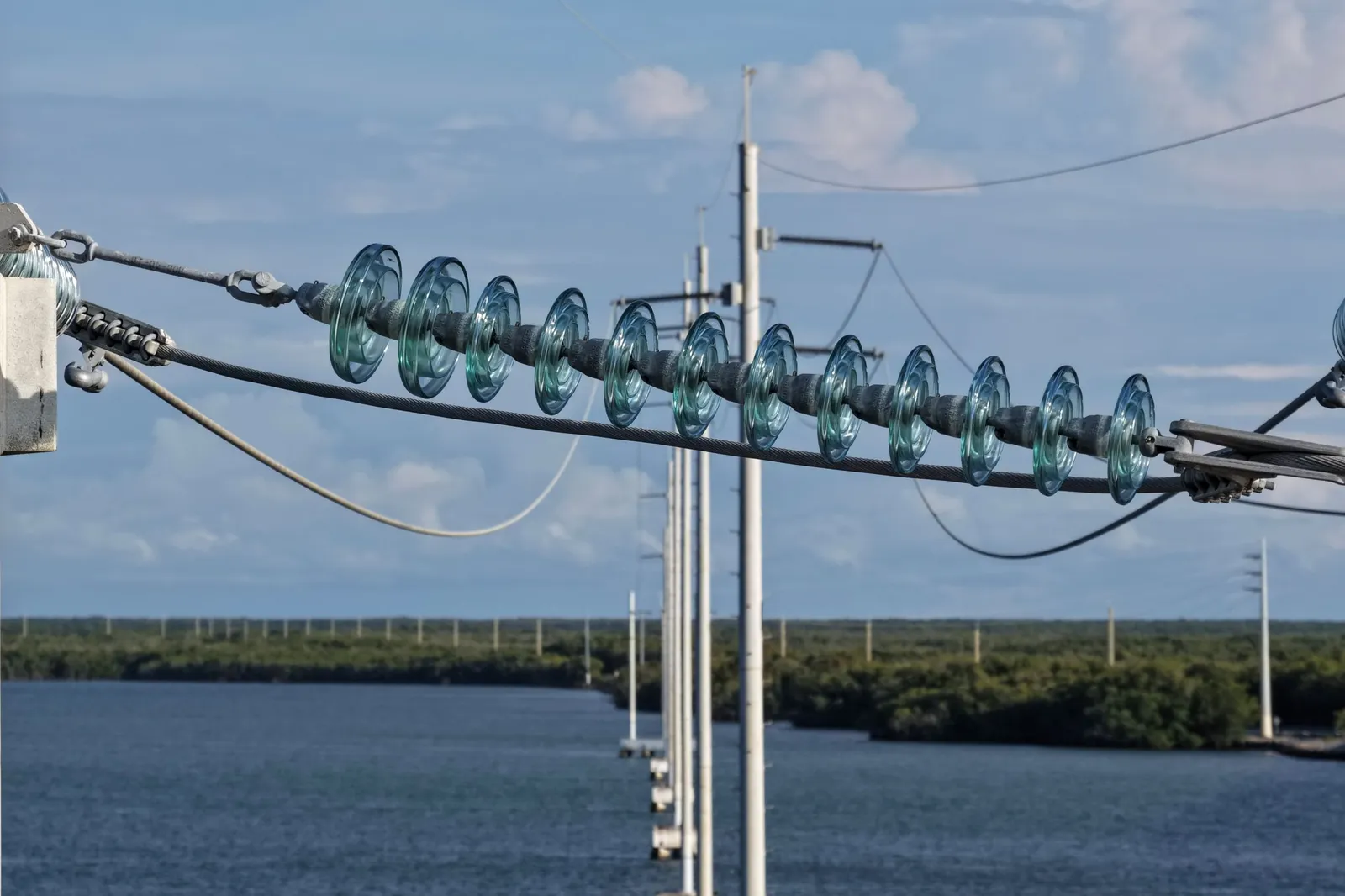
High voltage power lines

High-voltage power lines run along the electrical power grid on Jan. 14, 2026, in Miami, Fla. Transmission and distribution costs have risen in recent years. 

Joe Raedle via Getty Images

There is a “regulatory gap in how transmission gets approved and then put on bills of utilities in parts of the country,” Daniel said. “We are building, essentially, the wrong type of transmission.”

Utilities are building local, supplemental projects “that undergo less scrutiny and still deliver a high rate of return, instead of the larger transmission projects that deliver on affordability and reliability,” he said. A 2024 RMI report, for instance, found that in New England, annual spending on local transmission projects increased eightfold from 2016, to nearly $800 million in 2023. The Berkeley Lab study found that overall, investor-owned utilities’ inflation-adjusted spending on distribution and transmission increased from 2019 to 2024 while generation costs declined.

Paul Cicio, chair of the Electricity Transmission Competition Coalition and president of the Industrial Energy Consumers of America, said the fault lies with regulators.

In 2011, the Federal Energy Regulatory Commission issued Order 1000, which requires large transmission projects be subject to competitive bidding. But it made an exception for projects necessary for short-term reliability.


“These are massive amounts of layered in dollars and consumers are on the hook … The cake is baked.”

Paul Cicio

Chair of the Electricity Transmission Competition Coalition and President of the Industrial Energy Consumers of America


The result, Cicio said, was that just 5% of transmission projects are now being competitively bid. The “loophole” was supposed to be closed in 2024 with FERC Order 1920, but the order did not include ratepayer cost containment provisions, he added.

“FERC needs to close that loophole and require that these projects are competitively bid between utilities,” Cicio said. “Affordability is becoming a national political issue. … Electricity costs are now on everybody’s radar.”

Utilities have spent almost $154 billion annually on transmission investments in the last five years, said Cicio, “but that’s only the initial cost.”

When FERC incentives and financing charges are factored in, the cost to consumers winds up being almost $1.8 trillion on transmission in the last five years, he noted.

“These are massive amounts of layered-in dollars, and consumers are on the hook,” Cicio said. “The cake is baked.”

Storms and wildfires require grid upgrades

Industry sources and grid planners say that in addition to building out transmission and distribution, utilities also have to harden the grid in the face of more destructive storms and wildfires. 

Last year, U.S. residents lost more power than any year in the previous decade, according to the EIA, with hurricanes a leading cause. The annual average of 11 hours of electricity interruptions was nearly double the annual average of the last 10 years, it said.

On top of the costs of physical grid hardening, the cost of insurance also contributes to higher bills.

In California, which has some of the highest electricity prices in the country, wildfire mitigation efforts cost ratepayers $27 billion between 2019 and 2023, with 40% of that coming from insurance costs, according to the World Resources Institute.
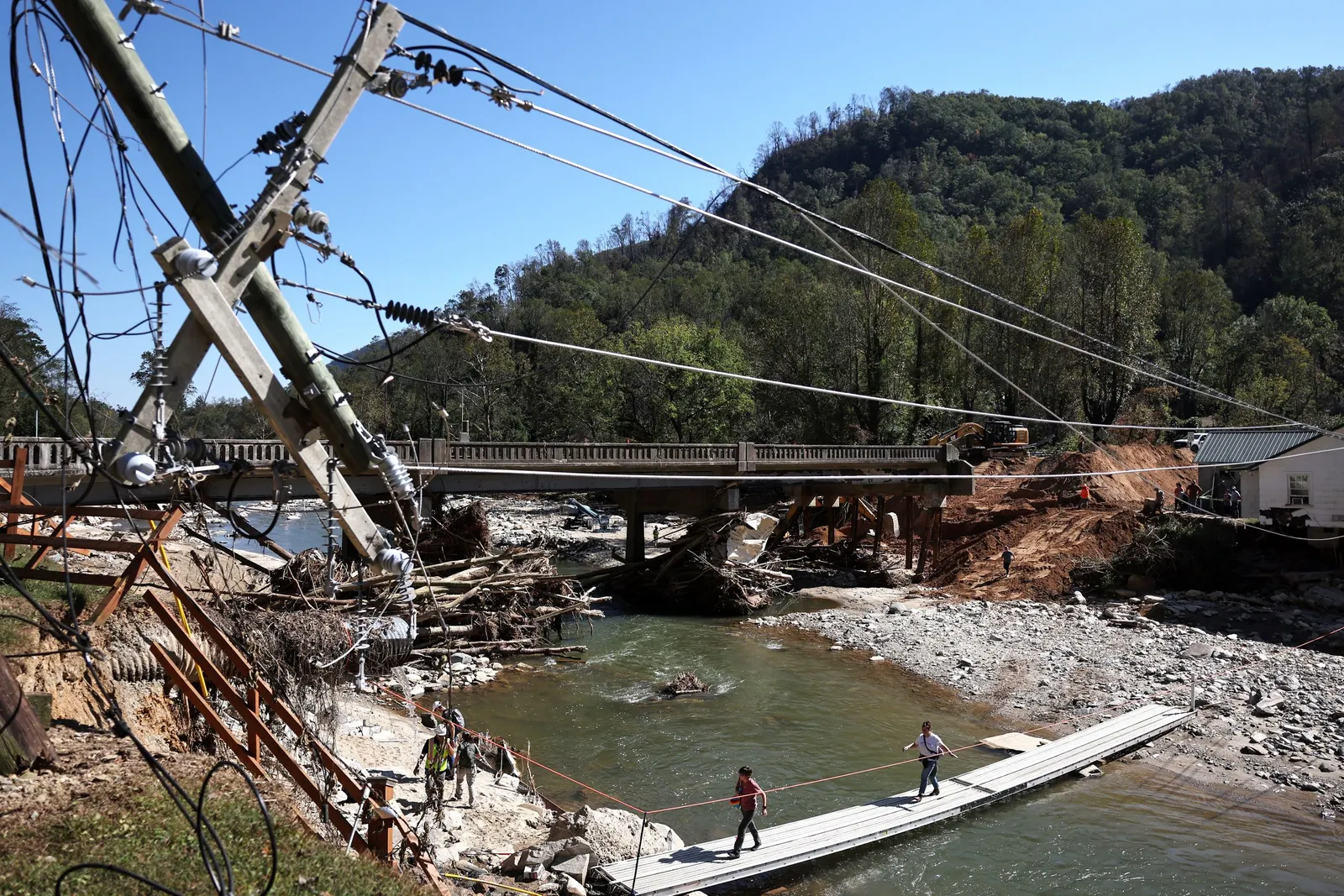
People walk across a makeshift bridge as a damaged bridge is repaired.

A damaged utility pole is seen as people walk across a makeshift bridge in the aftermath of Hurricane Helene flooding on Oct. 8, 2024, in Bat Cave, N.C. Storms and wildfires require costly grid repaids and upgrades.

Mario Tama via Getty Images

The cost of decarbonization

State policies driving decarbonization can also lead to higher prices, some say.

The Berkeley Lab report linked price increases in recent years to net metered behind-the-meter solar and renewable portfolio standard programs. 

States with RPS programs that called for new supplies in the last five years increased retail electricity prices by about 0.4 cents/kWh, the study said. It also found, however, that electricity prices were unaffected by “market-based” utility-scale renewable energy projects built outside of RPS mandates.

Those and other findings are driving some states to rethink their policies. Pennsylvania Republicans forced the state to withdraw from the Regional Greenhouse Gas Initiative last year, for instance, over affordability concerns. 

“Programs like RGGI have seen pretty significant [cost] increases,” said Brown from the Consumer Energy Alliance. Program revenues could be returned to consumers, or expenses capped, he said.

Gifford said states with carbon reduction deadlines may need to rapidly to squeeze out a final 20% of carbon-emitting resources. “You could imagine some of those states reconsidering those mandates or creating a political face-saving way to back off,” he said. “But some of those transition costs are baked in already.”

LNG exports contribute to volatile gas prices

Natural gas prices are one of the biggest determinants of power prices because gas generators tend to set the marginal price of electricity in organized markets, and vertically integrated utilities directly pass fuel costs on to consumers.

The EIA expects the spot price of natural gas at Henry Hub to go down this year by 2% from 2025 before rising against in 2027.

“Natural gas prices increase in our forecast because growth in demand — led by expanding liquefied natural gas exports and more natural gas consumption in the electric power sector — will outpace production growth,” it said.

A ship cruises up a riven near a large industrial facility.

A cargo ship passes by the Cheniere Energy liquefied natural gas plant on Feb. 10, 2025, in Port Arthur, Texas. Rising LNG exports are helping drive up gas prices domestically, according to experts and government agencies. 

Brandon Bell via Getty Images

The advocacy group Public Citizen published a report in December arguing the Trump administration’s policies to increase liquefied natural gas exports are driving higher fuel costs and volatility, and, ultimately, higher electricity bills. Under President Trump, DOE has worked to aggressively increase exports, which the agency says are approximately 25% above 2024 levels.

An average U.S. household paid over $124 more on its utility bills in the first nine months of 2025 than in the same period a year earlier due to rising natural gas prices, according to the report.

“And the driver of this, that everyone in the industry acknowledges, is overwhelmingly record LNG exports that are just getting bigger and bigger,” said Tyson Slocum, director of Public Citizen’s energy program.

Eight U.S. LNG export facilities now use more natural gas than all 74 million domestic gas utility household consumers, he said, adding: “That’s madness.”

“If you start to take steps to reduce demand by LNG exporters, it is going to have a downward effect on domestic gas prices,” Slocum said.

Customer support solutions

While experts and government agencies that track electricity prices see little hope for relief this year, some utilities and states are emphasizing bill assistance and other programs intended to help lower-income households in particular.

But NEADA’s Wolfe said the programs don’t go far enough, and changes are necessary, particularly for low-income customers. 

“There should be no charge,” he said, for a “base amount of electricity for very-low-income families.”

NEADA has also been critical of the Trump administration’s attitude toward the Low Income Home Energy Assistance Program, known as LIHEAP, a federally-funded, state-administered utility bill assistance program that has helped families afford power for decades. 

In April, the Department of Health and Human Services fired the entire LIHEAP program staff, and the administration proposed eliminating funding for the program in fiscal year 2026. The future of the program remains uncertain as lawmakers negotiate government funding. 

Even if LIHEAP survives, its budget would need to be increased “maybe 5-10 times in order to actually fully address the problem,” said Daniel. 

Utilities and governments should lean into low-income programs that directly provide energy assistance and support, he said.

Fewer unpaid bills means fewer utility write-offs, which ultimately are paid by all customers. Those programs “tend to be far more cost-effective than we used to think,” he said, and “actually could drive down rates and bills for everybody.”


Shape
Shape
Stay Ahead

Explore More Insights

Stay ahead with more perspectives on cutting-edge power, infrastructure, energy,  bitcoin and AI solutions. Explore these articles to uncover strategies and insights shaping the future of industries.

Shape

Forward Networks launches agentic AI system built on network digital twin

The practical difference becomes clear in troubleshooting workflows. When asked to triage a ServiceNow ticket, the agent reads the ticket content, gathers context about entities mentioned from the digital twin, automatically performs path traces for connectivity issues, and returns a diagnosis. The complete workflow remains visible to operators throughout the

Read More »

Top 11 network outages and application failures of 2025

Asana: February 5 & 6 Duration: Two consecutive outages, with the second lasting approximately 20 minutes Symptoms: Service unavailability and degraded performance Cause: A configuration change overloaded server logs on February 5, causing servers to restart. A second outage with similar characteristics occurred the following day. Takeaways: “This pair of

Read More »

Introducing CodeMender: an AI agent for code security

While large language models are rapidly improving, mistakes in code security could be costly. CodeMender’s automatic validation process ensures that code changes are correct across many dimensions by only surfacing for human review high-quality patches that, for example, fix the root cause of the issue, are functionally correct, cause no

Read More »

Cisco adds intelligent policy enforcement to mesh firewall family

Deploy policies automatically: New or updated Layer 3/4 (L3/L4) policies can be created and applied to the appropriate firewalls within minutes. This is a stark contrast to traditional processes that can take weeks and often require back-and-forth with the application owner. Avoid rip-and-replace: The engine supports a hybrid mesh firewall

Read More »

Exxon, Chevron Lift Oil Production, Blunting Price Drop

Exxon Mobil Corp. and Chevron Corp. surpassed profit expectations as higher oil production helped offset the blow from lower crude prices.  The titans of the US oil industry expanded output from the US Permian Basin, Guyana and other regions. For Exxon, full-year production hit a 40-year high while Chevron benefited from the integration of its $48 billion takeover of Hess Corp. The outperformance comes as major US drillers face growing pressure to assist in the Trump administration’s aspiration to revive the Venezuelan oil sector after the ouster of strongman Nicolas Maduro.   Chevron intends to finance a 50% increase in its Venezuelan oil production with cash from oil sales rather than committing new capital to the country, Chief Financial Officer Eimear Bonner said during an interview.  As the only major oil explorer with ongoing operations in the South American nation, Chevron has a leg up on rivals that departed years ago during a nationalization campaign by Maduro’s predecessor, the late former leader Hugo Chavez. Late Thursday, The Trump administration took steps to begin relaxing some of the punishing sanctions that have isolated the Venezuelan energy industry. The move gives other US companies the go-ahead to work with the state-controlled oil producer, with restrictions such as a prohibition on transactions with Chinese-tied entities.   Exxon’s adjusted fourth-quarter net income of $1.71 a share was 2 cents higher than the average estimate in a Bloomberg survey. Chevron earned $1.52 a share, 14 cents higher than expected. For both companies, debt ratios crept higher during the final three months of 2025. Exxon shares fell 1% at 9:35 a.m. in New York. Chevron rose 1.1%. “We’re capturing more value from every barrel and molecule we produce and building growth platforms at scale,” Chief Executive Officer Darren Woods said in a statement. The strategy is “creating a

Read More »

2026 US power sector outlook

In 2026, the electric utility sector faces unprecedented load growth that is challenging the physical infrastructure of the grid and the regulatory and market structures that have guided its development for decades. Federal and state authorities are at odds over who will manage this growth as officials come under pressure over rising costs. At the same time, the Trump administration has moved to exert more direct control over the power system under the banner of “energy dominance.” The stories in our 2026 outlook series below comprise a road map to the year ahead, including what to expect from the Federal Energy Regulatory Commission, the impacts of new federal policy on renewables and other resources, and technological advances that promise to unlock new efficiencies. We’re tracking the biggest trends rewriting the rules of how the U.S. produces and delivers power heading into what is sure to be a defining year for energy. 

Read More »

Customers, don’t expect electric bill relief in 2026: ‘The cake is baked.’

Listen to the article 16 min This audio is auto-generated. Please let us know if you have feedback. Rising energy demand, inflation, grid investment, extreme weather and volatile fuel costs are increasing the cost of electricity faster than many households can keep up, and there are no easy fixes, experts say. Mitigating the problem would require threading a needle of policy alternatives, but even with the right policies, it will take time to reduce customer energy burdens. The U.S. Energy Information Administration puts the national average residential price per kilowatt hour in 2026 at 18 cents, up approximately 37% from 2020. “I don’t see hidden costs that can be suddenly squeezed out of the system,” said Ray Gifford, managing partner of Wilkinson Barker Knauer’s Denver office and former chair of the Colorado Public Utilities Commission. “You are talking about an industry where most of the costs are fixed, and the assets are long-lived.” Energy affordability has recently become politically salient, but for many low-income people, “the energy affordability crisis is not new,” said Joe Daniel, a principal on the Rocky Mountain Institute’s carbon free electricity team. In 2017, 25% of all U.S. households — more than 30 million — faced a high energy burden, defined as paying more than 6% of income on energy bills, according to a report from the American Council for an Energy-Efficient Economy. For the poorest, it can be much higher. Households making less than 30% of area median income paid about 11% of their income for electricity alone, according to data from the Department of Energy covering the years 2018 to 2022.  The Department of Energy’s Low-Income Energy Affordability Data Tool shows households’ energy burden in the lower 48 states and Washington, D.C. The data is based on the American Community Survey 5-year Estimates for 2018-2022. Retrieved from

Read More »

Energy Department Extends Emergency Orders in the Carolinas and Mid-Atlantic Ahead of Second Winter Storm

Secretary Wright extends four emergency orders to stabilize grids in the Carolinas and the Mid-Atlantic, deploy backup generation, save lives, and lower costs ahead of the second major winter storm in a week. WASHINGTON—The U.S. Department of Energy (DOE) overnight extended four emergency orders to mitigate the risk of blackouts in the Carolinas and the Mid-Atlantic ahead of extended winter weather, with below freezing temperatures projected over the weekend and into early next week. Pursuant to Section 202(c) of the Federal Power Act, two orders were issued to Duke Energy Carolinas, LLC and Duke Energy Progress (collectively, Duke Energy) and two were issued to PJM Interconnection, LLC (PJM).  Duke Energy and PJM requested these extensions because the emergency conditions will persist beyond the term of the original orders. The original orders were issued on January 24, 2026 and January 26, 2026.  “Winter Storm Fern proves that decisive action by the Trump Administration is crucial to reversing the dangerous energy subtraction agenda of the previous administration,” said U.S. Secretary of Energy Chris Wright. “Those policies weakened the grid and left Americans more vulnerable. We are doing everything in our power to reverse those reckless decisions. The Trump Administration is committed to using every available tool, and unleashing all available power generation, to keep the lights on and Americans safe.” On day one, President Trump declared a national energy emergency after the Biden Administration’s energy subtraction agenda left behind a grid increasingly vulnerable to blackouts. According to the North American Electric Reliability Corporation (NERC), “Winter electricity demand is rising at the fastest rate in recent years,” while the premature forced closure of reliable generation such as coal and natural gas plants leaves American families vulnerable to power outages. The NERC 2025 – 2026 Winter Reliability Assessment further warns that areas across the

Read More »

NERC forecasts peak demand to rise 24% on new data center loads

Listen to the article 5 min This audio is auto-generated. Please let us know if you have feedback. Dive Brief: Reliability risks are spreading across the bulk electric system, driven by soaring peak demand forecasts and lagging resource additions, the North American Electric Reliability Corp. said Thursday in its annual Long Term Reliability Assessment.  Summer peak demand across the bulk system is forecast to grow by 224 GW over the next 10 years, a more than 69% increase over the 2024 LTRA forecast and a 24% increase from 2025 peak demand, NERC said. New data centers account for most of the projected increase. Winter demand growth is even higher, with 246 GW of growth forecast over the next decade. The Midcontinent Independent System Operator, PJM Interconnection, Electric Reliability Council of Texas and parts of the Pacific Northwest all face a high risk of insufficient reserve margins or exceeding unserved energy criteria at some point within the next five years, according to the report.    Dive Insight: “The system is changing faster than the infrastructure needed to support it,” John Moura, NERC’s director of reliability assessments and performance analysis, said in a call with reporters. We are “in a period here where future electricity supply has never been more uncertain.” From 2024 to 2025, existing capacity from fossil-fueled generators fell by 21 GW, while bulk power system capacity for peak demand hours from battery, wind, and solar resources increased by 23 GW, according to the report. Bulk power system capacity “fell short of projections this year,” said Mark Olson, NERC’s manager of reliability assessments. “And that was the case last year as well,” he added. Delays in connecting new resources and unanticipated generator retirements are the cause of the miss. In a change from last year’s LTRA, NERC said solar PV is no longer the

Read More »

Texas RRC Reveals Latest Oil, Gas Production Figures

The Railroad Commission of Texas (RRC) revealed its latest preliminary crude oil and natural gas production figures, which were for October last year, in a statement posted on its website recently. The preliminary reported total volume of crude oil in Texas in October 2025 was 125,078,417 barrels, according to the statement, which showed that the preliminary reported total volume of natural gas in the state during the same month was 957.0 billion cubic feet. The RRC noted in the statement that crude oil and natural gas production for October 2025 came from 157,228 oil wells and 84,019 gas wells. In its statement, the RRC highlighted that crude oil production reported by the RRC is limited to oil produced from oil leases and does not include condensate, which the organization said is reported separately by the RRC. The RRC also pointed out in the statement that preliminary figures are based on production volumes reported by operators and said they will be updated as late and corrected production reports are received. The RRC’s statement showed that the updated reported total volume of crude oil in Texas in October 2024 was 149,680,107 barrels. The preliminary reported total volume was 122,145,230 barrels, the statement highlighted. It showed that the updated reported total volume of natural gas in the state came in at 1.12 trillion cubic feet in October 2024. The preliminary reported total volume was 898.8 billion cubic feet, the statement outlined. According to the RRC’s statement, the county in Texas with the highest preliminary crude oil production figure in October 2025 was Martin, with 19,906,130 barrels. Midland ranked second, with 18,076,141 barrels, Loving was third, with 8,545,374 barrels, Upton was fourth, with 8,436,384 barrels, Reeves was fifth, with 6,374,887 barrels, Karnes was sixth, with 5,797,349 barrels, Reagan was seventh, with 5,603,608 barrels, Howard was

Read More »

Network engineers take on NetDevOps roles to advance stalled automation efforts

What NetDevOps looks like Most enterprises begin their NetDevOps journey modestly by automating a limited set of repetitive, lower-level tasks. Nearly 70% of enterprises pursuing infrastructure automation start with task-level scripting, rather than end-to-end automation, according to theCUBE Research’s AppDev Done Right Summit. This can include using tools such as Ansible or Python scripts to standardize device provisioning, configuration changes, or other routine changes. Then, more mature teams adopt Git for version control, define golden configurations, and apply basic validation before and after changes, explains Bob Laliberte, principal analyst at SiliconANGLE and theCUBE. A smaller group of enterprises extends automation efforts into complete CI/CD-style workflows with consistent testing, staged deployments, and automated verification, Laliberte adds. This capability is present in less than 25% of enterprises today, according to theCUBE, and it is typically focused on specific domains such as data center fabric or cloud networking. NetDevOps usually exists with the network organization as a dedicated automation or platform subgroup, and more than 60% of enterprises anchor NetDevOps initiatives within traditional infrastructure teams rather than application or platform engineering groups, according to Laliberte. “In larger enterprises, NetDevOps capabilities are increasingly centralized within shared infrastructure or platform teams that provide tooling, pipelines, and guardrails across compute, storage, and networking,” Laliberte says. “In more advanced or cloud-native environments, network specialists may be embedded within application, site reliability engineering (SRE), or platform teams, particularly where networking directly impacts application performance.” Transforming work At its core, NetDevOps isn’t just about changing titles for network engineers. It is about changing workflows, behaviors, and operating models across network operations.

Read More »

China clears Nvidia H200 sales to tech giants, reshaping AI data center plans

China is also accelerating efforts to strengthen domestic training chip design and manufacturing capabilities, with the strategic objective of reducing long-term dependence on foreign suppliers, Zeng added. Things could get more complex if authorities mandated imported chips to be deployed alongside domestically produced accelerators. Reuters has reported that this may be a possibility. “A mandated bundling requirement would create a heterogeneous computing environment that significantly increases system complexity,” Zeng said. “Performance inconsistencies and communication protocol disparities across different chip architectures would elevate O&M [operations and maintenance] overhead and introduce additional network latency.” However, the approvals are unlikely to close the gap with US hyperscalers, Zeng said, noting that the H200 remains one generation behind Nvidia’s Blackwell architecture and that approved volumes fall well short of China’s overall demand. Implications for global enterprises For global enterprise IT and network leaders, the move adds another variable to long-term AI infrastructure planning. Expanded sales of Nvidia’s H200 chips could help the company increase production scale, potentially creating room to ease pricing for Western enterprises deploying H200-based AI infrastructure, said Neil Shah, VP for research at Counterpoint Research.

Read More »

Nuclear safety rules quietly rewritten to favor AI

‘Referee now plays for the home team’ Kimball pointed out that while an SMR works on the same principle as a large-scale nuclear plant, using controlled fission to generate heat which is then converted to electricity, its design reduces environmental impacts such as groundwater contamination, water use, and the impact in the event of failure. For example, he said, the integral reactor design in an SMR, with all components in a single vessel, eliminates external piping. This means that accidents would be self-contained, reducing the environmental impact. In addition, he said, SMRs can be air-cooled, which greatly reduces the amount of water required. “These are just a couple of examples of how an SMR differs from the large industrial nuclear power plants we think of when we think of nuclear power.”  Because of differences like this, said Kimball, “I can see where rules generated/strengthened in the post-Three Mile Island era might need to be revisited for this new nuclear era. But it is really difficult to speak to how ‘loose’ these rules have become, and whether distinctions between SMRs and large-scale nuclear plants comprise the majority of the changes reported.” Finally, he said, “I don’t think I need to spend too many words on articulating the value of nuclear to the hyperscale or AI data center. The era of the gigawatt datacenter is upon us, and the traditional means of generating power can’t support this insatiable demand. But we have to ensure we deploy power infrastructure, such as SMRs, in a responsible, ethical, and safe manner.”  Further to that, Gogia pointed out that for CIOs and infrastructure architects, the risks extend well beyond potential radiation leaks. “What matters more immediately is that system anomalies — mechanical, thermal, software-related — may not be documented, investigated, or escalated with the diligence one would expect from

Read More »

Mplify launches AI-focused Carrier Ethernet certifications

“We didn’t want to just put a different sticker on it,” Vachon said. “We wanted to give the opportunity for operators to recertify their infrastructure so at least you’ve now got this very competitive infrastructure.” Testing occurs on live production networks. The automated testing platform can be completed in days once technical preparation is finished. Organizations pay once per certification with predictable annual maintenance fees required to keep certifications active. Optional retesting can refresh certification test records. Carrier Ethernet for AI The Carrier Ethernet for AI certification takes the business certification baseline and adds a performance layer specifically designed for AI workloads. Rather than creating a separate track, the AI certification requires providers to first complete the Carrier Ethernet for Business validation, then demonstrate they can meet additional stringent requirements. “What we identified was that there was another tier that we could produce a standard around for AI,” Vachon explained. “With extensive technical discussions with our membership, our CTO, and our director of certification, they identified the critical performance and functionality parameters.” The additional validation focuses on three key performance parameters: frame delay, inter-frame delay variation, and frame loss ratio aligned with AI workload requirements. Testing uses MEF 91 test requirements with AI-specific traffic profiles and performance objectives that go beyond standard business service thresholds. The program targets three primary use cases: connecting subscriber premises running AI applications to AI edge sites, interconnecting AI edge sites to AI data centers, and AI data center to data center interconnections.

Read More »

Gauging the real impact of AI agents

That creates the primary network issue for AI agents, which is dealing with implicit and creeping data. There’s a singular important difference between an AI agent component and an ordinary software component. Software is explicit in its use of data. The programming includes data identification. AI is implicit in its data use; the model was trained on data, and there may well be some API linkage to databases that aren’t obvious to the user of the model. It’s also often true that when an agentic component is used, it’s determined that additional data resources are needed. Are all these resources in the same place? Probably not. The enterprises with the most experience with AI agents say it would be smart to expect some data center network upgrades to link agents to databases, and if the agents are distributed away from the data center, it may be necessary to improve the agent sites’ connection to the corporate VPN. As agents evolve into real-time applications, this requires they also be proximate to the real-time system they support (a factory or warehouse), so the data center, the users, and any real-time process pieces all pull at the source of hosting to optimize latency. Obviously, they can’t all be moved into one place, so the network has to make a broad and efficient set of connections. That efficiency demands QoS guarantees on latency as well as on availability. It’s in the area of availability, with a secondary focus on QoS attributes like latency, that the most agent-experienced enterprises see potential new service opportunities. Right now, these tend to exist within a fairly small circle—a plant, a campus, perhaps a city or town—but over time, key enterprises say that their new-service interest could span a metro area. They point out that the real-time edge applications

Read More »

Photonic chip vendor snags Gates investment

“Moore’s Law is slowing, but AI can’t afford to wait. Our breakthrough in photonics unlocks an entirely new dimension of scaling, by packing massive optical parallelism on a single chip,” said Patrick Bowen, CEO of Neurophos. “This physics-level shift means both efficiency and raw speed improve as we scale up, breaking free from the power walls that constrain traditional GPUs.” The new funding includes investments from Microsoft’s investment fund M12 that will help speed up delivery of Neurophos’ first integrated photonic compute system, including datacenter-ready OPU modules. Neurophos is not the only company exploring this field. Last April, Lightmatter announced the launch of photonic chips to tackle data center bottlenecks, And in 2024, IBM said its researchers were exploring optical chips and developing a prototype in this area.

Read More »

Microsoft will invest $80B in AI data centers in fiscal 2025

And Microsoft isn’t the only one that is ramping up its investments into AI-enabled data centers. Rival cloud service providers are all investing in either upgrading or opening new data centers to capture a larger chunk of business from developers and users of large language models (LLMs).  In a report published in October 2024, Bloomberg Intelligence estimated that demand for generative AI would push Microsoft, AWS, Google, Oracle, Meta, and Apple would between them devote $200 billion to capex in 2025, up from $110 billion in 2023. Microsoft is one of the biggest spenders, followed closely by Google and AWS, Bloomberg Intelligence said. Its estimate of Microsoft’s capital spending on AI, at $62.4 billion for calendar 2025, is lower than Smith’s claim that the company will invest $80 billion in the fiscal year to June 30, 2025. Both figures, though, are way higher than Microsoft’s 2020 capital expenditure of “just” $17.6 billion. The majority of the increased spending is tied to cloud services and the expansion of AI infrastructure needed to provide compute capacity for OpenAI workloads. Separately, last October Amazon CEO Andy Jassy said his company planned total capex spend of $75 billion in 2024 and even more in 2025, with much of it going to AWS, its cloud computing division.

Read More »

John Deere unveils more autonomous farm machines to address skill labor shortage

Join our daily and weekly newsletters for the latest updates and exclusive content on industry-leading AI coverage. Learn More Self-driving tractors might be the path to self-driving cars. John Deere has revealed a new line of autonomous machines and tech across agriculture, construction and commercial landscaping. The Moline, Illinois-based John Deere has been in business for 187 years, yet it’s been a regular as a non-tech company showing off technology at the big tech trade show in Las Vegas and is back at CES 2025 with more autonomous tractors and other vehicles. This is not something we usually cover, but John Deere has a lot of data that is interesting in the big picture of tech. The message from the company is that there aren’t enough skilled farm laborers to do the work that its customers need. It’s been a challenge for most of the last two decades, said Jahmy Hindman, CTO at John Deere, in a briefing. Much of the tech will come this fall and after that. He noted that the average farmer in the U.S. is over 58 and works 12 to 18 hours a day to grow food for us. And he said the American Farm Bureau Federation estimates there are roughly 2.4 million farm jobs that need to be filled annually; and the agricultural work force continues to shrink. (This is my hint to the anti-immigration crowd). John Deere’s autonomous 9RX Tractor. Farmers can oversee it using an app. While each of these industries experiences their own set of challenges, a commonality across all is skilled labor availability. In construction, about 80% percent of contractors struggle to find skilled labor. And in commercial landscaping, 86% of landscaping business owners can’t find labor to fill open positions, he said. “They have to figure out how to do

Read More »

2025 playbook for enterprise AI success, from agents to evals

Join our daily and weekly newsletters for the latest updates and exclusive content on industry-leading AI coverage. Learn More 2025 is poised to be a pivotal year for enterprise AI. The past year has seen rapid innovation, and this year will see the same. This has made it more critical than ever to revisit your AI strategy to stay competitive and create value for your customers. From scaling AI agents to optimizing costs, here are the five critical areas enterprises should prioritize for their AI strategy this year. 1. Agents: the next generation of automation AI agents are no longer theoretical. In 2025, they’re indispensable tools for enterprises looking to streamline operations and enhance customer interactions. Unlike traditional software, agents powered by large language models (LLMs) can make nuanced decisions, navigate complex multi-step tasks, and integrate seamlessly with tools and APIs. At the start of 2024, agents were not ready for prime time, making frustrating mistakes like hallucinating URLs. They started getting better as frontier large language models themselves improved. “Let me put it this way,” said Sam Witteveen, cofounder of Red Dragon, a company that develops agents for companies, and that recently reviewed the 48 agents it built last year. “Interestingly, the ones that we built at the start of the year, a lot of those worked way better at the end of the year just because the models got better.” Witteveen shared this in the video podcast we filmed to discuss these five big trends in detail. Models are getting better and hallucinating less, and they’re also being trained to do agentic tasks. Another feature that the model providers are researching is a way to use the LLM as a judge, and as models get cheaper (something we’ll cover below), companies can use three or more models to

Read More »

OpenAI’s red teaming innovations define new essentials for security leaders in the AI era

Join our daily and weekly newsletters for the latest updates and exclusive content on industry-leading AI coverage. Learn More OpenAI has taken a more aggressive approach to red teaming than its AI competitors, demonstrating its security teams’ advanced capabilities in two areas: multi-step reinforcement and external red teaming. OpenAI recently released two papers that set a new competitive standard for improving the quality, reliability and safety of AI models in these two techniques and more. The first paper, “OpenAI’s Approach to External Red Teaming for AI Models and Systems,” reports that specialized teams outside the company have proven effective in uncovering vulnerabilities that might otherwise have made it into a released model because in-house testing techniques may have missed them. In the second paper, “Diverse and Effective Red Teaming with Auto-Generated Rewards and Multi-Step Reinforcement Learning,” OpenAI introduces an automated framework that relies on iterative reinforcement learning to generate a broad spectrum of novel, wide-ranging attacks. Going all-in on red teaming pays practical, competitive dividends It’s encouraging to see competitive intensity in red teaming growing among AI companies. When Anthropic released its AI red team guidelines in June of last year, it joined AI providers including Google, Microsoft, Nvidia, OpenAI, and even the U.S.’s National Institute of Standards and Technology (NIST), which all had released red teaming frameworks. Investing heavily in red teaming yields tangible benefits for security leaders in any organization. OpenAI’s paper on external red teaming provides a detailed analysis of how the company strives to create specialized external teams that include cybersecurity and subject matter experts. The goal is to see if knowledgeable external teams can defeat models’ security perimeters and find gaps in their security, biases and controls that prompt-based testing couldn’t find. What makes OpenAI’s recent papers noteworthy is how well they define using human-in-the-middle

Read More »