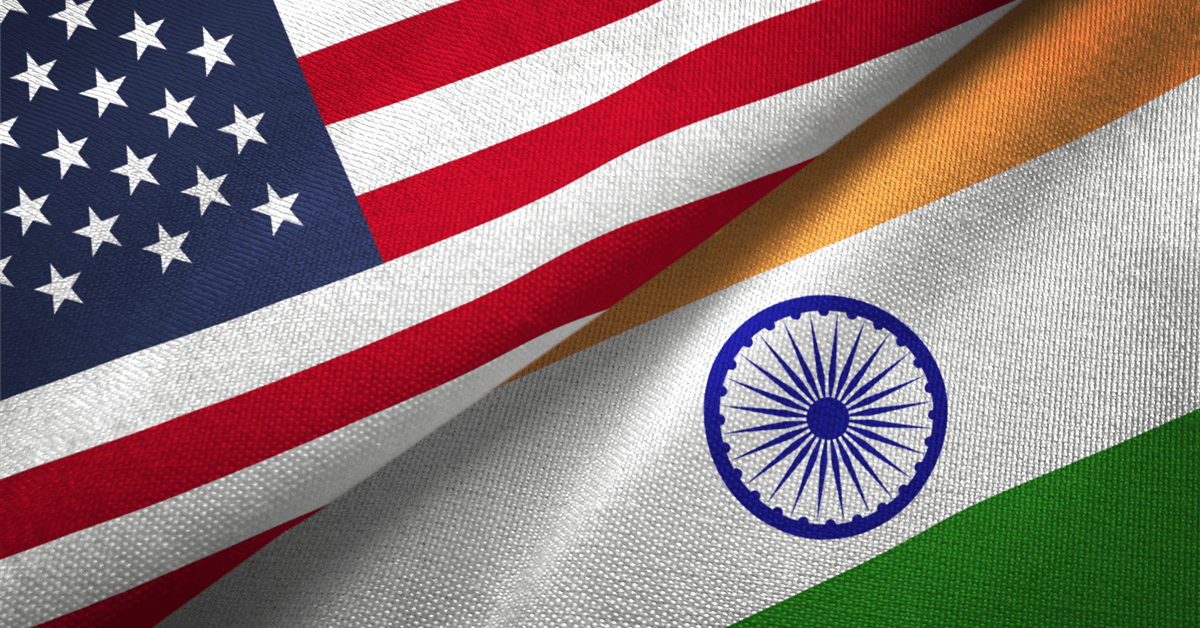
President Donald Trump said he would roll back punitive tariffs on India in return for an agreement that Prime Minister Narendra Modi would stop buying Russian oil, easing months of tension between the two countries.
Following a phone call with Modi, Trump said on social media that he would cut a US levy on Indian goods to 18% from 25%. The US president is also removing an extra punitive 25% duty applied in response to India’s purchases of crude from Russia, according to officials familiar with the matter.
India would “move forward to reduce their Tariffs and Non Tariff Barriers against the United States, to ZERO”, Trump wrote, as well as purchase “over $500 BILLION DOLLARS of U.S. Energy, Technology, Agricultural, Coal, and many other products.”
Modi confirmed the pact, posting on social media that “Made in India products will now have a reduced tariff of 18%.” He did not provide further details on oil or on agricultural imports, a major sticking point for New Delhi.
Wonderful to speak with my dear friend President Trump today. Delighted that Made in India products will now have a reduced tariff of 18%. Big thanks to President Trump on behalf of the 1.4 billion people of India for this wonderful announcement.
When two large economies and the…
— Narendra Modi (@narendramodi) February 2, 2026
India has not traditionally been an importer of Russian crude, but emerged as a key buyer in the aftermath of Moscow’s 2022 invasion of Ukraine, as trade flows were upended and discounts became attractive. The Trump administration’s efforts to choke off Russia’s flows to India have slowed shipments, but not halted them.
In October, Trump also announced Modi had agreed to cease purchases of Russian oil. Without a firm trade deal in place, though, Indian refiners continued to buy cheap crude from Moscow. Later the same month, the US imposed sanctions on Russia’s biggest oil producers, Rosneft PJSC and Lukoil PJSC, diminishing appetite more significantly.
The news offers significant relief for New Delhi, which has sought for months to negotiate a lower rate with Washington. India ships almost a fifth of its total exports to the US and Trump’s tariffs of 50% amounted to the highest rate on products from any major trading partner.
The reduction could boost India’s attractiveness as an alternative manufacturing hub to China. At 18%, India’s tariff is lower than Vietnam’s 20% rate and the 19% for most of Southeast Asia.
“The 18% tariff brings the rate in line to India’s peers,” said Garima Kapoor, an economist at Elara Securities India Pvt Ltd. It’s likely to “generate positive tariff differential for India,” she said.
The change could also boost Indian GDP growth by around 0.2 to 0.3 percentage points this year, pushing it closer to 7%, according to Shilan Shah, deputy chief emerging market economist at Capital Economics. wrote — versus Capital Economics’s current forecasts for growth of 6.5% for both 2026 and 2027.
“There could be geopolitical ramifications too,” Shah wrote. “Many in India would prefer to remain strategically unaligned, but if this rapprochement proves durable, India would likely gravitate back into the US bloc.”
India’s benchmark stock index Nifty 50’s futures traded at the Gujarat International Fin-Tec City surged as much as 3.2% in thin trading, while the US-listed iShares MSCI India ETF rose 3%. The rupee rallied in offshore trading, gaining 1% against the dollar.
“While devil is in the details, it removes a hanging sword over rupee, equity and rates market,” said Nilesh Shah, managing director at Kotak Mahindra AMC. “Let us hope that it is a win-win deal for both the countries as they have lot to gain through cooperation.”
The US is India’s biggest export market, and the new levies have hurt labor-intensive industries including textiles, leather, footwear, and jewelry. The latest trade figures show exports down nearly 12% in October from a year earlier, with the trade deficit hitting a record.
Lengthy Talks
India was among the first to open trade talks with the Trump administration, but ties soured after the US president repeatedly claimed credit for a ceasefire between India and Pakistan, an assertion that rankled officials in New Delhi. The tariffs further strained relations.
Signs of a thaw between the two economies emerged after Trump called Modi on his birthday in September, ratcheting down tensions and seeing the countries resume stalled trade talks. The US president in November said he could visit India at the urging of Modi.
But it wasn’t immediately clear a deal was imminent before Trump and Modi’s phone call. US Trade Representative Jamieson Greer said last Tuesday that while India had “made a lot of progress” on curbing Russian oil buys but “they still have a ways to go on this point.”
The deal’s detail will still present challenges for both sides, with questions over the exact scale of the reduction required of India’s refiners — and the issue of agricultural imports and purchases of genetically modified crops. Farmers are among Modi’s largest and most vocal constituencies.
Still, India has taken steps to appease Trump. India’s oil minister said recently that state refiners had signed their first long-term deal to import American liquefied petroleum gas.
In his Truth Social post Monday, Trump said Modi had also agreed to potentially buy more oil from Venezuela. Indian Oil Corp., the country’s largest refiner, could add Venezuelan crude to its diet, an executive at the state-owned firm said last week.
Venezuelan purchases are likely to remain peripheral compared to Russian crude, which become a mainstay for India’s refiners. Modi didn’t address Venezuelan oil purchases in his post.