Regions in a Position to Scale
California (A- overall)
California continues to lead in long-term, scenario-based transmission planning. CAISO’s most recent transmission plan identifies $4.8 billion in new projects to accommodate approximately 76 gigawatts of additional capacity by 2039, explicitly accounting for data center growth alongside broader electrification.
For data center developers, California’s challenge is less about planning quality and more about execution. Permitting timelines, cost allocation debates, and political scrutiny remain significant hurdles.
Plains / Southwest Power Pool (B- overall, A in regional planning)
SPP stands out nationally for embracing ultra-high-voltage transmission as a backbone strategy. Its recent Integrated Transmission Plans approve more than $16 billion in new projects, including multiple 765-kV lines, with benefit-cost ratios exceeding 10:1.
This approach positions the Plains region as one of the most structurally “AI-ready” grids in North America, particularly for multi-gigawatt campuses supported by wind, natural gas, and emerging nuclear resources.
Midwest / MISO (B overall)
MISO’s Long-Range Transmission Planning framework aligns closely with federal best practices, co-optimizing generation and transmission over long planning horizons. While challenges remain—particularly around interregional coordination—the Midwest is comparatively well positioned for sustained data center growth.
Regions Facing Heightened Risk
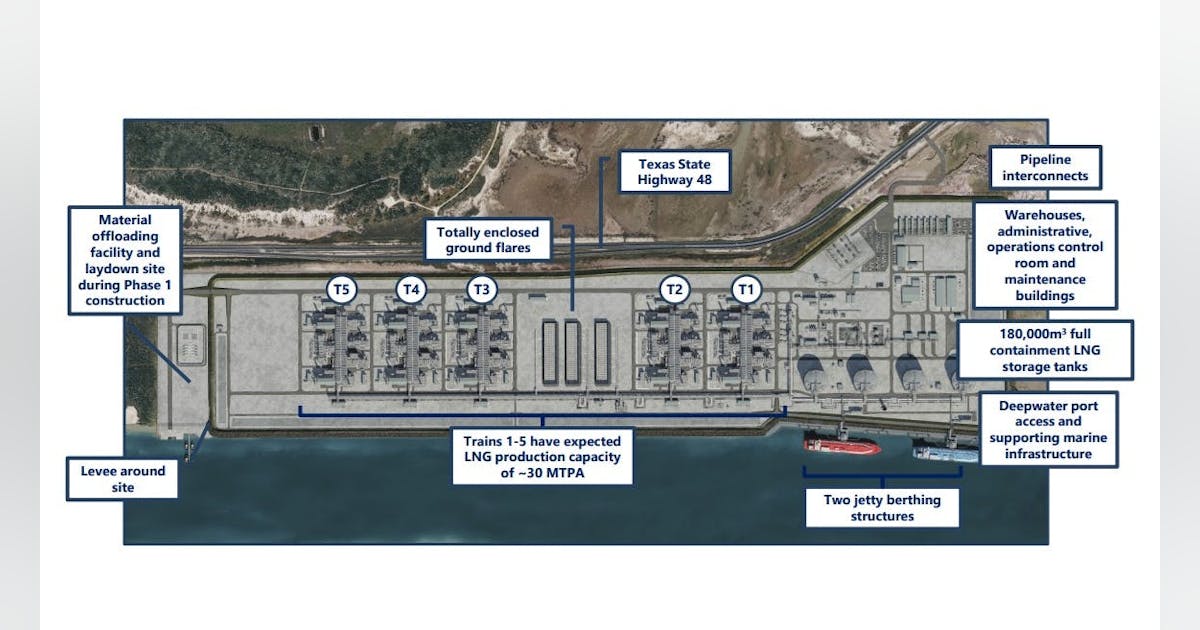
Texas / ERCOT (D- overall)
Texas has approved massive new transmission investments, including 765-kV projects tied to explosive load growth in the Permian Basin. However, the report criticizes ERCOT’s planning for remaining largely siloed and reliability-driven, with limited long-term scenario analysis and narrow benefit assessments.
For data centers, ERCOT still offers speed to market, but increasingly with risks tied to congestion, price volatility, and political backlash surrounding grid reliability.
Southeast (F overall)
The Southeast receives failing grades across all categories, with transmission development remaining fragmented, utility-driven, and largely disconnected from durable regional planning frameworks.
As AI data centers increasingly target the region for its land availability and tax incentives, the lack of coordinated transmission planning raises the likelihood of future bottlenecks, rate shocks, and community opposition.
Interregional Transmission: The Missing Link for Resilience
If regional planning gaps are concerning, the report finds even greater shortcomings in interregional transmission. Despite extensive research showing that interregional lines can deliver roughly $5 in benefits for every dollar invested, most U.S. regions plan little interregional transmission. Where coordination exists, it is often voluntary, limited to reliability studies, and constrained by misaligned assumptions and cost-allocation disputes.
For data centers, this weakness directly affects resilience. Interregional transmission functions as an insurance policy during extreme weather events, enabling regions under stress to import power from neighbors with surplus capacity. Without it, large loads face greater exposure to price spikes, curtailments, and outages.
The report highlights voluntary efforts such as the Western Transmission Expansion Coalition (WestTEC) as promising models, but notes that such initiatives lack the durability and authority required to meet future demand at scale. Voluntary coordination alone is unlikely to be sufficient going forward.
FERC Order No. 1920: Reform Arrives. But Is It Arriving Too Slowly?
Federal Energy Regulatory Commission Order No. 1920 is a central pillar of the report. The rule requires regions to adopt 20-year planning horizons, scenario-based modeling, multi-value benefit analysis, and improved cost-allocation frameworks.
Yet every region in the country has received extensions on compliance deadlines, and in many cases projects planned under the new framework may not receive approval until well into the 2030s.
For the data center industry, the mismatch is stark: AI infrastructure investment cycles operate on years, not decades. As a result, developers are increasingly moving upstream: co-funding transmission, partnering directly with utilities, or selecting sites based on grid readiness rather than traditional metrics such as fiber proximity or tax incentives.
What This Means for Data Center Strategy
The ACEG report makes one conclusion unavoidable: transmission planning quality is becoming a decisive factor in where AI data centers can scale.
Several strategic implications follow:
-
Transmission is now a core site-selection variable, not a secondary consideration.
-
Regions building high-voltage backbone systems are structurally advantaged for AI growth.
-
Interconnection agreements alone are insufficient without long-term deliverability planning.
-
Hyperscalers will increasingly act as grid stakeholders, not just customers.
-
And while not explicitly covered in the report, co-generation, on-site power generation, and other behind-the-meter strategies are becoming increasingly important components of data center development planning.
The Grid as the Next Bottleneck
The 2025 Transmission Planning and Development Report Card is neither a story of failure nor a victory lap. Progress is visible, and best practices are spreading, but the scale and speed of AI-driven load growth are testing the grid faster than institutions are adapting.
For the data center industry, the message is unavoidable: the next constraint on AI may not be chips, land, capital, or even power availability. It may be transmission. Where the grid evolves quickly enough, AI infrastructure will scale. Where it does not, even the most ambitious digital infrastructure plans may stall.