Stay Ahead, Stay ONMINE

ADNOC Drilling Delivers ‘Best Year on Record’

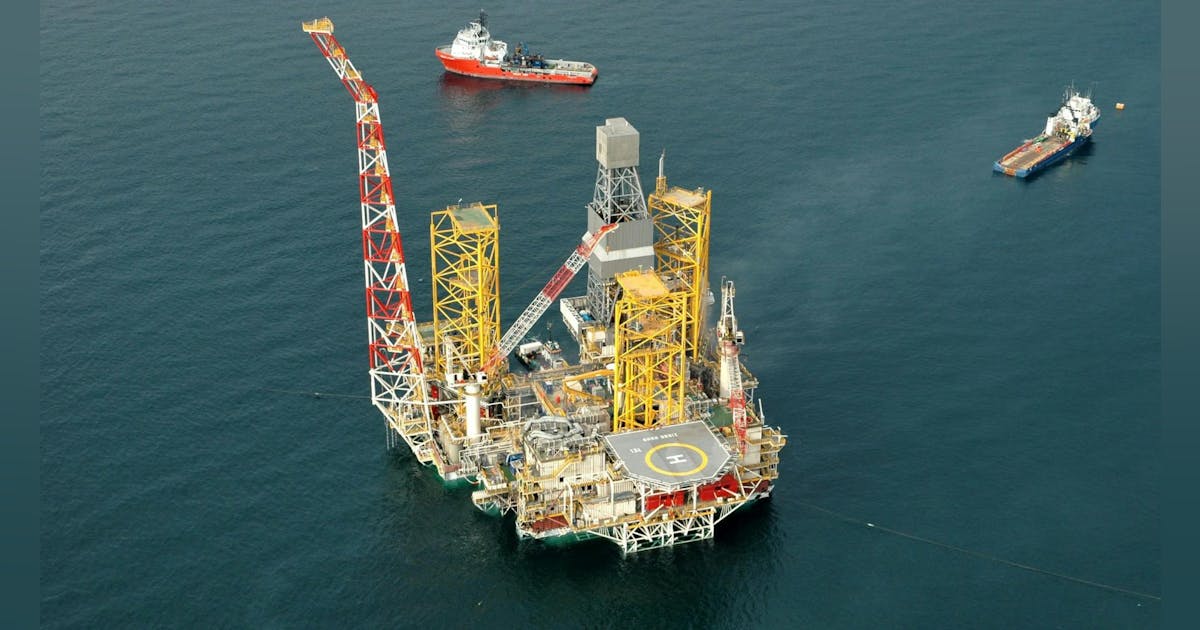
In a release sent to Rigzone on Thursday, ADNOC Drilling said it had delivered its “best year on record with 2025 net profit of $1.45 billion”. “ADNOC Drilling Company PJSC announced today record fourth quarter and full year 2025 results, marking a step change in scale, technology-enabled performance and excellence in execution,” the company noted in the release. […]

In a release sent to Rigzone on Thursday, ADNOC Drilling said it had delivered its “best year on record with 2025 net profit of $1.45 billion”.

“ADNOC Drilling Company PJSC announced today record fourth quarter and full year 2025 results, marking a step change in scale, technology-enabled performance and excellence in execution,” the company noted in the release.

“This performance represents the strongest in the company’s history, reflecting high asset utilization and continued growth across integrated drilling and oilfield services, and driven by strong operational execution across the fleet,” it added.

ADNOC Drilling highlighted in the release that its 2025 net profit marked an 11 percent year on year increase. In 2025, the company reported revenue of $4.9 billion, which it pointed out was a 22 percent increase year on year, and EBITDA of $2.2 billion, which it highlighted was an increase of nine percent year on year.

“2025 was a defining year for ADNOC Drilling,” ADNOC Drilling CEO Abdulla Ateya Al Messabi said in the release.

“Our record breaking results were delivered by our people, whose discipline, innovation and commitment to operational excellence and safety underpin every milestone we achieve,” Messabi added.

“Our resilience as a business, built on strong systems, disciplined operations and the ability to adapt at pace, continues to reinforce our competitive strength,” the CEO continued.

“Through execution excellence, technology‑led efficiency and a disciplined approach to capital allocation and operations, we continue our transformation into the region’s most advanced energy services company,” Messabi said.

“By expanding across the GCC, pioneering AI‑driven operations and setting new benchmarks in sustainability, we are unlocking value and helping power the UAE’s energy future. This is just the beginning of a new era of growth, innovation and impact,” Messabi went on to note.

In a release posted on its site in November last year, ADNOC Drilling announced that it had entered into definitive agreement to acquire 80 percent of MB Petroleum Services, which it described as one of the leading drilling and oilfield services providers in the region with operations in Oman, Kuwait, Saudi Arabia and Bahrain.

“This milestone deal is expected to significantly accelerate ADNOC Drilling’s regional expansion strategy, adding scale and capability and strengthening presence in four key Gulf economies,” the company said in that release.

In a release posted on its site back in October 2025, ADNOC Drilling announced “record financial results for the third quarter and first nine months of 2025, reinforcing its position as ADNOC’s upstream growth engine and a cornerstone of Abu Dhabi’s long-term energy security”.

Messabi said in that release, “our record performance in 2025 showcases the strength and resilience of our business model and disciplined execution”.

“The true story is the transformational growth ahead; we are scaling unconventionals to a potential of 300+ wells annually, expanding our Integrated Drilling Services (IDS) fleet to 70 rigs and preparing for new offshore island operations by the end of the decade,” Messabi added.

“These milestones can add billions in new revenue streams, de-risked by our in-house expertise and powered by our ambition to become AI-native,” Messabi continued.

On its website, ADNOC Drilling states that, “for more than 50 years”, it has “enabled the Abu Dhabi National Oil Company (ADNOC) to safely and efficiently unlock United Arab Emirates’ (UAE) oil and gas resources”.

“ADNOC Drilling is key to delivering the targeted increase in crude oil production capacity by 25 percent to five million barrels per day by 2030 and achieve UAE gas self-sufficiency,” the site adds.

In a statement sent to Rigzone on Monday, ADNOC Gas plc announced a “record” net income of $5.2 billion for 2025, which the company pointed out is a three percent increase compared to 2024.

ADNOC Gas said in the statement that its results “underscored the strength of its long-term strategy” and added that its “robust 2025 net income was primarily driven by the strength of its domestic gas business, where its EBITDA was up 10 percent on sales volume growth of four percent year on year and improved commercial terms”.

ADNOC Gas describes itself on its website as “a key enabler of ADNOC’s ambitious growth plans and decarbonization strategy”. 

To contact the author, email [email protected]

Shape
Shape
Stay Ahead

Explore More Insights

Stay ahead with more perspectives on cutting-edge power, infrastructure, energy,  bitcoin and AI solutions. Explore these articles to uncover strategies and insights shaping the future of industries.

Shape

IBM Research: When AI and quantum merge

IBM’s research laboratory in Zurich. A look inside an IBM Quantum System Two. Advances in tape development. On the left is a quantum-secure tape drive. Scanning tunneling microscope in one of the Zurich laboratories. The innovation won the Nobel Prize in Physics in 1986.

Read More »

Petronas launches Malaysia Bid Round 2026

@import url(‘https://fonts.googleapis.com/css2?family=Inter:[email protected]&display=swap’); a { color: var(–color-primary-main); } .ebm-page__main h1, .ebm-page__main h2, .ebm-page__main h3, .ebm-page__main h4, .ebm-page__main h5, .ebm-page__main h6 { font-family: Inter; } body { line-height: 150%; letter-spacing: 0.025em; font-family: Inter; } button, .ebm-button-wrapper { font-family: Inter; } .label-style { text-transform: uppercase; color: var(–color-grey); font-weight: 600; font-size: 0.75rem; } .caption-style

Read More »

Intel says Google engineers spotted Xeon vulnerabilities

“In a perfect world, the [Trusted Computer Base] would be bug-free; in reality, the complexity of modern systems makes continuous assessment essential. Collaborative reviews allow industry leaders to proactively fix vulnerabilities while fostering transparency for everyone who relies on the technology,” Google researchers wrote. The main problem arose when using

Read More »

How Cisco’s platform mindset is meeting the AI era

4. Sovereignty, trust, and the rise of sovereign AI In EMEA, trust and sovereignty were more than talk—they were central to almost every discussion. This came across loud and clear at the event and in Davos in January. Cisco emphasized four dimensions of trust: security, innovation, execution, and sovereign control.​

Read More »

Some OPEC+ Members See Scope to Resume Hikes in April

Some OPEC+ members see scope for the alliance to resume supply increases in April, believing concerns of a glut in global oil markets to be overblown. The group led by Saudi Arabia and Russia hasn’t committed to any course of action or begun formal discussions ahead of its meeting on March 1, according to several delegates, who asked not to be identified as the process is private. Their ultimate decision may depend on whether US President Donald Trump launches military action against — or reaches a nuclear deal with — OPEC member Iran, one added.  Nonetheless, some nations in the Organization of the Petroleum Exporting Countries and its allies said they see room to resume the output increases the coalition paused during the seasonal demand slowdown of the first quarter.  Trump’s assertive stance toward OPEC members Venezuela and Iran, along with disruptions spanning from North America to Kazakhstan, drove oil prices to a strong start of the year despite warnings of a supply glut. Several top traders have said that prices are supported by tightness in key markets, as many of the surplus barrels are from producers subject to sanctions like Russia and Iran, and thus remain unavailable to a wider pool of buyers. That has made the market surprisingly resilient. Brent futures are up 11% this year, after spiking to a six-month high near $72 a barrel at the end of January over concerns a conflict might erupt in the Middle East. Oil inventories piled up last year at the fastest pace since the 2020 pandemic amid swelling output from both OPEC+ and its competitors in the Americas, according to the International Energy Agency, though the impact on prices was tempered as China scooped up barrels for its strategic reserves. Last April, the Saudis stunned crude traders by steering OPEC+ to

Read More »

ADNOC Drilling Delivers ‘Best Year on Record’

In a release sent to Rigzone on Thursday, ADNOC Drilling said it had delivered its “best year on record with 2025 net profit of $1.45 billion”. “ADNOC Drilling Company PJSC announced today record fourth quarter and full year 2025 results, marking a step change in scale, technology-enabled performance and excellence in execution,” the company noted in the release. “This performance represents the strongest in the company’s history, reflecting high asset utilization and continued growth across integrated drilling and oilfield services, and driven by strong operational execution across the fleet,” it added. ADNOC Drilling highlighted in the release that its 2025 net profit marked an 11 percent year on year increase. In 2025, the company reported revenue of $4.9 billion, which it pointed out was a 22 percent increase year on year, and EBITDA of $2.2 billion, which it highlighted was an increase of nine percent year on year. “2025 was a defining year for ADNOC Drilling,” ADNOC Drilling CEO Abdulla Ateya Al Messabi said in the release. “Our record breaking results were delivered by our people, whose discipline, innovation and commitment to operational excellence and safety underpin every milestone we achieve,” Messabi added. “Our resilience as a business, built on strong systems, disciplined operations and the ability to adapt at pace, continues to reinforce our competitive strength,” the CEO continued. “Through execution excellence, technology‑led efficiency and a disciplined approach to capital allocation and operations, we continue our transformation into the region’s most advanced energy services company,” Messabi said. “By expanding across the GCC, pioneering AI‑driven operations and setting new benchmarks in sustainability, we are unlocking value and helping power the UAE’s energy future. This is just the beginning of a new era of growth, innovation and impact,” Messabi went on to note. In a release posted on its site in November last year, ADNOC Drilling announced that

Read More »

Oil Trading Giants Say Sanctions Driving Up Prices

A vast hoard of sanctioned oil that’s stranded at sea is driving up global prices as buyers compete for other barrels, several of the world’s top traders said. Refineries that would typically buy Russian and Iranian crude are increasingly turning elsewhere, Russell Hardy, the chief executive officer of Vitol Group, the world’s biggest independent oil trader, said at an event in London on Thursday. His views are widely echoed by traders from around the world, including at Gunvor Group and Pacific Investment Management Co.  A ramp-up of sanctions pressure on Russia and Iran has tightened the screws on flows from the two nations over the past few months, forcing buyers in countries like India to seek alternatives. The shift marks a potential turning point after years of sanctioned oil flowing with little restriction, and is supporting prices even as analysts warn of a mounting excess of supply. “The traditional buyers of those two supply sources are reaching for more Western or Saudi supply sources, which is in turn tightening the real market,” Hardy said at the International Energy Week conference in London. “The global supply demand balance needs to factor in some of these difficult situations — because that’s roughly a million barrels a day that’s not reaching a refinery — it’s just sitting on the high seas.” The US and European nations have stepped up moves to seize tankers from the shadow fleet that helps keep sanctioned barrels flowing, while restrictions on Russia’s biggest producers, and American political pressure have forced Indian refiners to look elsewhere for barrels. The result has been a large volume of oil building up at sea that’s not getting bought. While a flotilla of oil tankers can often be very bearish because it points to oversupply, this time it’s pressuring refiners to look elsewhere

Read More »

Market Positioning Itself for Period of Higher Geopolitical Risk

The oil market is positioning itself for a period of higher geopolitical risk and unpredictability, according to Emily Ashford, Energy Research Head at Standard Chartered Bank. “This is evident in both the gradual push higher in flat price, adjustments in the forward curve and volatility skew,” Ashford said in a report sent to Rigzone by the Standard Chartered team this week. “Brent crude for April delivery settled at $69.04 per barrel on 9 February, a week on week rise of $2.74 per barrel (or 4.13 percent). The forward curve has moved higher week on week,” Ashford added. “While movement at the front of the curve is the most significant, even delivery in five years is $0.53 per barrel higher week on week,” Ashford continued. “Call skew is very well bid, with 1m risk reversal (RR) at 18.69 on 9 February; approximately the same levels as during the initial Russian invasion of Ukraine (19.14 on 8 March 2022) , and was only recently higher in mid-June 2025 (23.01 on 17 June 2025), during the previous escalation in the U.S.-Iran-Israel conflict,” the Standard Chartered Bank Energy Research Head went on to state. In the report, Ashford highlighted that traders and analysts were meeting in London this week for the annual International Energy Week, which the energy head said “is always a useful gauge of market sentiment”. “Last year the focus was around the new second Trump administration, and whether it would be inherently bullish or bearish for oil prices,” Ashford noted. “This was particularly so given the signing of a National Security Presidential Memorandum in early February 2025 that restored maximum pressure on Iran, with a focus on reducing its crude exports,” Ashford said. “One year later, and the complex U.S.-Iran relationship and potential impact on Iranian barrels in the market remains

Read More »

Secretary Wright Delivers Remarks Alongside Interim Venezuelan President Delcy Rodriguez

CARACAS, VENEZUELA—U.S. Secretary of Energy Chris Wright deliveredremarks today alongside Interim President Delcy Rodriguez after meetings at the Miraflores Palace in Caracas. Secretary Wright’s full remarks are below: Thank you so much, Interim President Rodriguez. It is an honor to stand here with you today, and to be among the tremendous people of Venezuela. As Interim President Rodriguez mentioned, our countries share a long history. It has gone through different chapters as all relationships do. But today, I bring a message from President Trump: He is passionately committed to absolutely transforming the relationship between the United States and Venezuela. This is part of a broader agenda to make the Americas great again, to bring our countries closer together, and to bring commerce, peace, prosperity, jobs, and opportunity to the people of Venezuela in partnership with the United States. These are not just words or ambitions. We have very specific plans and very specific actions already. This is President Trump’s broader agenda: peace, commerce, and trade, not conflict, not military action, not what has dominated so much of our world. Whether it’s in the Middle East, whether it’s in South Asia, or maybe, most importantly, in the Americas, we want commerce, we want peace, we want prosperity, we want security. Our government in Washington, DC, has been working 7 days a week to issue licenses, so existing businesses in Venezuela, new businesses that want to enter Venezuela, Venezuelan national companies can buy products, invest money, raise oil production, create new jobs, grow export revenue. All of the things that have constricted the Venezuelan economy, we want to set the Venezuelan people and the economy free. We had very wonderful and candid dialogues today. We both spoke very candidly about the tremendous opportunities in front of us, and some of the problems

Read More »

Energy Department Announces 26 Genesis Mission Science and Technology Challenges to Accelerate AI-Enabled American Innovation and Leadership

WASHINGTON—The U.S. Department of Energy (DOE) today announced 26 science and technology challenges of national importance to advance the Genesis Mission and accelerate innovation and discovery through artificial intelligence (AI). Building on President Trump’s Executive Orders Launching The Genesis Mission and Removing Barriers to American Leadership In Artificial Intelligence, the challenges span DOE’s discovery science, energy, and national security missions. Each was selected for its potential to deliver measurable benefits for the American people and to accelerate advancements through the Genesis Mission’s AI platforms, world-class facilities, and public-private partnerships. “These challenges represent a bold step toward a future where science moves at the speed of imagination because of AI. It’s a game-changer for science, energy, and national security,” said DOE Under Secretary for Science and Genesis Mission Lead Dr. Darío Gil. “By uniting the U.S. Government’s unparalleled data resources and DOE’s experimental facilities with cutting-edge AI, we can unlock discoveries that will power the economy, secure our energy future, and keep America at the forefront of global innovation.” “President Trump’s Genesis Mission is mobilizing America’s unmatched scientific infrastructure and AI ingenuity to double the pace of discovery. These 26 challenges are a direct call to action to America’s researchers and innovators to join the Genesis Mission and deliver science and technology breakthroughs that will benefit the American people,” said Assistant to the President and Director of The White House Office of Science and Technology Policy Michael Kratsios. “We look forward to expanding the list of challenges across Federal agencies to bring even greater impact to the Mission.” Working in partnership with DOE’s National Laboratories, industry, and academia, these efforts will deliver tangible results for the American people. Examples include: Scaling the Grid to Power the American Economy: Using AI to improve power grid planning, interconnection, operations, and security — enabling decisions up to 20–100 times faster and improving electricity cost and reliability by up to 10 percent. Harnessing America’s Historic Nuclear Data: Digitizing eight decades of

Read More »

Starcloud prepares to launch AWS Outpost into space

One executive skeptical of the idea of data centers in space is AWS’s own CEO, Matt Garman. “There are not enough rockets to launch a million satellites yet, so we’re, like, pretty far from that. If you think about the cost of getting a payload in space today, it’s massive,” Garman told attendees at the Cisco AI summit, according to a Reuters report. Garman is just one of many critics of the notion that data centers can be a viable alternative. Issues such as collisions with space debris, the difficulty of supplying water as a coolant, the impossibility of fixing hardware issues and latency have all been highlighted as potential problems.

Read More »

Data center capex to hit $1.7 trillion by 2030 due to AI boom

Asked on Thursday about the fact that capex is expected to approach the $1 trillion mark in 2026, he said it is somewhat surprising. “Last year, I thought it would take at least three years to get to that trillion dollar mark,” he said. “It seems increases are supported by the result of larger models needed for training infrastructure, and in turn, you need inference as well. You also need a supporting infrastructure in storage, networking, power, and cooling.” AI, he said, has become “the tide that lift all boats, meaning that in addition to the core accelerated compute, AI also positively impacts complementary infrastructure, such as storage, networking, and physical infrastructure.” Fung added that while much of the achievement of projected spending estimates will depend on whether or not this growth is sustainable, he pointed out, “it seems like the large hyperscalers have a lot of weight in optimizing cash flow and cost structures. They’re trying to get as creative as possible, generally moving towards a more vertical, integrated stack with their own custom networking and external financing, which would help  [create] more sustainable deployments and operations.” Enterprises thinking of expanding their own infrastructure can learn from this growth. In a recent article on the hyper spending of hyperscalers, Greyhound Research chief analyst Sanchit Vir Gogia said their capex spending  levels can help pinpoint where the hyperscalers are expecting bottlenecks, which is useful information for enterprises planning their own cloud strategy across multiple geographies. These and other factors can help enterprises plan their own execution timelines, he said. This article originally appeared on CIO.com.

Read More »

Cisco highlights memory costs, Silicon One growth in Q2 recap

“AI infrastructure orders taken from hyperscalers totaled $2.1 billion in Q2 compared to $1.3 billion just last quarter and equal to the total orders taken in all of fiscal year ’25, marking another significant acceleration in growth across our silicon, systems and optics,” Robbins said. “Given the strong demand for our Silicon One systems and optics, we now expect to take AI orders in excess of $5 billion and to recognize over $3 billion in AI infrastructure revenue from hyperscalers in FY ’26.” Regarding enterprise uptake, Robbins said Cisco took in $350 million in AI orders from enterprise customers in Q2 and has a pipeline in excess of $2.5 billion for its high-performance AI infrastructure portfolio. Cisco is seeing early enterprise use cases for AI around fraud detection and video analytics in sectors such as financial, manufacturing and pharmaceuticals, for example. “I also see examples in retail, where customers are leveraging agents on mobile devices in retail to help their staff do a better job engaging with their customers. We’re seeing a combination of both investment in cloud-based architectures as well as on prem,” Robbins said. Networking rules Cisco is experiencing a faster-than-historical ramp-up of next-generation platforms, including its Catalyst 9K, Wi-Fi 7, and smart switches, stated Sebastien Naji, a research analyst with William Blair, in a report after the call. He attributed it to three factors: an accelerated refresh cycle in the data center; early AI-readiness efforts in the enterprise; and end-of-support for legacy Catalyst and Nexus switches.  “We are seeing strong demand for our next-generation switching, routing and wireless products, which continue to ramp faster than prior product launches. We’re delivering AI-native capabilities across these products, including weaving security into the fabric of the network and modernizing the operational stack of campus networks,” Robbins said. Co-packaged optics? When asked

Read More »

Energy providers seek flexible load strategies for data center operations

“In theory, yes, they’d have to wait a little bit longer while their queries are routed to a data center that has capacity,” said Lawrence. The one thing the industry cannot do is operate like it has in the past, where data center power was tuned and then forgotten for six months. Previously, data centers would test their power sources once or twice a year. They don’t have that luxury anymore. They need to check their power sources and loads far more regularly, according to Lawrence. “I think that for that for the data center industry to continue to survive like we all need it, there’s going to have to be some realignment on the incentives to why somebody would become flexible,” said Lawrence. The survey suggests that utilities and load operators expect to expand their demand response activities and budgets in the near term. Sixty-three percent of respondents anticipate DR program funding to grow by 50% or more over the next three years. While they remain a major source of load growth and system strain, 57% of respondents indicate that onsite power generation from data centers will be most important to improving grid stability over the next five years. One of the proposed fixes to the power shortage has been small modular nuclear reactors. These have gained a lot of traction in the marketplace even if they have nothing to sell yet. But Lawrence said that that’s not an ideal solution for existing power generators, ironically enough.

Read More »

Nokia predicts huge WAN traffic growth, but experts question assumptions

Consumer, which includes both mobile access and fixed access, including fixed wireless access. Enterprise and industrial, which covers wide-area connectivity that supports knowledge work, automation, machine vision, robotics coordination, field support, and industrial IoT. AI, including applications that people directly invoke, such as assistants, copilots, and media generation, as well as autonomous use cases in which AI systems trigger other AI systems to perform functions and move data across networks. The report outlines three scenarios: conservative, moderate, and aggressive. “Our goal is to present scenarios that fall within a realistic range of possible outcomes, encouraging stakeholders to plan across the full spectrum of high-impact demand possibilities,” the report says. Nokia’s prediction for global WAN traffic growth ranges from a 13% CAGR for the conservative scenario to 16% CAGR for moderate and 22% CAGR for aggressive. Looking more closely at the moderate scenario, it’s clear that consumer traffic dominates. Enterprise and industrial traffic make up only about 14% to 17% of overall WAN traffic, although their share is expected to grow during the 10-year forecast period. “On the consumer side, the vast majority of traffic by volume is video,” says William Webb, CEO of the consulting firm Commcisive. Asked whether any of that consumer traffic is at some point served up by enterprises, the answer is a decisive “no.” It’s mostly YouTube and streaming services like Netflix, he says. In short, that doesn’t raise enterprise concerns. Nokia predicts AI traffic boom AI is a different story. “Consumer- and enterprise-generated AI traffic imposes a substantial impact on the wide-area network (WAN) by adding AI workloads processed by data centers across the WAN. AI traffic does not stay inside one data center; it moves across edge, metro, core, and cloud infrastructure, driving dense lateral flows and new capacity demands,” the report says. An

Read More »

Cisco amps up Silicon One line, delivers new systems and optics for AI networking

Those building blocks include the new G300 as well as the G200 51.2 Tbps chip, which is aimed at spine and aggregation applications, and the G100 25.6 Tbps chip, which is aimed at leaf operations. Expanded portfolio of Silicon One P200-powered systems Cisco in October rolled out the P200 Silicon One chip and the high-end, 51.2 Tbps 8223 router aimed at distributed AI workloads. That system supports Octal Small Form-Factor Pluggable (OSFP) and Quad Small Form-Factor Pluggable Double Density (QSFP-DD) optical form factors that help the box support geographically dispersed AI clusters. Cisco grew the G200 family this week with the addition of the 8122X-64EF-O, a 64x800G switch that will run the SONiC OS and includes support for Cisco 800G Linear Pluggable Optics (LPO) connectivity. LPO components typically set up direct links between fiber optic modules, eliminating the need for traditional components such as a digital signal processor. Cisco said its P200 systems running IOS XR software now better support core routing services to allow data-center-to-data-center links and data center interconnect applications. In addition, Cisco introduced a P200-powered 88-LC2-36EF-M line card, which delivers 28.8T of capacity. “Available for both our 8-slot and 18-slot modular systems, this line card enables up to an unprecedented 518.4T of total system bandwidth, the highest in the industry,” wrote Guru Shenoy, senior vice president of the Cisco provider connectivity group, in a blog post about the news. “When paired with Cisco 800G ZR/ZR+ coherent pluggable optics, these systems can easily connect sites over 1,000 kilometers apart, providing the high-density performance needed for modern data center interconnects and core routing.”

Read More »

Microsoft will invest $80B in AI data centers in fiscal 2025

And Microsoft isn’t the only one that is ramping up its investments into AI-enabled data centers. Rival cloud service providers are all investing in either upgrading or opening new data centers to capture a larger chunk of business from developers and users of large language models (LLMs).  In a report published in October 2024, Bloomberg Intelligence estimated that demand for generative AI would push Microsoft, AWS, Google, Oracle, Meta, and Apple would between them devote $200 billion to capex in 2025, up from $110 billion in 2023. Microsoft is one of the biggest spenders, followed closely by Google and AWS, Bloomberg Intelligence said. Its estimate of Microsoft’s capital spending on AI, at $62.4 billion for calendar 2025, is lower than Smith’s claim that the company will invest $80 billion in the fiscal year to June 30, 2025. Both figures, though, are way higher than Microsoft’s 2020 capital expenditure of “just” $17.6 billion. The majority of the increased spending is tied to cloud services and the expansion of AI infrastructure needed to provide compute capacity for OpenAI workloads. Separately, last October Amazon CEO Andy Jassy said his company planned total capex spend of $75 billion in 2024 and even more in 2025, with much of it going to AWS, its cloud computing division.

Read More »

John Deere unveils more autonomous farm machines to address skill labor shortage

Join our daily and weekly newsletters for the latest updates and exclusive content on industry-leading AI coverage. Learn More Self-driving tractors might be the path to self-driving cars. John Deere has revealed a new line of autonomous machines and tech across agriculture, construction and commercial landscaping. The Moline, Illinois-based John Deere has been in business for 187 years, yet it’s been a regular as a non-tech company showing off technology at the big tech trade show in Las Vegas and is back at CES 2025 with more autonomous tractors and other vehicles. This is not something we usually cover, but John Deere has a lot of data that is interesting in the big picture of tech. The message from the company is that there aren’t enough skilled farm laborers to do the work that its customers need. It’s been a challenge for most of the last two decades, said Jahmy Hindman, CTO at John Deere, in a briefing. Much of the tech will come this fall and after that. He noted that the average farmer in the U.S. is over 58 and works 12 to 18 hours a day to grow food for us. And he said the American Farm Bureau Federation estimates there are roughly 2.4 million farm jobs that need to be filled annually; and the agricultural work force continues to shrink. (This is my hint to the anti-immigration crowd). John Deere’s autonomous 9RX Tractor. Farmers can oversee it using an app. While each of these industries experiences their own set of challenges, a commonality across all is skilled labor availability. In construction, about 80% percent of contractors struggle to find skilled labor. And in commercial landscaping, 86% of landscaping business owners can’t find labor to fill open positions, he said. “They have to figure out how to do

Read More »

2025 playbook for enterprise AI success, from agents to evals

Join our daily and weekly newsletters for the latest updates and exclusive content on industry-leading AI coverage. Learn More 2025 is poised to be a pivotal year for enterprise AI. The past year has seen rapid innovation, and this year will see the same. This has made it more critical than ever to revisit your AI strategy to stay competitive and create value for your customers. From scaling AI agents to optimizing costs, here are the five critical areas enterprises should prioritize for their AI strategy this year. 1. Agents: the next generation of automation AI agents are no longer theoretical. In 2025, they’re indispensable tools for enterprises looking to streamline operations and enhance customer interactions. Unlike traditional software, agents powered by large language models (LLMs) can make nuanced decisions, navigate complex multi-step tasks, and integrate seamlessly with tools and APIs. At the start of 2024, agents were not ready for prime time, making frustrating mistakes like hallucinating URLs. They started getting better as frontier large language models themselves improved. “Let me put it this way,” said Sam Witteveen, cofounder of Red Dragon, a company that develops agents for companies, and that recently reviewed the 48 agents it built last year. “Interestingly, the ones that we built at the start of the year, a lot of those worked way better at the end of the year just because the models got better.” Witteveen shared this in the video podcast we filmed to discuss these five big trends in detail. Models are getting better and hallucinating less, and they’re also being trained to do agentic tasks. Another feature that the model providers are researching is a way to use the LLM as a judge, and as models get cheaper (something we’ll cover below), companies can use three or more models to

Read More »

OpenAI’s red teaming innovations define new essentials for security leaders in the AI era

Join our daily and weekly newsletters for the latest updates and exclusive content on industry-leading AI coverage. Learn More OpenAI has taken a more aggressive approach to red teaming than its AI competitors, demonstrating its security teams’ advanced capabilities in two areas: multi-step reinforcement and external red teaming. OpenAI recently released two papers that set a new competitive standard for improving the quality, reliability and safety of AI models in these two techniques and more. The first paper, “OpenAI’s Approach to External Red Teaming for AI Models and Systems,” reports that specialized teams outside the company have proven effective in uncovering vulnerabilities that might otherwise have made it into a released model because in-house testing techniques may have missed them. In the second paper, “Diverse and Effective Red Teaming with Auto-Generated Rewards and Multi-Step Reinforcement Learning,” OpenAI introduces an automated framework that relies on iterative reinforcement learning to generate a broad spectrum of novel, wide-ranging attacks. Going all-in on red teaming pays practical, competitive dividends It’s encouraging to see competitive intensity in red teaming growing among AI companies. When Anthropic released its AI red team guidelines in June of last year, it joined AI providers including Google, Microsoft, Nvidia, OpenAI, and even the U.S.’s National Institute of Standards and Technology (NIST), which all had released red teaming frameworks. Investing heavily in red teaming yields tangible benefits for security leaders in any organization. OpenAI’s paper on external red teaming provides a detailed analysis of how the company strives to create specialized external teams that include cybersecurity and subject matter experts. The goal is to see if knowledgeable external teams can defeat models’ security perimeters and find gaps in their security, biases and controls that prompt-based testing couldn’t find. What makes OpenAI’s recent papers noteworthy is how well they define using human-in-the-middle

Read More »