There are tears in the audience as Patrick Darling’s song begins to play. It’s a heartfelt song written for his great-grandfather, whom he never got the chance to meet. But this performance is emotional for another reason: It’s Darling’s first time on stage with his bandmates since he lost the ability to sing two years ago.
The 32-year-old musician was diagnosed with amyotrophic lateral sclerosis (ALS) when he was 29 years old. Like other types of motor neuron disease (MND), it affects nerves that supply the body’s muscles. People with ALS eventually lose the ability to control their muscles, including those that allow them to move, speak, and breathe.
Darling’s last stage performance was over two years ago. By that point, he had already lost the ability to stand and play his instruments and was struggling to sing or speak. But recently, he was able to re-create his lost voice using an AI tool trained on snippets of old audio recordings. Another AI tool has enabled him to use this “voice clone” to compose new songs. Darling is able to make music again.
“Sadly, I have lost the ability to sing and play my instruments,” Darling said on stage at the event, which took place in London on Wednesday, using his voice clone. “Despite this, most of my time these days is spent still continuing to compose and produce my music. Doing so feels more important than ever to me now.”
Losing a voice
Darling says he’s been a musician and a composer since he was around 14 years old. “I learned to play bass guitar, acoustic guitar, piano, melodica, mandolin, and tenor banjo,” he said at the event. “My biggest love, though, was singing.”
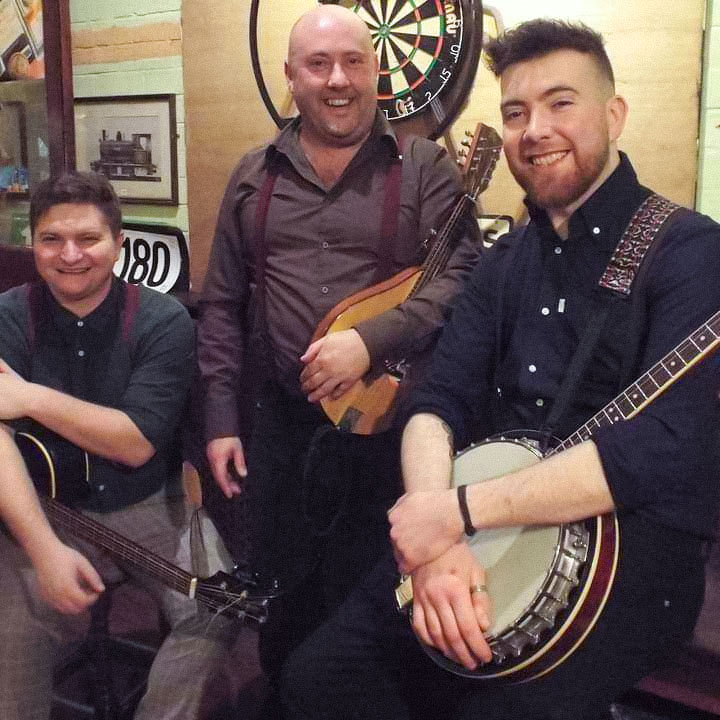
He met bandmate Nick Cocking over 10 years ago, while he was still a university student, says Cocking. Darling joined Cocking’s Irish folk outfit, the Ceili House Band, shortly afterwards, and their first gig together was in April 2014. Darling, who joined the band as a singer and guitarist, “elevated the musicianship of the band,” says Cocking.
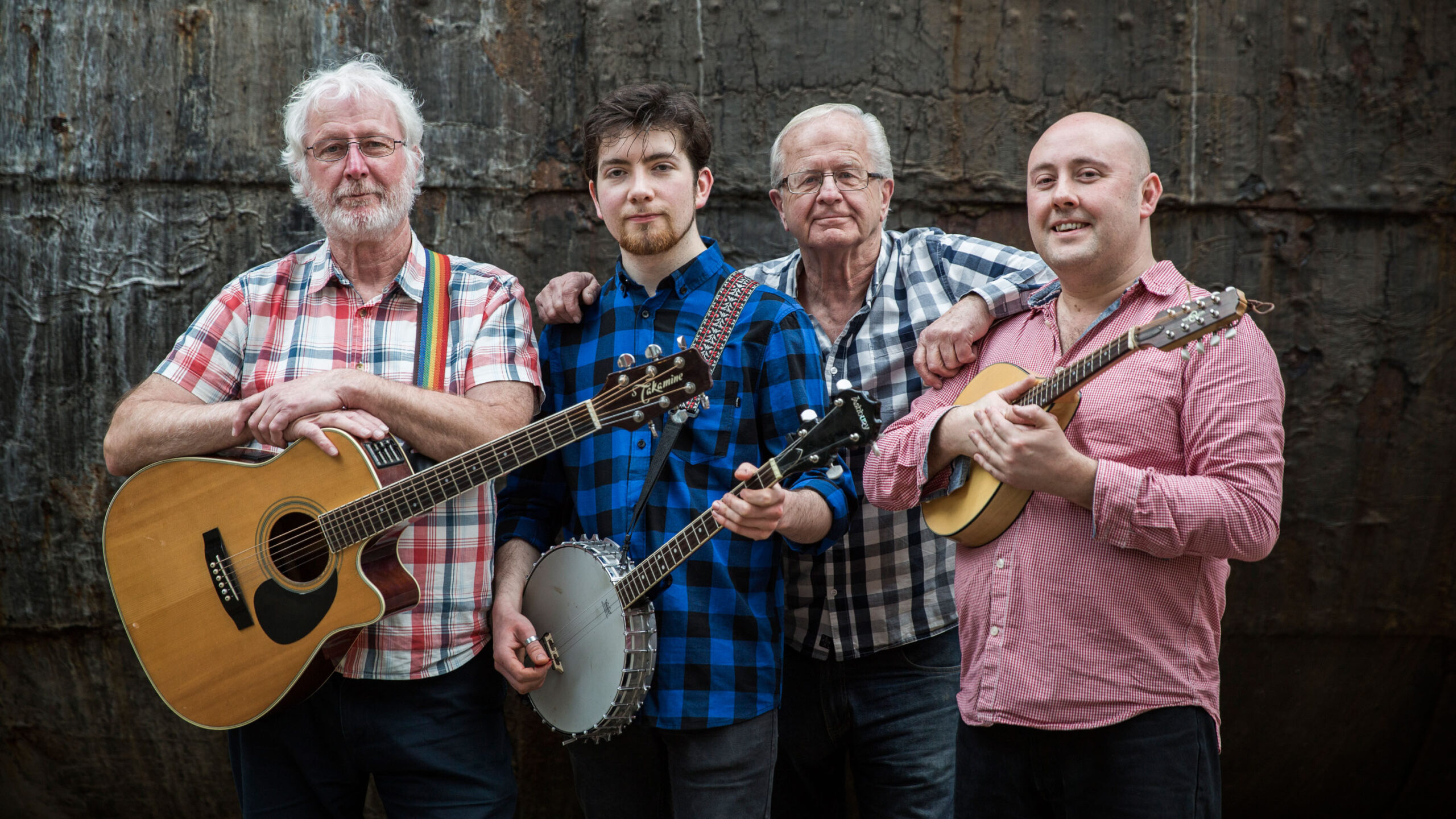
But a few years ago, Cocking and his other bandmates started noticing changes in Darling. He became clumsy, says Cocking. He recalls one night when the band had to walk across the city of Cardiff in the rain: “He just kept slipping and falling, tripping on paving slabs and things like that.”
He didn’t think too much of it at the time, but Darling’s symptoms continued to worsen. The disease affected his legs first, and in August 2023, he started needing to sit during performances. Then he started to lose the use of his hands. “Eventually he couldn’t play the guitar or the banjo anymore,” says Cocking.
By April 2024, Darling was struggling to talk and breathe at the same time, says Cocking. For that performance, the band carried Darling on stage. “He called me the day after and said he couldn’t do it anymore,” Cocking says, his voice breaking. “By June 2024, it was done.” It was the last time the band played together.
Re-creating a voice
Darling was put in touch with a speech therapist, who raised the possibility of “banking” his voice. People who are losing the ability to speak can opt to record themselves speaking and use those recordings to create speech sounds that can then be activated with typed text, whether by hand or perhaps using a device controlled by eye movements.
Some users have found these tools to be robotic sounding. But Darling had another issue. “By that stage, my voice had already changed,” he said at the event. “It felt like we were saving the wrong voice.”
Then another speech therapist introduced him to a different technology. Richard Cave is a speech and language therapist and a researcher at University College London. He is also a consultant for ElevenLabs, an AI company that develops agents and audio, speech, video, and music tools. One of these tools can create “voice clones”—realistic mimics of real voices that can be generated from minutes, or even seconds, of a person’s recorded voice.
Last year, ElevenLabs launched an impact program with a promise to provide free licenses to these tools for people who have lost their voices to ALS or other diseases, like head and neck cancer or stroke.
The tool is already helping some of those users. “We’re not really improving how quickly they’re able to communicate, or all of the difficulties that individuals with MND are going through physically, with eating and breathing,” says Gabi Leibowitz, a speech therapist who leads the program. “But what we are doing is giving them a way … to create again, to thrive.” Users are able to stay in their jobs longer and “continue to do the things that make them feel like human beings,” she says.
Cave worked with Darling to use the tool to re-create his lost speaking voice from older recordings.
“The first time I heard the voice, I thought it was amazing,” Darling said at the event, using the voice clone. “It sounded exactly like I had before, and you literally wouldn’t be able to tell the difference,” he said. “I will not say what the first word I made my new voice say, but I can tell you that it began with ‘f’ and ended in ‘k.’”
Re-creating his singing voice wasn’t as easy. The tool typically requires around 10 minutes of clear audio to generate a clone. “I had no high-quality recordings of myself singing,” Darling said. “We had to use audio from videos on people’s phones, shot in noisy pubs, and a couple of recordings of me singing in my kitchen.” Still, those snippets were enough to create a “synthetic version of [Darling’s] singing voice,” says Cave.
In the recordings, Darling sounded a little raspy and “was a bit off” on some of the notes, says Cave. The voice clone has the same qualities. It doesn’t sound perfect, Cave says—it sounds human.
“The ElevenLabs voice that we’ve created is wonderful,” Darling said at the event. “It definitely sounds like me—[it] just kind of feels like a different version of me.”
ElevenLabs has also developed an AI music generator called Eleven Music. The tool allows users to compose tracks, using text prompts to choose the musical style. Several well-known artists have also partnered with the company to license AI clones of their voices, including the actor Michael Caine, whose voice clone is being used to narrate an upcoming ElevenLabs documentary. Last month, the company released an album of 11 tracks created using the tool. “The Liza Minnelli track is really a banger,” says Cave.
Eleven Music can generate a song in a minute, but Darling and Cave spent around six weeks fine-tuning Darling’s song. Using text prompts, any user can “create music and add lyrics in any style [they like],” says Cave. Darling likes Irish folk, but Cave has also worked with a man in Colombia who is creating Colombian folk music. (The ElevenLabs tool is currently available in 74 languages.)
Back on stage
Last month, Cocking got a call from Cave, who sent him Darling’s completed track. “I heard the first two or three words he sang, and I had to turn it off,” he says. “I was just in bits, in tears. It took me a good half a dozen times to make it to the end of the track.”
Darling and Cave were making plans to perform the track live at the ElevenLabs summit in London on Wednesday, February 11. So Cocking and bandmate Hari Ma each arranged accompanying parts to play on the mandolin and fiddle. They had a couple of weeks to rehearse before they joined Darling on stage, two years after their last performance together.
“I wheeled him out on stage, and neither of us could believe it was happening,” says Cave. “He was thrilled.” The song was played as Darling remained on stage, and Cocking and Ma played their instruments live.
Cocking and Cave say Darling plans to continue to use the tools to make music. Cocking says he hopes to perform with Darling again but acknowledges that, given the nature of ALS, it is difficult to make long-term plans.
“It’s so bittersweet,” says Cocking. “But getting up on stage and seeing Patrick there filled me with absolute joy. I know Patrick really enjoyed it as well. We’ve been talking about it … He was really, really proud.”