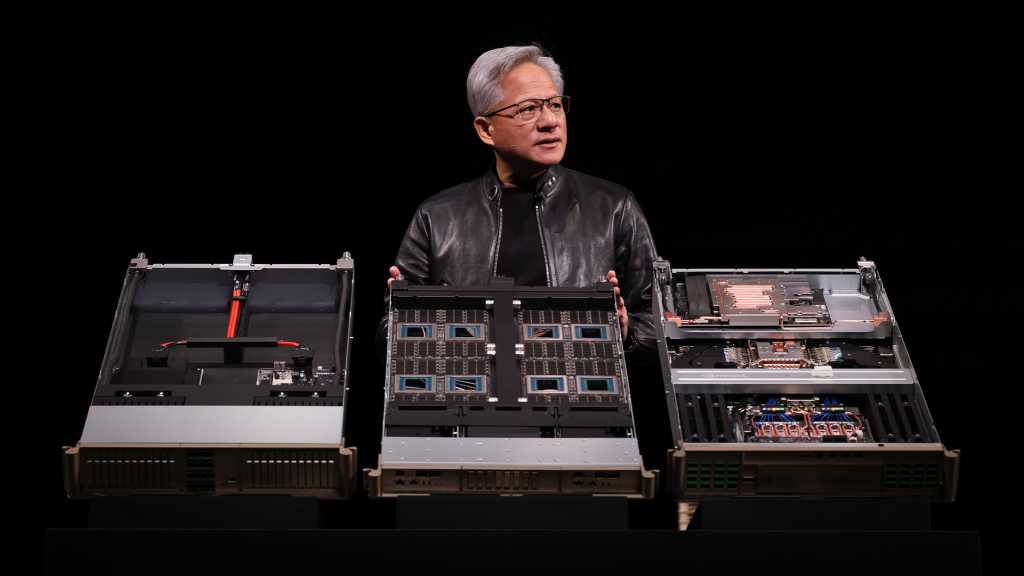
Nvidia’s products for data centers now encompass a full stack with all the pieces, said Sandeep Gupta, executive managing director and head of global strategic alliances at NTT Data. “From a customer perspective, if they believe in an integrated stack, it makes things simple,” Gupta said.
The integrated data center cuts complexity and improves efficiency across cooling, networking and storage. “It is driven by the sentiment of an enterprise on how dependent they want to be on one provider versus mix and match,” Gupta said.
AI complexity has gone up manifold with multi-agent systems and technologies like OpenClaw, which Huang said is as big a deal as HTML and Linux. Those technologies will generate tokens at an unprecedented pace and strain network, memory and storage simultaneously.
AI data also has context, and moving it inefficiently wastes power and cost. A new networking and storage layer is needed to move data intelligently and efficiently. A technology called KV Cache holds the contextual memory necessary for processing agentic AI systems.
“It’s going to pound on memory really hard… It’s going to be pounding on the storage system really really hard, which is the reason why we reinvented the storage system,” Huang said.
Nvidia’s blueprint turns data centers into one giant AI GPU. It is spearheaded by the GPU known as Rubin and CPU called Vera, which were announced at GTC. Nvidia also slipped in a new inference chip; the Groq LPU has significantly more memory bandwidth than GPUs and is designed for low-latency token generation.