Stay Ahead, Stay ONMINE

Inside the stealthy startup that pitched brainless human clones

After operating in secrecy for years, a startup company called R3 Bio, in Richmond, California, suddenly shared details about its work last week—saying it had raised money to create nonsentient monkey “organ sacks” as an alternative to animal testing. In an interview with Wired, R3 listed three investors: billionaire Tim Draper, the Singapore-based fund Immortal Dragons, and life-extension investors LongGame Ventures. But there is more to the story. And R3 doesn’t want that story told. MIT Technology Review discovered that the stealth startup’s founder John Schloendorn also pitched a startling, medically graphic, and ethically charged vision for what he’s called “brainless clones” to serve the role of backup human bodies. Imagine it like this: a baby version of yourself with only enough of a brain structure to be alive in case you ever need a new kidney or liver. Or, alternatively, he has speculated, you might one day get your brain placed into a younger clone. That could be a way to gain a second lifespan through a still hypothetical procedure known as a body transplant. The fuller context of R3’s proposals, as well as activities of another stealth startup with related goals, have not previously been reported. They’ve been kept secret by a circle of extreme life-extension proponents who fear that their plans for immortality could be derailed by clickbait headlines and public backlash. And that’s because the idea can sound like something straight from a creepy science fiction film. One person who heard R3’s clone presentation, and spoke on the condition of anonymity, was left reeling by its implications and shaken by Schloendorn’s enthusiastic delivery. The briefing, this person said, was like a “close encounter of the third kind” with “Dr. Strangelove.” A key inspiration for Schloendorn is a birth defect in which children are born missing most of their cortical hemispheres; he’s shown people medical scans of these kids’ nearly empty skulls as evidence that a body can live without much of a brain.  And he’s talked about how to grow a clone. Since artificial wombs don’t exist yet, brainless bodies can’t be grown in a lab. So he’s said the first batch of brainless clones would have to be carried by women paid to do the job. In the future, though, one brainless clone could give birth to another. Last Monday, the same day it announced itself to the world in Wired, R3 sent us a sweeping disavowal of our findings. It said Schloendorn “never made any statement regarding hypothetical ‘non-sentient human clones’ [that] would be carried by surrogates.” The most overarching of these challenges was its insistence that “any allegations of intent or conspiracy to create human clones or humans with brain damage are categorically false.” But even Schloendorn and his cofounder, Alice Gilman, can’t seem to keep away from the topic. Just last September, the pair presented at Abundance Longevity, a $70,000-per-ticket event in Boston organized by the anti-aging promoter Peter Diamandis. Although the presentation to about 40 people was not recorded and was meant to be confidential, a copy of the agenda for the event shows that Schloendorn was there to outline his “final bid to defeat aging” in a session called “Full Body Replacement.” According to a person who was there, both animal research and personal clones for spare organs were discussed. During the presentation, Gilman and Schloendorn even stood in front of an image of a cloning needle. Pressed on whether this was a talk about brainless clones, Gilman told us that while R3’s current business is replacing animal models, “the team reserves the right to hold hypothetical futuristic discussions.” MIT Technology Review found no evidence that R3 has cloned anyone, or even any animal bigger than a rodent. What we did find were documents, additional meeting agendas, and other sources outlining a technical road map for what R3 called “body replacement cloning” in a 2023 letter to supporters. That road map involved improvements to the cloning process and genetic wiring diagrams for how to create animals without complete brains.  A child with hydranencephaly, a rare condition in which most of the brain is missing. Could a human clone also be created without much of a brain as an ethical source of spare organs?DIMITRI AGAMANOLIS, M.D. VIA WIKIPEDIA A main purpose of the fundraising, investors say, was to support efforts to try these techniques in monkeys from a base in the Caribbean. That offered a path to a nearer-term business plan for more ethical medical experiments and toxicology testing—if the company could develop what it now calls monkey “organ sacks.” However, this work would clearly inform any possible human version.  Though he holds a PhD, Schloendorn is a biotech outsider who has published little and is best known for having once outfitted a DIY lab in his Bay Area garage. Still, his ties to the experimental fringe of longevity science have earned him a network in Silicon Valley and allies at a risk-taking US health innovation agency, ARPA-H. Together with his success at raising money from investors, this signals that the brainless-clone concept should be taken seriously by a wider community of scientists, doctors, and ethicists, some of whom expressed grave concerns.  “It sounds crazy, in my opinion,” said Jose Cibelli, a researcher at Michigan State University, after MIT Technology Review described R3’s brainless-clone idea to him. “How do you demonstrate safety? What is safety when you’re trying to create an abnormal human?” Twenty-five years ago, Cibelli was among the first scientists to try to clone human embryos, but he was trying to obtain matched stem cells, not make a baby. “There is no limit to human imagination and ways to make money, but there have to be boundaries,” he says. “And this is the boundary of making a human being who is not a human being.”  “Feasibility research” Since Dolly the sheep was born in 1996, researchers have cloned dogs, cats, camels, horses, cattle, ferrets, and other species of mammal. Injecting a cell from an existing animal into an egg creates a carbon-copy embryo that can develop, although not always without problems. Defects, deformities, and stillbirths remain common.  Those grave risks are why we’ve never heard of a human clone, even though it’s theoretically possible to create one.  But brainless clones flip the script. That’s because the ultimate aim is to create not a healthy person but an unconscious body that would probably need life support, like a feeding tube, to stay alive. Because this body would share the DNA of the person being copied, its organs would be a near-perfect immunological match.  Backers of this broad concept argue that a nonsentient body would be ethically acceptable to harvest organs from. Some also believe that swapping in fresh, young body parts—known as “replacement”—is the likeliest path to life extension, since so far no drug can reverse aging.  And then there’s the idea of a complete body transplant. “Certainly, for the cryonics patients, that sounds like something really promising,” says Anders Sandberg, a prominent Swedish transhumanist and expert in the ethics of future technologies. He notes that many people who opt to be stored in cryonic chambers after death choose the less expensive “head only” option, so “there might be a market for having an extra cloned body.” MIT Technology Review first approached Schloendorn two years ago after learning he’d led a confidential online seminar called the Body Replacement Mini Conference, in which he presented “recent lab progress towards making replacement bodies.”  According to a copy of the agenda, that 2023 session also included a presentation by a cloning expert, Young Gie Chung. And there was another from Jean Hébert, who was then a professor at the Albert Einstein College of Medicine and is now a program manager at ARPA-H, where he oversees a project to use stem cells to restore damaged brain tissue. Hébert popularized the so-called replacement solution to avoiding death in a 2020 book called Replacing Aging.  In an interview prior to joining the government in 2024, Hébert described an informal but “very collaborative” relationship with Schloendorn. The overall idea was that to stop aging, one of them would determine how to repair a brain, while the other would figure out how to create a body without one. “It’s a perfect match, right? Body, brain,” Hébert told MIT Technology Review at the time.  Schloendorn, by working outside the mainstream, had the huge advantage of “not being bound by getting the next paper out, or the next grant,” Hébert said, adding, “It’s such a wonderful way of doing research. It’s just clean and pure.” R3 now appears on the ARPA-H website on a list of prospective partners for Hébert’s program. In a LinkedIn message exchanged with Schloendorn that same year, he described his work as “feasibility research in body replacement.” “We will try to do it in a way that produces defined societal benefits early on, and we need to be prepared to take no for an answer, if it turns out that this cannot be done safely,” Schloendorn wrote at the time. He declined an interview then, saying that before exiting stealth mode, he wants to be sure the benefits are “reasonably grounded in reality.” That could prove challenging. While body-part replacement sounds logical, like swapping the timing belt on an old car, in reality there’s scant evidence that receiving organs from a younger twin would make you live any longer.  A complete body transplant, meanwhile, would probably be fatal, at least with current techniques. In the latest test of the concept, published last July, Russian surgeons removed a pig’s head and then sewed it back on. The animal did live—breathing weakly and lapping water from a syringe. But because its spinal cord had been cut, it was otherwise totally paralyzed. (As yet, there’s no proven method to rejoin a severed spinal cord.) In an act of mercy, the doctors ended the pig’s life after about 12 hours.  Even some of R3’s investors say the endeavor is a risky, low-odds project, on par with colonizing Mars. Boyang Wang, head of Immortal Dragons, has spoken at longevity conferences about body-swapping technology, referring to the chance that “when the time comes, you can transplant your brain into a new body.” Wang confirmed in a January Zoom call that he’d been referring to R3 and that he invested $500,000 in the company during a 2024 fundraising round. But since making his investment, Wang says, he’s become less bullish. He now views whole-body transplant as “very infeasible, not even very scientific” and “far away from hope for any realistic application.”  Still, he says, the investment in R3 fits with his philosophy of making unorthodox bets that could be breakthroughs against aging. “What can really move the needle?” he asks. “Because time is running out.” Stealth mode Clonal bodies sit at the extreme frontier of an advancing cluster of technologies all aimed at growing spare parts. Researchers are exploring stem cells, synthetic embryos, and blob-like organoids, and some companies are cloning genetically engineered pigs whose kidneys and hearts have already been transplanted into a few patients. Each of these methods seeks to harness development—the process by which animal bodies naturally form in the womb—to grow fully functional organs.  There’s even a growing cadre of mainstream scientists who say nonsentient bodies could solve the organ shortage, if they could be grown through artificial means. Two Stanford University professors, calling these structures “bodyoids,” published an editorial in favor of manufacturing spare human bodies in MIT Technology Review last year. While that editorial left many details to the imagination, they called the idea “at least plausible—and possibly revolutionary.”  “There are a lot of variations on this where they’re trying to find a socially acceptable form,” says George Church, a Harvard University professor who advises startups in the field. But Church says gestating an entire body is probably taking things too far, especially since nearly all patients on transplant lists are waiting for just a single organ, like a heart or kidney.  “There’s almost no scenario where you need a whole body,” he says. “I just think even if it’s someday acceptable, it’s not a good place to start.” For the moment, Church says, brainless human bodies are “not very useful, in addition to being repulsive.” That’s arguably why body replacement technology still feels risky to talk about, even among life-extension enthusiasts who are otherwise ready to inject Chinese peptides or have their bodies cryogenically frozen. “I think it’s exciting or interesting from a scientific perspective, but I think the world is not fully ready for it yet,” says Emil Kendziorra, CEO of Tomorrow Bio, a company in Berlin that stores bodies at -196 °C in the hope they can be restored to life in the future.  “Everybody’s like, yeah, you know, cryopreservation makes total sense,” he says. “And then you talk about total body replacement. And then everybody’s like, Whoa, whoa, whoa.” Even so, “replacement” technology has found a fervent base of support among a group of self-described “hardcore” longevity adherents who follow a philosophy called Vitalism, which holds that society should redirect resources toward achieving unlimited lifespans. The growing influence of this movement, achieved through lobbying, investment, recruiting, and public messaging, was detailed earlier this year in MIT Technology Review. Last spring, during a meetup for this community, Kendziorra was among the attendees at an invite-only “Replacement Day” gathering that took place off the public schedule. It was where more radical ideas could be discussed freely, since to some in the Vitalist circle, replacing body parts has emerged as the most plausible, least expensive way to beat death.  At least that was the conclusion of a road map for anti-aging technology produced by one Vitalist group, the Longevity Biotech Fellowship, which reckoned that a proof-of-concept human clone lacking a neocortex would cost $40 million to create—a tiny amount, relatively speaking.  Its report cited the existence of two stealth companies working on cloning whole nonsentient bodies, although it took care not to name them. If these companies’ activities become public, “there will be a huge backlash—people will hate it,” the entrepreneur Kris Borer said while presenting the road map at a French resort last August.  “There are a ton of dystopian movies and novels about this kind of stuff. That is why I didn’t talk about any of the companies working on it. They are trying to hide from public attention,” he said. “We have to have the angel investors and other people invest kind of in secret until things are ready.”  Borer did say what he sees as the best way to go public: first, to slowly ease body replacement into society’s awareness by disclosing more limited aims, which will be palatable. “We are not going to start with Let’s clone you and give you a body. We are going to start with Let’s solve the organ shortage,” he said. “Eventually people will warm up to it, and then we can go to the more hardcore stuff.” In an interview earlier this month, Borer declined to name the companies involved in his immortality road map, or to say if R3 is one of them. But we did identify one additional stealthy startup, this one focused on replacing a person’s internal organs, not the whole body. Called Kind Biotechnology, it is a New Hampshire–based company headed by the anti-aging researcher Justin Rebo, a sometime collaborator of Schloendorn’s. A patent image from Kind Biotechnology shows a mouse pup engineered to lack anatomical features (left) next to a normal animal. The company’s goal is to grow organ “sacks” with a “complete lack of ability to feel, think, or sense.” WO2025260099 VIA WIPO According to patent applications filed by the company, Rebo’s team is working to create animals with a “complete lack of ability to feel, think, or sense the environment.” Images included in the patents show mice the company produced that lack a complete brain, and others that don’t have faces or limbs. They did that by deleting genes in embryos using the gene-editing technology CRISPR with the goal of creating a “sack of organs that grows mostly on its own,” with only a minimal nervous system. A cartoon rendering submitted to the patent office shows what looks like a fleshy duffel bag connected to life support tubes.  In an email, Rebo said his company is working on an “ethical and scalable” way to create animal organs for experimental transplant to humans. He notes that “thousands die while waiting” for an organ.  Some of Kind’s patent applications do cover the possibility of producing these organ sacks from human cells. Rebo says that’s more of a speculative possibility. But he does see his work as part of the “replacement” approach to longevity. Firstly, that’s because a “scalable production of young, high-quality organs” would let surgeons try transplants in more types of patients, including many with heart disease in old age who aren’t candidates for a transplant now.  “With abundant high-quality organs, replacement could become a direct form of rejuvenation by replacement of failing parts,” he says.  And Rebo imagines that simultaneously replacing multiple internal organs (grown together in the sack) could have even broader rejuvenating effects. “Ultimately, replacing failing parts is a direct path to extending healthy human lifespan,” he says.  Church, who agreed earlier this year to advise Kind Bio, sees this work as part of an effort to “nudge” these technologies “toward something that is more useful and more acceptable from the get-go,” he says. “And then let’s see how society responds to that—rather than jumping to the most repulsive and most useless form, which some of them seem to be aiming for.”  “There’s one way to find out” People who know Schloendorn describe a dynamo-like presence who is “100% dedicated” to the goal of extreme life extension. In 2006, he penned a paper in a bioethics journal outlining why the “desire to live forever” is rational, and his doctoral research at the University of Arizona was sponsored by a longevity research organization called the SENS Foundation.   He’s also well connected. In an interview, Aubrey de Grey, the influential and controversial fundraiser and prognosticator who cofounded SENS, called Schloendorn “one of my protégés.” And around 2010, Peter Thiel reportedly invested $1.5 million in ImmunePath, a company started by Schloendorn to develop stem-cell treatments, though it soon failed. (A representative for Thiel did not respond to a request to confirm the figure.) By 2021, Schloendorn had moved on, founding R3 Biotechnologies. He began to circulate the body replacement idea and discuss a step-by-step scheme to get there: assess techniques in the lab first, then in monkeys, and maybe eventually in humans.  A 2023 “letter to stakeholders” signed by Schloendorn begins by saying that “body replacement cloning will require multicomponent genetic engineering on a scale that has never been attempted in primates.” Fortunately, it adds, molecular techniques for “brain knockout” are well known in mice and should also be expected to function in “birthing whole primates,” a class that includes both monkeys and humans.  Would it work? “There’s one way to find out,” the letter says.  Wang, the investor at Immortal Dragons, says he put money into R3 after it showed him it is possible to create mice without complete brains. “There were imperfections, but the resulting mice survived, grew up, and to me, that is a pretty strong experiment,” he says; it was evidence enough for him to fund R3’s attempt to “replicate the result in primates.”  (In its emailed statement, R3 said the company and its founders “never produced any degree of brain alterations in any species, did not attempt to do so, did not hire another party to do so, and have no specific plans to do so in the future.” It added: “We do not work with live non-human primates.”)  The bigger technical obstacle, though, remains the cloning. Out of 100 attempts to clone an animal, only a few typically succeed. That fact alone makes cloning a human—or a monkey—almost infeasible. But R3 does seem to have made an effort to tackle the efficiency problem. In one document reviewed by MIT Technology Review, it claims to have implemented improvements to the basic procedure in rodents, referencing a protein, called a histone demethylase, that helps erase a cell’s genetic memory. Adding it can greatly increase the chance that the cell will form a cloned embryo after being injected into an egg in the lab. Those molecules were used in the first successful cloning of a monkey, which occurred in 2018 in China. But it still wasn’t easy—in fact, it was a huge and costly effort to handle a crowd of monkeys in estrus and perform IVF on them. According to Michigan State’s Cibelli, monkey cloning remains nearly impossible, at least on US territory, just because it’s “unaffordable.” Nevertheless, success in monkeys did help prove, at least biologically, that human reproductive cloning could be possible.  The company may also have tried to tackle a second long-standing obstacle to cloning: defects in how the placenta works. Because of such problems, some cloned animals die quickly after birth. The R3 document refers to a “birthing fix” it developed to further improve the cloning success rate. While MIT Technology Review didn’t learn what R3’s process entails, we found a reference to it on the LinkedIn page of Maitriyee Mahanta, a scientist who cosigned the 2023 letter to R3 stakeholders and is a former research assistant to Hébert. (We were unable to reach Mahanta for comment.) Her page described her current role as “molecular lead” studying cloning, “birth rate fixing,” and cortical development using cells from nonhuman primates. Her job affiliation is given as the Longevity Escape Velocity Foundation, a nonprofit where de Grey is the president and chief science officer. But de Grey says his foundation only arranged a work visa for Mahanta as part of a partnership “with the company she actually spends her time at.” Like several other people interviewed for this article, de Grey made a resourceful effort to avoid directly confirming the existence of R3 when we spoke, while at the same time freely discussing theoretical aspects of body cloning technology. For instance, he talked about ways to shorten the wait for your double to grow up to a size suitable for organ harvesting; a further genetic mutation could be added to cause “central precocious puberty” in the clone, he said. This condition causes a growth spurt, even pubic hair, in a toddler.  Cloning dictators Who would clone a body and pay to keep it alive for years, until it’s needed? The first customers for this costly technology (if it ever proves feasible) would likely be the ultra-rich or the ultra-powerful.  Indeed, somehow the world’s top dictators seem to have gotten the memo about replacement parts. In September, a hot mic picked up a conversation between Russian president Vladimir Putin and Chinese leader Xi Jinping as they walked through Beijing with North Korean autocrat Kim Jong Un; in the exchange, the Russian speculated on life extension.   “Biotechnology is continuously developing. Human organs can be continuously transplanted. The longer you live, the younger you become, and [you can] even achieve immortality,” Putin said through an interpreter. “Some predict that in this century, humans will live to 150 years old,” Xi responded agreeably. How the leaders learned of these possibilities is unknown. But scenarios involving dictators are a constant topic among body replacement enthusiasts.  “There are companies working on this. They are in stealth—we can’t reveal too much about them—but the general concept on this is if you didn’t have any ethical qualms, you could do most of it today,” Will Harborne, the chief investment officer of LongGame Advisors, said last year, during an interview with the podcaster Julian Issa. “If you were the dictator of some country and wanted a clone of yourself, you can already go grow one. You can create a cloned embryo of yourself, you can get a surrogate to carry it to term, and you can grow [a] body until age 18 with a brain, and eventually, if you were a dictator, you could kill them and try to transplant your head on their body.” “And now no one is suggesting you do that—it’s very unethical—but most of the technology is there,” he said. He noted that the reason for removing the cortex of a clone created for such a purpose is that “we don’t want to kill other people to live forever.”  Harborne subsequently confirmed to MIT Technology Review that the fund invested $1 million in R3 about a year and a half ago. In order to make the body replacement process ethical, the clone’s brain needs to be stunted so it lacks consciousness. That is where the interest in birth defects comes in. Remarkable medical scans of kids with a rare condition, hydranencephaly, show a total absence of the cerebral hemispheres. Yet if they are cared for, they may be able to live into their 20s, even though they cannot speak or engage in purposeful movement.  The technical question, then, is how to intentionally produce such a condition in a clone. Sandberg, the futurist, says he’s visited R3’s lab, talked to Gilman, and sat through a presentation about how genetic engineering can be used to shape brain growth. Previous work has shown that by adding a toxic gene, it is possible to kill specific cell types in a growing embryo but spare others, leading to a mouse without a neocortex. While Sandberg isn’t an expert in biotechnology, he says R3’s theory looked sensible to him. “I think it’s possible to actually prevent the development of the brain well enough that you can say ‘Yeah, there is almost certainly no consciousness here,’” Sandberg says. “Hence, there can’t be any suffering, or any individual, in a practical sense.” “I think the overall aim—actually, it looks ethically pretty good,” he says.  Monkeys were successfully cloned in China for the first time in 2018. Although it was was a costly and difficult undertaking, the feat suggested human cloning is biologically possible. QIANG SUN AND MU-MING POO/CHINESE ACADEMY OF SCIENCES VIA AP Yet it could be difficult to really determine where consciousness starts and ends. Under current medical standards, taking the organs of people with hydranencephaly isn’t allowed because they don’t meet the standard of brain death: They have a functioning brain stem. An even more serious problem is evidence that the brain stem alone produces a basic form of consciousness. If that is so, says Bjorn Merker, a neuroscientist who surveyed caretakers of more than a hundred children with hydranencephaly, a plan “to harvest organs from organisms modeled on this condition would be unethical.” Of course, the most extreme version of the replacement dream isn’t just to take organs. It’s to take over the body entirely. Sergio Canavero, a controversial Italian surgeon who has proposed head and brain transplants, says he was approached for advice by Schloendorn and others a few years ago. “They told me they were looking at a head transplant on a two- or three-year-old,” he says. “I stopped short. How could you even conceive of that? The biomechanical compatibility is not there. You have to wait until at least 14. And I would say 16. It was very clear to me these guys are not surgeons—they are biologists.”  Canavero says he’s not opposed to cloning bodies for transplant—he thinks it could work. “But if you want to use a clone,” he says, “it must be a nonsentient clone. Otherwise it’s murder, a homicide.”     MIT Technology Review has not found any evidence that R3 has yet created an “organ sack,” much less a brainless human clone. And there are many reasons to believe their hypothetical future of “full body replacement” will never come to pass—that it is just a live-forever fantasy. “There are so many barriers,” says Cibelli. It’s a long list: Human cloning is illegal in many countries, it’s unsafe, and few competent experts would want, or dare, to participate. And then there’s the inconvenient fact that for now, there’s no way to grow a brainless clone to birth, except in a woman’s body. Think about it, Cibelli says: “You’d have to convince a woman to carry a fetus that is going to be abnormal.” Sandberg agrees that is where things could start to get tricky. “The problem here, of course,” he says, “is that the yuck factor is magnificent.”

After operating in secrecy for years, a startup company called R3 Bio, in Richmond, California, suddenly shared details about its work last week—saying it had raised money to create nonsentient monkey “organ sacks” as an alternative to animal testing.

In an interview with Wired, R3 listed three investors: billionaire Tim Draper, the Singapore-based fund Immortal Dragons, and life-extension investors LongGame Ventures.

But there is more to the story. And R3 doesn’t want that story told.

MIT Technology Review discovered that the stealth startup’s founder John Schloendorn also pitched a startling, medically graphic, and ethically charged vision for what he’s called “brainless clones” to serve the role of backup human bodies.

Imagine it like this: a baby version of yourself with only enough of a brain structure to be alive in case you ever need a new kidney or liver.

Or, alternatively, he has speculated, you might one day get your brain placed into a younger clone. That could be a way to gain a second lifespan through a still hypothetical procedure known as a body transplant.

The fuller context of R3’s proposals, as well as activities of another stealth startup with related goals, have not previously been reported. They’ve been kept secret by a circle of extreme life-extension proponents who fear that their plans for immortality could be derailed by clickbait headlines and public backlash.

And that’s because the idea can sound like something straight from a creepy science fiction film. One person who heard R3’s clone presentation, and spoke on the condition of anonymity, was left reeling by its implications and shaken by Schloendorn’s enthusiastic delivery. The briefing, this person said, was like a “close encounter of the third kind” with “Dr. Strangelove.”

A key inspiration for Schloendorn is a birth defect in which children are born missing most of their cortical hemispheres; he’s shown people medical scans of these kids’ nearly empty skulls as evidence that a body can live without much of a brain. 

And he’s talked about how to grow a clone. Since artificial wombs don’t exist yet, brainless bodies can’t be grown in a lab. So he’s said the first batch of brainless clones would have to be carried by women paid to do the job. In the future, though, one brainless clone could give birth to another.

Last Monday, the same day it announced itself to the world in Wired, R3 sent us a sweeping disavowal of our findings. It said Schloendorn “never made any statement regarding hypothetical ‘non-sentient human clones’ [that] would be carried by surrogates.” The most overarching of these challenges was its insistence that “any allegations of intent or conspiracy to create human clones or humans with brain damage are categorically false.”

But even Schloendorn and his cofounder, Alice Gilman, can’t seem to keep away from the topic. Just last September, the pair presented at Abundance Longevity, a $70,000-per-ticket event in Boston organized by the anti-aging promoter Peter Diamandis. Although the presentation to about 40 people was not recorded and was meant to be confidential, a copy of the agenda for the event shows that Schloendorn was there to outline his “final bid to defeat aging” in a session called “Full Body Replacement.”

According to a person who was there, both animal research and personal clones for spare organs were discussed. During the presentation, Gilman and Schloendorn even stood in front of an image of a cloning needle. Pressed on whether this was a talk about brainless clones, Gilman told us that while R3’s current business is replacing animal models, “the team reserves the right to hold hypothetical futuristic discussions.”

MIT Technology Review found no evidence that R3 has cloned anyone, or even any animal bigger than a rodent. What we did find were documents, additional meeting agendas, and other sources outlining a technical road map for what R3 called “body replacement cloning” in a 2023 letter to supporters. That road map involved improvements to the cloning process and genetic wiring diagrams for how to create animals without complete brains. 

light passing through an infant's skull
A child with hydranencephaly, a rare condition in which most of the brain is missing. Could a human clone also be created without much of a brain as an ethical source of spare organs?
DIMITRI AGAMANOLIS, M.D. VIA WIKIPEDIA

A main purpose of the fundraising, investors say, was to support efforts to try these techniques in monkeys from a base in the Caribbean. That offered a path to a nearer-term business plan for more ethical medical experiments and toxicology testing—if the company could develop what it now calls monkey “organ sacks.” However, this work would clearly inform any possible human version. 

Though he holds a PhD, Schloendorn is a biotech outsider who has published little and is best known for having once outfitted a DIY lab in his Bay Area garage. Still, his ties to the experimental fringe of longevity science have earned him a network in Silicon Valley and allies at a risk-taking US health innovation agency, ARPA-H. Together with his success at raising money from investors, this signals that the brainless-clone concept should be taken seriously by a wider community of scientists, doctors, and ethicists, some of whom expressed grave concerns. 

“It sounds crazy, in my opinion,” said Jose Cibelli, a researcher at Michigan State University, after MIT Technology Review described R3’s brainless-clone idea to him. “How do you demonstrate safety? What is safety when you’re trying to create an abnormal human?”

Twenty-five years ago, Cibelli was among the first scientists to try to clone human embryos, but he was trying to obtain matched stem cells, not make a baby. “There is no limit to human imagination and ways to make money, but there have to be boundaries,” he says. “And this is the boundary of making a human being who is not a human being.” 

“Feasibility research”

Since Dolly the sheep was born in 1996, researchers have cloned dogs, cats, camels, horses, cattle, ferrets, and other species of mammal. Injecting a cell from an existing animal into an egg creates a carbon-copy embryo that can develop, although not always without problems. Defects, deformities, and stillbirths remain common. 

Those grave risks are why we’ve never heard of a human clone, even though it’s theoretically possible to create one. 

But brainless clones flip the script. That’s because the ultimate aim is to create not a healthy person but an unconscious body that would probably need life support, like a feeding tube, to stay alive. Because this body would share the DNA of the person being copied, its organs would be a near-perfect immunological match. 

Backers of this broad concept argue that a nonsentient body would be ethically acceptable to harvest organs from. Some also believe that swapping in fresh, young body parts—known as “replacement”—is the likeliest path to life extension, since so far no drug can reverse aging. 

And then there’s the idea of a complete body transplant. “Certainly, for the cryonics patients, that sounds like something really promising,” says Anders Sandberg, a prominent Swedish transhumanist and expert in the ethics of future technologies. He notes that many people who opt to be stored in cryonic chambers after death choose the less expensive “head only” option, so “there might be a market for having an extra cloned body.”

MIT Technology Review first approached Schloendorn two years ago after learning he’d led a confidential online seminar called the Body Replacement Mini Conference, in which he presented “recent lab progress towards making replacement bodies.” 

According to a copy of the agenda, that 2023 session also included a presentation by a cloning expert, Young Gie Chung. And there was another from Jean Hébert, who was then a professor at the Albert Einstein College of Medicine and is now a program manager at ARPA-H, where he oversees a project to use stem cells to restore damaged brain tissue. Hébert popularized the so-called replacement solution to avoiding death in a 2020 book called Replacing Aging

In an interview prior to joining the government in 2024, Hébert described an informal but “very collaborative” relationship with Schloendorn. The overall idea was that to stop aging, one of them would determine how to repair a brain, while the other would figure out how to create a body without one. “It’s a perfect match, right? Body, brain,” Hébert told MIT Technology Review at the time. 

Schloendorn, by working outside the mainstream, had the huge advantage of “not being bound by getting the next paper out, or the next grant,” Hébert said, adding, “It’s such a wonderful way of doing research. It’s just clean and pure.” R3 now appears on the ARPA-H website on a list of prospective partners for Hébert’s program.

In a LinkedIn message exchanged with Schloendorn that same year, he described his work as “feasibility research in body replacement.”

“We will try to do it in a way that produces defined societal benefits early on, and we need to be prepared to take no for an answer, if it turns out that this cannot be done safely,” Schloendorn wrote at the time. He declined an interview then, saying that before exiting stealth mode, he wants to be sure the benefits are “reasonably grounded in reality.”

That could prove challenging. While body-part replacement sounds logical, like swapping the timing belt on an old car, in reality there’s scant evidence that receiving organs from a younger twin would make you live any longer. 

A complete body transplant, meanwhile, would probably be fatal, at least with current techniques. In the latest test of the concept, published last July, Russian surgeons removed a pig’s head and then sewed it back on. The animal did live—breathing weakly and lapping water from a syringe. But because its spinal cord had been cut, it was otherwise totally paralyzed. (As yet, there’s no proven method to rejoin a severed spinal cord.) In an act of mercy, the doctors ended the pig’s life after about 12 hours. 

Even some of R3’s investors say the endeavor is a risky, low-odds project, on par with colonizing Mars. Boyang Wang, head of Immortal Dragons, has spoken at longevity conferences about body-swapping technology, referring to the chance that “when the time comes, you can transplant your brain into a new body.” Wang confirmed in a January Zoom call that he’d been referring to R3 and that he invested $500,000 in the company during a 2024 fundraising round.

But since making his investment, Wang says, he’s become less bullish. He now views whole-body transplant as “very infeasible, not even very scientific” and “far away from hope for any realistic application.” 

Still, he says, the investment in R3 fits with his philosophy of making unorthodox bets that could be breakthroughs against aging. “What can really move the needle?” he asks. “Because time is running out.”

Stealth mode

Clonal bodies sit at the extreme frontier of an advancing cluster of technologies all aimed at growing spare parts. Researchers are exploring stem cells, synthetic embryos, and blob-like organoids, and some companies are cloning genetically engineered pigs whose kidneys and hearts have already been transplanted into a few patients. Each of these methods seeks to harness development—the process by which animal bodies naturally form in the womb—to grow fully functional organs. 

There’s even a growing cadre of mainstream scientists who say nonsentient bodies could solve the organ shortage, if they could be grown through artificial means. Two Stanford University professors, calling these structures “bodyoids,” published an editorial in favor of manufacturing spare human bodies in MIT Technology Review last year. While that editorial left many details to the imagination, they called the idea “at least plausible—and possibly revolutionary.” 

“There are a lot of variations on this where they’re trying to find a socially acceptable form,” says George Church, a Harvard University professor who advises startups in the field. But Church says gestating an entire body is probably taking things too far, especially since nearly all patients on transplant lists are waiting for just a single organ, like a heart or kidney. 

“There’s almost no scenario where you need a whole body,” he says. “I just think even if it’s someday acceptable, it’s not a good place to start.” For the moment, Church says, brainless human bodies are “not very useful, in addition to being repulsive.”

That’s arguably why body replacement technology still feels risky to talk about, even among life-extension enthusiasts who are otherwise ready to inject Chinese peptides or have their bodies cryogenically frozen. “I think it’s exciting or interesting from a scientific perspective, but I think the world is not fully ready for it yet,” says Emil Kendziorra, CEO of Tomorrow Bio, a company in Berlin that stores bodies at -196 °C in the hope they can be restored to life in the future. 

“Everybody’s like, yeah, you know, cryopreservation makes total sense,” he says. “And then you talk about total body replacement. And then everybody’s like, Whoa, whoa, whoa.”

Even so, “replacement” technology has found a fervent base of support among a group of self-described “hardcore” longevity adherents who follow a philosophy called Vitalism, which holds that society should redirect resources toward achieving unlimited lifespans. The growing influence of this movement, achieved through lobbying, investment, recruiting, and public messaging, was detailed earlier this year in MIT Technology Review.

Last spring, during a meetup for this community, Kendziorra was among the attendees at an invite-only “Replacement Day” gathering that took place off the public schedule. It was where more radical ideas could be discussed freely, since to some in the Vitalist circle, replacing body parts has emerged as the most plausible, least expensive way to beat death. 

At least that was the conclusion of a road map for anti-aging technology produced by one Vitalist group, the Longevity Biotech Fellowship, which reckoned that a proof-of-concept human clone lacking a neocortex would cost $40 million to create—a tiny amount, relatively speaking. 

Its report cited the existence of two stealth companies working on cloning whole nonsentient bodies, although it took care not to name them. If these companies’ activities become public, “there will be a huge backlash—people will hate it,” the entrepreneur Kris Borer said while presenting the road map at a French resort last August. 

“There are a ton of dystopian movies and novels about this kind of stuff. That is why I didn’t talk about any of the companies working on it. They are trying to hide from public attention,” he said. “We have to have the angel investors and other people invest kind of in secret until things are ready.” 

Borer did say what he sees as the best way to go public: first, to slowly ease body replacement into society’s awareness by disclosing more limited aims, which will be palatable. “We are not going to start with Let’s clone you and give you a body. We are going to start with Let’s solve the organ shortage,” he said. “Eventually people will warm up to it, and then we can go to the more hardcore stuff.”

In an interview earlier this month, Borer declined to name the companies involved in his immortality road map, or to say if R3 is one of them. But we did identify one additional stealthy startup, this one focused on replacing a person’s internal organs, not the whole body. Called Kind Biotechnology, it is a New Hampshire–based company headed by the anti-aging researcher Justin Rebo, a sometime collaborator of Schloendorn’s.
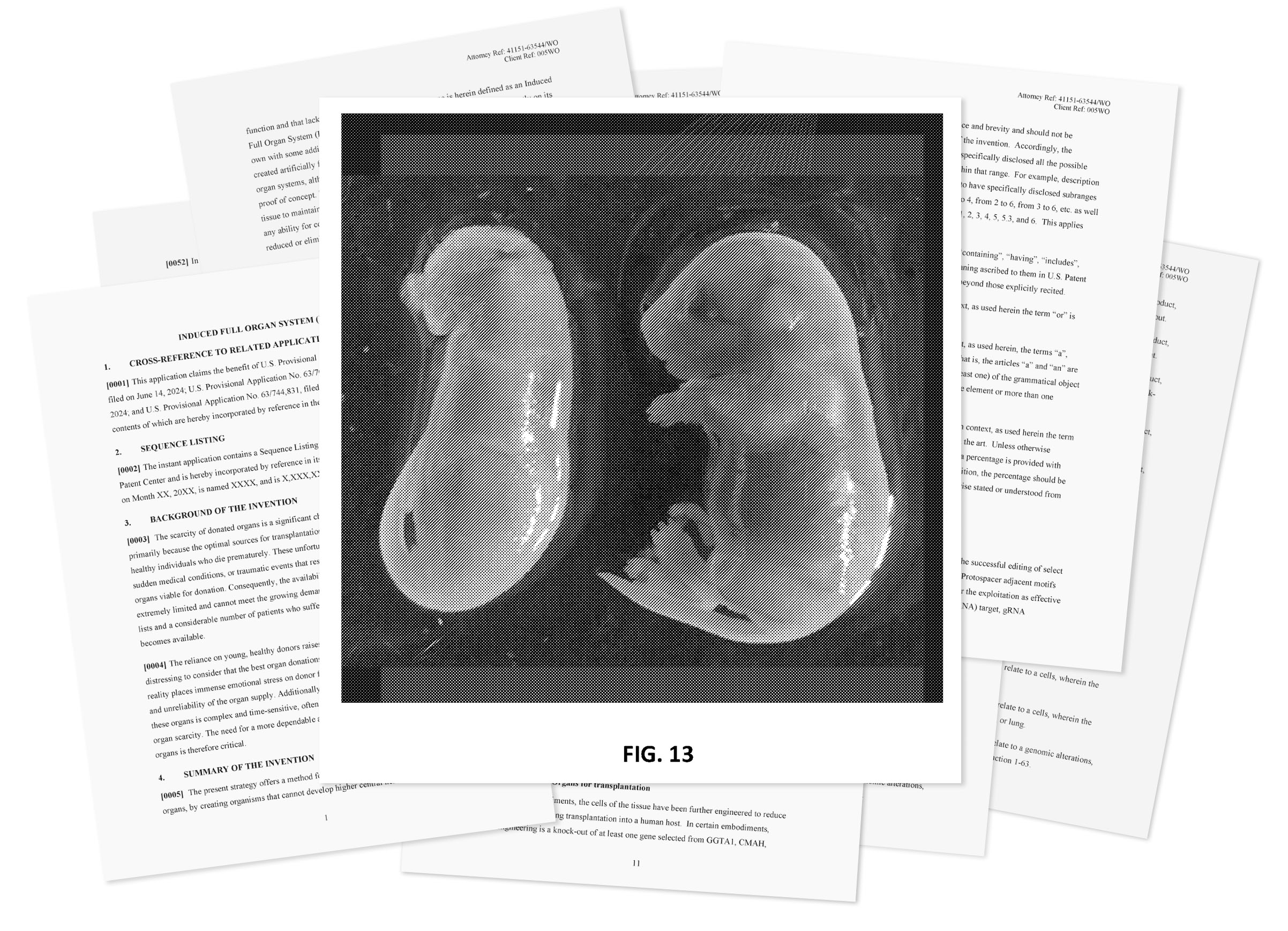
Fig 13 from a patent application
A patent image from Kind Biotechnology shows a mouse pup engineered to lack anatomical features (left) next to a normal animal. The company’s goal is to grow organ “sacks” with a “complete lack of ability to feel, think, or sense.”
WO2025260099 VIA WIPO

According to patent applications filed by the company, Rebo’s team is working to create animals with a “complete lack of ability to feel, think, or sense the environment.” Images included in the patents show mice the company produced that lack a complete brain, and others that don’t have faces or limbs. They did that by deleting genes in embryos using the gene-editing technology CRISPR with the goal of creating a “sack of organs that grows mostly on its own,” with only a minimal nervous system. A cartoon rendering submitted to the patent office shows what looks like a fleshy duffel bag connected to life support tubes. 

In an email, Rebo said his company is working on an “ethical and scalable” way to create animal organs for experimental transplant to humans. He notes that “thousands die while waiting” for an organ. 

Some of Kind’s patent applications do cover the possibility of producing these organ sacks from human cells. Rebo says that’s more of a speculative possibility. But he does see his work as part of the “replacement” approach to longevity. Firstly, that’s because a “scalable production of young, high-quality organs” would let surgeons try transplants in more types of patients, including many with heart disease in old age who aren’t candidates for a transplant now. 

“With abundant high-quality organs, replacement could become a direct form of rejuvenation by replacement of failing parts,” he says. 

And Rebo imagines that simultaneously replacing multiple internal organs (grown together in the sack) could have even broader rejuvenating effects. “Ultimately, replacing failing parts is a direct path to extending healthy human lifespan,” he says. 

Church, who agreed earlier this year to advise Kind Bio, sees this work as part of an effort to “nudge” these technologies “toward something that is more useful and more acceptable from the get-go,” he says. “And then let’s see how society responds to that—rather than jumping to the most repulsive and most useless form, which some of them seem to be aiming for.” 

“There’s one way to find out”

People who know Schloendorn describe a dynamo-like presence who is “100% dedicated” to the goal of extreme life extension. In 2006, he penned a paper in a bioethics journal outlining why the “desire to live forever” is rational, and his doctoral research at the University of Arizona was sponsored by a longevity research organization called the SENS Foundation.  

He’s also well connected. In an interview, Aubrey de Grey, the influential and controversial fundraiser and prognosticator who cofounded SENS, called Schloendorn “one of my protégés.” And around 2010, Peter Thiel reportedly invested $1.5 million in ImmunePath, a company started by Schloendorn to develop stem-cell treatments, though it soon failed. (A representative for Thiel did not respond to a request to confirm the figure.)

By 2021, Schloendorn had moved on, founding R3 Biotechnologies. He began to circulate the body replacement idea and discuss a step-by-step scheme to get there: assess techniques in the lab first, then in monkeys, and maybe eventually in humans. 

A 2023 “letter to stakeholders” signed by Schloendorn begins by saying that “body replacement cloning will require multicomponent genetic engineering on a scale that has never been attempted in primates.” Fortunately, it adds, molecular techniques for “brain knockout” are well known in mice and should also be expected to function in “birthing whole primates,” a class that includes both monkeys and humans. 

Would it work? “There’s one way to find out,” the letter says. 

Wang, the investor at Immortal Dragons, says he put money into R3 after it showed him it is possible to create mice without complete brains. “There were imperfections, but the resulting mice survived, grew up, and to me, that is a pretty strong experiment,” he says; it was evidence enough for him to fund R3’s attempt to “replicate the result in primates.” 

(In its emailed statement, R3 said the company and its founders “never produced any degree of brain alterations in any species, did not attempt to do so, did not hire another party to do so, and have no specific plans to do so in the future.” It added: “We do not work with live non-human primates.”) 

The bigger technical obstacle, though, remains the cloning. Out of 100 attempts to clone an animal, only a few typically succeed. That fact alone makes cloning a human—or a monkey—almost infeasible.

But R3 does seem to have made an effort to tackle the efficiency problem. In one document reviewed by MIT Technology Review, it claims to have implemented improvements to the basic procedure in rodents, referencing a protein, called a histone demethylase, that helps erase a cell’s genetic memory. Adding it can greatly increase the chance that the cell will form a cloned embryo after being injected into an egg in the lab.

Those molecules were used in the first successful cloning of a monkey, which occurred in 2018 in China. But it still wasn’t easy—in fact, it was a huge and costly effort to handle a crowd of monkeys in estrus and perform IVF on them. According to Michigan State’s Cibelli, monkey cloning remains nearly impossible, at least on US territory, just because it’s “unaffordable.”

Nevertheless, success in monkeys did help prove, at least biologically, that human reproductive cloning could be possible. 

The company may also have tried to tackle a second long-standing obstacle to cloning: defects in how the placenta works. Because of such problems, some cloned animals die quickly after birth.

The R3 document refers to a “birthing fix” it developed to further improve the cloning success rate. While MIT Technology Review didn’t learn what R3’s process entails, we found a reference to it on the LinkedIn page of Maitriyee Mahanta, a scientist who cosigned the 2023 letter to R3 stakeholders and is a former research assistant to Hébert. (We were unable to reach Mahanta for comment.)

Her page described her current role as “molecular lead” studying cloning, “birth rate fixing,” and cortical development using cells from nonhuman primates. Her job affiliation is given as the Longevity Escape Velocity Foundation, a nonprofit where de Grey is the president and chief science officer. But de Grey says his foundation only arranged a work visa for Mahanta as part of a partnership “with the company she actually spends her time at.”

Like several other people interviewed for this article, de Grey made a resourceful effort to avoid directly confirming the existence of R3 when we spoke, while at the same time freely discussing theoretical aspects of body cloning technology. For instance, he talked about ways to shorten the wait for your double to grow up to a size suitable for organ harvesting; a further genetic mutation could be added to cause “central precocious puberty” in the clone, he said. This condition causes a growth spurt, even pubic hair, in a toddler. 

Cloning dictators

Who would clone a body and pay to keep it alive for years, until it’s needed? The first customers for this costly technology (if it ever proves feasible) would likely be the ultra-rich or the ultra-powerful. 

Indeed, somehow the world’s top dictators seem to have gotten the memo about replacement parts. In September, a hot mic picked up a conversation between Russian president Vladimir Putin and Chinese leader Xi Jinping as they walked through Beijing with North Korean autocrat Kim Jong Un; in the exchange, the Russian speculated on life extension.  

“Biotechnology is continuously developing. Human organs can be continuously transplanted. The longer you live, the younger you become, and [you can] even achieve immortality,” Putin said through an interpreter.

“Some predict that in this century, humans will live to 150 years old,” Xi responded agreeably.

How the leaders learned of these possibilities is unknown. But scenarios involving dictators are a constant topic among body replacement enthusiasts. 

“There are companies working on this. They are in stealth—we can’t reveal too much about them—but the general concept on this is if you didn’t have any ethical qualms, you could do most of it today,” Will Harborne, the chief investment officer of LongGame Advisors, said last year, during an interview with the podcaster Julian Issa. “If you were the dictator of some country and wanted a clone of yourself, you can already go grow one. You can create a cloned embryo of yourself, you can get a surrogate to carry it to term, and you can grow [a] body until age 18 with a brain, and eventually, if you were a dictator, you could kill them and try to transplant your head on their body.”

“And now no one is suggesting you do that—it’s very unethical—but most of the technology is there,” he said. He noted that the reason for removing the cortex of a clone created for such a purpose is that “we don’t want to kill other people to live forever.” 

Harborne subsequently confirmed to MIT Technology Review that the fund invested $1 million in R3 about a year and a half ago.

In order to make the body replacement process ethical, the clone’s brain needs to be stunted so it lacks consciousness. That is where the interest in birth defects comes in. Remarkable medical scans of kids with a rare condition, hydranencephaly, show a total absence of the cerebral hemispheres. Yet if they are cared for, they may be able to live into their 20s, even though they cannot speak or engage in purposeful movement. 

The technical question, then, is how to intentionally produce such a condition in a clone. Sandberg, the futurist, says he’s visited R3’s lab, talked to Gilman, and sat through a presentation about how genetic engineering can be used to shape brain growth. Previous work has shown that by adding a toxic gene, it is possible to kill specific cell types in a growing embryo but spare others, leading to a mouse without a neocortex.

While Sandberg isn’t an expert in biotechnology, he says R3’s theory looked sensible to him. “I think it’s possible to actually prevent the development of the brain well enough that you can say ‘Yeah, there is almost certainly no consciousness here,’” Sandberg says. “Hence, there can’t be any suffering, or any individual, in a practical sense.”

“I think the overall aim—actually, it looks ethically pretty good,” he says. 
Two monkeys with stuffed animals in a plastic research container
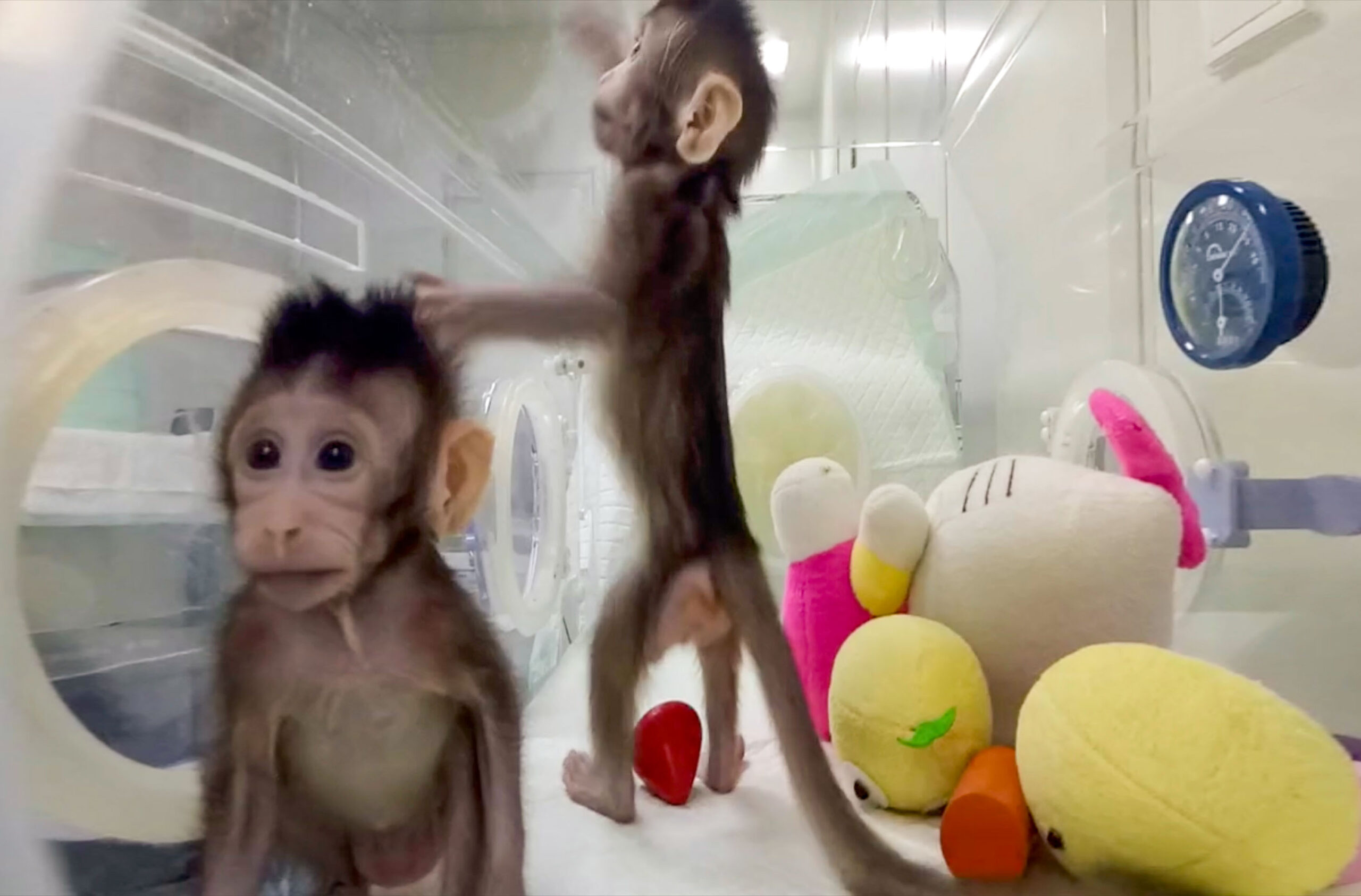
Monkeys were successfully cloned in China for the first time in 2018. Although it was was a costly and difficult undertaking, the feat suggested human cloning is biologically possible.
QIANG SUN AND MU-MING POO/CHINESE ACADEMY OF SCIENCES VIA AP

Yet it could be difficult to really determine where consciousness starts and ends. Under current medical standards, taking the organs of people with hydranencephaly isn’t allowed because they don’t meet the standard of brain death: They have a functioning brain stem. An even more serious problem is evidence that the brain stem alone produces a basic form of consciousness. If that is so, says Bjorn Merker, a neuroscientist who surveyed caretakers of more than a hundred children with hydranencephaly, a plan “to harvest organs from organisms modeled on this condition would be unethical.”

Of course, the most extreme version of the replacement dream isn’t just to take organs. It’s to take over the body entirely. Sergio Canavero, a controversial Italian surgeon who has proposed head and brain transplants, says he was approached for advice by Schloendorn and others a few years ago. “They told me they were looking at a head transplant on a two- or three-year-old,” he says. “I stopped short. How could you even conceive of that? The biomechanical compatibility is not there. You have to wait until at least 14. And I would say 16. It was very clear to me these guys are not surgeons—they are biologists.” 

Canavero says he’s not opposed to cloning bodies for transplant—he thinks it could work. “But if you want to use a clone,” he says, “it must be a nonsentient clone. Otherwise it’s murder, a homicide.”    

MIT Technology Review has not found any evidence that R3 has yet created an “organ sack,” much less a brainless human clone. And there are many reasons to believe their hypothetical future of “full body replacement” will never come to pass—that it is just a live-forever fantasy.

“There are so many barriers,” says Cibelli. It’s a long list: Human cloning is illegal in many countries, it’s unsafe, and few competent experts would want, or dare, to participate. And then there’s the inconvenient fact that for now, there’s no way to grow a brainless clone to birth, except in a woman’s body. Think about it, Cibelli says: “You’d have to convince a woman to carry a fetus that is going to be abnormal.”

Sandberg agrees that is where things could start to get tricky. “The problem here, of course,” he says, “is that the yuck factor is magnificent.”


Shape
Shape
Stay Ahead

Explore More Insights

Stay ahead with more perspectives on cutting-edge power, infrastructure, energy,  bitcoin and AI solutions. Explore these articles to uncover strategies and insights shaping the future of industries.

Shape

An “Unstoppable Web” is a reality that Tether is orchestrating

The current web is optimized for surveillance capitalism; this is positive compared to other ways our data can be used. Data from activities on native utility applications and communications on social messaging applications, both offline and online, are routed through centralized systems managed by admins who decide whether these actions

Read More »

Equinix launches AI platform to simplify control of distributed AI resources

Fabric Intelligence is a software layer that enhances Equinix Fabric, the company’s on-demand global interconnection service, with real-time awareness and automation for AI and multicloud workloads. It is integrated with AI orchestration tools to automate connectivity decisions, taps into live telemetry for deep observability, and dynamically adjusts routing and segmentation

Read More »

NextDecade contractor Bechtel awards ABB more Rio Grande LNG automation work

NextDecade Corp. contractor Bechtel Corp. has awarded ABB Ltd. additional integrated automation and electrical solution orders, extending its scope to Trains 4 and 5 of NextDecade’s 30-million tonne/year (tpy)  Rio Grande LNG (RGLNG) plant in Brownsville, Tex. The orders were booked in third- and fourth-quarters 2025 and build on ABB’s Phase 1 work with Trains 1-3, totaling 17 million tpy.  The scope for RGLNG Trains 4 and 5 includes deployment of an integrated control and safety system consisting of a distributed control system, emergency shutdown, and fire and gas systems. An electrical controls and monitoring system will provide unified visibility of the plant’s electrical infrastructure. These two overarching solutions will provide a common automation platform. ABB will also supply medium-voltage drives, synchronous motors, transformers, motor controllers and switchgear.  The orders also include local equipment buildings—two for Train 4 and one for Train 5— housing critical control and electrical systems in prefabricated modules to streamline installation and commissioning on site. The solutions being delivered to Bechtel use ABB adaptive execution, a methodology for capital projects designed to optimize engineering work and reduce delivery timelines. Phase 1 of RGLNG is under construction and expected to begin operations in 2027. Operations at Train 4 are expected in 2030 and Train 5 in 2031. ABB’s senior vice-president for the Americas, Scott McCay, confirmed to Oil & Gas Journal at CERAWeek by S&P Global in Houston that the company is doing similar work through Tecnimont for Argent LNG’s planned 25-million tpy plant in Port Fourchon, La.; 10-million tpy Phase 1 and 15-million tpy Phase 2. Argent is targeting 2030 completion for its plant.

Read More »

Persistent oil flow imbalances drive Enverus to increase crude price forecast

Citing impacts from the Iran war, near-zero flows through the Strait of Hormuz, accelerating global stock draws, and expectations for a muted US production response despite higher prices, Enverus Intelligence Research (EIR) raised its Brent crude oil price forecast. EIR now expects Brent to average $95/bbl for the remainder of 2026 and $100/bbl in 2027, reflecting what it described as a persistent global oil flow imbalance that continues to draw down inventories. “The world has an oil flow problem that is draining stocks,” said Al Salazar, director of research at EIR. “Whenever that oil flow problem is resolved, the world is left with low stocks. That’s what drives our oil price outlook higher for longer.” The outlook assumes the Strait of Hormuz remains largely closed for 3 months. EIR estimates that each month of constrained flows shifts the price outlook by about $10–15/bbl, underscoring the scale of the disruption and uncertainty around its duration. Despite West Texas Intermediate (WTI) prices of $90–100/bbl, EIR does not expect US producers to materially increase output. The firm forecasts US liquids production growth of 370,000 b/d by end-2026 and 580,000 b/d by end-2027, citing drilling-to-production lags, industry consolidation, and continued capital discipline. Global oil demand growth for 2026 has been reduced to about 500,000 b/d from 1.0 million b/d as higher energy prices and anticipated supply disruptions weigh on economic activity. Cumulative global oil stock draws are estimated at roughly 1 billion bbl through 2027, with non-OECD inventories—particularly in Asia—absorbing nearly half of the impact. A 60-day Jones Act waiver may provide limited short-term US shipping flexibility, but EIR said the measure is unlikely to materially affect global oil prices given broader market forces.

Read More »

Equinor begins drilling $9-billion natural gas development project offshore Brazil

Equinor has started drilling the Raia natural gas project in the Campos basin presalt offshore Brazil. The $9-billion project is Equinor’s largest international investment, its largest project under execution, and marks the deepest water depth operation in its portfolio. The drilling campaign, which began Mar. 24 with the Valaris DS‑17 drillship, includes six wells in the Raia area 200 km offshore in water depths of around 2,900 m. The area is expected to hold recoverable natural gas and condensate reserves of over 1 billion boe. Raia’s development concept is based on production through wells connected to a 126,000-b/d floating production, storage and offloading unit (FPSO), which will treat produced oil/condensate and gas. Natural gas will be transported through a 200‑km pipeline from the FPSO to Cabiúnas, in the city of Macaé, Rio de Janeiro state. Once in operation, expected in 2028, the project will have the capacity to export up to 16 million cu m/day of natural gas, which could represent 15% of Brazil’s natural gas demand, the company said in a release Mar. 24. “While drilling takes place, integration and commissioning activities on the FPSO are progressing well putting us on track towards a safe start of operations in 2028,” said Geir Tungesvik, executive vice-president, projects, drilling and procurement, Equinor. The Raia project is operated by Equinor (35%), in partnership with Repsol Sinopec Brasil (35%) and Petrobras (30%).

Read More »

Woodfibre LNG receives additional modules as construction advances

Woodfibre LNG LP has received two major modules within a week for its under‑construction, 2.1‑million tonne/year (tpy) LNG export plant near Squamish, British Columbia, advancing construction to about 65% complete. The deliveries include the liquefaction module—the project’s heaviest and most critical process unit—and the powerhouse module, which will serve as the plant’s central power and control hub. The liquefaction module, delivered aboard the heavy cargo vessel Red Zed 1, is the 15th of 19 modules scheduled for installation at the site, the company said in a Mar. 24 release. Weighing about 10,847 metric tonnes and occupying a footprint roughly equivalent to a football field, it is among the largest modules fabricated for the project. Once installed and commissioned, the liquefaction module will cool natural gas to about –162°C, converting it into LNG for export. Shortly after the liquefaction module’s arrival, Woodfibre LNG received the powerhouse module, the 16th module delivered to site. Weighing more than 4,200 metric tonnes, the powerhouse module will function as a power and control system, receiving electricity from BC Hydro and managing and distributing power to the plant’s electric‑drive compressors. The Woodfibre LNG project is designed as the first LNG export plant to use electric‑drive motors for liquefaction, replacing conventional gas‑turbine‑driven compressors. The Siemens electric‑drive system will be powered by renewable hydroelectricity from BC Hydro, eliminating the largest operational source of greenhouse gas emissions typically associated with liquefaction, the company said. The project is being built near the community of Squamish on the traditional territory of the Sḵwx̱wú7mesh Úxwumixw (Squamish Nation) and is regulated in part by the Indigenous government.  All 19 modules are expected to arrive on site by spring 2026. Construction is scheduled for completion in 2027. Woodfibre LNG is owned by Woodfibre LNG Ltd. Partnership, which is 70% owned by Pacific Energy Corp.

Read More »

ExxonMobil begins Turrum Phase 3 drilling off Australia’s east coast

@import url(‘https://fonts.googleapis.com/css2?family=Inter:[email protected]&display=swap’); a { color: var(–color-primary-main); } .ebm-page__main h1, .ebm-page__main h2, .ebm-page__main h3, .ebm-page__main h4, .ebm-page__main h5, .ebm-page__main h6 { font-family: Inter; } body { line-height: 150%; letter-spacing: 0.025em; font-family: Inter; } button, .ebm-button-wrapper { font-family: Inter; } .label-style { text-transform: uppercase; color: var(–color-grey); font-weight: 600; font-size: 0.75rem; } .caption-style { font-size: 0.75rem; opacity: .6; } #onetrust-pc-sdk [id*=btn-handler], #onetrust-pc-sdk [class*=btn-handler] { background-color: #c19a06 !important; border-color: #c19a06 !important; } #onetrust-policy a, #onetrust-pc-sdk a, #ot-pc-content a { color: #c19a06 !important; } #onetrust-consent-sdk #onetrust-pc-sdk .ot-active-menu { border-color: #c19a06 !important; } #onetrust-consent-sdk #onetrust-accept-btn-handler, #onetrust-banner-sdk #onetrust-reject-all-handler, #onetrust-consent-sdk #onetrust-pc-btn-handler.cookie-setting-link { background-color: #c19a06 !important; border-color: #c19a06 !important; } #onetrust-consent-sdk .onetrust-pc-btn-handler { color: #c19a06 !important; border-color: #c19a06 !important; } Esso Australia Pty Ltd., a subsidiary of ExxonMobil Corp. and current operator of the Gippsland basin oil and gas fields in Bass Strait offshore eastern Victoria, has started drilling the Turrum Phase 3 project in Australia. This $350-million investment will see the VALARIS 107 jack-up rig drill five new wells into Turrum and North Turrum gas fields within Production License VIC/L03 to support Australia’s east coast domestic gas market. The new wells will be drilled from Marlin B platform, about 42 km off the Gippsland coastline, southeast of Lakes Entrance in water depths of about 60 m, according to a 2025 information bulletin.   <!–> Turrum Phase 3, which builds on nearly $1 billion in recent investment across the Gippsland basin, is expected to be online before winter 2027, the company said in a post to its LinkedIn account Mar. 24. In 2025, Esso made a final investment decision to develop the Turrum Phase 3 project targeting underdeveloped gas resources. The Gippsland Basin joint venture is a 50-50 partnership between Esso Australia Resources and Woodside Energy (Bass Strait) and operated by Esso Australia.  ]–><!–> ]–>

Read More »

The Golden Rule of the oil market: Understanding global price dynamics and emerging exceptions

Mark FinleyBaker Institute, Rice University  In recent weeks, questions surrounding the oil market crisis have been framed around a core principle described as the Golden Rule of the Oil Market: it is a global market. When conditions change anywhere—positively or negatively—prices respond everywhere. That framework helps explain why gasoline prices are rising in the US despite limited direct imports from the Middle East and the US’s status as a significant net exporter of oil. It also explains why oil cargoes that Iran permits to transit the Strait of Hormuz reduce Iran’s leverage over global oil prices, and by extension over US consumers and policymakers concerned about prices at the pump. Alongside its own exports, Iran has allowed a handful of additional tankers to transit the Strait, including several tankers destined for China and LPG shipments for India. The greater the volume of oil transiting the Strait, the smaller the disruption to the global oil market and the less upward pressure on global prices. The same logic applies to US efforts to ease sanctions on Iranian and Russian oil cargoes already at sea, which are unlikely to provide meaningful relief for rising oil prices. Under the Golden Rule, those barrels—having already been produced and shipped—would have found buyers regardless of sanctions, with price discounts sufficient to offset the risk of US penalties, as has been the case for Russian oil since 2022. Exceptions The Golden Rule has described oil market dynamics effectively for decades. However, a small number of potential exceptions have begun to emerge. For now, those exceptions remain relatively inconsequential, though larger risks may be developing. The non-market player There are two ways that supply and demand can be equalized. In a global market, it is achieved by price changes. Prices rise or fall to ensure that there is

Read More »

Executive Roundtable: The AI Infrastructure Credibility Test

For the fourth installment of DCF’s Executive Roundtable for the First Quarter of 2026, we turn to a question that increasingly sits alongside power and capital as a defining constraint. Credibility. As AI-driven data center development accelerates, public scrutiny is rising in parallel. Communities, regulators, and policymakers are taking a closer look at the industry’s footprintin terms of its energy consumption, its land use, and its broader impact on local infrastructure and ratepayers. What was once a relatively low-profile sector has become a visible and, at times, contested presence in regional economies. This shift reflects the sheer scale of the current build cycle. Multi-hundred-megawatt and gigawatt campuses are no longer theoretical in any sense. They are actively being proposed and constructed across key markets. With that scale comes heightened expectations around transparency, accountability, and tangible community benefit. At the same time, the industry faces a more complex regulatory and political landscape. Questions around grid capacity, rate structures, environmental impact, and economic incentives are increasingly being debated in public forums, from state utility commissions to local zoning boards. In this environment, the ability to secure approvals is no longer assured, even in historically favorable markets. The concept of a “social license to operate” has therefore moved to the forefront. Beyond technical execution, developers and operators must now demonstrate that AI infrastructure can be deployed in a way that aligns with community priorities and delivers shared value. In this roundtable, our panel of industry leaders explores what will define that credibility in the years ahead and what the data center industry must do to sustain its momentum in an era of growing public scrutiny.

Read More »

International Data Center Day: Future Frontiers 2030-2070

In honor of this year’s International Data Center Day 2026 (Mar 25), Data Center Frontier presents a forward-looking vision of what the next era of digital infrastructure education—and imagination—could become. As the media partner of 7×24 Exchange, DCF is committed to elevating both the technical rigor and the human story behind the systems that power the AI age. What follows is not reportage, but a plausible future: a narrative exploration of how the next generation might learn to build, operate, and ultimately redefine data centers—from tabletop scale to lunar megacampuses. International Data Center Day, 2030 The Little Grid That Could They called it “Build the Cloud.” Which, to the adults in the room, sounded like branding. To the kids, it sounded literal. On a gymnasium floor somewhere in suburban Ohio (though it could just as easily have been Osaka, or Rotterdam, or Lagos) thirty-two teams of middle school students crouched over sprawling tabletop worlds the size of model train layouts. Only these weren’t towns with plastic trees and HO-scale diners. These were data centers. Tiny ones. Living ones. Or trying to be. Each team had been given the same kit six weeks earlier: modular rack frames no taller than a juice box, fiber spools thin as thread, micro solar arrays, a handful of millimeter-scale wind turbines, and a small fleet of programmable robotic “operators”—wheeled, jointed, blinking with LED status lights. The assignment had been deceptively simple: Design, build, and operate a self-sustaining data center campus. Then make it come alive. Now it was International Data Center Day, 2030, and the judging had begun. The Sound of Small Machines Thinking If you stood at the edge of the gym and closed your eyes, it didn’t sound like a science fair. It sounded like… something else. A low hum of micro-inverters stepping

Read More »

Superconducting the AI Era: Rethinking Power Delivery for Gigawatt Data Centers

For the data center industry, the AI era has already rewritten the rules around capital deployment, site selection, and infrastructure scale. But as the build cycle accelerates into the gigawatt range, a deeper constraint is coming into focus; one that sits beneath generation, beneath interconnection queues, and even beneath permitting. It is the physical act of moving power. The challenge is no longer simply how to procure energy, but how to deliver it efficiently from the grid edge to the campus, across buildings, and ultimately into racks that are themselves becoming industrial-scale power consumers. In this emerging reality, traditional copper-based distribution systems are beginning to show signs of strain not just economically, but physically. In the latest episode of the Data Center Frontier Show Podcast, MetOx CEO Bud Vos frames this moment as a structural turning point for the industry, one where superconducting technologies may begin to shift from theoretical to practical. “When you start looking at gigawatt-type campuses,” Vos explains, “you find three fundamental constraints in the power distribution problem: the grid interconnect, the campus distribution, and then delivery inside the data hall.” Each of these layers compounds the difficulty of scaling infrastructure in a copper-based world. More capacity means more cables, more trenching, more materials, and more complexity in an exponential expansion of the physical systems required to support AI workloads. A Different Kind of Conductor High-temperature superconducting (HTS) wire offers a radically different path forward. Developed from research originating at the University of Houston and now manufactured through advanced thin-film processes, HTS replaces bulk conductive material with a highly efficient layered structure capable of carrying dramatically higher current densities. Vos describes the manufacturing approach in familiar terms for a data center audience: “You can think of it as a semiconductor process. We’re creating thin film depositions on

Read More »

DCF Poll: AI Data Center Assumptions

Matt Vincent is Editor in Chief of Data Center Frontier, where he leads editorial strategy and coverage focused on the infrastructure powering cloud computing, artificial intelligence, and the digital economy. A veteran B2B technology journalist with more than two decades of experience, Vincent specializes in the intersection of data centers, power, cooling, and emerging AI-era infrastructure. Since assuming the EIC role in 2023, he has helped guide Data Center Frontier’s coverage of the industry’s transition into the gigawatt-scale AI era, with a focus on hyperscale development, behind-the-meter power strategies, liquid cooling architectures, and the evolving energy demands of high-density compute, while working closely with the Digital Infrastructure Group at Endeavor Business Media to expand the brand’s analytical and multimedia footprint. Vincent also hosts The Data Center Frontier Show podcast, where he interviews industry leaders across hyperscale, colocation, utilities, and the data center supply chain to examine the technologies and business models reshaping digital infrastructure. Since its inception he serves as Head of Content for the Data Center Frontier Trends Summit. Before becoming Editor in Chief, he served in multiple senior editorial roles across Endeavor Business Media’s digital infrastructure portfolio, with coverage spanning data centers and hyperscale infrastructure, structured cabling and networking, telecom and datacom, IP physical security, and wireless and Pro AV markets. He began his career in 2005 within PennWell’s Advanced Technology Division and later held senior editorial positions supporting brands such as Cabling Installation & Maintenance, Lightwave Online, Broadband Technology Report, and Smart Buildings Technology. Vincent is a frequent moderator, interviewer, and keynote speaker at industry events including the HPC Forum, where he delivers forward-looking analysis on how AI and high-performance computing are reshaping digital infrastructure. He graduated with honors from Indiana University Bloomington with a B.A. in English Literature and Creative Writing and lives in southern New Hampshire with

Read More »

A Faster Path to Power: What Natrium’s NRC Approval Means for AI Infrastructure

The race to build AI infrastructure at scale has exposed a deeper constraint than capital or compute: power that can be delivered on predictable timelines. That constraint is now colliding with a system that has historically moved at the pace of decades. But in early March, a key signal emerged that the equation may be starting to change. A Regulatory Breakthrough at the Moment of Peak Power Demand TerraPower’s Natrium reactor cleared a major milestone with the Nuclear Regulatory Commission, which approved a construction permit for Kemmerer Power Station Unit 1 in Wyoming, representing the company’s first commercial-scale plant. It is the first reactor construction approval the NRC has granted in nearly a decade, and the first for a commercial non-light-water reactor in more than 40 years. More significantly, it is the first advanced reactor to reach this stage under the modern U.S. licensing framework. For an industry increasingly defined by gigawatt-scale AI campuses and compressed build cycles, that milestone lands with unusual timing. Construction Approved — But Not Yet ‘Power Delivered’ The distinction between construction approval and operational readiness is critical. TerraPower has not received a license to generate electricity. What the NRC has granted is permission to begin nuclear-related construction at the Kemmerer site, following safety and environmental review. Before the plant can operate, TerraPower’s subsidiary, US SFR Owner, must still secure a separate operating license. But in practical terms, this is the moment when a project transitions from concept to execution. It is a regulatory green light not for power generation, but for steel, concrete, and capital deployment. And in the context of advanced nuclear, that step has historically been the hardest to reach. An 18-Month Signal to the Market The speed of that approval may ultimately matter as much as the approval itself. TerraPower submitted its construction

Read More »

Return of the PTT: Poste Italiane looks to snap up telco TIM

Poste Italiane sees opportunities in reuniting with the former state-owned telecommunications business: “The creation of an integrated group strategic pillar for the national economy, Italy’s largest connected infrastructure with leading positions in financial and insurance services,” it said in a news release. The company is looking to build some complementary services. “The transaction aims to scale and enhance Poste Italiane’s platform by adding three significant assets: a nationwide fixed and mobile network, a leading position in the country’s cloud and data center infrastructure and the ability to offer secure and seamless connectivity to all stakeholders,” it said. Poste Italiane was already the largest stakeholder in TIM and, as the government is the largest stakeholder in Poste Italiane, we’re getting back to the status quo of the 1980s. There is no sign, however, of other European governments following suit.

Read More »

Microsoft will invest $80B in AI data centers in fiscal 2025

And Microsoft isn’t the only one that is ramping up its investments into AI-enabled data centers. Rival cloud service providers are all investing in either upgrading or opening new data centers to capture a larger chunk of business from developers and users of large language models (LLMs).  In a report published in October 2024, Bloomberg Intelligence estimated that demand for generative AI would push Microsoft, AWS, Google, Oracle, Meta, and Apple would between them devote $200 billion to capex in 2025, up from $110 billion in 2023. Microsoft is one of the biggest spenders, followed closely by Google and AWS, Bloomberg Intelligence said. Its estimate of Microsoft’s capital spending on AI, at $62.4 billion for calendar 2025, is lower than Smith’s claim that the company will invest $80 billion in the fiscal year to June 30, 2025. Both figures, though, are way higher than Microsoft’s 2020 capital expenditure of “just” $17.6 billion. The majority of the increased spending is tied to cloud services and the expansion of AI infrastructure needed to provide compute capacity for OpenAI workloads. Separately, last October Amazon CEO Andy Jassy said his company planned total capex spend of $75 billion in 2024 and even more in 2025, with much of it going to AWS, its cloud computing division.

Read More »

John Deere unveils more autonomous farm machines to address skill labor shortage

Join our daily and weekly newsletters for the latest updates and exclusive content on industry-leading AI coverage. Learn More Self-driving tractors might be the path to self-driving cars. John Deere has revealed a new line of autonomous machines and tech across agriculture, construction and commercial landscaping. The Moline, Illinois-based John Deere has been in business for 187 years, yet it’s been a regular as a non-tech company showing off technology at the big tech trade show in Las Vegas and is back at CES 2025 with more autonomous tractors and other vehicles. This is not something we usually cover, but John Deere has a lot of data that is interesting in the big picture of tech. The message from the company is that there aren’t enough skilled farm laborers to do the work that its customers need. It’s been a challenge for most of the last two decades, said Jahmy Hindman, CTO at John Deere, in a briefing. Much of the tech will come this fall and after that. He noted that the average farmer in the U.S. is over 58 and works 12 to 18 hours a day to grow food for us. And he said the American Farm Bureau Federation estimates there are roughly 2.4 million farm jobs that need to be filled annually; and the agricultural work force continues to shrink. (This is my hint to the anti-immigration crowd). John Deere’s autonomous 9RX Tractor. Farmers can oversee it using an app. While each of these industries experiences their own set of challenges, a commonality across all is skilled labor availability. In construction, about 80% percent of contractors struggle to find skilled labor. And in commercial landscaping, 86% of landscaping business owners can’t find labor to fill open positions, he said. “They have to figure out how to do

Read More »

2025 playbook for enterprise AI success, from agents to evals

Join our daily and weekly newsletters for the latest updates and exclusive content on industry-leading AI coverage. Learn More 2025 is poised to be a pivotal year for enterprise AI. The past year has seen rapid innovation, and this year will see the same. This has made it more critical than ever to revisit your AI strategy to stay competitive and create value for your customers. From scaling AI agents to optimizing costs, here are the five critical areas enterprises should prioritize for their AI strategy this year. 1. Agents: the next generation of automation AI agents are no longer theoretical. In 2025, they’re indispensable tools for enterprises looking to streamline operations and enhance customer interactions. Unlike traditional software, agents powered by large language models (LLMs) can make nuanced decisions, navigate complex multi-step tasks, and integrate seamlessly with tools and APIs. At the start of 2024, agents were not ready for prime time, making frustrating mistakes like hallucinating URLs. They started getting better as frontier large language models themselves improved. “Let me put it this way,” said Sam Witteveen, cofounder of Red Dragon, a company that develops agents for companies, and that recently reviewed the 48 agents it built last year. “Interestingly, the ones that we built at the start of the year, a lot of those worked way better at the end of the year just because the models got better.” Witteveen shared this in the video podcast we filmed to discuss these five big trends in detail. Models are getting better and hallucinating less, and they’re also being trained to do agentic tasks. Another feature that the model providers are researching is a way to use the LLM as a judge, and as models get cheaper (something we’ll cover below), companies can use three or more models to

Read More »

OpenAI’s red teaming innovations define new essentials for security leaders in the AI era

Join our daily and weekly newsletters for the latest updates and exclusive content on industry-leading AI coverage. Learn More OpenAI has taken a more aggressive approach to red teaming than its AI competitors, demonstrating its security teams’ advanced capabilities in two areas: multi-step reinforcement and external red teaming. OpenAI recently released two papers that set a new competitive standard for improving the quality, reliability and safety of AI models in these two techniques and more. The first paper, “OpenAI’s Approach to External Red Teaming for AI Models and Systems,” reports that specialized teams outside the company have proven effective in uncovering vulnerabilities that might otherwise have made it into a released model because in-house testing techniques may have missed them. In the second paper, “Diverse and Effective Red Teaming with Auto-Generated Rewards and Multi-Step Reinforcement Learning,” OpenAI introduces an automated framework that relies on iterative reinforcement learning to generate a broad spectrum of novel, wide-ranging attacks. Going all-in on red teaming pays practical, competitive dividends It’s encouraging to see competitive intensity in red teaming growing among AI companies. When Anthropic released its AI red team guidelines in June of last year, it joined AI providers including Google, Microsoft, Nvidia, OpenAI, and even the U.S.’s National Institute of Standards and Technology (NIST), which all had released red teaming frameworks. Investing heavily in red teaming yields tangible benefits for security leaders in any organization. OpenAI’s paper on external red teaming provides a detailed analysis of how the company strives to create specialized external teams that include cybersecurity and subject matter experts. The goal is to see if knowledgeable external teams can defeat models’ security perimeters and find gaps in their security, biases and controls that prompt-based testing couldn’t find. What makes OpenAI’s recent papers noteworthy is how well they define using human-in-the-middle

Read More »