From GPU Cloud to AI Factory Operator
In sum, CoreWeave is moving beyond its origins as a fast-scaling GPU cloud built on scarcity. The company is increasingly positioning itself as an AI infrastructure operator, where competitive advantage comes from integration across hardware, networking, cooling, platform software, workload orchestration, and early access to NVIDIA’s latest systems.
That positioning has been reinforced by NVIDIA itself. In January, NVIDIA outlined a deeper alignment with CoreWeave focused on building AI factories, accelerating the procurement of land, power, and shell, and validating CoreWeave’s AI-native software and reference architecture.
The partnership also includes deployment of multiple generations of NVIDIA infrastructure across CoreWeave’s platform, including Rubin systems, Vera CPUs, and BlueField data processing units, alongside a $2 billion equity investment. No simple vendor relationship, this is co-development around physical AI infrastructure.
Bell Canada and the Rise of Sovereign AI Capacity
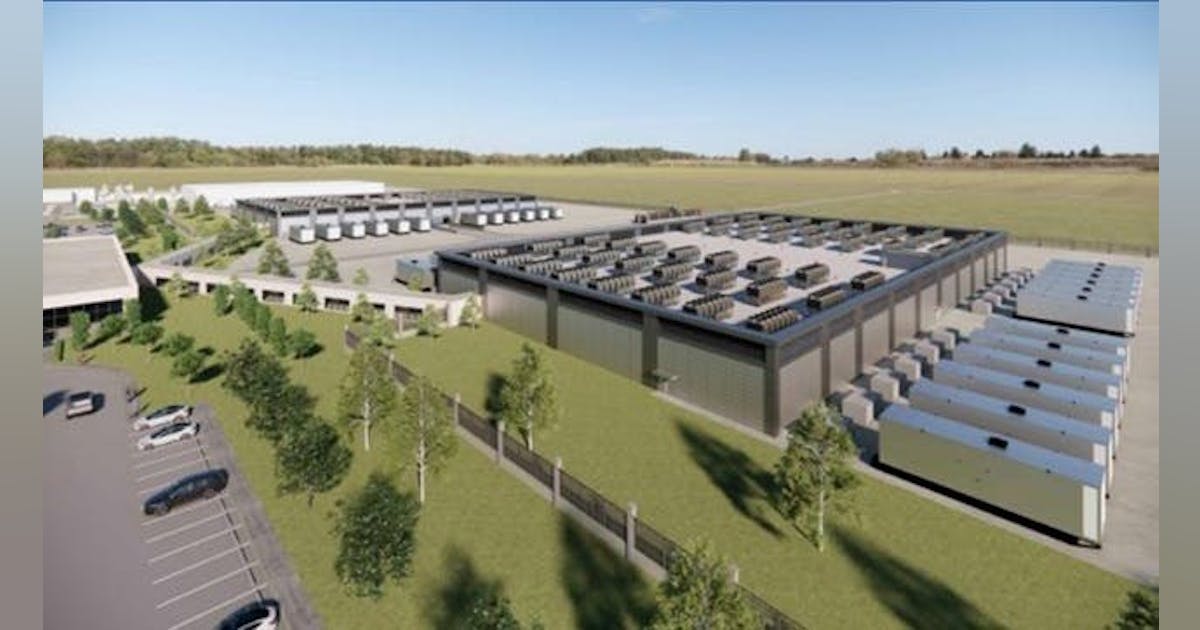
Viewed through that lens, Bell Canada’s Saskatchewan announcement can be seen as part of the same structural shift. On March 16, Bell and the Government of Saskatchewan unveiled plans for a 300 MW AI Fabric data center in the Rural Municipality of Sherwood, outside Regina. CoreWeave is expected to anchor the site’s NVIDIA-based GPU infrastructure, extending its AI-native platform into a sovereign, hyperscale, power-dense environment.
BCE described the project as its largest-ever investment in the province and said it is expected to become Canada’s largest purpose-built AI data center campus. Bell projects up to $12 billion (CDN) in long-term economic impact, along with at least 800 construction jobs and a minimum of 80 permanent roles once the site is operational. More importantly, Bell is explicitly framing the development as a foundation for domestic compute capacity, positioning AI infrastructure as a national asset tied to economic growth and technological sovereignty.
That project extends Bell’s broader sovereign AI strategy. In 2025, the company outlined its AI Fabric roadmap, including a 7 MW Groq-powered inference facility in Kamloops, a second 7 MW site in Merritt, and a 26 MW TRU-linked data center in Kamloops, alongside additional developments in planning. The Saskatchewan campus represents a step-change in scale. What began as a distributed sovereign-AI footprint is now moving into hyperscale territory.
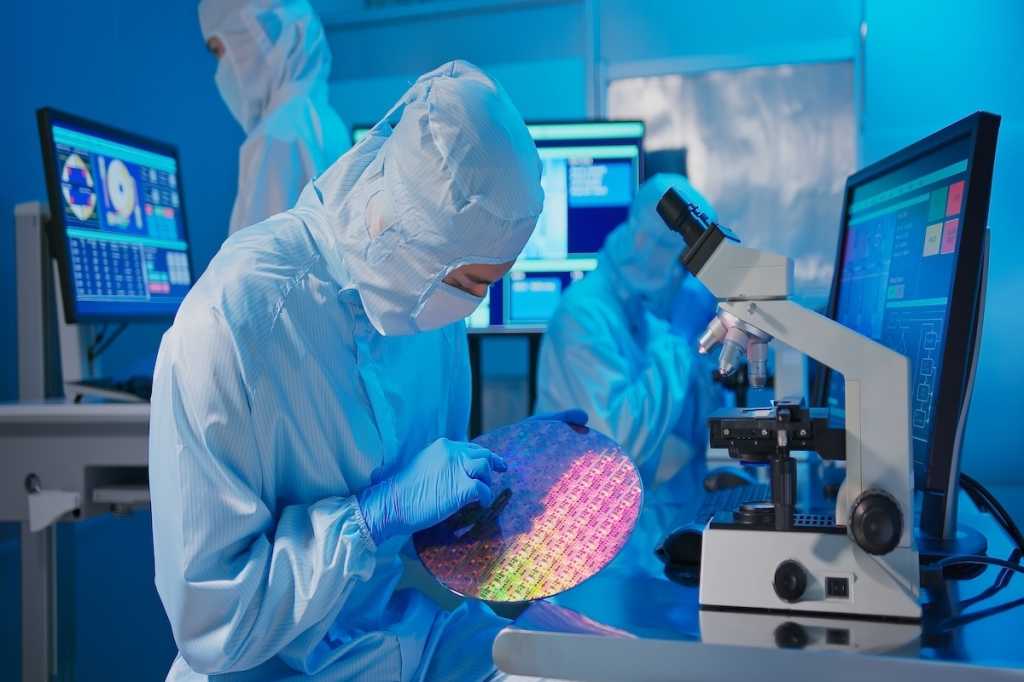
The inclusion of Cerebras introduces a differentiated approach. Bell has indicated that Cerebras will supply its wafer-scale systems for large-scale training and inference, while CoreWeave provides NVIDIA-based GPU infrastructure. The result is a dual-architecture campus: conventional hyperscale GPU clusters paired with a specialized, high-performance Cerebras environment optimized for specific AI workloads.
Two Models, One Direction
The contrast between CoreWeave and Bell Canada is instructive. CoreWeave operates as an AI-native cloud platform, closely aligned with NVIDIA’s roadmap and focused on serving frontier developers and production AI workloads across sectors such as robotics, industrial systems, and financial services.
Bell, by contrast, is building a sovereign compute network shaped by national priorities, regional development, and domestic capacity requirements.
Yet the underlying playbook is converging. Both models are being built around AI-specific assumptions: higher density, greater power intensity, advanced cooling, and tightly integrated software stacks. In both cases, infrastructure is no longer a commodity layer. It is a source of strategic control.
The implication may be broader than either company. Apparently, the constraint in AI is no longer limited to access to chips. It is the ability to design and operate integrated environments that support continuous, production-scale deployment.
AI Infrastructure Becomes a Geopolitical Asset
A geopolitical dimension is now clearly emerging. CoreWeave’s announcements at NVIDIA GTC 2026 align with a U.S.-led model of AI industrialization, where NVIDIA’s platform roadmap, AI factories, and frontier cloud providers form the foundation of deployment. Bell Canada’s Saskatchewan project reflects a parallel shift: allied nations are moving to establish sovereign or nationally anchored compute capacity rather than relying entirely on U.S.-based hyperscale infrastructure.
At its core, this is a question of control. Who owns and operates the physical infrastructure on which next-generation AI systems run? Bell’s AI Fabric positions Canada within that equation, extending domestic capacity while aligning with a broader push among governments to localize critical AI resources.
NVIDIA’s messaging at GTC reinforced the pace of this transition, pointing to rapid expansion across cloud, robotics, physical AI, and enterprise deployments. CoreWeave used that backdrop to emphasize readiness for production-scale AI, while Bell’s announcement that same week demonstrated that sovereign infrastructure is now scaling into the hundreds of megawatts.
Taken together, these signals point to a new buildout cycle. Success will still depend on the traditional fundamentals of hyperscale development (land, power, and cooling) but under more demanding technical conditions: higher rack densities, liquid cooling, advanced interconnects, long-term power visibility, and software platforms capable of managing increasingly autonomous workloads.
CoreWeave’s GTC announcements should be read in that context as a move to control a critical layer of the AI factory stack; combining early access to NVIDIA systems, integrated developer tooling, and production-scale operational environments. Bell’s Saskatchewan project shows that the same logic is now spreading across geographies and institutions, as telecom operators, governments, and sovereign initiatives move to establish their own position within the emerging AI infrastructure landscape.
AI Infrastructure Becomes an Industrial System
The common thread between the GTC announcements and Bell Canada’s Saskatchewan project is not simply that both involve data centers. It is that both reflect the maturation of AI infrastructure into a full industrial system.
CoreWeave is positioning itself as an AI-native execution layer for frontier and enterprise workloads, while Bell is emerging as a sovereign capacity anchor within Canada’s national AI strategy. Even with the inclusion of Cerebras, NVIDIA remains at the center of the ecosystem, pushing partners toward larger, more tightly integrated AI factory deployments.
The shift is structural. What was, until recently, a story about GPU supply has become a broader contest over land, power, cooling, software integration, and sovereignty.
That is why Bell’s 300 MW development and CoreWeave’s GTC announcements belong in the same narrative. Both point to the same conclusion: the next phase of AI will be defined not just by advances in models, but by the physical campuses, regional power strategies, and integrated platforms required to run those models continuously, at scale.