Stay Ahead, Stay ONMINE

A blueprint for using AI to strengthen democracy

Every few centuries, changes in how information moves reshape how societies govern themselves. The printing press spread vernacular literacy, helping give rise to the Reformation and, eventually, representative government. The telegraph made it possible to administer vast nations like the US, accelerating the growth of the modern bureaucratic state. Broadcast media created shared national audiences, which in turn fueled mass democracy. We are now in the early stages of another such shift. Faster than many realize, AI is becoming the primary interface through which we form beliefs and participate in democratic self-governance. If left unchecked, this shift could further strain America’s already fragile institutions. But it could also help address long-standing problems, like lagging civic engagement and deepening polarization. What happens next depends on design choices that are already being made, whether we know it or not. Start with what might be called the epistemic layer—how we come to know things. People are increasingly relying on AI to know what is true, what is happening, and whom to trust. Search is already substantially AI-mediated. The next generation of AI assistants will synthesize information, frame it, and present it with authority. For a growing number of people, asking an AI will become the default way to form views on a candidate, a policy, or a public figure. Whoever controls what these models say therefore has increasing influence over what people believe.  Technology has always shaped the way citizens interact with information. But a new problem will soon arise in the form of personal AI agents, which can change not only how people receive information but how they act on it. These systems will conduct research, draft communications, highlight causes, and lobby on a user’s behalf. They will inform decisions such as how to vote on a ballot measure, which organizations are worth supporting, or how to respond to a government notice. They will, in a meaningful sense, begin to mediate the relationship between individuals and the institutions that govern them. We’ve already seen with social media what happens when algorithms optimize for engagement over understanding. Platforms do not need to have an explicit political agenda to produce polarization and radicalization. An agent that knows your preferences and your anxieties—one shaped to keep you engaged—poses the same risks. And in this case the risks may be even more difficult to detect, because an agent presents itself as your advocate. It speaks for you, acts on your behalf, and may earn trust precisely through that intimacy. Now zoom out to the collective. AI agents and humans could soon participate in the same forums, where it may be impossible to tell them apart. Even if every individual AI agent were well-designed and aligned with its user’s interests, the interactions of millions of agents could produce outcomes that no individual wanted or chose. For example, research shows that agents displaying no individual bias can still generate collective biases at scale. And setting aside what agents do to each other, there is what they do for their users. A public sphere in which everyone has a personalized agent attuned to their existing views is not, in aggregate, a public sphere at all. It is a collection of private worlds, each internally coherent but collectively inhospitable to the kind of shared deliberation that democracy requires. Taken together, these three transformations—in how we know, how we act, and how we engage in collective governance—amount to a fundamental change in the texture of citizenship. In the near future, people will form their political views through AI filters, exercise their civic agency through AI agents, and participate in institutions and public discussions that are themselves shaped by the interactions of millions of such agents. Today’s democracy is not ready for this. Our institutions were designed for a world in which power was exercised visibly, information traveled slowly enough to be contested, and reality felt more shared, if imperfectly. All of this was already fraying long before generative AI arrived. And yet this need not be a story of decline. Avoiding that outcome requires us to design for something better. On the informational layer, AI companies must ramp up existing efforts to ensure that models’ outputs are truthful. They should also explore some promising early findings that AI models can help reduce polarization. A recent field evaluation of AI-generated fact checks on X found that people with a variety of political viewpoints deemed AI-written notes more helpful than human-written ones. The paper is yet to be peer-reviewed, but that is a potentially revolutionary finding: AI-assisted fact-checking may be able to achieve the kind of cross-partisan credibility that has eluded most manual human efforts. Greater understanding of and transparency about how models make these assertions and prioritize sources in the process could help build further public trust. On the agentic layer, we need ways to evaluate whether AI agents faithfully represent their users. An agent must never have an agenda of its own or misrepresent its user’s views—a technically daunting requirement in domains where users may have not explicitly stated any preferences. But faithful representation also cannot become an accessory to motivated reasoning. An agent that refuses to present uncomfortable information, that shields its user from ever questioning prior beliefs or fails to adjust to a change of heart, is not acting in the person’s best interest. Finally, on the institutional level, policymakers should hurry to harness AI’s potential to make governance more responsive and legitimate. Several states and localities are already using AI-mediated platforms to conduct democratic deliberation at scale, building on research showing that AI mediators can help citizens find common ground. As agents become increasingly common participants in public input processes—and there is already evidence that bots are skewing those processes—identity verification for both humans and their agentic proxies must be built in from the start. What is needed is a new generation of democratic infrastructure, technological and institutional, built for the world that is actually here. Failing to design for democratic outcomes, in a domain this consequential, means designing for something else. And the history of unaccountable power does not leave much room for optimism about what that something else tends to be. Andrew Sorota and Josh Hendler lead work on AI and democracy at the Office of Eric Schmidt.

Every few centuries, changes in how information moves reshape how societies govern themselves. The printing press spread vernacular literacy, helping give rise to the Reformation and, eventually, representative government. The telegraph made it possible to administer vast nations like the US, accelerating the growth of the modern bureaucratic state. Broadcast media created shared national audiences, which in turn fueled mass democracy.

We are now in the early stages of another such shift. Faster than many realize, AI is becoming the primary interface through which we form beliefs and participate in democratic self-governance. If left unchecked, this shift could further strain America’s already fragile institutions. But it could also help address long-standing problems, like lagging civic engagement and deepening polarization. What happens next depends on design choices that are already being made, whether we know it or not.

Start with what might be called the epistemic layer—how we come to know things. People are increasingly relying on AI to know what is true, what is happening, and whom to trust. Search is already substantially AI-mediated. The next generation of AI assistants will synthesize information, frame it, and present it with authority. For a growing number of people, asking an AI will become the default way to form views on a candidate, a policy, or a public figure. Whoever controls what these models say therefore has increasing influence over what people believe. 

Technology has always shaped the way citizens interact with information. But a new problem will soon arise in the form of personal AI agents, which can change not only how people receive information but how they act on it. These systems will conduct research, draft communications, highlight causes, and lobby on a user’s behalf. They will inform decisions such as how to vote on a ballot measure, which organizations are worth supporting, or how to respond to a government notice. They will, in a meaningful sense, begin to mediate the relationship between individuals and the institutions that govern them.

We’ve already seen with social media what happens when algorithms optimize for engagement over understanding. Platforms do not need to have an explicit political agenda to produce polarization and radicalization. An agent that knows your preferences and your anxieties—one shaped to keep you engaged—poses the same risks. And in this case the risks may be even more difficult to detect, because an agent presents itself as your advocate. It speaks for you, acts on your behalf, and may earn trust precisely through that intimacy.

Now zoom out to the collective. AI agents and humans could soon participate in the same forums, where it may be impossible to tell them apart. Even if every individual AI agent were well-designed and aligned with its user’s interests, the interactions of millions of agents could produce outcomes that no individual wanted or chose. For example, research shows that agents displaying no individual bias can still generate collective biases at scale. And setting aside what agents do to each other, there is what they do for their users. A public sphere in which everyone has a personalized agent attuned to their existing views is not, in aggregate, a public sphere at all. It is a collection of private worlds, each internally coherent but collectively inhospitable to the kind of shared deliberation that democracy requires.

Taken together, these three transformations—in how we know, how we act, and how we engage in collective governance—amount to a fundamental change in the texture of citizenship. In the near future, people will form their political views through AI filters, exercise their civic agency through AI agents, and participate in institutions and public discussions that are themselves shaped by the interactions of millions of such agents.

Today’s democracy is not ready for this. Our institutions were designed for a world in which power was exercised visibly, information traveled slowly enough to be contested, and reality felt more shared, if imperfectly. All of this was already fraying long before generative AI arrived. And yet this need not be a story of decline. Avoiding that outcome requires us to design for something better.

On the informational layer, AI companies must ramp up existing efforts to ensure that models’ outputs are truthful. They should also explore some promising early findings that AI models can help reduce polarization. A recent field evaluation of AI-generated fact checks on X found that people with a variety of political viewpoints deemed AI-written notes more helpful than human-written ones. The paper is yet to be peer-reviewed, but that is a potentially revolutionary finding: AI-assisted fact-checking may be able to achieve the kind of cross-partisan credibility that has eluded most manual human efforts. Greater understanding of and transparency about how models make these assertions and prioritize sources in the process could help build further public trust.

On the agentic layer, we need ways to evaluate whether AI agents faithfully represent their users. An agent must never have an agenda of its own or misrepresent its user’s views—a technically daunting requirement in domains where users may have not explicitly stated any preferences. But faithful representation also cannot become an accessory to motivated reasoning. An agent that refuses to present uncomfortable information, that shields its user from ever questioning prior beliefs or fails to adjust to a change of heart, is not acting in the person’s best interest.

Finally, on the institutional level, policymakers should hurry to harness AI’s potential to make governance more responsive and legitimate. Several states and localities are already using AI-mediated platforms to conduct democratic deliberation at scale, building on research showing that AI mediators can help citizens find common ground. As agents become increasingly common participants in public input processes—and there is already evidence that bots are skewing those processes—identity verification for both humans and their agentic proxies must be built in from the start.

What is needed is a new generation of democratic infrastructure, technological and institutional, built for the world that is actually here. Failing to design for democratic outcomes, in a domain this consequential, means designing for something else. And the history of unaccountable power does not leave much room for optimism about what that something else tends to be.

Andrew Sorota and Josh Hendler lead work on AI and democracy at the Office of Eric Schmidt.

Shape
Shape
Stay Ahead

Explore More Insights

Stay ahead with more perspectives on cutting-edge power, infrastructure, energy,  bitcoin and AI solutions. Explore these articles to uncover strategies and insights shaping the future of industries.

Shape

Ovintiv raises 2026 guidance on productivity gains

Speaking to analysts and investors on July 24 after Ovintiv reported its second-quarter results, McCracken and his team said the efficiency gains stem from a cocktail of innovations around well designs, development patterns, and the usage of proppants and surfactants, among other things. “It starts with the culture, that relentless

Read More »

Atos launches sovereign cloud service to power comeback

Atos has launched a new sovereign cloud platform aimed squarely at European public sector bodies, healthcare providers and defense organizations. It’s the latest effort by European companies in their fight back against US dominance. Atos Sovereign Cloud offers a range of controls for data management, providing customers with resilience and

Read More »

Magnolia expands Giddings position with $4-billion WildFire Energy acquisition

In the filing, Magnolia said WildFire’s second-quarter 2025 production is expected to average 53,000 boe/d, about 70% oil, primarily from the Eagle Ford, Austin Chalk, and Woodbine formations. Magnolia said the acquisition would strengthen its position in the Eagle Ford/Austin Chalk trend by expanding its inventory of high-return drilling locations, adding development flexibility and longer laterals, and leveraging its technical expertise to improve well performance and lower costs. “WildFire has a large, low-decline oily PDP base with historic development centered on the Eagle Ford. While there are significant future Eagle Ford development opportunities, our technical teams see extensive future potential in the Austin Chalk with further upside in the Woodbine as well as other appraisal opportunities that should expand on our success in Giddings since 2018,” said Chris Stavros, Magnolia’s chairman, president, and chief executive officer. The deal is expected to result in a pro forma position in Giddings of more than 1.25 million net acres, add more than 500 miles of gas-gathering pipelines, and offer various cost savings, the company said. “Magnolia is guiding to $100 million in run rate synergies by the end of 2027, with savings coming from the chance to deploy long laterals, shared facilities and infrastructure and additional sand sourcing for operations from WildFire’s in-basin mine. As always, successful execution will be key for the longer-term success of the deal,” Enverus’ Dittmar said. Total consideration consists of $2.65 billion in cash, 32.2 million shares of Magnolia Class A common stock, and the assumption of $600 million of outstanding debt.

Read More »

Vår Energi inks deal to acquire BlueNord

Vår Energi ASA has agreed to buy BlueNord ASA as part of a proposed merger that, if completed, will expand Vår Energi’s presence beyond the Norwegian Continental Shelf (NCS), positioning the operator as Europe’s largest independent oil and gas producer. Acqusition of BlueNord would add producing assets on the Danish Continental Shelf (DCS) to Vår Energi’s current holdings, with the combined post-merger portfolio anticipated to lift long-term production to about 450,000 boe/d, with about 2.4 billion boe of reserves and resources and an estimated reserve and resource life of about 15 years. BlueNord’s portfolio includes interests in the Tyra, Halfdan, Dan, and Gorm hub areas, which are part of the Danish Underground Consortium operated by TotalEnergies SE. The assets are expected to contribute about 45,000 boe/d of net production beginning in 2026 and include about 195 million boe of net 2P reserves and 2C contingent resources, extending production beyond 2040. “The transaction marks a significant milestone in Vår Energi’s growth journey, creating the largest independent producer of oil and gas in Europe with a long-term production target of [about 450,000 b/d] and reinforcing our role as a reliable and secure supplier of energy to Europe,” said Nick Walker, Vår Energi’s chief executive officer. Vår Energi said the DCS assets complement its existing North Sea operations because of their geological, operational, and fiscal similarities to the NCS. The combination also expands the company’s exposure to European natural gas markets through access to the Nybro and Den Helder gas delivery points. The combined portfolio would maintain a production mix of about 65% oil and 35% natural gas, with operating costs projected to remain at $10-11/boe. The proposed merger remains subject to approval by BlueNord shareholders, regulatory and governmental approvals, license and partner consent, and other customary conditions. If approved, the companies said

Read More »

Bahrain’s GPIC enlists Fluor for new unit at Sitra complex

Gulf Petrochemical Industries Co. (GPIC) has awarded Fluor Corp. a contract to execute front-end engineering and design (FEED) for a proposed aromatics plant to be built at GPIC’s petrochemicals complex located across 60 hectares of reclaimed land in Sitra, Bahrain. As part of the contract, Fluor will deliver a FEED study based on commercially proven process technologies for the plant’s targeted production of 1.2 million tonnes/year (tpy) of paraxylene and 500,000 tpy of benzene, the service provider said on July 21. Critical building blocks for plastics, polyester fibers, and packaging materials, paraxylene and benzene production from the plant would help meet global demand for high‑performance consumer and industrial products, as well as expand capabilities of GPIC’s current operations at Sitra, Fluor said. GPIC’s existing complex currently uses a feedstock of natural gas domestically produced in Bahrain to produce about 1.2 million tonnes/day of ammonia, 1.2 million tonnes/day of methanol, and 1.7 million tonnes/day of urea. Neither Fluor nor GPIC revealed details regarding a timeline for completion of the proposed aromatics plant. GPIC is a joint venture of Bahrain Petroleum Co. (33.3%), SABIC Agri-Nutrients Investment Co. (33.3%), and Kuwait’s Petrochemical Industries Co. (PIC; 33.3%).

Read More »

Oil prices surge as Hormuz, Bab el-Mandeb risks escalate amid renewed US–Iran tensions

Oil prices jumped on Wednesday, July 22, with escalating geopolitical tensions and mounting risks to key maritime chokepoints driving the rally. International Brent crude rose nearly 5% to above $95/bbl, its highest level in almost 6 weeks, while US crude climbed more than 4% to above $88/bbl. The gains extend a strong upward trend, with prices up about 30% since the start of the month and more than 55% year to date, reversing declines seen after a mid-June memorandum of understanding (MOU) between the US and Iran. Stay updated on oil price volatility, shipping disruptions, LNG market analysis, and production output through OGJ’s Iran war content hub. The earlier agreement, aimed at de-escalating conflict and reopening the Strait of Hormuz, was declared “over” on July 8 by President Donald Trump. Since then, hostilities have intensified, with US forces carrying out an 11th consecutive night of strikes on Iran. Comments from US Secretary of State Marco Rubio further dampened expectations for near-term diplomacy, noting that while Washington remains open to talks, Iran does not appear to be engaging seriously. At the same time, security risks to global shipping have increased. The UK Maritime Trade Operations (UKMTO)  has reported multiple recent attacks on vessels in the region, including incidents that forced crews to abandon ships. As a result, traffic through the Strait of Hormuz has fallen sharply, with just 13 vessels transiting Monday and 9 on Tuesday, according to MarineTraffic data. Concerns are also growing at the Bab el-Mandeb Strait, another critical oil transit route linking the Red Sea to the Gulf of Aden. Iranian-backed Houthi forces in Yemen have threatened a maritime blockade targeting Saudi Arabia, raising fears of broader supply disruptions. While vessel traffic through Bab el-Mandeb remains relatively steady—73 ships transited Tuesday—it has edged lower and signs of hesitation among

Read More »

Global LNG trade hits record in 2025 as 2026 tests market resilience

Global LNG trade reached a record 437 million tonnes in 2025, up 6.3% year on year (y-o-y) and marking the fastest growth since 2022, according to the International Gas Union’s (IGU) World LNG Report 2026. The increase of roughly 25 million tonnes was driven primarily by rising US supply, alongside higher exports from Qatar, Malaysia, Angola, and Nigeria. Canada and the Mauritania–Senegal project also shipped their first LNG cargoes, expanding the pool of exporting countries. Investment kept pace with market growth. Developers sanctioned 68.4 million tonnes/year (tpy) of new liquefaction capacity in 2025—the highest annual total since 2019—bringing approvals over the 2021–25 period to about 206 million tpy, roughly double the volume sanctioned in the previous 5-year cycle. Much of the new capacity was concentrated in US Gulf Coast projects. The outlook for 2026, however, is more uncertain. The Middle East conflict has knocked Qatar and the UAE—together about 16% of global liquefaction capacity—off the market for periods this year, and missile strikes on Qatar’s Ras Laffan complex are expected to keep roughly 12.8 million tpy of capacity offline for 3-5 years. Shell PLC’s separately published LNG Outlook 2026 is blunter about the near-term picture: Depending on how quickly the Strait of Hormuz reopens, 2026 could see global LNG trade contract year-on-year—something that’s never happened before in the past decade of rapid growth Shell has tracked. The Asia Pacific has absorbed most of the supply shock so far, responding through storage draws, fuel switching, demand curtailment and increased spot buying, while a wave of US cargoes has been rerouted from Europe toward Asia to fill the gap. Despite near-term volatility, both reports highlight a strong long-term trajectory. IGU expects global LNG supply capacity, including existing and under-construction projects, to exceed 700 million tonnes by 2030, a roughly 40% increase from

Read More »

INA discovers gas in northern Adriatic

Croatia’s Industrija Nafte DD (INA) has discovered more gas as part of a five-well drilling campaign in the northern Adriatic Sea offshore Croatia.  The first well in the campaign, Ana-4 DIR in the existing North Adriatic field, has been completed after reaching a total depth of 1,282 m. Drilling operations were carried out by the Labin drilling rig, operated by the crew of INA’s service company CROSCO. Initial testing across three reservoirs delivered a total gas flow rate of about 160,000 cu m/d. Preparations are under way to tie the well into the surface production system to carry out an extended well test aimed at reservoir clean-up, detailed characterization of production potential, and collection of key data to support the preparation of the reserves report. The successful completion of the first well confirmed the remaining gas potential of offshore fields that INA will continue to develop in the coming years, the company said. The Labin rig is now being moved to the location of IKA JZ-6 DIR, the next well in the campaign. Construction investment in the five wells is expected to total about EUR 65 million.

Read More »

When Buildability Breaks: What Prince William and New York Signal for Data Center Development

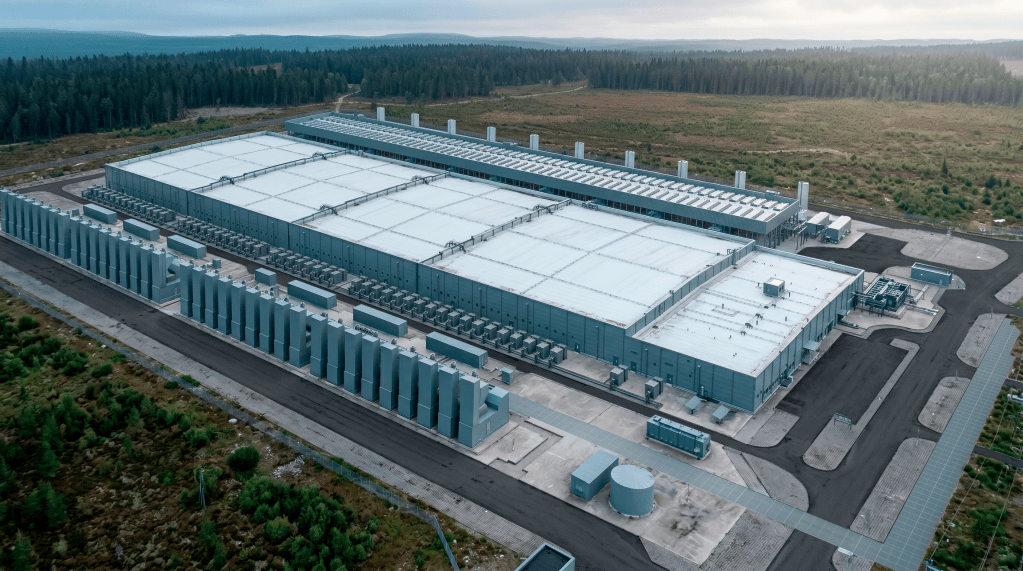
For several years, the Prince William Digital Gateway represented data center ambition at its largest scale: a proposed 2,100-acre technology corridor near Gainesville, Virginia, capable of accommodating tens of millions of square feet of digital infrastructure. Its location also made it uniquely contentious. The corridor bordered Manassas National Battlefield Park and other historic, environmental and residential resources, drawing the data center development debate beyond its usual industry and land-use constituencies. Opposition increasingly centered not only on the project’s scale, but on whether development of that magnitude belonged alongside one of the country’s most significant Civil War landscapes. In July 2026, that vision effectively ended. QTS Data Centers terminated its participation in the Digital Gateway and withdrew its remaining petitions before the Supreme Court of Virginia. The decision followed Compass Datacenters’ withdrawal in April, leaving neither of the project’s original developers pursuing the corridor. QTS said it reached the decision after “careful consideration,” while emphasizing that Virginia remains an important market for the company. From Proposed Capacity to Executable Capacity The collapse of the Digital Gateway is more than the cancellation of one unusually large development. It comes as the data center industry confronts a widening gap between announced capacity and executable capacity. Power remains the most visible constraint. But permitting discipline, environmental review, community acceptance and the durability of political support are increasingly determining whether a project can progress from land control and conceptual capacity to construction and operation. A separate development in New York underscored that shift less than two weeks after QTS withdrew. On July 14, Gov. Kathy Hochul issued Executive Order 62, establishing what the state describes as the nation’s first statewide moratorium on new hyperscale data centers. The order temporarily holds in abeyance certain incomplete state environmental permit applications for data centers capable of drawing at

Read More »

Q&A: Google’s AI and computing chief talks about its shapeshifting data centers

Mark Lohmeyer: We’ve seen the rise of agents and agentic use cases. Years ago, it was the chat phase: Ask a question, get an answer. Now we’re in the agentic era, where you express your intent, agents spin off multiple sub-agents, working in parallel, preserving state. This is a radical shift in what infrastructure needs to do; make them fast, cost effective, secure, reliable. We’re delivering infrastructure optimized for the age of agents. NW: What’s the goal of the infrastructure buildout, and what should customers expect regarding costs? ML: Ultimately, it’s about enabling customers with leading-edge capabilities and models at scale cost-effectively. With agents, inference transactions increase by 50x, 100x versus non-agentic workloads. We’re driving the cost per transaction down exponentially. In our latest platforms, we reduce the cost by almost 2x for the same work. Customers serve twice the number of users at the same cost, directly driving profitability.

Read More »

Google transforms its data center architecture for agent era

Google adjusted the Google Kubernetes Engine into an agent-native environment, where agents could be quickly spun up in sandboxes and containers. “From an infrastructure perspective, you need to spin up a bunch of TPUs or GPUs very rapidly. Then you need to be able to run them and spin them back down,” Lohmeyer said. Google also made drastic improvements to its silicon to support its middleware changes. It recently introduced new AI chips, with the TPU-8t for training, and TPU-8i for inference. The 8t chip has three times more computing power than the previous-generation Ironwood chip. The 8i chip has 384 megabytes of SRAM and 288GB of HBM3e memory, which is 50% more than the previous-generation chip. The platform is optimized for KV cache (key-value cache), which stores important contextual information needed by agents to make decisions, which reduces the round trips to other memory and storage systems. “Being able to store more of the KV cache directly on the chip allows you to respond much more rapidly and cost-effectively,” Lohmeyer said.

Read More »

10 Reasons You Cannot Afford to Miss DCF Trends Summit 2026

The data center industry has no shortage of AI infrastructure ambition. What it lacks is certainty. Power is harder to secure. Designs are advancing faster than facilities can be built. Supply chains remain vulnerable. Liquid cooling is adding operational demands. Projects that look viable on paper can still stall on permitting, commissioning or community opposition. The question in 2026 is no longer how large the AI opportunity may become. It is what can actually be delivered, and who has learned how to deliver it. That question defines the 2026 Data Center Frontier Trends Summit, August 4–6 at the Hyatt Regency Reston. Across three days, the people building, powering, financing and operating next-generation infrastructure will examine what is working, where execution is failing and how the market is responding. This is not a conference about whether AI will create demand. It is about who will be able to meet it. The advantage will belong to those who join the conversation before its conclusions become market consensus. Here are 10 reasons to be in the room. 1. The industry has entered the execution era For several years, the market has been defined by projected demand, capacity, density and investment. The next phase will be defined by execution. AI data center announcements remain abundant. Energized, commissioned and operational capacity is harder to find. DCFTS begins with a live editorial calibration, followed by “The New Geography of AI,” featuring EdgeCore CEO Lee Kestler, Data Center Frontier founder Rich Miller and DCF Editor in Chief Matt Vincent. The focus: how power, entitled land, utility partnerships and execution speed are determining where AI capacity can be built—and who can deliver it. Demand creates opportunity. Execution determines who captures it. 2. Power will be treated as the foundation of AI strategy Power is no longer one workstream

Read More »

Time to Power: Sage Geosystems CEO Cindy Taff on Geothermal’s AI Infrastructure Moment

Three years ago, the data center industry’s energy conversation was largely framed around emissions. Hyperscale operators were setting carbon-free energy targets, signing renewable power agreements, and aligning their expanding infrastructure portfolios with corporate sustainability commitments. The arrival of generative AI has not eliminated those priorities. But it has reordered them. “Three years ago, data center energy, they were really focused on low emissions, no emissions,” said Cindy Taff, CEO of Sage Geosystems. “Now the primary challenge is just enough energy.” Speaking on the Data Center Frontier Show podcast, Taff described an energy market being reshaped by the speed and physical scale of AI infrastructure development. After decades of relatively flat U.S. electricity demand, AI has introduced a new class of concentrated, rapidly arriving industrial load. The result is a shift away from thinking only about how much generating capacity exists in aggregate and toward a harder question: Can usable power be delivered at a specific site, on a predictable schedule, in the quantities an AI campus requires? For hyperscalers, neocloud providers, data center developers, utilities, and energy companies, that distinction is becoming central to project execution. “I think time to power is the most precious metric right now versus cost or total capacity,” Taff said. Capacity on Paper Is Not Power at the Site Announcements of new generation can create the appearance of an energy system capable of meeting rising data center demand. But a megawatt located far from a planned campus, trapped behind a transmission constraint, or unavailable until the next decade has limited value to a developer trying to energize an AI facility within several years. “Aggregate capacity is not going to solve the problem if the power really isn’t where and when you need it,” Taff said. Data centers are large physical facilities tied to specific parcels,

Read More »

Tech Explainer: Data Center Cooling – Air, Evaporative, Liquid, and Hybrid Approaches

Data Center Cooling Glossary The following definitions reflect common terminology used in Department of Energy guidance, ASHRAE TC 9.9 materials, Berkeley Lab resources and Green Grid efficiency metrics. Adiabatic Cooling — A cooling process that uses water evaporation to lower the temperature of air before it reaches a heat exchanger or cooling coil. It can reduce compressor demand but consumes water when evaporative assistance is active. Air-Cooled Data Center — A facility in which heat is removed from IT equipment primarily by moving conditioned air through servers, even if that heat is later transferred to water or refrigerant elsewhere in the cooling system. Air Handler — Equipment that moves, filters and conditions air before delivering it to a data hall or other controlled space. Air-Side Economizer — A system that uses suitable outdoor air, either directly or mixed with return air, to reduce or avoid compressor-based refrigeration. Airflow Management — The practice of delivering conditioned air where it is needed while preventing hot exhaust air from recirculating into server inlets. Approach Temperature — The temperature difference between the two fluids leaving a heat exchanger at their closest thermal point. In a cooling tower, it commonly refers to the difference between leaving-water temperature and entering-air wet-bulb temperature. A smaller approach generally indicates more effective heat transfer. ASHRAE TC 9.9 — The ASHRAE technical committee focused on mission-critical facilities, data centers, technology spaces and electronic equipment. It is a major source of environmental and thermal guidance for data center operators and equipment manufacturers. Blanking Panel — A panel installed in unused rack spaces to prevent hot exhaust air from recirculating to server intakes. British Thermal Unit, or BTU — A unit of heat energy commonly used to express the heating or cooling capacity of equipment. Cabinet — An enclosure, also commonly called

Read More »

Microsoft will invest $80B in AI data centers in fiscal 2025

And Microsoft isn’t the only one that is ramping up its investments into AI-enabled data centers. Rival cloud service providers are all investing in either upgrading or opening new data centers to capture a larger chunk of business from developers and users of large language models (LLMs).  In a report published in October 2024, Bloomberg Intelligence estimated that demand for generative AI would push Microsoft, AWS, Google, Oracle, Meta, and Apple would between them devote $200 billion to capex in 2025, up from $110 billion in 2023. Microsoft is one of the biggest spenders, followed closely by Google and AWS, Bloomberg Intelligence said. Its estimate of Microsoft’s capital spending on AI, at $62.4 billion for calendar 2025, is lower than Smith’s claim that the company will invest $80 billion in the fiscal year to June 30, 2025. Both figures, though, are way higher than Microsoft’s 2020 capital expenditure of “just” $17.6 billion. The majority of the increased spending is tied to cloud services and the expansion of AI infrastructure needed to provide compute capacity for OpenAI workloads. Separately, last October Amazon CEO Andy Jassy said his company planned total capex spend of $75 billion in 2024 and even more in 2025, with much of it going to AWS, its cloud computing division.

Read More »

John Deere unveils more autonomous farm machines to address skill labor shortage

Join our daily and weekly newsletters for the latest updates and exclusive content on industry-leading AI coverage. Learn More Self-driving tractors might be the path to self-driving cars. John Deere has revealed a new line of autonomous machines and tech across agriculture, construction and commercial landscaping. The Moline, Illinois-based John Deere has been in business for 187 years, yet it’s been a regular as a non-tech company showing off technology at the big tech trade show in Las Vegas and is back at CES 2025 with more autonomous tractors and other vehicles. This is not something we usually cover, but John Deere has a lot of data that is interesting in the big picture of tech. The message from the company is that there aren’t enough skilled farm laborers to do the work that its customers need. It’s been a challenge for most of the last two decades, said Jahmy Hindman, CTO at John Deere, in a briefing. Much of the tech will come this fall and after that. He noted that the average farmer in the U.S. is over 58 and works 12 to 18 hours a day to grow food for us. And he said the American Farm Bureau Federation estimates there are roughly 2.4 million farm jobs that need to be filled annually; and the agricultural work force continues to shrink. (This is my hint to the anti-immigration crowd). John Deere’s autonomous 9RX Tractor. Farmers can oversee it using an app. While each of these industries experiences their own set of challenges, a commonality across all is skilled labor availability. In construction, about 80% percent of contractors struggle to find skilled labor. And in commercial landscaping, 86% of landscaping business owners can’t find labor to fill open positions, he said. “They have to figure out how to do

Read More »

2025 playbook for enterprise AI success, from agents to evals

Join our daily and weekly newsletters for the latest updates and exclusive content on industry-leading AI coverage. Learn More 2025 is poised to be a pivotal year for enterprise AI. The past year has seen rapid innovation, and this year will see the same. This has made it more critical than ever to revisit your AI strategy to stay competitive and create value for your customers. From scaling AI agents to optimizing costs, here are the five critical areas enterprises should prioritize for their AI strategy this year. 1. Agents: the next generation of automation AI agents are no longer theoretical. In 2025, they’re indispensable tools for enterprises looking to streamline operations and enhance customer interactions. Unlike traditional software, agents powered by large language models (LLMs) can make nuanced decisions, navigate complex multi-step tasks, and integrate seamlessly with tools and APIs. At the start of 2024, agents were not ready for prime time, making frustrating mistakes like hallucinating URLs. They started getting better as frontier large language models themselves improved. “Let me put it this way,” said Sam Witteveen, cofounder of Red Dragon, a company that develops agents for companies, and that recently reviewed the 48 agents it built last year. “Interestingly, the ones that we built at the start of the year, a lot of those worked way better at the end of the year just because the models got better.” Witteveen shared this in the video podcast we filmed to discuss these five big trends in detail. Models are getting better and hallucinating less, and they’re also being trained to do agentic tasks. Another feature that the model providers are researching is a way to use the LLM as a judge, and as models get cheaper (something we’ll cover below), companies can use three or more models to

Read More »

OpenAI’s red teaming innovations define new essentials for security leaders in the AI era

Join our daily and weekly newsletters for the latest updates and exclusive content on industry-leading AI coverage. Learn More OpenAI has taken a more aggressive approach to red teaming than its AI competitors, demonstrating its security teams’ advanced capabilities in two areas: multi-step reinforcement and external red teaming. OpenAI recently released two papers that set a new competitive standard for improving the quality, reliability and safety of AI models in these two techniques and more. The first paper, “OpenAI’s Approach to External Red Teaming for AI Models and Systems,” reports that specialized teams outside the company have proven effective in uncovering vulnerabilities that might otherwise have made it into a released model because in-house testing techniques may have missed them. In the second paper, “Diverse and Effective Red Teaming with Auto-Generated Rewards and Multi-Step Reinforcement Learning,” OpenAI introduces an automated framework that relies on iterative reinforcement learning to generate a broad spectrum of novel, wide-ranging attacks. Going all-in on red teaming pays practical, competitive dividends It’s encouraging to see competitive intensity in red teaming growing among AI companies. When Anthropic released its AI red team guidelines in June of last year, it joined AI providers including Google, Microsoft, Nvidia, OpenAI, and even the U.S.’s National Institute of Standards and Technology (NIST), which all had released red teaming frameworks. Investing heavily in red teaming yields tangible benefits for security leaders in any organization. OpenAI’s paper on external red teaming provides a detailed analysis of how the company strives to create specialized external teams that include cybersecurity and subject matter experts. The goal is to see if knowledgeable external teams can defeat models’ security perimeters and find gaps in their security, biases and controls that prompt-based testing couldn’t find. What makes OpenAI’s recent papers noteworthy is how well they define using human-in-the-middle

Read More »