How Long Can Single-Phase Go?
The Liquid Lab also makes clear that CoolIT is not treating today’s architecture as permanent.
The company’s R&D operation includes CNC machining, 3D printing, skiving equipment and friction stir welding, allowing engineers to move quickly from CAD designs to physical prototypes. Some work is aimed several processor generations ahead.
CoolIT is also experimenting with two-phase thermal technologies. That does not mean the company expects two-phase cooling to displace single-phase DLC wholesale. Robison sees the technologies as potentially complementary.
Two-phase techniques can be particularly effective for moving heat from localized areas, using approaches such as vapor chambers and heat pipes. But operating an entire data center cooling loop through repeated phase changes introduces another set of system-engineering challenges.
CoolIT’s position is that single-phase cooling still has significant room to advance through better geometries, flow management and system design, while two-phase technologies may emerge where they provide a specific thermal advantage.
That is a more useful way to think about the cooling transition than searching for a single architecture that wins outright.
AI servers are becoming collections of thermal problems rather than a single thermal problem. Processors, memory, networking and storage may ultimately require different cooling approaches even within the same system.
The thermal architecture is likely to become more diverse as density rises.
Cooling Becomes Infrastructure
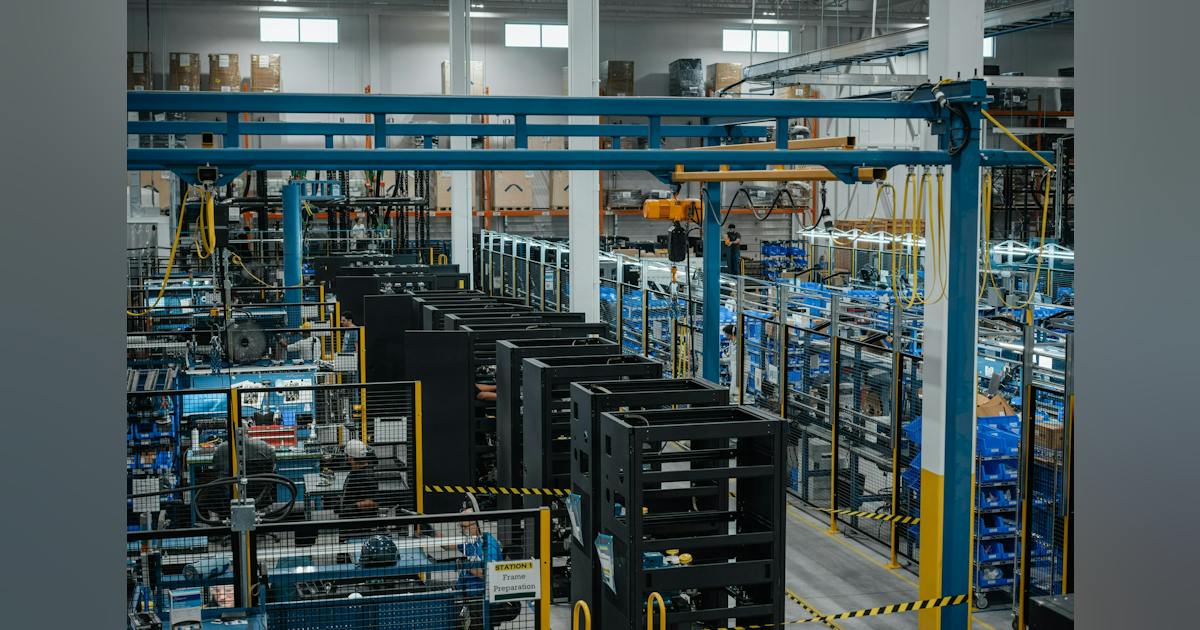
Walking through the CoolIT campus in Calgary, the most striking feature was not any single cold plate, manifold or CDU. It was the amount of infrastructure now required to develop and validate the cooling infrastructure itself.
A cold plate begins as a carefully engineered flow path measured in millimeters. Several steps later, that component has become part of a megawatt-scale thermal system involving pumps, controls, manifolds, piping, facility water and field technicians.
And before that system reaches a data center, CoolIT may reproduce several megawatts of server heat simply to find out how it behaves.
That is where the liquid-cooling market appears to be heading.
The first stage of the direct-liquid-cooling transition was proving that the technology could reliably remove heat from high-performance processors.
The next stage is industrializing it.
For the newest generation of AI infrastructure, the question is no longer simply whether liquid cooling works.
It is whether the industry can manufacture it, test it, install it and operate it at the same scale as the compute it is being asked to cool.