Stay Ahead, Stay ONMINE

Podcast: Vaire Computing Bets on Reversible Logic for ‘Near Zero Energy’ AI Data Centers

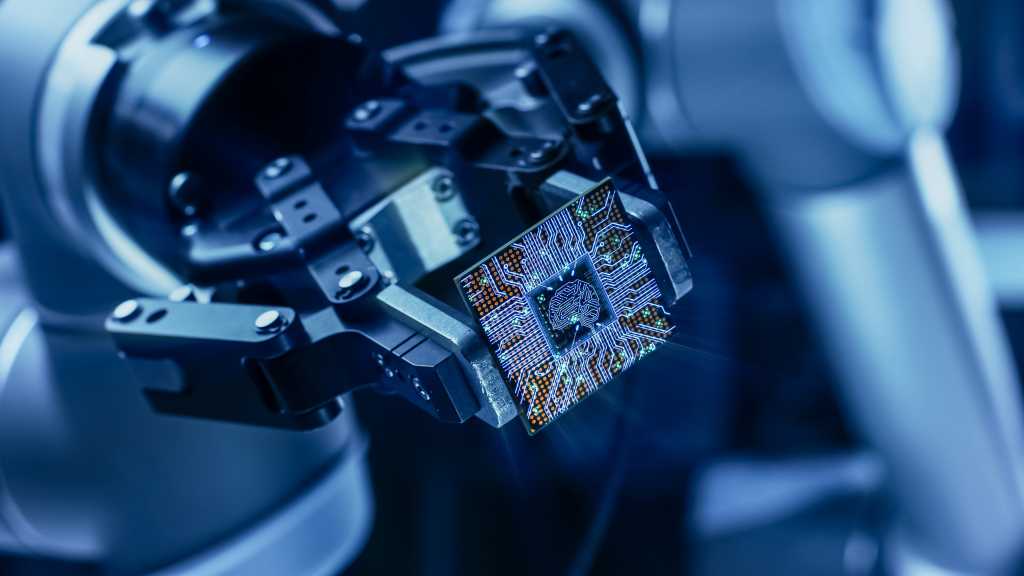
The AI revolution is charging ahead—but powering it shouldn’t cost us the planet. That tension lies at the heart of Vaire Computing’s bold proposition: rethinking the very logic that underpins silicon to make chips radically more energy efficient. Speaking on the Data Center Frontier Show podcast, Vaire CEO Rodolfo Rossini laid out a compelling case […]

The AI revolution is charging ahead—but powering it shouldn’t cost us the planet. That tension lies at the heart of Vaire Computing’s bold proposition: rethinking the very logic that underpins silicon to make chips radically more energy efficient.

Speaking on the Data Center Frontier Show podcast, Vaire CEO Rodolfo Rossini laid out a compelling case for why the next era of compute won’t just be about scaling transistors—but reinventing the way they work.

“Moore’s Law is coming to an end, at least for classical CMOS,” Rossini said. “There are a number of potential architectures out there—quantum and photonics are the most well known. Our bet is that the future will look a lot like existing CMOS, but the logic will look very, very, very different.”

That bet is reversible computing—a largely untapped architecture that promises major gains in energy efficiency by recovering energy lost during computation.

A Forgotten Frontier

Unlike conventional chips that discard energy with each logic operation, reversible chips can theoretically recycle that energy. The concept, Rossini explained, isn’t new—but it’s long been overlooked.

“The tech is really old. I mean really old,” Rossini said. “The seeds of this technology were actually at the very beginning of the industrial revolution.”

Drawing on the work of 19th-century mechanical engineers like Sadi Carnot and later insights from John von Neumann, the theoretical underpinnings of reversible computing stretch back decades. A pivotal 1961 paper formally connected reversibility to energy efficiency in computing. But progress stalled—until now.

“Nothing really happened until a team of MIT students built the first chip in the 1990s,” Rossini noted. “But they were trying to build a CPU, which is a world of pain. There’s a reason why I don’t think there’s been a startup trying to build CPUs for a very, very long time.”

AI, the Great Enabler

The rise of AI may have unlocked reversible computing’s real-world potential. Rossini described how the shift from CPUs to GPUs and specialized AI accelerators created an opening for new logic architectures to gain traction.

“It’s still general-purpose enough to run a model that can do a lot of different things,” he said, “But the underlying architecture is much simpler.”

Rossini founded Vaire after a personal epiphany. “I saw that the future of AI was going to be brilliant—everything was going to be AI. But at the same time, we were going to basically boil the oceans to power our data centers.”

So he started looking for alternatives. One obscure MIT project—and a conspicuous lack of competition—led him to reversible computing.

“Nobody was working on this, which is usually peculiar,” he said. “Dozens of quantum computing companies, hundreds of photonic companies… and this area was a bit orphan.”

From Theory to Silicon

Today, Vaire has completed a tape-out of its first test chip. It’s not commercial yet, but it proves the design works in silicon.

“We proved the theory. Great. Now we proved the practice. And we are on to proving the commercial viability,” Rossini said.

And while he’s quick to acknowledge the difficulty of building chips from scratch, Rossini is bullish on the comparative simplicity of their approach.

“I’m not saying it’s super simple,” he said. “But it’s not the order of magnitude of building a quantum computer. It’s basically CMOS.”

Vaire has also secured foundational patents in a space that remains curiously underexplored.

“We found all the basic patents and everything in a space where no one was working,” Rossini said.

Product, Not IP

Unlike some chip startups focused on licensing intellectual property, Vaire is playing to win with full-stack product development.

“Right now we’re not really planning to license. We really want to build product,” Rossini emphasized. “It’s very important today, especially from the point of view of the customer. It’s not just the hardware—it’s the hardware and software.”

Rossini points to Nvidia’s CUDA ecosystem as the gold standard for integrated hardware/software development.

“The reason why Nvidia is so great is because they spent a decade perfecting their CUDA stack,” he said. “You can’t really think of a chip company being purely a hardware company anymore. Better hardware is the ticket to the ball—and the software is how you get to dance.”

A great metaphor for a company aiming to rewrite the playbook on compute logic.

The Long Game: Reimagining Chips Without Breaking the System

In an industry where even incremental change can take years to implement, Vaire Computing is taking a pragmatic approach to a deeply ambitious goal: reimagining chip architecture through reversible computing — but without forcing the rest of the computing stack to start over.

“We call it the Near-Zero Energy Chip,” said Rossini. “And by that we mean a chip that operates at the lowest possible energy point compared to classical chips—one that dissipates the least amount of energy, and where you can reuse the software and the manufacturing supply chain.”

That last point is crucial. Vaire isn’t trying to uproot the hyperscale data center ecosystem — it’s aiming to integrate into it. The company’s XPU architecture is designed to deliver breakthrough efficiency while remaining compatible with existing tooling, manufacturing processes, and software paradigms.

Build the Future—But Don’t Break the Present

Rossini acknowledged that other new compute architectures, from FET variants to exotic materials, often fall short not because of technical limitations, but because they require sweeping changes in manufacturing or software support.

“You might have the best product in the world. It doesn’t matter,” Rossini said. “If it requires a change in manufacturing, you have to spend a decade convincing a leading foundry to adopt it—and that’s a killer.”

Instead, Vaire is working within the existing CMOS ecosystem—what Rossini calls “the 800-pound gorilla in chip manufacturing”—and limiting how many pieces they move on the board at once.

“We could, in theory, achieve much better performance if we changed everything: software stack, manufacturing method, and computer architecture,” he said. “But the more you change, the more problems you create for the customer. Suddenly they need to support a new architecture, test it, and port applications. That’s a huge opportunity cost.”

One Vaire customer, Rossini noted, is locked in a tight competitive race. If they spent even six months porting software to a novel architecture, “they basically lost the race.”

So Vaire’s first objective is to prove that its chip can meet or exceed current expectations while fitting into existing systems as seamlessly as possible.

A Roadmap, Not a Revolution

The company’s ambitions stretch over the next 10 to 15 years—but Rossini was quick to clarify that this isn’t a long wait for a product.

“I don’t mean we ship a product in 10 years. We want to ship a product in three,” he said. “But we think we’ll have multiple iterations of products before we reach the true end of CMOS.”

He likened the strategy to Apple’s evolution of the iPhone—from version 1 to version 16, the progress was steady, deliberate, and transformative without ever being jarring.

“There isn’t really a quantum jump from one version to another,” Rossini said. “But there’s constant improvement. You ship a product every year or 18 months, and customers keep getting better and better performance.”

Software Matters—But So Does Timing

Asked whether Vaire is building a parallel software stack, Rossini responded with a nuanced yes.

“The greatest thing is that creating a software stack in 2025 is not the same thing as doing it in 2006,” he said. “There’s a very clear dominant open-source ecosystem that we have to support. That means PyTorch, possibly TensorFlow. But we don’t have to support everything.”

Vaire is focusing first on inference workloads rather than training—an important decision that narrows the company’s engineering scope and accelerates go-to-market potential.

“Training is a really complicated beast,” Rossini admitted. “Inference is where we want to play.”

Even more interesting is Vaire’s counterintuitive take on software efficiency. The company is betting that even if the software isn’t fully optimized at launch, the chip’s energy efficiency and performance gains will be so significant that users will adopt it anyway.

“Basically, the idea is that the car is inefficient, but it’s so comfortable and beautiful that—even if the software isn’t perfect—it’s still a net gain,” Rossini said. “And over time, you refine the software, you push the limits of the hardware.”

Reversible, Relatable, Ready for Reality: Disruptive—but Not Destructive

As Vaire moves from test chip to commercial product, Rossini’s team is walking a tightrope: introducing genuinely novel compute logic in a way that doesn’t break developer workflows, supply chains, or hyperscaler procurement models.

“Reversible computing is disrupting enough,” said Rossini. “We don’t want to break everything at the same time.”

In an AI-powered world where compute demand is exploding and energy is the limiting factor, that kind of surgical disruption may be exactly what the industry needs.

So what do you call a chip that’s not quite a CPU, not exactly a GPU, and is building a new compute architecture without breaking the software world? For now, it’s “XPU,” says Rodolfo. “It’s CPU-esque, GPU-esque… but we’re not building a graphics pipeline.”

Getting that XPU into data centers, though, is not about trying to reinvent the wheel—or the hyperscale rack. Rodolfo’s playbook draws on his experience working with the Department of Defense, “probably the most complex supply chain in the world.” You don’t sell directly to the big players; instead, you embed into the existing machinery. “You partner with Tier 2 and Tier 3 suppliers,” he explains. “They already know the power budgets, size, space, design constraints… so we co-design with them to get into the customer’s hands.”

You can’t stop the train of computing, he adds. “We still use COBOL and Fortran in production. You can’t say, ‘Hey, let’s stop everything for a better mousetrap.’” But you can jump onboard, just in the right railcar. “We’re injecting ourselves into existing supply chains,” he says. “Maybe we’re selling IP, maybe chips—but always in the path of upgrade, not disruption for disruption’s sake.”

Less Heat, More Compute

One of the central advantages of reversible computing is thermal efficiency. Traditional chips discard charge with every gate switch. That’s fine when you’ve got a handful of transistors—but in the modern era of ultra-dense chips, that adds up fast. “If you have low-leakage nodes,” Rodolfo notes, “that discarded charge is actually the majority of the energy dissipated.”

Reversible chips operate a little slower, but they recover that charge, making them ideal for multicore environments. “That’s why Nvidia chips are slower than Intel’s, but use tons of cores,” he adds. “Same idea—slow down a little, parallelize a lot.”

The result is a system that’s more thermally efficient and more sustainable in the long run. “We’ve figured out how to make a reversible system talk to classical systems—without them even knowing it’s a different architecture. It’s completely alien under the hood, but seamless on the outside.”

And while ultra-low power use cases are on the roadmap, the short-term problem is more about power envelopes. “Customers already have power coming into the building,” he says. “What they don’t have is headroom. They want more compute without increasing draw. That’s the opportunity.”

Modular Visions and the Edge

When asked if this technology lends itself to edge inference, Rodolfo steers the conversation toward modularity—but not edge computing. “We’re talking about data centers here,” he says. “The market is clear. The price per chip is higher. And the pain points—power, cooling—are urgent.”

But he sees that modular vision evolving. “If you don’t need massive centralized cooling, maybe you don’t need massive centralized data centers either,” he muses. “We could be heading toward a new generation of modular units, kind of like the old Sun Microsystems container idea.”

That’s down the line, though. Edge devices still face huge cost constraints and BOM sensitivities. “Consumer electronics can’t just absorb premium chip prices—even if the chip is magic.”

A New Path, Rooted in Reversibility

Zooming out, Rodolfo sees this as a foundational transition in computing. “In 15 years, every chip will be reversible,” he predicts. “Not all made by us, of course—but that’s the direction. CMOS is bound by thermal limits. Photonics will help, but computing with light still needs breakthroughs. Quantum? It’s still niche. But here’s the thing—quantum computers are also reversible. They have to be.”

That’s not a coincidence. It’s a trend line. “Reversible is the way forward,” says Rossini

To be clear, Rodolfo’s company isn’t in the quantum business. “We have nothing to do with quantum,” he says. “They use reversibility for coherence. We do it for heat.” But both share a deeper implication: Moore’s Law has run its course. Classical computing gave us an extraordinary 50-year run—but scaling it further demands a new direction. And for Rodolfo and his team, that direction is irreversibility’s mirror twin: reversible logic.

That’s not the mainstream view in the chip world, of course. “This is very much not the orthodoxy,” he admits. But rather than chasing academic acceptance, VAR’s strategy was all-in from day one. “We didn’t want to write papers—we did publish, but that’s not the goal,” he says. “We raised money, built a team, and spent three years in stealth. Because once you put silicon in a customer’s hands, the argument ends.”

Pacing Progress: Balancing Ambition and Real-World Delivery

So when will that first chip hit real workloads? The company’s current thinking pegs 2027 as the start of commercial availability—but it’s a moving target. “We’re in that tension of ‘How cool can this car be?’ versus ‘Can we just ship the damn motorcycle?’” Rodolfo jokes.

As VAR works closely with early customers, new ideas and possibilities keep pushing the roadmap out. “We’re wrestling with scope—people see what we’re building and say, ‘Can it do this? Can it do that?’ And suddenly the product gets bigger and more ambitious.”

Still, VAR has a structure. They plan on taping out at least one new chip per year leading up to 2027, each tackling a specific, foundational breakthrough—resonators, adiabatic switching, reversible clocking, and other techniques that make this novel architecture viable in silicon. “Every year, we take on a hard problem we think we can solve on paper. Then we build it,” he explains. “If it works—great. If it doesn’t—we go back to the drawing board.”

So far, they’re on track. And that steady drumbeat is what gave the team the confidence to finally come out of stealth. “We didn’t start talking until we were sure we wouldn’t fall flat on our faces.”

From Moonshot to Minimum Viable Product

When DCF asked Rossini whether Vaire Computing’s technology could be considered a moonshot, the CEO didn’t hesitate: “Yes, it absolutely is,” he affirmed.

This candid acknowledgment speaks volumes about Vaire’s bold approach. The company is attempting nothing less than the reinvention of chip architecture itself, with a vision to fundamentally reshape the energy efficiency and scalability of computing in a way that could transcend the limitations of current technologies. While the challenge is daunting, it’s a calculated moonshot—one that strives to deliver a game-changing solution without requiring a complete overhaul of the ecosystem that currently supports data centers, software, and hardware.

Why a moonshot? The idea of reversible computing, which Vaire is pushing forward, is uncharted territory for most of the chip industry. It holds the promise of dramatically reduced energy consumption, enabling the next generation of computing to scale beyond the thermal limits of Moore’s Law. However, building such an architecture is no small feat. It involves overcoming deep technical challenges—ranging from charge recovery at the gate level to making this revolutionary architecture compatible with classical systems. It’s a high-risk, high-reward effort, and success could redefine how we think about the energy demands of computing.

For now, Vaire is tackling the challenge with incremental steps, working closely with customers and partners to ensure that their innovations are practical and scalable. But the long-term goal remains clear: to reshape the computing landscape by delivering chips that push beyond the boundaries of today’s energy constraints.

And if they succeed, Vaire Computing could very well light the way for the next major leap in data center technology, marking the beginning of a new era in energy-efficient computing.

While the long-term vision is big—“Every chip will be reversible,” Rodolfo repeats—it’s grounded in pragmatism. The Vaire team isn’t trying to boil the ocean. “We try to scope problems the customer has right now,” he says. “Maybe our tech can solve something today—in a year, not five.”

Along the way, they may find simpler, more narrowly scoped chips that solve very specific problems—side quests that still push the architecture forward, even if they’re not the ultimate XPU. “There’s a whole range of complexity in chip design,” Rodolfo notes. “We always try to build the least complex product that gets us to market fastest.”

The Beginning of Something Big

Reversible computing might not be orthodox, but it’s starting to sound inevitable. If heat is the ultimate barrier to scale—and it increasingly is—then it’s time to rethink what chips can do, and how they do it. For Vaire, that rethink has already started.

“We’re not here to stop the train,” Rodolfo says. “We’re jumping on board—and building the engine for what comes next.”

Shape
Shape
Stay Ahead

Explore More Insights

Stay ahead with more perspectives on cutting-edge power, infrastructure, energy,  bitcoin and AI solutions. Explore these articles to uncover strategies and insights shaping the future of industries.

Shape

Nile adds microsegmentation and native NAC to its secure NaaS platform

Identity is the authentication layer that feeds the NAC replacement. For users and employees, Nile pulls identity from Active Directory, including group and role membership, which maps directly to policy enforcement. Corporate devices can authenticate through RADIUS using certificates, which carry additional device metadata. For wired connections, Nile supports 802.1X

Read More »

IDC: Dell leads server market driven by AI infrastructure needs

For calendar year 2025 the market finished growing 80.4% compared to 2024, reaching a yearly record of $444.1 billion dollars revenue. Dell Technologies clearly leads the OEM market with $12.5 billion in total revenue share, accounting for 10% of total sales. IDC attributed this to outstanding growth on accelerated servers.

Read More »

Cloud providers seek to shape European sovereignty legislation

Finally, they say, there should be taxpayer-funded investments in cloud and AI infrastructure and support for the European development of key components such as memory and chips and the incorporation of strict environmental sustainability requirements. “It’s important to realize that the proposal is not just about the technical aspects but

Read More »

Energy Department Announces $500 Million to Strengthen Domestic Critical Materials Processing and Manufacturing

 Funding will expand domestic manufacturing of battery supply chains for defense, grid resilience, transportation, manufacturing and other industries WASHINGTON—The U.S. Department of Energy’s (DOE) Office of Critical Minerals and Energy Innovation (CMEI) today announced a Notice of Funding Opportunity (NOFO) for up to $500 million to expand U.S. critical mineral and materials processing and derivative battery manufacturing and recycling. Assistant Secretary of Energy (EERE) Audrey Robertson is currently in Japan meeting with regional allies at the Indo-Pacific Energy Security Ministerial and Business Forum (IPEM) to advance shared efforts on supply chain resilience and energy security issues. Her engagements at IPEM underscore the importance of close cooperation with partners as the United States strengthens its supply chain through this NOFO. “For too long, the United States has relied on hostile foreign actors to supply and process the critical materials that are essential in battery manufacturing and materials processing,” said U.S. Energy Secretary Chris Wright. “Thanks to President Trump’s leadership, the Department of Energy is playing a leading role in strengthening these domestic industries that will position the U.S. to win the AI race, meeting rising energy demand, and achieve energy dominance.” “I am delighted to be in Japan meeting with our allies, underscoring the important connection between critical materials and energy security,” said Assistant Secretary of Energy (EERE) Audrey Robertson. “Critical minerals processing is a vital component of our nation’s critical minerals supply base. Boosting domestic production, including through recycling, will bolster national security and ensure the United States and our partners are prepared to meet the energy challenges of the 21st century.” Funding awarded through this NOFO will support demonstration and/or commercial facilities for processing, recycling, or utilizing for manufacturing of critical materials which may include traditional battery minerals such as lithium, graphite, nickel, copper, aluminum, as well as other

Read More »

Energy Department Announces $293 Million in Funding to Support Genesis Mission National Science and Technology Challenges

WASHINGTON—The U.S. Department of Energy (DOE) today announced funding to advance the Genesis Mission’s efforts to tackle the nation’s most complex science and technology challenges. This includes a $293 million Request for Application (RFA),“The Genesis Mission: Transforming Science and Energy with AI.” Through this RFA, DOE invites interdisciplinary teams to leverage novel AI models and frameworks to address over 20 national challenges spanning advanced manufacturing, biotechnology, critical materials, nuclear energy, and quantum information science.    “The Genesis Mission has caught the imagination of our scientific and engineering communities to tackle national challenges in the age of AI,” said Under Secretary for Science Darío Gil and Genesis Mission Director. “With these investments we seek breakthrough ideas and novel collaborations leveraging the scientific prowess of our National Laboratories, the private sector, universities, and science philanthropies.”  The RFA is open to interdisciplinary teams from DOE National Laboratories, U.S. industry, and academia. Phase I awards will range from $500,000 to $750,000 and will support a nine month project period. Phase II awards will range from $6 million to $15 million over a three year project period. Teams may apply directly to either phase in FY 2026, and successful Phase I teams will be eligible to compete for larger Phase II awards in future cycles. Phase I applications and Phase II letters of intent are due April 28, 2026. Phase II applications are due May 19, 2026. DOE plans to hold an informational webinar about this RFA on March 26, 2026.  For full eligibility, application instructions, and challenge details, see the official NOFO: DE-FOA-0003612. Registration instructions and other details will be posted here.  ### 

Read More »

Trump Administration Keeps Coal Plant Open to Ensure Affordable, Reliable and Secure Power in the Northwest

Emergency order addresses critical grid reliability issues, lowering risk of blackouts and ensuring affordable electricity access. WASHINGTON—U.S. Secretary of Energy Chris Wright today issued an emergency order to ensure Americans in the Northwestern region of the United States have access to affordable, reliable and secure electricity. The order directs TransAlta to keep Unit 2 of the Centralia Generating Station in Centralia, Washington available to operate. Unit 2 of the coal plant was scheduled to shut down at the end of 2025. The reliable supply of power from the Centralia plant is essential to maintaining grid stability across the Northwest, and this order ensures that the region avoids unnecessary blackout risks and costs. “The last administration’s energy subtraction policies had the United States on track to likely experience significantly more blackouts in the coming years — thankfully, President Trump won’t let that happen,” said Energy Secretary Wright. “The Trump administration will continue taking action to keep America’s coal plants running so we can stop the price spikes and ensure we don’t lose critical generation sources. Americans deserve access to affordable, reliable, and secure energy to power their homes all the time, regardless of whether the wind is blowing or the sun is shining.” Thanks to President Trump’s leadership, coal plants across the country are reversing plans to shut down. On December 16, 2025, Secretary Wright issued an emergency order directing TransAlta to keep Unit 2 (729.9 MW) available to operate.According to DOE’s Resource Adequacy Report, blackouts were on track to potentially increase 100 times by 2030 if the U.S. continued to take reliable power offline as it did during the Biden administration. This order is in effect beginning on March 17, 2026, through June 14, 2026. ### 

Read More »

Brent retreats from highs after Trump signals Iran war nearing end

@import url(‘https://fonts.googleapis.com/css2?family=Inter:[email protected]&display=swap’); a { color: var(–color-primary-main); } .ebm-page__main h1, .ebm-page__main h2, .ebm-page__main h3, .ebm-page__main h4, .ebm-page__main h5, .ebm-page__main h6 { font-family: Inter; } body { line-height: 150%; letter-spacing: 0.025em; font-family: Inter; } button, .ebm-button-wrapper { font-family: Inter; } .label-style { text-transform: uppercase; color: var(–color-grey); font-weight: 600; font-size: 0.75rem; } .caption-style { font-size: 0.75rem; opacity: .6; } #onetrust-pc-sdk [id*=btn-handler], #onetrust-pc-sdk [class*=btn-handler] { background-color: #c19a06 !important; border-color: #c19a06 !important; } #onetrust-policy a, #onetrust-pc-sdk a, #ot-pc-content a { color: #c19a06 !important; } #onetrust-consent-sdk #onetrust-pc-sdk .ot-active-menu { border-color: #c19a06 !important; } #onetrust-consent-sdk #onetrust-accept-btn-handler, #onetrust-banner-sdk #onetrust-reject-all-handler, #onetrust-consent-sdk #onetrust-pc-btn-handler.cookie-setting-link { background-color: #c19a06 !important; border-color: #c19a06 !important; } #onetrust-consent-sdk .onetrust-pc-btn-handler { color: #c19a06 !important; border-color: #c19a06 !important; } Oil futures eased from recent highs Tuesday as markets reacted to comments from US President Donald Trump suggesting the war with Iran may be nearing its conclusion, easing concerns about prolonged disruptions to Middle East crude supplies. Brent crude had climbed above $100/bbl amid escalating tensions in the region and fears that the war could prolong disruptions to shipments through the Strait of Hormuz—one of the world’s most critical energy chokepoints and a transit route for roughly one-fifth of global oil supply. Prices pulled back after Pres. Trump said the war was “almost done,” prompting traders to reassess the risk premium that had built into crude markets during the latest escalation. The earlier gains were driven by the fact that the war had disrupted tanker traffic in the Strait of Hormuz, raising concerns about wider supply disruptions from major Gulf oil producers. While the latest remarks helped calm markets, analysts note that geopolitical risks remain elevated and price volatility is likely to persist as traders monitor developments in the region. Any renewed escalation could quickly send crude prices higher again.

Read More »

Southwest Arkansas lithium project moves toward FID with 10-year offtake deal

Smackover Lithium, a joint venture between Standard Lithium Ltd. and Equinor, through subsidiaries of Equinor ASA, signed the first commercial offtake agreement for the South West Arkansas Project (SWA Project) with commodities group Trafigura Trading LLC. Under the terms of a binding take-or-pay offtake agreement, the JV will supply Trafigura with 8,000 metric tonnes/year (tpy) of battery-quality lithium carbonate (Li2CO3) over a 10-year period, beginning at the start of commercial production. Smackover Lithium is expected to achieve final investment decision (FID) for the project, which aims to use direct lithium extraction technology to produce lithium from brine resources in the Smackover formation in southern Arkansas, in 2026, with first production anticipated in 2028. The project encompasses about 30,000 acres of brine leases in the region, with the initial phase of project development focused on production from the 20,854-acre Reynolds Brine Unit.   Front-end engineering design was completed in support of a definitive feasibility study with a principal recommendation that the project is ready to progress to FID.  While pricing terms of the Trafigura deal were kept confidential, Standard Lithium said they are “structured to support the anticipated financing for the project.” The JV is seeking to finalize customer offtake agreements for roughly 80% of the 22,500 tonnes of annual nameplate lithium carbonate capacity for the initial phase of the project. This agreement represents over 40% of the targeted offtake commitments. Formed in 2024, Smackover Lithium is developing multiple DLE projects in Southwest Arkansas and East Texas. Standard Lithium is operator of the projecs with 55% interest. Equinor holds the remaining 45% interest.

Read More »

Equinor makes oil and gas discoveries in the North Sea

Equinor Energy AS discovered oil in the Troll area and gas and condensate in the Sleipner area of the North Sea. Byrding C discovery well 35/11-32 S in production license (PL) 090 HS was made 5 km northwest of Fram field in Troll. The well was drilled by the COSL Innovator rig in 373 m of water to 3,517 m TVD subsea. It was terminated in the Heather formation from the Middle Jurassic. The primary exploration target was to prove petroleum in reservoir rocks from the Late Jurassic deep marine equivalent to the Sognefjord formation. The secondary target was to prove petroleum and investigate the presence of potential reservoir rocks in two prospective intervals from the Middle Jurassic in deep marine equivalents to the Fensfjord formation. The well encountered a 22-m oil column in sandstone layers in the Sognefjord formation with a total thickness of 82 m, of which 70 m was sandstone with moderate to good reservoir properties. The oil-water contact was encountered. The secondary exploration target in the Fensfjord formation did not prove reservoir rocks or hydrocarbons. The well was not formation-tested, but data and samples were collected. The well has been permanently plugged. Preliminary estimates indicate the size of the discovery is 4.4–8.2 MMboe. Oil discovered in Byrding C will be produced using existing or future infrastructure in the area. The Frida Kahlo discovery was drilled from the Sleipner B platform in production license PL 046 northwest of Sleipner Vest and is estimated to contain 5–9 MMboe of gas and condensate. The well will be brought on stream as early as April. The four most recent exploration wells in the Sleipner area, drilled over a 3-month period, include Lofn, Langemann, Sissel, and Frida Kahlo. All have all proven gas and condensate in the Hugin formation, with combined estimated

Read More »

Nvidia joins push for data centers in space

For example, instead of sending down raw image data, which can take hours, or even days, a satellite can transmit the information that, say, a particular bridge is down, or that a certain road is having issues—actionable information of immediate business value. “AI can also help satellites navigate low earth orbit much more confidently, avoid other satellites, and operate much more autonomously,” says Su. And it can be used for other heavy workloads as well. For example, Kepler Communications is using Jetson Orin in its satellite communication network. That helps the company make its satellites smarter, CEO Mina Mitry said in a statement, “allowing us to intelligently manage and route data across our constellation.” The Jetson Orin is already bringing data center-level compute capability to space, Su says, and, with the new chips, there will be even more real-time capability for the next generation of satellites. According to Gartner analyst Bill Ray, orbital data centers are a waste of time and money. “The rush to develop orbital data centers has reached a period of peak insanity,” he wrote in a recent report. “For all the hype around them, these space-based data centers will not be able to deliver on the promise of useful analysis of terrestrial data for terrestrial applications for decades, and may not ever be able to do so.” But that’s not where today’s use cases are, Su points out. “It is edge computing workloads,” he says. “It’s AI inference for multi-dimensional data for disaster recovery and weather forecasting.”

Read More »

Microsoft’s laser-free cable tech promises to slash AI data center power bills in half

The power problem, Microsoft argues, starts with the cables themselves. How MOSAIC works Copper interconnects top out at roughly two meters at high data rates, limiting them to within a single rack. Laser-based fiber optic cables go further but consume more power and are sensitive to temperature and dust, Microsoft said in the post. MOSAIC reaches up to 50 meters while drawing less power than either, the company added. “Imaging fiber looks like a standard fiber, but inside it has thousands of cores,” Paolo Costa, a Microsoft partner research manager and the project’s lead researcher, wrote in the post. “That was the missing piece. We finally had a way to carry thousands of parallel channels in one cable.” MOSAIC is not Microsoft’s only optical networking bet, and it is not the one furthest along. HCF is already in production across Azure regions MOSAIC arrives alongside Hollow Core Fiber (HCF), a complementary technology Microsoft is already deploying globally. HCF carries optical signals through air rather than glass, delivering up to 47% faster data transmission and 33% lower latency than conventional single-mode fiber, according to published research from the University of Southampton cited by Microsoft. Frank Rey, Microsoft’s general manager of Azure Hyperscale Networking, said in the post that the two technologies are complementary — HCF for long-distance inter-datacenter links, MOSAIC for in-facility GPU and server connectivity.

Read More »

Beyond the fan: Crossing the liquid cooling rubicon

At 20 kW per rack, the airflow velocity required to maintain safe operating temperatures triggers two failure modes. First, the acoustic vibration becomes severe enough to damage equipment. Organizations learn this lesson the hard way — high-frequency vibration from upgraded CRAC units causing bit errors in high-density Non-Volatile Memory Express (NVMe) storage arrays. The signature is mechanical resonance in drive enclosures. Fans shake storage infrastructure to death. Second, the power required for that airflow becomes self-defeating. At 100 kW densities, nearly 30 percent of the total facility power goes to fans alone — before accounting for compressors and chillers working overtime to cool the air. According to Uptime Institute research, data centers spend an estimated $1.9 to $2.8 million per MW annually on operations, with cooling-related costs consuming nearly $500,000 of that figure. The American Society of Heating, Refrigerating and Air-Conditioning Engineers (ASHRAE) TC 9.9 guidelines governing data center thermal management were written for a 15 kW world. Many organizations now operate so far outside those parameters that the guidelines have become irrelevant. One moment crystallized this reality. A single CRAC unit failed in a training cluster. Within eight minutes, hot-aisle temperatures exceeded 120°F. Monitoring systems triggered automatic throttling on millions of dollars of compute infrastructure. A multi-day processing run crashed and restarted from a checkpoint. Standing in that sweltering aisle watching temperature readouts climb, the conclusion was inescapable: air had carried the industry as far as it could go. Crossing the Rubicon: Cold plates versus rear-door heat exchangers Bringing liquid into a data center is terrifying. Water — or water-adjacent fluids — enters rooms filled with equipment worth tens of millions of dollars. Equipment that fails catastrophically when wet. “Crossing the Rubicon” captures the commitment: once started down this path, there is no returning to the comfortable certainty of

Read More »

System-level ‘coopetition’: Why Nvidia’s DGX Rubin NVL8 runs on Intel Xeon 6

Not a strategic alliance Despite working together at the system level, the relationship between the two companies does not amount to a formal strategic alliance. “The Intel–Nvidia dynamic is best understood as system-level coopetition. Long-standing collaboration persists across data center and PC ecosystems, with Intel CPUs paired alongside Nvidia GPUs forming standardized AI server architectures and enabling deeper integration,” said Manish Rawat, semiconductor analyst at TechInsights. However, competition is accelerating structurally. Even though Nvidia dominates the GPU space, the company is also expanding its presence across more layers of the data-center stack. It has been developing its own CPUs, such as the Grace CPU, aimed at tighter integration between compute, memory, and interconnect. The company has also launched Vera CPU, purpose-built for agentic AI at GTC 2026. This reflects Nvidia’s broader approach of building more of the system in-house, spanning both hardware and software, even as it continues to incorporate external components where required. “Nvidia’s push into CPUs (Grace, Vera) and tightly integrated, NVLink-based systems signals a shift toward full-stack ownership spanning compute, networking, and software. This challenges Intel’s traditional dominance in CPUs and system control. In essence, Nvidia is partnering tactically to sustain ecosystem adoption while strategically positioning to displace incumbents and capture greater control of next-generation AI infrastructure,” added Rawat.

Read More »

Nvidia announces Vera Rubin platform, signaling a shift to full-stack AI infrastructure

The transition reflects a deeper move from optimizing individual components to engineering entire systems for scalability and efficiency, said Sanchit Vir Gogia, chief analyst at Greyhound Research. “Compute, memory behavior, interconnect bandwidth, and workload orchestration are being engineered together,” Gogia said. “Even physical design choices such as rack modularity, serviceability, and assembly efficiency are now part of performance engineering. Infrastructure is beginning to resemble an appliance at scale, but one that operates at extreme density and complexity.” Industry observers said rack-scale systems, including Nvidia’s NVL72 and open standards such as OCP Open Rack, are enabling more flexible pooling and orchestration of infrastructure resources for AI and machine learning workloads. “I am also seeing other operators are increasingly adopting chip-to-grid strategies, integrating onsite power generation (microgrids, batteries), advanced cooling technologies, and co-packaged optics to effectively manage power spikes, reduce conversion losses, and support rack densities exceeding 100kW,” said Franco Chiam, VP of Cloud, Datacenter, Telecommunication, and Infrastructure Research Group at IDC Asia Pacific. “This collective industry response to adapt to the needs for higher power and thermal demands is further reinforced by leading vendors and hyperscalers aligning around open standards, facilitating scalable, gigawatt-class datacenter deployments,” Chiam added. Networking takes center stage Networking is emerging as a central component of AI infrastructure, as platforms such as Vera Rubin place greater emphasis on how data moves across systems rather than treating connectivity as a supporting layer.

Read More »

Available’s $5B Project Qestrel aims to roll out 1,000 AI-ready edge data centers by year’s end

Available is partnering with wireless infrastructure company Crown Castle, which owns, operates, and leases more than 40,000 cell towers and roughly 90,000 miles of fiber. “Our strategy is to industrialize and modularize deployment by building on telecom co-location and pre-existing physical infrastructure rather than greenfield hyperscale construction,” said Medina. Some initial sites are live (the company declined to say how many, due to “final contractual and commissioning milestones”) and 30 cities are expected to come online by early July. Available is prioritizing dense urban corridors, and early adoption has begun in “major Northeast corridors with a path to nationwide rollout,” Medina explained. The company’s infrastructure will be used by Strata Expanse, which specializes in 60 to 90 day AI data center deployments, and incorporated into Strata’s new full-stack, end-to-end Amphix AI Infrastructure Platform. The neocloud architecture will run up to 48 GPUs per site, bringing AI inferencing to the edge. Many sites will be pre-integrated with IBM’s watsonx; others will be AI-agnostic, allowing enterprises to run their preferred models. According to Available, Project Qestrel will provide:

Read More »

Microsoft will invest $80B in AI data centers in fiscal 2025

And Microsoft isn’t the only one that is ramping up its investments into AI-enabled data centers. Rival cloud service providers are all investing in either upgrading or opening new data centers to capture a larger chunk of business from developers and users of large language models (LLMs).  In a report published in October 2024, Bloomberg Intelligence estimated that demand for generative AI would push Microsoft, AWS, Google, Oracle, Meta, and Apple would between them devote $200 billion to capex in 2025, up from $110 billion in 2023. Microsoft is one of the biggest spenders, followed closely by Google and AWS, Bloomberg Intelligence said. Its estimate of Microsoft’s capital spending on AI, at $62.4 billion for calendar 2025, is lower than Smith’s claim that the company will invest $80 billion in the fiscal year to June 30, 2025. Both figures, though, are way higher than Microsoft’s 2020 capital expenditure of “just” $17.6 billion. The majority of the increased spending is tied to cloud services and the expansion of AI infrastructure needed to provide compute capacity for OpenAI workloads. Separately, last October Amazon CEO Andy Jassy said his company planned total capex spend of $75 billion in 2024 and even more in 2025, with much of it going to AWS, its cloud computing division.

Read More »

John Deere unveils more autonomous farm machines to address skill labor shortage

Join our daily and weekly newsletters for the latest updates and exclusive content on industry-leading AI coverage. Learn More Self-driving tractors might be the path to self-driving cars. John Deere has revealed a new line of autonomous machines and tech across agriculture, construction and commercial landscaping. The Moline, Illinois-based John Deere has been in business for 187 years, yet it’s been a regular as a non-tech company showing off technology at the big tech trade show in Las Vegas and is back at CES 2025 with more autonomous tractors and other vehicles. This is not something we usually cover, but John Deere has a lot of data that is interesting in the big picture of tech. The message from the company is that there aren’t enough skilled farm laborers to do the work that its customers need. It’s been a challenge for most of the last two decades, said Jahmy Hindman, CTO at John Deere, in a briefing. Much of the tech will come this fall and after that. He noted that the average farmer in the U.S. is over 58 and works 12 to 18 hours a day to grow food for us. And he said the American Farm Bureau Federation estimates there are roughly 2.4 million farm jobs that need to be filled annually; and the agricultural work force continues to shrink. (This is my hint to the anti-immigration crowd). John Deere’s autonomous 9RX Tractor. Farmers can oversee it using an app. While each of these industries experiences their own set of challenges, a commonality across all is skilled labor availability. In construction, about 80% percent of contractors struggle to find skilled labor. And in commercial landscaping, 86% of landscaping business owners can’t find labor to fill open positions, he said. “They have to figure out how to do

Read More »

2025 playbook for enterprise AI success, from agents to evals

Join our daily and weekly newsletters for the latest updates and exclusive content on industry-leading AI coverage. Learn More 2025 is poised to be a pivotal year for enterprise AI. The past year has seen rapid innovation, and this year will see the same. This has made it more critical than ever to revisit your AI strategy to stay competitive and create value for your customers. From scaling AI agents to optimizing costs, here are the five critical areas enterprises should prioritize for their AI strategy this year. 1. Agents: the next generation of automation AI agents are no longer theoretical. In 2025, they’re indispensable tools for enterprises looking to streamline operations and enhance customer interactions. Unlike traditional software, agents powered by large language models (LLMs) can make nuanced decisions, navigate complex multi-step tasks, and integrate seamlessly with tools and APIs. At the start of 2024, agents were not ready for prime time, making frustrating mistakes like hallucinating URLs. They started getting better as frontier large language models themselves improved. “Let me put it this way,” said Sam Witteveen, cofounder of Red Dragon, a company that develops agents for companies, and that recently reviewed the 48 agents it built last year. “Interestingly, the ones that we built at the start of the year, a lot of those worked way better at the end of the year just because the models got better.” Witteveen shared this in the video podcast we filmed to discuss these five big trends in detail. Models are getting better and hallucinating less, and they’re also being trained to do agentic tasks. Another feature that the model providers are researching is a way to use the LLM as a judge, and as models get cheaper (something we’ll cover below), companies can use three or more models to

Read More »

OpenAI’s red teaming innovations define new essentials for security leaders in the AI era

Join our daily and weekly newsletters for the latest updates and exclusive content on industry-leading AI coverage. Learn More OpenAI has taken a more aggressive approach to red teaming than its AI competitors, demonstrating its security teams’ advanced capabilities in two areas: multi-step reinforcement and external red teaming. OpenAI recently released two papers that set a new competitive standard for improving the quality, reliability and safety of AI models in these two techniques and more. The first paper, “OpenAI’s Approach to External Red Teaming for AI Models and Systems,” reports that specialized teams outside the company have proven effective in uncovering vulnerabilities that might otherwise have made it into a released model because in-house testing techniques may have missed them. In the second paper, “Diverse and Effective Red Teaming with Auto-Generated Rewards and Multi-Step Reinforcement Learning,” OpenAI introduces an automated framework that relies on iterative reinforcement learning to generate a broad spectrum of novel, wide-ranging attacks. Going all-in on red teaming pays practical, competitive dividends It’s encouraging to see competitive intensity in red teaming growing among AI companies. When Anthropic released its AI red team guidelines in June of last year, it joined AI providers including Google, Microsoft, Nvidia, OpenAI, and even the U.S.’s National Institute of Standards and Technology (NIST), which all had released red teaming frameworks. Investing heavily in red teaming yields tangible benefits for security leaders in any organization. OpenAI’s paper on external red teaming provides a detailed analysis of how the company strives to create specialized external teams that include cybersecurity and subject matter experts. The goal is to see if knowledgeable external teams can defeat models’ security perimeters and find gaps in their security, biases and controls that prompt-based testing couldn’t find. What makes OpenAI’s recent papers noteworthy is how well they define using human-in-the-middle

Read More »