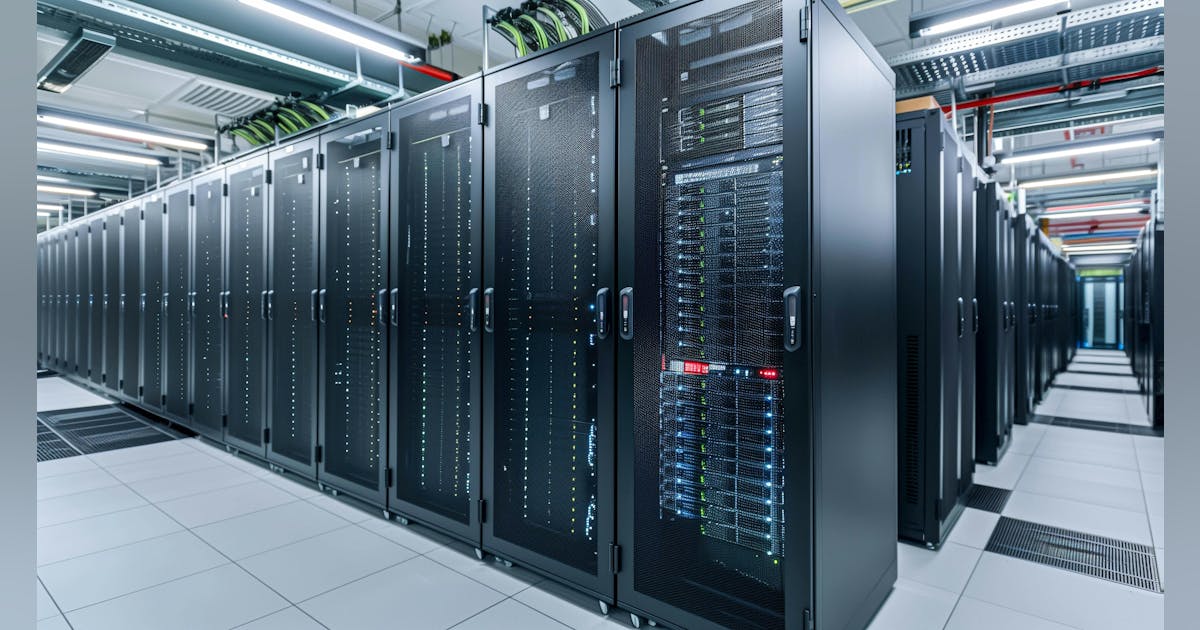
The rapidly evolving IT landscape, driven by artificial intelligence (AI), edge computing, and rising security threats, presents unprecedented challenges in managing compute infrastructure. Traditional management tools struggle to provide the necessary scalability, visibility, and automation to keep up with business demand, leading to inefficiencies and increased business risk.
Yet organizations need their IT departments to be strategic business partners that enable innovation and drive growth. To realize that goal, IT leaders should rethink the status quo and free up their teams’ time by adopting a unified approach to managing infrastructure that supports both traditional and AI workloads.
It’s a strategy that enables companies to simplify IT operations and improve IT job satisfaction.
5 IT management challenges of the AI era
Cisco recently commissioned Forrester Consulting to conduct a Total Economic Impact™ analysis of Cisco Intersight. This IT operations platform provides visibility, control, and automation capabilities for the Cisco Unified Computing System (Cisco UCS), including Cisco converged, hyperconverged, and AI-ready infrastructure solutions across data centers, colocation facilities, and edge environments. Intersight uses a unified policy-driven approach to infrastructure management and integrates with leading operating systems, storage providers, hypervisors, and third-party IT service management and security tools.
The Forrester study first uncovered the issues IT groups are facing:
- Difficulty scaling: Manual, repetitive processes cause lengthy IT compute infrastructure build and deployment times. This challenge is particularly acute for organizations that need to evolve infrastructure to support traditional and AI workloads across data centers and distributed edge environments.
- Architectural specialization and AI workloads: AI is altering infrastructure requirements, Forrester found. Companies design systems to support specific AI workloads — such as data preparation, model training, and inferencing — and each demands specialized compute, storage, and networking capabilities. Some require custom chip sets and purpose-built infrastructure, such as for edge computing and low-latency applications. These requirements are driving the need for solutions that embed AI infrastructure management into existing infrastructure and operations management tools.
- Lack of holistic visibility: Increasingly complex and distributed server estates create significant management challenges. IT organizations may be forced to employ multiple management systems, each with its own interface, making it difficult to troubleshoot issues. Complexity can also lead to increased outage risks, security and compliance gaps, and longer mean time to resolution (MTTR) when problems occur.
- Inefficient use of IT resources: A lack of automation and integration in compute management causes organizations to manually perform routine tasks, such as setting up connections to servers and both applying and updating policies. Forrester found that this led to “IT employee frustration, stalled skills acquisition, and slow progress on strategic initiatives.”
- Security and compliance gaps: Between complex environments spanning multiple data centers, the cloud, and edge locations, plus AI’s introducing new levels of risk from sophisticated threat actors, security vulnerabilities can arise more quickly than ever. Taken together, this complexity makes it difficult to implement zero-trust security strategies for consistent policy enforcement and management. At the same time, organizations face challenges in extracting reports to meet regulatory requirements.
Cisco Intersight delivers nearly 200% ROI
Forrester’s analysis revealed that adopting Cisco Intersight has helped organizations address these challenges while delivering significant business value.
Forrester amalgamated its findings from interviews with Intersight users in six organizations into a single composite organization. By employing Cisco Intersight, this composite achieved $5 million in benefits over three years from an investment of $1.7 million, for a return on investment (ROI) of 192%.
Delve into Forrester’s full analysis by downloading the free study The Total Economic Impact™ of Cisco Intersight.