Stay Ahead, Stay ONMINE

All anyone wants to talk about at Davos is AI and Donald Trump

This story first appeared in The Debrief, our subscriber-only newsletter about the biggest news in tech by Mat Honan, Editor in Chief. Subscribe to read the next edition as soon as it lands. Hello from the World Economic Forum annual meeting in Davos, Switzerland. I’ve been here for two days now, attending meetings, speaking on panels, and basically trying to talk to anyone I can. And as far as I can tell, the only things anyone wants to talk about are AI, and Trump.  Davos is physically defined by the Congress Center, where the official WEF sessions take place, and the Promenade, a street running through the center of the town lined with various “houses”—mostly retailers that are temporarily converted into meeting hubs for various corporate or national sponsors. So there is a Ukraine House, a Brazil House, Saudi House, and yes, a USA House (more on that tomorrow). There are a handful of media houses from the likes of CNBC and The Wall Street Journal. Some houses are devoted to specific topics, for example there’s one for science and another for AI.  But like everything else in 2026, the Promenade is dominated by tech companies. At one point I realized that literally everything I could see, in a spot where the road bends a bit, was a tech company house. Palantir, Workday, Infosys, Cloudflare, C3.ai. Maybe this should go without saying, but their presence, both in the houses and on the various stages and parties and platforms here at the World Economic Forum, really drove home to me how utterly and completely tech has captured the global economy.  While the houses host events and serve as networking hubs, the big show is inside the Congress Center. On Tuesday morning, I kicked off my official Davos experience there by moderating a panel with the CEOs of Accenture, Aramco, Royal Philips and Visa. The topic was scaling up AI within organizations. All of these leaders represented companies that have gone from pilot projects to large internal implementations. It was, for me, a fascinating conversation. You can watch the whole thing here, but my takeaway was that while there are plenty of stories about AI being overhyped (including from us), it is certainly having substantive effects at large companies.   Aramco CEO Amin Nasser, for example, described how that company has found $3-5 billion in cost savings by improving the efficiency of its operations. Royal Philips CEO Roy Jakobs described how it was allowing healthcare practitioners to spend more time with patients by doing things such as automated note-taking. (This really resonated with me as my wife is a pediatrics nurse, and for decades now I’ve heard her talk about how much of her time is devoted to charting.) And Visa CEO Ryan McInerney talked about that company’s push into agentic commerce and the way that will play out for consumers, small businesses, and the global payments industry.  To elaborate a little on that point, McInerney painted a picture of commerce where agents won’t just shop for things you ask them to, which will be basically step one, but will eventually be able to shop for things based on your preferences and previous spending patterns. This could be your regular grocery shopping, or even a vacation getaway. That’s going to require a lot of trust and authentication to protect both merchants and consumers, but it is clear that the steps into agentic commerce we saw in 2025 were just baby ones. There are much bigger ones coming for 2026. (Coincidentally, I had a discussion with a senior executive from Mastercard on Monday, who made several of the same points.)  But the thing that really resonated with me from the panel was something Accenture CEO Julie Sweet—who has a view not only of her own large org but across a spectrum of companies—said: “It’s hard to trust something until you understand it.”  I felt like that neatly summed up where we are as a society with AI.  Clearly other people feel the same. Before the official start of the conference I was at AI House for a panel. The place was packed. There was a consistent, massive line to get in, and once inside I literally had to muscle my way through the crowd. Everyone wanted to get in. Everyone wanted to talk about AI.  (A quick aside on what I was doing there: I sat on a panel on “Creativity and Identity in the Age of Memes and Deepfakes” led by Atlantic CEO Nicholas Thompson, featuring the artist Emi Kusano who works with AI, and Duncan Crabtree-Ireland, the chief negotiator for SAG-AFTRA, who has been at the center over a lot of the debates about AI in the film and gaming industries. I’m not going to spend much time describing it because I’m already running long, but it was a rip-roarer of a panel. Check it out.) And, okay. Sigh. Donald Trump.  The President is due here Wednesday, amid threats of seizing Greenland and fears that he’s about to permanently fracture the NATO alliance. While AI is all over the stages, Trump is dominating all the side conversations. There are lots of little jokes. Nervous laughter. Outright anger. Fear in the eyes. It’s wild.  These conversations are also starting to spill out into the public conversations. Just after my panel on Tuesday, I headed to a pavilion outside the main hall in the Congress Center. I saw someone coming down the stairs with a small entourage, who was suddenly mobbed by cameras and phones.  Moments earlier in the same spot, the press had been surrounding David Beckham, shouting questions at him. So I was primed for it to be another celebrity – after all captains of industry were everywhere you looked. I mean, I had just bumped into Eric Schmidt, who was literally standing in line in front of me at the coffee bar. Davos is weird.  But in fact, it was Gavin Newsom, the governor of California who is increasingly seen as the leading voice of the Democratic opposition to President Trump, and a likely contender, or even frontrunner, in the race to replace him. Because I live in San Francisco I’ve encountered Newsom many times, dating back to his early days as a city supervisor before he was even mayor. I’ve rarely, rarely, seen him quite so worked up as he was on Tuesday.  Among other things, he called Trump a narcissist who follows “the law of the jungle, the rule of Don” and compared him to a T-Rex, saying “you mate with him or he devours you.” And he was just as harsh on the world leaders, many of whom are gathered in Davos, calling them “pathetic” and saying he should have brought knee pads for them.  Yikes. There was more of this sentiment, if in more measured tones, from Canadian Prime Minister Mark Carney during his address at Davos. While I missed his remarks, they had people talking. “If we’re not at the table, we’re on the menu,” he argued. 
This story first appeared in The Debrief, our subscriber-only newsletter about the biggest news in tech by Mat Honan, Editor in Chief. Subscribe to read the next edition as soon as it lands.

Hello from the World Economic Forum annual meeting in Davos, Switzerland. I’ve been here for two days now, attending meetings, speaking on panels, and basically trying to talk to anyone I can. And as far as I can tell, the only things anyone wants to talk about are AI, and Trump. 

Davos is physically defined by the Congress Center, where the official WEF sessions take place, and the Promenade, a street running through the center of the town lined with various “houses”—mostly retailers that are temporarily converted into meeting hubs for various corporate or national sponsors. So there is a Ukraine House, a Brazil House, Saudi House, and yes, a USA House (more on that tomorrow). There are a handful of media houses from the likes of CNBC and The Wall Street Journal. Some houses are devoted to specific topics, for example there’s one for science and another for AI. 

But like everything else in 2026, the Promenade is dominated by tech companies. At one point I realized that literally everything I could see, in a spot where the road bends a bit, was a tech company house. Palantir, Workday, Infosys, Cloudflare, C3.ai. Maybe this should go without saying, but their presence, both in the houses and on the various stages and parties and platforms here at the World Economic Forum, really drove home to me how utterly and completely tech has captured the global economy. 

While the houses host events and serve as networking hubs, the big show is inside the Congress Center. On Tuesday morning, I kicked off my official Davos experience there by moderating a panel with the CEOs of Accenture, Aramco, Royal Philips and Visa. The topic was scaling up AI within organizations. All of these leaders represented companies that have gone from pilot projects to large internal implementations. It was, for me, a fascinating conversation. You can watch the whole thing here, but my takeaway was that while there are plenty of stories about AI being overhyped (including from us), it is certainly having substantive effects at large companies.  

Aramco CEO Amin Nasser, for example, described how that company has found $3-5 billion in cost savings by improving the efficiency of its operations. Royal Philips CEO Roy Jakobs described how it was allowing healthcare practitioners to spend more time with patients by doing things such as automated note-taking. (This really resonated with me as my wife is a pediatrics nurse, and for decades now I’ve heard her talk about how much of her time is devoted to charting.) And Visa CEO Ryan McInerney talked about that company’s push into agentic commerce and the way that will play out for consumers, small businesses, and the global payments industry. 

To elaborate a little on that point, McInerney painted a picture of commerce where agents won’t just shop for things you ask them to, which will be basically step one, but will eventually be able to shop for things based on your preferences and previous spending patterns. This could be your regular grocery shopping, or even a vacation getaway. That’s going to require a lot of trust and authentication to protect both merchants and consumers, but it is clear that the steps into agentic commerce we saw in 2025 were just baby ones. There are much bigger ones coming for 2026. (Coincidentally, I had a discussion with a senior executive from Mastercard on Monday, who made several of the same points.) 

But the thing that really resonated with me from the panel was something Accenture CEO Julie Sweet—who has a view not only of her own large org but across a spectrum of companies—said: “It’s hard to trust something until you understand it.” 

I felt like that neatly summed up where we are as a society with AI. 

Clearly other people feel the same. Before the official start of the conference I was at AI House for a panel. The place was packed. There was a consistent, massive line to get in, and once inside I literally had to muscle my way through the crowd. Everyone wanted to get in. Everyone wanted to talk about AI. 

(A quick aside on what I was doing there: I sat on a panel on “Creativity and Identity in the Age of Memes and Deepfakes” led by Atlantic CEO Nicholas Thompson, featuring the artist Emi Kusano who works with AI, and Duncan Crabtree-Ireland, the chief negotiator for SAG-AFTRA, who has been at the center over a lot of the debates about AI in the film and gaming industries. I’m not going to spend much time describing it because I’m already running long, but it was a rip-roarer of a panel. Check it out.)

And, okay. Sigh. Donald Trump. 

The President is due here Wednesday, amid threats of seizing Greenland and fears that he’s about to permanently fracture the NATO alliance. While AI is all over the stages, Trump is dominating all the side conversations. There are lots of little jokes. Nervous laughter. Outright anger. Fear in the eyes. It’s wild. 

These conversations are also starting to spill out into the public conversations. Just after my panel on Tuesday, I headed to a pavilion outside the main hall in the Congress Center. I saw someone coming down the stairs with a small entourage, who was suddenly mobbed by cameras and phones. 

Moments earlier in the same spot, the press had been surrounding David Beckham, shouting questions at him. So I was primed for it to be another celebrity – after all captains of industry were everywhere you looked. I mean, I had just bumped into Eric Schmidt, who was literally standing in line in front of me at the coffee bar. Davos is weird. 

But in fact, it was Gavin Newsom, the governor of California who is increasingly seen as the leading voice of the Democratic opposition to President Trump, and a likely contender, or even frontrunner, in the race to replace him. Because I live in San Francisco I’ve encountered Newsom many times, dating back to his early days as a city supervisor before he was even mayor. I’ve rarely, rarely, seen him quite so worked up as he was on Tuesday. 

Among other things, he called Trump a narcissist who follows “the law of the jungle, the rule of Don” and compared him to a T-Rex, saying “you mate with him or he devours you.” And he was just as harsh on the world leaders, many of whom are gathered in Davos, calling them “pathetic” and saying he should have brought knee pads for them. 

Yikes.

There was more of this sentiment, if in more measured tones, from Canadian Prime Minister Mark Carney during his address at Davos. While I missed his remarks, they had people talking. “If we’re not at the table, we’re on the menu,” he argued. 

Shape
Shape
Stay Ahead

Explore More Insights

Stay ahead with more perspectives on cutting-edge power, infrastructure, energy,  bitcoin and AI solutions. Explore these articles to uncover strategies and insights shaping the future of industries.

Shape

Cisco extends Nexus 9000 support to Intel Gaudi 3 AI accelerators

Partnerships, validated designs strengthen Cisco offerings Cisco’s AI offerings also include Nvidia technologies, such as Spectrum-X-based switches that are part of Cisco Secure AI Factory with Nvidia.  Cisco also works with AMD and its Instinct AI GPUs for networking and compute stack in large AI clusters. In addition, Cisco integrates

Read More »

F5 tackles AI security with new platform extensions

F5 AI Guardrails deploys as a proxy between users and AI models. Wormke describes it as being inserted as a proxy layer at the “front door” of AI interaction, between AI applications, users and agents. It intercepts prompts before they reach the model and analyzes outputs before they return to

Read More »

EU Hydrogen Matchmaking Platform Opens for Buyer Expressions of Interest

The European Commission on Tuesday made the first call for buyer expressions of interest for hydrogen supply offers under a matchmaking platform launched last year. In a call to suppliers that closed earlier this month, European and international companies placed offers from over 260 projects, the Commission’s Directorate-General for Energy said in an online statement. Buyers now have until March 20, 2026 to indicate interest in the offers, according to the statement. “As part of the EU Energy and Raw Materials Platform, the Hydrogen Mechanism connects potential off-takers in Europe with suppliers of renewable and low-carbon hydrogen or derivatives, including ammonia, methanol, eMethane and electro-sustainable aviation fuel”, the Directorate-General said. “Hydrogen plays an important role in decarbonizing industrial processes and industries for which reducing carbon emissions is both urgent and hard to achieve”, it added. “At the same time, it can strengthen the competitiveness of Europe’s industry and leverage the EU market towards more security of supply, diversification and decarbonization”. European Energy and Housing Commissioner Dan Jørgensen said, “The EU’s Hydrogen Mechanism is a new, innovative tool to help develop the market. With strong interest shown from suppliers across Europe and beyond, the initiative is off to a very promising start”. The broader European Union Energy and Raw Materials Platform lets buyers in the 27-member bloc offer demand for biomethane, hydrogen, natural gas and raw materials. The online platform seeks to give EU companies cost-effective and efficient access to such commodities by enabling negotiations with competing suppliers, according to the Commission. The Hydrogen Mechanism will operate until 2029 under the European Hydrogen Bank, as specified under the EU’s “Regulation on the Internal Markets for Renewable Gas, Natural Gas and Hydrogen”. The Hydrogen Bank is an EU Innovation Fund financing platform to scale up the renewable hydrogen value chain. The platform’s user

Read More »

Bulgaria Acquires 10 Percent in Han Asparuh Block

OMV Petrom SA and NewMed Energy LP have signed a deal to sell 10 percent in the Han Asparuh exploration block on Bulgaria’s side of the Black Sea to state-owned Bulgarian Energy Holding EAD (BEH) following a government order. The Bulgarian parliament had directed the Energy Ministry to have up to 20 percent of the license transferred to a government-owned corporation, NewMed Energy said in a stock filing. Operator OMV Petrom, an integrated energy company with investments from Austria’s state-backed OMV AG and the Romanian government, and equal co-owner NewMed Energy, an Israeli natural gas-focused explorer and producer, have now agreed to sell five percent each to BEH, according to the regulatory disclosure. The Bulgarian government still needs to approve the sale agreement and the companies need to amend the “joint operating agreement” for Han Asparuh before the sale could be completed, NewMed Energy said. Under the sale agreement, “the parties agreed to work jointly vis-à-vis the Bulgarian government and the Bulgarian Ministry of Energy in connection with amendments to the ordinance for determining the concession royalty payments for the production of underground resources and extension of the period of the appraisal drillings in the project to two years in lieu of one year”, NewMed Energy said. “It is noted in this context that on 8 December 2025, the Bulgarian Ministry of Energy released a draft of new regulations for determining royalty payments to the Bulgarian government, which are determined by multiplying the economic value of annual production by the royalty rate payable to the government”. “It is further proposed to establish in the draft regulations a minimum annual royalty payment obligation”, NewMed Energy added. BEH has agreed to pay NewMed Energy and OMV Petrom its proportionate share of the cost of drilling preparations, NewMed Energy said. A two-well campaign

Read More »

HSBC Thinks BP Could Accentuate Shift Back to Oil Under New CEO

In a research note sent to Rigzone by the HSBC team this week, HSBC analysts, including Kim Fustier, HSBC’s Senior Global Oil and Gas Analyst, said they think BP “could accentuate its shift back to oil and gas and away from low carbon energy” under its new CEO. “BP’s 4Q25 results in February will take place during yet another period of transition for the company,” the analysts said in the note. “Incoming CEO Meg O’Neill will assume the role on April 1, following the unexpected departure of Murray Auchincloss in late December and interim leadership of Carol Howle,” they added. “We do not expect major strategic announcements at BP’s 4Q results yet, almost a year since its ‘fundamental reset’. Under its new CEO, we think BP could accentuate its shift back to oil and gas and away from low carbon energy,” they continued. The HSBC analysts stated in the research note that they would also expect a greater emphasis on cost savings and capital efficiency. “On our estimates, there is no immediate financial pressure on BP’s $3 billion annual buyback in a $60-65 per barrel Brent environment as it is dwarfed by the scale of yet to be announced disposals of c$9 billion,” the analysts noted. “That said, BP could choose to cut buybacks out of prudence as deleveraging remains a priority, or if it sees the current interim period as an opportune time to reset shareholder distributions,” they added. Rigzone has contacted BP for comment on HSBC’s research note. At the time of writing, BP has not responded to Rigzone. In a statement posted on its website on December 17, BP announced that its board had appointed O’Neill as BP’s next CEO, effective April 1, noting that Murray Auchincloss had decided to step down from his position as CEO

Read More »

Norway Gas Production Hits 12-Month High

Norway’s natural gas output averaged 367.6 million cubic meters (12.98 billion cubic feet) a day (MMcmd) in December, increasing for the third consecutive month sequentially and marking last year’s highest monthly production, according to preliminary monthly production figures released Tuesday by the country’s upstream regulator. Last month’s gas production exceeded the Norwegian Offshore Directorate’s (NOD) forecast by 2.9 percent and rose 1.5 percent from November, the NOD reported on its website. Year-on-year the December figure climbed 1.6 percent. The Nordic country sold 11.4 billion cubic meters (Bcm) of gas in December, up 600 MMcm from November. In the third quarter of 2025, the Nordic country accounted for 51.8 percent of pipeline gas imported into the European Union, according to EU statistics agency Eurostat. “Norwegian gas accounts for about 30 percent of EU gas consumption, and Norway is Europe’s largest supplier after cutting off Russian gas”, the NOD said earlier in “The Shelf 2025” report published January 8, 2026. The Equinor ASA-operated Troll field in the North Sea accounts for about one-third of Norway’s gas production. The NOD said in that report it expects Troll to hold onto the position “over the next few years”, noting most new developments “are relatively small discoveries that are being developed with subsea templates or wells from existing subsea templates, and tied back to existing infrastructure”. Meanwhile Norway’s oil production in December averaged two million barrels per day (MMbpd), up 4.6 percent from November 2025 and 9.7 percent from December 2024, the NOD said Tuesday. The figure beat the NOD projection by 5.1 percent. Total liquids production in December was 2.2 MMbpd, up 4.9 percent month-over-month and 8.1 percent year-on-year. “Preliminary production figures for December 2025 show an average daily production of 2,190,000 barrels of oil, NGL [natural gas liquids] and condensate”, the NOD said. “The total

Read More »

China Oil Firm Cancels Bond Sale amid Global Market Turmoil

Spikes in borrowing costs following a meltdown in Japanese bonds and a selloff in US Treasuries have prompted at least one Asian borrower to shelve plans to raise funds, underscoring how renewed volatility is rippling through credit markets. High-yield issuer China Oil & Gas Group Ltd. had attracted more than $750 million of orders before it decided to pull a planned dollar-bond sale on Wednesday, adding to signs of broader fallout from the turbulence.  While Asia-Pacific bond issuance got off to a strong start this year, there have also been signs of concern for some companies. Non-rated Chinese issuer Sun Hung Kai & Co., for example, raised less than its targeted amount for a dollar bond offering earlier this month. The company also decided not to tighten its pricing guidance for the offering, another indication that demand may be thinning for the weaker borrowers as funding conditions tighten. “The macro backdrop this year is full of uncertainties – from geopolitics to moves in U.S. Treasuries – all of which pose real challenges for these issuers, especially those whose secondary-market yields have compressed the most,” said Li Huan, co-founder of Forest Capital Hong Kong Ltd. China Oil & Gas, a non-investment grade private-sector energy company, was able to tighten pricing guidance on its planned note to 7 percent from an initial 7.25 percent, according to people familiar with the transaction. The company had intended to use proceeds from the sale to buy back $361 million of notes maturing in June.  The company still must refinance the 2026 notes before the June maturity, and would likely come back to the market, said Leonard Law, a senior credit analyst at Lucror Analytics Pte. “That said, it may end up having to pay slightly more than the 7 percent final price guidance for this exercise, due to the higher base rates

Read More »

USGS notes ‘significant’ undiscovered resources in Woodford, Barnett shales in Permian basin

The Woodford and Barnett shales in the Permian basin contain technically recoverable resources of 28.3 tcf of gas and 1.6 billion bbl of oil in New Mexico and Texas, according to the US Geological Survey (USGS). The gas volumes are enough to supply the United States for 10 months at the current rate of consumption, while the oil volumes account for 10 weeks’ supply for the nation, the USGS said in its Jan. 14 assessment release of undiscovered gas and oil in the Woodford and Barnett shales in the Permian basin. Since production began in the late 1990s, the Woodford and Barnett shales have produced 26 million bbl of oil, equal to one day’s US consumption, USGS said.   The shales of the Woodford and Barnett occur up to 20,000 ft below the surface, at greater depths than other resources in the Permian, USGS said in the release, noting “advances in unconventional production – hydraulic fracturing and horizontal drilling – now make it possible to produce energy resources from previously inaccessible and technically challenging formations, such as the Woodford and Barnett.”  “The US economy and our way of life depend on energy, and USGS oil and gas assessments point to resources that industry hasn’t discovered yet.  In this case, we have assessed there are significant undiscovered resources in the Woodford and Barnett shales in the Permian Basin,” said Ned Mamula, USGS director.

Read More »

SoftBank launches software stack for AI data center operations

Addressing enterprise challenges The software provides two main services, according to SoftBank. The Kubernetes-as-a-Service component automates the stack from BIOS and RAID settings through the OS, GPU drivers, networking, Kubernetes controllers, and storage, the company said. It reconfigures physical connectivity using Nvidia NVLink and memory allocation as users create, update, or delete clusters, according to the announcement. The system allocates nodes based on GPU proximity and NVLink domain configuration to reduce latency, SoftBank said. Enterprises currently face complex GPU cluster provisioning, Kubernetes lifecycle management, inference scaling, and infrastructure tuning challenges that require deep expertise, according to Dai. SoftBank’s automated approach addresses these pain points by handling BIOS-to-Kubernetes configuration, optimizing GPU interconnects, and abstracting inference into API-based services, he said. This allows teams to focus on model development rather than infrastructure maintenance, Dai said. The Inference-as-a-Service component lets users deploy inference services by selecting large language models without configuring Kubernetes or underlying infrastructure, according to the company. It provides OpenAI-compatible APIs and scales across multiple nodes on platforms including the GB200 NVL72, SoftBank said. The software includes tenant isolation through encrypted communications, automated system monitoring and failover, and APIs for connecting to portal, customer management, and billing systems, according to the announcement.

Read More »

OpenAI shifts AI data center strategy toward power-first design

The shift to ‘energy sovereignty’  Analysts say the move reflects a fundamental shift in data center strategy, moving from “fiber-first” to “power-first” site selection. “Historically, data centers were built near internet exchange points and urban centers to minimize latency,” said Ashish Banerjee, senior principal analyst at Gartner. “However, as AI training requirements reach the gigawatt scale, OpenAI is signaling that they will prioritize regions with ‘energy sovereignty’, places where they can build proprietary generation and transmission, rather than fighting for scraps on an overtaxed public grid.” For network architecture, this means a massive expansion of the “middle mile.” By placing these behemoth data centers in energy-rich but remote locations, the industry will have to invest heavily in long-haul, high-capacity dark fiber to connect these “power islands” back to the edge. “We should expect a bifurcated network: a massive, centralized core for ‘cold’ model training located in the wilderness, and a highly distributed edge for ‘hot’ real-time inference located near the users,” Banerjee added. Manish Rawat, a semiconductor analyst at TechInsights, also noted that the benefits may come at the cost of greater architectural complexity. “On the network side, this pushes architectures toward fewer mega-hubs and more regionally distributed inference and training clusters, connected via high-capacity backbone links,” Rawat said. “The trade-off is higher upfront capex but greater control over scalability timelines, reducing dependence on slow-moving utility upgrades.”

Read More »

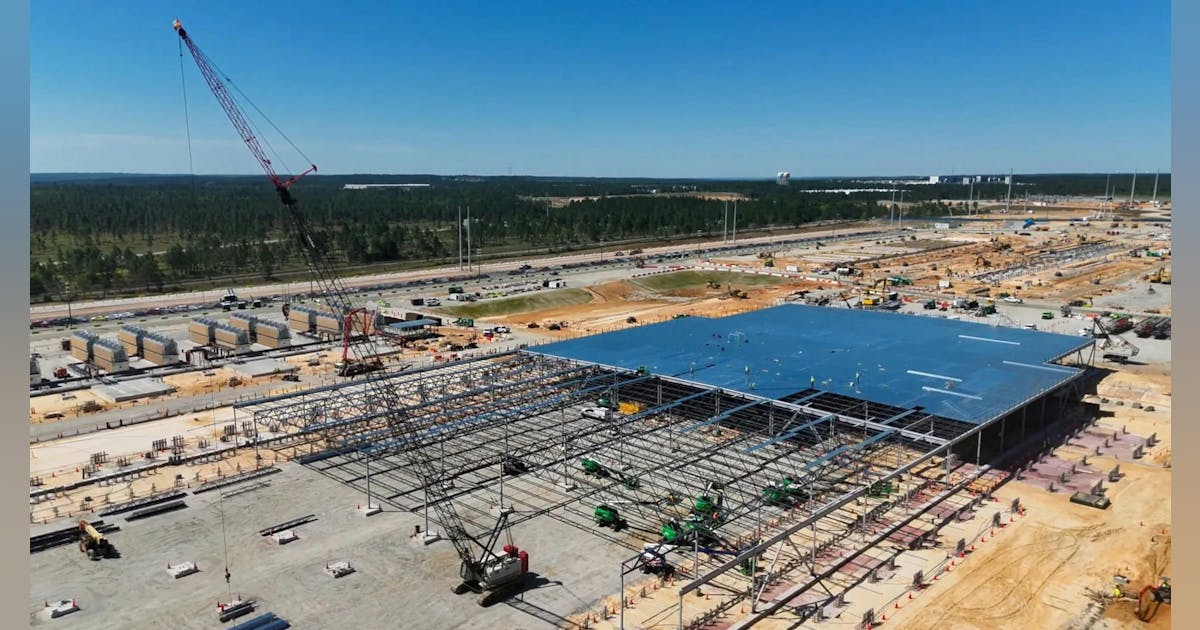
CleanArc’s Virginia Hyperscale Bet Meets the Era of Pay-Your-Way Power

What CleanArc’s Project Really Signals About Scaling in Virginia The more important story is what the project signals about how developers believe they can still scale in Virginia at hyperscale magnitude. To wit: 1) The campus is sized like a grid project, not a real estate project At 900 MW, CleanArc is not simply building a few facilities. It is effectively planning a utility-interface program that will require staged substation, transmission, and interconnection work over many years. The company describes the campus as a “flagship” designed for scalable demand and sustainability-focused procurement. Power delivery is planned in three 300 MW phases: the first targeted for 2027, the second for 2030, and the final block sometime between 2033 and 2035. That scale changes what “site selection” really means. For projects of this magnitude, the differentiator is no longer “Can we entitle buildings?” but “Can we secure a credible path for large power blocks, with predictable commercial terms, while regulators are rewriting the rules?” 2) It’s being marketed as sustainability-forward in a market that increasingly requires it CleanArc frames the campus as aligned with sustainability-focused infrastructure: a posture that is no longer optional for hyperscale procurement teams. That does not mean the grid power itself is automatically carbon-free. It means the campus is being positioned to support the modern contracting stack, involving renewables, clean-energy attributes, and related structures, while still delivering what hyperscalers buy first: capacity, reliability, and delivery certainty. 3) The timing is strategic as Virginia tightens around very large load CleanArc is launching its flagship in the nation’s premier data center corridor at the same moment Virginia has moved to formalize a large-customer category that explicitly includes data centers. The implication is not that Virginia has become anti-data center. It is that the state is entering a phase where it

Read More »

xAI’s AI Factories: From Colossus to MACROHARDRR in the Gigawatt Era

Colossus: The Prototype For much of the past year, xAI’s infrastructure story did not unfold across a portfolio of sites. It unfolded inside a single building in Memphis, where the company first tested what an “AI factory” actually looks like in physical form. That building had a name that matched the ambition: Colossus. The Memphis-area facility, carved out of a vacant Electrolux factory, became shorthand for a new kind of AI build: fast, dense, liquid-cooled, and powered on a schedule that often ran ahead of the grid. It was an “AI factory” in the literal sense: not a cathedral of architecture, but a machine for turning electricity into tokens. Colossus began as an exercise in speed. xAI took over a dormant industrial building in Southwest Memphis and turned it into an AI training plant in months, not years. The company has said the first major system was built in about 122 days, and then doubled in roughly 92 more, reaching around 200,000 GPUs. Those numbers matter less for their bravado than for what they reveal about method. Colossus was never meant to be bespoke. It was meant to be repeatable. High-density GPU servers, liquid cooling at the rack, integrated CDUs, and large-scale Ethernet networking formed a standardized building block. The rack, not the room, became the unit of design. Liquid cooling was not treated as a novelty. It was treated as a prerequisite. By pushing heat removal down to the rack, xAI avoided having to reinvent the data hall every time density rose. The building became a container; the rack became the machine. That design logic, e.g. industrial shell plus standardized AI rack, has quietly become the template for everything that followed. Power: Where Speed Met Reality What slowed the story was not compute, cooling, or networking. It was power.

Read More »

Sustainable Data Centers in the Age of AI: Page Haun, Chief Marketing and ESG Strategy Officer, Cologix

Artificial intelligence has turned the data center industry into a front-page story, often for the wrong reasons. The narrative usually starts with megawatts, ends with headlines about grid strain, and rarely pauses to explain what operators are actually doing about it. On the latest episode of The Data Center Frontier Show, Page Haun, Chief Marketing and ESG Strategy Officer at Cologix, laid out a more grounded reality: the AI era is forcing sustainability from a side initiative into a core design principle. Not because it sounds good, but because it has to work. From fuel cells in Ohio to closed-loop water systems that dramatically outperform industry norms, Cologix’s approach offers a case study in what “responsible growth” looks like when rack densities climb, power timelines stretch, and communities demand more than promises. The AI-Era Sustainability Baseline AI is changing the math. Power demand is rising faster than grid infrastructure can move. Communities are paying closer attention. Regulators are asking sharper questions. And the industry is discovering that speed without credibility creates friction. Haun described the current moment as a “perfect storm” where grid constraints, community concerns, and regulatory scrutiny all converge around AI-driven growth. But she also pushed back on the idea that the industry is ignoring the problem. Data center operators, utilities, and governments are already working together in ways that didn’t exist a decade ago by sharing load forecasts, coordinating long-lead infrastructure investments, and aligning power planning with customer roadmaps. One of the industry’s biggest gaps, she argued, isn’t engineering; it’s communication. Data centers still struggle to explain their role in the digital economy: education platforms, healthcare systems, streaming media, gaming, and now AI tools that enterprises are rapidly embedding into daily operations. Without that context, power usage becomes the whole story, yet it’s only part of the

Read More »

Meta Builds a Nuclear Supply Chain for the AI Era

Meta’s power announcements in January aren’t a simple case of “Meta goes nuclear.” They are better understood as Meta assembling a nuclear supply chain, using three different deal structures to target three different bottlenecks: near-term firm power, medium-term life extension and uprates at existing plants, and longer-term new-build advanced reactors. Meta says the combined package could support up to 6.6 gigawatts (GW) of new and existing clean power by 2035, building on its earlier nuclear offtake agreement with Constellation Energy and folding these moves into its broader push to scale AI and data center infrastructure. Part 1: A 20-Year Offtake Tied to Operating Reactors (Vistra) Meta’s agreement with Vistra isn’t a flashy “new reactor” announcement. It is something more important for the next decade of AI-era power: a long-duration financial commitment designed to keep existing nuclear plants running, push more megawatts (MW) out of them, and justify another round of 20-year license extensions. This is happening inside the tightest, most politically contentious power market in the U.S. right now: PJM, the Pennsylvania-New Jersey-Maryland Interconnection, currently the largest Regional Transmission Organization in the country. The agreed-upon number is a big one: 20-year power purchase agreements covering more than 2,600 megawatts of zero-carbon nuclear energy tied to three Vistra plants: Perry (Ohio), Davis-Besse (Ohio), and Beaver Valley (Pennsylvania). A meaningful share of that commitment is expected to come from uprates, or capacity increases, rather than simply reallocating existing output. The implication is straightforward. By making this commitment, nuclear power moves from at-risk legacy baseload into foundational power for AI-era infrastructure. Meta is effectively acting as a long-term anchor tenant, similar to how hyperscalers once treated early renewables to catalyze that market; but adapted to a reality where wind and solar alone cannot support 24/7 load growth. This is the fastest path to

Read More »

Microsoft will invest $80B in AI data centers in fiscal 2025

And Microsoft isn’t the only one that is ramping up its investments into AI-enabled data centers. Rival cloud service providers are all investing in either upgrading or opening new data centers to capture a larger chunk of business from developers and users of large language models (LLMs).  In a report published in October 2024, Bloomberg Intelligence estimated that demand for generative AI would push Microsoft, AWS, Google, Oracle, Meta, and Apple would between them devote $200 billion to capex in 2025, up from $110 billion in 2023. Microsoft is one of the biggest spenders, followed closely by Google and AWS, Bloomberg Intelligence said. Its estimate of Microsoft’s capital spending on AI, at $62.4 billion for calendar 2025, is lower than Smith’s claim that the company will invest $80 billion in the fiscal year to June 30, 2025. Both figures, though, are way higher than Microsoft’s 2020 capital expenditure of “just” $17.6 billion. The majority of the increased spending is tied to cloud services and the expansion of AI infrastructure needed to provide compute capacity for OpenAI workloads. Separately, last October Amazon CEO Andy Jassy said his company planned total capex spend of $75 billion in 2024 and even more in 2025, with much of it going to AWS, its cloud computing division.

Read More »

John Deere unveils more autonomous farm machines to address skill labor shortage

Join our daily and weekly newsletters for the latest updates and exclusive content on industry-leading AI coverage. Learn More Self-driving tractors might be the path to self-driving cars. John Deere has revealed a new line of autonomous machines and tech across agriculture, construction and commercial landscaping. The Moline, Illinois-based John Deere has been in business for 187 years, yet it’s been a regular as a non-tech company showing off technology at the big tech trade show in Las Vegas and is back at CES 2025 with more autonomous tractors and other vehicles. This is not something we usually cover, but John Deere has a lot of data that is interesting in the big picture of tech. The message from the company is that there aren’t enough skilled farm laborers to do the work that its customers need. It’s been a challenge for most of the last two decades, said Jahmy Hindman, CTO at John Deere, in a briefing. Much of the tech will come this fall and after that. He noted that the average farmer in the U.S. is over 58 and works 12 to 18 hours a day to grow food for us. And he said the American Farm Bureau Federation estimates there are roughly 2.4 million farm jobs that need to be filled annually; and the agricultural work force continues to shrink. (This is my hint to the anti-immigration crowd). John Deere’s autonomous 9RX Tractor. Farmers can oversee it using an app. While each of these industries experiences their own set of challenges, a commonality across all is skilled labor availability. In construction, about 80% percent of contractors struggle to find skilled labor. And in commercial landscaping, 86% of landscaping business owners can’t find labor to fill open positions, he said. “They have to figure out how to do

Read More »

2025 playbook for enterprise AI success, from agents to evals

Join our daily and weekly newsletters for the latest updates and exclusive content on industry-leading AI coverage. Learn More 2025 is poised to be a pivotal year for enterprise AI. The past year has seen rapid innovation, and this year will see the same. This has made it more critical than ever to revisit your AI strategy to stay competitive and create value for your customers. From scaling AI agents to optimizing costs, here are the five critical areas enterprises should prioritize for their AI strategy this year. 1. Agents: the next generation of automation AI agents are no longer theoretical. In 2025, they’re indispensable tools for enterprises looking to streamline operations and enhance customer interactions. Unlike traditional software, agents powered by large language models (LLMs) can make nuanced decisions, navigate complex multi-step tasks, and integrate seamlessly with tools and APIs. At the start of 2024, agents were not ready for prime time, making frustrating mistakes like hallucinating URLs. They started getting better as frontier large language models themselves improved. “Let me put it this way,” said Sam Witteveen, cofounder of Red Dragon, a company that develops agents for companies, and that recently reviewed the 48 agents it built last year. “Interestingly, the ones that we built at the start of the year, a lot of those worked way better at the end of the year just because the models got better.” Witteveen shared this in the video podcast we filmed to discuss these five big trends in detail. Models are getting better and hallucinating less, and they’re also being trained to do agentic tasks. Another feature that the model providers are researching is a way to use the LLM as a judge, and as models get cheaper (something we’ll cover below), companies can use three or more models to

Read More »

OpenAI’s red teaming innovations define new essentials for security leaders in the AI era

Join our daily and weekly newsletters for the latest updates and exclusive content on industry-leading AI coverage. Learn More OpenAI has taken a more aggressive approach to red teaming than its AI competitors, demonstrating its security teams’ advanced capabilities in two areas: multi-step reinforcement and external red teaming. OpenAI recently released two papers that set a new competitive standard for improving the quality, reliability and safety of AI models in these two techniques and more. The first paper, “OpenAI’s Approach to External Red Teaming for AI Models and Systems,” reports that specialized teams outside the company have proven effective in uncovering vulnerabilities that might otherwise have made it into a released model because in-house testing techniques may have missed them. In the second paper, “Diverse and Effective Red Teaming with Auto-Generated Rewards and Multi-Step Reinforcement Learning,” OpenAI introduces an automated framework that relies on iterative reinforcement learning to generate a broad spectrum of novel, wide-ranging attacks. Going all-in on red teaming pays practical, competitive dividends It’s encouraging to see competitive intensity in red teaming growing among AI companies. When Anthropic released its AI red team guidelines in June of last year, it joined AI providers including Google, Microsoft, Nvidia, OpenAI, and even the U.S.’s National Institute of Standards and Technology (NIST), which all had released red teaming frameworks. Investing heavily in red teaming yields tangible benefits for security leaders in any organization. OpenAI’s paper on external red teaming provides a detailed analysis of how the company strives to create specialized external teams that include cybersecurity and subject matter experts. The goal is to see if knowledgeable external teams can defeat models’ security perimeters and find gaps in their security, biases and controls that prompt-based testing couldn’t find. What makes OpenAI’s recent papers noteworthy is how well they define using human-in-the-middle

Read More »