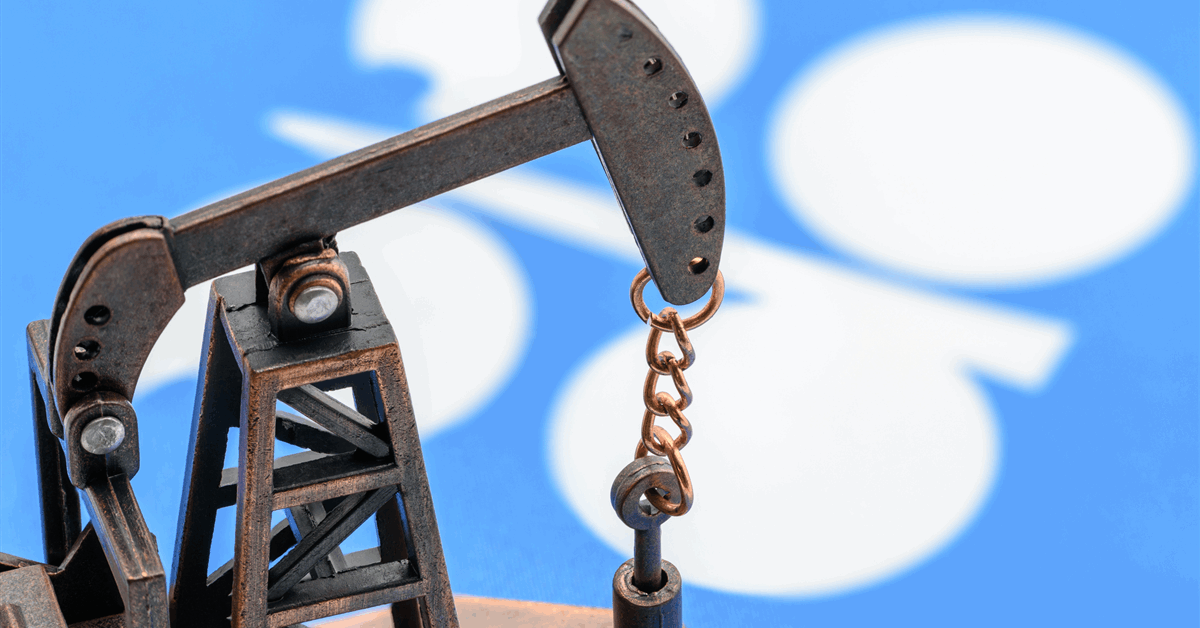
In a report sent to Rigzone by the Standard Chartered team on Wednesday, Standard Chartered Bank Energy Research Head Emily Ashford revealed the “market consensus” for the outcome of the next OPEC+ meeting, which is currently scheduled to take place on Sunday.
“OPEC+ members meet virtually on February 1, with market consensus that the meeting will likely mirror January’s in both speed and outcome (rapid, with no policy change),” Ashford said in the publication.
Ashford noted in the report that OPEC+’s monthly meetings “allow the group to be highly reactive and nimble in response to market conditions and sentiment”.
“We have seen notable improvements in the forward curve over the past month,” Ashford said.
“Backwardation at the front of the forward curve extends out through the 2026 contracts, while one month ago it was only the first three months, and the back of the curve has risen by $1 per barrel month on month,” the analyst added.
“In addition, market sentiment appears to be gradually turning away from the overwhelmingly bearish ‘supply glut’ narrative that has dominated media reporting since Q4-2025,” Ashford continued.
“However, we do not expect a pivot in strategy at this meeting and Q1 loadings remain paused,” the Standard Chartered analyst went on to state.
The Standard Chartered Bank analyst projected in the report that “attention is more likely to fall on the OPEC+ overproducers’ updated compensation plans”.
“Both Iraq and Kazakhstan have notable volumes to remove from their supply,” Ashford highlighted.
“Kazakhstan’s compensation plan for January was 279,000 barrels per day, rising to 569,000 barrels per day for both February and March,” Ashford pointed out.
Rigzone has contacted OPEC for comment on the Standard Chartered report. At the time of writing, OPEC has not responded to Rigzone.
In a market update sent to Rigzone by the Rystad Energy team on Monday, Rystad highlighted that oil traders “will monitor … signals from OPEC+ members”.
A statement posted on OPEC’s website on January 4 revealed that, in a meeting held that day, Saudi Arabia, Russia, Iraq, UAE, Kuwait, Kazakhstan, Algeria, and Oman “reaffirmed their decision on 2 November 2025 to pause production increments in February and March 2026 due to seasonality”.
According to a table accompanying that statement, “required production” in February and March this year is 10.103 million barrels per day for Saudi Arabia, 9.574 million barrels per day for Russia, 4.273 million barrels per day for Iraq, 3.411 million barrels per day for the UAE, 2.580 million barrels per day for Kuwait, 1.569 million barrels per day for Kazakhstan, 971,000 barrels per day for Algeria, and 811,000 barrels per day for Oman.
The statement went on to note that the eight OPEC+ countries will hold monthly meetings “to review market conditions, conformity, and compensation”, adding that the eight countries will meet on February 1.
A statement posted on OPEC’s website on January 7 announced that the OPEC Secretariat had received updated compensation plans from Iraq, the United Arab Emirates (UAE), Kazakhstan, and Oman.
A table accompanying this statement showed that these compensation plans amount to a total of 267,000 barrels per day in December 2025, 415,000 barrels per day in January 2026, 708,000 barrels per day in February, 710,000 barrels per day in March, 810,000 barrels per day in April, 831,000 barrels per day in May, and 829,000 barrels per day in June.
According to the table, Kazakhstan’s compensation plans come in at 131,000 barrels per day in December, 279,000 barrels per day in January, 569,000 barrels per day in both February and March, 650,000 barrels per day in April, and 669,000 barrels per day in both May and June.
Iraq’s compensation plans amount to 120,000 barrels per day in both December 2025 and January 2026, 115,000 barrels per day in both February and March, 101,000 barrels per day in April, and 100,000 barrels per day in both May and June, the table showed.
To contact the author, email [email protected]