Those building blocks include the new G300 as well as the G200 51.2 Tbps chip, which is aimed at spine and aggregation applications, and the G100 25.6 Tbps chip, which is aimed at leaf operations.
Expanded portfolio of Silicon One P200-powered systems
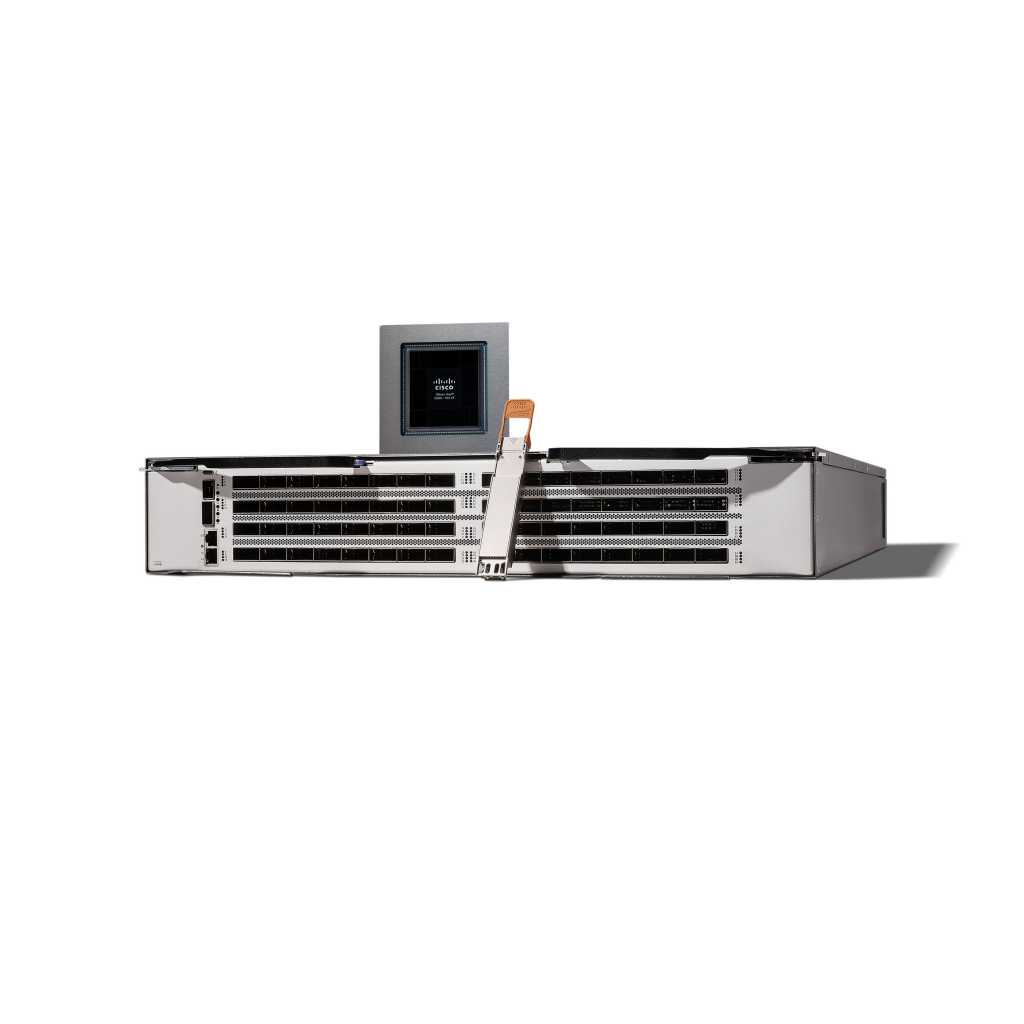
Cisco in October rolled out the P200 Silicon One chip and the high-end, 51.2 Tbps 8223 router aimed at distributed AI workloads. That system supports Octal Small Form-Factor Pluggable (OSFP) and Quad Small Form-Factor Pluggable Double Density (QSFP-DD) optical form factors that help the box support geographically dispersed AI clusters.
Cisco grew the G200 family this week with the addition of the 8122X-64EF-O, a 64x800G switch that will run the SONiC OS and includes support for Cisco 800G Linear Pluggable Optics (LPO) connectivity. LPO components typically set up direct links between fiber optic modules, eliminating the need for traditional components such as a digital signal processor.
Cisco said its P200 systems running IOS XR software now better support core routing services to allow data-center-to-data-center links and data center interconnect applications.
In addition, Cisco introduced a P200-powered 88-LC2-36EF-M line card, which delivers 28.8T of capacity.
“Available for both our 8-slot and 18-slot modular systems, this line card enables up to an unprecedented 518.4T of total system bandwidth, the highest in the industry,” wrote Guru Shenoy, senior vice president of the Cisco provider connectivity group, in a blog post about the news. “When paired with Cisco 800G ZR/ZR+ coherent pluggable optics, these systems can easily connect sites over 1,000 kilometers apart, providing the high-density performance needed for modern data center interconnects and core routing.”