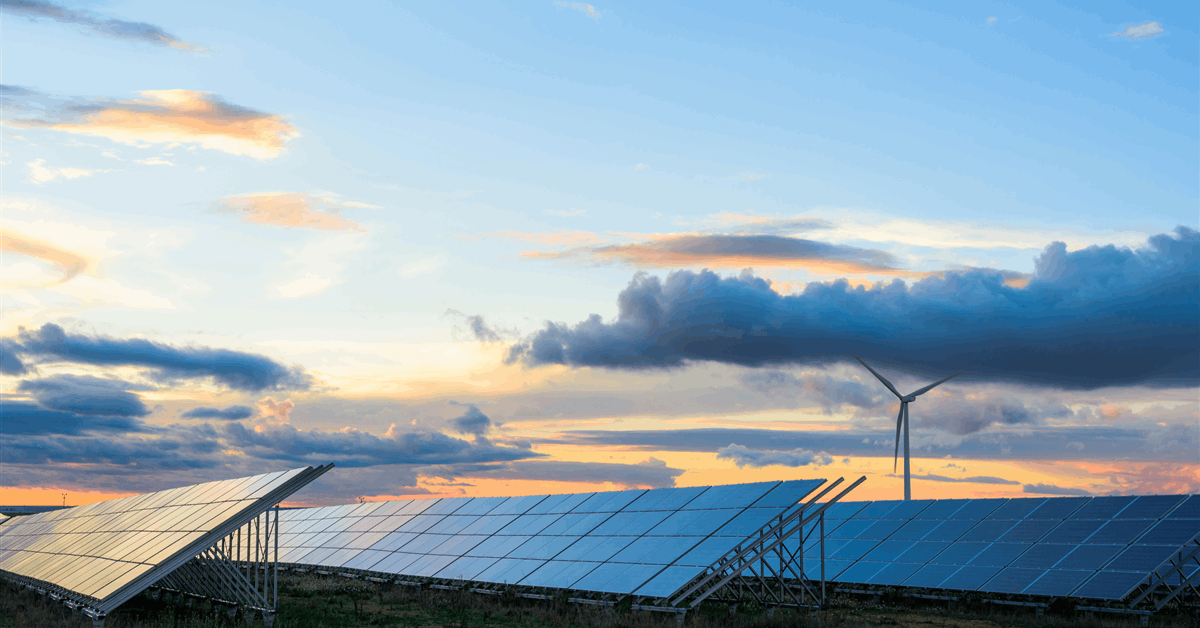
Equinor ASA said the 140-megawatt (MW) Serra da Babilônia Solar in the Brazilian state of Bahia is now commercially operational.
Co-located with the existing 223-MW Serra da Babilônia Wind, the solar unit completes the Norwegian majority state-owned company’s first hybrid power complex, Equinor said in an online statement. The wind farm came online 2018, before Equinor took over through the acquisition of Rio Energy in 2023.
“Accumulated annual production from Serra da Babilônia Solar is estimated at 236 GWh of power per year, which is equivalent to the consumption of 143,000 Brazilian households”, Equinor said. “The produced energy will be sold in the Brazilian power market by Equinor’s energy trading house, Danske Commodities”.
“Hybrid projects take advantage of the complementary nature of solar and wind resources, which generate power at different times of the day and throughout different seasons”, it said. “This helps to reduce the intermittency associated with renewable power generation and enhance grid stability.
“Further, Serra da Babilônia Solar leverages synergies from the operating wind facility by sharing existing infrastructure on site, and by achieving efficiencies during the operations and maintenance phase. This results in material cost savings for the hybrid complex compared to a standalone solar asset”.
Serra da Babilônia Solar is the first project delivered by Rio Energy as a wholly owned subsidiary of Equinor, according to Equinor.
“Brazil is a key area for Equinor’s long-term growth”, said Equinor manager for Brazil Veronica Coelho. “Building on a solid portfolio of oil and natural gas, including Raia that will supply around 15 percent of Brazil’s total gas demand, we are advancing towards a more integrated and diverse energy offering in the country.
“With Serra da Babilônia Solar operational, we now have around 600 MW of solar and wind capacity in power production, which we can further optimize through our trading arm Danske Commodities based in São Paulo”.
In Brazil’s power sector, Equinor also owns a 43.5 percent stake in the 162-MW Apodi solar complex in Ceará state and 30 percent in the 531-MW Mendubim solar plants complex in Rio Grande do Norte state, both operated by Scatec ASA, also a Norwegian company.
Rio Energy is also maturing a 1.5-gigawatt (GW) pipeline of onshore wind and solar projects, according to Equinor.
Equinor aims to install a renewables capacity of 10-12 GW by 2030.
It updated its energy transition plan earlier this year to hold down renewables expansion in favor of “value creation”. The new strategy junked a plan to allot 50 percent of capital to renewables and low-carbon solutions by the end of the decade.
“Equinor has high-graded the project portfolios in renewables and low-carbon solutions, and reduced cost and early-phase spend to improve the value creation for shareholders”, it said in its 2024 fourth quarter report, published February 4, 2025. “The portfolio is expected to deliver more than 10 percent life-cycle equity returns”.
To contact the author, email [email protected]
What do you think? We’d love to hear from you, join the conversation on the
Rigzone Energy Network.
The Rigzone Energy Network is a new social experience created for you and all energy professionals to Speak Up about our industry, share knowledge, connect with peers and industry insiders and engage in a professional community that will empower your career in energy.
MORE FROM THIS AUTHOR