Stay Ahead, Stay ONMINE

Equinor Makes Gas Discovery in Halten Area of Norwegian Sea

Equinor ASA and its partners have proven natural gas and condensate in production license 1119 in the Halten area of the Norwegian Sea. Preliminary estimates from the drilling of the Mistral Sør exploration well, or well 6406/6-7 S, indicate 3-7 million standard cubic meters of oil equivalent in recoverable resources, corresponding to 19-44 million barrels […]

Equinor ASA and its partners have proven natural gas and condensate in production license 1119 in the Halten area of the Norwegian Sea.

Preliminary estimates from the drilling of the Mistral Sør exploration well, or well 6406/6-7 S, indicate 3-7 million standard cubic meters of oil equivalent in recoverable resources, corresponding to 19-44 million barrels of oil equivalent, according to the Norwegian majority state-owned company.

“The licensees’ assessment is that this is a commercial discovery, and they will consider tie-back to existing infrastructure or development together with other discoveries in the area”, Equinor said in an online statement.

“Mistral Sør is situated just a short distance north of Linnorm, the largest gas discovery on the Norwegian continental shelf that has yet to be developed”, Equinor noted. It has raised its stake in Linnorm to 50 percent after acquiring Shell PLC’s operating 30 percent interest, in a transaction completed April 2024. Linnorm is estimated to hold about 25-30 billion cubic meters (882.87 billion-1.06 trillion cubic feet) of recoverable gas, according to Equinor.

The Norwegian Offshore Directorate said separately, “Wildcat well 6406/6-7 S is the first well drilled by the licensees in production license 1119, but the fifth within the license area as a whole”.

Grete B. Haaland, Equinor senior vice president for Exploration & Production North, commented, “Norwegian gas is in high demand and is crucial to Europe’s energy security”.

“That’s why it’s important for us to continue exploring and making new discoveries so we can maintain a high level of deliveries”, Haaland added.

“This discovery was made in an area where gas infrastructure is already in place, and which we’re also continuing to develop. We have active exploration efforts underway in this area, which have resulted in several discoveries in recent years”.

The drilling of Mistral Sør, conducted by Odfjell Drilling Ltd.’s Deepsea Atlantic, aimed to prove petroleum in Middle Jurassic sandstones in the Garn Formation, with a secondary target in the Ile Formation.

“Well 6406/6-7 S encountered an approx. 45-meter hydrocarbon column in the Garn Formation, with good reservoir properties”, Equinor said. It was drilled to a vertical depth of 4,024 meters below sea level and terminated in the Ror Formation in the Lower Jurassic. The site has a water depth of 256 meters.

The secondary target failed to yield hydrocarbons.

“The well will be permanently plugged, and the Deepsea Atlantic will leave the location to commence drilling on 15/8-G-4 Utgard”, Equinor said.

Equinor operates production license 1119, granted February 2021 and valid until August 2027, with a 50 percent stake through Equinor Energy AS. OKEA ASA owns 30 percent and Pandion Energy AS 20 percent.

To contact the author, email jov.onsat@rigzone.com

What do you think? We’d love to hear from you, join the conversation on the

Rigzone Energy Network.

The Rigzone Energy Network is a new social experience created for you and all energy professionals to Speak Up about our industry, share knowledge, connect with peers and industry insiders and engage in a professional community that will empower your career in energy.


MORE FROM THIS AUTHOR

Shape
Shape
Stay Ahead

Explore More Insights

Stay ahead with more perspectives on cutting-edge power, infrastructure, energy,  bitcoin and AI solutions. Explore these articles to uncover strategies and insights shaping the future of industries.

Shape

Oracle cancels $7 billion Tencent AI chip deal

U.S. export controls restrict Chinese companies’ access to some of the most advanced AI accelerators, such as high-performance processors from Nvidia. Leasing computing capacity outside China offers another route to obtaining access to such hardware, although overseas arrangements can still attract scrutiny from U.S. authorities. After all, what’s the performance

Read More »

North America rig numbers dip

Total drilling activity in North America decreased slightly the week ended Nov. 6 with a total of 827 rigs working, reported Baker Hughes. A 1-rig increase in the US helped offset a 3-rig loss in Canada. The total North American rig count is down 2 units from this time last

Read More »

Oil falls below $90 amid easing US-Iran tensions

Oil prices extended their decline on Tuesday, Nov. 10, as recovering Middle Eastern production and expectations of a global supply surplus added pressure to a market already retreating on signs of easing US-Iran tensions. Brent crude fell below $90/bbl for the first time since late August. The international benchmark has now retreated nearly 24% from its Oct. 30 intraday high of $118/bbl, while US West Texas Intermediate (WTI) futures also recorded losses. The selloff reflects a reassessment of supply risks as Middle Eastern oil production recovers despite continuing disruptions to regional shipping. OPEC crude production increased by 1.38 million b/d in October to 22.87 million b/d, according to a Reuters survey. Gains were led by Saudi Arabia, Kuwait, and Iraq, bringing output among the 11 producers surveyed to about 90% of February’s prewar level. The recovery in exports has been less consistent. Preliminary Kpler data showed crude and condensate shipments through the Strait of Hormuz, Red Sea, and Gulf of Oman averaging about 16.1 million b/d in October, down from 17.09 million b/d in September. Kpler cautioned that the October figure could be revised upward as additional shipment information becomes available. Meanwhile, the broader global supply-demand balance has weakened. JPMorgan estimated that the oil market shifted into a surplus of 1.1 million b/d in September, widening to 1.4 million b/d in October. The bank attributed the change to recovering Middle Eastern exports, additional supply from other producing regions, and weaker consumption following months of elevated energy prices. Easing geopolitical concerns have added to the downward pressure. US President Donald Trump said Monday that further military strikes against Iran were unlikely in the near-term following appeals from regional leaders. After meeting Qatar’s prime minister at the White House, Trump suggested that the conflict could end “fairly soon,” although he indicated that

Read More »

Diamondback, KKR to jointly own entirety of Midland basin water network Deep Blue

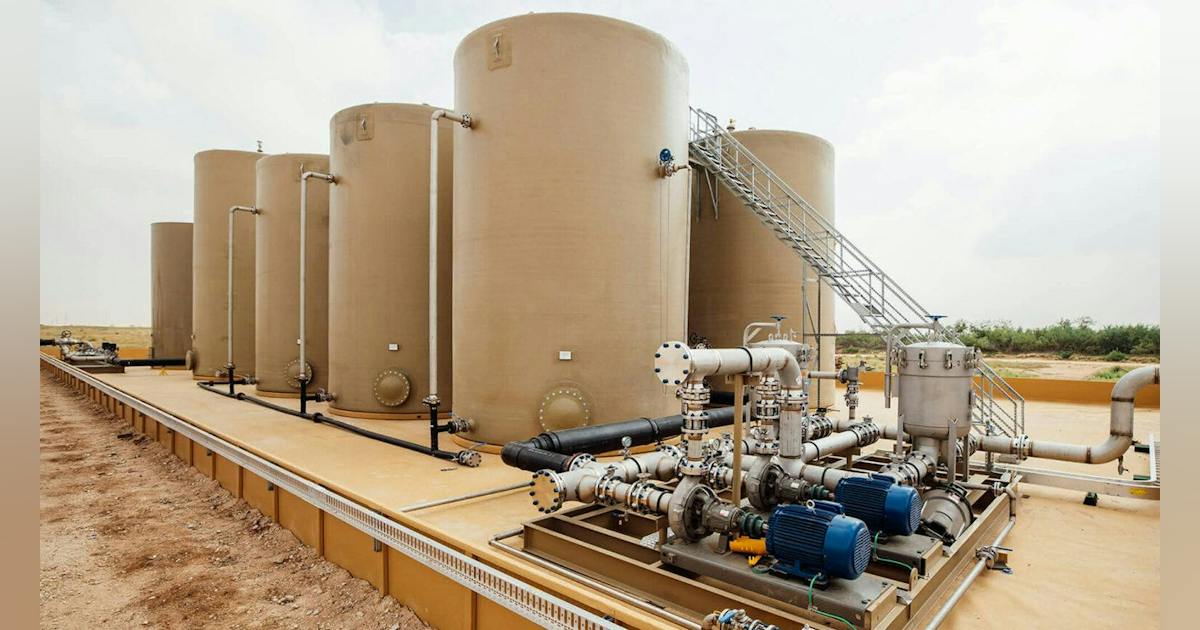
Diamondback Energy Inc., Midland, Tex., and investment firm KKR agreed to jointly acquire Five Point Infrastructure LLC’s 70% stake in Deep Blue Midland Basin LLC, a full-cycle water infrastructure platform in the Permian’s Midland basin. Financial details were not disclosed. Upon closing, which is expected in this year’s fourth quarter subject to regulatory approvals and closing conditions, Diamondback and KKR will jointly own 100% of Deep Blue, building on Diamondback’s existing 30% ownership interest. Deep Blue, which was formed in 2023 as a joint venture between Diamondback and private equity and infrastructure investor Five Point, operates an integrated water infrastructure network that provides water services including sourcing, transportation, storage, recycling, and disposal. “The Deep Blue system is critical for Diamondback’s core operations, which require reliable transportation of nearly 2 million barrels of water per day,” said Kaes Van’t Hof, Diamondback’s chief executive officer. The acquisition is aimed at supporting Deep Blue’s continued investment traditional full-cycle water infrastructure across West Texas, and, said Van’t Hof, “establishes a strategic partnership that is well positioned for traditional growth with additional opportunities to expand outside of oil and gas through advancements in new technology and potential industrial use cases in the Permian basin.” In addition to robust Permian oil and gas activity, the rapid expansion of AI data centers in West Texas is creating a water-demand challenge, prompting industry interest in treating and reusing the Permian’s vast volumes of produced water as a potential cooling-water source.

Read More »

Are data centers really paying their share? AES Indiana’s Google deal highlights a thorny question

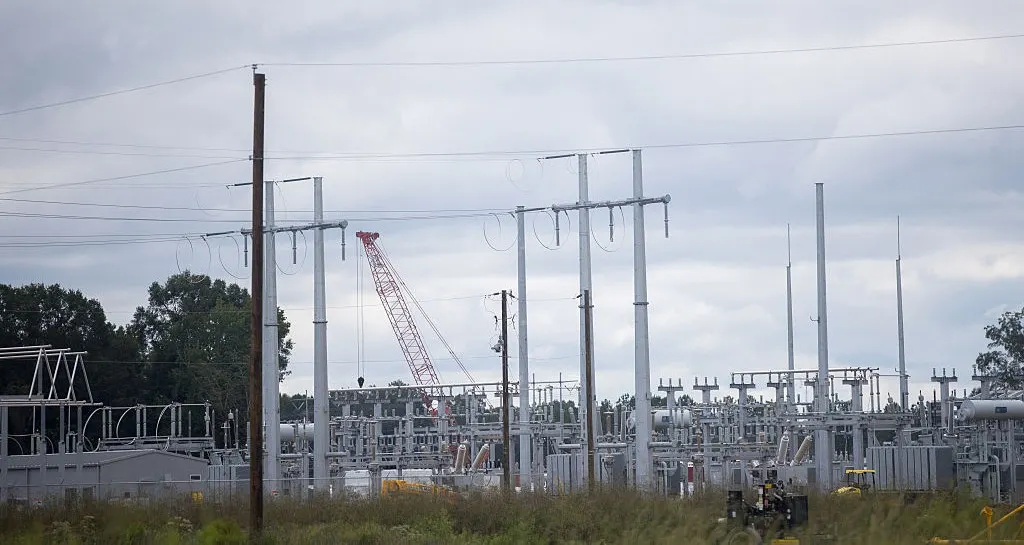
Listen to the article 9 min This audio is auto-generated. Please let us know if you have feedback. The Indiana Utility Regulatory Commission recently approved AES Indiana’s plan to serve a Google data center in a contested case that highlights the complex challenges regulators and utilities face in allocating system costs for large computational loads. According to the Oct. 7 order, AES will acquire or build new generation, storage and grid infrastructure for a 390-MW data center planned for Monrovia, a town Southwest of Indianapolis, at an estimated project cost of about $737 million.  The new generation, storage and transmission assets included in the Monrovia Project will go into the utility’s rate base.  AES says its electric service agreement with Google is designed to ensure the revenues will be sufficient to “reimburse at least 100%” of the project’s incremental direct costs. But the contract itself is heavily redacted, and an estimated $74 million in network upgrades has been explicitly allocated to all customers as a reliability need, prompting criticism from consumer advocates that the arrangement is shifting costs onto other ratepayers. What are ‘reasonably allocable’ costs?  Indiana state law requires large load customers to reimburse at least 80% of project costs “reasonably allocable” to them.  Claire Wayner, a senior associate at the clean energy nonprofit RMI, said in an interview that while local projects are fairly easy to trace back to a specific data center, broader regional system upgrades raise more complex questions about who benefits and how costs are allocated across jurisdictions. “Maybe they’re upgrading a part of the grid that they were going to have to upgrade anyway because it’s aging infrastructure,” Wayner said. “If that’s the case, they should have to demonstrate that, and then maybe cross socialization makes sense.” But, she continued, “If that upgrade was

Read More »

Market Focus: Balancing AI opportunities and risks in upstream operations

Robert Plumb is an executive vice-president at CAC, part of The Baldwin Group. Robert co-founded the Energy Practice of CAC Specialty in July 2016 with Josh Kirklin. Prior to joining CAC, Robert began his career as an oil and gas underwriter, working for both Travelers and the boutique energy wholesaler & MGA outfit, J.H. Blades & Co. Through these positions, he has drafted insurance policies and written thousands of General Liability, Umbrella, Well Control, Builders Risk, Loss of Production Income, Pollution, Property, Workers Compensation, and auto policies. In his underwriting career he was responsible for an aggregate portfolio of more than $500 million in gross written premium on behalf of various carriers including domestic and international markets, specifically Lloyd’s of London securities. Robert brings unique market perspective on how carriers analyze energy risks, and he specializes in property and casualty lines for on energy accounts worldwide. Robert has a bachelor’s degree in Corporate Communications and a Minor in Business Foundation from the University of Texas at Austin.  

Read More »

Vaalco advances to second exploration phase in block offshore Côte D’Ivoire

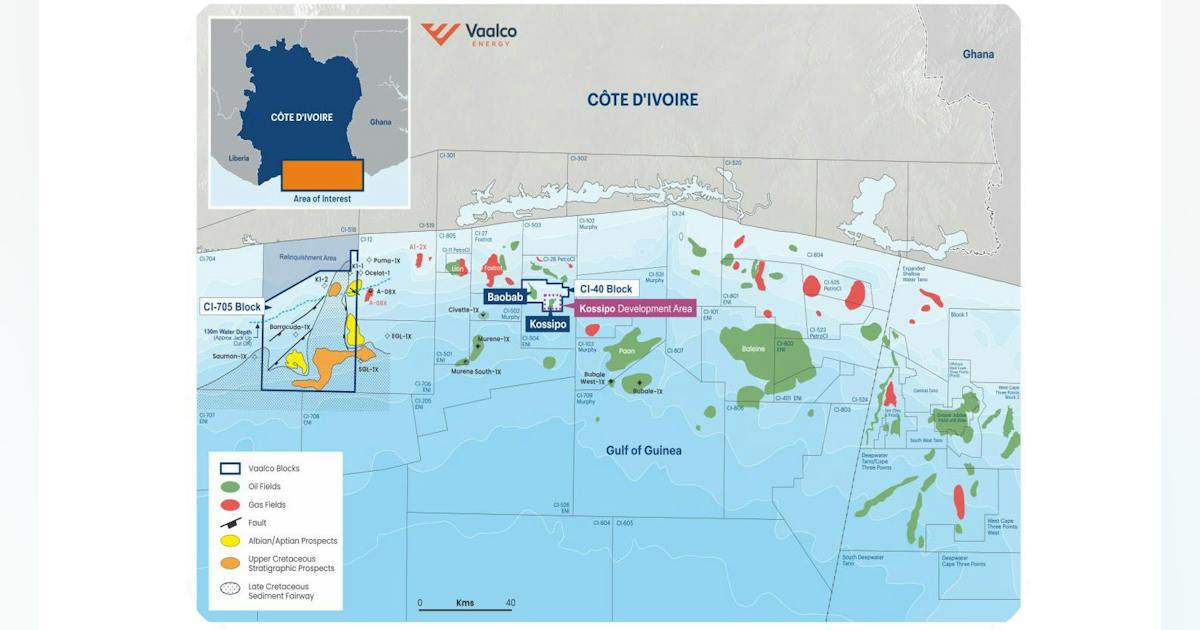
Vaalco Energy Inc., Houston, has been granted government approval to begin the second exploration phase at Block CI-705, offshore Côte d’Ivoire. News comes following encouraging results following completion of the first exploration phase work commitments, which included the evaluation and interpretation of existing seismic and well data, the company said in a release Nov. 9. Work on the second exploration phase includes additional seismic reprocessing, relinquishing 25% of the exploration block to the government, and commitment to drill an exploration well by yearend-2028. In March 2025, Vaalco farmed into and became operator of the exploration license with a 70% working interest. The block lies in the Ivoirien basin about 70 km to the west of Vaalco’s CI-40 Block, which hold Baobab and Kossipo oil fields. “We see encouraging prospectivity on the block in the play types proven throughout the Ivoirien Basin including both structural and stratigraphic traps in the Upper Cretaceous and Albian sections,” said George Maxwell, Vaalco’s chief executive officer. “Recent nearby discoveries are on trend with CI-705 and provide additional validation of our play concepts and our view of the block’s prospectivity,” he continued.

Read More »

BSR, consortium enter talks for potential downstream collaborations

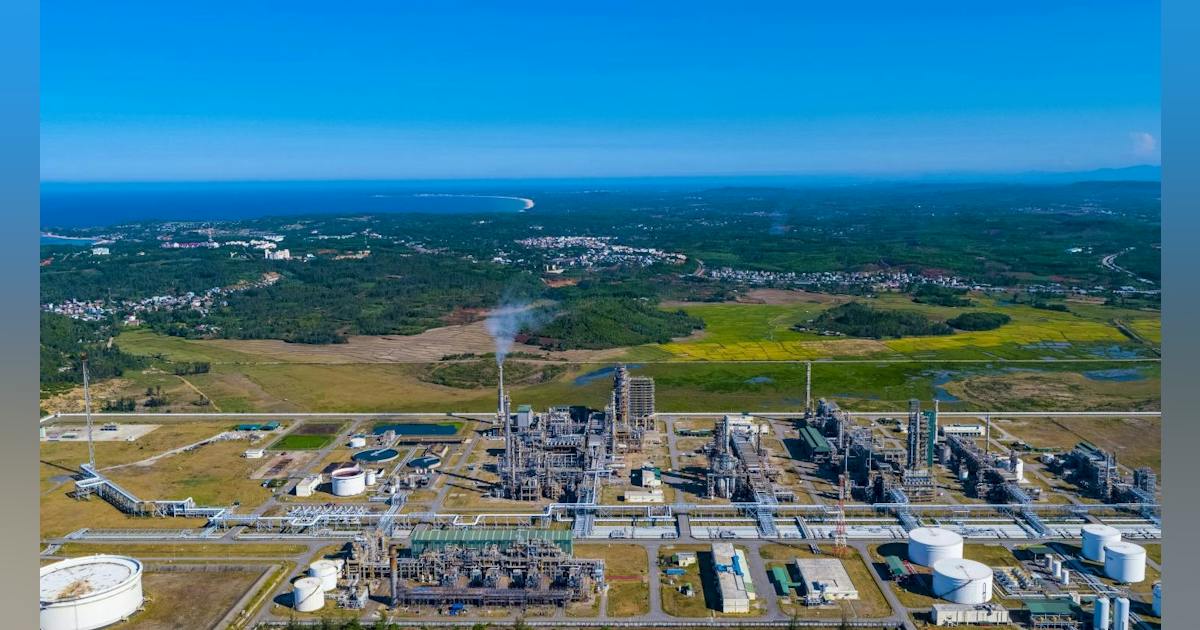
Vietnam Refining and Petrochemical Corp. (BSR) has entered talks with a consortium of FutureTec Co. and Zhejiang Hanghua Technology Co. Ltd. (Hanghua) to discuss and explore development opportunities along the refining and petrochemical value chain. At a Nov. 5 meeting between the parties, officials from the companies weighed potential collaborations on the deep processing of petroleum products, the development of value-added products, and research into related industrial infrastructure projects, BSR said in a release Nov. 6. While specific projects discussed at the meeting were not revealed, BSR said the event has laid the groundwork for further in-depth talks on potential areas of collaboration that would contributing to expanding the petrochemical refining value chain, improving resource utilization efficiency, and moving operations towards sustainable development. The proposed collaboration discussion comes amid shared interests of BSR and the FutureTec-Hanghua consortium in developing green, clean, and environmentally friendly products, as well as researching and developing new higher-value products, BSR said. With its experience in operating and managing refineries, BSR offers a favorable platform for expanding cooperation efforts with partners such as FutureTec and Hanghua that bring specialized capabilities in technology, research, and product development, added Nguyen Viet Thang, BSR’s general director. Potential collaborations with external partners come alongside BSR’s upgrading and expansion project now underway at the operator’s the 6.5-million tonne/year (tpy) refinery in the Dung Quat Economic Zone of Binh Tri Commune in Binh Son District, Quang Ngai Province, Vietnam. During the Nov. 5 meeting with the FutureTec-Hanghua consortium, BSR said its near-term plans for the refinery—which is currently operating at about 121% capacity—include further improving operational efficiency; optimizing technological processes; diversifying crude oil and product sourcing; as well as developing additional cleaner, sustainable fuels, petrochemicals, and high-value products. The operator said it will also continue focusing on efforts further efficient energy use,

Read More »

Data center champions lose badly as ballot initiatives target AI infrastructure

In other locales, data centers lost badly. In Joliet Township, Illinois, a restriction on new data centers passed with 80% of the vote. In Hubbard, Ohio, more than three-quarters of voters gave data centers a thumbs down. Ohio emerged as the main battleground, accounting for 21 of the 50 measures tracked by Ballotpedia. The votes covered several different approaches to controlling development: outright bans, power-consumption thresholds, temporary permitting moratoriums, mandatory public votes and requirements for developers seeking tax incentives. California and Florida saw outright bans. California voters in the cities of Alhambra and Monterey Park, where voters approved a measure prohibiting data centers. In Florida, Edgewater voters approved a charter amendment opposing new data centers and expansions of existing facilities.

Read More »

Land & Expand: Texas’ AI Boom Meets a New Political Reality

Hut 8 Advances a Gigawatt-Scale Campus Near Corpus Christi Another significant development came November 4, when Hut 8 reported continued progress on its Beacon Point AI data center campus in the Corpus Christi region. The company said that its previously announced second 352 MW IT-capacity lease had fully commercialized the campus, bringing the total contracted IT capacity associated with the two phases to 704 MW. The campus is designed around approximately 1 GW of utility capacity, a separate measure from the critical IT load under lease. Hut 8 estimates approximately $19.6 billion in base-term contract value across the two phases. In its third-quarter results, the company said construction of the campus substation had begun, alongside foundation and underground utility work for the first phase. Initial data hall delivery is targeted for the third quarter of 2027, with the second phase targeted for the second quarter of 2028. The company also disclosed agreements to acquire two energized sites in West Texas, with up to 230 MW of utility capacity at full energization, subject to outstanding approvals and infrastructure development. Those acquisitions point to another important trend: the increasing value of existing electrical infrastructure and sites that can potentially be adapted to serve advanced computing. As new greenfield projects face lengthy power studies and regulatory requirements, already energized locations may offer an alternative route to capacity. The distinction is especially important in markets such as Dallas-Fort Worth, where DCF’s analysis of CBRE’s first-half 2026 data found that approximately 95% of the region’s 765 MW under construction had already been preleased. PowerHouse and Big Watt Win Approval for Taylor Technology Campus Not every large new project is meeting resistance at the municipal level. On October 8, the City of Taylor approved a development agreement with PowerHouse Data Centers and Big Watt Digital for

Read More »

Google targets AI’s next infrastructure bottlenecks with two new TPUs

“It’s like adding more lanes to the highway,” he observed. “We’re not necessarily making each car travel faster, we’re creating more capacity so more traffic can move through the system at the same time.” Handling bursts, idling However, an agentic workload doesn’t behave exactly like a traditional inference workload. “It is bursty, long running, but often idle,” Lohmeyer noted. While it might generate outputs and call tools, it still has to wait for a response, maybe from a human, “literally for days.” During that time, it doesn’t need to do anything; it just needs to preserve context. But if resources are tied up for that entire multi-day period, they’re being wasted “90% plus of the time,” he said. Google Cloud’s open source TPU Sync is designed to address these issues by unifying memory, storage, and networking in software. The model-state layer for TPUs turns chip high bandwidth memory (HBM), host DRAM, shared storage, and the data center network into a “single, co-designed memory hierarchy,” the company said. It automatically tiers KV caches off the chip in milliseconds, streams context across nodes, and synchronizes RL weights to cut transfer latency and Time to First Token (TTFT) by more than 90%.

Read More »

DCF Global: Britain’s New Bargain With the AI Data Center Industry

The Global Perspective: A New Bargain for the AI Economy? Britain’s new Data Centre Covenant may ultimately prove important well beyond the United Kingdom. Governments across the world are attempting to reconcile the economic promise of AI infrastructure with the extraordinary physical requirements of building it. Electricity networks must accommodate loads measured in hundreds of megawatts. Utilities must plan transmission and generation investments years in advance. Communities are being asked to host facilities whose construction costs can run into billions, but whose permanent employment footprints may be relatively modest. At the same time, national governments increasingly view domestic computing capacity as a strategic asset. Britain is attempting to connect those issues within a single policy framework. Its approach differs in important respects from the fragmented regulatory environment in the United States, where utility commissions, state governments, local authorities, and regional grid operators exercise separate—and sometimes competing—powers over development. Nevertheless, the underlying questions are increasingly similar. In DCF’s October examination of Virginia’s changing data center policies, the industry’s largest established market was confronting new expectations concerning infrastructure costs, utility commitments, community impacts, and the conditions under which large facilities should receive development approval. Britain’s Covenant addresses comparable pressures through a more coordinated national initiative. It effectively proposes that preferential treatment for strategically important data center development should be accompanied by demonstrable public value. That is a meaningful evolution in the relationship between government and the industry. For years, data center investment announcements have emphasized capital expenditure, construction employment, technological leadership, and economic development. Those considerations remain important. But Britain’s emerging framework asks a more demanding set of questions: Can the project obtain real electricity capacity? Will it pay its fair share of infrastructure costs? Does it contribute to domestic capability? What obligations does it have to its host community? And can

Read More »

Don’t mention the data center: OpenAI calls them ‘compute campuses’ instead

Data centers’ increasing power consumption is straining the grid, with AI servers accounting for an ever larger share of that consumption, with further increases forecast. These demands are leading to a growing number of protests against the development of data centers, which could lead to construction delays. OpenAI claims that its Grid Protectors Program will meet some of those issues head-on by taking into account future capacity needs and working to make power flexibility a key element in data center, sorry, compute campus, design. The company said that the approach would differ, region by region. It has yet to finalize all the details of the scheme, but it hopes to head off some of the protests. It remains to be seen whether it has this effect. Google recently took the opposite approach to the peak consumption problem, proposing to pay people to turn off their appliances at times of high demand so that it can continue to power its data centers.

Read More »

Agentic AI boom expected to reshape CPU market

These activities include planning tasks, scheduling subtasks, calling external tools, managing interactions between multiple agents and evaluating results. Agents also rely on conventional computing resources to execute Python code, search databases, crawl websites and process information, according to TrendForce. As a result, the CPU is enjoying a new lease on life and becoming a more significant component of AI infrastructure rather than simply serving as a supporting processor for GPUs, according to TrendForce. TrendForce notes that traditional AI data centers have typically deployed approximately one CPU for every four to eight GPUs, reflecting the industry’s emphasis on accelerating computationally intensive AI workloads.

Read More »

Microsoft will invest $80B in AI data centers in fiscal 2025

And Microsoft isn’t the only one that is ramping up its investments into AI-enabled data centers. Rival cloud service providers are all investing in either upgrading or opening new data centers to capture a larger chunk of business from developers and users of large language models (LLMs).  In a report published in October 2024, Bloomberg Intelligence estimated that demand for generative AI would push Microsoft, AWS, Google, Oracle, Meta, and Apple would between them devote $200 billion to capex in 2025, up from $110 billion in 2023. Microsoft is one of the biggest spenders, followed closely by Google and AWS, Bloomberg Intelligence said. Its estimate of Microsoft’s capital spending on AI, at $62.4 billion for calendar 2025, is lower than Smith’s claim that the company will invest $80 billion in the fiscal year to June 30, 2025. Both figures, though, are way higher than Microsoft’s 2020 capital expenditure of “just” $17.6 billion. The majority of the increased spending is tied to cloud services and the expansion of AI infrastructure needed to provide compute capacity for OpenAI workloads. Separately, last October Amazon CEO Andy Jassy said his company planned total capex spend of $75 billion in 2024 and even more in 2025, with much of it going to AWS, its cloud computing division.

Read More »

John Deere unveils more autonomous farm machines to address skill labor shortage

Join our daily and weekly newsletters for the latest updates and exclusive content on industry-leading AI coverage. Learn More Self-driving tractors might be the path to self-driving cars. John Deere has revealed a new line of autonomous machines and tech across agriculture, construction and commercial landscaping. The Moline, Illinois-based John Deere has been in business for 187 years, yet it’s been a regular as a non-tech company showing off technology at the big tech trade show in Las Vegas and is back at CES 2025 with more autonomous tractors and other vehicles. This is not something we usually cover, but John Deere has a lot of data that is interesting in the big picture of tech. The message from the company is that there aren’t enough skilled farm laborers to do the work that its customers need. It’s been a challenge for most of the last two decades, said Jahmy Hindman, CTO at John Deere, in a briefing. Much of the tech will come this fall and after that. He noted that the average farmer in the U.S. is over 58 and works 12 to 18 hours a day to grow food for us. And he said the American Farm Bureau Federation estimates there are roughly 2.4 million farm jobs that need to be filled annually; and the agricultural work force continues to shrink. (This is my hint to the anti-immigration crowd). John Deere’s autonomous 9RX Tractor. Farmers can oversee it using an app. While each of these industries experiences their own set of challenges, a commonality across all is skilled labor availability. In construction, about 80% percent of contractors struggle to find skilled labor. And in commercial landscaping, 86% of landscaping business owners can’t find labor to fill open positions, he said. “They have to figure out how to do

Read More »

2025 playbook for enterprise AI success, from agents to evals

Join our daily and weekly newsletters for the latest updates and exclusive content on industry-leading AI coverage. Learn More 2025 is poised to be a pivotal year for enterprise AI. The past year has seen rapid innovation, and this year will see the same. This has made it more critical than ever to revisit your AI strategy to stay competitive and create value for your customers. From scaling AI agents to optimizing costs, here are the five critical areas enterprises should prioritize for their AI strategy this year. 1. Agents: the next generation of automation AI agents are no longer theoretical. In 2025, they’re indispensable tools for enterprises looking to streamline operations and enhance customer interactions. Unlike traditional software, agents powered by large language models (LLMs) can make nuanced decisions, navigate complex multi-step tasks, and integrate seamlessly with tools and APIs. At the start of 2024, agents were not ready for prime time, making frustrating mistakes like hallucinating URLs. They started getting better as frontier large language models themselves improved. “Let me put it this way,” said Sam Witteveen, cofounder of Red Dragon, a company that develops agents for companies, and that recently reviewed the 48 agents it built last year. “Interestingly, the ones that we built at the start of the year, a lot of those worked way better at the end of the year just because the models got better.” Witteveen shared this in the video podcast we filmed to discuss these five big trends in detail. Models are getting better and hallucinating less, and they’re also being trained to do agentic tasks. Another feature that the model providers are researching is a way to use the LLM as a judge, and as models get cheaper (something we’ll cover below), companies can use three or more models to

Read More »

OpenAI’s red teaming innovations define new essentials for security leaders in the AI era

Join our daily and weekly newsletters for the latest updates and exclusive content on industry-leading AI coverage. Learn More OpenAI has taken a more aggressive approach to red teaming than its AI competitors, demonstrating its security teams’ advanced capabilities in two areas: multi-step reinforcement and external red teaming. OpenAI recently released two papers that set a new competitive standard for improving the quality, reliability and safety of AI models in these two techniques and more. The first paper, “OpenAI’s Approach to External Red Teaming for AI Models and Systems,” reports that specialized teams outside the company have proven effective in uncovering vulnerabilities that might otherwise have made it into a released model because in-house testing techniques may have missed them. In the second paper, “Diverse and Effective Red Teaming with Auto-Generated Rewards and Multi-Step Reinforcement Learning,” OpenAI introduces an automated framework that relies on iterative reinforcement learning to generate a broad spectrum of novel, wide-ranging attacks. Going all-in on red teaming pays practical, competitive dividends It’s encouraging to see competitive intensity in red teaming growing among AI companies. When Anthropic released its AI red team guidelines in June of last year, it joined AI providers including Google, Microsoft, Nvidia, OpenAI, and even the U.S.’s National Institute of Standards and Technology (NIST), which all had released red teaming frameworks. Investing heavily in red teaming yields tangible benefits for security leaders in any organization. OpenAI’s paper on external red teaming provides a detailed analysis of how the company strives to create specialized external teams that include cybersecurity and subject matter experts. The goal is to see if knowledgeable external teams can defeat models’ security perimeters and find gaps in their security, biases and controls that prompt-based testing couldn’t find. What makes OpenAI’s recent papers noteworthy is how well they define using human-in-the-middle

Read More »