The AI data center market is no longer defined by speed alone. For much of the past three years, capital moved aggressively into digital infrastructure, chasing land, power, and platform scale as generative AI workloads began to reshape demand curves.
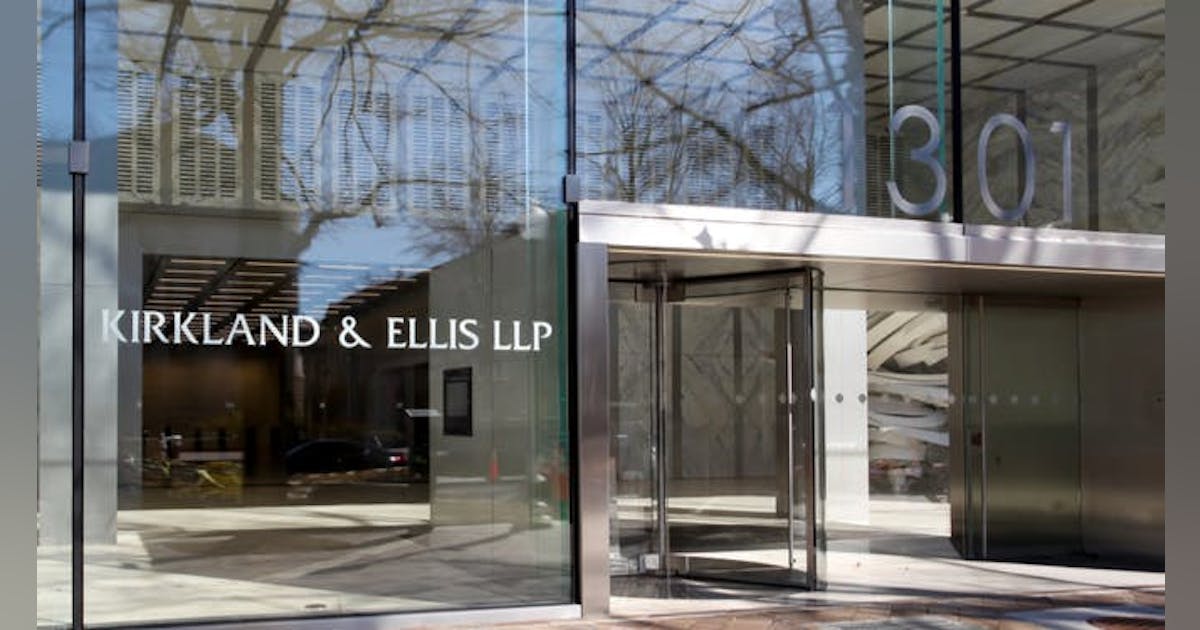
But as Melissa Kalka, M&A and private equity partner, and Kimberly McGrath, real estate partner at Kirkland & Ellis, explain on the latest episode of the Data Center Frontier Show, the industry is now entering a more complex and more consequential phase.
The land grab is over. Execution has begun. Capital remains abundant, but it is no longer forgiving.
From Capital Rush to Capital Discipline
As noted by Kalka and McGrath, the period from roughly 2022 through 2025 marked a rapid acceleration in AI infrastructure investment. Take-private deals involving CyrusOne, QTS, and Switch signaled a structural shift, while hyperscale demand scaled from tens of megawatts to hundreds, and now toward gigawatt-class campuses.
But the current phase is not defined by a pullback in capital. Instead, it reflects an expansion of investment pathways and a corresponding increase in scrutiny.
“There’s actually more deal flow now,” Kalka notes, pointing to the growing range of entry points across the capital stack, including development vehicles, yield-oriented structures, and private credit. With more capital chasing larger and more complex opportunities, investors are evaluating not just platforms, but the full lifecycle of assets from early-stage development through stabilization and long-term hold.
That shift has pulled capital earlier into the process, where risk is higher and less defined. Power availability, permitting, and execution timelines are now central to underwriting decisions.
What Defines a “Bankable” Platform
In this environment, the definition of a bankable data center platform has tightened.
Execution history remains foundational. Investors are looking for consistent delivery, operational reliability, and clean contractual performance. But those factors alone no longer carry a deal.
Power certainty has become the dividing line.
“It’s one thing to have entitled land,” Kalka explains. “It’s another to have power that’s actually coming online within a four- to five-year window.”
That distinction is now decisive. A site without credible access to power may struggle to secure tenants, financing, or investor backing. What was once a procedural step, i.e. grid interconnection, has become a strategic constraint.
AI Reshapes the Asset Itself
As AI workloads scale, the underlying nature of the data center asset is changing. The sector is no longer being evaluated strictly through a real estate lens. Instead, it is increasingly treated as a hybrid infrastructure asset.
That shift is influencing how transactions are structured and how capital is deployed. Investors are borrowing frameworks from infrastructure sectors, incorporating longer-term hold strategies, shared systems across campuses, and phased development models.
The implications are far-reaching. Developers must now plan for the full lifecycle of a campus from the outset: how it will be built, financed, expanded, and ultimately held or monetized over time.
The scale of capital required reinforces this shift. Multi-billion-dollar transactions, including the $40 billion Aligned deal, have required consortium structures and blended capital stacks designed to support long-term development as much as initial acquisition.
The traditional model of build, lease, and exit is giving way to something more durable.
Power as the Central Deal Variable
If AI has redefined the asset, power has become the gating variable.
“Power is the first part of diligence,” Kalka says. McGrath is more direct: “No power, no customer.”
Every major transaction now begins with a detailed assessment of power access, including queue position, interconnection timelines, and the viability of alternative solutions. Developers and investors are increasingly forced to evaluate not just whether power is available, but when, and at what level of certainty.
This has elevated powered land into a distinct investment category. Sites that have secured large-scale power capacity are now among the most valuable assets in the market.
At the same time, alternative approaches are gaining traction, including behind-the-meter generation, partnerships with energy providers, and hybrid power strategies. The convergence of energy and digital infrastructure is no longer theoretical; it is embedded in dealmaking.
Financing the Gigawatt Era
As data center campuses scale into the gigawatt range, financing structures are evolving to match.
Traditional bank construction lending remains active, but it is increasingly constrained by concentration limits, both in terms of asset exposure and tenant risk. In response, new forms of capital are entering the market.
High-yield structures, including 144A transactions, are becoming more common, alongside expanded participation from infrastructure funds and private credit providers. Developers and operators are tapping a broader range of capital sources, including markets that historically sat adjacent to digital infrastructure.
The sheer scale of capital required is forcing innovation across the financing stack.
Contracts as Financing Infrastructure
Customer contracts have also taken on new importance. Lease and colocation agreements are no longer just commercial documents, they are foundational to financing.
Operators must balance hyperscaler demand for flexibility with lender requirements for long-term revenue stability. At gigawatt scale, even small changes in contract terms can materially impact a project’s financeability.
As McGrath notes, these agreements are the product of ongoing negotiation and collaboration among all parties. “It has to work for everybody: operators, customers, and lenders.”
A Longer-Term View for Private Equity
Private equity strategy is evolving alongside the assets themselves.
While traditional build-and-exit models remain active in enterprise and colocation segments, large-scale AI campuses are pushing investors toward longer-term ownership structures. Open-ended and perpetual capital vehicles are gaining traction, enabling investors to hold assets through extended development cycles and into stabilization.
Infrastructure funds and sovereign investors, already accustomed to long-duration assets, are playing a larger role. The emerging model increasingly separates development and ownership:
- Closed-end capital for development
- Open-ended capital for long-term holding
This approach aligns capital structure with the realities of large-scale AI infrastructure.
The Industry’s Most Common Misstep
For developers and operators, the most common mistake is not about access to capital; it is about preparation.
Kalka highlights the importance of structuring assets from the outset in ways that support future financing, recapitalization, or sale. As platforms grow, the ability to divide and allocate assets becomes critical to maintaining flexibility.
At the same time, the level of coordination required across stakeholders is unprecedented. These projects bring together expertise across energy, real estate, finance, legal, environmental, and community engagement disciplines.
“This level of collaboration,” McGrath observes, “is not something we see in other asset classes.”
The Bottom Line
The AI boom has forced the data center industry to adopt an infrastructure mindset.
That means longer timelines, larger capital stacks, deeper integration with energy systems, and far greater complexity in execution. Access to capital is no longer the primary constraint. The challenge now is aligning capital, power, contracts, and development into a credible path to delivery.
The land grab phase may be over. But the work of building (and financing) AI infrastructure at scale is just beginning.
Listen to the full episode of the Data Center Frontier Show featuring Melissa Kalka and Kimberly McGrath for a deeper dive into how capital and deal structures are evolving in the AI era.