The approval of the Joliet Technology Center signals that the Chicago region is being pulled into the Midwest’s next phase of AI infrastructure development, one that has so far been led by Ohio and defined by scale, power demand, and rising public scrutiny. It also underscores a growing reality: local governments are beginning to understand exactly what that shift entails.
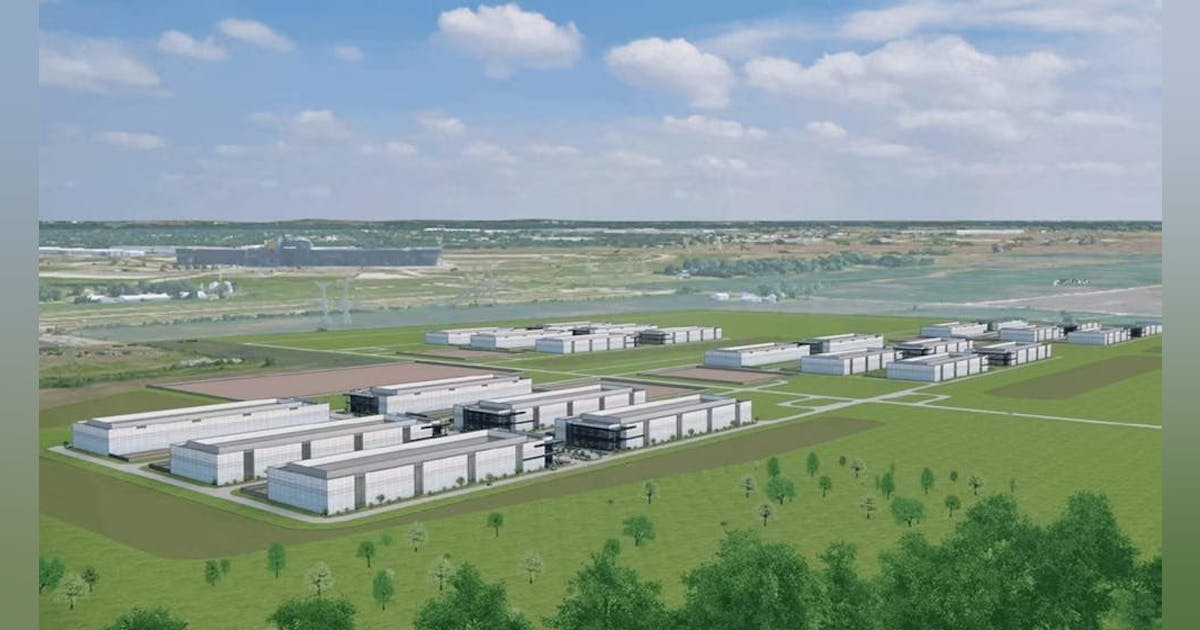
On March 19, 2026, the Joliet City Council voted 8–1 to approve the conditional annexation of roughly 795 acres for the proposed Joliet Technology Center, a $20 billion data center campus backed by Hillwood and PowerHouse Data Centers. The site, near Rowell and Bernhard Roads on Joliet’s east side, is planned as a 24-building, multi-phase development that would rank among the most consequential digital infrastructure projects ever approved in Illinois.
Joliet is now a clear case study in how the Midwest’s data center market is evolving: massive land assemblies, utility-scale power requirements, front-loaded community concessions, increasingly organized local opposition, and regulators working to ensure that the costs of AI infrastructure are not shifted onto ratepayers.
A Project Too Large to Call Routine
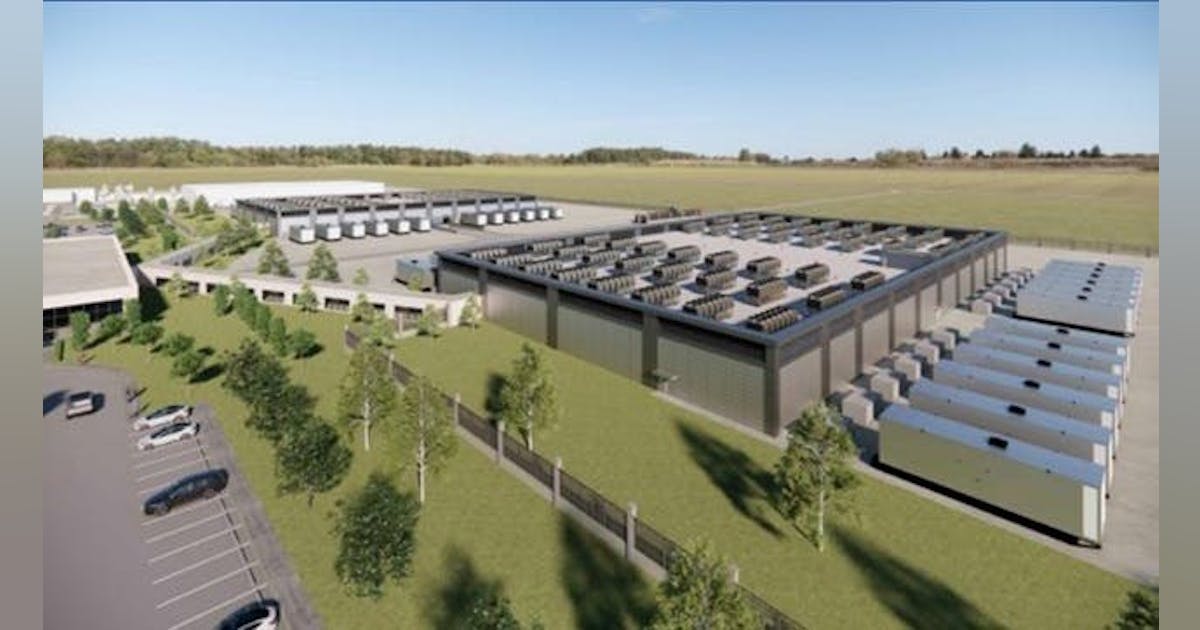
The Joliet Technology Center is a campus-scale industrial platform built for the AI era. Plans call for 24 two-story buildings of roughly 144,500 square feet each, with total development estimated at approximately 6.9 million square feet and up to 1.8 GW of eventual capacity. That places the project firmly in the emerging “AI factory” category, e.g. far-removed from the incremental, metro-edge data center expansions that defined earlier growth cycles.
The distinction is critical. AI-scale campuses operate on a different economic and technical model. Fiber access and metro proximity are no longer enough. These developments require large, contiguous power blocks, land to support phased substation and utility infrastructure, and a political framework capable of absorbing what is effectively heavy industrial development under a digital banner.
Joliet checks those boxes: available land, a logistics-oriented location, access to the Chicago market, and a municipal posture aligned with long-term economic development. Just as importantly, it reflects a growing willingness among cities to engage with projects at a scale that would have been considered exceptional only a few years ago.
Why Joliet Said Yes
For Joliet officials, the project’s appeal was straightforward. The city estimates the campus will generate roughly $310 million in property taxes over 30 years, in addition to utility tax revenue. Projected distributions include $677 million for Joliet Township High School District, $76 million for Joliet Junior College, and $146 million for Will County. The development is also expected to create approximately 700 permanent onsite jobs and between 7,000 and 10,000 construction jobs sourced locally.
The developer’s messaging reinforces that case, positioning the project as a long-term expansion of the tax base capable of supporting city services, education, and infrastructure without adding pressure to existing municipal systems. A five- to seven-year build schedule further frames the campus as a durable economic engine rather than a one-time construction cycle.
Joliet also secured a substantial, front-loaded community investment package. Ahead of the vote, Hillwood and PowerHouse committed up to $100 million for sidewalks, streets, and city services. The structure is notable: $20 million payable within 30 days of closing, with additional $20 million contributions tied to permits across each of the project’s four phases.
This is no peripheral concession. It reflects a shift in how communities are negotiating with data center developers. Increasingly, cities are demanding visible, near-term returns; not just long-dated tax projections.
That shift helps explain why the Joliet vote matters beyond Will County. Hyperscale and AI-oriented data centers are no longer treated as low-friction industrial projects moving quietly through zoning. They are being evaluated as large-scale infrastructure developments that must begin paying for their public impact from day one.
Why Residents Fought It
If the economics supported approval, the public hearings made clear why projects of this scale are becoming politically volatile.
Local coverage described packed meetings, hundreds of attendees, and a marathon public hearing on March 16 that ran more than six hours and ultimately forced the vote to be postponed until March 19. Residents raised concerns spanning electricity demand, water use, noise, light pollution, environmental impact, and the broader social implications of AI-driven infrastructure.
NBC Chicago reported the meeting stretched to roughly six and a half hours before the decision was delayed, while ABC 7 and Shaw Local documented both the scale of turnout and the intensity of local opposition.