Stay Ahead, Stay ONMINE

How adding capacity to a network could reduce IT costs

Higher capacity throughout the network means less congestion. It’s old-think, they say, to assume that if you have faster LAN connections to users and servers, you’ll admit more traffic and congest trunks. “Applications determine traffic,” one CIO pointed out. “The network doesn’t suck data into it at the interface. Applications push it.” Faster connections mean […]

Higher capacity throughout the network means less congestion. It’s old-think, they say, to assume that if you have faster LAN connections to users and servers, you’ll admit more traffic and congest trunks. “Applications determine traffic,” one CIO pointed out. “The network doesn’t suck data into it at the interface. Applications push it.” Faster connections mean less congestion, which means fewer complaints, and more alternate paths to take without traffic delay and loss, which also reduces complaints. In fact, anything that creates packet loss, outages, even latency, creates complaints, and addressing complaints is a big source of opex. The complexity comes in because network speed impacts user/application quality of experience in multiple ways, ways beyond the obvious congestion impacts.

When a data packet passes through a switch or router, it’s exposed to two things that can delay it. Congestion is one, but the other is “serialization delay.” This complex-sounding term means that you can’t switch a packet if you don’t have it all, and so every data packet is delayed until it’s all received. The length of that delay is determined by the speed of the connection it arrives on, so fast interfaces always offer better latency, and the delay a given packet experiences is the sum of the serialization delay of each interface it passes through.

Application designs, component costs and AI reshape views on network capacity

You might wonder why enterprises are starting to look at this capacity-solves-problems point now, versus years or decades earlier. They say there’s both a demand and supply-side answer.

On the demand side, increased componentization of applications, including the division of component hosting between data center and cloud, has radically increased the complexity of application workflows. Monolithic applications have simple workflows—input, process, output. Componentized ones have to move messages among the components, and each of these movements is supported by network connectivity, so the network is more tightly bound to application availability and performance. Not only that, the complex workflows make it harder to decide what’s wrong and how to fix it. Finally, remember serialization delay? Every component interface adds to it and eats up part of the delay budget intrinsic to all applications.

On the supply side, the cost of network adapters on systems and interfaces on network devices doesn’t increase in a linear way. One network engineer pointed out that the cost per bit of an interface typically falls as speed increases, up to a point, and then starts to rise. Where that curve breaks upward has changed as technologies have improved, so building in extra capacity is more practical today. Ethernet standards have also evolved to better handle multiple paths between switches (this capability is popular with enterprises that favor adding capacity to reduce opex) and different traffic priorities.

Then there’s AI. Interestingly, the majority of the enterprises who are now actively building local networks with bandwidth to burn are also early explorers of in-house hosting of AI. AI in general, and model training in particular, generates a lot of server-to-server traffic, and so congestion and the risk of delay or packet loss is high. Most agree that AI will need lower latency and higher network capacity, particularly during training, and that since the amount and nature of traffic generated by AI is impossible for a user of AI to understand, congestion-related issues would generate all the more complaint calls. AI traffic might also impact other applications. Thus, AI hosting is a good reason to think seriously about adding capacity to the data center network.


Shape
Shape
Stay Ahead

Explore More Insights

Stay ahead with more perspectives on cutting-edge power, infrastructure, energy,  bitcoin and AI solutions. Explore these articles to uncover strategies and insights shaping the future of industries.

Shape

Forward Networks launches agentic AI system built on network digital twin

The practical difference becomes clear in troubleshooting workflows. When asked to triage a ServiceNow ticket, the agent reads the ticket content, gathers context about entities mentioned from the digital twin, automatically performs path traces for connectivity issues, and returns a diagnosis. The complete workflow remains visible to operators throughout the

Read More »

Top 11 network outages and application failures of 2025

Asana: February 5 & 6 Duration: Two consecutive outages, with the second lasting approximately 20 minutes Symptoms: Service unavailability and degraded performance Cause: A configuration change overloaded server logs on February 5, causing servers to restart. A second outage with similar characteristics occurred the following day. Takeaways: “This pair of

Read More »

Introducing CodeMender: an AI agent for code security

While large language models are rapidly improving, mistakes in code security could be costly. CodeMender’s automatic validation process ensures that code changes are correct across many dimensions by only surfacing for human review high-quality patches that, for example, fix the root cause of the issue, are functionally correct, cause no

Read More »

Greece Warns Shipowners Against Sailing Near Iran Coast

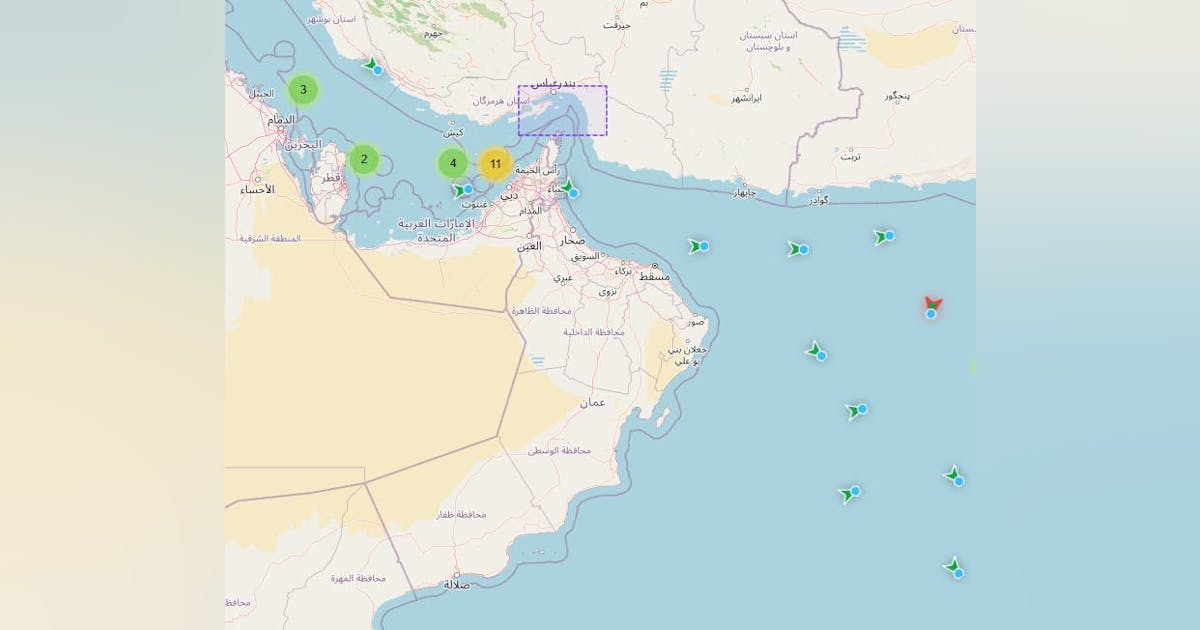
Greece, home to the world’s largest oil tanker fleet, told the nation’s vessel owners to do what they can to stay away from Iran’s coast — a task that is all but impossible for those entering the Persian Gulf to collect cargoes of Middle East crude. Shipowners were directed to sail closer to the United Arab Emirates and Oman when transiting the Strait of Hormuz, according to two advisories seen by Bloomberg. They were issued by the Greek shipping ministry to local shipowner associations on Jan. 27 and 29. The advisories said more warships were operating near the strait and warned that the European Union’s latest sanctions on Iran risked further inflaming tensions around Hormuz, the Persian Gulf and southern parts of the Red Sea. They were sent to the Hellenic Chamber of Shipping, the Union of Greek Shipowners and the Hellenic Shortsea Shipowners Association. A spokesman for Greece’s shipping ministry confirmed the notices had been sent. The global shipping community and oil traders are closely watching developments in the Middle East after the US dispatched an aircraft-carrier strike group to the region. President Donald Trump said he hoped he would not have to use it against Iran, which monitoring groups have accused of killing thousands of people during recent protests. The Strait of Hormuz is critical to the global oil supply, with roughly a quarter of the world’s seaborne crude passing through the corridor. Much of that oil is transported on Greek-owned vessels. Greece is the biggest tanker owner by tonnage, according to Clarkson Research Services, a unit of the world’s largest shipbroker. WHAT DO YOU THINK? Generated by readers, the comments included herein do not reflect the views and opinions of Rigzone. All comments are subject to editorial review. Off-topic, inappropriate or insulting comments will be removed.

Read More »

Exxon, Chevron Lift Oil Production, Blunting Price Drop

Exxon Mobil Corp. and Chevron Corp. surpassed profit expectations as higher oil production helped offset the blow from lower crude prices.  The titans of the US oil industry expanded output from the US Permian Basin, Guyana and other regions. For Exxon, full-year production hit a 40-year high while Chevron benefited from the integration of its $48 billion takeover of Hess Corp. The outperformance comes as major US drillers face growing pressure to assist in the Trump administration’s aspiration to revive the Venezuelan oil sector after the ouster of strongman Nicolas Maduro.   Chevron intends to finance a 50% increase in its Venezuelan oil production with cash from oil sales rather than committing new capital to the country, Chief Financial Officer Eimear Bonner said during an interview.  As the only major oil explorer with ongoing operations in the South American nation, Chevron has a leg up on rivals that departed years ago during a nationalization campaign by Maduro’s predecessor, the late former leader Hugo Chavez. Late Thursday, The Trump administration took steps to begin relaxing some of the punishing sanctions that have isolated the Venezuelan energy industry. The move gives other US companies the go-ahead to work with the state-controlled oil producer, with restrictions such as a prohibition on transactions with Chinese-tied entities.   Exxon’s adjusted fourth-quarter net income of $1.71 a share was 2 cents higher than the average estimate in a Bloomberg survey. Chevron earned $1.52 a share, 14 cents higher than expected. For both companies, debt ratios crept higher during the final three months of 2025. Exxon shares fell 1% at 9:35 a.m. in New York. Chevron rose 1.1%. “We’re capturing more value from every barrel and molecule we produce and building growth platforms at scale,” Chief Executive Officer Darren Woods said in a statement. The strategy is “creating a

Read More »

2026 US power sector outlook

In 2026, the electric utility sector faces unprecedented load growth that is challenging the physical infrastructure of the grid and the regulatory and market structures that have guided its development for decades. Federal and state authorities are at odds over who will manage this growth as officials come under pressure over rising costs. At the same time, the Trump administration has moved to exert more direct control over the power system under the banner of “energy dominance.” The stories in our 2026 outlook series below comprise a road map to the year ahead, including what to expect from the Federal Energy Regulatory Commission, the impacts of new federal policy on renewables and other resources, and technological advances that promise to unlock new efficiencies. We’re tracking the biggest trends rewriting the rules of how the U.S. produces and delivers power heading into what is sure to be a defining year for energy. 

Read More »

Customers, don’t expect electric bill relief in 2026: ‘The cake is baked.’

Listen to the article 16 min This audio is auto-generated. Please let us know if you have feedback. Rising energy demand, inflation, grid investment, extreme weather and volatile fuel costs are increasing the cost of electricity faster than many households can keep up, and there are no easy fixes, experts say. Mitigating the problem would require threading a needle of policy alternatives, but even with the right policies, it will take time to reduce customer energy burdens. The U.S. Energy Information Administration puts the national average residential price per kilowatt hour in 2026 at 18 cents, up approximately 37% from 2020. “I don’t see hidden costs that can be suddenly squeezed out of the system,” said Ray Gifford, managing partner of Wilkinson Barker Knauer’s Denver office and former chair of the Colorado Public Utilities Commission. “You are talking about an industry where most of the costs are fixed, and the assets are long-lived.” Energy affordability has recently become politically salient, but for many low-income people, “the energy affordability crisis is not new,” said Joe Daniel, a principal on the Rocky Mountain Institute’s carbon free electricity team. In 2017, 25% of all U.S. households — more than 30 million — faced a high energy burden, defined as paying more than 6% of income on energy bills, according to a report from the American Council for an Energy-Efficient Economy. For the poorest, it can be much higher. Households making less than 30% of area median income paid about 11% of their income for electricity alone, according to data from the Department of Energy covering the years 2018 to 2022.  The Department of Energy’s Low-Income Energy Affordability Data Tool shows households’ energy burden in the lower 48 states and Washington, D.C. The data is based on the American Community Survey 5-year Estimates for 2018-2022. Retrieved from

Read More »

Energy Department Extends Emergency Orders in the Carolinas and Mid-Atlantic Ahead of Second Winter Storm

Secretary Wright extends four emergency orders to stabilize grids in the Carolinas and the Mid-Atlantic, deploy backup generation, save lives, and lower costs ahead of the second major winter storm in a week. WASHINGTON—The U.S. Department of Energy (DOE) overnight extended four emergency orders to mitigate the risk of blackouts in the Carolinas and the Mid-Atlantic ahead of extended winter weather, with below freezing temperatures projected over the weekend and into early next week. Pursuant to Section 202(c) of the Federal Power Act, two orders were issued to Duke Energy Carolinas, LLC and Duke Energy Progress (collectively, Duke Energy) and two were issued to PJM Interconnection, LLC (PJM).  Duke Energy and PJM requested these extensions because the emergency conditions will persist beyond the term of the original orders. The original orders were issued on January 24, 2026 and January 26, 2026.  “Winter Storm Fern proves that decisive action by the Trump Administration is crucial to reversing the dangerous energy subtraction agenda of the previous administration,” said U.S. Secretary of Energy Chris Wright. “Those policies weakened the grid and left Americans more vulnerable. We are doing everything in our power to reverse those reckless decisions. The Trump Administration is committed to using every available tool, and unleashing all available power generation, to keep the lights on and Americans safe.” On day one, President Trump declared a national energy emergency after the Biden Administration’s energy subtraction agenda left behind a grid increasingly vulnerable to blackouts. According to the North American Electric Reliability Corporation (NERC), “Winter electricity demand is rising at the fastest rate in recent years,” while the premature forced closure of reliable generation such as coal and natural gas plants leaves American families vulnerable to power outages. The NERC 2025 – 2026 Winter Reliability Assessment further warns that areas across the

Read More »

NERC forecasts peak demand to rise 24% on new data center loads

Listen to the article 5 min This audio is auto-generated. Please let us know if you have feedback. Dive Brief: Reliability risks are spreading across the bulk electric system, driven by soaring peak demand forecasts and lagging resource additions, the North American Electric Reliability Corp. said Thursday in its annual Long Term Reliability Assessment.  Summer peak demand across the bulk system is forecast to grow by 224 GW over the next 10 years, a more than 69% increase over the 2024 LTRA forecast and a 24% increase from 2025 peak demand, NERC said. New data centers account for most of the projected increase. Winter demand growth is even higher, with 246 GW of growth forecast over the next decade. The Midcontinent Independent System Operator, PJM Interconnection, Electric Reliability Council of Texas and parts of the Pacific Northwest all face a high risk of insufficient reserve margins or exceeding unserved energy criteria at some point within the next five years, according to the report.    Dive Insight: “The system is changing faster than the infrastructure needed to support it,” John Moura, NERC’s director of reliability assessments and performance analysis, said in a call with reporters. We are “in a period here where future electricity supply has never been more uncertain.” From 2024 to 2025, existing capacity from fossil-fueled generators fell by 21 GW, while bulk power system capacity for peak demand hours from battery, wind, and solar resources increased by 23 GW, according to the report. Bulk power system capacity “fell short of projections this year,” said Mark Olson, NERC’s manager of reliability assessments. “And that was the case last year as well,” he added. Delays in connecting new resources and unanticipated generator retirements are the cause of the miss. In a change from last year’s LTRA, NERC said solar PV is no longer the

Read More »

How Robotics Is Re-Engineering Data Center Construction and Operations

Physical AI: A Reusable Robotics Stack for Data Center Operations This is where the recent collaboration between Multiply Labs and NVIDIA becomes relevant, even though the application is biomanufacturing rather than data centers. Multiply Labs has outlined a robotics approach built on three core elements: Digital twins using NVIDIA Isaac Sim to model hardware and validate changes in simulation before deployment. Foundation-model-based skill learning via NVIDIA Isaac GR00T, enabling robots to generalize tasks rather than rely on brittle, hard-coded behaviors. Perception pipelines including FoundationPose and FoundationStereo, that convert expert demonstrations into structured training data. Taken together, this represents a reusable blueprint for data center robotics. Applying the Lesson to Data Center Environments The same physical-AI techniques now being applied in lab and manufacturing environments map cleanly onto the realities of data center operations, particularly where safety, uptime, and variability intersect. Digital-twin-first deployment Before a robot ever enters a live data hall, it needs to be trained in simulation. That means modeling aisle geometry, obstacles, rack layouts, reflective surfaces, and lighting variation; along with “what if” scenarios such as blocked aisles, emergency egress conditions, ladders left in place, or spill events. Simulation-first workflows make it possible to validate behavior and edge cases before introducing any new system into a production environment. Skill learning beats hard-coded rules Data centers appear structured, but in practice they are full of variability: temporary cabling, staged parts, mixed-vendor racks, and countless human exceptions. Foundation-model approaches to manipulation are designed to generalize across that messiness far better than traditional rule-based automation, which tends to break when conditions drift even slightly from the expected state. Imitation learning captures tribal knowledge Many operational tasks rely on tacit expertise developed over years in the field, such as how to manage stiff patch cords, visually confirm latch engagement, or stage a

Read More »

Applied Digital CEO Wes Cummins On the Hard Part of the AI Boom: Execution

Designing for What Comes After the Current AI Cycle Applied Digital’s design philosophy starts with a premise many developers still resist: today’s density assumptions may not hold. “We’re designing for maximum flexibility for the future—higher density power, lower density power, higher voltage delivery, and more floor space,” Cummins said. “It’s counterintuitive because densities are going up, but we don’t know what comes next.” That choice – to allocate more floor space even as rack densities climb – signals a long-view approach. Facilities are engineered to accommodate shifts in voltage, cooling topology, and customer requirements without forcing wholesale retrofits. Higher-voltage delivery, mixed cooling configurations, and adaptable data halls are baked in from the start. The goal is not to predict the future perfectly, Cummins stressed, but to avoid painting infrastructure into a corner. Supply Chain as Competitive Advantage If flexibility is the design thesis, supply chain control is the execution weapon. “It’s a huge advantage that we locked in our MEP supply chain 18 to 24 months ago,” Cummins said. “It’s a tight environment, and more timelines are going to get missed in 2026 because of it.” Applied Digital moved early to secure long-lead mechanical, electrical, and plumbing components; well before demand pressure fully rippled through transformers, switchgear, chillers, generators, and breakers. That foresight now underpins the company’s ability to make credible delivery commitments while competitors confront procurement bottlenecks. Cummins was blunt: many delays won’t stem from poor planning, but from simple unavailability. From 100 MW to 700 MW Without Losing Control The past year marked a structural pivot for Applied Digital. What began as a single, 100-megawatt “field of dreams” facility in North Dakota has become more than 700 MW under construction, with expansion still ahead. “A hundred megawatts used to be considered scale,” Cummins said. “Now we’re at 700

Read More »

From Silicon to Cooling: Dell’Oro Maps the AI Data Center Buildout

For much of the past decade, data center growth could be measured in incremental gains: another efficiency point here, another capacity tranche there. That era is over. According to a cascade of recent research from Dell’Oro Group, the AI investment cycle has crossed into a new phase, one defined less by experimentation and more by industrial-scale execution. Across servers, networks, power, and cooling, Dell’Oro’s latest data points to a market being reshaped end-to-end by AI workloads which are pulling forward capital spending, redefining bill-of-material assumptions, and forcing architectural transitions that are rapidly becoming non-negotiable. Capex Becomes the Signal The clearest indicator of the shift is spending. Dell’Oro reported that worldwide data center capital expenditures rose 59 percent year-over-year in 3Q 2025, marking the eighth consecutive quarter of double-digit growth. Importantly, this is no longer a narrow, training-centric surge. “The Top 4 US cloud service providers—Amazon, Google, Meta, and Microsoft—continue to raise data center capex expectations for 2025, supported by increased investments in both AI and general-purpose infrastructure,” said Baron Fung, Senior Research Director at Dell’Oro Group. He added that Oracle is on track to double its data center capex as it expands capacity for the Stargate project. “What is notable this cycle is not just the pace of spending, but the expanding scope of investment,” Fung said. Hyperscalers are now scaling accelerated compute, general-purpose servers, and the supporting infrastructure required to deploy AI at production scale, while simultaneously applying tighter discipline around asset lifecycles and depreciation to preserve cash flow. The result is a capex environment that looks less speculative and more structural, with investment signals extending well into 2026. Accelerators Redefine the Hardware Stack At the component level, the AI effect is even more pronounced. Dell’Oro found that global data center server and storage component revenue jumped 40 percent

Read More »

Rethinking Water in the AI Data Center Era

Finding Water by Eliminating Waste: Leakage as a Hidden Demand Driver ION Water and Meta frame leakage not as a marginal efficiency issue, but as one of the largest and least visible sources of water demand. According to the release, more than half of the water paid for at some properties can be lost to “invisible leaks,” including running toilets, aging water heaters, and faulty fixtures that go undetected for extended periods. ION’s platform is designed to surface that hidden demand. By monitoring water consumption at the unit level, the system flags anomalies in real time and directs maintenance teams to specific fixtures, rather than entire buildings. The company says this approach can reduce leak-driven water waste by as much as 60%. This represents an important evolution in how hyperscalers defend and contextualize their water footprints: Instead of focusing solely on their own direct WUE metrics, operators are investing in demand reduction within the same watershed where their data centers operate. That shift reframes the narrative from simply managing active water consumption to actively helping stabilize stressed local water systems. The Accounting Shift: Volumetric Water Benefits (VWB) The release explicitly positions the project as a model for Volumetric Water Benefits (VWB) initiatives, projects intended to deliver measurable environmental gains while also producing operational and financial benefits for underserved communities. This framing aligns with a broader stewardship accounting movement promoted by organizations such as the World Resources Institute, which has developed Volumetric Water Benefit Accounting (VWBA) as a standardized method for quantifying and valuing watershed-scale benefits. Meta is explicit that the project supports its water-positive commitment tied to its Temple, Texas data center community. The company has set a 2030 goal to restore more water than it consumes across its global operations and has increasingly emphasized “water stewardship in our data center

Read More »

Microsoft and Meta’s Earnings Week Put the AI Data Center Cycle in Sharp Relief

If you’re trying to understand where the hyperscalers really are in the AI buildout, beyond the glossy campus renders and “superintelligence” rhetoric, this week’s earnings calls from Microsoft and Meta offered a more grounded view. Both companies are spending at a scale the data center industry has never had to absorb at once. Both are navigating the same hard constraints: power, capacity, supply chain, silicon allocation, and time-to-build.  But the market’s reaction split decisively, and that divergence tells its own story about what investors will tolerate in 2026. To wit: Massive capex is acceptable when the return narrative is already visible in the P&L…and far less so when the payoff is still being described as “early innings.” Microsoft: AI Demand Is Real. So Is the Cost Microsoft’s fiscal Q2 2026 results reinforced the core fact that has been driving North American hyperscale development for two years: Cloud + AI growth is still accelerating, and Azure remains one of the primary runways. Microsoft said Q2 total revenue rose to $81.3 billion, while Microsoft Cloud revenue reached $51.5 billion, up 26% (constant currency 24%). Intelligent Cloud revenue hit $32.9 billion, up 29%, and Azure and other cloud services revenue grew 39%. That’s the demand signal. The supply signal is more complicated. On the call and in follow-on reporting, Microsoft’s leadership framed the moment as a deliberate capacity build into persistent AI adoption. Yet the bill for that build is now impossible to ignore: Reuters reported Microsoft’s capital spending totaled $37.5 billion in the quarter, up nearly 66% year-over-year, with roughly two-thirds going toward computing chips. That “chips first” allocation matters for the data center ecosystem. It implies a procurement and deployment reality that many developers and colo operators have been living: the short pole is not only power and buildings; it’s GPU

Read More »

Network engineers take on NetDevOps roles to advance stalled automation efforts

What NetDevOps looks like Most enterprises begin their NetDevOps journey modestly by automating a limited set of repetitive, lower-level tasks. Nearly 70% of enterprises pursuing infrastructure automation start with task-level scripting, rather than end-to-end automation, according to theCUBE Research’s AppDev Done Right Summit. This can include using tools such as Ansible or Python scripts to standardize device provisioning, configuration changes, or other routine changes. Then, more mature teams adopt Git for version control, define golden configurations, and apply basic validation before and after changes, explains Bob Laliberte, principal analyst at SiliconANGLE and theCUBE. A smaller group of enterprises extends automation efforts into complete CI/CD-style workflows with consistent testing, staged deployments, and automated verification, Laliberte adds. This capability is present in less than 25% of enterprises today, according to theCUBE, and it is typically focused on specific domains such as data center fabric or cloud networking. NetDevOps usually exists with the network organization as a dedicated automation or platform subgroup, and more than 60% of enterprises anchor NetDevOps initiatives within traditional infrastructure teams rather than application or platform engineering groups, according to Laliberte. “In larger enterprises, NetDevOps capabilities are increasingly centralized within shared infrastructure or platform teams that provide tooling, pipelines, and guardrails across compute, storage, and networking,” Laliberte says. “In more advanced or cloud-native environments, network specialists may be embedded within application, site reliability engineering (SRE), or platform teams, particularly where networking directly impacts application performance.” Transforming work At its core, NetDevOps isn’t just about changing titles for network engineers. It is about changing workflows, behaviors, and operating models across network operations.

Read More »

Microsoft will invest $80B in AI data centers in fiscal 2025

And Microsoft isn’t the only one that is ramping up its investments into AI-enabled data centers. Rival cloud service providers are all investing in either upgrading or opening new data centers to capture a larger chunk of business from developers and users of large language models (LLMs).  In a report published in October 2024, Bloomberg Intelligence estimated that demand for generative AI would push Microsoft, AWS, Google, Oracle, Meta, and Apple would between them devote $200 billion to capex in 2025, up from $110 billion in 2023. Microsoft is one of the biggest spenders, followed closely by Google and AWS, Bloomberg Intelligence said. Its estimate of Microsoft’s capital spending on AI, at $62.4 billion for calendar 2025, is lower than Smith’s claim that the company will invest $80 billion in the fiscal year to June 30, 2025. Both figures, though, are way higher than Microsoft’s 2020 capital expenditure of “just” $17.6 billion. The majority of the increased spending is tied to cloud services and the expansion of AI infrastructure needed to provide compute capacity for OpenAI workloads. Separately, last October Amazon CEO Andy Jassy said his company planned total capex spend of $75 billion in 2024 and even more in 2025, with much of it going to AWS, its cloud computing division.

Read More »

John Deere unveils more autonomous farm machines to address skill labor shortage

Join our daily and weekly newsletters for the latest updates and exclusive content on industry-leading AI coverage. Learn More Self-driving tractors might be the path to self-driving cars. John Deere has revealed a new line of autonomous machines and tech across agriculture, construction and commercial landscaping. The Moline, Illinois-based John Deere has been in business for 187 years, yet it’s been a regular as a non-tech company showing off technology at the big tech trade show in Las Vegas and is back at CES 2025 with more autonomous tractors and other vehicles. This is not something we usually cover, but John Deere has a lot of data that is interesting in the big picture of tech. The message from the company is that there aren’t enough skilled farm laborers to do the work that its customers need. It’s been a challenge for most of the last two decades, said Jahmy Hindman, CTO at John Deere, in a briefing. Much of the tech will come this fall and after that. He noted that the average farmer in the U.S. is over 58 and works 12 to 18 hours a day to grow food for us. And he said the American Farm Bureau Federation estimates there are roughly 2.4 million farm jobs that need to be filled annually; and the agricultural work force continues to shrink. (This is my hint to the anti-immigration crowd). John Deere’s autonomous 9RX Tractor. Farmers can oversee it using an app. While each of these industries experiences their own set of challenges, a commonality across all is skilled labor availability. In construction, about 80% percent of contractors struggle to find skilled labor. And in commercial landscaping, 86% of landscaping business owners can’t find labor to fill open positions, he said. “They have to figure out how to do

Read More »

2025 playbook for enterprise AI success, from agents to evals

Join our daily and weekly newsletters for the latest updates and exclusive content on industry-leading AI coverage. Learn More 2025 is poised to be a pivotal year for enterprise AI. The past year has seen rapid innovation, and this year will see the same. This has made it more critical than ever to revisit your AI strategy to stay competitive and create value for your customers. From scaling AI agents to optimizing costs, here are the five critical areas enterprises should prioritize for their AI strategy this year. 1. Agents: the next generation of automation AI agents are no longer theoretical. In 2025, they’re indispensable tools for enterprises looking to streamline operations and enhance customer interactions. Unlike traditional software, agents powered by large language models (LLMs) can make nuanced decisions, navigate complex multi-step tasks, and integrate seamlessly with tools and APIs. At the start of 2024, agents were not ready for prime time, making frustrating mistakes like hallucinating URLs. They started getting better as frontier large language models themselves improved. “Let me put it this way,” said Sam Witteveen, cofounder of Red Dragon, a company that develops agents for companies, and that recently reviewed the 48 agents it built last year. “Interestingly, the ones that we built at the start of the year, a lot of those worked way better at the end of the year just because the models got better.” Witteveen shared this in the video podcast we filmed to discuss these five big trends in detail. Models are getting better and hallucinating less, and they’re also being trained to do agentic tasks. Another feature that the model providers are researching is a way to use the LLM as a judge, and as models get cheaper (something we’ll cover below), companies can use three or more models to

Read More »

OpenAI’s red teaming innovations define new essentials for security leaders in the AI era

Join our daily and weekly newsletters for the latest updates and exclusive content on industry-leading AI coverage. Learn More OpenAI has taken a more aggressive approach to red teaming than its AI competitors, demonstrating its security teams’ advanced capabilities in two areas: multi-step reinforcement and external red teaming. OpenAI recently released two papers that set a new competitive standard for improving the quality, reliability and safety of AI models in these two techniques and more. The first paper, “OpenAI’s Approach to External Red Teaming for AI Models and Systems,” reports that specialized teams outside the company have proven effective in uncovering vulnerabilities that might otherwise have made it into a released model because in-house testing techniques may have missed them. In the second paper, “Diverse and Effective Red Teaming with Auto-Generated Rewards and Multi-Step Reinforcement Learning,” OpenAI introduces an automated framework that relies on iterative reinforcement learning to generate a broad spectrum of novel, wide-ranging attacks. Going all-in on red teaming pays practical, competitive dividends It’s encouraging to see competitive intensity in red teaming growing among AI companies. When Anthropic released its AI red team guidelines in June of last year, it joined AI providers including Google, Microsoft, Nvidia, OpenAI, and even the U.S.’s National Institute of Standards and Technology (NIST), which all had released red teaming frameworks. Investing heavily in red teaming yields tangible benefits for security leaders in any organization. OpenAI’s paper on external red teaming provides a detailed analysis of how the company strives to create specialized external teams that include cybersecurity and subject matter experts. The goal is to see if knowledgeable external teams can defeat models’ security perimeters and find gaps in their security, biases and controls that prompt-based testing couldn’t find. What makes OpenAI’s recent papers noteworthy is how well they define using human-in-the-middle

Read More »