The International Energy Agency (IEA) on Mar. 11 approved the largest emergency oil stock release in its history, making 400 million bbl available from member-country reserves in response to market disruptions tied to the war in the Middle East.
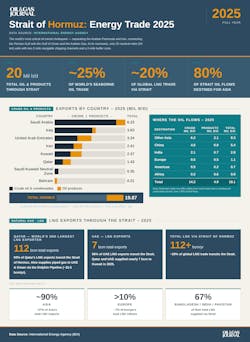
The coordinated action, agreed unanimously by the IEA’s 32 member countries, is intended to ease supply pressure and temper price volatility as crude markets react to disrupted flows through the Strait of Hormuz.
“The conflict in the Middle East is having significant impacts on global oil and gas markets, with major implications for energy security, energy affordability and the global economy for oil,” IEA executive director Fatih Birol said.
The release more than doubles the previous IEA record set in 2022, when member countries collectively made 182.7 million bbl available following Russia’s invasion of Ukraine. Under the IEA system, member countries are required to maintain emergency oil stocks equal to at least 90 days of net imports, giving the agency a mechanism to respond when severe disruptions threaten global supply.
The move comes after crude prices surged amid concerns that the US-Iran war could lead to prolonged disruption of exports from the Gulf. Despite the planned stock release, traders remain uncertain about whether reserve barrels alone will be enough to offset losses if the disruption persists.
IEA said the emergency barrels will be supplied to the market from government-controlled and obligated industry stocks held across member countries. The action marks the sixth coordinated stock release in the agency’s history and underscores the seriousness of the current supply shock.
Earlier the day, Japanese Prime Minister Sanae Takaichi said that Japan might start using its strategic oil reserves as early as next week, citing Japan’s unusually high dependence on Middle Eastern crude oil.