Stay Ahead, Stay ONMINE

Making AI Work, MIT Technology Review’s new AI newsletter, is here

For years, our newsroom has explored AI’s limitations and potential dangers, as well as its growing energy needs. And our reporters have looked closely at how generative tools are being used for tasks such as coding and running scientific experiments.  But how is AI actually being used in fields like health care, climate tech, education, and finance? How are small businesses using it? And what should you keep in mind if you use AI tools at work? These questions guided the creation of Making AI Work, a new AI mini-course newsletter. Sign up for Making AI Work to see weekly case studies exploring tools and tips for AI implementation. The limited-run newsletter will deliver practical, industry-specific guidance on how generative AI is being used and deployed across sectors and what professionals need to know to apply it in their everyday work. The goal is to help working professionals more clearly see how AI is actually being used today, and what that looks like in practice—including new challenges it presents.  You can sign up at any time and you’ll receive seven editions, delivered once per week, until you complete the series.  Each newsletter begins with a case study, examining a specific use case of AI in a given industry. Then we’ll take a deeper look at the AI tool being used, with more context about how other companies or sectors are employing that same tool or system. Finally, we’ll end with action-oriented tips to help you apply the tool.  Here’s a closer look at what we’ll cover: Week 1: How AI is changing health care  Explore the future of medical note-taking by learning about the Microsoft Copilot tool used by doctors at Vanderbilt University Medical Center.  Week 2: How AI could power up the nuclear industry  Dig into an experiment between Google and the nuclear giant Westinghouse to see if AI can help build nuclear reactors more efficiently.  Week 3: How to encourage smarter AI use in the classroom Visit a private high school in Connecticut and meet a technology coordinator who will get you up to speed on MagicSchool, an AI-powered platform for educators.  Week 4: How small businesses can leverage AI Hear from an independent tutor on how he’s outsourcing basic administrative tasks to Notion AI.  Week 5: How AI is helping financial firms make better investments Learn more about the ways financial firms are using large language models like ChatGPT Enterprise to supercharge their research operations.  Week 6: How to use AI yourself  We’ll share some insights from the staff of MIT Technology Review about how you might use AI tools powered by LLMs in your own life and work. Week 7: 5 ways people are getting AI right The series ends with an on-demand virtual event featuring expert guests exploring what AI adoptions are working, and why.   If you’re not quite ready to jump into Making AI Work, then check out Intro to AI, MIT Technology Review’s first AI newsletter mini-course, which serves as a beginner’s guide to artificial intelligence. Readers will learn the basics of what AI is, how it’s used, what the current regulatory landscape looks like, and more. Sign up to receive Intro to AI for free.  Our hope is that Making AI Work will help you understand how AI can, well, work for you. Sign up for Making AI Work to learn how LLMs are being put to work across industries. 

For years, our newsroom has explored AI’s limitations and potential dangers, as well as its growing energy needs. And our reporters have looked closely at how generative tools are being used for tasks such as coding and running scientific experiments

But how is AI actually being used in fields like health care, climate tech, education, and finance? How are small businesses using it? And what should you keep in mind if you use AI tools at work? These questions guided the creation of Making AI Work, a new AI mini-course newsletter.

Sign up for Making AI Work to see weekly case studies exploring tools and tips for AI implementation. The limited-run newsletter will deliver practical, industry-specific guidance on how generative AI is being used and deployed across sectors and what professionals need to know to apply it in their everyday work. The goal is to help working professionals more clearly see how AI is actually being used today, and what that looks like in practice—including new challenges it presents. 

You can sign up at any time and you’ll receive seven editions, delivered once per week, until you complete the series. 

Each newsletter begins with a case study, examining a specific use case of AI in a given industry. Then we’ll take a deeper look at the AI tool being used, with more context about how other companies or sectors are employing that same tool or system. Finally, we’ll end with action-oriented tips to help you apply the tool. 

Here’s a closer look at what we’ll cover:

  • Week 1: How AI is changing health care 

Explore the future of medical note-taking by learning about the Microsoft Copilot tool used by doctors at Vanderbilt University Medical Center. 

  • Week 2: How AI could power up the nuclear industry 

Dig into an experiment between Google and the nuclear giant Westinghouse to see if AI can help build nuclear reactors more efficiently. 

  • Week 3: How to encourage smarter AI use in the classroom

Visit a private high school in Connecticut and meet a technology coordinator who will get you up to speed on MagicSchool, an AI-powered platform for educators. 

  • Week 4: How small businesses can leverage AI

Hear from an independent tutor on how he’s outsourcing basic administrative tasks to Notion AI. 

  • Week 5: How AI is helping financial firms make better investments

Learn more about the ways financial firms are using large language models like ChatGPT Enterprise to supercharge their research operations. 

  • Week 6: How to use AI yourself 

We’ll share some insights from the staff of MIT Technology Review about how you might use AI tools powered by LLMs in your own life and work.

  • Week 7: 5 ways people are getting AI right

The series ends with an on-demand virtual event featuring expert guests exploring what AI adoptions are working, and why.  

If you’re not quite ready to jump into Making AI Work, then check out Intro to AI, MIT Technology Review’s first AI newsletter mini-course, which serves as a beginner’s guide to artificial intelligence. Readers will learn the basics of what AI is, how it’s used, what the current regulatory landscape looks like, and more. Sign up to receive Intro to AI for free. 

Our hope is that Making AI Work will help you understand how AI can, well, work for you. Sign up for Making AI Work to learn how LLMs are being put to work across industries. 

Shape
Shape
Stay Ahead

Explore More Insights

Stay ahead with more perspectives on cutting-edge power, infrastructure, energy,  bitcoin and AI solutions. Explore these articles to uncover strategies and insights shaping the future of industries.

Shape

Four new vulnerabilities found in Ingress NGINX

NGINX is a reverse proxy/load balancer that generally acts as the front-end web traffic receiver and directs it to the application service for data transformation. Ingress NGINX is a version used in Kubernetes as the controller for traffic coming into the infrastructure. It takes care of mapping traffic to pods

Read More »

North America Increases Rig Count

North America added one rig week on week, according to Baker Hughes’ latest North America rotary rig count, which was published on February 6. The total U.S. rig count rose by five week on week and the total Canada rig count dropped by four during the same period, pushing the total North America rig count up to 779, comprising 551 rigs from the U.S. and 228 rigs from Canada, the count outlined. Of the total U.S. rig count of 551, 532 rigs are categorized as land rigs, 16 are categorized as offshore rigs, and three are categorized as inland water rigs. The total U.S. rig count is made up of 412 oil rigs, 130 gas rigs, and nine miscellaneous rigs, according to Baker Hughes’ count, which revealed that the U.S. total comprises 483 horizontal rigs, 55 directional rigs, and 13 vertical rigs. Week on week, the U.S. land rig count rose by three, its offshore rig count rose by two, and its inland water rig count remained unchanged, Baker Hughes highlighted. The U.S. oil rig count increased by one week on week, while its gas rig count increased by five and its miscellaneous rig count dropped by one, the count showed. The U.S. horizontal rig count rose by five week on week, its directional rig count rose by two week on week, and its vertical rig count dropped by two during the same period, the count revealed. A major state variances subcategory included in the rig count showed that, week on week, Texas added six rigs, Louisiana added one rig, and California and New Mexico each dropped one rig. A major basin variances subcategory included in the rig count showed that, week on week, the Haynesville basin added seven rigs and the Permian basin dropped one rig. Canada’s total rig

Read More »

More Indian Refiners Take Venezuelan Oil

Indian Oil Corp. and Hindustan Petroleum Corp. jointly bought a cargo of Venezuelan crude, marking a second deal on the trade by the nation’s processors after Reliance Industries Ltd. snapped up a shipment. The country’s largest state-owned refiner and its smaller counterpart purchased 2 million barrels of Merey crude, according to people familiar with the matter, asking not to be identified speaking about confidential information. Oil will be delivered to IOC’s Paradip refinery and HPCL’s Visakhapatnam plant, they said. The Trump administration has tapped trading giants Vitol Group and Trafigura Group to market Venezuelan oil after the US seized President Nicolás Maduro and asserted control over the nation’s energy industry. Indian private refiner Reliance Industries Ltd. recently acquired a cargo, returning to the trade after hitting pause last year following the expiry of US sanctions waivers. IOC and HPCL didn’t immediately respond to emails seeking comment. The deal was first reported by Reuters. India’s oil buying is under the spotlight after President Donald Trump said last week that the country had agreed to stop taking Russian crude as part of trade deal with the US. New Delhi hasn’t directly addressed the Russian oil trade in its public responses. A foreign ministry spokesperson reiterated over the weekend that energy security remained a top priority for India. IOC and a unit of HPCL — HPCL-Mittal Energy Ltd. — last took Venezuelan oil in 2024, according to data compiled by Kpler. The processors also halted purchases after the expiry of sanctions waivers from the US. WHAT DO YOU THINK? Generated by readers, the comments included herein do not reflect the views and opinions of Rigzone. All comments are subject to editorial review. Off-topic, inappropriate or insulting comments will be removed.

Read More »

ADNOC Gas Announces ‘Record’ Net Income

In a statement sent to Rigzone on Monday, ADNOC Gas plc announced a “record” net income of $5.2 billion for 2025, which the company pointed out is a three percent increase compared to 2024. ADNOC Gas said in the statement that its results “underscored the strength of its long-term strategy” and added that its “robust 2025 net income was primarily driven by the strength of its domestic gas business, where its EBITDA was up 10 percent on sales volume growth of four percent year on year and improved commercial terms”. The company noted in the statement that fourth quarter 2025 net income was $1.2 billion, “despite softer export market pricing”. ADNOC Gas said it increased sales volumes by five percent compared to Q4 2024, “primarily driven by strong domestic gas performance, with demand remaining steady throughout the UAE’s milder weather conditions in the final quarter of 2025”. ADNOC Gas highlighted in its release that, overall, domestic Adjusted EBITDA for the fourth quarter of last year rose six percent year on year. The company said “this sustained demand is attributable to the robust industrial sector, which contributed to a 4.8 percent UAE GDP growth rate in 2025”. ADNOC Gas pointed out that its capital expenditure was $3.6 billion in 2025, “as several major projects progressed”. “In 2025 we launched phase one of the RGD project, which expands domestic gas processing capacity and increases production of export-traded liquids from new, richer gas supplies, which progressed in line with ADNOC Gas’ strategy,” the company noted. “Following the commissioning of IGD‑E2 in the final quarter of 2025, work is advancing as planned on the ADNOC Estidama gas-pipeline project, which aims to enhance access for industrial and utility customers in the Northern Emirates,” it said. “Together, these projects reinforce ADNOC Gas’ role as a critical

Read More »

USA Natural Gas Extends Decline

US natural gas dropped for a second session on the outlook for warmer temperatures across large parts of the country, which is likely to trim demand for the fuel used for heating and power generation. Futures for March delivery slipped as much as 6.5% to $3.200 per million British thermal units in early Asian trading. Temperatures are expected to be above normal in central and southern US from the end of this week, before warmer conditions move to the east, according to a government forecast. Prices dropped 2.5% on Friday, snapping a three-day gain, after a weekly report by Baker Hughes showed a significant uptick in drilling in the Haynesville shale in northwest Louisiana and East Texas. A higher rig count typically signals more supply later on, and that can weigh on near-term prices. US natural gas spiked at the end of last month to the highest level in more than three years after a cold snap led to higher demand and disrupted some supply. Futures have since unwound all those gains. WHAT DO YOU THINK? Generated by readers, the comments included herein do not reflect the views and opinions of Rigzone. All comments are subject to editorial review. Off-topic, inappropriate or insulting comments will be removed.

Read More »

Oil Servicers Look to Middle East for Growth

The world’s largest oilfield-service providers are looking to production increases in the Middle East to help offset a slowdown in US shale.  That’s one of the big takeaways from comments this week made by executives at Helmerich & Payne Inc. and Patterson-UTI Energy Inc., who pointed to opportunities in countries such as Saudi Arabia to help drive growth. The comments echoed outlooks from some of the biggest names in the industry, including SLB and Weatherford International Plc, who expect the Middle East to lead a rebound in activity for the end of 2026 through 2027.  Operators in the US shale patch, once the world’s leader in oil production growth, are now closely watching commodity markets as they hover near the level that makes drilling profitable for producers. If crude prices drop into the low $50-per-barrel range for several months, companies are expected to make more drastic cuts to drilling and fracking in the US. Global oil prices have steadily declined in the past several months on expectations of a glut. West Texas Intermediate, the US benchmark, has fallen more than 10% over the past year, trading around $63 a barrel on Thursday. But some producers in the Middle East can better sustain the lower crude prices, which underscores why the oilfield-services companies are looking there for growth. Projects to frack for natural gas have also emerged in the region, as governments face rising electricity demand, industrial expansion and petrochemical build-outs.  Here’s a look at recent comments from oilfield-services companies: Helmerich & Payne One of the top drilling-rig contractors on the US shale patch, the company said the reactivation of its suspended rigs in Saudi Arabia is underway. On an earnings call Thursday, incoming Chief Executive Officer Trey Adams said the company remains hopeful for further opportunities in the region Patterson-UTI Energy

Read More »

Phillips 66 to Cut Nearly 300 Jobs as LA Refinery Shuts

Phillips 66 will lay off around half of its employees at its sole remaining oil refinery in California after shuttering operations. The Houston-based company said it will cut 122 employees effective April 3 at two facilities in Carson and Wilmington that make up the company’s Los Angeles refinery, according a notice filed Monday with California’s employment regulator. This follows a separate notice last month that 155 employees will be terminated at the refinery in December, bringing the total to 277. The century-old refinery employs about 600 staff, according to Phillips 66’s website. The fuel-making plant has been slated to close since 2024 and the facility, once capable of processing 139,000 barrels of oil a day, refined its final barrel of crude in late 2025. Another Texas-based refiner, Valero Energy Corp., is also cutting more than 200 jobs in California this year as it idles a San Francisco Bay Area plant. Oil companies have decried what they call a hostile regulatory environment in the state, whose residents regularly pay the highest gasoline prices in the nation. Chevron Corp. officially relocated its headquarters to Texas in recent years and refiners have either fled or converted plants to producing biofuels, dwindling the in-state supply of petroleum products like gasoline, diesel and jet fuel. Some state lawmakers have recently tried to soften their stance toward the oil and gas industry. Phillips 66 continues to operate a biofuels refinery near San Francisco and import fossil fuels to California. WHAT DO YOU THINK? Generated by readers, the comments included herein do not reflect the views and opinions of Rigzone. All comments are subject to editorial review. Off-topic, inappropriate or insulting comments will be removed.

Read More »

Nvidia’s $100 Billion OpenAI Bet Shrinks and Signals a New Phase in the AI Infrastructure Cycle

One of the most eye-popping figures of the AI boom – a proposed $100 billion Nvidia commitment to OpenAI and as much as 10 gigawatts of compute for the company’s Stargate AI infrastructure buildout – is no longer on the table. And that partial retreat tells the data center industry something important. According to multiple reports surfacing at the end of January, Nvidia has paused and re-scoped its previously discussed, non-binding investment framework with OpenAI, shifting from an unprecedented capital-plus-infrastructure commitment to a much smaller (though still massive) equity investment. What was once framed as a potential $100 billion alignment is now being discussed in the $20-30 billion range, as part of OpenAI’s broader effort to raise as much as $100 billion at a valuation approaching $830 billion. For data center operators, infrastructure developers, and power providers, the recalibration matters less for the headline number and more for what it reveals about risk discipline, competitive dynamics, and the limits of vertical circularity in AI infrastructure finance. From Moonshot to Measured Capital The original September 2025 memorandum reportedly contemplated not just capital, but direct alignment on compute delivery: a structure that would have tightly coupled Nvidia’s balance sheet with OpenAI’s AI-factory roadmap. By late January, however, sources indicated Nvidia executives had grown uneasy with both the scale and the structure of the deal. Speaking in Taipei on January 31, Nvidia CEO Jensen Huang pushed back on reports of friction, calling them “nonsense” and confirming Nvidia would “absolutely” participate in OpenAI’s current fundraising round. But Huang was also explicit on what had changed: the investment would be “nothing like” $100 billion, even if it ultimately becomes the largest single investment Nvidia has ever made. That nuance matters. Nvidia is not walking away from OpenAI. But it is drawing a clearer boundary around

Read More »

Data Center Jobs: Engineering, Construction, Commissioning, Sales, Field Service and Facility Tech Jobs Available in Major Data Center Hotspots

Each month Data Center Frontier, in partnership with Pkaza, posts some of the hottest data center career opportunities in the market. Here’s a look at some of the latest data center jobs posted on the Data Center Frontier jobs board, powered by Pkaza Critical Facilities Recruiting. Looking for Data Center Candidates? Check out Pkaza’s Active Candidate / Featured Candidate Hotlist Onsite Engineer – Critical FacilitiesCharleston, SC This is NOT a traveling position. Having degreed engineers seems to be all the rage these days. I can also use this type of candidate in following cities: Ashburn, VA; Moncks Corner, SC; Binghamton, NY; Dallas, TX or Indianapolis, IN. Our client is an engineering design and commissioning company that is a subject matter expert in the data center space. This role will be onsite at a customer’s data center. They will provide onsite design coordination and construction administration, consulting and management support for the data center / mission critical facilities space with the mindset to provide reliability, energy efficiency, sustainable design and LEED expertise when providing these consulting services for enterprise, colocation and hyperscale companies. This career-growth minded opportunity offers exciting projects with leading-edge technology and innovation as well as competitive salaries and benefits. Electrical Commissioning Engineer Ashburn, VA This traveling position is also available in: New York, NY; White Plains, NY;  Richmond, VA; Montvale, NJ; Charlotte, NC; Atlanta, GA; Hampton, GA; New Albany, OH; Cedar Rapids, IA; Phoenix, AZ; Salt Lake City, UT; Dallas, TX; Kansas City, MO; Omaha, NE; Chesterton, IN or Chicago, IL. *** ALSO looking for a LEAD EE and ME CxA Agents and CxA PMs *** Our client is an engineering design and commissioning company that has a national footprint and specializes in MEP critical facilities design. They provide design, commissioning, consulting and management expertise in the critical facilities space. They

Read More »

Operationalizing AI at Scale: Google Cloud on Data Infrastructure, Search, and Enterprise AI

The AI conversation has been dominated by model announcements, benchmark races, and the rapid evolution of large language models. But in enterprise environments, the harder problem isn’t building smarter models. It’s making them work reliably with real-world data. On the latest episode of the Data Center Frontier Show Podcast, Sailesh Krishnamurthy, VP of Engineering for Databases at Google Cloud, pulled back the curtain on the infrastructure layer where many ambitious AI initiatives succeed, or quietly fail. Krishnamurthy operates at the intersection of databases, search, and AI systems. His perspective underscores a growing reality across enterprise IT: AI success increasingly depends on how organizations manage, integrate, and govern data across operational systems, not just how powerful their models are. The Disconnect Between LLMs and Reality Enterprises today face a fundamental challenge: connecting LLMs to real-time operational data. Search systems handle documents and unstructured information well. Operational databases manage transactions, customer data, and financial records with precision. But combining the two remains difficult. Krishnamurthy described the problem as universal. “Inside enterprises, knowledge workers are often searching documents while separately querying operational systems,” he said. “But combining unstructured information with operational database data is still hard to do.” Externally, customers encounter the opposite issue. Portals expose personal data but struggle to incorporate broader contextual information. “You get a narrow view of your own data,” he explained, “but combining that with unstructured information that might answer your real question is still challenging.” The result: AI systems often operate with incomplete context. Vector Search Moves Into the Database Vector search has emerged as a bridge between structured and unstructured worlds. But its evolution over the past three years has changed how enterprises deploy it. Early use cases focused on semantic search, i.e. finding meaning rather than exact keyword matches. Bug tracking systems, for example, began

Read More »

Transmission at the Breaking Point: Why the Grid Is Becoming the Defining Constraint for AI Data Centers

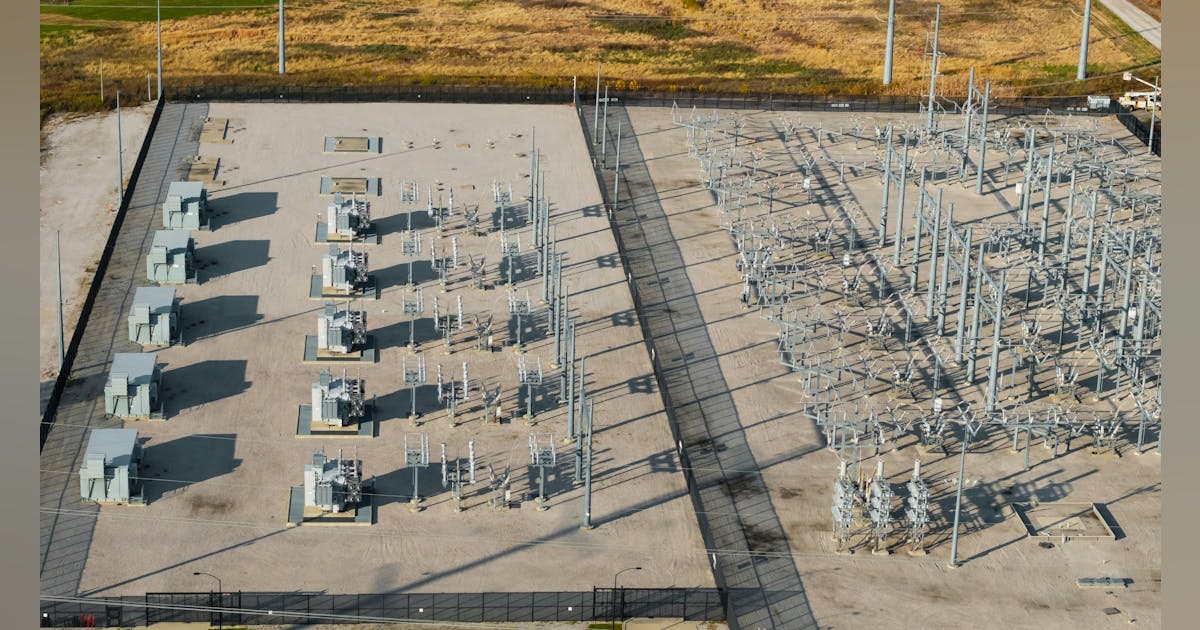
Regions in a Position to Scale California (A- overall)California continues to lead in long-term, scenario-based transmission planning. CAISO’s most recent transmission plan identifies $4.8 billion in new projects to accommodate approximately 76 gigawatts of additional capacity by 2039, explicitly accounting for data center growth alongside broader electrification. For data center developers, California’s challenge is less about planning quality and more about execution. Permitting timelines, cost allocation debates, and political scrutiny remain significant hurdles. Plains / Southwest Power Pool (B- overall, A in regional planning)SPP stands out nationally for embracing ultra-high-voltage transmission as a backbone strategy. Its recent Integrated Transmission Plans approve more than $16 billion in new projects, including multiple 765-kV lines, with benefit-cost ratios exceeding 10:1. This approach positions the Plains region as one of the most structurally “AI-ready” grids in North America, particularly for multi-gigawatt campuses supported by wind, natural gas, and emerging nuclear resources. Midwest / MISO (B overall)MISO’s Long-Range Transmission Planning framework aligns closely with federal best practices, co-optimizing generation and transmission over long planning horizons. While challenges remain—particularly around interregional coordination—the Midwest is comparatively well positioned for sustained data center growth. Regions Facing Heightened Risk Texas / ERCOT (D- overall)Texas has approved massive new transmission investments, including 765-kV projects tied to explosive load growth in the Permian Basin. However, the report criticizes ERCOT’s planning for remaining largely siloed and reliability-driven, with limited long-term scenario analysis and narrow benefit assessments. For data centers, ERCOT still offers speed to market, but increasingly with risks tied to congestion, price volatility, and political backlash surrounding grid reliability. Southeast (F overall)The Southeast receives failing grades across all categories, with transmission development remaining fragmented, utility-driven, and largely disconnected from durable regional planning frameworks. As AI data centers increasingly target the region for its land availability and tax incentives, the lack of

Read More »

From Row-Level CDUs to Facility-Scale Cooling: DCX Ramps Liquid Cooling for the AI Factory Era

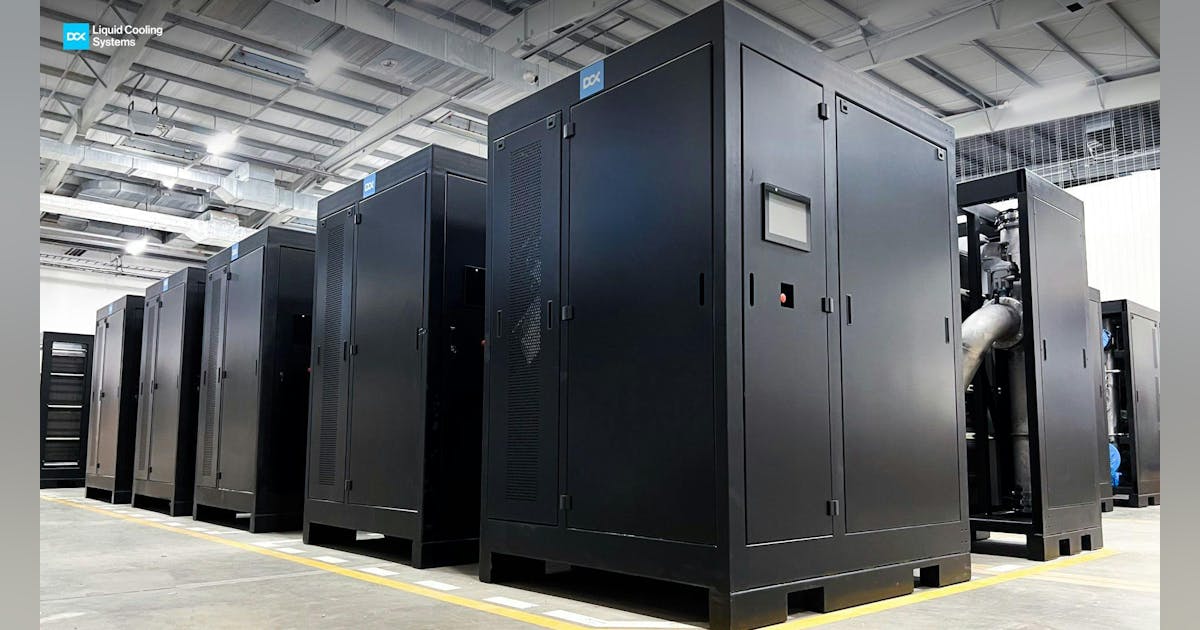
Enter the 8MW CDU Era The next evolution arrived just days later. On Jan. 20, DCX announced its second-generation facility-scale unit, the FDU V2AT2, pushing capacity into territory previously unimaginable for single CDU platforms. The system delivers up to 8.15 megawatts of heat transfer capacity with record flow rates designed to support 45°C warm-water cooling, aligning directly with NVIDIA’s roadmap for rack-scale AI systems, including Vera Rubin-class deployments. That temperature target is significant. Warm-water cooling at this level allows many facilities to eliminate traditional chillers for heat rejection, depending on climate and deployment design. Instead of relying on compressor-driven refrigeration, operators can shift toward dry coolers or other simplified heat rejection strategies. The result: • Reduced mechanical complexity• Lower energy consumption• Improved efficiency at scale• New opportunities for heat reuse According to DCX CTO Maciek Szadkowski, the goal is to avoid obsolescence in a single hardware generation: “As the datacenter industry transitions to AI factories, operators need cooling systems that won’t be obsolete in one platform cycle. The FDU V2AT2 replaces multiple legacy CDUs and enables 45°C supply water operation while simplifying cooling topology and significantly reducing both CAPEX and OPEX.” The unit incorporates a high-capacity heat exchanger with a 2°C approach temperature, N+1 redundant pump configuration, integrated water quality control, and diagnostics systems designed for predictive maintenance. In short, this is infrastructure built not for incremental density growth, but for hyperscale AI facilities where megawatts of cooling must scale as predictably as compute capacity. Liquid Cooling Becomes System Architecture The broader industry implication is clear: cooling is no longer an auxiliary mechanical function. It is becoming system architecture. DCX’s broader 2025 performance metrics underscore the speed of this transition. The company reported 600% revenue growth, expanded its workforce fourfold, and shipped or secured contracts covering more than 500 MW

Read More »

AI Infrastructure Scales Out and Up: Edge Expansion Meets the Gigawatt Campus Era

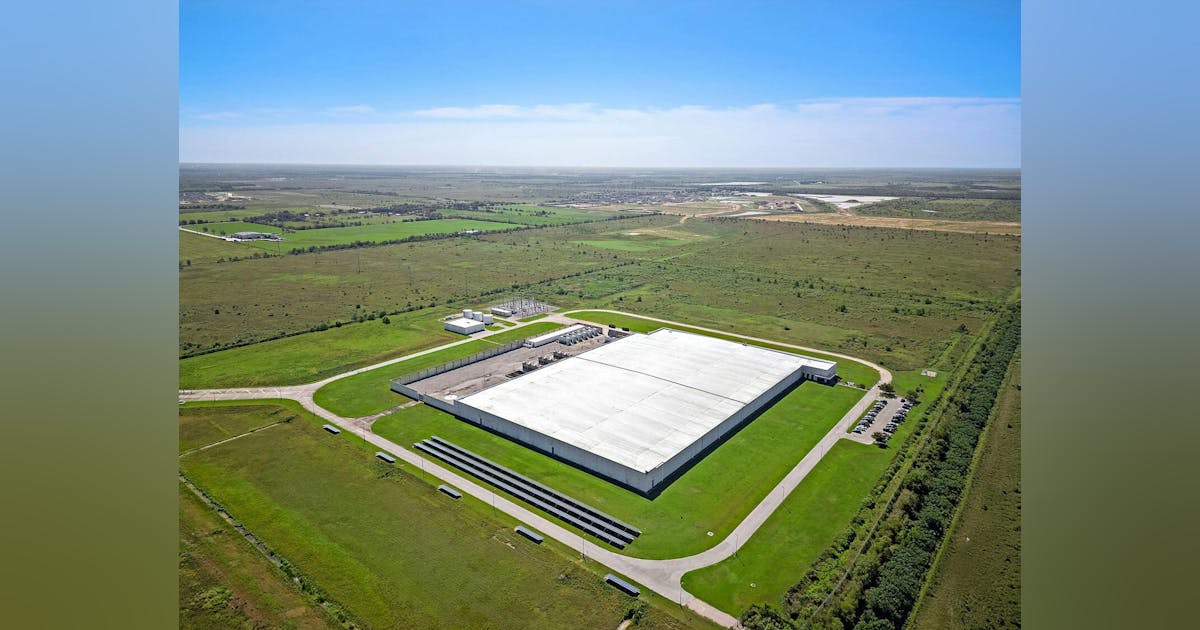
The AI infrastructure boom is often framed around massive hyperscale campuses racing to secure gigawatts of power. But an equally important shift is happening in parallel: AI infrastructure is also becoming more distributed, modular, and sovereign, extending compute far beyond traditional data center hubs. A wave of recent announcements across developers, infrastructure investors, and regional operators shows the market pursuing a dual strategy. On one end, developers are accelerating delivery of hyperscale campuses measured in hundreds of megawatts, and increasingly gigawatts, often located where power availability and energy economics offer structural advantage, and in some cases pairing compute directly with dedicated generation. On the other, providers are building increasingly capable regional and edge facilities designed to bring AI compute closer to users, industrial operations, and national jurisdictions. Taken together, these moves point toward a future in which AI infrastructure is no longer purely centralized, but built around interconnected hub-and-spoke architectures combining energy-advantaged hyperscale cores with rapidly deployable edge capacity. Recent developments across hyperscale developers, edge specialists, infrastructure investors, and regional operators illustrate how quickly this model is taking shape. Sovereign AI Moves Beyond the Core On Feb. 5, 2026, San Francisco-based Armada and European AI infrastructure builder Nscale signed a letter of intent to jointly deploy both large-scale and edge AI infrastructure worldwide. The collaboration targets enterprise and public sector customers seeking sovereign, secure, geographically distributed AI environments. Nscale is building large AI supercomputer clusters globally, offering vertically integrated capabilities spanning power, data centers, compute, and software. Armada specializes in modular deployments through its Galleon data centers and Armada Edge Platform, delivering compute and storage into remote or infrastructure-poor environments. The combined offering addresses a growing challenge: many governments and enterprises want AI capability deployed within their own jurisdictions, even where traditional hyperscale infrastructure does not yet exist. “There is

Read More »

Microsoft will invest $80B in AI data centers in fiscal 2025

And Microsoft isn’t the only one that is ramping up its investments into AI-enabled data centers. Rival cloud service providers are all investing in either upgrading or opening new data centers to capture a larger chunk of business from developers and users of large language models (LLMs).  In a report published in October 2024, Bloomberg Intelligence estimated that demand for generative AI would push Microsoft, AWS, Google, Oracle, Meta, and Apple would between them devote $200 billion to capex in 2025, up from $110 billion in 2023. Microsoft is one of the biggest spenders, followed closely by Google and AWS, Bloomberg Intelligence said. Its estimate of Microsoft’s capital spending on AI, at $62.4 billion for calendar 2025, is lower than Smith’s claim that the company will invest $80 billion in the fiscal year to June 30, 2025. Both figures, though, are way higher than Microsoft’s 2020 capital expenditure of “just” $17.6 billion. The majority of the increased spending is tied to cloud services and the expansion of AI infrastructure needed to provide compute capacity for OpenAI workloads. Separately, last October Amazon CEO Andy Jassy said his company planned total capex spend of $75 billion in 2024 and even more in 2025, with much of it going to AWS, its cloud computing division.

Read More »

John Deere unveils more autonomous farm machines to address skill labor shortage

Join our daily and weekly newsletters for the latest updates and exclusive content on industry-leading AI coverage. Learn More Self-driving tractors might be the path to self-driving cars. John Deere has revealed a new line of autonomous machines and tech across agriculture, construction and commercial landscaping. The Moline, Illinois-based John Deere has been in business for 187 years, yet it’s been a regular as a non-tech company showing off technology at the big tech trade show in Las Vegas and is back at CES 2025 with more autonomous tractors and other vehicles. This is not something we usually cover, but John Deere has a lot of data that is interesting in the big picture of tech. The message from the company is that there aren’t enough skilled farm laborers to do the work that its customers need. It’s been a challenge for most of the last two decades, said Jahmy Hindman, CTO at John Deere, in a briefing. Much of the tech will come this fall and after that. He noted that the average farmer in the U.S. is over 58 and works 12 to 18 hours a day to grow food for us. And he said the American Farm Bureau Federation estimates there are roughly 2.4 million farm jobs that need to be filled annually; and the agricultural work force continues to shrink. (This is my hint to the anti-immigration crowd). John Deere’s autonomous 9RX Tractor. Farmers can oversee it using an app. While each of these industries experiences their own set of challenges, a commonality across all is skilled labor availability. In construction, about 80% percent of contractors struggle to find skilled labor. And in commercial landscaping, 86% of landscaping business owners can’t find labor to fill open positions, he said. “They have to figure out how to do

Read More »

2025 playbook for enterprise AI success, from agents to evals

Join our daily and weekly newsletters for the latest updates and exclusive content on industry-leading AI coverage. Learn More 2025 is poised to be a pivotal year for enterprise AI. The past year has seen rapid innovation, and this year will see the same. This has made it more critical than ever to revisit your AI strategy to stay competitive and create value for your customers. From scaling AI agents to optimizing costs, here are the five critical areas enterprises should prioritize for their AI strategy this year. 1. Agents: the next generation of automation AI agents are no longer theoretical. In 2025, they’re indispensable tools for enterprises looking to streamline operations and enhance customer interactions. Unlike traditional software, agents powered by large language models (LLMs) can make nuanced decisions, navigate complex multi-step tasks, and integrate seamlessly with tools and APIs. At the start of 2024, agents were not ready for prime time, making frustrating mistakes like hallucinating URLs. They started getting better as frontier large language models themselves improved. “Let me put it this way,” said Sam Witteveen, cofounder of Red Dragon, a company that develops agents for companies, and that recently reviewed the 48 agents it built last year. “Interestingly, the ones that we built at the start of the year, a lot of those worked way better at the end of the year just because the models got better.” Witteveen shared this in the video podcast we filmed to discuss these five big trends in detail. Models are getting better and hallucinating less, and they’re also being trained to do agentic tasks. Another feature that the model providers are researching is a way to use the LLM as a judge, and as models get cheaper (something we’ll cover below), companies can use three or more models to

Read More »

OpenAI’s red teaming innovations define new essentials for security leaders in the AI era

Join our daily and weekly newsletters for the latest updates and exclusive content on industry-leading AI coverage. Learn More OpenAI has taken a more aggressive approach to red teaming than its AI competitors, demonstrating its security teams’ advanced capabilities in two areas: multi-step reinforcement and external red teaming. OpenAI recently released two papers that set a new competitive standard for improving the quality, reliability and safety of AI models in these two techniques and more. The first paper, “OpenAI’s Approach to External Red Teaming for AI Models and Systems,” reports that specialized teams outside the company have proven effective in uncovering vulnerabilities that might otherwise have made it into a released model because in-house testing techniques may have missed them. In the second paper, “Diverse and Effective Red Teaming with Auto-Generated Rewards and Multi-Step Reinforcement Learning,” OpenAI introduces an automated framework that relies on iterative reinforcement learning to generate a broad spectrum of novel, wide-ranging attacks. Going all-in on red teaming pays practical, competitive dividends It’s encouraging to see competitive intensity in red teaming growing among AI companies. When Anthropic released its AI red team guidelines in June of last year, it joined AI providers including Google, Microsoft, Nvidia, OpenAI, and even the U.S.’s National Institute of Standards and Technology (NIST), which all had released red teaming frameworks. Investing heavily in red teaming yields tangible benefits for security leaders in any organization. OpenAI’s paper on external red teaming provides a detailed analysis of how the company strives to create specialized external teams that include cybersecurity and subject matter experts. The goal is to see if knowledgeable external teams can defeat models’ security perimeters and find gaps in their security, biases and controls that prompt-based testing couldn’t find. What makes OpenAI’s recent papers noteworthy is how well they define using human-in-the-middle

Read More »