Stay Ahead, Stay ONMINE

RFID boosts Amazon’s autonomous retail tech

The new RFID lanes are built for merchandise and apparel. These items are much harder to track with camera-based systems since they can be folded, stacked, or carried out of a store in bulk. RFID tags solve that problem by identifying every item. The lanes combine several systems working together at the point of exit. […]

The new RFID lanes are built for merchandise and apparel. These items are much harder to track with camera-based systems since they can be folded, stacked, or carried out of a store in bulk. RFID tags solve that problem by identifying every item. The lanes combine several systems working together at the point of exit. Each lane is equipped with multiple RFID antennas positioned along both sides, which begin reading item tags as a person approaches. Those reads are processed by technology built directly into the lane, eliminating the need for a separate back room or server rack.

A screen inside the lane shows the items detected and the running total. Consumers can finish their purchase by tapping a credit card and exiting the lane. Motorized gates control entry and exit, opening once payment is complete. Cameras are also used alongside RFID, primarily to handle exceptions. For example, they can detect when a person is carrying an item without a readable tag. The system flags this type of transaction, and then a store associate can get involved.

Store associates still play an important role

The technology isn’t meant to eliminate associates, but rather shift their role. O’Neill clarified: “Instead of an associate stopping every checkout, you can have them helping people find what they’re looking for in the store, like a particular t-shirt someone saw online. The goal is to be able to change what associates are doing in the store.”

The lanes themselves are designed to be mobile. They sit on caster wheels, use standard power, and require only a network connection. After several iterations, Just Walk Out has become easier and cheaper for retailers to adopt, Amazon claims. Installation times have dropped from weeks to hours, and deployment costs are also down. In 2025, the new generation of RFID lanes were implemented at 17 pilot locations, including a pop-up at the Camp Flog Gnaw music festival.

While speed of deployment is important, the bigger driver for Amazon is to improve accuracy and reduce theft. As O’Neil acknowledged: “I don’t think anything is 100 percent foolproof.” Even so, he said, the new RFID-based approach is more accurate and more effective than traditional checkout and loss-prevention methods. 

Final thoughts

I’ve long been a fan of Just Walk Out and have used it in many venues including Lumen Field in Seattle, Harry Reid International Airport in Las Vegas, and at the Javits Center in New York during the NRF show. The ability to pick up merchandise and leave does require a bit of a mental hurdle. The first time you use it, you might worry about accurate billing. However, after using it a couple of times, that doubt goes away. The RFID lanes add features and streamline deployment —customers can quickly grab merchandise and get back to their seats or other activity instead of having to wait in line.

Shape
Shape
Stay Ahead

Explore More Insights

Stay ahead with more perspectives on cutting-edge power, infrastructure, energy,  bitcoin and AI solutions. Explore these articles to uncover strategies and insights shaping the future of industries.

Shape

RFID boosts Amazon’s autonomous retail tech

The new RFID lanes are built for merchandise and apparel. These items are much harder to track with camera-based systems since they can be folded, stacked, or carried out of a store in bulk. RFID tags solve that problem by identifying every item. The lanes combine several systems working together

Read More »

Cisco extends Nexus 9000 support to Intel Gaudi 3 AI accelerators

Partnerships, validated designs strengthen Cisco offerings Cisco’s AI offerings also include Nvidia technologies, such as Spectrum-X-based switches that are part of Cisco Secure AI Factory with Nvidia.  Cisco also works with AMD and its Instinct AI GPUs for networking and compute stack in large AI clusters. In addition, Cisco integrates

Read More »

EIA Sees USA Crude Oil Production Dropping in 2026, 2027

In its latest short term energy outlook (STEO), which was released on January 13, the U.S. Energy Information Administration (EIA) projected that total U.S. crude oil production will drop in 2026 and 2027. According to this STEO, the EIA sees U.S. crude oil output, including lease condensate, averaging 13.59 million barrels per day in 2026 and 13.25 million barrels per day in 2027. This production averaged 13.61 million barrels per day in 2025, the STEO showed. The STEO projected that Lower 48 States production, excluding the Gulf of America, will come in at 11.11 million barrels per day in 2026 and 10.87 million barrels per day in 2027. In the report, Federal Gulf of America production is forecast to average 2.00 million barrels per day in 2026 and 1.89 million barrels per day in 2027 and Alaska output is projected to come in at 0.47 million barrels per day in 2026 and 0.50 million barrels per day in 2027. In 2025, Lower 48 States production averaged 11.28 million barrels per day, Federal Gulf of America production came in at 1.91 million barrels per day, and Alaska output averaged 0.42 million barrels per day, the STEO showed. A quarterly breakdown included in the EIA’s latest STEO projected that U.S. crude oil production will come in at 13.73 million barrels per day in the first quarter of this year, 13.65 million barrels per day in the second quarter, 13.47 million barrels per day in the third quarter, 13.50 million barrels per day in the fourth quarter, 13.43 million barrels per day in the first quarter of 2027, 13.31 million barrels per day in the second quarter, and 13.13 million barrels per day across the third and fourth quarter of next year. “We forecast U.S. crude oil production will remain close to the

Read More »

Western Midstream Secures New Deals with Occidental,ConocoPhillips

Western Midstream Partners LP (WES) announced Tuesday it has amended its natural gas gathering and processing contracts in the Delaware Basin with Occidental Petroleum Corp and expanded its partnership with ConocoPhillips in the same basin. The new agreements with ConocoPhillips and Occidental advance WES’ transition to fixed-fee arrangements in the maturing basin, The Woodlands, Texas-based company said in a statement on its website. The previous agreement with Occidental already provided for a transition to a fixed-fee structure; the new agreement speeds up that transition, according to WES. Houston, Texas-based oil, gas and chemicals producer Occidental agreed to reduce its ownership in WES from about 42 percent to around 40 percent under the renegotiated gathering and processing contracts, “further positioning WES as a standalone midstream enterprise”, WES said. “Following this amendment, approximately nine percent of WES’ total revenue will remain subject to cost-of-service rates, with approximately one percent of total revenue subject to cost-of-service rates expiring in the late 2020s”, WES said. “The remaining cost-of-service rate provisions extend into the mid-to-late 2030s and include provisions to convert to fixed-fee structures at that time. “All significant fixed-fee contracts with Occidental, including the contracts being amended, are effective through the mid-to-late 2030s”. The new gas gathering contract provides “volumetric protection via substantial minimum volume commitments (MVCs) through the original cost-of-service term, and from that point forward, the existing acreage dedication and fixed-fee structure continues through the duration of the contract”, WES added. The new gas processing contract “continues to provide volumetric protection via MVCs through 2035”, WES said. As part of the renegotiated contracts, Occidental will surrender to WES 15.3 million common units currently owned by Occidental. The volume represents around $610 million of limited partnership interests, according to WES. “This transfer was structured on terms intended to represent a value-neutral exchange for the economic concessions reflected in

Read More »

Why Are USA NatGas Prices Rising Today?

U.S. natural gas prices are rising today due to a combination of weather risk, production softness, and positioning, rather than any single structural shift. That’s what Ole R. Hvalbye, a commodities analyst at Skandinaviska Enskilda Banken AB (SEB), told Rigzone in an exclusive interview on Wednesday. “First, the weather premium has kicked in hard,” Hvalbye said. “Forecasts now show temperatures in the Lower-48 turning well below normal from around January 23 and extending into early February, particularly across the eastern half of the United States,” he added. “That directly lifts heating demand expectations at a time of year when the market is already sensitive(!). As a result, Henry Hub has surged from … [around] $3 per MMBtu [million British thermal units] last week to nearly $5 per MMBtu intraday today!” he noted. “Second, supply has tightened at the margin. Lower-48 dry gas production has dipped to around 110.5 Bcfpd [billion cubic feet per day], down from over 112 Bcfpd earlier this week, partly reflecting cold-weather disruptions,” Hvalbye continued. “At the same time, LNG feedgas demand remains elevated at just over 18 Bcfpd, even though flows at Sabine Pass eased slightly today, partly offset by higher intake at Elba Island,” he stated. “Third, positioning and short covering are amplifying the move,” Hvalbye highlighted. The SEB commodities analyst told Rigzone that trading volumes in Henry Hub futures hit a record high earlier this week and added that today’s rally has been pushed by hedge funds covering short positions built up during the recent sell-off. “That adds momentum once prices start moving,” he pointed out. Looking at the demand side, Hvalbye told Rigzone that U.S. gas consumption “has eased back toward ~108 Bcfpd from very high cold-weather levels earlier this week” but added that “that hasn’t been enough to offset the weather risk

Read More »

EU Hydrogen Matchmaking Platform Opens for Buyer Expressions of Interest

The European Commission on Tuesday made the first call for buyer expressions of interest for hydrogen supply offers under a matchmaking platform launched last year. In a call to suppliers that closed earlier this month, European and international companies placed offers from over 260 projects, the Commission’s Directorate-General for Energy said in an online statement. Buyers now have until March 20, 2026 to indicate interest in the offers, according to the statement. “As part of the EU Energy and Raw Materials Platform, the Hydrogen Mechanism connects potential off-takers in Europe with suppliers of renewable and low-carbon hydrogen or derivatives, including ammonia, methanol, eMethane and electro-sustainable aviation fuel”, the Directorate-General said. “Hydrogen plays an important role in decarbonizing industrial processes and industries for which reducing carbon emissions is both urgent and hard to achieve”, it added. “At the same time, it can strengthen the competitiveness of Europe’s industry and leverage the EU market towards more security of supply, diversification and decarbonization”. European Energy and Housing Commissioner Dan Jørgensen said, “The EU’s Hydrogen Mechanism is a new, innovative tool to help develop the market. With strong interest shown from suppliers across Europe and beyond, the initiative is off to a very promising start”. The broader European Union Energy and Raw Materials Platform lets buyers in the 27-member bloc offer demand for biomethane, hydrogen, natural gas and raw materials. The online platform seeks to give EU companies cost-effective and efficient access to such commodities by enabling negotiations with competing suppliers, according to the Commission. The Hydrogen Mechanism will operate until 2029 under the European Hydrogen Bank, as specified under the EU’s “Regulation on the Internal Markets for Renewable Gas, Natural Gas and Hydrogen”. The Hydrogen Bank is an EU Innovation Fund financing platform to scale up the renewable hydrogen value chain. The platform’s user

Read More »

Bulgaria Acquires 10 Percent in Han Asparuh Block

OMV Petrom SA and NewMed Energy LP have signed a deal to sell 10 percent in the Han Asparuh exploration block on Bulgaria’s side of the Black Sea to state-owned Bulgarian Energy Holding EAD (BEH) following a government order. The Bulgarian parliament had directed the Energy Ministry to have up to 20 percent of the license transferred to a government-owned corporation, NewMed Energy said in a stock filing. Operator OMV Petrom, an integrated energy company with investments from Austria’s state-backed OMV AG and the Romanian government, and equal co-owner NewMed Energy, an Israeli natural gas-focused explorer and producer, have now agreed to sell five percent each to BEH, according to the regulatory disclosure. The Bulgarian government still needs to approve the sale agreement and the companies need to amend the “joint operating agreement” for Han Asparuh before the sale could be completed, NewMed Energy said. Under the sale agreement, “the parties agreed to work jointly vis-à-vis the Bulgarian government and the Bulgarian Ministry of Energy in connection with amendments to the ordinance for determining the concession royalty payments for the production of underground resources and extension of the period of the appraisal drillings in the project to two years in lieu of one year”, NewMed Energy said. “It is noted in this context that on 8 December 2025, the Bulgarian Ministry of Energy released a draft of new regulations for determining royalty payments to the Bulgarian government, which are determined by multiplying the economic value of annual production by the royalty rate payable to the government”. “It is further proposed to establish in the draft regulations a minimum annual royalty payment obligation”, NewMed Energy added. BEH has agreed to pay NewMed Energy and OMV Petrom its proportionate share of the cost of drilling preparations, NewMed Energy said. A two-well campaign

Read More »

HSBC Thinks BP Could Accentuate Shift Back to Oil Under New CEO

In a research note sent to Rigzone by the HSBC team this week, HSBC analysts, including Kim Fustier, HSBC’s Senior Global Oil and Gas Analyst, said they think BP “could accentuate its shift back to oil and gas and away from low carbon energy” under its new CEO. “BP’s 4Q25 results in February will take place during yet another period of transition for the company,” the analysts said in the note. “Incoming CEO Meg O’Neill will assume the role on April 1, following the unexpected departure of Murray Auchincloss in late December and interim leadership of Carol Howle,” they added. “We do not expect major strategic announcements at BP’s 4Q results yet, almost a year since its ‘fundamental reset’. Under its new CEO, we think BP could accentuate its shift back to oil and gas and away from low carbon energy,” they continued. The HSBC analysts stated in the research note that they would also expect a greater emphasis on cost savings and capital efficiency. “On our estimates, there is no immediate financial pressure on BP’s $3 billion annual buyback in a $60-65 per barrel Brent environment as it is dwarfed by the scale of yet to be announced disposals of c$9 billion,” the analysts noted. “That said, BP could choose to cut buybacks out of prudence as deleveraging remains a priority, or if it sees the current interim period as an opportune time to reset shareholder distributions,” they added. Rigzone has contacted BP for comment on HSBC’s research note. At the time of writing, BP has not responded to Rigzone. In a statement posted on its website on December 17, BP announced that its board had appointed O’Neill as BP’s next CEO, effective April 1, noting that Murray Auchincloss had decided to step down from his position as CEO

Read More »

CyrusOne Hones AI-Era Data Center Strategy for Power, Pace, and Reliability

In the second half of 2025, CyrusOne was racing to secure buildable power and faster time-to-market capacity for AI-era customers. At the same time, its reputation for mission-critical reliability took a very public hit when a disruption at a CyrusOne facility helped knock CME trading offline. The incident forced the company into an unusually open conversation about redundancy, cooling systems, and operational discipline: systems that are meant to disappear in normal operation, and dominate the story when they malfunction. From Projects to a Playbook Which projects, missteps, and strategic moves from 2025 are now shaping how CyrusOne enters 2026? Nowhere is that view clearer than in Texas. There, CyrusOne has been leaning hard into a “power + land + interconnect” model: treating deliverable power and grid position as part of the product, not just a prerequisite. If you map the company’s announcements since late July, Texas reveals the playbook. Secure power, secure substations and grid position, then build multi-phase campuses designed to scale quickly as demand materializes. The Calpine “Powered Land” Deal: From 190 MW to 400 MW in Three Months On July 30, 2025, CyrusOne and Calpine announced a 190-MW agreement tied to a hyperscale campus (DFW10) adjacent to Calpine’s Thad Hill Energy Center in Bosque County, Texas. The structure bundled power, grid connection, and land into a single development package, with CyrusOne saying the site was already under construction and targeting operation by Q4 2026. Just three months later, on November 3–4, the partners announced a second phase, adding 210 MW and taking the campus to 400 MW. The update emphasized coordination to support grid reliability during scarcity; such curtailment and operational-coordination concepts are becoming table stakes for ERCOT-scale megaprojects. Together, the two announcements show CyrusOne placing a large bet on an emerging model: power-ready campuses, or “powered

Read More »

Forrester study quantifies benefits of Cisco Intersight

If IT groups are to be the strategic business partners their companies need, they require solutions that can improve infrastructure life cycle management in the age of artificial intelligence (AI) and heightened security threats. To quantify the value of such solutions, Cisco recently commissioned Forrester Consulting to conduct a Total Economic Impact™ analysis of Cisco Intersight. The comprehensive study found that for a composite organization, Intersight delivered 192% return on investment (ROI) and a payback period of less than six months, along with significant tangible benefits to IT and businesses. Cisco Intersight overview Cisco Intersight is a cloud-native IT operations platform for infrastructure life cycle management. It provides IT teams with comprehensive visibility, control, and automation capabilities for Cisco’s portfolio of compute solutions for data centers, colocation facilities, and edge environments based on the Cisco Unified Computing System (Cisco UCS). Intersight also integrates with leading operating systems, storage providers, hypervisors, and third-party IT service management and security tools. Intersight’s unified, policy-driven approach to infrastructure management helps IT groups automate numerous tasks and, as Forrester found, free up time to dedicate to strategic projects. Forrester study quantifies the benefits of Cisco Intersight  A composite organization using Cisco Intersight achieved:192% ROI and payback in less than six months$3.3M net present value over three years$2.7M from improved uptime and resilience 50% reduction in mean time to resolution $1.7M from increased IT productivity$267K benefit from decreased time to value due to faster project execution and earlier return on infrastructure investments Forrester Total Economic Impact study findings The analyst firm conducted detailed interviews with IT decision-makers and Intersight users at six organizations, from which it created one composite organization: a multinational technology-driven company with $10 billion in annual revenue, 120 branch locations, and a team of six engineers managing its 1,000 servers deployed in several

Read More »

SoftBank launches software stack for AI data center operations

Addressing enterprise challenges The software provides two main services, according to SoftBank. The Kubernetes-as-a-Service component automates the stack from BIOS and RAID settings through the OS, GPU drivers, networking, Kubernetes controllers, and storage, the company said. It reconfigures physical connectivity using Nvidia NVLink and memory allocation as users create, update, or delete clusters, according to the announcement. The system allocates nodes based on GPU proximity and NVLink domain configuration to reduce latency, SoftBank said. Enterprises currently face complex GPU cluster provisioning, Kubernetes lifecycle management, inference scaling, and infrastructure tuning challenges that require deep expertise, according to Dai. SoftBank’s automated approach addresses these pain points by handling BIOS-to-Kubernetes configuration, optimizing GPU interconnects, and abstracting inference into API-based services, he said. This allows teams to focus on model development rather than infrastructure maintenance, Dai said. The Inference-as-a-Service component lets users deploy inference services by selecting large language models without configuring Kubernetes or underlying infrastructure, according to the company. It provides OpenAI-compatible APIs and scales across multiple nodes on platforms including the GB200 NVL72, SoftBank said. The software includes tenant isolation through encrypted communications, automated system monitoring and failover, and APIs for connecting to portal, customer management, and billing systems, according to the announcement.

Read More »

OpenAI shifts AI data center strategy toward power-first design

The shift to ‘energy sovereignty’  Analysts say the move reflects a fundamental shift in data center strategy, moving from “fiber-first” to “power-first” site selection. “Historically, data centers were built near internet exchange points and urban centers to minimize latency,” said Ashish Banerjee, senior principal analyst at Gartner. “However, as AI training requirements reach the gigawatt scale, OpenAI is signaling that they will prioritize regions with ‘energy sovereignty’, places where they can build proprietary generation and transmission, rather than fighting for scraps on an overtaxed public grid.” For network architecture, this means a massive expansion of the “middle mile.” By placing these behemoth data centers in energy-rich but remote locations, the industry will have to invest heavily in long-haul, high-capacity dark fiber to connect these “power islands” back to the edge. “We should expect a bifurcated network: a massive, centralized core for ‘cold’ model training located in the wilderness, and a highly distributed edge for ‘hot’ real-time inference located near the users,” Banerjee added. Manish Rawat, a semiconductor analyst at TechInsights, also noted that the benefits may come at the cost of greater architectural complexity. “On the network side, this pushes architectures toward fewer mega-hubs and more regionally distributed inference and training clusters, connected via high-capacity backbone links,” Rawat said. “The trade-off is higher upfront capex but greater control over scalability timelines, reducing dependence on slow-moving utility upgrades.”

Read More »

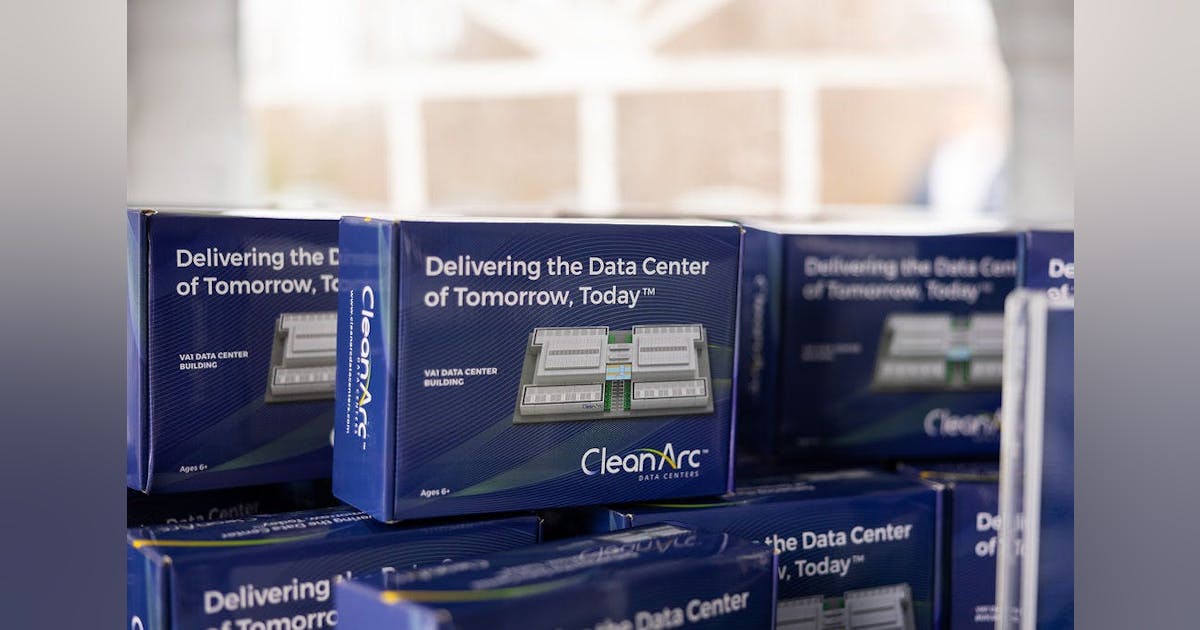
CleanArc’s Virginia Hyperscale Bet Meets the Era of Pay-Your-Way Power

What CleanArc’s Project Really Signals About Scaling in Virginia The more important story is what the project signals about how developers believe they can still scale in Virginia at hyperscale magnitude. To wit: 1) The campus is sized like a grid project, not a real estate project At 900 MW, CleanArc is not simply building a few facilities. It is effectively planning a utility-interface program that will require staged substation, transmission, and interconnection work over many years. The company describes the campus as a “flagship” designed for scalable demand and sustainability-focused procurement. Power delivery is planned in three 300 MW phases: the first targeted for 2027, the second for 2030, and the final block sometime between 2033 and 2035. That scale changes what “site selection” really means. For projects of this magnitude, the differentiator is no longer “Can we entitle buildings?” but “Can we secure a credible path for large power blocks, with predictable commercial terms, while regulators are rewriting the rules?” 2) It’s being marketed as sustainability-forward in a market that increasingly requires it CleanArc frames the campus as aligned with sustainability-focused infrastructure: a posture that is no longer optional for hyperscale procurement teams. That does not mean the grid power itself is automatically carbon-free. It means the campus is being positioned to support the modern contracting stack, involving renewables, clean-energy attributes, and related structures, while still delivering what hyperscalers buy first: capacity, reliability, and delivery certainty. 3) The timing is strategic as Virginia tightens around very large load CleanArc is launching its flagship in the nation’s premier data center corridor at the same moment Virginia has moved to formalize a large-customer category that explicitly includes data centers. The implication is not that Virginia has become anti-data center. It is that the state is entering a phase where it

Read More »

xAI’s AI Factories: From Colossus to MACROHARDRR in the Gigawatt Era

Colossus: The Prototype For much of the past year, xAI’s infrastructure story did not unfold across a portfolio of sites. It unfolded inside a single building in Memphis, where the company first tested what an “AI factory” actually looks like in physical form. That building had a name that matched the ambition: Colossus. The Memphis-area facility, carved out of a vacant Electrolux factory, became shorthand for a new kind of AI build: fast, dense, liquid-cooled, and powered on a schedule that often ran ahead of the grid. It was an “AI factory” in the literal sense: not a cathedral of architecture, but a machine for turning electricity into tokens. Colossus began as an exercise in speed. xAI took over a dormant industrial building in Southwest Memphis and turned it into an AI training plant in months, not years. The company has said the first major system was built in about 122 days, and then doubled in roughly 92 more, reaching around 200,000 GPUs. Those numbers matter less for their bravado than for what they reveal about method. Colossus was never meant to be bespoke. It was meant to be repeatable. High-density GPU servers, liquid cooling at the rack, integrated CDUs, and large-scale Ethernet networking formed a standardized building block. The rack, not the room, became the unit of design. Liquid cooling was not treated as a novelty. It was treated as a prerequisite. By pushing heat removal down to the rack, xAI avoided having to reinvent the data hall every time density rose. The building became a container; the rack became the machine. That design logic, e.g. industrial shell plus standardized AI rack, has quietly become the template for everything that followed. Power: Where Speed Met Reality What slowed the story was not compute, cooling, or networking. It was power.

Read More »

Microsoft will invest $80B in AI data centers in fiscal 2025

And Microsoft isn’t the only one that is ramping up its investments into AI-enabled data centers. Rival cloud service providers are all investing in either upgrading or opening new data centers to capture a larger chunk of business from developers and users of large language models (LLMs).  In a report published in October 2024, Bloomberg Intelligence estimated that demand for generative AI would push Microsoft, AWS, Google, Oracle, Meta, and Apple would between them devote $200 billion to capex in 2025, up from $110 billion in 2023. Microsoft is one of the biggest spenders, followed closely by Google and AWS, Bloomberg Intelligence said. Its estimate of Microsoft’s capital spending on AI, at $62.4 billion for calendar 2025, is lower than Smith’s claim that the company will invest $80 billion in the fiscal year to June 30, 2025. Both figures, though, are way higher than Microsoft’s 2020 capital expenditure of “just” $17.6 billion. The majority of the increased spending is tied to cloud services and the expansion of AI infrastructure needed to provide compute capacity for OpenAI workloads. Separately, last October Amazon CEO Andy Jassy said his company planned total capex spend of $75 billion in 2024 and even more in 2025, with much of it going to AWS, its cloud computing division.

Read More »

John Deere unveils more autonomous farm machines to address skill labor shortage

Join our daily and weekly newsletters for the latest updates and exclusive content on industry-leading AI coverage. Learn More Self-driving tractors might be the path to self-driving cars. John Deere has revealed a new line of autonomous machines and tech across agriculture, construction and commercial landscaping. The Moline, Illinois-based John Deere has been in business for 187 years, yet it’s been a regular as a non-tech company showing off technology at the big tech trade show in Las Vegas and is back at CES 2025 with more autonomous tractors and other vehicles. This is not something we usually cover, but John Deere has a lot of data that is interesting in the big picture of tech. The message from the company is that there aren’t enough skilled farm laborers to do the work that its customers need. It’s been a challenge for most of the last two decades, said Jahmy Hindman, CTO at John Deere, in a briefing. Much of the tech will come this fall and after that. He noted that the average farmer in the U.S. is over 58 and works 12 to 18 hours a day to grow food for us. And he said the American Farm Bureau Federation estimates there are roughly 2.4 million farm jobs that need to be filled annually; and the agricultural work force continues to shrink. (This is my hint to the anti-immigration crowd). John Deere’s autonomous 9RX Tractor. Farmers can oversee it using an app. While each of these industries experiences their own set of challenges, a commonality across all is skilled labor availability. In construction, about 80% percent of contractors struggle to find skilled labor. And in commercial landscaping, 86% of landscaping business owners can’t find labor to fill open positions, he said. “They have to figure out how to do

Read More »

2025 playbook for enterprise AI success, from agents to evals

Join our daily and weekly newsletters for the latest updates and exclusive content on industry-leading AI coverage. Learn More 2025 is poised to be a pivotal year for enterprise AI. The past year has seen rapid innovation, and this year will see the same. This has made it more critical than ever to revisit your AI strategy to stay competitive and create value for your customers. From scaling AI agents to optimizing costs, here are the five critical areas enterprises should prioritize for their AI strategy this year. 1. Agents: the next generation of automation AI agents are no longer theoretical. In 2025, they’re indispensable tools for enterprises looking to streamline operations and enhance customer interactions. Unlike traditional software, agents powered by large language models (LLMs) can make nuanced decisions, navigate complex multi-step tasks, and integrate seamlessly with tools and APIs. At the start of 2024, agents were not ready for prime time, making frustrating mistakes like hallucinating URLs. They started getting better as frontier large language models themselves improved. “Let me put it this way,” said Sam Witteveen, cofounder of Red Dragon, a company that develops agents for companies, and that recently reviewed the 48 agents it built last year. “Interestingly, the ones that we built at the start of the year, a lot of those worked way better at the end of the year just because the models got better.” Witteveen shared this in the video podcast we filmed to discuss these five big trends in detail. Models are getting better and hallucinating less, and they’re also being trained to do agentic tasks. Another feature that the model providers are researching is a way to use the LLM as a judge, and as models get cheaper (something we’ll cover below), companies can use three or more models to

Read More »

OpenAI’s red teaming innovations define new essentials for security leaders in the AI era

Join our daily and weekly newsletters for the latest updates and exclusive content on industry-leading AI coverage. Learn More OpenAI has taken a more aggressive approach to red teaming than its AI competitors, demonstrating its security teams’ advanced capabilities in two areas: multi-step reinforcement and external red teaming. OpenAI recently released two papers that set a new competitive standard for improving the quality, reliability and safety of AI models in these two techniques and more. The first paper, “OpenAI’s Approach to External Red Teaming for AI Models and Systems,” reports that specialized teams outside the company have proven effective in uncovering vulnerabilities that might otherwise have made it into a released model because in-house testing techniques may have missed them. In the second paper, “Diverse and Effective Red Teaming with Auto-Generated Rewards and Multi-Step Reinforcement Learning,” OpenAI introduces an automated framework that relies on iterative reinforcement learning to generate a broad spectrum of novel, wide-ranging attacks. Going all-in on red teaming pays practical, competitive dividends It’s encouraging to see competitive intensity in red teaming growing among AI companies. When Anthropic released its AI red team guidelines in June of last year, it joined AI providers including Google, Microsoft, Nvidia, OpenAI, and even the U.S.’s National Institute of Standards and Technology (NIST), which all had released red teaming frameworks. Investing heavily in red teaming yields tangible benefits for security leaders in any organization. OpenAI’s paper on external red teaming provides a detailed analysis of how the company strives to create specialized external teams that include cybersecurity and subject matter experts. The goal is to see if knowledgeable external teams can defeat models’ security perimeters and find gaps in their security, biases and controls that prompt-based testing couldn’t find. What makes OpenAI’s recent papers noteworthy is how well they define using human-in-the-middle

Read More »