Stay Ahead, Stay ONMINE

TÜPRAŞ İzmir refinery upgrading sulfur recovery with ERGIL condensers

ERGIL Group has completed delivery of gas-to-gas sulfur condenser heat exchangers for a project at Türkiye Petrol Rafinerileri AŞ’s (TÜPRAŞ) 11.9-million-tonnes/year İzmir refinery, the equipment manufacturer confirmed. The scope included four shell-and-tube sulfur condensers (E-9702/3 and E-9704/5) for sulfur recovery unit (SRU) service. ERGIL said it executed detailed engineering, fabrication, inspection, and certification in compliance […]

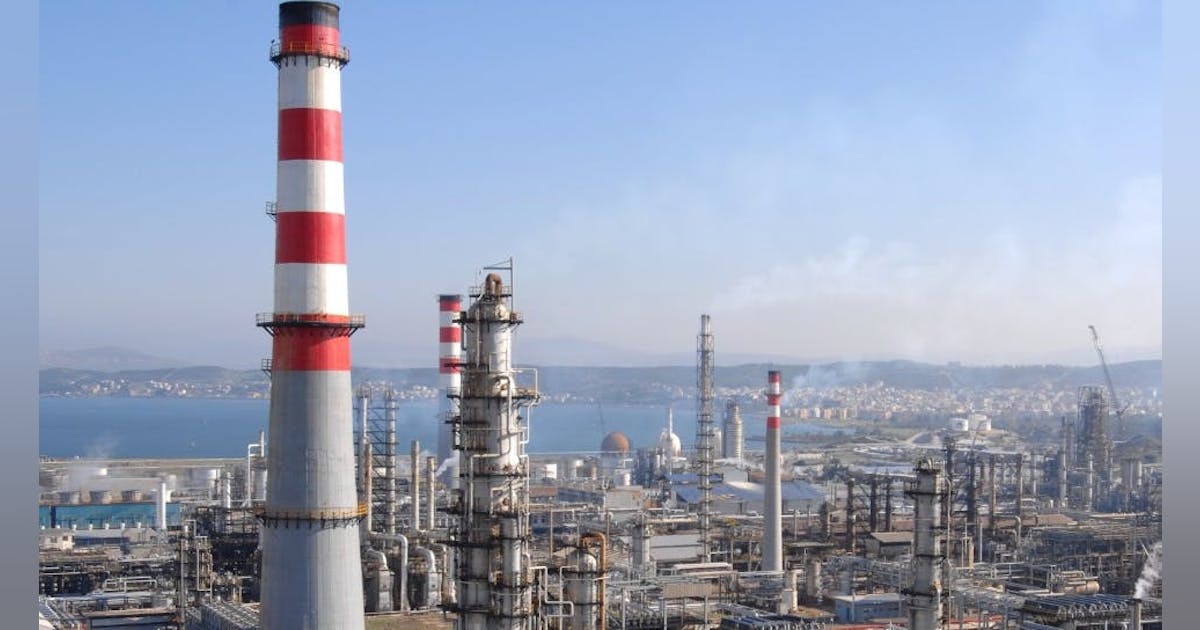
ERGIL Group has completed delivery of gas-to-gas sulfur condenser heat exchangers for a project at Türkiye Petrol Rafinerileri AŞ’s (TÜPRAŞ) 11.9-million-tonnes/year İzmir refinery, the equipment manufacturer confirmed.

The scope included four shell-and-tube sulfur condensers (E-9702/3 and E-9704/5) for sulfur recovery unit (SRU) service. ERGIL said it executed detailed engineering, fabrication, inspection, and certification in compliance with TÜPRAŞ’s refinery-specific technical standards.

Designed to ASME Boiler and Pressure Vessel Code Section VIII, Division 1, and Tubular Exchanger Manufacturers Association (TEMA) Class R requirements, the equipment was delivered with ASME U-stamp certification, Pressure Equipment Directive compliance, Conformité Européenne (CE) marking—a certification that indicates a product meets European Union safety, health, and environmental protection requirements—and TEMA certification.

According to ERGIL, the condensers are designed for operating temperatures of 210–370° C. and a design pressure of 5.3 kg/sq cm (g) on both shell and tube sides, handling sulfur process gases containing ammonia typical of refinery SRU operations. The units include integrated demisters, refractory linings, and heating coil serpentines to support high-temperature sulfur service and controlled startup.

Fabrication included post-weld heat treatment, hardness and impact testing, and verification to NACE MR0175 and hydrogen-induced cracking requirements for sour service. ERGIL said it completed all required non-destructive examinations, hydrostatic testing, and final inspections ahead of delivery.

The project forms part of ongoing investments at the İzmir refinery to support reliable sulfur handling and environmental compliance. TÜPRAŞ did not disclose project cost or schedule details.


Shape
Shape
Stay Ahead

Explore More Insights

Stay ahead with more perspectives on cutting-edge power, infrastructure, energy,  bitcoin and AI solutions. Explore these articles to uncover strategies and insights shaping the future of industries.

Shape

Cisco adds intelligent policy enforcement to mesh firewall family

Deploy policies automatically: New or updated Layer 3/4 (L3/L4) policies can be created and applied to the appropriate firewalls within minutes. This is a stark contrast to traditional processes that can take weeks and often require back-and-forth with the application owner. Avoid rip-and-replace: The engine supports a hybrid mesh firewall

Read More »

Crooks are hijacking and reselling AI infrastructure: Report

Threat actors may not only be stealing AI access from fully developed applications, the researchers added. A developer trying to prototype an app, who, through carelessness, doesn’t secure a server, could be victimized through credential theft as well. Joseph Steinberg, a US-based AI and cybersecurity expert, said the report is

Read More »

Amazon confirms 16,000 job cuts, including to AWS

Amazon is cutting about 16,000 jobs across the company, SVP of People Experience and Technology Beth Galetti wrote in an email to employees Wednesday. The cuts were widely expected — and although Galetti’s email did not mention Amazon Web Services, the cuts came as no surprise to AWS staff, some

Read More »

Chevron Nigeria finds hydrocarbons in western Niger Delta appraisal

@import url(‘https://fonts.googleapis.com/css2?family=Inter:[email protected]&display=swap’); a { color: var(–color-primary-main); } .ebm-page__main h1, .ebm-page__main h2, .ebm-page__main h3, .ebm-page__main h4, .ebm-page__main h5, .ebm-page__main h6 { font-family: Inter; } body { line-height: 150%; letter-spacing: 0.025em; font-family: Inter; } button, .ebm-button-wrapper { font-family: Inter; } .label-style { text-transform: uppercase; color: var(–color-grey); font-weight: 600; font-size: 0.75rem; } .caption-style { font-size: 0.75rem; opacity: .6; } #onetrust-pc-sdk [id*=btn-handler], #onetrust-pc-sdk [class*=btn-handler] { background-color: #c19a06 !important; border-color: #c19a06 !important; } #onetrust-policy a, #onetrust-pc-sdk a, #ot-pc-content a { color: #c19a06 !important; } #onetrust-consent-sdk #onetrust-pc-sdk .ot-active-menu { border-color: #c19a06 !important; } #onetrust-consent-sdk #onetrust-accept-btn-handler, #onetrust-banner-sdk #onetrust-reject-all-handler, #onetrust-consent-sdk #onetrust-pc-btn-handler.cookie-setting-link { background-color: #c19a06 !important; border-color: #c19a06 !important; } #onetrust-consent-sdk .onetrust-pc-btn-handler { color: #c19a06 !important; border-color: #c19a06 !important; } Chevron Nigeria Ltd. (CNL) completed the Awodi-07 appraisal and exploration well in shallow waters offshore western Niger Delta, the Nigerian National Petroleum Co. Ltd. (NNPC) said in a Jan. 26 release. Drilling operations started in late November 2025 and were concluded in mid-December 2025. Following the completion of comprehensive testing, logging, and data acquisition, the well was safely secured. Results from the well confirmed a significant presence of hydrocarbons across multiple reservoir zones, NNPC said. Additional details were not disclosed.  NNPC and CNL work together under a joint venture agreement to operate several oil and gas fields in Nigeria’s Niger Delta. The partners aim to increase oil production to about 146,000 b/d. CNL is operator of the joint venture (40%) with NNPC holding the remaining 60%.

Read More »

TotalEnergies extends contract for concessions offshore Libya

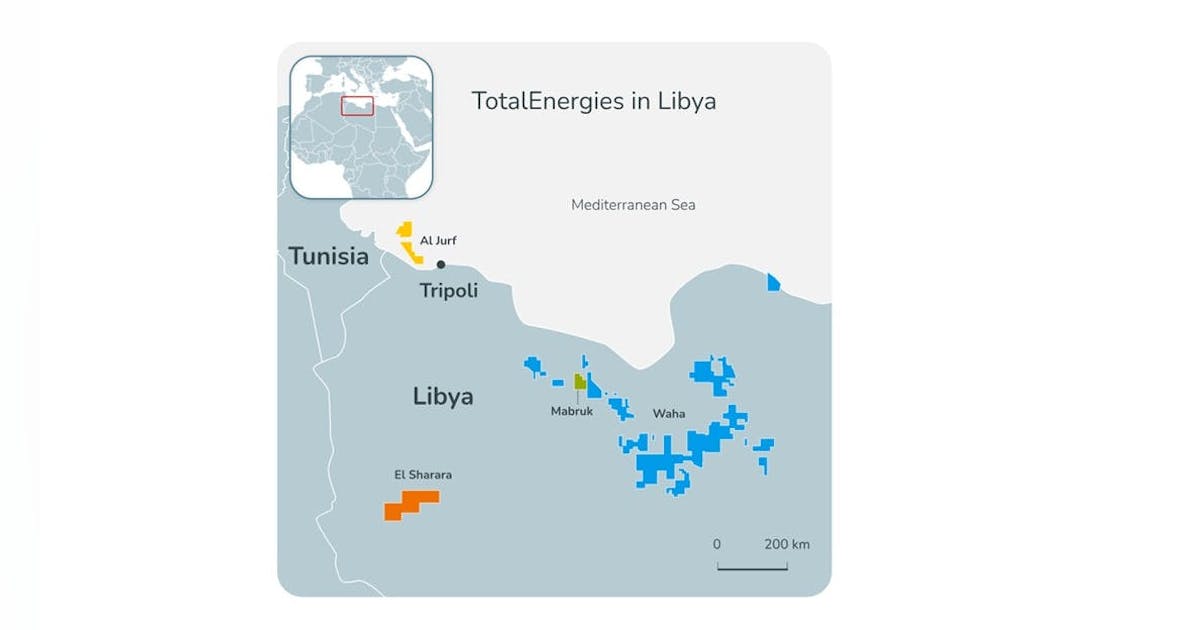
@import url(‘https://fonts.googleapis.com/css2?family=Inter:[email protected]&display=swap’); a { color: var(–color-primary-main); } .ebm-page__main h1, .ebm-page__main h2, .ebm-page__main h3, .ebm-page__main h4, .ebm-page__main h5, .ebm-page__main h6 { font-family: Inter; } body { line-height: 150%; letter-spacing: 0.025em; font-family: Inter; } button, .ebm-button-wrapper { font-family: Inter; } .label-style { text-transform: uppercase; color: var(–color-grey); font-weight: 600; font-size: 0.75rem; } .caption-style { font-size: 0.75rem; opacity: .6; } #onetrust-pc-sdk [id*=btn-handler], #onetrust-pc-sdk [class*=btn-handler] { background-color: #c19a06 !important; border-color: #c19a06 !important; } #onetrust-policy a, #onetrust-pc-sdk a, #ot-pc-content a { color: #c19a06 !important; } #onetrust-consent-sdk #onetrust-pc-sdk .ot-active-menu { border-color: #c19a06 !important; } #onetrust-consent-sdk #onetrust-accept-btn-handler, #onetrust-banner-sdk #onetrust-reject-all-handler, #onetrust-consent-sdk #onetrust-pc-btn-handler.cookie-setting-link { background-color: #c19a06 !important; border-color: #c19a06 !important; } #onetrust-consent-sdk .onetrust-pc-btn-handler { color: #c19a06 !important; border-color: #c19a06 !important; } TotalEnergies signed an agreement extending the Waha Concessions offshore Libya up to Dec. 31, 2050. The agreement sets new fiscal terms allowing to increase the production of these concessions which are currently producing about 370,000 boe/d. It also allows for a new phase of investments including the development of North Gialo field, which is expected to add 100,000 boe/d of production. The Waha oil concessions are operated by the Waha Oil Co. which is fully owned by Libya’s National Oil Corp. (NOC, 59.16%) with partners TotalEnergies (20.42%) and ConocoPhillips (20.42%).  

Read More »

Beacon lets rig contract for US Gulf workover well

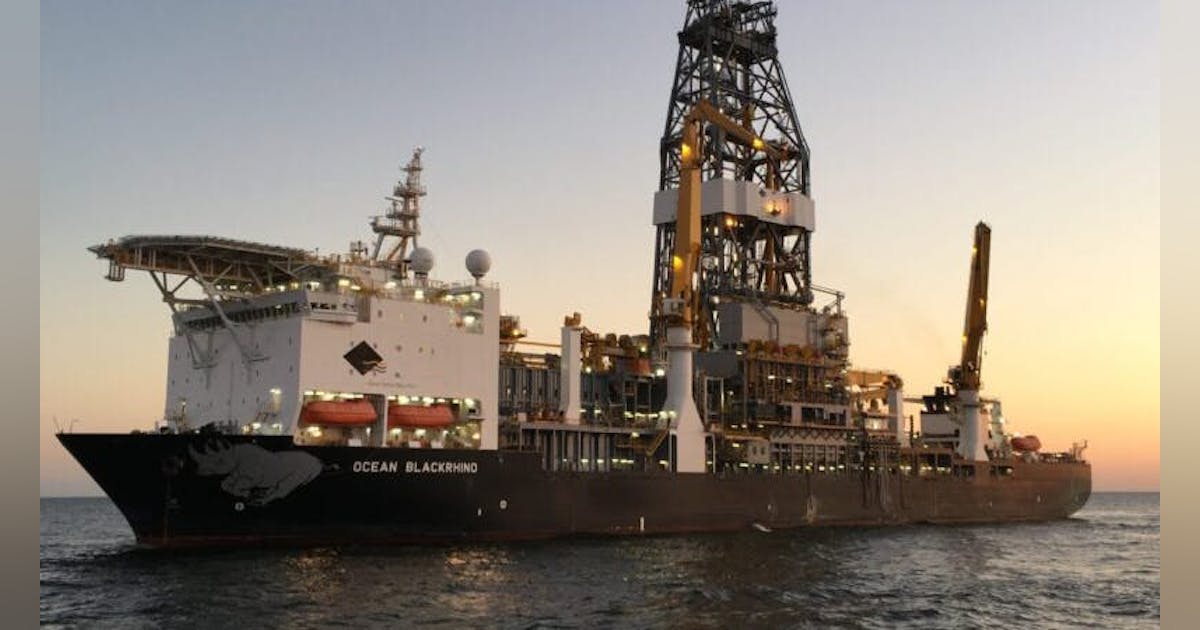
@import url(‘https://fonts.googleapis.com/css2?family=Inter:[email protected]&display=swap’); a { color: var(–color-primary-main); } .ebm-page__main h1, .ebm-page__main h2, .ebm-page__main h3, .ebm-page__main h4, .ebm-page__main h5, .ebm-page__main h6 { font-family: Inter; } body { line-height: 150%; letter-spacing: 0.025em; font-family: Inter; } button, .ebm-button-wrapper { font-family: Inter; } .label-style { text-transform: uppercase; color: var(–color-grey); font-weight: 600; font-size: 0.75rem; } .caption-style { font-size: 0.75rem; opacity: .6; } #onetrust-pc-sdk [id*=btn-handler], #onetrust-pc-sdk [class*=btn-handler] { background-color: #c19a06 !important; border-color: #c19a06 !important; } #onetrust-policy a, #onetrust-pc-sdk a, #ot-pc-content a { color: #c19a06 !important; } #onetrust-consent-sdk #onetrust-pc-sdk .ot-active-menu { border-color: #c19a06 !important; } #onetrust-consent-sdk #onetrust-accept-btn-handler, #onetrust-banner-sdk #onetrust-reject-all-handler, #onetrust-consent-sdk #onetrust-pc-btn-handler.cookie-setting-link { background-color: #c19a06 !important; border-color: #c19a06 !important; } #onetrust-consent-sdk .onetrust-pc-btn-handler { color: #c19a06 !important; border-color: #c19a06 !important; } Beacon Offshore Energy LLC let a contract to Noble for a workover well in the US Gulf of Mexico. Work will be performed utilizing the Noble BlackRhino drillship and is scheduled to begin in March with an estimated duration of 50 days. The contract includes an option for an additional well with estimated duration of 100 days.

Read More »

Equinor granted North Sea drilling permit

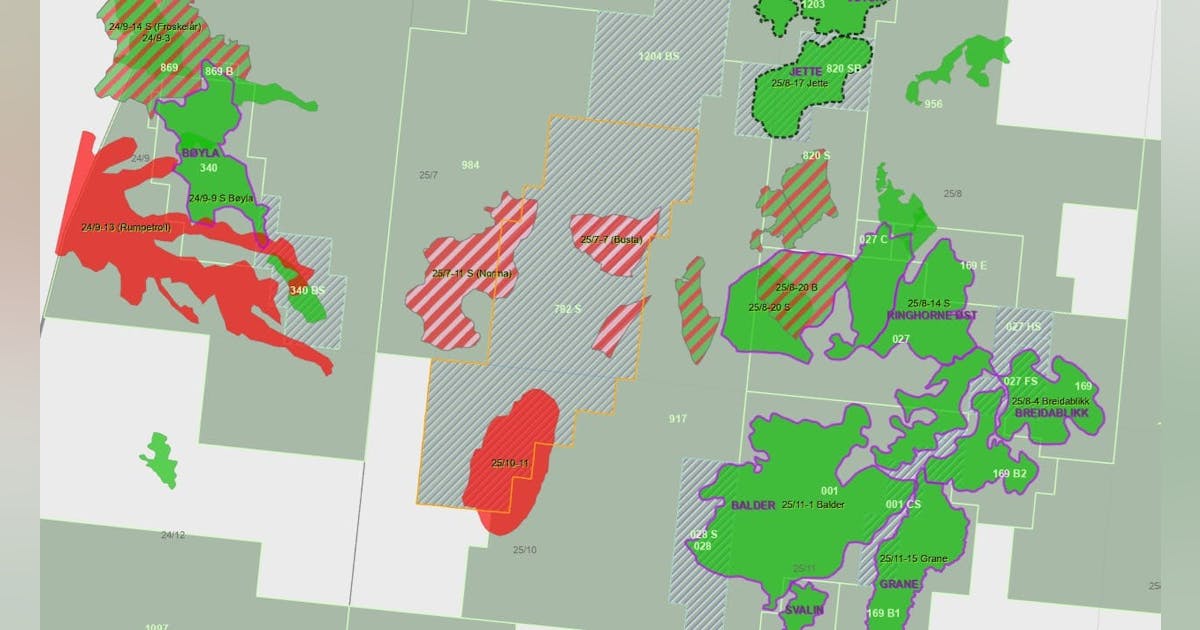
@import url(‘https://fonts.googleapis.com/css2?family=Inter:[email protected]&display=swap’); a { color: var(–color-primary-main); } .ebm-page__main h1, .ebm-page__main h2, .ebm-page__main h3, .ebm-page__main h4, .ebm-page__main h5, .ebm-page__main h6 { font-family: Inter; } body { line-height: 150%; letter-spacing: 0.025em; font-family: Inter; } button, .ebm-button-wrapper { font-family: Inter; } .label-style { text-transform: uppercase; color: var(–color-grey); font-weight: 600; font-size: 0.75rem; } .caption-style { font-size: 0.75rem; opacity: .6; } #onetrust-pc-sdk [id*=btn-handler], #onetrust-pc-sdk [class*=btn-handler] { background-color: #c19a06 !important; border-color: #c19a06 !important; } #onetrust-policy a, #onetrust-pc-sdk a, #ot-pc-content a { color: #c19a06 !important; } #onetrust-consent-sdk #onetrust-pc-sdk .ot-active-menu { border-color: #c19a06 !important; } #onetrust-consent-sdk #onetrust-accept-btn-handler, #onetrust-banner-sdk #onetrust-reject-all-handler, #onetrust-consent-sdk #onetrust-pc-btn-handler.cookie-setting-link { background-color: #c19a06 !important; border-color: #c19a06 !important; } #onetrust-consent-sdk .onetrust-pc-btn-handler { color: #c19a06 !important; border-color: #c19a06 !important; } Equinor Energy AS has been granted a permit by the Norwegian Offshore Directorate to drill in the North Sea. Exploration well 25/7-13 will be drilled in production license 782 S with the COSLInnovator semisubmersible drilling unit beginning in March 2026. Equinor is operator of the license with 60% interest. Aker BP holds the remaining 40%.

Read More »

TÜPRAŞ İzmir refinery upgrading sulfur recovery with ERGIL condensers

ERGIL Group has completed delivery of gas-to-gas sulfur condenser heat exchangers for a project at Türkiye Petrol Rafinerileri AŞ’s (TÜPRAŞ) 11.9-million-tonnes/year İzmir refinery, the equipment manufacturer confirmed. The scope included four shell-and-tube sulfur condensers (E-9702/3 and E-9704/5) for sulfur recovery unit (SRU) service. ERGIL said it executed detailed engineering, fabrication, inspection, and certification in compliance with TÜPRAŞ’s refinery-specific technical standards. Designed to ASME Boiler and Pressure Vessel Code Section VIII, Division 1, and Tubular Exchanger Manufacturers Association (TEMA) Class R requirements, the equipment was delivered with ASME U-stamp certification, Pressure Equipment Directive compliance, Conformité Européenne (CE) marking—a certification that indicates a product meets European Union safety, health, and environmental protection requirements—and TEMA certification. According to ERGIL, the condensers are designed for operating temperatures of 210–370° C. and a design pressure of 5.3 kg/sq cm (g) on both shell and tube sides, handling sulfur process gases containing ammonia typical of refinery SRU operations. The units include integrated demisters, refractory linings, and heating coil serpentines to support high-temperature sulfur service and controlled startup. Fabrication included post-weld heat treatment, hardness and impact testing, and verification to NACE MR0175 and hydrogen-induced cracking requirements for sour service. ERGIL said it completed all required non-destructive examinations, hydrostatic testing, and final inspections ahead of delivery. The project forms part of ongoing investments at the İzmir refinery to support reliable sulfur handling and environmental compliance. TÜPRAŞ did not disclose project cost or schedule details.

Read More »

Kinder Morgan grows net income 17%, sells Eagle Ford JV share

Kinder Morgan Inc. recorded fourth-quarter 2025 net income of $996 million versus $667 million in fourth-quarter 2024. Adjusted net income attributable to KMI, excluding certain items, primarily from a gain on an asset sale during fourth-quarter 2025, was $866 million, 22% higher than fourth-quarter 2024, the company said in an earnings report Jan. 21. EagleHawk sale The company ended the year with the sale of its 25% non-operated interest in BPX (Eagle Ford) Gathering LLC, formerly known as EagleHawk Field Services, for $396 million to an undisclosed buyer. In a call detailing the earnings report, Kinder Morgan chief executive officer Kim Dang said that while the asset wasn’t part of any divestiture plan, “based on the price that we could achieve, it made sense to sell.” The sale resulted in a pre-tax gain of $123 million, the company said. EagleHawk began as a joint venture of a subsidiary of BPX Energy (75%), a unit of bp plc, and Kinder Morgan (25%), and held Eagle Ford midstream assets. bp in November 2025 noted an agreement to sell a non-controlling portion of its share to Sixth Street-managed funds.   Fourth-quarter 2025 In the fourth quarter, Kinder Morgan, “led by record-setting performance in [Kinder Morgan’s] natural gas pipelines business segment, the company delivered its highest ever fourth quarter and full-year net income attributable to KMI and Adjusted EBITDA,” Dang noted. For the full year, net income attributable to KMI was 17% higher than 2024. Cash flow from operations was $1.7 billion and free cash flow (FCF) after capital expenditures was $900 million, up 12% and 18%, respectively, from the prior year period. “Overall, total demand for natural gas is expected to grow by 17% through 2030, led by LNG exports. We have long-term contracts to move 8 bcfd of natural gas feedstocks to

Read More »

Network engineers take on NetDevOps roles to advance stalled automation efforts

What NetDevOps looks like Most enterprises begin their NetDevOps journey modestly by automating a limited set of repetitive, lower-level tasks. Nearly 70% of enterprises pursuing infrastructure automation start with task-level scripting, rather than end-to-end automation, according to theCUBE Research’s AppDev Done Right Summit. This can include using tools such as Ansible or Python scripts to standardize device provisioning, configuration changes, or other routine changes. Then, more mature teams adopt Git for version control, define golden configurations, and apply basic validation before and after changes, explains Bob Laliberte, principal analyst at SiliconANGLE and theCUBE. A smaller group of enterprises extends automation efforts into complete CI/CD-style workflows with consistent testing, staged deployments, and automated verification, Laliberte adds. This capability is present in less than 25% of enterprises today, according to theCUBE, and it is typically focused on specific domains such as data center fabric or cloud networking. NetDevOps usually exists with the network organization as a dedicated automation or platform subgroup, and more than 60% of enterprises anchor NetDevOps initiatives within traditional infrastructure teams rather than application or platform engineering groups, according to Laliberte. “In larger enterprises, NetDevOps capabilities are increasingly centralized within shared infrastructure or platform teams that provide tooling, pipelines, and guardrails across compute, storage, and networking,” Laliberte says. “In more advanced or cloud-native environments, network specialists may be embedded within application, site reliability engineering (SRE), or platform teams, particularly where networking directly impacts application performance.” Transforming work At its core, NetDevOps isn’t just about changing titles for network engineers. It is about changing workflows, behaviors, and operating models across network operations.

Read More »

China clears Nvidia H200 sales to tech giants, reshaping AI data center plans

China is also accelerating efforts to strengthen domestic training chip design and manufacturing capabilities, with the strategic objective of reducing long-term dependence on foreign suppliers, Zeng added. Things could get more complex if authorities mandated imported chips to be deployed alongside domestically produced accelerators. Reuters has reported that this may be a possibility. “A mandated bundling requirement would create a heterogeneous computing environment that significantly increases system complexity,” Zeng said. “Performance inconsistencies and communication protocol disparities across different chip architectures would elevate O&M [operations and maintenance] overhead and introduce additional network latency.” However, the approvals are unlikely to close the gap with US hyperscalers, Zeng said, noting that the H200 remains one generation behind Nvidia’s Blackwell architecture and that approved volumes fall well short of China’s overall demand. Implications for global enterprises For global enterprise IT and network leaders, the move adds another variable to long-term AI infrastructure planning. Expanded sales of Nvidia’s H200 chips could help the company increase production scale, potentially creating room to ease pricing for Western enterprises deploying H200-based AI infrastructure, said Neil Shah, VP for research at Counterpoint Research.

Read More »

Nuclear safety rules quietly rewritten to favor AI

‘Referee now plays for the home team’ Kimball pointed out that while an SMR works on the same principle as a large-scale nuclear plant, using controlled fission to generate heat which is then converted to electricity, its design reduces environmental impacts such as groundwater contamination, water use, and the impact in the event of failure. For example, he said, the integral reactor design in an SMR, with all components in a single vessel, eliminates external piping. This means that accidents would be self-contained, reducing the environmental impact. In addition, he said, SMRs can be air-cooled, which greatly reduces the amount of water required. “These are just a couple of examples of how an SMR differs from the large industrial nuclear power plants we think of when we think of nuclear power.”  Because of differences like this, said Kimball, “I can see where rules generated/strengthened in the post-Three Mile Island era might need to be revisited for this new nuclear era. But it is really difficult to speak to how ‘loose’ these rules have become, and whether distinctions between SMRs and large-scale nuclear plants comprise the majority of the changes reported.” Finally, he said, “I don’t think I need to spend too many words on articulating the value of nuclear to the hyperscale or AI data center. The era of the gigawatt datacenter is upon us, and the traditional means of generating power can’t support this insatiable demand. But we have to ensure we deploy power infrastructure, such as SMRs, in a responsible, ethical, and safe manner.”  Further to that, Gogia pointed out that for CIOs and infrastructure architects, the risks extend well beyond potential radiation leaks. “What matters more immediately is that system anomalies — mechanical, thermal, software-related — may not be documented, investigated, or escalated with the diligence one would expect from

Read More »

Mplify launches AI-focused Carrier Ethernet certifications

“We didn’t want to just put a different sticker on it,” Vachon said. “We wanted to give the opportunity for operators to recertify their infrastructure so at least you’ve now got this very competitive infrastructure.” Testing occurs on live production networks. The automated testing platform can be completed in days once technical preparation is finished. Organizations pay once per certification with predictable annual maintenance fees required to keep certifications active. Optional retesting can refresh certification test records. Carrier Ethernet for AI The Carrier Ethernet for AI certification takes the business certification baseline and adds a performance layer specifically designed for AI workloads. Rather than creating a separate track, the AI certification requires providers to first complete the Carrier Ethernet for Business validation, then demonstrate they can meet additional stringent requirements. “What we identified was that there was another tier that we could produce a standard around for AI,” Vachon explained. “With extensive technical discussions with our membership, our CTO, and our director of certification, they identified the critical performance and functionality parameters.” The additional validation focuses on three key performance parameters: frame delay, inter-frame delay variation, and frame loss ratio aligned with AI workload requirements. Testing uses MEF 91 test requirements with AI-specific traffic profiles and performance objectives that go beyond standard business service thresholds. The program targets three primary use cases: connecting subscriber premises running AI applications to AI edge sites, interconnecting AI edge sites to AI data centers, and AI data center to data center interconnections.

Read More »

Gauging the real impact of AI agents

That creates the primary network issue for AI agents, which is dealing with implicit and creeping data. There’s a singular important difference between an AI agent component and an ordinary software component. Software is explicit in its use of data. The programming includes data identification. AI is implicit in its data use; the model was trained on data, and there may well be some API linkage to databases that aren’t obvious to the user of the model. It’s also often true that when an agentic component is used, it’s determined that additional data resources are needed. Are all these resources in the same place? Probably not. The enterprises with the most experience with AI agents say it would be smart to expect some data center network upgrades to link agents to databases, and if the agents are distributed away from the data center, it may be necessary to improve the agent sites’ connection to the corporate VPN. As agents evolve into real-time applications, this requires they also be proximate to the real-time system they support (a factory or warehouse), so the data center, the users, and any real-time process pieces all pull at the source of hosting to optimize latency. Obviously, they can’t all be moved into one place, so the network has to make a broad and efficient set of connections. That efficiency demands QoS guarantees on latency as well as on availability. It’s in the area of availability, with a secondary focus on QoS attributes like latency, that the most agent-experienced enterprises see potential new service opportunities. Right now, these tend to exist within a fairly small circle—a plant, a campus, perhaps a city or town—but over time, key enterprises say that their new-service interest could span a metro area. They point out that the real-time edge applications

Read More »

Photonic chip vendor snags Gates investment

“Moore’s Law is slowing, but AI can’t afford to wait. Our breakthrough in photonics unlocks an entirely new dimension of scaling, by packing massive optical parallelism on a single chip,” said Patrick Bowen, CEO of Neurophos. “This physics-level shift means both efficiency and raw speed improve as we scale up, breaking free from the power walls that constrain traditional GPUs.” The new funding includes investments from Microsoft’s investment fund M12 that will help speed up delivery of Neurophos’ first integrated photonic compute system, including datacenter-ready OPU modules. Neurophos is not the only company exploring this field. Last April, Lightmatter announced the launch of photonic chips to tackle data center bottlenecks, And in 2024, IBM said its researchers were exploring optical chips and developing a prototype in this area.

Read More »

Microsoft will invest $80B in AI data centers in fiscal 2025

And Microsoft isn’t the only one that is ramping up its investments into AI-enabled data centers. Rival cloud service providers are all investing in either upgrading or opening new data centers to capture a larger chunk of business from developers and users of large language models (LLMs).  In a report published in October 2024, Bloomberg Intelligence estimated that demand for generative AI would push Microsoft, AWS, Google, Oracle, Meta, and Apple would between them devote $200 billion to capex in 2025, up from $110 billion in 2023. Microsoft is one of the biggest spenders, followed closely by Google and AWS, Bloomberg Intelligence said. Its estimate of Microsoft’s capital spending on AI, at $62.4 billion for calendar 2025, is lower than Smith’s claim that the company will invest $80 billion in the fiscal year to June 30, 2025. Both figures, though, are way higher than Microsoft’s 2020 capital expenditure of “just” $17.6 billion. The majority of the increased spending is tied to cloud services and the expansion of AI infrastructure needed to provide compute capacity for OpenAI workloads. Separately, last October Amazon CEO Andy Jassy said his company planned total capex spend of $75 billion in 2024 and even more in 2025, with much of it going to AWS, its cloud computing division.

Read More »

John Deere unveils more autonomous farm machines to address skill labor shortage

Join our daily and weekly newsletters for the latest updates and exclusive content on industry-leading AI coverage. Learn More Self-driving tractors might be the path to self-driving cars. John Deere has revealed a new line of autonomous machines and tech across agriculture, construction and commercial landscaping. The Moline, Illinois-based John Deere has been in business for 187 years, yet it’s been a regular as a non-tech company showing off technology at the big tech trade show in Las Vegas and is back at CES 2025 with more autonomous tractors and other vehicles. This is not something we usually cover, but John Deere has a lot of data that is interesting in the big picture of tech. The message from the company is that there aren’t enough skilled farm laborers to do the work that its customers need. It’s been a challenge for most of the last two decades, said Jahmy Hindman, CTO at John Deere, in a briefing. Much of the tech will come this fall and after that. He noted that the average farmer in the U.S. is over 58 and works 12 to 18 hours a day to grow food for us. And he said the American Farm Bureau Federation estimates there are roughly 2.4 million farm jobs that need to be filled annually; and the agricultural work force continues to shrink. (This is my hint to the anti-immigration crowd). John Deere’s autonomous 9RX Tractor. Farmers can oversee it using an app. While each of these industries experiences their own set of challenges, a commonality across all is skilled labor availability. In construction, about 80% percent of contractors struggle to find skilled labor. And in commercial landscaping, 86% of landscaping business owners can’t find labor to fill open positions, he said. “They have to figure out how to do

Read More »

2025 playbook for enterprise AI success, from agents to evals

Join our daily and weekly newsletters for the latest updates and exclusive content on industry-leading AI coverage. Learn More 2025 is poised to be a pivotal year for enterprise AI. The past year has seen rapid innovation, and this year will see the same. This has made it more critical than ever to revisit your AI strategy to stay competitive and create value for your customers. From scaling AI agents to optimizing costs, here are the five critical areas enterprises should prioritize for their AI strategy this year. 1. Agents: the next generation of automation AI agents are no longer theoretical. In 2025, they’re indispensable tools for enterprises looking to streamline operations and enhance customer interactions. Unlike traditional software, agents powered by large language models (LLMs) can make nuanced decisions, navigate complex multi-step tasks, and integrate seamlessly with tools and APIs. At the start of 2024, agents were not ready for prime time, making frustrating mistakes like hallucinating URLs. They started getting better as frontier large language models themselves improved. “Let me put it this way,” said Sam Witteveen, cofounder of Red Dragon, a company that develops agents for companies, and that recently reviewed the 48 agents it built last year. “Interestingly, the ones that we built at the start of the year, a lot of those worked way better at the end of the year just because the models got better.” Witteveen shared this in the video podcast we filmed to discuss these five big trends in detail. Models are getting better and hallucinating less, and they’re also being trained to do agentic tasks. Another feature that the model providers are researching is a way to use the LLM as a judge, and as models get cheaper (something we’ll cover below), companies can use three or more models to

Read More »

OpenAI’s red teaming innovations define new essentials for security leaders in the AI era

Join our daily and weekly newsletters for the latest updates and exclusive content on industry-leading AI coverage. Learn More OpenAI has taken a more aggressive approach to red teaming than its AI competitors, demonstrating its security teams’ advanced capabilities in two areas: multi-step reinforcement and external red teaming. OpenAI recently released two papers that set a new competitive standard for improving the quality, reliability and safety of AI models in these two techniques and more. The first paper, “OpenAI’s Approach to External Red Teaming for AI Models and Systems,” reports that specialized teams outside the company have proven effective in uncovering vulnerabilities that might otherwise have made it into a released model because in-house testing techniques may have missed them. In the second paper, “Diverse and Effective Red Teaming with Auto-Generated Rewards and Multi-Step Reinforcement Learning,” OpenAI introduces an automated framework that relies on iterative reinforcement learning to generate a broad spectrum of novel, wide-ranging attacks. Going all-in on red teaming pays practical, competitive dividends It’s encouraging to see competitive intensity in red teaming growing among AI companies. When Anthropic released its AI red team guidelines in June of last year, it joined AI providers including Google, Microsoft, Nvidia, OpenAI, and even the U.S.’s National Institute of Standards and Technology (NIST), which all had released red teaming frameworks. Investing heavily in red teaming yields tangible benefits for security leaders in any organization. OpenAI’s paper on external red teaming provides a detailed analysis of how the company strives to create specialized external teams that include cybersecurity and subject matter experts. The goal is to see if knowledgeable external teams can defeat models’ security perimeters and find gaps in their security, biases and controls that prompt-based testing couldn’t find. What makes OpenAI’s recent papers noteworthy is how well they define using human-in-the-middle

Read More »