Stay Ahead, Stay ONMINE

Utilities should consider heat pump-specific rates to encourage adoption: ACEEE

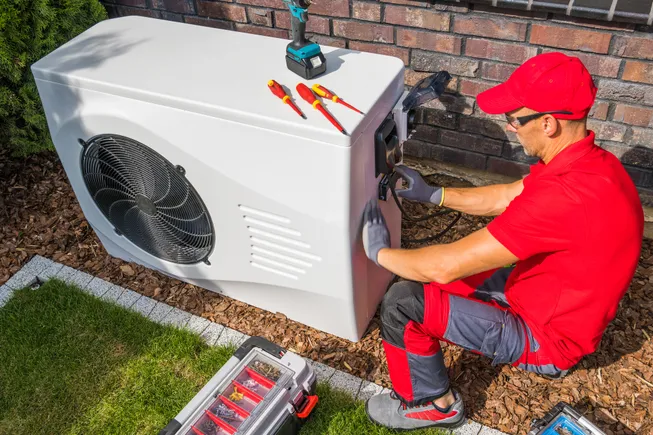
Utilities looking to encourage the adoption of heat pumps for home heating should consider rates specific to the new technology, particularly those in colder climates, the American Council for an Energy-Efficient Economy said in research published Tuesday. “Heat pump-specific rate plans are best for incentivizing heat pump adoption, with winter discounts being a potentially important […]

Utilities looking to encourage the adoption of heat pumps for home heating should consider rates specific to the new technology, particularly those in colder climates, the American Council for an Energy-Efficient Economy said in research published Tuesday.

“Heat pump-specific rate plans are best for incentivizing heat pump adoption, with winter discounts being a potentially important facet of those plans,” the report concluded.

A winter electricity discount “is a key rate structure change for ensuring energy bills do not increase in cold climates, which is where (in the United States) the economics of heat pumps are most challenged,” the report found. Time-of-use and demand-based rate plans “can also help reduce ongoing costs for heat pump users.”

The Inflation Reduction Act provided billions for electrification efforts, including the purchase of heat pumps. Most of those funds have already been distributed to states, experts told Utility Dive, though President Trump’s efforts to halt IRA programs and claw back funding has injected uncertainty into the clean energy space.

ACEEE’s heat pump research published this week is focused on their potential impact on electricity bills.

“Pairing heat pump installation with energy efficiency envelope upgrades further decreases ongoing electricity bills,” the report said. It also noted that flat-rate electricity rate plans increase costs for heat pump users. 

The conclusions are “commonsense,” ACEEE said, and come at a time when more utilities are offering time-varying and technology-specific rares. However, flat volumetric electricity rates remain common across the U.S.; according to Brattle Group, less than 10% of households were on a TOU rate in 2021 and the number was on pace to reach 35% by the end of the decade.

“We know that heat pumps cut climate pollution and can reduce home energy costs, even in the coldest states,” said Matt Malinowski, an author of the report and ACEEE’s buildings program director. “Utilities, regulators, and policymakers need to further reduce costs by encouraging heat pump-friendly electric rates and energy efficiency upgrades, especially for low- and moderate-income households.”

The study modeled average bill impacts of electrifying home heating in the largest utilities of four states looking to heat pumps to help achieve their climate goals: Colorado, Connecticut, Maine and Minnesota.

In Maine, switching to heat pumps will cut monthly utility bills over the course of a year, ACEEE said. But in the other three states, customers are paying higher-than-average electric rates compared to gas, necessitating new rate approaches to make the new technology pencil out.

Minnesota’s largest utility has a rate offering a 35% discount during winter for customers heating with electricity, helping to lower bills for customers heating with electricity. “Colorado’s winter electricity rate is only 10% less than in summer, so electrification can increase costs,” ACEEE said.

In Connecticut, electrifying a home’s heat would pencil out for those currently using oil or propane, “but electrification would raise costs for homes using gas because of the state’s markedly high electricity rates.”

Along with winter discounts and heat pump-specific rates, ACEEE’s report recommends policymakers consider “providing non-ratepayer investments in electricity distribution and transmission, put a price on carbon emissions, or implement clean heat standards.”

For program administrators, behavioral strategies can help shift customer consumption, and contractors need to be provided with more education about the use and benefits of heat pumps, the efficiency advocate said.


Shape
Shape
Stay Ahead

Explore More Insights

Stay ahead with more perspectives on cutting-edge power, infrastructure, energy,  bitcoin and AI solutions. Explore these articles to uncover strategies and insights shaping the future of industries.

Shape

Western Digital wants to ramp-up hard disk drive speeds

Most enterprises are not using SATA drives, at least not with hot data. Perhaps cold storage but not frequently accessed data. They are using PCI Express based drives and those are considerably faster than anything Western Digital can engineer in a hard disk. Capacity aside, Western Digital is also aiming

Read More »

LoRaWAN reaches 125 million devices as industrial IoT expands

Satellite integration is set to grow Terrestrial LoRaWAN networks cannot achieve complete geographic coverage. Yegin cited Swisscom’s nationwide Switzerland deployment, which covers 97.2% of the population but cannot reach remote alpine terrain. Two LoRa Alliance members, Lacuna Space and Plan-S, already operate commercial LoRaWAN services from low Earth orbit. Standard

Read More »

Data stored in glass could last over 10,000 years, Microsoft says

Magnetic tape, the most widely deployed archival medium today, reflects those constraints. An LTO-10 (Linear Tape-Open) cartridge, the current enterprise benchmark, holds 30TB to 40TB native at 400MB/s, but its rated shelf life is just 30 years. It requires climate-controlled storage between 16°C and 25°C and migration roughly every five

Read More »

Arista hints at in-the-works telemetry tools to manage AI fabrics

“This greatly aids our customers in building an overall working solution, because the interactions between the network and the host can be complicated and difficult to debug when it’s different systems collecting them,” Duda said. Analysts react to telemetry preview Arista declined to share more details about its forthcoming AI

Read More »

Energy Department Approves Final Export Authorization for Venture Global CP2 LNG

WASHINGTON — U.S. Secretary of Energy Chris Wright today signed the final export authorization for the Venture Global CP2 LNG Project in Cameron Parish, Louisiana, allowing exports of up to 3.96 billion cubic feet per day of U.S. natural gas as liquefied natural gas (LNG) to non-Free Trade Agreement (FTA) countries. “In less than ten months, President Trump’s administration is redefining what it means to unleash American energy by approving record new LNG exports,” said Kyle Haustveit, Assistant Secretary of the Office of Fossil Energy. “Finalizing the non-FTA authorization for CP2 LNG will enable secure and reliable American energy access for our allies and trading partners, while also providing well-paid jobs and economic opportunities at home.” Today’s authorization follows the Department’s conditional authorization to CP2 LNG in March 2025 and reflects the Federal Energy Regulatory Commission’s May 2025 decision approving the siting, construction, and operation of the facility. It also incorporates DOE’s May 2025 response to comments on the 2024 LNG Export Study, which reaffirmed that U.S. LNG exports strengthen America’s energy leadership, expand opportunities for American workers, and provide our allies with secure access to reliable U.S. energy. On day one, President Trump directed the Energy Department to end the Biden administration’s LNG export pause and to resume the consideration of pending applications to export LNG to countries without a free trade agreement (FTA). Under President Trump’s leadership, DOE has authorized more than 13.8 Bcf/d of LNG exports—greater than the volume exported today by the world’s second-largest LNG supplier. Today, U.S. exports are approximately 15 billion cubic feet per day (Bcf/d), an increase of approximately 25% from 2024 levels.

Read More »

Energy Department Grants Woodside Louisiana LNG Project Additional Time to Commence Exports

WASHINGTON – U.S. Secretary of Energy Chris Wright today signed an amendment order granting an additional 44 months for Woodside Energy to commence exports of liquefied natural gas (LNG) to non-free trade agreement (non-FTA) countries from the Woodside Louisiana LNG Project under construction in Calcasieu Parish, LA. Once fully constructed, the project will be capable of exporting up to 3.88 billion cubic feet per day (Bcf/d) of natural gas as LNG.    Woodside Louisiana took final investment decision on its first phase earlier this year and has off-take agreements with Germany’s Uniper as well as U.S. pipeline operator Williams who will be marketing natural gas through the Woodside Louisiana LNG project.  “It is exciting to take this action to provide the needed runway for this project to fully take off and realize its potential in providing reliable and secure energy to the world,” said Kyle Haustveit, Assistant Secretary of the Office of Hydrocarbons and Geothermal Energy. “Thanks to President Trump’s leadership, the Department of Energy is redefining what it means to unleash American energy to strengthen energy reliability and affordability for American families, businesses, and our allies.” The United States is the largest global producer and exporter of natural gas. There are currently eight large-scale LNG projects operating in the United States and several additional projects are expanding or under construction. Under President Trump’s leadership, the Department has approved applications from projects authorized to export more than 17.7 Bcf/d of natural gas as LNG, an increase of approximately 25% from 2024 levels. So far in 2025, over 8 Bcf/d of U.S. LNG export capacity, including from Woodside Louisiana LNG, has reached a final investment decision and gone under construction.

Read More »

Energy Department Removes Barriers for American Energy Producers, Unleashing Investment in Domestic Hydrogen

The U.S. Department of Energy’s (DOE) Hydrogen and Fuel Cell Technologies Office today removed barriers for the American hydrogen industry by updating its 45VH2-GREET modeling tool. The latest version of 45VH2 GREET employs a more flexible method for calculating methane loss from hydrogen supply chains, allowing a wider range of deserving companies to access resources supporting hydrogen production. “This update to the GREET model reflects the Department of Energy’s commitment to unleashing American energy dominance by removing bureaucratic burdens on industry,” said Principal Deputy Assistant Secretary for Energy Efficiency and Renewable Energy Lou Hrkman. “We are expanding opportunities for companies to produce domestic hydrogen and spurring U.S. innovation in new technologies to pave the way for billions in private investment.” The 45VH2-GREET model, which has been adopted by the U.S. Department of the Treasury, is specifically designed to evaluate hydrogen production processes. The latest updates allow users to input company-specific methane loss data, rather than requiring the use of national averages. This change will allow companies to use data specific to their own facilities when assessing their eligibility under 45V. To download the latest GREET model, along with an updated user manual and a log of all changes, visit www.energy.gov/eere/greet. For questions on how to use the model, please contact [email protected]. First developed by Argonne National Laboratory in 1994, the GREET® (Greenhouse gases, Regulated Emissions, and Energy use in Technologies) suite of models assess the life cycle impacts of technologies, fuels, products, and energy systems across various stages of the supply chain. Today, there are multiple GREET models for specific use cases that guide decision-making, research and development, and regulations related to the transportation and energy sectors. The models are freely available for industry to use and play an integral role in DOE’s research, development, and deployment efforts.

Read More »

Eni delivers Congo LNG Phase 2 with first cargo from Nguya vessel

@import url(‘https://fonts.googleapis.com/css2?family=Inter:[email protected]&display=swap’); a { color: var(–color-primary-main); } .ebm-page__main h1, .ebm-page__main h2, .ebm-page__main h3, .ebm-page__main h4, .ebm-page__main h5, .ebm-page__main h6 { font-family: Inter; } body { line-height: 150%; letter-spacing: 0.025em; font-family: Inter; } button, .ebm-button-wrapper { font-family: Inter; } .label-style { text-transform: uppercase; color: var(–color-grey); font-weight: 600; font-size: 0.75rem; } .caption-style { font-size: 0.75rem; opacity: .6; } #onetrust-pc-sdk [id*=btn-handler], #onetrust-pc-sdk [class*=btn-handler] { background-color: #c19a06 !important; border-color: #c19a06 !important; } #onetrust-policy a, #onetrust-pc-sdk a, #ot-pc-content a { color: #c19a06 !important; } #onetrust-consent-sdk #onetrust-pc-sdk .ot-active-menu { border-color: #c19a06 !important; } #onetrust-consent-sdk #onetrust-accept-btn-handler, #onetrust-banner-sdk #onetrust-reject-all-handler, #onetrust-consent-sdk #onetrust-pc-btn-handler.cookie-setting-link { background-color: #c19a06 !important; border-color: #c19a06 !important; } #onetrust-consent-sdk .onetrust-pc-btn-handler { color: #c19a06 !important; border-color: #c19a06 !important; } <!–> Eni SPA has delivered Phase 2 of the Congo LNG project with the first LNG cargo export from the 2.4-million tonne/year (tpy) Nguya floating liquefied natural gas (FLNG) unit, lifting the Republic of Congo’s liquefaction capacity to 3 million tpy. ]–> Photo: Eni SPA <!–> ]–> <!–> Nov. 26, 2024 ]–> Photo from Eni. <!–> ]–> <!–> Aug. 26, 2025 ]–> Phase 2 leverages natural gas resources from Nené and Litchendjili fields in the offshore Marine XII license, which lies 20 km offshore Congo and is estimated to hold 1.3-billion boe proven and probable reserves. Phase 1 of Congo LNG, launched with the 600,000-tpy Tango FLNG vessel, reached start-up in December 2023, just over 1 year after the project definition. Phase 2 start-up comes only 35 months after construction of the Nguya FLNG unit began, Eni said in a release Feb. 7. map from Eni <!–> –> <!–> ]–>

Read More »

PTTEP takes FID on first greenfield development in Malaysia

PTT Exploration and Production Public Co. Ltd. (PTTEP) has reached a final investment decision (FID) to develop the Malaysia SK405B project offshore Malaysia, marking its first greenfield development project in the country. PTTEP Sarawak Oil Ltd., a subsidiary of PTTEP and operator of SK405B PSC will proceed with development of Sirung and Chenda fields. The development plan for both fields comprises a central processing platform and a wellhead platform with a target combined production capacity of about 15,000 b/d and 200 MMscfd of gas. SK405B lies in shallow water offshore Sarawak.  The field development plan, together with the FID, has been approved by the project partners, and the engineering, procurement, construction, installation, and commissioning (EPCIC) contract is expected to be signed in early 2026, with first production anticipated in 2028. The project is designed with Zero Routine Flaring and incorporates advanced remote-operated offshore operations, the company said.

Read More »

Russia’s crude exports signal narrowing buyer pool

A growing number of vessels sailing to unknown destinations and a sharp rise in Russian oil held on water—up as much as 49 million bbl since November 2025—suggest a shrinking pool of willing buyers. Russian crude exports declined by 350,000 b/d m-o-m, reversing most of December’s 360,000 b/d increase. The bulk of the drop came from the Black Sea, while product exports rose by 260,000 b/d, largely driven by heavy product flows (+200,000 b/d). Higher prices boosted revenues across both crude and products. Product revenues climbed by $330 million, more than offsetting a $210 million decline in crude export revenues. Separately, Russia reported a 24% year-on-year decline in 2025 oil and gas tax revenues to about $110 billion. Under the European Union (EU)’s revised mechanism, the price cap on Russian crude was lowered to $44.10/bbl as of Feb. 2. Urals Primorsk averaged $40.06/bbl in January. Of total crude exports, 65% were sold by Russian proxy companies, 13% by sanctioned firms, and 21% by other companies. Among the proxy companies, Redwood Global FZE LLC—Rosneft’s substitute—remained the largest crude exporter, supplying 1 million b/d to China and India last month. Russian crude imports EU enforcement measures are beginning to reshape trade flows. Since Jan. 21, EU buyers have been required to more rigorously verify the origin of imported products. In 2025, the EU-27 and UK sourced 12% of their middle distillate imports from refineries in India and Türkiye processing Russian crude. India’s Jamnagar refinery halted Russian crude imports in mid-December to comply, as Europe accounted for 40% of its middle distillate exports last year. As a result, EU and UK reliance on seaborne Russian-origin molecules fell to 1.6% in January, with most cargoes shipped before Jan. 21 and largely originating from Türkiye. Meanwhile, EU middle distillate imports from the US rose by

Read More »

ECL targets AI data centers with fuel-agnostic power platform

Power availability has become a gating factor for many data center projects, particularly where developers need larger connections or rapid delivery. Grid constraints can also influence where operators place compute for low-latency AI workloads. “Inference has to live close to people, data and applications, in and around major cities, smaller metros and industrial hubs where there is rarely a spare 50 or 100 megawatts sitting on the grid, and almost never a mature hydrogen ecosystem,” said Bachar. In typical data center design, the facilities are planned around 1 energy source, be it electrical grid, solar and other renewables, or diesel generated. All require different layouts and designs. One design does not fit all power sources. FlexGrid lets the data center use any power source it wants and switch to a new source without requiring a redesign of the facilities.

Read More »

AI likely to put a major strain on global networks—are enterprises ready?

“When AI pipelines slow down or traffic overloads common infrastructure, business processes slow down, and customer experience degrades,” Kale says. “Since many organizations are using AI to enable their teams to make critical decisions, disruptions caused by AI-related failures will be experienced instantly by both internal teams and external customers.” A single bottleneck can quickly cascade through an organization, Kales says, “reducing the overall value of the broader digital ecosystem.” In 2026, “we will see significant disruption from accelerated appetite for all things AI,” research firm Forrester noted in a late-year predictions post. “Business demands of AI systems, network connectivity, AI for IT operations, the conversational AI-powered service desk, and more are driving substantial changes that tech leaders must enable within their organizations.” And in a 2025 study of about 1,300 networking, operations, cloud, and architecture professionals worldwide, Broadcom noted a “readiness gap” between the desire for AI and network preparedness. While 99% of organizations have cloud strategies and are adopting AI, only 49% say their networks can support the bandwidth and low latency that AI requires, according to Broadcom’s  2026 State of Network Operations report. “AI is shifting Internet traffic from human-paced to machine-paced, and machines generate 100 times more requests with zero off-hours,” says Ed Barrow, CEO of Cloud Capital, an investment management firm focused on acquiring, managing, and operating data centers. “Inference workloads in particular create continuous, high-intensity, globally distributed traffic patterns,” Barrow says. “A single AI feature can trigger millions of additional requests per hour, and those requests are heavier—higher bandwidth, higher concurrency, and GPU-accelerated compute on the other side of the network.”

Read More »

Adani bets $100 billion on AI data centers as India eyes global hub status

The sovereignty question Adani framed the investment as a matter of national digital sovereignty, saying it would reserve a significant portion of GPU capacity for Indian AI startups and research institutions. Analysts were not convinced the structure supported the claim. “I believe it is too distant from digital sovereignty if the majority of the projects are being built to serve leading MNC AI hyperscalers,” said Shah. “Equal investments have to happen for public AI infrastructure, and the data of billions of users — from commerce to content to health — must remain sovereign.” Gogia framed the gap in operational terms. “Ownership alone does not define sovereignty,” he said. “The practical determinants are who controls privileged access during incidents, where critical workloads fail over when grids are stressed, and what regulatory oversight mechanisms are contractually enforceable.” Those are questions Adani has not yet answered and the market, analysts say, will be watching for more than just construction progress. But Banerjee said the market would not wait nine years to judge the announcement. “In practice, I think the market will judge this on near-term proof points, grid capacity secured, power contracting in place, and anchor tenants signed, rather than the headline capex or long-dated targets,” he said.

Read More »

Arista laments ‘horrendous’ memory situation

Digging in on campus Arista has been clear about its plans to grow its presence campus networking environments. Last Fall, Ullal said she expects Arista’s campus and WAN business would grow from the current $750 million-$800 million run rate to $1.25 billion, representing a 60% growth opportunity for the company. “We are committed to our aggressive goal of $1.25 billion for ’26 for the cognitive campus and branch. We have also successfully deployed in many routing edge, core spine and peering use cases,” Ullal said. “In Q4 2025, Arista launched our flagship 7800 R4 spine for many routing use cases, including DCI, AI spines with that massive 460 terabits of capacity to meet the demanding needs of multiservice routing, AI workloads and switching use cases. The combined campus and routing adjacencies together contribute approximately 18% of revenue.” Ethernet leads the way “In terms of annual 2025 product lines, our core cloud, AI and data center products built upon our highly differentiated Arista EOS stack is successfully deployed across 10 gig to 800 gigabit Ethernet speeds with 1.6 terabit migration imminent,” Ullal said. “This includes our portfolio of EtherLink AI and our 7000 series platforms for best-in-class performance, power efficiency, high availability, automation, agility for both the front and back-end compute, storage and all of the interconnect zones.” Ullal said she expects Ethernet will get even more of a boost later this year when the multivendor Ethernet for Scale-Up Networking (ESUN) specification is released.  “We have consistently described that today’s configurations are mostly a combination of scale out and scale up were largely based on 800G and smaller ratings. Now that the ESUN specification is well underway, we need a good solid spec. Otherwise, we’ll be shipping proprietary products like some people in the world do today. And so we will tie our

Read More »

From NIMBY to YIMBY: A Playbook for Data Center Community Acceptance

Across many conversations at the start of this year, at PTC and other conferences alike, the word on everyone’s lips seems to be “community.” For the data center industry, that single word now captures a turning point from just a few short years ago: we are no longer a niche, back‑of‑house utility, but a front‑page presence in local politics, school board budgets, and town hall debates. That visibility is forcing a choice in how we tell our story—either accept a permanent NIMBY-reactive framework, or actively build a YIMBY narrative that portrays the real value digital infrastructure brings to the markets and surrounding communities that host it. Speaking regularly with Ilissa Miller, CEO of iMiller Public Relations about this topic, there is work to be done across the ecosystem to build communications. Miller recently reflected: “What we’re seeing in communities isn’t a rejection of digital infrastructure, it’s a rejection of uncertainty driven by anxiety and fear. Most local leaders have never been given a framework to evaluate digital infrastructure developments the way they evaluate roads, water systems, or industrial parks. When there’s no shared planning language, ‘no’ becomes the safest answer.” A Brief History of “No” Community pushback against data centers is no longer episodic; it has become organized, media‑savvy, and politically influential in key markets. In Northern Virginia, resident groups and environmental organizations have mobilized against large‑scale campuses, pressing counties like Loudoun and Prince William to tighten zoning, question incentives, and delay or reshape projects.1 Loudoun County’s move in 2025 to end by‑right approvals for new facilities, requiring public hearings and board votes, marked a watershed moment as the world’s densest data center market signaled that communities now expect more say over where and how these campuses are built. Prince William County’s decision to sharply increase its tax rate on

Read More »

Nomads at the Frontier: PTC 2026 Signals the Digital Infrastructure Industry’s Moment of Execution

Each January, the Pacific Telecommunications Council conference serves as a barometer for where digital infrastructure is headed next. And according to Nomad Futurist founders Nabeel Mahmood and Phillip Koblence, the message from PTC 2026 was unmistakable: The industry has moved beyond hype. The hard work has begun. In the latest episode of The DCF Show Podcast, part of our ongoing ‘Nomads at the Frontier’ series, Mahmood and Koblence joined Data Center Frontier to unpack the tone shift emerging across the AI and data center ecosystem. Attendance continues to grow year over year. Conversations remain energetic. But the character of those conversations has changed. As Mahmood put it: “The hype that the market started to see is actually resulting a bit more into actions now, and those conversations are resulting into some good progress.” The difference from prior years? Less speculation. More execution. From Data Center Cowboys to Real Deployments Koblence offered perhaps the sharpest contrast between PTC conversations in 2024 and those in 2026. Two years ago, many projects felt speculative. Today, developers are arriving with secured power, customers, and construction underway. “If 2024’s PTC was data center cowboys — sites that in someone’s mind could be a data center — this year was: show me the money, show me the power, give me accurate timelines.” In other words, the market is no longer rewarding hypothetical capacity. It is demanding delivered capacity. Operators now speak in terms of deployments already underway, not aspirational campuses still waiting on permits and power commitments. And behind nearly every conversation sits the same gating factor. Power. Power Has Become the Industry’s Defining Constraint Whether discussions centered on AI factories, investment capital, or campus expansion, Mahmood and Koblence noted that every conversation eventually returned to energy availability. “All of those questions are power,” Koblence said.

Read More »

Microsoft will invest $80B in AI data centers in fiscal 2025

And Microsoft isn’t the only one that is ramping up its investments into AI-enabled data centers. Rival cloud service providers are all investing in either upgrading or opening new data centers to capture a larger chunk of business from developers and users of large language models (LLMs).  In a report published in October 2024, Bloomberg Intelligence estimated that demand for generative AI would push Microsoft, AWS, Google, Oracle, Meta, and Apple would between them devote $200 billion to capex in 2025, up from $110 billion in 2023. Microsoft is one of the biggest spenders, followed closely by Google and AWS, Bloomberg Intelligence said. Its estimate of Microsoft’s capital spending on AI, at $62.4 billion for calendar 2025, is lower than Smith’s claim that the company will invest $80 billion in the fiscal year to June 30, 2025. Both figures, though, are way higher than Microsoft’s 2020 capital expenditure of “just” $17.6 billion. The majority of the increased spending is tied to cloud services and the expansion of AI infrastructure needed to provide compute capacity for OpenAI workloads. Separately, last October Amazon CEO Andy Jassy said his company planned total capex spend of $75 billion in 2024 and even more in 2025, with much of it going to AWS, its cloud computing division.

Read More »

John Deere unveils more autonomous farm machines to address skill labor shortage

Join our daily and weekly newsletters for the latest updates and exclusive content on industry-leading AI coverage. Learn More Self-driving tractors might be the path to self-driving cars. John Deere has revealed a new line of autonomous machines and tech across agriculture, construction and commercial landscaping. The Moline, Illinois-based John Deere has been in business for 187 years, yet it’s been a regular as a non-tech company showing off technology at the big tech trade show in Las Vegas and is back at CES 2025 with more autonomous tractors and other vehicles. This is not something we usually cover, but John Deere has a lot of data that is interesting in the big picture of tech. The message from the company is that there aren’t enough skilled farm laborers to do the work that its customers need. It’s been a challenge for most of the last two decades, said Jahmy Hindman, CTO at John Deere, in a briefing. Much of the tech will come this fall and after that. He noted that the average farmer in the U.S. is over 58 and works 12 to 18 hours a day to grow food for us. And he said the American Farm Bureau Federation estimates there are roughly 2.4 million farm jobs that need to be filled annually; and the agricultural work force continues to shrink. (This is my hint to the anti-immigration crowd). John Deere’s autonomous 9RX Tractor. Farmers can oversee it using an app. While each of these industries experiences their own set of challenges, a commonality across all is skilled labor availability. In construction, about 80% percent of contractors struggle to find skilled labor. And in commercial landscaping, 86% of landscaping business owners can’t find labor to fill open positions, he said. “They have to figure out how to do

Read More »

2025 playbook for enterprise AI success, from agents to evals

Join our daily and weekly newsletters for the latest updates and exclusive content on industry-leading AI coverage. Learn More 2025 is poised to be a pivotal year for enterprise AI. The past year has seen rapid innovation, and this year will see the same. This has made it more critical than ever to revisit your AI strategy to stay competitive and create value for your customers. From scaling AI agents to optimizing costs, here are the five critical areas enterprises should prioritize for their AI strategy this year. 1. Agents: the next generation of automation AI agents are no longer theoretical. In 2025, they’re indispensable tools for enterprises looking to streamline operations and enhance customer interactions. Unlike traditional software, agents powered by large language models (LLMs) can make nuanced decisions, navigate complex multi-step tasks, and integrate seamlessly with tools and APIs. At the start of 2024, agents were not ready for prime time, making frustrating mistakes like hallucinating URLs. They started getting better as frontier large language models themselves improved. “Let me put it this way,” said Sam Witteveen, cofounder of Red Dragon, a company that develops agents for companies, and that recently reviewed the 48 agents it built last year. “Interestingly, the ones that we built at the start of the year, a lot of those worked way better at the end of the year just because the models got better.” Witteveen shared this in the video podcast we filmed to discuss these five big trends in detail. Models are getting better and hallucinating less, and they’re also being trained to do agentic tasks. Another feature that the model providers are researching is a way to use the LLM as a judge, and as models get cheaper (something we’ll cover below), companies can use three or more models to

Read More »

OpenAI’s red teaming innovations define new essentials for security leaders in the AI era

Join our daily and weekly newsletters for the latest updates and exclusive content on industry-leading AI coverage. Learn More OpenAI has taken a more aggressive approach to red teaming than its AI competitors, demonstrating its security teams’ advanced capabilities in two areas: multi-step reinforcement and external red teaming. OpenAI recently released two papers that set a new competitive standard for improving the quality, reliability and safety of AI models in these two techniques and more. The first paper, “OpenAI’s Approach to External Red Teaming for AI Models and Systems,” reports that specialized teams outside the company have proven effective in uncovering vulnerabilities that might otherwise have made it into a released model because in-house testing techniques may have missed them. In the second paper, “Diverse and Effective Red Teaming with Auto-Generated Rewards and Multi-Step Reinforcement Learning,” OpenAI introduces an automated framework that relies on iterative reinforcement learning to generate a broad spectrum of novel, wide-ranging attacks. Going all-in on red teaming pays practical, competitive dividends It’s encouraging to see competitive intensity in red teaming growing among AI companies. When Anthropic released its AI red team guidelines in June of last year, it joined AI providers including Google, Microsoft, Nvidia, OpenAI, and even the U.S.’s National Institute of Standards and Technology (NIST), which all had released red teaming frameworks. Investing heavily in red teaming yields tangible benefits for security leaders in any organization. OpenAI’s paper on external red teaming provides a detailed analysis of how the company strives to create specialized external teams that include cybersecurity and subject matter experts. The goal is to see if knowledgeable external teams can defeat models’ security perimeters and find gaps in their security, biases and controls that prompt-based testing couldn’t find. What makes OpenAI’s recent papers noteworthy is how well they define using human-in-the-middle

Read More »