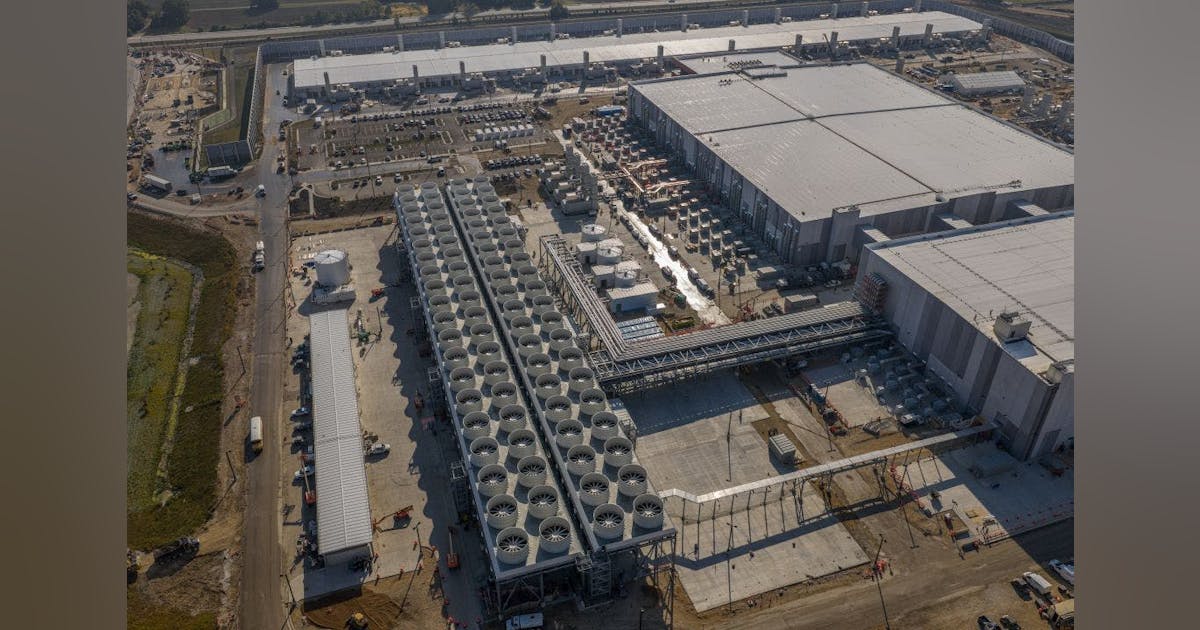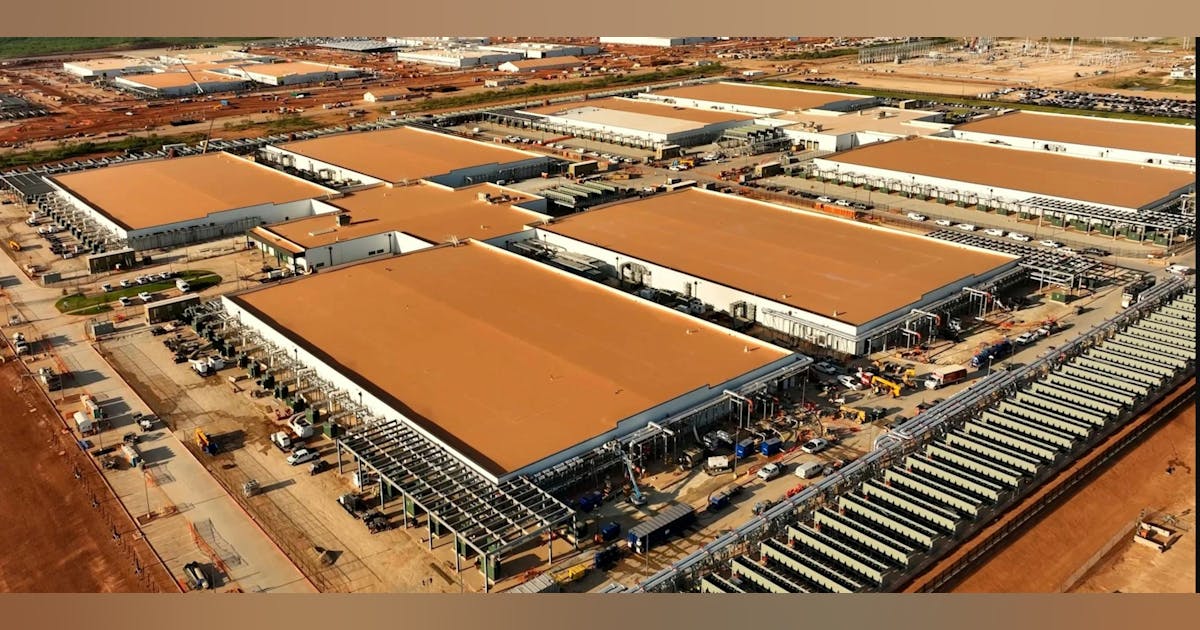
At one level, the challenge of meeting load growth from data centers is straightforward. After all, the task is fundamentally about quickly delivering a substantial amount of electrons to data centers to power cloud computing and artificial intelligence applications (AI).
The sheer scale of the demand for electricity is enormous, especially for a utility industry that spent decades forecasting flat or even declining load growth. For example, the U.S. Energy Information Administration’s (EIA) most recent short-term energy outlook (STEO) report forecast commercial electricity consumption to grow 3% in 2025 and 5% in 2026, a revision up from the annual increase of 2% EIA had previously projected.
“The revisions are most notable in the commercial sector, where data centers are an expanding source of demand,” the EIA wrote. A report last year by the Lawrence Berkeley National Laboratory (LBNL) reached similar conclusions, finding that the percentage of the nation’s electricity consumed by data centers could rise from 4.4% in 2023 to as much as 12% in 2028.
Complexity beyond scale
Utilities obviously want to serve data centers. However, the question for both utilities and data center developers is whether extremely large and reliable amounts of electricity can be provided within the required timeframe — speedy access to power is a key strategic imperative for data centers.
But the reality is that very little about meeting the enormous electricity demand from data centers is straightforward. For example, besides their sheer size, data centers have unique load characteristics, whether they’re being used to train new models or for inference, when trained AI models produce answers to questions users ask. Additionally, some data center loads are extremely variable and rapidly changing, with power demands fluctuating quickly as compute workloads shift.
This rapidly changing variability can put mechanical stress on a behind-the-meter or grid-connected but dedicated turbine. “That stress can cause a torsional pulsing or torsional vibration on the drive trains that could reduce the life of the shaft,” said Jason MacDowell, director of integrated systems for GE Vernova’s Consulting Services, referring to the long steel shaft connecting the turbine and the generator. “It could reduce the life of the equipment, and in extreme cases, if it’s not mitigated or if it’s not protected, it could even break the equipment.”
The menu of challenges data centers pose to utilities and the broad ecosystem of partners involved in delivering power also includes shifts between grid and backup power as well as the need for exceptional reliability — as high as 99.99% or even 99.999% of the time. It’s a task that requires careful and sophisticated planning capabilities able to weigh a staggering number of variables and uncertainties.
An integrated approach to planning
So how do utilities and developers navigate these and other challenges? The answer: with the help of sophisticated, integrated planning that accounts for not just grid conditions today, but for how those conditions will evolve over the next few decades. “Behind every data center, there’s a web of power decisions: where to build, how to connect, how to scale,” MacDowell said. “Proper modeling and well-designed architectures can future-proof your data center power system plan.”
Consider the seemingly straightforward decision about where to locate a data center. It would be simple to assume that the choice would come down to where a grid connection has sufficient capacity today. That’s clearly one factor to consider, but grid conditions also change, changes that can impact the reliability of power and the economics of a project.
Gene Hinkle, general manager, power economics for GE Vernova’s Consulting Services, recalls working with a data center developer trying to choose between two sites that looked similarly viable on paper. “When we ran our pricing and congestion forecast 15 years ahead, one site showed escalating costs that would have doubled their energy costs,” Hinkle recalled. “The other offered stable pricing and fewer downside risks. That insight turned what looked like a coin toss into a confident decision.”
Effective planning for the numerous power-related factors that can impact data centers requires a range of capabilities that analyze interdependent factors over decades — encompassing everything from data-driven infrastructure analysis to power flow dynamics, congestion risk, and locational marginal pricing.
Deep analysis extends beyond power availability. Hinkle recalls working with a large data center developer that was convinced it had the perfect site: good land, low-cost energy, and fiber connectivity nearby. GE Vernova’s risk modeling, however, identified flooding risk at the site and instead suggested an alternative location three miles away. “The move likely saved the client millions of dollars and years of delay,” Hinkle said. “Uncertainty is expensive.”
For integrated planning to be as valuable as possible, it should also be informed and guided by decades of expertise in utility and developer planning. The combination of sophisticated and holistic planning tools with deep industry expertise is particularly important because data center demand for reliable power is increasingly leading developers to consider on-site power solutions. “On one end of the spectrum, we’re working on totally islanded power system architectures where the data center, the substation, and the generation are completely isolated from the bulk grid,” said Yazan Al-Saif, director of integrated systems for data centers at GE Vernova’s Consulting Services.
This adds another layer of complexity that demands sophisticated planning able to answer challenging questions. How do you maintain grid stability under any scenario? Can on-site resources provide needed flexibility to the grid and, in certain cases, be used to take advantage of energy arbitrage opportunities? Even when utilities don’t especially welcome these on-site resources, they need to understand them and how they interact with grid operations.
The scale and pace of data center development is a fundamental shift for both utilities and developers on several levels. Many data center developers have little experience with power markets and utilities. Traditional utility planning is often hindered by the rapid growth in load and the tight timelines of data centers. For both developers and utilities to meet this moment requires planning tools and expertise capable of providing insights that inform confident long-term decisions. In an environment defined by competing demands and uncertainties, robust planning can make the difference between projects that succeed and those that fail.