Stay Ahead, Stay ONMINE

California Resources eyes ‘measured’ capex ramp on way to 12% production growth thanks to Berry buy

@import url(‘https://fonts.googleapis.com/css2?family=Inter:[email protected]&display=swap’); a { color: var(–color-primary-main); } .ebm-page__main h1, .ebm-page__main h2, .ebm-page__main h3, .ebm-page__main h4, .ebm-page__main h5, .ebm-page__main h6 { font-family: Inter; } body { line-height: 150%; letter-spacing: 0.025em; font-family: Inter; } button, .ebm-button-wrapper { font-family: Inter; } .label-style { text-transform: uppercase; color: var(–color-grey); font-weight: 600; font-size: 0.75rem; } .caption-style { font-size: 0.75rem; opacity: .6; […]

@import url(‘https://fonts.googleapis.com/css2?family=Inter:[email protected]&display=swap’);
a { color: var(–color-primary-main); }
.ebm-page__main h1, .ebm-page__main h2, .ebm-page__main h3, .ebm-page__main h4,
.ebm-page__main h5, .ebm-page__main h6 {
font-family: Inter;
}
body {
line-height: 150%;
letter-spacing: 0.025em;
font-family: Inter;
}
button, .ebm-button-wrapper { font-family: Inter; }
.label-style {
text-transform: uppercase;
color: var(–color-grey);
font-weight: 600;
font-size: 0.75rem;
}
.caption-style {
font-size: 0.75rem;
opacity: .6;
}

#onetrust-pc-sdk [id*=btn-handler], #onetrust-pc-sdk [class*=btn-handler] {
background-color: #c19a06 !important;
border-color: #c19a06 !important;
}
#onetrust-policy a, #onetrust-pc-sdk a, #ot-pc-content a {
color: #c19a06 !important;
}
#onetrust-consent-sdk #onetrust-pc-sdk .ot-active-menu {
border-color: #c19a06 !important;
}
#onetrust-consent-sdk #onetrust-accept-btn-handler,
#onetrust-banner-sdk #onetrust-reject-all-handler,
#onetrust-consent-sdk #onetrust-pc-btn-handler.cookie-setting-link {
background-color: #c19a06 !important;
border-color: #c19a06 !important;
}
#onetrust-consent-sdk
.onetrust-pc-btn-handler {
color: #c19a06 !important;
border-color: #c19a06 !important;
}

The leaders of California Resources Corp., Long Beach, plan to have the company’s total production average 152,000-157,000 boe/d in 2026, with each quarter expected to be in that range. That output would equate to an increase of more than 12% from the operator’s 137,000 boe/d during fourth-quarter 2025, due mostly to the mid-December acquisition of Berry Corp.

Fourth-quarter results folded in 14 days of Berry production and included 109,000 b/d of oil, with the company’s assets in the San Joaquin and Los Angeles basins accounting for 99,000 b/d of that total. The company dilled 31 new wells during the quarter and 76 in all of 2025—all in the San Joaquin—but that number will grow significantly to about 260 this year as state officials have resumed issuing permits following the passage last fall of a bill focused on Kern County production.

Speaking to analysts after CRC reported fourth-quarter net income of $12 million on $924 million in revenues, president and chief executive officer Francisco Leon and chief financial officer Clio Crespy said the goal is to manage 2026 output decline to roughly 0.5% per quarter while operating four rigs and putting to work $280-300 million in capital on drilling, completion, and workovers. That capex is down from $322 million last year and Crespy said spending will increase during 2026 in a “measured” way.

388041610 © Ahmad Efendi | Dreamstime.com

US, Israel, and Iran flags

<!–>

]–>

<!–>

March 2, 2026

]–>

“The program is intentionally weighted towards lower-risk development. It’s really focused on PUD inventory,” Crespy said on the Mar. 2 conference call. “We’ve got roughly two-thirds of our activity on sidetracks and one-third on new wells. That’s all supplemented by a very robust workover program. And the sequencing here is deliberate: more sidetracks and workovers in the first half and then we transition into new wells as permit inventory builds here throughout the year.”

The $709 million purchase of Berry also brought with it about 100,000 net acres in the Uinta basin in Utah and Colorado, an operation Jefferies analysts in September said Leon and his team might divest. Asked on Mar. 2 how he views that asset, Leon noted that there are “some promising benches” there and that the Uinta is a “high-quality option.” But he noted that his team is focused on efficient development of its California holdings that it thinks will create large returns on capital.

“Uinta will have to compete for capital in that way so we’ll continue to evaluate it,” he added. “Whether that’s scaling it through development or partnership or other value-creating pads, we don’t know yet. But we’re keeping all options on the table.”

Shares of California Resources (Ticker: CRC) rose more than 4% to $61.51 on Mar. 2 after the earnings report and conference call (and updates on the military conflict in the Gulf). Over the past 6 months, shares are up 25% and the operator’s market capitalization now stands at nearly $5.5 billion.


Shape
Shape
Stay Ahead

Explore More Insights

Stay ahead with more perspectives on cutting-edge power, infrastructure, energy,  bitcoin and AI solutions. Explore these articles to uncover strategies and insights shaping the future of industries.

Shape

Equinor, Wellesley Petroleum agree to HPHT exploration

Equinor and Wellesley Petroleum agreed to establish a joint exploration project aimed at increasing high-pressure, high-temperature (HPHT) exploration activity on the Norwegian Continental Shelf (NCS) and contributing to long-term production from existing infrastructure. Equinor will bring regional knowledge, subsurface experience, and infrastructure to the project, while Wellesley will focus on

Read More »

Occidental Petroleum, 1PointFive STRATOS DAC plant nears startup in Texas Permian basin

Occidental Petroleum Corp. and its subsidiary 1PointFive expect Phase 1 of the STRATOS direct air capture (DAC) plant in Texas’ Permian basin to come online in this year’s second quarter. In a post to LinkedIn, 1PointFive said Phase 1 “is in the final stage of startup” and that Phase 2, which incorporates learnings from research and development and Phase 1 construction activities, “will also begin commissioning in Q2, with operational ramp-up continuing through the rest of the year.” Once fully operational, STRATOS is designed to capture up to 500,000 tonnes/year (tpy) of CO2. As part of the US Environmental Protection Agency (EPA) Class VI permitting process and approval, it was reported that STRATOS is expected to include three wells to store about 722,000 tpy of CO2 in saline formations at a depth of about 4,400 ft. The company said a few activities before start-up remain, including ramping up remaining pellet reactors, completing calciner final commissioning in parallel, and beginning CO2 injection. Start-up milestones achieved include: Completed wet commissioning with water circulation. Received Class VI permits to sequester CO2. Ran CO2 compression system at design pressure. Added potassium hydroxide (KOH) to capture CO2 from the atmosphere. Building pellet inventory. Burners tested on calciner.  

Read More »

Brava Energia weighs Phase 3 at Atlanta to extend production plateau

Just 2 months after bringing its flagship Atlanta field onstream with the new FPSO Atlanta, Brazil’s independent operator Brava Energia SA is evaluating a potential third development phase that could add roughly 25 million bbl of reserves and help sustain peak production longer than originally planned. The Phase 3 project, still at an early technical and economic evaluation stage, focuses on the Atlanta Nordeste area; a separate, shallower reservoir discovered in 2006 by Shell’s 9-SHEL-19D-RJS well. According to André Fagundes, vice-president of research (Brazil) at Welligence Energy Analytics, Phase 2 has four wells still to be developed: two expected in 2027 and two in 2029. Phase 3 would involve drilling two additional wells in 2031, bringing total development to 12 producing wells. Until recently, full-field development was understood to comprise 10 wells, but Brava has since updated guidance to reflect a 12-well development concept. Atlanta field upside The primary objective is clear. “We believe its main objective is to extend the production plateau,” Fagundes said. Welligence estimates incremental recovery could reach 25 MMbbl, increasing the field’s overall recovery factor by roughly 1.5%. Lying outside Atlanta’s main Cretaceous reservoir, Atlanta Nordeste represents a genuine upside opportunity, Fagundes explained. The field benefits from strong natural aquifer support, and no water or gas injection is anticipated. Water-handling constraints that affected early production using the Petrojarl I—limited to 11,500 b/d of water treatment—are no longer a bottleneck. FPSO Atlanta can process up to 140,000 b/d of water. Reservoir performance to date has been solid, albeit with difficulties. Recurrent electric submersible pump (ESP) failures and processing limits on the previous FPSO complicated full validation of original reservoir models. With the new 50,000-b/d FPSO in operation since late 2024, reservoir deliverability has become the main constraint. Phase 3 wells would also use ESPs and require additional subsea

Read More »

California Resources eyes ‘measured’ capex ramp on way to 12% production growth thanks to Berry buy

@import url(‘https://fonts.googleapis.com/css2?family=Inter:[email protected]&display=swap’); a { color: var(–color-primary-main); } .ebm-page__main h1, .ebm-page__main h2, .ebm-page__main h3, .ebm-page__main h4, .ebm-page__main h5, .ebm-page__main h6 { font-family: Inter; } body { line-height: 150%; letter-spacing: 0.025em; font-family: Inter; } button, .ebm-button-wrapper { font-family: Inter; } .label-style { text-transform: uppercase; color: var(–color-grey); font-weight: 600; font-size: 0.75rem; } .caption-style { font-size: 0.75rem; opacity: .6; } #onetrust-pc-sdk [id*=btn-handler], #onetrust-pc-sdk [class*=btn-handler] { background-color: #c19a06 !important; border-color: #c19a06 !important; } #onetrust-policy a, #onetrust-pc-sdk a, #ot-pc-content a { color: #c19a06 !important; } #onetrust-consent-sdk #onetrust-pc-sdk .ot-active-menu { border-color: #c19a06 !important; } #onetrust-consent-sdk #onetrust-accept-btn-handler, #onetrust-banner-sdk #onetrust-reject-all-handler, #onetrust-consent-sdk #onetrust-pc-btn-handler.cookie-setting-link { background-color: #c19a06 !important; border-color: #c19a06 !important; } #onetrust-consent-sdk .onetrust-pc-btn-handler { color: #c19a06 !important; border-color: #c19a06 !important; } The leaders of California Resources Corp., Long Beach, plan to have the company’s total production average 152,000-157,000 boe/d in 2026, with each quarter expected to be in that range. That output would equate to an increase of more than 12% from the operator’s 137,000 boe/d during fourth-quarter 2025, due mostly to the mid-December acquisition of Berry Corp. Fourth-quarter results folded in 14 days of Berry production and included 109,000 b/d of oil, with the company’s assets in the San Joaquin and Los Angeles basins accounting for 99,000 b/d of that total. The company dilled 31 new wells during the quarter and 76 in all of 2025—all in the San Joaquin—but that number will grow significantly to about 260 this year as state officials have resumed issuing permits following the passage last fall of a bill focused on Kern County production. Speaking to analysts after CRC reported fourth-quarter net income of $12 million on $924 million in revenues, president and chief executive officer Francisco Leon and chief financial officer Clio Crespy said the goal is to manage 2026 output decline to roughly 0.5% per quarter while operating four rigs and

Read More »

Petro-Victory Energy spuds São João well in Brazil

@import url(‘https://fonts.googleapis.com/css2?family=Inter:[email protected]&display=swap’); a { color: var(–color-primary-main); } .ebm-page__main h1, .ebm-page__main h2, .ebm-page__main h3, .ebm-page__main h4, .ebm-page__main h5, .ebm-page__main h6 { font-family: Inter; } body { line-height: 150%; letter-spacing: 0.025em; font-family: Inter; } button, .ebm-button-wrapper { font-family: Inter; } .label-style { text-transform: uppercase; color: var(–color-grey); font-weight: 600; font-size: 0.75rem; } .caption-style { font-size: 0.75rem; opacity: .6; } #onetrust-pc-sdk [id*=btn-handler], #onetrust-pc-sdk [class*=btn-handler] { background-color: #c19a06 !important; border-color: #c19a06 !important; } #onetrust-policy a, #onetrust-pc-sdk a, #ot-pc-content a { color: #c19a06 !important; } #onetrust-consent-sdk #onetrust-pc-sdk .ot-active-menu { border-color: #c19a06 !important; } #onetrust-consent-sdk #onetrust-accept-btn-handler, #onetrust-banner-sdk #onetrust-reject-all-handler, #onetrust-consent-sdk #onetrust-pc-btn-handler.cookie-setting-link { background-color: #c19a06 !important; border-color: #c19a06 !important; } #onetrust-consent-sdk .onetrust-pc-btn-handler { color: #c19a06 !important; border-color: #c19a06 !important; } Petro-Victory Energy Corp. has spudded the SJ‑12 well at São João field in Barreirinhas basin, on the Brazilian equatorial margin, Maranhão.  Drilling and testing SJ‑12 is aimed at proving enough gas can be produced to sell locally. The well forms part of the single non‑associated gas well commitment under a memorandum of understanding signed in 2024 with Enava. São João contains 50.1 bcf (1.4 billion cu m) non‑associated gas resources. Petro‑Victory 100% owns and operates São João field.

Read More »

Opinion Poll: Strait of Hormuz disruptions

@import url(‘https://fonts.googleapis.com/css2?family=Inter:[email protected]&display=swap’); a { color: var(–color-primary-main); } .ebm-page__main h1, .ebm-page__main h2, .ebm-page__main h3, .ebm-page__main h4, .ebm-page__main h5, .ebm-page__main h6 { font-family: Inter; } body { line-height: 150%; letter-spacing: 0.025em; font-family: Inter; } button, .ebm-button-wrapper { font-family: Inter; } .label-style { text-transform: uppercase; color: var(–color-grey); font-weight: 600; font-size: 0.75rem; } .caption-style { font-size: 0.75rem; opacity: .6; } #onetrust-pc-sdk [id*=btn-handler], #onetrust-pc-sdk [class*=btn-handler] { background-color: #c19a06 !important; border-color: #c19a06 !important; } #onetrust-policy a, #onetrust-pc-sdk a, #ot-pc-content a { color: #c19a06 !important; } #onetrust-consent-sdk #onetrust-pc-sdk .ot-active-menu { border-color: #c19a06 !important; } #onetrust-consent-sdk #onetrust-accept-btn-handler, #onetrust-banner-sdk #onetrust-reject-all-handler, #onetrust-consent-sdk #onetrust-pc-btn-handler.cookie-setting-link { background-color: #c19a06 !important; border-color: #c19a06 !important; } #onetrust-consent-sdk .onetrust-pc-btn-handler { color: #c19a06 !important; border-color: #c19a06 !important; } 388041610 © Ahmad Efendi | Dreamstime.com US, Israel, and Iran flags <!–> ]–> <!–> –> Oil & Gas Journal wants to hear your thoughts about how the collaborative strike on Iran by the US and Israel and disruptions through the Strait of Hormuz may impact oil prices.  

Read More »

Iran war

@import url(‘https://fonts.googleapis.com/css2?family=Inter:[email protected]&display=swap’); a { color: var(–color-primary-main); } .ebm-page__main h1, .ebm-page__main h2, .ebm-page__main h3, .ebm-page__main h4, .ebm-page__main h5, .ebm-page__main h6 { font-family: Inter; } body { line-height: 150%; letter-spacing: 0.025em; font-family: Inter; } button, .ebm-button-wrapper { font-family: Inter; } .label-style { text-transform: uppercase; color: var(–color-grey); font-weight: 600; font-size: 0.75rem; } .caption-style { font-size: 0.75rem; opacity: .6; } #onetrust-pc-sdk [id*=btn-handler], #onetrust-pc-sdk [class*=btn-handler] { background-color: #c19a06 !important; border-color: #c19a06 !important; } #onetrust-policy a, #onetrust-pc-sdk a, #ot-pc-content a { color: #c19a06 !important; } #onetrust-consent-sdk #onetrust-pc-sdk .ot-active-menu { border-color: #c19a06 !important; } #onetrust-consent-sdk #onetrust-accept-btn-handler, #onetrust-banner-sdk #onetrust-reject-all-handler, #onetrust-consent-sdk #onetrust-pc-btn-handler.cookie-setting-link { background-color: #c19a06 !important; border-color: #c19a06 !important; } #onetrust-consent-sdk .onetrust-pc-btn-handler { color: #c19a06 !important; border-color: #c19a06 !important; } <!–> –> <!–> ]–> <!–> –> You’ll need free site-access membership to view certain articles below. If you are not already registered with Oil & Gas Journal, sign up now for free. For Offshore articles, sign up here for free. New content will be added as it becomes available.  Oil & Gas Journal content <!–> Economics & Markets –> 26184925 © Robert Hale | Dreamstime.com <!–> ]–> <!–> When the market opened after the initial strike on Iran, oil prices traded $75/bbl on the Open, a $7/bbl jump from Friday’s High, indicating a higher risk premium as the market… –> March 6, 2026 96633437 © Titoonz | Dreamstime.com <!–> ]–> <!–> Broader infrastructure risks are emerging as regional attacks threaten production in Qatar, Saudi Arabia, and Iraq, while Europe and Asia face heightened vulnerability due to … –> March 3, 2026 387409148 © Clare Jackson | Dreamstime.com <!–> ]–> <!–> Despite initial market volatility, oil storage levels and pre-positioned supplies have mitigated immediate price shocks. However, ongoing tensions and insurance issues continue… –> March 2, 2026 220736519 © Pavel Muravev | Dreamstime.com <!–> ]–> <!–> About 20 million b/d of

Read More »

Data center new builds diminish even as demand rises

However, the report said, development in more remote regions “will remain challenging” due to a shortage of skilled labor such as mechanics, electricians, plumbers, laborers and construction workers. Market shift from abundance to constrained Sanchit Vir Gogia, chief analyst at Greyhound Research, said Wednesday that enterprises must assume, as the report suggests, that there will be elevated pricing for North American data center capacity through at least 2029, and possibly longer. “Vacancy at or near 1%- 2% is not a temporary imbalance,” he said. It is a “signal that supply elasticity has broken. When over 90% of capacity under construction is already pre-committed, new entrants are negotiating from a position of structural scarcity, not market equilibrium.” “Energy intensity is rising because AI workloads are more power dense,” he pointed out. “So even if an enterprise does not expand its footprint, the cost per deployed workload can still increase because the electrical envelope changes.” His advice to enterprises: expansion is viable, but only if they diversify beyond legacy Tier 1 hubs, secure long term expansion rights early, negotiate structured pricing protection, and “optimize workload placement with ruthless clarity.” But, he added, “it is not viable if enterprises assume that incremental megawatts will remain readily available in the same region at roughly similar economics.” John Annand, practice lead at Info-Tech Research, said that, to compensate, his firm’s client base is increasingly open to moving the right workloads to private clouds or on-premises. “The shift is nuanced, not ideological,” he said, and is usually financially motivated and “framed as hybrid optimization, not public cloud reversal.”  

Read More »

Why network bandwidth matters a lot

One interesting point about VPNs is raised by fully a third of capacity-hungry enterprises: SD-WAN is the cheapest and easiest way to increase capacity to remote sites. Yes, service reliability of broadband Internet access for these sites is highly variable, so enterprises say they need to pilot test in a target area to determine whether even business-broadband Internet is reliable enough, but if it is, high capacity is both available and cheap. Clearly data center networking is taking the prime position in enterprise network planning, even without any contribution from AI. Will AI contribute? Enterprises generally believe that self-hosted AI will indeed require more network bandwidth, but again think this will be largely confined to the data center. AI, they say, has a broader and less predictable appetite for data, and business applications involving the data that’s subject to governance, or that’s already data-center hosted, are likely to be hosted proximate to the data. That was true for traditional software, and it’s likely just as true for AI. Yes, but…today, three times as many enterprises say that they’d use AI needs simply to boost justification for capacity expansion as think they currently need it. AI hype has entered, and perhaps even dominates, capital network project justifications. These capacity trends don’t impact enterprises alone, they also reshape the equipment space. Only 9% of enterprises say they have invested in white-box devices to build capacity and data center configuration flexibility, but the number that say they would evaluate them in 2026 is double that. This may be what’s behind Cisco’s decision to push its new G300 chip. AI’s role in capital project justifications may also be why Cisco positions the G300 so aggressively as an AI facilitator. Make no mistake, though; this is really all about capacity and QoE, even for AI.

Read More »

JLL: Hyperscale and AI Demand Push North American Data Centers Toward Industrial Scale

JLL’s North America Data Center Report Year-End 2025 makes a clear argument that the sector is no longer merely expanding but has shifted into a phase of industrial-scale acceleration driven by hyperscalers, AI platforms, and capital markets that increasingly treat digital infrastructure as core, bond-like collateral. The report’s central thesis is straightforward. Structural demand has overwhelmed traditional real estate cycles. JLL supports that claim with a set of reinforcing signals: Vacancy remains pinned near zero. Most new supply is pre-leased years ahead. Rents continue to climb. Debt markets remain highly liquid. Investors are engineering new financial structures to sustain growth. Author Andrew Batson notes that JLL’s Data Center Solutions team significantly expanded its methodology for this edition, incorporating substantially more hyperscale and owner-occupied capacity along with more than 40 additional markets. The subtitle — “The data center sector shifts into hyperdrive” — serves as an apt one-line summary of the report’s posture. The methodological change is not cosmetic. By incorporating hyper-owned infrastructure, total market size increases, vacancy compresses, and historical time series shift accordingly. JLL is explicit that these revisions reflect improved visibility into the market rather than a change in underlying fundamentals; and, if anything, suggest prior reports understated the sector’s true scale. The Market in Three Words: Tight, Pre-Leased, Relentless The report’s key highlights page serves as an executive brief for investors, offering a concise snapshot of market conditions that remain historically constrained. Vacancy stands at just 1%, unchanged year over year, while 92% of capacity currently under construction is already pre-leased. At the same time, geographic diversification continues to accelerate, with 64% of new builds now occurring in so-called frontier markets. JLL also notes that Texas, when viewed as a unified market, could surpass Northern Virginia as the top data center market by 2030, even as capital

Read More »

7×24 Exchange’s Dennis Cronin on the Data Center Workforce Crisis: The Talent Cliff Is Already Here

The data center industry has spent the past two years obsessing over power constraints, AI density, and supply chain pressure. But according to longtime mission critical leader Dennis Cronin, the sector’s most consequential bottleneck may be far more human. In a recent episode of the Data Center Frontier Show Podcast, Cronin — a founding member of 7×24 Exchange International and board member of the Mission Critical Global Alliance (MCGA) — delivered a stark message: the workforce “talent cliff” the industry keeps discussing as a future risk is already impacting operations today. A Million-Job Gap Emerging Cronin’s assessment reframes the workforce conversation from a routine labor shortage to what he describes as a structural and demographic challenge. Based on recent analysis of open roles, he estimates the industry is currently short between 467,000 and 498,000 workers across core operational positions including facilities managers, operations engineers, electricians, generator technicians, and HVAC specialists. Layer in emerging roles tied to AI infrastructure, sustainability, and cyber-physical security, and the potential demand rises to roughly one million jobs. “The coming talent cliff is not coming,” Cronin said. “It’s here, here and now.” With data center capacity expanding at roughly 30% annually, the workforce pipeline is not keeping pace with physical buildout. The Five-Year Experience Trap One of the industry’s most persistent self-inflicted wounds, Cronin argues, is the widespread requirement for five years of experience in roles that are effectively entry level. The result is a closed-loop hiring dynamic: New workers can’t get hired without experience They can’t gain experience without being hired Operators end up poaching from each other Workers may benefit from the resulting 10–20% salary jumps, but the overall talent pool remains stagnant. “It’s not helping us grow the industry,” Cronin said. In a market defined by rapid expansion and increasing system complexity, that

Read More »

Aeroderivative Turbines Move to the Center of AI Data Center Power Strategy

From “Backup” to “Bridging” to Behind-the-Meter Power Plants The most important shift is conceptual: these systems are increasingly blurring the boundary between emergency backup and primary power supply. Traditionally, data center electrical architecture has been clearly tiered: UPS (seconds to minutes) to ride through utility disturbances and generator start. Diesel gensets (minutes to hours or days) for extended outages. Utility grid as the primary power source. What’s changing is the rise of bridging power:  generation deployed to energize a site before the permanent grid connection is ready, or before sufficient utility capacity becomes available. Providers such as APR Energy now explicitly market turbine-based solutions to data centers seeking behind-the-meter capacity while awaiting utility build-out. That framing matters because it fundamentally changes expected runtime. A generator that operates for a few hours per year is one regulatory category. A turbine that runs continuously for weeks or months while a campus ramps is something very different; and it is drawing increased scrutiny from regulators who are beginning to treat these installations as material generation assets rather than temporary backup systems. The near-term driver is straightforward. AI workloads are arriving faster than grid infrastructure can keep pace. Data Center Frontier and other industry observers have documented the growing scramble for onsite generation as interconnection queues lengthen and critical equipment lead times expand. Mainstream financial and business media have taken notice. The Financial Times has reported on data centers turning to aeroderivative turbines and diesel fleets to bypass multi-year power delays. Reuters has likewise covered large gas-turbine-centric strategies tied to hyperscale campuses, underscoring how quickly the co-located generation model is moving into the mainstream. At the same time, demand pressure is tightening turbine supply chains. Industry reporting points to extended waits for new units, one reason repurposed engine cores and mobile aeroderivative packages are gaining

Read More »

Cooling’s New Reality: It’s Not Air vs. Liquid Anymore. It’s Architecture.

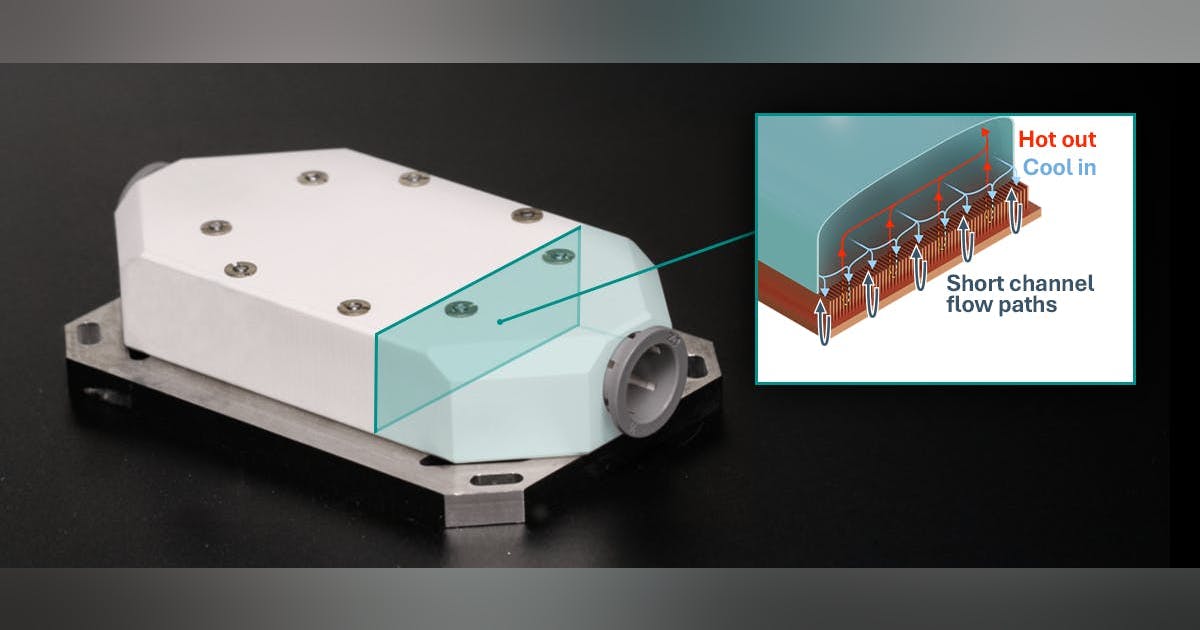
By early 2026, the data center cooling conversation has started to sound less like a product catalog and more like a systems engineering summit. The old framing – air cooling versus liquid cooling – still matters, but it increasingly misses the point. AI-era facilities are being defined by thermal constraints that run from chip-level cold plates to facility heat rejection, with critical decisions now shaped by pumping power, fluid selection, reliability under ambient extremes, water availability, and manufacturing throughput. That full-stack shift is written all over a grab bag of recent cooling announcements. On one end of the spectrum we see a Department of Energy-funded breakthrough aimed directly at next-generation GPU heat flux. On the other, it’s OEM product launches built to withstand –20°F to 140°F operating conditions and recover full cooling capacity within minutes of a power interruption. In between we find a major acquisition move for advanced liquid cooling IP, a manufacturing expansion that more than doubles footprint, and the quiet rise of refrigerants and heat-transfer fluids as design-level considerations. What’s emerging is a new reality. Cooling is becoming one of the primary constraints on AI deployment technically, economically, and geographically. The winners will be the players that can integrate the whole stack and scale it. 1) The Chip-level Arms Race: Single-phase Fights for More Runway The most “pure engineering” signal in this news batch comes from HRL Laboratories, which on Feb. 24, 2026 unveiled details of a single-phase direct liquid cooling approach called Low-Chill™. HRL’s framing is pointed: the industry wants higher GPU and rack power densities, but many operators are wary of the cost and operational complexity of two-phase cooling. HRL says Low-Chill was developed under the U.S. Department of Energy’s ARPA-E COOLERCHIPS program, and claims a leap that goes straight at the bottleneck. It can increase

Read More »

Microsoft will invest $80B in AI data centers in fiscal 2025

And Microsoft isn’t the only one that is ramping up its investments into AI-enabled data centers. Rival cloud service providers are all investing in either upgrading or opening new data centers to capture a larger chunk of business from developers and users of large language models (LLMs).  In a report published in October 2024, Bloomberg Intelligence estimated that demand for generative AI would push Microsoft, AWS, Google, Oracle, Meta, and Apple would between them devote $200 billion to capex in 2025, up from $110 billion in 2023. Microsoft is one of the biggest spenders, followed closely by Google and AWS, Bloomberg Intelligence said. Its estimate of Microsoft’s capital spending on AI, at $62.4 billion for calendar 2025, is lower than Smith’s claim that the company will invest $80 billion in the fiscal year to June 30, 2025. Both figures, though, are way higher than Microsoft’s 2020 capital expenditure of “just” $17.6 billion. The majority of the increased spending is tied to cloud services and the expansion of AI infrastructure needed to provide compute capacity for OpenAI workloads. Separately, last October Amazon CEO Andy Jassy said his company planned total capex spend of $75 billion in 2024 and even more in 2025, with much of it going to AWS, its cloud computing division.

Read More »

John Deere unveils more autonomous farm machines to address skill labor shortage

Join our daily and weekly newsletters for the latest updates and exclusive content on industry-leading AI coverage. Learn More Self-driving tractors might be the path to self-driving cars. John Deere has revealed a new line of autonomous machines and tech across agriculture, construction and commercial landscaping. The Moline, Illinois-based John Deere has been in business for 187 years, yet it’s been a regular as a non-tech company showing off technology at the big tech trade show in Las Vegas and is back at CES 2025 with more autonomous tractors and other vehicles. This is not something we usually cover, but John Deere has a lot of data that is interesting in the big picture of tech. The message from the company is that there aren’t enough skilled farm laborers to do the work that its customers need. It’s been a challenge for most of the last two decades, said Jahmy Hindman, CTO at John Deere, in a briefing. Much of the tech will come this fall and after that. He noted that the average farmer in the U.S. is over 58 and works 12 to 18 hours a day to grow food for us. And he said the American Farm Bureau Federation estimates there are roughly 2.4 million farm jobs that need to be filled annually; and the agricultural work force continues to shrink. (This is my hint to the anti-immigration crowd). John Deere’s autonomous 9RX Tractor. Farmers can oversee it using an app. While each of these industries experiences their own set of challenges, a commonality across all is skilled labor availability. In construction, about 80% percent of contractors struggle to find skilled labor. And in commercial landscaping, 86% of landscaping business owners can’t find labor to fill open positions, he said. “They have to figure out how to do

Read More »

2025 playbook for enterprise AI success, from agents to evals

Join our daily and weekly newsletters for the latest updates and exclusive content on industry-leading AI coverage. Learn More 2025 is poised to be a pivotal year for enterprise AI. The past year has seen rapid innovation, and this year will see the same. This has made it more critical than ever to revisit your AI strategy to stay competitive and create value for your customers. From scaling AI agents to optimizing costs, here are the five critical areas enterprises should prioritize for their AI strategy this year. 1. Agents: the next generation of automation AI agents are no longer theoretical. In 2025, they’re indispensable tools for enterprises looking to streamline operations and enhance customer interactions. Unlike traditional software, agents powered by large language models (LLMs) can make nuanced decisions, navigate complex multi-step tasks, and integrate seamlessly with tools and APIs. At the start of 2024, agents were not ready for prime time, making frustrating mistakes like hallucinating URLs. They started getting better as frontier large language models themselves improved. “Let me put it this way,” said Sam Witteveen, cofounder of Red Dragon, a company that develops agents for companies, and that recently reviewed the 48 agents it built last year. “Interestingly, the ones that we built at the start of the year, a lot of those worked way better at the end of the year just because the models got better.” Witteveen shared this in the video podcast we filmed to discuss these five big trends in detail. Models are getting better and hallucinating less, and they’re also being trained to do agentic tasks. Another feature that the model providers are researching is a way to use the LLM as a judge, and as models get cheaper (something we’ll cover below), companies can use three or more models to

Read More »

OpenAI’s red teaming innovations define new essentials for security leaders in the AI era

Join our daily and weekly newsletters for the latest updates and exclusive content on industry-leading AI coverage. Learn More OpenAI has taken a more aggressive approach to red teaming than its AI competitors, demonstrating its security teams’ advanced capabilities in two areas: multi-step reinforcement and external red teaming. OpenAI recently released two papers that set a new competitive standard for improving the quality, reliability and safety of AI models in these two techniques and more. The first paper, “OpenAI’s Approach to External Red Teaming for AI Models and Systems,” reports that specialized teams outside the company have proven effective in uncovering vulnerabilities that might otherwise have made it into a released model because in-house testing techniques may have missed them. In the second paper, “Diverse and Effective Red Teaming with Auto-Generated Rewards and Multi-Step Reinforcement Learning,” OpenAI introduces an automated framework that relies on iterative reinforcement learning to generate a broad spectrum of novel, wide-ranging attacks. Going all-in on red teaming pays practical, competitive dividends It’s encouraging to see competitive intensity in red teaming growing among AI companies. When Anthropic released its AI red team guidelines in June of last year, it joined AI providers including Google, Microsoft, Nvidia, OpenAI, and even the U.S.’s National Institute of Standards and Technology (NIST), which all had released red teaming frameworks. Investing heavily in red teaming yields tangible benefits for security leaders in any organization. OpenAI’s paper on external red teaming provides a detailed analysis of how the company strives to create specialized external teams that include cybersecurity and subject matter experts. The goal is to see if knowledgeable external teams can defeat models’ security perimeters and find gaps in their security, biases and controls that prompt-based testing couldn’t find. What makes OpenAI’s recent papers noteworthy is how well they define using human-in-the-middle

Read More »