Stay Ahead, Stay ONMINE

South Korea’s hottest new bachelors are chip workers

EXECUTIVE SUMMARY Baek, a 35-year-old manager at the South Korean semiconductor titan SK Hynix, was enrolled in Sunoo, a matchmaking company based in Seoul, a year ago. In a move typical of anxious South Korean parents, his mother signed him up, hoping to find a good wife for her son. Lately, says Baek (who asked to be referred to by his last name to protect his privacy), he and his coworkers are having better luck finding dates than they used to, perhaps because of the dazzling bonuses they just got. Flush with eye-popping profits from the AI chip boom, SK Hynix struck a landmark deal last year with its labor union to pay out 10% of operating profits to employees, which translates to an extra $476,000 per employee this year. A similar agreement and sizable lump sum followed for Samsung workers this May. With their newfound wealth, chip workers like Baek have become the most sought-after bachelors and bachelorettes in South Korea. “I have a coworker who’s perpetually going on blind dates, and he’s been getting so many recently,” says Baek. “For the past few months, I’ve been getting many blind dates too, perhaps because of the bonuses I got.” Lately, young South Koreans joke online that the best outfit to wear on a blind date is an SK Hynix uniform.  The AI chip boom is changing the social fabric of South Korea by minting a new elite of “silicon-collar” workers earning about 20 times as much as the average South Korean. Although it’s helping some chip workers to find relationships, it’s also fueling fears of a deepening wealth disparity—and a loud public debate about inequality. Love in the time of chips South Korea is the epicenter of the chip boom fueling the AI race. Samsung and SK Hynix supply the vast majority of the world’s high-bandwidth memory (HBM) chips, which power Nvidia’s AI accelerators—the GPUs used to train AI models. As AI companies spend hundreds of billions of dollars on building data centers around the world, demand for HBMs is rising beyond what suppliers can keep up with, driving their prices to unprecedented levels. Samsung and SK Hynix are raking in record profits as a result.  South Korea’s economy now orbits the two chip giants. In May, both companies topped $1 trillion in market value. And chip exports helped fuel a 1.7% surge in South Korea’s gross domestic product in the first quarter of 2026. South Korea’s main equity index, Kospi, has nearly tripled over the past year, becoming the best-performing market in the world. Swimming in cash, chip workers are going on shopping sprees in department stores near the “semicon belt” fabs—splurging on everything from lavish furniture and electronic appliances to jewelry and watches. They’re also snapping up homes near the commuter-shuttle routes that ferry workers to campus. And they’re shelling out for matchmakers. “Quite a lot of people ask me if I can introduce them to chip workers,” says Lee Sung-mi, a matchmaker at Sunoo, who has been playing Cupid for chip workers for years. “In fact, people who once rejected them are asking to be matched with them again, now that their salaries and bonuses have shot so far above what everyone else earns.” One woman who lives in Gangnam, a ritzy district in Seoul lined with luxury high-rises and designer boutiques, previously turned down a chip worker at SK Hynix because his fab was too far out in Icheon, a rural city about 50 miles southeast of Seoul that’s dotted with rice farms and manufacturing plants. But in May, she asked her matchmaker to set them up again. They’ve now been dating for a month.                                                                                                                                                                                                                                                                                                                                                                                                                              In South Korea, matchmaking companies evaluate their clients on a long list of criteria such as education, job, income, looks, and family background, including whether their aging parents have saved enough for retirement. In an economy where housing prices and child care costs are soaring, competition for jobs is fierce, and the social safety net is thin, a good job is the ultimate dating credential—all the more coveted at a time when many young South Koreans are forgoing marriage and children altogether, seeing family life as an unaffordable dream. Every client at Sunoo gets a spouse rating, determined by an algorithm that assigns scores for each criterion. Since their hefty bonuses were announced, the job ratings of Samsung employees have risen from 80 to 84, while those of SK Hynix employees climbed from 78 to 82. Scores above 90 are reserved for doctors and lawyers. Long prized as paragons of prestige and wealth, they’re now close to being overtaken by chip workers. A score of 99, the highest possible rating, is earmarked for heads of state.   Their new status is reshaping how chip workers themselves approach dating. “Chip workers from Samsung and SK Hynix are enrolling in our services because they feel more financially ready,” says Lee. “They’re also becoming pickier, as they feel like they’re now in a good position. The women want to meet men with higher incomes and better jobs, and the men want to meet younger and better-looking women with better jobs.”  An SK Hynix engineer in her 40s, who was once desperate to get married as soon as possible, started turning down men she would’ve dated before the chip boom. Lately, showered with more matches, she’s been sifting through her suitors more carefully. “She now has peace of mind and wants to take her time to meet someone better,” says Lee. A mixed blessing While chip workers enjoy the fruits of their labor, the bonus bonanza is stoking anxieties among other South Koreans. “When wealth disparity is no longer a mere difference of income but, rather, a difference in identity … it can fuel social conflict,” says Se-eun Jung, an economist at Inha University.  Earlier this month, the Bank of Korea warned that the chip boom will create a “K-shaped” economy, where a handful of workers race ahead while everyone else falls behind. The windfall, the bank said, is flowing to high income earners and then barely trickling out to the broader economy. Such polarization could erode people’s motivation to work by narrowing the path to upward mobility, it cautioned.  Workers in other industries are venting online about feeling demoralized by the ballooning wealth gap. “The one-billion-won ($650,000) bonuses have crushed my motivation to work. I have no energy when I teach,” an employee of the Seoul Metropolitan Office of Education wrote on Blind, an app where employees can discuss their workplaces anonymously. Others are giving up the job hunt, lamenting that years of working at a small company could never match a year’s bonus at Samsung.  In a Facebook post in May, presidential policy chief Kim Yong-beom proposed paying an “AI dividend” to citizens by taxing AI profits. The idea sparked a heated public debate over whether the government should redistribute gains from the chip boom. Some argue that the industry is indebted to the society that has educated its engineers, subsidized its infrastructure, and provided tax credits. Others counter that the profits are already being shared with the public as stocks. Then there’s the question of how long this new social class will last. The semiconductor industry is notoriously cyclical; AI spending may cool, or rival chipmakers could catch up. There’s also the risk that chip workers will be replaced by automation. Samsung announced in March that it plans to fully automate its fabs by 2030, drawing backlash from chip workers.  Although he doesn’t know how long the boom will last, chip workers like Baek are riding high. “These days, we say we want to work hard and bury our bones here [at SK Hynix],” he says. “And I hope I can find [a wife] similar to me.”

Baek, a 35-year-old manager at the South Korean semiconductor titan SK Hynix, was enrolled in Sunoo, a matchmaking company based in Seoul, a year ago. In a move typical of anxious South Korean parents, his mother signed him up, hoping to find a good wife for her son.

Lately, says Baek (who asked to be referred to by his last name to protect his privacy), he and his coworkers are having better luck finding dates than they used to, perhaps because of the dazzling bonuses they just got. Flush with eye-popping profits from the AI chip boom, SK Hynix struck a landmark deal last year with its labor union to pay out 10% of operating profits to employees, which translates to an extra $476,000 per employee this year. A similar agreement and sizable lump sum followed for Samsung workers this May.

With their newfound wealth, chip workers like Baek have become the most sought-after bachelors and bachelorettes in South Korea. “I have a coworker who’s perpetually going on blind dates, and he’s been getting so many recently,” says Baek. “For the past few months, I’ve been getting many blind dates too, perhaps because of the bonuses I got.”

Lately, young South Koreans joke online that the best outfit to wear on a blind date is an SK Hynix uniform

The AI chip boom is changing the social fabric of South Korea by minting a new elite of “silicon-collar” workers earning about 20 times as much as the average South Korean. Although it’s helping some chip workers to find relationships, it’s also fueling fears of a deepening wealth disparity—and a loud public debate about inequality.

Love in the time of chips

South Korea is the epicenter of the chip boom fueling the AI race. Samsung and SK Hynix supply the vast majority of the world’s high-bandwidth memory (HBM) chips, which power Nvidia’s AI accelerators—the GPUs used to train AI models. As AI companies spend hundreds of billions of dollars on building data centers around the world, demand for HBMs is rising beyond what suppliers can keep up with, driving their prices to unprecedented levels. Samsung and SK Hynix are raking in record profits as a result. 

South Korea’s economy now orbits the two chip giants. In May, both companies topped $1 trillion in market value. And chip exports helped fuel a 1.7% surge in South Korea’s gross domestic product in the first quarter of 2026. South Korea’s main equity index, Kospi, has nearly tripled over the past year, becoming the best-performing market in the world.

Swimming in cash, chip workers are going on shopping sprees in department stores near the “semicon belt” fabs—splurging on everything from lavish furniture and electronic appliances to jewelry and watches. They’re also snapping up homes near the commuter-shuttle routes that ferry workers to campus. And they’re shelling out for matchmakers.

“Quite a lot of people ask me if I can introduce them to chip workers,” says Lee Sung-mi, a matchmaker at Sunoo, who has been playing Cupid for chip workers for years. “In fact, people who once rejected them are asking to be matched with them again, now that their salaries and bonuses have shot so far above what everyone else earns.”

One woman who lives in Gangnam, a ritzy district in Seoul lined with luxury high-rises and designer boutiques, previously turned down a chip worker at SK Hynix because his fab was too far out in Icheon, a rural city about 50 miles southeast of Seoul that’s dotted with rice farms and manufacturing plants. But in May, she asked her matchmaker to set them up again. They’ve now been dating for a month.                                                                                                                                                                                                                                                                                                                                                                                                                             

In South Korea, matchmaking companies evaluate their clients on a long list of criteria such as education, job, income, looks, and family background, including whether their aging parents have saved enough for retirement. In an economy where housing prices and child care costs are soaring, competition for jobs is fierce, and the social safety net is thin, a good job is the ultimate dating credential—all the more coveted at a time when many young South Koreans are forgoing marriage and children altogether, seeing family life as an unaffordable dream.

Every client at Sunoo gets a spouse rating, determined by an algorithm that assigns scores for each criterion. Since their hefty bonuses were announced, the job ratings of Samsung employees have risen from 80 to 84, while those of SK Hynix employees climbed from 78 to 82. Scores above 90 are reserved for doctors and lawyers. Long prized as paragons of prestige and wealth, they’re now close to being overtaken by chip workers. A score of 99, the highest possible rating, is earmarked for heads of state.  

Their new status is reshaping how chip workers themselves approach dating. “Chip workers from Samsung and SK Hynix are enrolling in our services because they feel more financially ready,” says Lee. “They’re also becoming pickier, as they feel like they’re now in a good position. The women want to meet men with higher incomes and better jobs, and the men want to meet younger and better-looking women with better jobs.” 

An SK Hynix engineer in her 40s, who was once desperate to get married as soon as possible, started turning down men she would’ve dated before the chip boom. Lately, showered with more matches, she’s been sifting through her suitors more carefully. “She now has peace of mind and wants to take her time to meet someone better,” says Lee.

A mixed blessing

While chip workers enjoy the fruits of their labor, the bonus bonanza is stoking anxieties among other South Koreans. “When wealth disparity is no longer a mere difference of income but, rather, a difference in identity … it can fuel social conflict,” says Se-eun Jung, an economist at Inha University. 

Earlier this month, the Bank of Korea warned that the chip boom will create a “K-shaped” economy, where a handful of workers race ahead while everyone else falls behind. The windfall, the bank said, is flowing to high income earners and then barely trickling out to the broader economy. Such polarization could erode people’s motivation to work by narrowing the path to upward mobility, it cautioned. 

Workers in other industries are venting online about feeling demoralized by the ballooning wealth gap. “The one-billion-won ($650,000) bonuses have crushed my motivation to work. I have no energy when I teach,” an employee of the Seoul Metropolitan Office of Education wrote on Blind, an app where employees can discuss their workplaces anonymously. Others are giving up the job hunt, lamenting that years of working at a small company could never match a year’s bonus at Samsung. 

In a Facebook post in May, presidential policy chief Kim Yong-beom proposed paying an “AI dividend” to citizens by taxing AI profits. The idea sparked a heated public debate over whether the government should redistribute gains from the chip boom. Some argue that the industry is indebted to the society that has educated its engineers, subsidized its infrastructure, and provided tax credits. Others counter that the profits are already being shared with the public as stocks.

Then there’s the question of how long this new social class will last. The semiconductor industry is notoriously cyclical; AI spending may cool, or rival chipmakers could catch up. There’s also the risk that chip workers will be replaced by automation. Samsung announced in March that it plans to fully automate its fabs by 2030, drawing backlash from chip workers. 

Although he doesn’t know how long the boom will last, chip workers like Baek are riding high. “These days, we say we want to work hard and bury our bones here [at SK Hynix],” he says. “And I hope I can find [a wife] similar to me.”

Shape
Shape
Stay Ahead

Explore More Insights

Stay ahead with more perspectives on cutting-edge power, infrastructure, energy,  bitcoin and AI solutions. Explore these articles to uncover strategies and insights shaping the future of industries.

Shape

Bharat Petroleum awards contract for Bina refinery expansion

Bharat Petroleum Corp. Ltd. (BPCL) has let a contract to Duncan Engineering Ltd. (DEL) for supply of valves as part of the operator’s project to expand production of petrochemicals at its 7.8-million tonne/year (tpy) refinery at Bina, Madya Pradesh. As part the late-June contract award, DEL will deliver its critical

Read More »

Neste plans 9-week turnaround at Porvoo refinery

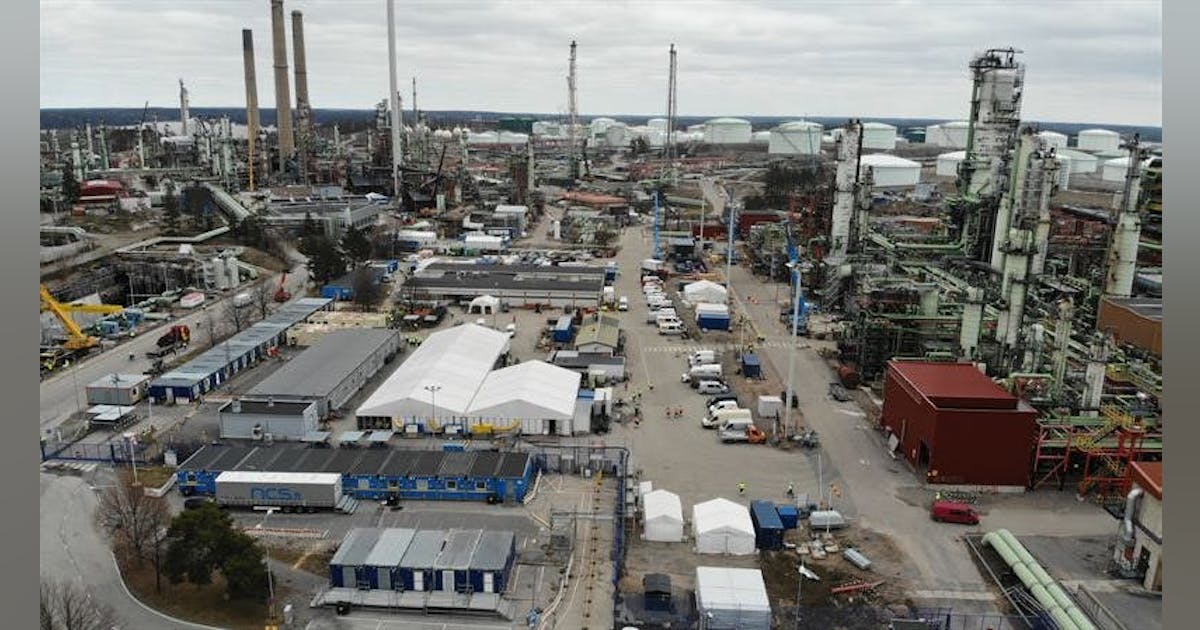
Neste Corp. will undertake a major turnaround beginning in August at its 10-million tonne/year (tpy) refinery in the Kilpilahti industrial area of Porvoo, Finland, about 20 miles east of Helsinki. Budgeted at an overall investment of more than €400-million ($457 million) and scheduled to run through October, the 9-week turnaround

Read More »

San Mateo Midstream expands Delaware basin footprint with $752-million acquisition

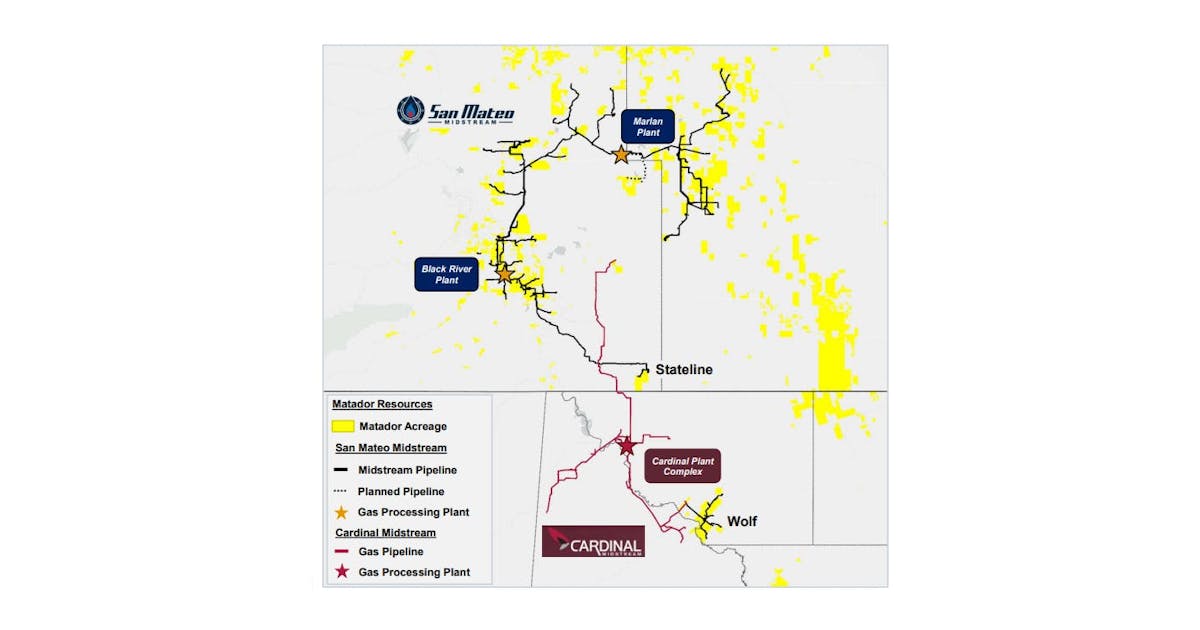
San Mateo said the assets complement its existing gathering and processing system and will improve natural gas flow across the northern Delaware basin in southeast New Mexico and West Texas. The acquisition is expected to increase San Mateo’s designed processing capacity to more than 1 bcfd and expand its gathering network to more than 800 miles. Integration of the systems is expected to provide immediate operating synergies, including the ability to move volumes between Cardinal’s Loving County plant and San Mateo’s Marlan and Black River plants in Eddy County. “With this acquisition, San Mateo not only gains more processing capacity, a larger pipeline system and a more diverse customer base but also improves its positioning for strategic transactions in the future,” said Brian J. Willey, San Mateo chairman and executive vice-president of midstream for Matador. Willey added that connecting the systems will “complete the circle” of San Mateo’s Delaware basin infrastructure, enhancing flow assurance for Matador and third‑party customers and improving flexibility to move natural gas throughout the northern Delaware basin north to south or south to north. The transaction is expected to close on or before July 31, 2026, subject to customary conditions. Cardinal’s field employees are expected to join San Mateo upon closing.

Read More »

QatarEnergy signs commercial declaration for offshore Cyprus

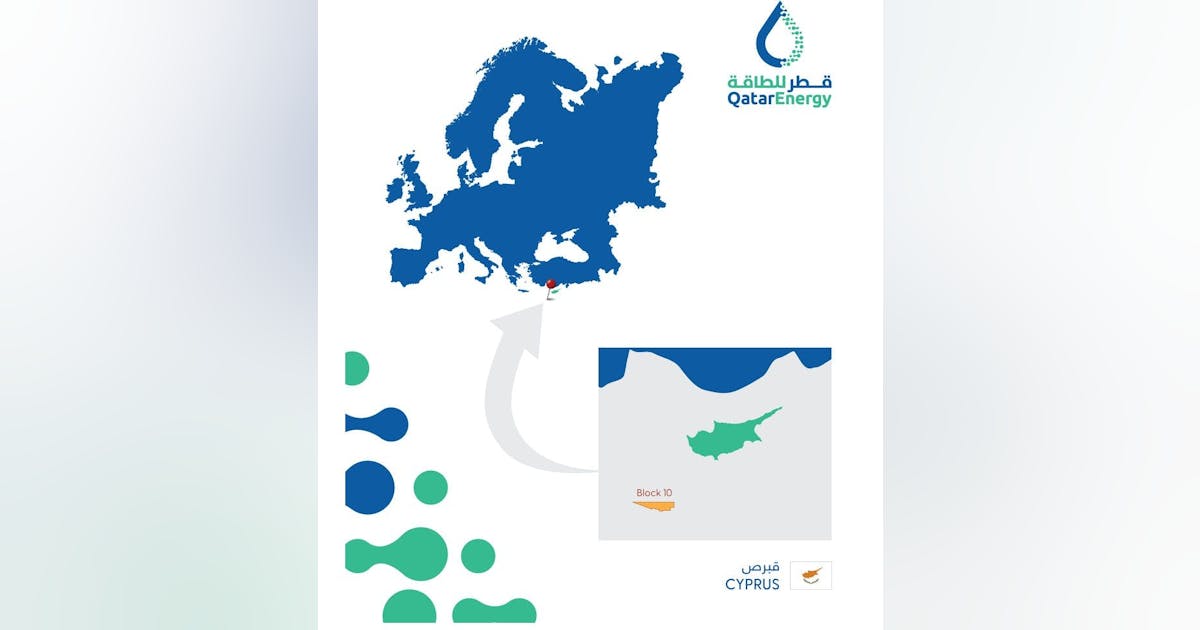
QatarEnergy has signed a commercial discovery declaration for the Glaucus and Pegasus fields in Cyprus, partnering with Cyprus and ExxonMobil to progress development plans and regulatory approvals for offshore gas production. <!–> June 30, 2026 –> Key Highlights QatarEnergy signed a commercial discovery declaration for offshore Cyprus. QatarEnergy, the government of Cyprus, and ExxonMobil will support the next phase of Block 10 development.

Read More »

Neste charts course for renewable fuels amidst industry retreat

Another technology that could provide massive potential to help meet rising energy demand and contribute to global climate goals is renewable hydrogen. Renewable hydrogen—or green hydrogen—is produced by electrolysis, where hydrogen is processed from water using renewable electricity (e.g., wind, solar) by splitting water molecules. Currently, around 95% of all hydrogen is made using fossil-derived natural gas, resulting in high GHG emissions. Since renewable hydrogen is nearly free of GHG emissions, the transition to a renewable hydrogen economy hold potential to transform the energy landscape. Just as with Neste’s the pilot program in Rotterdam, renewable fuel producers could benefit by evaluating options for replacing fossil-based hydrogen with renewable hydrogen in their production processes. In the renewable fuels production process, supply chain optimization is critical to ensure stable flows of both raw materials and end products. For Neste, this means an extensive global network for sourcing renewable raw materials and a market-centric distribution network to ensure renewable fuels reach customers and key markets quickly and efficiently. In the US, Neste made a major strategic move to enhance its supply network with the acquisition of Mahoney Environmental in 2020. This integration provides Neste with access to used cooking oil from over 100,000 locations across the country. To ensure efficient product delivery, Neste has also been fostering partnerships with infrastructure providers to lease terminals that are strategically located near key markets. These terminals are often well-connected to fuel logistics via vessels, barges, trucks, and pipelines. Having terminal capacities close to key markets can notably increase the availability and accessibility of Neste’s renewable fuels to customers. For example, the streamlined logistics system enabled a major expansion of Neste’s SAF supply in 2025, when Neste and United Airlines Inc. extended their partnership, making United the first commercial airline to purchase SAF for use on flights

Read More »

Talos Energy, Ridgewood sign deal to acquire Gulf of Mexico assets from Shell Offshore

Talos would acquire a 25% non-operated working interest in the bp plc-operated (50%) Na Kika platform and the Kepler, Ariel, Fourier, and Herschel fields, along with a 50% working interest and operatorship in the Coulomb field, the company said in a separate release. The Na Kika interests are subject to a 30-day preferential purchase right held by affiliates of bp. According to bp’s website, Na Kika is one of bp’s “most prolific producers in the Gulf,” as a hub for 8 subsea fields with more than 100 miles of infield flowlines which make up the gathering system. Na Kika, which lies 140 miles southeast of New Orleans in 6,340 ft of water, is designed to process up to 130,000 b/d of oil and 550 MMcfd of natural gas. If exercised, Talos would acquire only the 50% working interest and operatorship in Coulomb field, Talos said. Shell’s entitlement production from the assets is expected to average 37,000 boe/d in 2025. The company reported proved reserves at year-end 2025 of 4.3 MMboe for Na Kika and 7.2 MMboe for Coulomb. Based on its internal modeling, Na Kika and Coulomb “will not be meaningful contributors to production by 2030,” Shell said. Average first-quarter 2026 production attributable to the interests Talos expects to acquire was about 16,000 boe/d, of which about 77% was oil, Talos said. What Shell retains The agreement includes a 50% upside-sharing arrangement with Shell from closing through year-end 2027, subject to commodity price thresholds and certain other contingencies. The arrangement applies if realized oil prices exceed $60/bbl, Talos said. According to Shell, it will receive uncapped upside-linked payments through 2027 and overriding royalty interests on production from future Na Kika tiebacks, subject to specified conditions. Shell Trading US Co. will retain rights to offtake production from Na Kika and Coulomb

Read More »

Equinor and Vår Energi swap NCS interests to advance Peon, strengthen Gjøa positions

@import url(‘https://fonts.googleapis.com/css2?family=Inter:[email protected]&display=swap’); .ebm-page__main h1, .ebm-page__main h2, .ebm-page__main h3, .ebm-page__main h4, .ebm-page__main h5, .ebm-page__main h6 { font-family: Inter; } body { line-height: 150%; letter-spacing: 0.025em; } button, .ebm-button-wrapper { font-family: Inter; } .label-style { text-transform: uppercase; color: var(–color-grey); font-weight: 600; font-size: 0.75rem; } .caption-style { font-size: 0.75rem; opacity: .6; } #onetrust-pc-sdk [id*=btn-handler], #onetrust-pc-sdk [class*=btn-handler] { background-color: #c19a06 !important; border-color: #c19a06 !important; } #onetrust-policy a, #onetrust-pc-sdk a, #ot-pc-content a { color: #c19a06 !important; } #onetrust-consent-sdk #onetrust-pc-sdk .ot-active-menu { border-color: #c19a06 !important; } #onetrust-consent-sdk #onetrust-accept-btn-handler, #onetrust-banner-sdk #onetrust-reject-all-handler, #onetrust-consent-sdk #onetrust-pc-btn-handler.cookie-setting-link { background-color: #c19a06 !important; border-color: #c19a06 !important; } #onetrust-consent-sdk .onetrust-pc-btn-handler { color: #c19a06 !important; border-color: #c19a06 !important; } Equinor Energy AS and Vår Energi ASA agreed to exchange interests across several Norwegian Continental Shelf (NCS) licenses in a transaction aimed at advancing the Peon gas discovery and consolidating each company’s position in core areas. “This transaction enables us to speed up progress of one of the largest undeveloped gas discoveries on the NCS, Peon, while strengthening our position in the Troll-Fram area,” said Kjetil Hove, executive vice-president for exploration and production Norway. Vår Energi’s chief executive officer, Nick Walker, said the agreement “strengthens our position in the Gjøa area, one of our key operated hubs,” adding that operatorship and increased ownership of Peon “position Vår Energi to deliver long-term value from existing infrastructure.” <!–> –><!–> –> June 25, 2026 Øyvind Gravås / © Vår Energi <!–> ]–> <!–> June 18, 2026 ]–> Jan Arne Wold and Elisabeth Sahl / ©Equinor <!–> ]–> <!–> May 21, 2026 –><!–> [–> Map from Norwegian Offshore Directorate <!–> ]–> <!–> March 16, 2026 ]–> <!–> Under the agreement, Equinor will transfer 32.5% interest in Peon and operatorship to Vår Energi. In return, Equinor receives interests in producing assets and development licenses, including a 5% interest in Fram field

Read More »

Rhino Resources extends discovery offshore Namibia

Rhino Resources Namibia Ltd. discovered an oil-bearing sandstone reservoir in a second appraisal in petroleum exploration license 85, offshore Orange basin, Namibia. The Capricornus-1A appraisal well was drilled in Block 2914 in the eastern portion of the Capricornus fairway, which was established by the discovery at the Capricornus-1X well. The well was spudded on May 2, 2026, with the Saipem 12000 drillship, in 1,285 m of water. It reached 4,818 m MD on June 11, 2026.  The well intersected a gross reservoir interval of 46 m. A representative core of the main reservoir section was acquired, and a full suite of wireline logging and formation evaluation data was collected. Preliminary analysis of downhole pressure data indicates the presence of an oil-bearing sandstone reservoir in pressure communication with the reservoir fairway discovered by the Capricornus-1X well. The results provide further evidence of reservoir continuity across the Capricornus accumulation and represent an important data point in the ongoing appraisal of the discovery, the company said. The core, pressure, and wireline datasets acquired from Capricornus-1A will be integrated with data gathered from previous wells across PEL 85 to support the joint venture’s ongoing appraisal and exploration activities. Rhino is operator of the license joint venture with 42.5% interest. Co-venturers are Azule Energy (42.5%), NAMCOR (10%), and Korres Investments (5%). bp plc and Eni SPA each hold a 50% interest in Azule Energy, which entered the block in 2024.

Read More »

Cloud sovereignty: First four providers sign up to CISPE certification program

“Public bodies, hospitals and industrial operators are today seeking concrete guarantees of digital sovereignty. The CISPE Sovereignty Badge provides that guarantee. It is a natural complement to European standards such as Gaia-X Level 3, strengthening transparency, compliance and digital trust. It is this ability to provide concrete proof, beyond rhetoric, that underpins genuine European digital autonomy.” said Antoine Fournier, CEO of Thésée Datacenter The EU is keen to guard against ‘sovereignty washing’ — claims by foreign-owned cloud providers that they meet local control criteria. Last month, CISPE warned about Broadcom’s claim it complied with EU conditions. It probably won’t be the last to make such claims.

Read More »

What Meta, Oracle moves say about data center economics

Meta, meanwhile, is continuing its spending spree on AI infrastructure, anonymous sources told Bloomberg. The company is purportedly developing plans for new cloud infrastructure business lines that would sell access to AI computing power and models, putting it in competition with other data center giants. One potential scenario would have Meta selling access to models, including its new Muse Spark, hosted on its own AI infrastructure, as well as running the underlying data centers. This model is similar to AWS’ Bedrock offering. Another possibility is Meta selling access to “raw” computing capacity, as do neocloud businesses such as CoreWeave. This move is part of the company’s internal Meta Compute initiative, the sources said. Like Oracle, Meta has been investing hundreds of billions of dollars in data centers and expensive AI chips. And, according to its latest 10-K: “We plan to continue to significantly expand the size of our infrastructure primarily through data centers, subsea and terrestrial fiber optic cable systems, and other projects.”

Read More »

Executive Roundtable: The Rise of Integrated Infrastructure

Steve Altizer, Compu Dynamics: Integration has to be foundational. It has to start at the first planning conversation, not after the equipment is selected or once the building is already designed. In previous generations of data center development, mechanical, electrical, IT, and operations teams could often work in parallel and bring the pieces together later. That worked when the load profile was more predictable and the facility had more room to absorb change. Before the introduction of ChatGPT, there was very little change to absorb. AI removes that tolerance. A change in rack density can affect electrical distribution, structural requirements, thermal strategy, commissioning, service access, and the way the site is operated. These are no longer independent decisions. They are all part of one performance system. As AI systems move toward POD-scale platforms, the boundary between IT and facility infrastructure becomes much harder to separate. The challenge is that AI workloads are too varied for a one-size-fits-all approach. Training clusters, inference nodes, enterprise AI environments, and edge sites can all have different requirements for density, cooling architecture, network connectivity, security, site conditions, and serviceability. That is why many companies are adopting a modular approach, while others are embracing hybrid models where turnkey modular AI capacity is integrated into larger campus environments.  At the campus level, that means standardizing the backbone infrastructure that serves the site (utility power feeds, central cooling capacity, and network pathways), while allowing the IT environment and the integrated critical infrastructure components to evolve as workload requirements change. The goal is not modularity for its own sake. The goal is to support the next generation of AI deployments without forcing every hardware change to become a major redesign. AI infrastructure cannot be planned as a collection of disparate systems. It has to be designed as one coordinated

Read More »

Data Center Insights 2026 Brings Industry Leaders Together for a Two-Day Look at the AI Infrastructure Era

The data center industry has never been more visible, more vital, or more challenged. Support for AI and its overall industry impact has pushed digital infrastructure into the public conversation. It has become clear that the sector is confronting unprecedented demands for everything from power to basic infrastructure. That convergence is the focus of Data Center Insights 2026, a two-day virtual event taking place July 15–16, 2026, produced by Endeavor B2B’s Data Center Frontier, Cabling Installation & Maintenance, ISE, Lightwave, and SecurityInfoWatch. Designed for data center owners, operators, engineers, IT leaders, and the people supporting the next generation of data center development, the event offers a concentrated look at the technologies and strategies shaping the future of digital infrastructure. The program arrives at a crucial moment. AI workloads are changing almost every assumption behind data center design. Rack densities are rising, liquid cooling is becoming mainstream, and fiber networks are being rethought for 400G and beyond. Power constraints are now central to site selection. Security is becoming highlighted and operators are being asked to build faster, scale larger, be more resource efficient and maintain resilience in an environment where downtime carries higher consequences than ever. Data Center Insights 2026 is structured to help attendees make sense of this moment. Rather than treating data center infrastructure as a set of separate disciplines, the event brings together experts across cooling, cabling, fiber, power distribution, modular design, AI infrastructure, and operational strategy. The result is a practical, cross-functional program built around the real-world questions now facing the industry. What will I learn at this event? The event opens with “Expert Roundup: The State of the Data Center Industry,” featuring perspectives from Steven Carlini of Schneider Electric.This session sets the stage by examining the forces driving change across the data center landscape in 2026.

Read More »

Executive Roundtable: Scaling Beyond the Prototype Phase

Steve Altizer, Compu Dynamics: The defining challenge is keeping pace with the rate of change in the IT environment. It takes time to design, permit, build, and commission a data center. AI hardware operates on a completely different timeline. New GPU families are being introduced every 12 to 18 months, and from one generation to the next, rack power densities can double or even triple. At prototype scale, you can design around a single cluster or a specific density profile. At production scale, that approach becomes a real liability. The facility has to support today’s deployment while remaining adaptable for the next compute profile. We are not just talking about adding more power. We are preparing for major architectural shifts, including the move toward DC power delivery or cooling systems that may rely on two-phase liquid to remove heat at scale. That is what becomes materially harder. You are no longer solving for a single, static deployment. You are solving for a moving target inside a live operating environment. This is where strategic modularity proves its value. It helps decouple the lifecycle of the building from the lifecycle of the IT hardware. Instead of treating the data center as one monolithic design, modularity creates a more agile framework that can absorb new power and cooling architectures without requiring a full facility retrofit every time the IT roadmap shifts. At Compu Dynamics Modular, we are seeing this play out in real time. The value of a turnkey modular approach is not simply speed. It is the agility owners need to keep pace with ever-evolving rack densities, power delivery requirements, and cooling architectures.

Read More »

Q2 Executive Roundtable Recap

Matt Vincent is Editor in Chief of Data Center Frontier, where he leads editorial strategy and coverage focused on the infrastructure powering cloud computing, artificial intelligence, and the digital economy. A veteran B2B technology journalist with more than two decades of experience, Vincent specializes in the intersection of data centers, power, cooling, and emerging AI-era infrastructure. Since assuming the EIC role in 2023, he has helped guide Data Center Frontier’s coverage of the industry’s transition into the gigawatt-scale AI era, with a focus on hyperscale development, behind-the-meter power strategies, liquid cooling architectures, and the evolving energy demands of high-density compute, while working closely with the Digital Infrastructure Group at Endeavor Business Media to expand the brand’s analytical and multimedia footprint. Vincent also hosts The Data Center Frontier Show podcast, where he interviews industry leaders across hyperscale, colocation, utilities, and the data center supply chain to examine the technologies and business models reshaping digital infrastructure. Since its inception he serves as Head of Content for the Data Center Frontier Trends Summit. Before becoming Editor in Chief, he served in multiple senior editorial roles across Endeavor Business Media’s digital infrastructure portfolio, with coverage spanning data centers and hyperscale infrastructure, structured cabling and networking, telecom and datacom, IP physical security, and wireless and Pro AV markets. He began his career in 2005 within PennWell’s Advanced Technology Division and later held senior editorial positions supporting brands such as Cabling Installation & Maintenance, Lightwave Online, Broadband Technology Report, and Smart Buildings Technology. Vincent is a frequent moderator, interviewer, and keynote speaker at industry events including the HPC Forum, where he delivers forward-looking analysis on how AI and high-performance computing are reshaping digital infrastructure. He graduated with honors from Indiana University Bloomington with a B.A. in English Literature and Creative Writing and lives in southern New Hampshire with

Read More »

Microsoft will invest $80B in AI data centers in fiscal 2025

And Microsoft isn’t the only one that is ramping up its investments into AI-enabled data centers. Rival cloud service providers are all investing in either upgrading or opening new data centers to capture a larger chunk of business from developers and users of large language models (LLMs).  In a report published in October 2024, Bloomberg Intelligence estimated that demand for generative AI would push Microsoft, AWS, Google, Oracle, Meta, and Apple would between them devote $200 billion to capex in 2025, up from $110 billion in 2023. Microsoft is one of the biggest spenders, followed closely by Google and AWS, Bloomberg Intelligence said. Its estimate of Microsoft’s capital spending on AI, at $62.4 billion for calendar 2025, is lower than Smith’s claim that the company will invest $80 billion in the fiscal year to June 30, 2025. Both figures, though, are way higher than Microsoft’s 2020 capital expenditure of “just” $17.6 billion. The majority of the increased spending is tied to cloud services and the expansion of AI infrastructure needed to provide compute capacity for OpenAI workloads. Separately, last October Amazon CEO Andy Jassy said his company planned total capex spend of $75 billion in 2024 and even more in 2025, with much of it going to AWS, its cloud computing division.

Read More »

John Deere unveils more autonomous farm machines to address skill labor shortage

Join our daily and weekly newsletters for the latest updates and exclusive content on industry-leading AI coverage. Learn More Self-driving tractors might be the path to self-driving cars. John Deere has revealed a new line of autonomous machines and tech across agriculture, construction and commercial landscaping. The Moline, Illinois-based John Deere has been in business for 187 years, yet it’s been a regular as a non-tech company showing off technology at the big tech trade show in Las Vegas and is back at CES 2025 with more autonomous tractors and other vehicles. This is not something we usually cover, but John Deere has a lot of data that is interesting in the big picture of tech. The message from the company is that there aren’t enough skilled farm laborers to do the work that its customers need. It’s been a challenge for most of the last two decades, said Jahmy Hindman, CTO at John Deere, in a briefing. Much of the tech will come this fall and after that. He noted that the average farmer in the U.S. is over 58 and works 12 to 18 hours a day to grow food for us. And he said the American Farm Bureau Federation estimates there are roughly 2.4 million farm jobs that need to be filled annually; and the agricultural work force continues to shrink. (This is my hint to the anti-immigration crowd). John Deere’s autonomous 9RX Tractor. Farmers can oversee it using an app. While each of these industries experiences their own set of challenges, a commonality across all is skilled labor availability. In construction, about 80% percent of contractors struggle to find skilled labor. And in commercial landscaping, 86% of landscaping business owners can’t find labor to fill open positions, he said. “They have to figure out how to do

Read More »

2025 playbook for enterprise AI success, from agents to evals

Join our daily and weekly newsletters for the latest updates and exclusive content on industry-leading AI coverage. Learn More 2025 is poised to be a pivotal year for enterprise AI. The past year has seen rapid innovation, and this year will see the same. This has made it more critical than ever to revisit your AI strategy to stay competitive and create value for your customers. From scaling AI agents to optimizing costs, here are the five critical areas enterprises should prioritize for their AI strategy this year. 1. Agents: the next generation of automation AI agents are no longer theoretical. In 2025, they’re indispensable tools for enterprises looking to streamline operations and enhance customer interactions. Unlike traditional software, agents powered by large language models (LLMs) can make nuanced decisions, navigate complex multi-step tasks, and integrate seamlessly with tools and APIs. At the start of 2024, agents were not ready for prime time, making frustrating mistakes like hallucinating URLs. They started getting better as frontier large language models themselves improved. “Let me put it this way,” said Sam Witteveen, cofounder of Red Dragon, a company that develops agents for companies, and that recently reviewed the 48 agents it built last year. “Interestingly, the ones that we built at the start of the year, a lot of those worked way better at the end of the year just because the models got better.” Witteveen shared this in the video podcast we filmed to discuss these five big trends in detail. Models are getting better and hallucinating less, and they’re also being trained to do agentic tasks. Another feature that the model providers are researching is a way to use the LLM as a judge, and as models get cheaper (something we’ll cover below), companies can use three or more models to

Read More »

OpenAI’s red teaming innovations define new essentials for security leaders in the AI era

Join our daily and weekly newsletters for the latest updates and exclusive content on industry-leading AI coverage. Learn More OpenAI has taken a more aggressive approach to red teaming than its AI competitors, demonstrating its security teams’ advanced capabilities in two areas: multi-step reinforcement and external red teaming. OpenAI recently released two papers that set a new competitive standard for improving the quality, reliability and safety of AI models in these two techniques and more. The first paper, “OpenAI’s Approach to External Red Teaming for AI Models and Systems,” reports that specialized teams outside the company have proven effective in uncovering vulnerabilities that might otherwise have made it into a released model because in-house testing techniques may have missed them. In the second paper, “Diverse and Effective Red Teaming with Auto-Generated Rewards and Multi-Step Reinforcement Learning,” OpenAI introduces an automated framework that relies on iterative reinforcement learning to generate a broad spectrum of novel, wide-ranging attacks. Going all-in on red teaming pays practical, competitive dividends It’s encouraging to see competitive intensity in red teaming growing among AI companies. When Anthropic released its AI red team guidelines in June of last year, it joined AI providers including Google, Microsoft, Nvidia, OpenAI, and even the U.S.’s National Institute of Standards and Technology (NIST), which all had released red teaming frameworks. Investing heavily in red teaming yields tangible benefits for security leaders in any organization. OpenAI’s paper on external red teaming provides a detailed analysis of how the company strives to create specialized external teams that include cybersecurity and subject matter experts. The goal is to see if knowledgeable external teams can defeat models’ security perimeters and find gaps in their security, biases and controls that prompt-based testing couldn’t find. What makes OpenAI’s recent papers noteworthy is how well they define using human-in-the-middle

Read More »