Stay Ahead, Stay ONMINE

The Download: kids’ thoughts on AI, and female clones of male mice

This is today’s edition of The Download, our weekday newsletter that provides a daily dose of what’s going on in the world of technology. How kids feel about AI, in their own words —Jen Swetzoff and Keeley McNamara, the founding editors of Anyway, an independent print magazine for tweens and teens When we set out to talk to kids about AI, we thought we knew what we’d hear. We expected stories about cheating, inspiring uses, and concerns like deepfakes or job destruction. But what we actually heard from kids aged 10 to 18 had tons of nuance. Many were so deeply against AI or uninterested in making it part of their lives that they didn’t want to talk about it at all. Others worried about cheating, the environmental impact, or AI’s effect on creativity and critical thinking. AI doesn’t yet seem to be something a lot of them are focused on—and they aren’t begging for it, the way they do for iPhones and Snapchat. But what surprised us most was how much young people could teach adults about AI.  Meet the kids navigating an AI-filled future—and hear what they think of it. Scientists just created female clones of male mice Scientists have deliberately turned male mouse embryos into females for the first time. A team based in Japan used a CRISPR-based approach to remove the Y chromosome from male cells and create female clones of male mice.  The feat could change the way scientists think about reproduction, says Takashi Ishiuchi, a reproductive biologist at the University of Yamanashi, who co-led the work. “There’s a fixed concept in our scientific field that we need both females and males for reproduction,” says Ishiuchi. “I think we could change this concept.” He also hopes the technique could help rescue endangered species, particularly in cases where only a few individuals remain. Find out how it works—and what it could mean for the future of reproduction and conservation. —Jessica Hamzelou What’s behind this summer’s heat, and why 2027 could be worse This summer has been a scorcher for much of the Northern Hemisphere. June and July marked the hottest two-month stretch in Europe since record-keeping began, the contiguous US endured its hottest month on record in July, and South Korea saw its highest-ever recorded temperature.   Climate change makes heat waves more likely and more intense. But there’s another factor at play: El Niño, which is already ramping up and is expected to have a bigger effect on global temperatures next year. Here’s what’s behind this summer’s extreme heat—and why 2027 could be even hotter. —Casey Crownhart This story is from The Spark, our weekly climate tech newsletter. Sign up to receive it in your inbox every Wednesday. Inside the “censorship-industrial complex” idea shaping US policy For years, the idea of a “censorship-industrial complex” that suppressed conservative and populist speech spread in right-wing circles online. But now, the theory has made its way into the Trump administration. Over the past nine months, MIT Technology Review investigated its origins and traced its rise.  In a virtual Roundtables session today, senior reporter Eileen Guo and executive editor Amy Nordrum will explore what they discovered, where the theory is going, and what it could mean for the future of democracy and the internet. Register here to join the session at 19:00 GMT / 2:00 pm ET / 11:00 am PT. The must-reads I’ve combed the internet to find you today’s most fun/important/scary/fascinating stories about technology. 1 Trump has authorized businesses to conduct cyberattacks on criminalsVetted firms could use cyber tools against foreign criminal groups. (Reuters $)+ They would operate under the control of the US government. (Bloomberg $)+ Risks include escalation and inadvertent consequences. (Independent) 2 Chinese censorship is leaking into answers from American AIChatGPT, Claude, and Gemini can all echo authoritarian propaganda. (WSJ $)+ Turkey’s new cyber law has stoked fears of a digital police state. (FT $)+ Censorship conspiracy theories have entered the US policy mainstream. (MIT Technology Review)  3 Twitch is mining people’s streams to train Amazon’s AIAll streamers are opted in to train AI with their content by default. (404 Media)+ Users can now opt out, but the announcement has sparked uproar. (BBC)+ AI’s memories are privacy’s next frontier. (MIT Technology Review) 4 Trump has been sued over a service selling faster access to his social postsThe Intercept and the Freedom of the Press Foundation filed the suit. (NPR)+ They call the service “corrupt” and “unconstitutional.” (Ars Technica)+ And say it violates the right of equal access to official information. (Reuters $) 5 Police officers are using Flock cameras to stalk peopleThree Georgia deputies are the latest officers accused of abuse. (NYT $)+ But the surveillance devices still have some supporters. (Atlantic $) 6 AI reporters are now breaking big newsOne just beat human journalists to a story about hacking at OpenAI. (Wired $)+ The milestone has sparked debate about the future of journalism. (Gizmodo) 7 The web’s newest weapon against AI scrapers is a fontShieldFont foils scrapers but keeps pages readable to people. (Ars Technica) 8 Live streaming has turned us all into Perez HiltonIt’s made us both the celebrity and the paparazzi. (New Yorker $) 9 A fossil discovery suggests live birth emerged far earlier than thoughtIt pushes the origin of mammalian live birth back 95 million years. (New Scientist $) 10 Scientific progress may not be slowing after allNew research disputes claims that science is getting less disruptive. (Economist $) Quote of the day “Trump is trying to enrich himself by privatizing government information that he has no right to sell. We won’t let it stand.”  —Ben Muessig, editor-in-chief of The Intercept, explains why his media organization is suing President Trump over his fast-access service to Truth Social posts. One More Thing Puerto Rico’s power struggles Carmen Suárez Vázquez lives just minutes from Puerto Rico’s only coal-fired power plant. Black dust coats her windowpanes and the leaves of the blooming vines around her home. She doesn’t know exactly how the coal pollution got inside, but she is certain it ended up in her youngest son, Edgardo, who died of a rare form of cancer. The plant was supposed to close in 2027. Instead, it will stay open for at least another seven years, while Puerto Rico rolls back clean-energy targets and moves ahead with new gas plants. Meanwhile, residents are still dealing with frequent blackouts and high electricity prices. And an unelected fiscal control board has veto power over all spending by the island’s elected government, leaving Puerto Ricans with little say over their energy future. Here’s why Puerto Rico can’t seem to escape its energy crisis. — Alexander C. Kaufman We can still have nice things A place for comfort, fun, and distraction to brighten up your day. (Got any ideas? Drop me a line.) + A double amputee has climbed the tallest mountain on every continent.+ Enjoy a gorgeous coastal wander with Paul Theroux along the newly opened King Charles III England Coast Path.+ A shrine for plush toys has opened in Kyoto, offering a place where visitors can pray with their favourite stuffed companions.+ CrankGPT is a fully offline, off-the-grid AI box that makes a compelling argument that intelligent machines don’t need a data center.

This is today’s edition of The Download, our weekday newsletter that provides a daily dose of what’s going on in the world of technology.

How kids feel about AI, in their own words

—Jen Swetzoff and Keeley McNamara, the founding editors of Anyway, an independent print magazine for tweens and teens

When we set out to talk to kids about AI, we thought we knew what we’d hear. We expected stories about cheating, inspiring uses, and concerns like deepfakes or job destruction. But what we actually heard from kids aged 10 to 18 had tons of nuance.

Many were so deeply against AI or uninterested in making it part of their lives that they didn’t want to talk about it at all. Others worried about cheating, the environmental impact, or AI’s effect on creativity and critical thinking.

AI doesn’t yet seem to be something a lot of them are focused on—and they aren’t begging for it, the way they do for iPhones and Snapchat. But what surprised us most was how much young people could teach adults about AI. 

Meet the kids navigating an AI-filled future—and hear what they think of it.

Scientists just created female clones of male mice

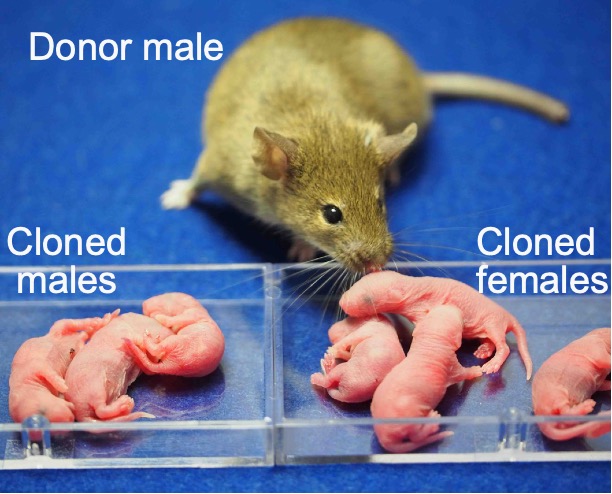
Scientists have deliberately turned male mouse embryos into females for the first time. A team based in Japan used a CRISPR-based approach to remove the Y chromosome from male cells and create female clones of male mice. 

The feat could change the way scientists think about reproduction, says Takashi Ishiuchi, a reproductive biologist at the University of Yamanashi, who co-led the work. “There’s a fixed concept in our scientific field that we need both females and males for reproduction,” says Ishiuchi. “I think we could change this concept.”

He also hopes the technique could help rescue endangered species, particularly in cases where only a few individuals remain. Find out how it works—and what it could mean for the future of reproduction and conservation.

—Jessica Hamzelou

What’s behind this summer’s heat, and why 2027 could be worse

This summer has been a scorcher for much of the Northern Hemisphere. June and July marked the hottest two-month stretch in Europe since record-keeping began, the contiguous US endured its hottest month on record in July, and South Korea saw its highest-ever recorded temperature.  

Climate change makes heat waves more likely and more intense. But there’s another factor at play: El Niño, which is already ramping up and is expected to have a bigger effect on global temperatures next year.

Here’s what’s behind this summer’s extreme heat—and why 2027 could be even hotter.

—Casey Crownhart

This story is from The Spark, our weekly climate tech newsletter. Sign up to receive it in your inbox every Wednesday.

Inside the “censorship-industrial complex” idea shaping US policy

For years, the idea of a “censorship-industrial complex” that suppressed conservative and populist speech spread in right-wing circles online. But now, the theory has made its way into the Trump administration.

Over the past nine months, MIT Technology Review investigated its origins and traced its rise

In a virtual Roundtables session today, senior reporter Eileen Guo and executive editor Amy Nordrum will explore what they discovered, where the theory is going, and what it could mean for the future of democracy and the internet.

Register here to join the session at 19:00 GMT / 2:00 pm ET / 11:00 am PT.

The must-reads

I’ve combed the internet to find you today’s most fun/important/scary/fascinating stories about technology.

1 Trump has authorized businesses to conduct cyberattacks on criminals
Vetted firms could use cyber tools against foreign criminal groups. (Reuters $)
+ They would operate under the control of the US government. (Bloomberg $)
+ Risks include escalation and inadvertent consequences. (Independent)

2 Chinese censorship is leaking into answers from American AI
ChatGPT, Claude, and Gemini can all echo authoritarian propaganda. (WSJ $)
+ Turkey’s new cyber law has stoked fears of a digital police state. (FT $)
+ Censorship conspiracy theories have entered the US policy mainstream. (MIT Technology Review) 

3 Twitch is mining people’s streams to train Amazon’s AI
All streamers are opted in to train AI with their content by default. (404 Media)
+ Users can now opt out, but the announcement has sparked uproar. (BBC)
+ AI’s memories are privacy’s next frontier. (MIT Technology Review)

4 Trump has been sued over a service selling faster access to his social posts
The Intercept and the Freedom of the Press Foundation filed the suit. (NPR)
+ They call the service corrupt” and “unconstitutional.” (Ars Technica)
+ And say it violates the right of equal access to official information. (Reuters $)

5 Police officers are using Flock cameras to stalk people
Three Georgia deputies are the latest officers accused of abuse. (NYT $)
+ But the surveillance devices still have some supporters. (Atlantic $)

6 AI reporters are now breaking big news
One just beat human journalists to a story about hacking at OpenAI. (Wired $)
+ The milestone has sparked debate about the future of journalism. (Gizmodo)

7 The web’s newest weapon against AI scrapers is a font
ShieldFont foils scrapers but keeps pages readable to people. (Ars Technica)

8 Live streaming has turned us all into Perez Hilton
It’s made us both the celebrity and the paparazzi. (New Yorker $)

9 A fossil discovery suggests live birth emerged far earlier than thought
It pushes the origin of mammalian live birth back 95 million years. (New Scientist $)

10 Scientific progress may not be slowing after all
New research disputes claims that science is getting less disruptive. (Economist $)

Quote of the day

Trump is trying to enrich himself by privatizing government information that he has no right to sell. We won’t let it stand.” 

—Ben Muessig, editor-in-chief of The Intercept, explains why his media organization is suing President Trump over his fast-access service to Truth Social posts.

One More Thing


Puerto Rico’s power struggles

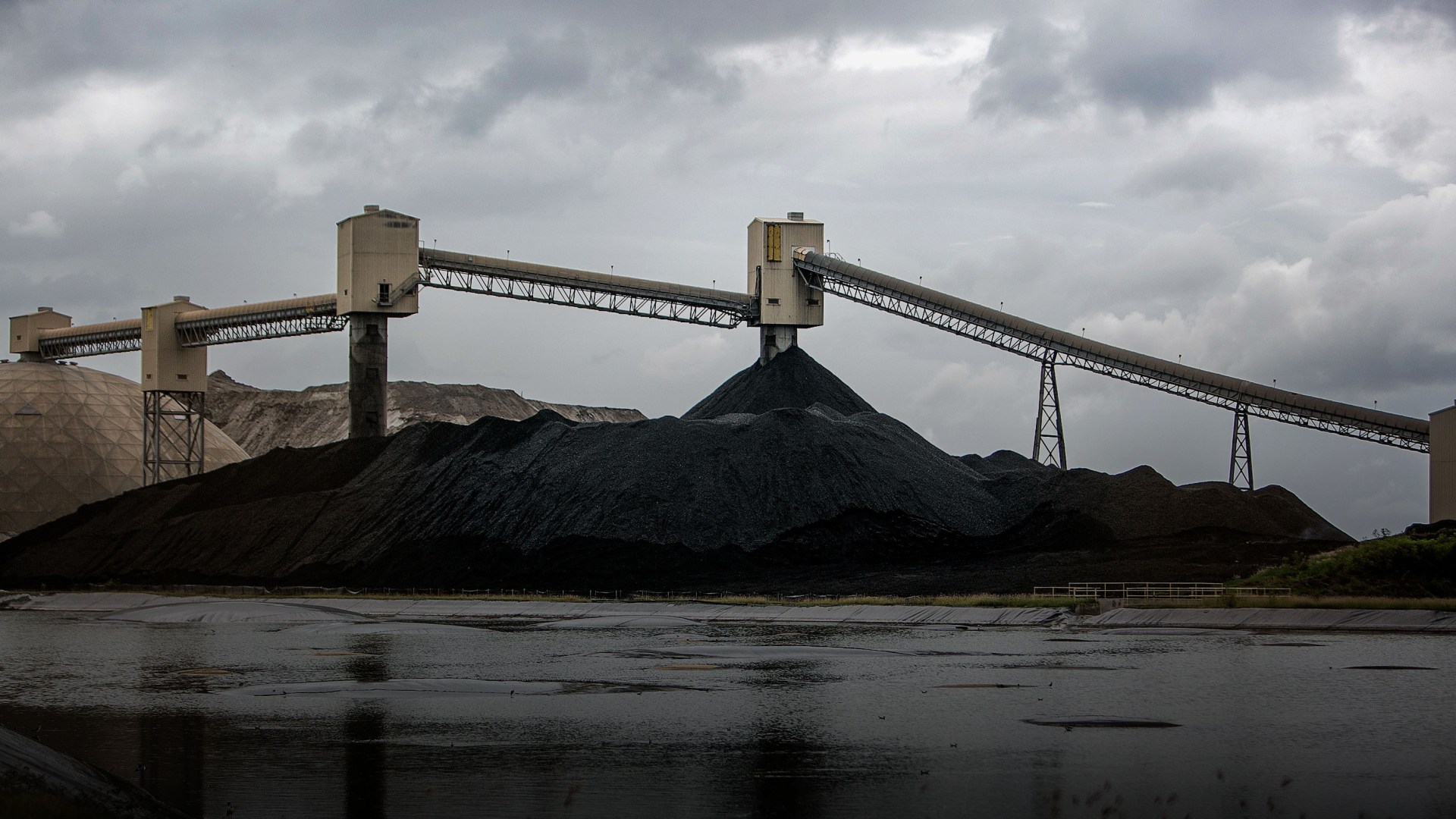
Carmen Suárez Vázquez lives just minutes from Puerto Rico’s only coal-fired power plant. Black dust coats her windowpanes and the leaves of the blooming vines around her home. She doesn’t know exactly how the coal pollution got inside, but she is certain it ended up in her youngest son, Edgardo, who died of a rare form of cancer.

The plant was supposed to close in 2027. Instead, it will stay open for at least another seven years, while Puerto Rico rolls back clean-energy targets and moves ahead with new gas plants.

Meanwhile, residents are still dealing with frequent blackouts and high electricity prices. And an unelected fiscal control board has veto power over all spending by the island’s elected government, leaving Puerto Ricans with little say over their energy future.

Here’s why Puerto Rico can’t seem to escape its energy crisis.

Alexander C. Kaufman

We can still have nice things

A place for comfort, fun, and distraction to brighten up your day. (Got any ideas? Drop me a line.)

+ A double amputee has climbed the tallest mountain on every continent.
+ Enjoy a gorgeous coastal wander with Paul Theroux along the newly opened King Charles III England Coast Path.
+ A shrine for plush toys has opened in Kyoto, offering a place where visitors can pray with their favourite stuffed companions.
+ CrankGPT is a fully offline, off-the-grid AI box that makes a compelling argument that intelligent machines don’t need a data center.

Shape
Shape
Stay Ahead

Explore More Insights

Stay ahead with more perspectives on cutting-edge power, infrastructure, energy,  bitcoin and AI solutions. Explore these articles to uncover strategies and insights shaping the future of industries.

Shape

Equinor lets stimulation service contract for NCS assets

@import url(‘https://fonts.googleapis.com/css2?family=Inter:wght@100..900&display=swap’); .ebm-page__main h1, .ebm-page__main h2, .ebm-page__main h3, .ebm-page__main h4, .ebm-page__main h5, .ebm-page__main h6 { font-family: Inter; } body { line-height: 150%; letter-spacing: 0.025em; } button, .ebm-button-wrapper { font-family: Inter; } .label-style { text-transform: uppercase; color: var(–color-grey); font-weight: 600; font-size: 0.75rem; } .caption-style { font-size: 0.75rem; opacity: .6; } #onetrust-pc-sdk

Read More »

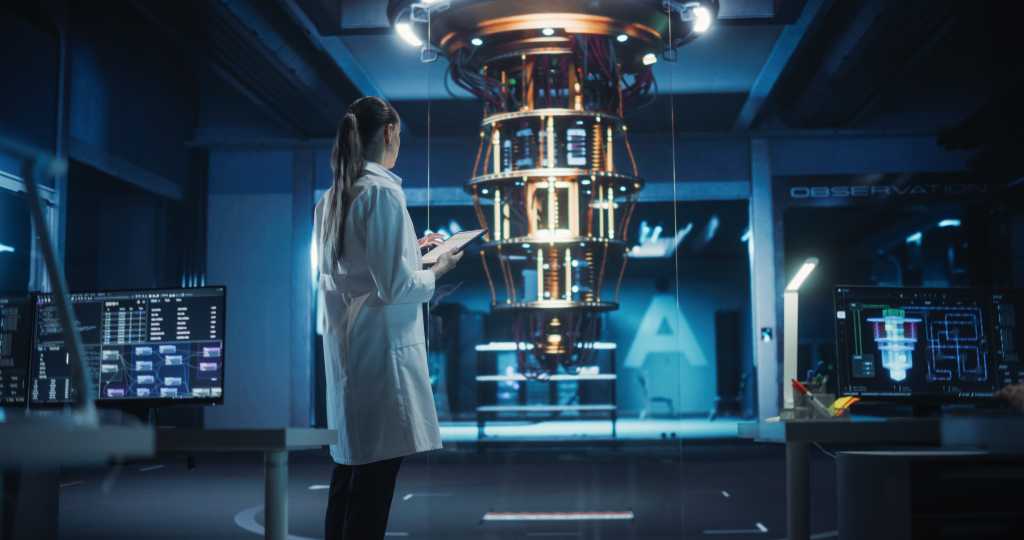
Oracle set to bring quantum computing to OCI for hybrid AI workloads

“By operating on-premises within OCI’s infrastructure, Helios is anticipated to be able to integrate seamlessly with existing OCI compute, networking, storage, identity, and data services under the same governance and access controls customers already use,” the statement added. By hosting Helios within OCI infrastructure, customers will be able to access

Read More »

Energy Secretary Announces Cancellation of Three Proposed National Interest Electric Transmission Corridors

WASHINGTON—U.S. Secretary of Energy Chris Wright today announced that the U.S. Department of Energy (DOE) will not move forward with designating the three proposed National Interest Electric Transmission Corridors (NIETCs) previously selected in December 2024 to advance in the review process. “Extensive review, including public feedback and stakeholder input, made clear that the current designation process for these three proposed transmission corridors should not continue,” said Secretary Wright. “Transmission policy must serve the American people—not special interests or a climate-alarmist agenda that drives up costs, worsens reliability, and disregards the concerns of local communities. The Trump Administration is committed to strengthening America’s electric grid with common-sense policies that prioritize delivering affordable, reliable, and secure electricity to American families and businesses.” The previous administration touted the Lake Erie–Canada Corridor, the Southwestern Grid Connector Corridor, and the Tribal Energy Access Corridor, as a means to advance their Green New Scam agenda and “accelerate decarbonization.” As the process unfolded, the current designation framework proved ineffective in strengthening grid reliability and reducing electricity costs. In some communities, it also contributed to confusion and concern about the scope and intent of NIETC authority. Thanks to President Trump and Secretary Wright, DOE has already taken numerous steps to build new transmission infrastructure and modernize existing infrastructure, including: In October 2025, DOE’s Office of Energy Dominance Financing (EDF) closed a $1.6 billion loan guarantee to AEP Transmission to reconductor and rebuild nearly 5,000 miles of transmission lines across five states.  In February 2026, DOE’s Office of Energy Dominance Financing (EDF) closed $26.5 billion in loans to Southern Company subsidiaries Georgia power and Alabama Power to support generation and grid investments, including more than 1,300 miles of transmission and grid enhancement projects.  In March 2026, DOE’s Office of Electricity (OE) announced the $1.9 billion SPARK funding opportunity to

Read More »

Permian Resources lifts forecast on working interest gains, acquisitions

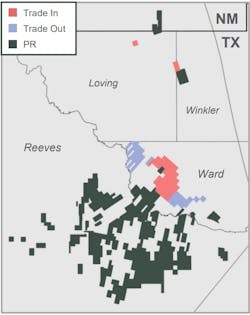
@import url(‘https://fonts.googleapis.com/css2?family=Inter:wght@100..900&display=swap’); .ebm-page__main h1, .ebm-page__main h2, .ebm-page__main h3, .ebm-page__main h4, .ebm-page__main h5, .ebm-page__main h6 { font-family: Inter; } body { line-height: 150%; letter-spacing: 0.025em; } button, .ebm-button-wrapper { font-family: Inter; } .label-style { text-transform: uppercase; color: var(–color-grey); font-weight: 600; font-size: 0.75rem; } .caption-style { font-size: 0.75rem; opacity: .6; } #onetrust-pc-sdk [id*=btn-handler], #onetrust-pc-sdk [class*=btn-handler] { background-color: #c19a06 !important; border-color: #c19a06 !important; } #onetrust-policy a, #onetrust-pc-sdk a, #ot-pc-content a { color: #c19a06 !important; } #onetrust-consent-sdk #onetrust-pc-sdk .ot-active-menu { border-color: #c19a06 !important; } #onetrust-consent-sdk #onetrust-accept-btn-handler, #onetrust-banner-sdk #onetrust-reject-all-handler, #onetrust-consent-sdk #onetrust-pc-btn-handler.cookie-setting-link { background-color: #c19a06 !important; border-color: #c19a06 !important; } #onetrust-consent-sdk .onetrust-pc-btn-handler { color: #c19a06 !important; border-color: #c19a06 !important; } The leaders of Permian Resources Corp., Midland, have lifted their production and capital spending forecasts for 2026 after recently closing on a $520 million acquisition, exercising an option for a 5,600-acre bolt-on buy and growing its working interest in completed wells more than expected. Permian Resources on July 31 closed on the purchase of about 20,500 acres in the Delaware basin’s Ward County that are largely non-operated and produce about 5,000 boe/d. The land sits adjacent to Permian property but James Walter, co-chief executive officer, told analysts on Aug. 6 that his team have since struck a deal with another operator that will trade some of the acquired bolt-on parcels as well as other acreage with goals of densifying Permian Resources’ holdings and lowering the share of acres that are non-operated or have low working interest. Permian Resources Corp. Permian Resources’ trade in Ward County with another operator is expected to close later this quarter. <!–> ]–> “The trade also increases the number of operating net locations from 50 to 120 while increasing the average lateral length by 20%,” Hickey said. “We view this trade as a true win-win for [Permian Resources] and our counterparty, who

Read More »

Canada rig count down 3 units

The rig count in Canada fell by 3 units to 216 rigs working for the week ended Aug. 7, according to data from Baker Hughes. A 4-rig drop in oil-directed rigs in Canada was partially offset by a 2-unit gain in gas-directed rigs. There were 146 oil-directed rigs working in Canada this week, while those drilling for gas ended the week at 65 units working. The overall US drilling rig count was unchanged this week at 588 rigs working. That number is up 49 units from this time last year. In the US, 3 additional rigs were drilling for oil, bringing the total count to 454. That number is up 43 units from this time last year. The number of gas-directed rigs fell by 3 to 124 working for the week. This time last year, 123 rigs were drilling for gas in the US. There were 572 rigs drilling on US land this week, unchanged from last week and up 48 from the year-ago period. A 1-rig increase in offshore rigs offset a 1-unit decrease in rigs drilling in inland waters. There were 14 rigs drilling offshore and 2 in inland waters this week. Leading the major oil-and gas-producing states was Texas with a 2-unit gain to end the week with 275 rigs working. The count is up 32 units from this time in 2025. Pennsylvania and Wyoming each dropped a rig to bring the respective rig counts to 16 and 15 for the week.

Read More »

Orlen’s Mažeikiai refinery to benefit from renewable electricity

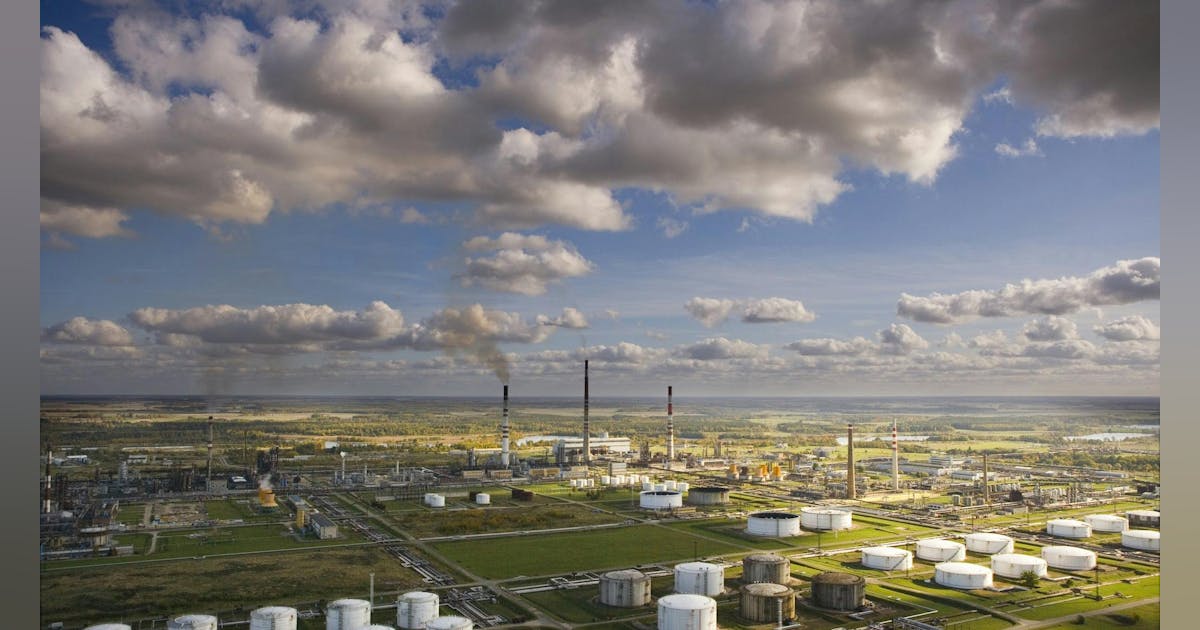
Orlen SA has brought a 42.2-Mw solar photovoltaic (PV) farm online to supply renewable energy that will help to power operations at subsidiary Orlen Lietuva AB’s 10.4-million tonne/year refinery in Mažeikiai, Lithuania. Operable as of Aug. 11 and designed to generate about 45 gigawatt-hours (Gw-hr)/year of electricity, the Mažeikiai solar farm aims to reduce the refinery’s electricity procurement costs by about €4 million/year while supporting Orlen’s goal of increasing the share of renewables across its portfolio, the company said. Located on site across 60 hectares on the refinery’s grounds, the solar farm consists of about 68,000 bifacial photovoltaic modules. Each module is rated at 620 w, the bifacial design of the modules enabling the capture of sunlight on both sides to improve energy output during lower-light conditions on cloudy days, according to Orlen. The solar PV farm’s generation of about 45 Gw-hr of electricity will cover roughly 7% of the Mažeikiai manufacturing complex, where it will be dedicated to supplying power for day-to-day refinery operations, office buildings, and other critical infrastructure at the site. Completed at an overall investment of nearly €35 million, Orlen said the solar farm project received €2.5 million in support from the European Union’s Modernization Fund. Energy transition, efficiency Alongside strengthening the refinery’s energy security by providing an on-site source of reliable electricity, the new solar farm advances Orlen’s commitment to advancing regional energy transition initiatives. “This is an important step towards reducing the environmental impact of our operations and lowering the [Mažeikiai] refinery’s operating costs,” said Dariusz Zonenberg, Orlen Lietuva’s chief executive officer. “The project will increase the share of Orlen Lietuva’s electricity demand met by its own renewable generation, strengthening the company’s competitiveness and supporting the Orlen Group’s long-term strategy,” Zonenberg added. Orlen said the project supports its 2035 strategy to expand renewable energy

Read More »

ADNOC Gas advances its largest-ever gas processing expansion

Abu Dhabi National Oil Co. (ADNOC) subsidiary ADNOC Gas PLC has let a contract to Tecnimont SPA—a subsidiary of Maire SPA—to provide a suite of services for the third phase of the operator’s broader multibillion-dollar, multiphased Rich Gas Development (RGD) project that aims to expand the company’s natural gas processing capacity to meet rising energy demand and secure the United Arab Emirates’ (UAE) reliability as a global energy supplier. As part of the $4.3-billion contract officially revealed on Aug. 10 following intimations to the market in releases dated June 4 and May 20 that withheld the identity of the operator and project, Tecnimont will deliver engineering, procurement, and construction (EPC) services for ADNOC Gas’ RGD Phase 3 expansion involving the addition of a fifth NGL fractionation unit at the Ruwais NGL complex in Abu Dhabi, Maire said. Alongside the NGL fractionation unit designed to separate various hydrocarbon components, as well as treatment and sweetening systems to remove impurities and ensure product quality, Maire confirmed Tecnimont’s scope of work also will cover EPC for a new regeneration gas treatment unit, a propane refrigeration system, ancillary systems, and associated storage installations of the RGD Phase 3 project. Scheduled for completion in 2030, the Phase 3 plant will have an output capacity of 23,000 tonnes/day, equivalent to about 8 million tonnes/year (tpy), according to the service provider. Confirmation of the Phase 3 contract award follows ADNOC Gas’ announcement earlier on Aug. 10 that it had taken final investment decision on both Phase 2 and Phase 3 of the RGD project, including the operator’s separate and concurrent award to Wison Engineering Ltd. for the project’s second phase. As part of the $3.9-billion RGD Phase 3 contract, Wison Engineering will deliver EPC services for a new 670-MMcfd natural gas processing train at the operator’s Habshan

Read More »

Sonangol flow tests first non-associated gas reservoir in Angola

Sonangol Exploração & Produção completed drilling and testing of the Katambi-2 appraisal well in Block 24 of Benguela basin, offshore Angola, the National Oil, Gas, and Biofuels Agency (ANPG) said Aug. 6. Drilled 1.3 km from the Katambi-1 well, the Katambi-2 well crossed two production intervals, with about 331 m of total thickness, confirming the existence of good quality reservoirs. The intervals have 9-12% average porosity and good permeability, higher than that recorded in the Katambi-1 well drilled in 2014-2015. Initial tests recorded a stabilized production of 41 MMscfd of gas and 1,160 b/d condensate without water or H2S, reinforcing the economic viability of the development of the discovery and its potential contribution to the optimization of national production. This is the first full flow test carried out in a non-associated gas reservoir in Angola. A preliminary assessment of the test results indicated that the well has the potential to produce more than 100 MMscfd. Block 24 lies 370 km southwest of Luanda. Sonagol is operator of the block.  

Read More »

North American data center vacancy holds at just 1%

The shift is being driven largely by the industry’s growing need for electricity, land and infrastructure. Traditional markets such as Northern Virginia have become increasingly difficult to expand because of power constraints, land availability and lengthy utility interconnection timelines. But JLL cautioned that the industry’s continued expansion will depend increasingly on winning public support, at a time of significant pushback from residents. “Supporting the next phase of growth will depend on building trust, addressing local concerns and delivering lasting benefits to host communities,” the report said. In addition to residential pushback, power availability is becoming increasingly scarce. In primary data center markets, the average wait for a grid connection can exceed four years, pushing operators toward on-site generation, battery storage and other alternatives.

Read More »

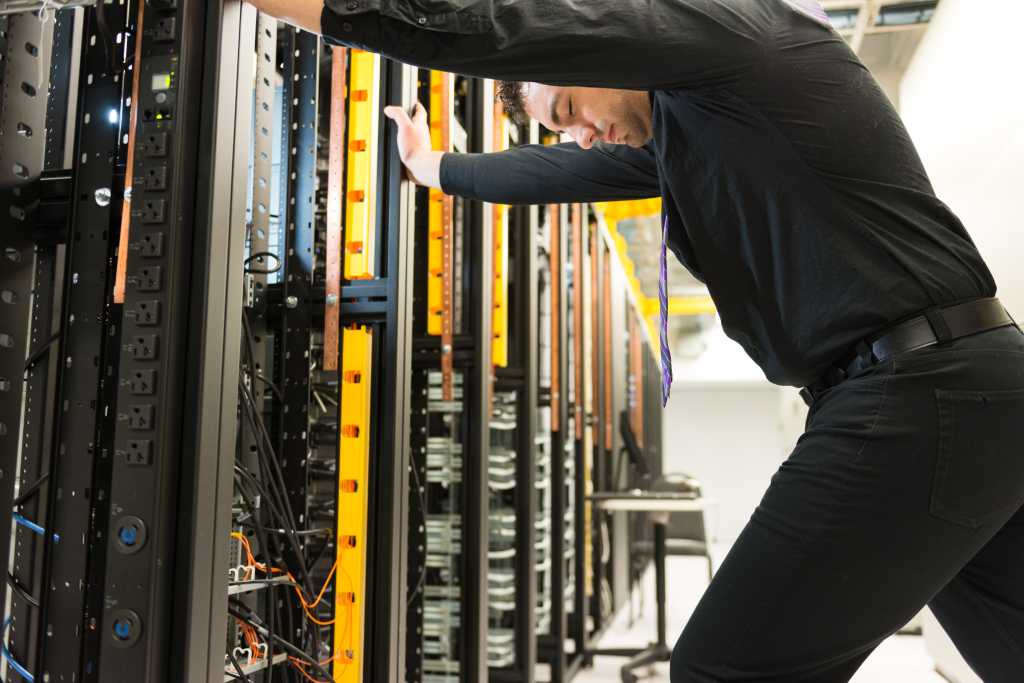
IT infrastructure shortages are real and lasting. Here’s how to cope

Look at alternatives, including AMD and cloud solutions, while staying mindful of how it all plays together. You may not be able to get Nvidia GPUs, but AWS, Azure, and Oracle Cloud have them, Kimball notes. Be strategic, perhaps by using cloud offerings to handle certain tuning or inference workloads, then bringing them back in-house when appropriate. “Have a better understanding of what absolutely has to be on prem and what can be in the cloud,” he says. That’s good advice, says Backblaze’s Thomas. When it comes to AI, think about performance tiers and the range of use cases you have. They don’t all need top-tier performance. “People get wrapped around axle of needing the top end. There’s a lot of flexibility in the edges, innovation in different hardware and software,” Thomas says. Gartner likewise advises companies to increase configuration flexibility and expand sourcing paths. That may include buying from secondary markets and lease-return programs to preserve continuity with existing infrastructure until the shortages pass, Forest says. Get started somewhere Even if you can’t acquire or have to wait for the infrastructure you need, don’t let that keep you from getting started with AI or other modernization projects. Options include public cloud and neocloud providers, Anderson says. WWT also provides capacity in its own lab so customers can get started with proof-of-concept projects. “Don’t just throw your hands up. We can help you find access to capacity,” Anderson says. “Production-scale AI may be delayed, but don’t let that derail your strategy.” Colocation providers may likewise be an option, especially if enterprises are struggling to acquire high-end networking equipment. Networking is a key value proposition for colocation providers, in that they have built-in connections to various cloud providers and other ecosystem players. Equinix, for example, has 280 data centers in 77 metropolitan

Read More »

Polish data center plans to send its waste heat to the neighbors

As Europe swelters in a heatwave, residents probably don’t want to hear about ways to make their homes even hotter, but that’s what Polish property developer Citylink is talking about, with plans to dump waste heat from a new data center in Wrocław into the municipal district heating network. Citylink is designing the data center so that heat from servers can be recovered instead of being dissipated via cooling systems — and as the data center grows, any increase in computing power will mean more energy available for recovery. The collaboration with local power company Kogeneracja will provide “valuable experience in designing and operating modern data centers, with a particular focus on infrastructure dedicated to AI nodes,” said Michał Starybrat, development director at Citylink.

Read More »

The Data Center Industry’s Permission to Build

The data center industry has spent the past several years announcing the future. Gigawatts. AI factories. New regions. New power architectures. Campuses at a scale that would have seemed extraordinary before generative AI reset the industry’s expectations. Now the public has entered the room. Communities are asking harder questions about who pays for electrical infrastructure, where the water comes from, how much noise reaches neighboring properties and what remains locally after construction crews leave. Utilities are being pressed to protect ratepayers from speculative load and costly system upgrades. Elected officials who once treated data centers primarily as economic-development wins are finding that the politics have changed. The defining question is no longer whether demand is real. It is whether the data center industry can keep earning the permission required to build at the scale it has promised. I mean permission in a broader sense than zoning approval, an environmental permit or a signed utility agreement. I mean the political and social room to develop infrastructure measured in hundreds of megawatts and billions of dollars—often in places whose residents have only recently begun to understand what is being proposed around them. That room is narrowing. A Different Kind of Constraint On July 18, opponents organized 142 demonstrations across 42 states in what Reuters described as the first coordinated national protest against the data center buildout. The movement crossed familiar political boundaries, bringing together environmental advocates, rural landowners and residents concerned about power prices, water, noise and the pace of development. A June Reuters/Ipsos poll found that 57% of respondents would oppose a data center in their community. Only 14% said they would be comfortable with one nearby. Those findings deserve the industry’s full attention. New York has imposed a one-year pause on certain environmental approvals for new hyperscale data centers while

Read More »

NVIDIA’s Reported $50B Lease and the Nuclear-Powered AI Factory

Aalo and Crusoe Pursue the Nuclear-Powered AI Factory The Aalo-Crusoe partnership addresses the industry’s power problem by bringing power generation directly to the compute. In this case, skipping intermediary power stages such as minimal grid or custom BTM gas turbine solutions and going straight to nuclear. Aalo Atomics and Crusoe said they plan to deploy a Crusoe Spark modular data center running Crusoe Cloud at Idaho National Laboratory in 2027. The proof-of-concept project is intended to demonstrate an AI workload operating on power from an Aalo advanced reactor. Crusoe continues to expand their other data center campus projects. The companies then intend to deploy Aalo Pods, Aalo’s 50-megawatt-electric nuclear power plants, at Crusoe data centers by the end of 2029. Aalo has already begun work on a second reactor beside its initial test unit at the Idaho site. That reactor is expected to produce electricity for the Crusoe installation. On July 4, 2026, Aalo’s zero-power Critical Test Reactor reached criticality, sustaining a nuclear chain reaction without generating commercial electricity. The test reactor contains a full-scale core and components analogous to those planned for the 10-megawatt-electric Aalo-X power reactor being built next door, but it operates before sodium coolant and electricity-generating systems are added. Aalo plans to continue experiments with the Critical Test Reactor to refine its reactor-physics models, characterize control behavior and generate data supporting development and licensing of the full-power Aalo-X system. Advanced nuclear announcements sometimes blur the line between a successful test, an electricity-producing demonstration and a commercially licensed fleet. Aalo has achieved an important technical milestone, but substantial work remains before reactors can be manufactured, licensed, financed and operated at commercial data center sites. The pairing with Crusoe should be noted because it connects a reactor developer with a company that can provide the data center load,

Read More »

Data Center Jobs: Engineering, Construction, Commissioning, Sales, Field Service and Facility Tech Jobs Available in Major Data Center Hotspots

Each month Data Center Frontier, in partnership with Pkaza, posts some of the hottest data center career opportunities in the market. Here’s a look at some of the latest data center jobs posted on the Data Center Frontier jobs board, powered by Pkaza Critical Facilities Recruiting. Looking for Data Center Candidates? Check out Pkaza’s Active Candidate / Featured Candidate Hotlist  CFD Engineer – Data Center Mechanical DesignNew York, NY (remote)This position is also available as a remote role anywhere in the US in addition to key markets such as Cedar Rapids, IA; Kansas City, CA or White Plains, NY. Our client is an engineering design and commissioning company that has a national footprint and specializes in MEP critical facilities design. They provide design, commissioning, consulting and management expertise in the critical facilities space. They have a mindset to provide reliability, energy efficiency, and sustainable design expertise when providing these consulting services for enterprise, colocation and hyperscale companies. This career-growth minded opportunity offers exciting projects with leading-edge technology and innovation as well as competitive salaries and benefits. Electrical Commissioning Agent – Data CentersColumbus, OH (limited travel) Non-traveling CxA positions available in: Indianapolis, IN; Cedar Rapids, IA; Phoenix, AZ; Atlanta, GA and Austin, TX. Traveling CxA based really near any major airport, otherwise traveling to: New York, NY; White Plains, NY; Dallas, TX; Richmond, VA; Montvale, NJ; Charlotte, NC; Salt Lake City, UT; Kansas City, MO; Chesterton, IN or Chicago, IL. ***Also looking for a lead EE and ME CxA Agents and CxA PMs.*** This opportunity is with a leading EPC company of data center design / build / commissioning solutions. This company provides a complete life cycle of solutions that are custom-fit to the requirements of their client’s mission-critical facilities. This opportunity provides a career-growth minded role with exciting projects with leading-edge technology

Read More »

Microsoft will invest $80B in AI data centers in fiscal 2025

And Microsoft isn’t the only one that is ramping up its investments into AI-enabled data centers. Rival cloud service providers are all investing in either upgrading or opening new data centers to capture a larger chunk of business from developers and users of large language models (LLMs).  In a report published in October 2024, Bloomberg Intelligence estimated that demand for generative AI would push Microsoft, AWS, Google, Oracle, Meta, and Apple would between them devote $200 billion to capex in 2025, up from $110 billion in 2023. Microsoft is one of the biggest spenders, followed closely by Google and AWS, Bloomberg Intelligence said. Its estimate of Microsoft’s capital spending on AI, at $62.4 billion for calendar 2025, is lower than Smith’s claim that the company will invest $80 billion in the fiscal year to June 30, 2025. Both figures, though, are way higher than Microsoft’s 2020 capital expenditure of “just” $17.6 billion. The majority of the increased spending is tied to cloud services and the expansion of AI infrastructure needed to provide compute capacity for OpenAI workloads. Separately, last October Amazon CEO Andy Jassy said his company planned total capex spend of $75 billion in 2024 and even more in 2025, with much of it going to AWS, its cloud computing division.

Read More »

John Deere unveils more autonomous farm machines to address skill labor shortage

Join our daily and weekly newsletters for the latest updates and exclusive content on industry-leading AI coverage. Learn More Self-driving tractors might be the path to self-driving cars. John Deere has revealed a new line of autonomous machines and tech across agriculture, construction and commercial landscaping. The Moline, Illinois-based John Deere has been in business for 187 years, yet it’s been a regular as a non-tech company showing off technology at the big tech trade show in Las Vegas and is back at CES 2025 with more autonomous tractors and other vehicles. This is not something we usually cover, but John Deere has a lot of data that is interesting in the big picture of tech. The message from the company is that there aren’t enough skilled farm laborers to do the work that its customers need. It’s been a challenge for most of the last two decades, said Jahmy Hindman, CTO at John Deere, in a briefing. Much of the tech will come this fall and after that. He noted that the average farmer in the U.S. is over 58 and works 12 to 18 hours a day to grow food for us. And he said the American Farm Bureau Federation estimates there are roughly 2.4 million farm jobs that need to be filled annually; and the agricultural work force continues to shrink. (This is my hint to the anti-immigration crowd). John Deere’s autonomous 9RX Tractor. Farmers can oversee it using an app. While each of these industries experiences their own set of challenges, a commonality across all is skilled labor availability. In construction, about 80% percent of contractors struggle to find skilled labor. And in commercial landscaping, 86% of landscaping business owners can’t find labor to fill open positions, he said. “They have to figure out how to do

Read More »

2025 playbook for enterprise AI success, from agents to evals

Join our daily and weekly newsletters for the latest updates and exclusive content on industry-leading AI coverage. Learn More 2025 is poised to be a pivotal year for enterprise AI. The past year has seen rapid innovation, and this year will see the same. This has made it more critical than ever to revisit your AI strategy to stay competitive and create value for your customers. From scaling AI agents to optimizing costs, here are the five critical areas enterprises should prioritize for their AI strategy this year. 1. Agents: the next generation of automation AI agents are no longer theoretical. In 2025, they’re indispensable tools for enterprises looking to streamline operations and enhance customer interactions. Unlike traditional software, agents powered by large language models (LLMs) can make nuanced decisions, navigate complex multi-step tasks, and integrate seamlessly with tools and APIs. At the start of 2024, agents were not ready for prime time, making frustrating mistakes like hallucinating URLs. They started getting better as frontier large language models themselves improved. “Let me put it this way,” said Sam Witteveen, cofounder of Red Dragon, a company that develops agents for companies, and that recently reviewed the 48 agents it built last year. “Interestingly, the ones that we built at the start of the year, a lot of those worked way better at the end of the year just because the models got better.” Witteveen shared this in the video podcast we filmed to discuss these five big trends in detail. Models are getting better and hallucinating less, and they’re also being trained to do agentic tasks. Another feature that the model providers are researching is a way to use the LLM as a judge, and as models get cheaper (something we’ll cover below), companies can use three or more models to

Read More »

OpenAI’s red teaming innovations define new essentials for security leaders in the AI era

Join our daily and weekly newsletters for the latest updates and exclusive content on industry-leading AI coverage. Learn More OpenAI has taken a more aggressive approach to red teaming than its AI competitors, demonstrating its security teams’ advanced capabilities in two areas: multi-step reinforcement and external red teaming. OpenAI recently released two papers that set a new competitive standard for improving the quality, reliability and safety of AI models in these two techniques and more. The first paper, “OpenAI’s Approach to External Red Teaming for AI Models and Systems,” reports that specialized teams outside the company have proven effective in uncovering vulnerabilities that might otherwise have made it into a released model because in-house testing techniques may have missed them. In the second paper, “Diverse and Effective Red Teaming with Auto-Generated Rewards and Multi-Step Reinforcement Learning,” OpenAI introduces an automated framework that relies on iterative reinforcement learning to generate a broad spectrum of novel, wide-ranging attacks. Going all-in on red teaming pays practical, competitive dividends It’s encouraging to see competitive intensity in red teaming growing among AI companies. When Anthropic released its AI red team guidelines in June of last year, it joined AI providers including Google, Microsoft, Nvidia, OpenAI, and even the U.S.’s National Institute of Standards and Technology (NIST), which all had released red teaming frameworks. Investing heavily in red teaming yields tangible benefits for security leaders in any organization. OpenAI’s paper on external red teaming provides a detailed analysis of how the company strives to create specialized external teams that include cybersecurity and subject matter experts. The goal is to see if knowledgeable external teams can defeat models’ security perimeters and find gaps in their security, biases and controls that prompt-based testing couldn’t find. What makes OpenAI’s recent papers noteworthy is how well they define using human-in-the-middle

Read More »