Stay Ahead, Stay ONMINE

Texas Tightens Oversight of Data Center Development

Texas has spent the past decade building one of the most data center-friendly policy environments in the United States. But the state’s political posture is tightening. The emerging message from Austin is that continued data center growth will face greater scrutiny over grid costs, water use, tax incentives and community impacts. What is interesting about […]

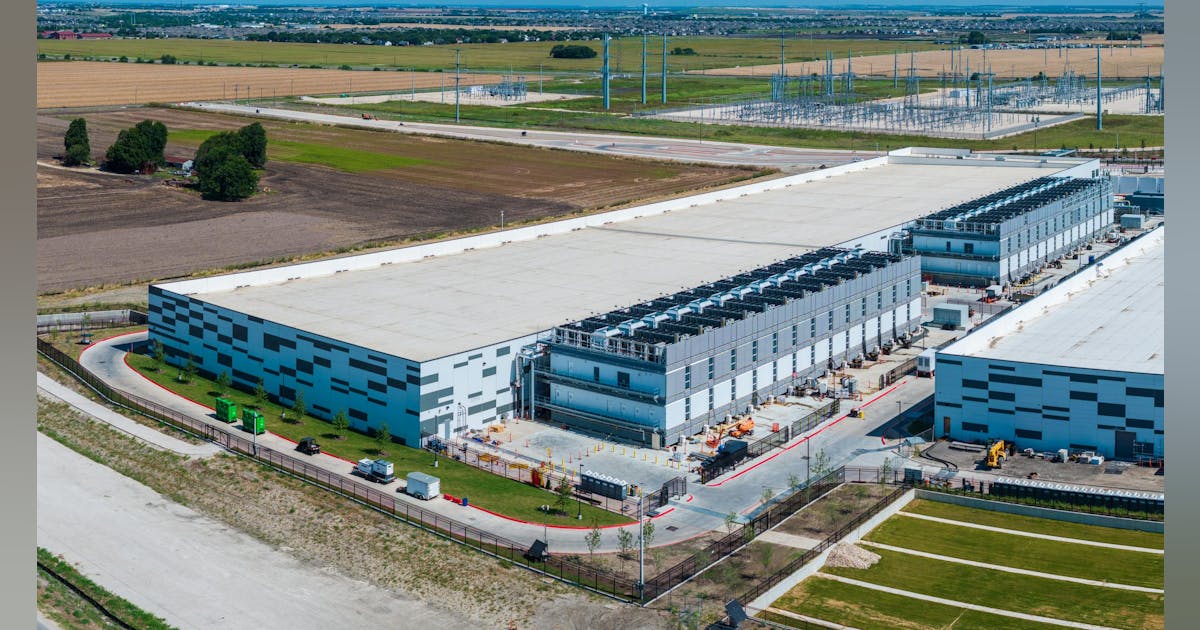
Texas has spent the past decade building one of the most data center-friendly policy environments in the United States. But the state’s political posture is tightening. The emerging message from Austin is that continued data center growth will face greater scrutiny over grid costs, water use, tax incentives and community impacts.

What is interesting about this policy conversation is that the Texas Legislature is not in regular session. The 89th regular session ended June 2, 2025, and the 90th Legislature does not convene until January 12, 2027. What has occurred instead is a concentrated period of interim committee work, gubernatorial recommendations, implementation of Senate Bill 6, calls for a special session, and regulatory action by the Public Utility Commission of Texas and the Electric Reliability Council of Texas. Together, those efforts are creating the framework for a broader legislative debate in 2027 while already affecting projects seeking ERCOT interconnection, infrastructure costs and site-selection decisions.

Abbott Sets Out a New Policy Framework

The policy shift accelerated June 10, when Gov. Greg Abbott directed the PUCT to require data centers to fully fund the electric infrastructure needed to serve their operations and directed PUCT and ERCOT to identify additional actions available under existing authority. Separately, Abbott pledged to work with lawmakers in 2027 on legislation requiring data centers to add electric capacity, use water-efficient cooling systems, report electricity and water use, phase out outdated tax incentives and adopt additional protections for neighboring communities.

The most consequential shift began June 10, when Gov. Greg Abbott sent state electricity regulators a sweeping list of data center policy priorities. Abbott called for future legislation requiring new facilities to add generation to the Texas grid, pay the full cost of their interconnection and related infrastructure, use closed-loop or similarly water-efficient cooling systems, and file annual reports on electricity and water consumption. The proposal also included the development of statewide best-practice standards for noise and other community impacts. The statement also urged lawmakers to repeal the state’s data center sales tax exemptions and other incentives he described as outdated or unnecessary.

That proposal represented a major reversal in tone. Texas has historically treated data centers as major economic-development projects, with qualified facilities eligible for sales-tax exemptions on computers, equipment, cooling systems, power infrastructure, electricity and fuel. Abbott’s new framework instead emphasizes greater cost responsibility and protection of residential and small-business ratepayers from infrastructure costs associated with large-load growth.

The practical impact of Texas adopting these proposals could be enormous for developers. If lawmakers require new data centers to add to Texas’ electric capacity, developers may need to demonstrate incremental supply or other qualifying capacity arrangements. The details of that obligation have not yet been legislated. Meanwhile, SB 6 and its implementation already increase the importance of deposits, security and other financial commitments tied to large-load interconnection and transmission infrastructure.

Even before lawmakers take up those proposals in 2027, the direction of policy can affect project underwriting by adding uncertainty around future power, infrastructure-cost and tax assumptions.

SB 6 Begins Reshaping Grid Access

Senate Bill 6 implementation has supplied the regulatory bridge between the 2025 Legislature and the current policy debate. On June 18, the PUCT approved ERCOT’s “Batch Zero” process for large-load interconnections. The framework groups qualifying projects of 75 megawatts or more into a common study so ERCOT can evaluate aggregate demand, allocate available grid capacity and identify needed transmission upgrades. At the time, ERCOT was tracking more than 438 gigawatts of large-load requests, nearly 89% of them associated with data centers.

Batch Zero was not a new statute but part of the implementation framework built around SB 6. It moves large-load planning toward batch-level transmission analysis. A project’s timeline can therefore depend not only on its own site and utility arrangements but also on aggregate demand, available transmission capacity and ERCOT’s assessment of project readiness.

The PUCT followed with another consequential action on July 9, approving “ride-through” requirements for Large Computational Loads. The rules require data centers and similar facilities to remain stable and connected during specified voltage and frequency disturbances rather than disconnecting large blocks of load simultaneously. If a facility fails to ride through an event, it may be required to investigate, submit a corrective plan and implement remediation. ERCOT can order a load disconnected if continued operation creates an imminent reliability risk.

These operational standards add a new engineering and compliance layer to data center development. Electrical design, uninterruptible power supplies, backup-generation controls and workload-protection schemes will increasingly have to account for grid behavior as well as facility and IT protection. Industry groups have questioned the extent of regulators’ statutory authority over retail loads, an issue that could return to lawmakers in 2027 as PUCT and ERCOT seek clearer authority over large-load operations.

Water Transparency Becomes a Legislative Priority

Water policy emerged as the second major legislative front. At a June 23 House Natural Resources Committee hearing, lawmakers examined the state’s limited information about data center water use. A voluntary PUCT survey developed with the Texas Water Development Board drew responses from 28 of 377 companies notified, representing 92 facilities. A separate mandatory TWDB water-use survey also produced weak compliance: only 17% of surveyed data centers responded in 2025, even though participation is required by law and failure to comply can be punished as a Class C misdemeanor.

The hearing made mandatory disclosure one of the clearest candidates for 2027 legislation. Republican and Democratic lawmakers questioned how the state could plan water infrastructure or evaluate projects in drought-prone regions without reliable facility-level data. Rep. Cody Harris, R-Palestine, said resource-use transparency should not be optional and identified disclosure of water consumption and water sources as a baseline issue for the next session.

Legislation requiring more comprehensive reporting of water consumption and sources is therefore likely to receive serious consideration next session. Lawmakers may also revisit enforcement and confidentiality provisions so agencies can obtain useful planning data while protecting proprietary information.

Cooling requirements may similarly become a development standard rather than a voluntary sustainability commitment. Abbott specifically endorsed closed-loop systems, while committee discussions focused on water-efficient development in water-stressed regions. A statewide standard could favor closed-loop or other water-efficient cooling architectures, including systems that reduce reliance on potable water.

Some water-saving cooling approaches can increase electrical demand or reduce cooling efficiency during hot weather. Future legislation will therefore have to coordinate water and power policy rather than regulate them separately.

The Sales Tax Exemption Comes Under Threat

The sharpest legislative threat to data center project economics surfaced July 27, when the Senate Finance Committee reviewed the state’s sales tax exemptions for qualified data centers. The committee’s interim charge noted that the estimated state cost of the exemptions has grown from $14.6 million in 2014–15 to a projected $3.3 billion in 2028–29.

Comptroller officials testified that 138 data centers had qualified for the program, but only 20 had been audited. Six of those audited facilities were found out of compliance, including projects that failed to meet job, square-footage or power-agreement requirements. The state’s previous estimate that it would forgo $3.2 billion over two years was also described as an underestimate because another 59 certifications had been approved in 2026 and officials expected roughly 10 more certifications each month.

Those numbers gave momentum to proposals to repeal or restructure the incentive. Committee Chair Joan Huffman said no tax exemption should operate on “autopilot” and reiterated that she intends to file legislation in 2027 to reform or eliminate it. Other senators questioned whether an industry already choosing Texas for power availability, land, fiber and market access still needs an exemption covering the state’s 6.25% sales tax on qualifying equipment and electricity.

Lawmakers could preserve the incentive while tightening eligibility and compliance requirements, including verified job creation, investment commitments, resource-efficiency standards and greater responsibility for infrastructure costs. They could also revisit when benefits begin relative to the existing five-year compliance window.

Special-Session Pressure Builds

Pressure for immediate lawmaking grew in late July. Agriculture Commissioner Sid Miller, Democratic Sen. Carol Alvarado, Rep. Richard Peña Raymond, local officials, community groups and other critics urged Abbott to call a special legislative session. Raymond asked for a temporary moratorium on permitting, construction approvals and state-level fast-tracking until lawmakers could establish statewide rules.

The pressure crossed traditional political lines, bringing together rural conservatives concerned about land and water with Democrats and environmental groups focused on consumer costs and resource use. Abbott did not call a special session, leaving interim hearings, agency action and the approaching 2027 regular session as the principal paths for policy change.

Abbott Pauses Data Center Interconnections

On August 3, Abbott directed the PUCT and ERCOT to conduct a comprehensive verification of data center projects advancing through ERCOT’s interconnection process before allowing those projects to move forward. Developers must provide information on tax incentives, ownership, projected peak and annual electricity consumption, on-site generation, water sources, cooling systems, and measures addressing noise, light, traffic, setbacks and emergency response. Projects that fail to satisfy state and regulatory requirements can be denied grid connection.

The directive came as ERCOT was considering approximately 474 gigawatts of connection requests, more than five times the grid’s record peak demand, with data centers representing roughly 90% of the proposed load. ERCOT subsequently withheld the Batch Zero project classifications scheduled for August 7 and said it would seek an exception to the existing timetable while consulting with the PUCT on next steps.

The order created a  direct development constraint. Yet it is not a substitute for legislation. It operates through the ERCOT interconnection process, leaving different questions for projects outside the ERCOT region and for fully islanded facilities with no ERCOT grid connection. The directive also does not establish a permanent statutory framework, leaving broader questions of agency authority, reporting and development standards for the Legislature.

Texas Development Pipeline Remains Active

Even as the policy environment tightens, development announcements over the past week underscored the scale of the Texas pipeline. Cipher Digital acquired an option on approximately 288 acres within 25 miles of San Antonio for its proposed Apollo campus, which could support up to 900 MW. The company said it has submitted the site as a studied load through ERCOT’s Batch Zero process. Cipher also began delivering data center capacity at its 300 MW Black Pearl site in Texas two months ahead of schedule; the site is being leased to AWS under a deal with a minimum 15-year term.

Activity also continued across Dallas-Fort Worth. Crow Holdings and CleanArc Data Centers are pursuing a five-story, 245 MW facility on approximately 40 acres at Dallas Market Center, potentially replacing the existing Market Hall, with a first phase targeted for late 2027. PowerHouse Data Centers and AREP, meanwhile, filed plans for the Circle T Data Center in Westlake, north of Fort Worth. Site plans call for as many as four 300,000-square-foot buildings totaling 300 MW. PowerHouse told local officials that its active and planned Texas portfolio now encompasses 11 projects totaling approximately 10 GW. The Westlake proposal has also drawn opposition from nearby residents and a Buddhist monastery over noise, proximity and other community impacts, illustrating the local-development friction increasingly accompanying large projects even where data centers are already permitted as a land use.

The power side of the buildout is moving at similar scale. Houston-based NRG said it is aligned on principal commercial terms with an unnamed global cloud and AI hyperscaler for a new 1.2 GW combined-cycle natural gas plant in Texas. The roughly $3.2 billion first phase is targeted for late 2029 and could eventually expand to 2.4 GW. NRG said the minimum 15-year arrangement would have the hyperscaler support incremental generation through capacity and operating payments rather than relying solely on existing grid supply.

Taken together, the announcements show why the Texas policy debate carries such high stakes. The development pipeline remains measured in hundreds of megawatts and increasingly in gigawatts, while the projects moving forward are bringing questions of generation, grid access and community impact directly into development strategy.

What to Watch in 2027

Based on Abbott’s stated legislative priorities, PUCT and ERCOT actions, and interim committee hearings, the 2027 debate is likely to center on several recurring issues:

  • Reform or repeal of the qualified data center sales-tax exemption.
  • Mandatory electricity and water-use reporting.
  • Water-efficient cooling requirements.
  • Greater responsibility for electric infrastructure costs.
  • Stronger project-readiness and compliance requirements.
  • Clearer PUCT and ERCOT authority over large-load operations.
  • Community protections addressing issues such as noise, setbacks and other local impacts.
  • Expanded county authority over data center development in unincorporated areas.

The question for Texas is whether it can impose a more demanding framework while preserving its advantages in AI and cloud infrastructure and preventing speculative projects or poorly allocated infrastructure costs from overwhelming the electric grid, water systems and local communities.

The direction of Texas policy is already becoming clearer. Projects with credible schedules, stronger financial commitments, transparent resource requirements, water-efficient cooling, concrete community protections and a willingness to bear the infrastructure costs associated with their development are likely to be better positioned. Projects dependent on uncertain grid capacity, limited disclosure or assumptions that today’s incentive structure will remain unchanged face a more difficult path.


Shape
Shape
Stay Ahead

Explore More Insights

Stay ahead with more perspectives on cutting-edge power, infrastructure, energy,  bitcoin and AI solutions. Explore these articles to uncover strategies and insights shaping the future of industries.

Shape

Why 6 GHz Wi-Fi will make or break the modern enterprise

To date, 6 GHz Wi‑Fi deployments across enterprises remain in their early stages, with only a subset of organizations moving aggressively beyond Wi‑Fi 6 and legacy bands. Most corporate campuses, manufacturing plants, healthcare facilities, and retail environments continue to run primarily on 2.4 GHz and 5 GHz, even as their

Read More »

IBM partners with OpenAI to drive enterprise AI deployment

There will be three focus areas in the new partnership: helping organizations transform their businesses to integrate AI into their daily work, assisting clients in modernizing legacy applications through a combination of OpenAI products and IBM’s expertise, and an expansion of an existing cybersecurity collaboration combining OpenAI frontier AI capabilities

Read More »

Cisco rides ‘networking supercycle’ for strong Q4

Security revenue grew 14% year-over-year in Q4, with more than 1,500 customers adopting new products such as Secure Access, XDR, HyperShield, and AI Defense, bringing the total new customer count for these products to 6,400 since launch, Robbins noted. Firewall orders increased more than 30%, and AI security features like AI

Read More »

Equinor lets stimulation service contract for NCS assets

@import url(‘https://fonts.googleapis.com/css2?family=Inter:wght@100..900&display=swap’); .ebm-page__main h1, .ebm-page__main h2, .ebm-page__main h3, .ebm-page__main h4, .ebm-page__main h5, .ebm-page__main h6 { font-family: Inter; } body { line-height: 150%; letter-spacing: 0.025em; } button, .ebm-button-wrapper { font-family: Inter; } .label-style { text-transform: uppercase; color: var(–color-grey); font-weight: 600; font-size: 0.75rem; } .caption-style { font-size: 0.75rem; opacity: .6; } #onetrust-pc-sdk

Read More »

Energy Department Modernizes National Laboratory Operations to Strengthen America’s Scientific, Energy, and National Security Missions

WASHINGTON—The U.S. Department of Energy (DOE) today announced updated operating directives for its National Laboratories, plants, and sites as part of a broader effort to modernize operations across DOE’s laboratory complex.  To advance President Trump’s commitment to Restoring Gold Standard Science, DOE is updating outdated and duplicative operating requirements to give its world-class scientific workforce more time to focus on critical science, energy, and national security missions. These reforms will improve efficiency, strengthen stewardship of taxpayer resources, and help DOE’s National Laboratories, plants, and sites operate with the speed, discipline, and agility their missions demand, while maintaining rigorous safety and security standards.  “America’s National Laboratories are among our nation’s greatest scientific assets and have powered generations of American discovery and innovation,” said U.S. Secretary of Energy Chris Wright. “President Trump has called on DOE to build on that legacy by restoring Gold Standard Science and unleashing the full potential of American ingenuity. By removing unnecessary barriers, we are giving our scientists, engineers, and technicians, more freedom to focus on the critical missions that matter most.” Working with laboratory leaders and subject matter experts, DOE reviewed a targeted set of directives governing day-to-day field operations. Its reforms build on more than three decades of recommendations from Congress, the Government Accountability Office, the National Academies, and other independent reviews that have identified unnecessary complexity in DOE’s directives framework.  DOE is acting on these longstanding recommendations while preserving strong oversight, accountability, and operational excellence—including strong protections for DOE workers, the public, the environment, and the Nation’s nuclear security enterprise.   DOE’s National Laboratories, plants, and sites carry out some of the nation’s most consequential scientific, engineering, and national security missions. Today’s action better aligns their operations with the pace and complexity of today’s missions, giving its scientific workforce more time to develop technologies, strengthen American

Read More »

Energy Secretary Announces Cancellation of Three Proposed National Interest Electric Transmission Corridors

WASHINGTON—U.S. Secretary of Energy Chris Wright today announced that the U.S. Department of Energy (DOE) will not move forward with designating the three proposed National Interest Electric Transmission Corridors (NIETCs) previously selected in December 2024 to advance in the review process. “Extensive review, including public feedback and stakeholder input, made clear that the current designation process for these three proposed transmission corridors should not continue,” said Secretary Wright. “Transmission policy must serve the American people—not special interests or a climate-alarmist agenda that drives up costs, worsens reliability, and disregards the concerns of local communities. The Trump Administration is committed to strengthening America’s electric grid with common-sense policies that prioritize delivering affordable, reliable, and secure electricity to American families and businesses.” The previous administration touted the Lake Erie–Canada Corridor, the Southwestern Grid Connector Corridor, and the Tribal Energy Access Corridor, as a means to advance their Green New Scam agenda and “accelerate decarbonization.” As the process unfolded, the current designation framework proved ineffective in strengthening grid reliability and reducing electricity costs. In some communities, it also contributed to confusion and concern about the scope and intent of NIETC authority. Thanks to President Trump and Secretary Wright, DOE has already taken numerous steps to build new transmission infrastructure and modernize existing infrastructure, including: In October 2025, DOE’s Office of Energy Dominance Financing (EDF) closed a $1.6 billion loan guarantee to AEP Transmission to reconductor and rebuild nearly 5,000 miles of transmission lines across five states.  In February 2026, DOE’s Office of Energy Dominance Financing (EDF) closed $26.5 billion in loans to Southern Company subsidiaries Georgia power and Alabama Power to support generation and grid investments, including more than 1,300 miles of transmission and grid enhancement projects.  In March 2026, DOE’s Office of Electricity (OE) announced the $1.9 billion SPARK funding opportunity to

Read More »

Permian Resources lifts forecast on working interest gains, acquisitions

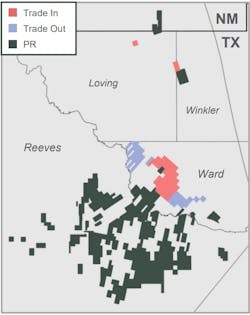
@import url(‘https://fonts.googleapis.com/css2?family=Inter:wght@100..900&display=swap’); .ebm-page__main h1, .ebm-page__main h2, .ebm-page__main h3, .ebm-page__main h4, .ebm-page__main h5, .ebm-page__main h6 { font-family: Inter; } body { line-height: 150%; letter-spacing: 0.025em; } button, .ebm-button-wrapper { font-family: Inter; } .label-style { text-transform: uppercase; color: var(–color-grey); font-weight: 600; font-size: 0.75rem; } .caption-style { font-size: 0.75rem; opacity: .6; } #onetrust-pc-sdk [id*=btn-handler], #onetrust-pc-sdk [class*=btn-handler] { background-color: #c19a06 !important; border-color: #c19a06 !important; } #onetrust-policy a, #onetrust-pc-sdk a, #ot-pc-content a { color: #c19a06 !important; } #onetrust-consent-sdk #onetrust-pc-sdk .ot-active-menu { border-color: #c19a06 !important; } #onetrust-consent-sdk #onetrust-accept-btn-handler, #onetrust-banner-sdk #onetrust-reject-all-handler, #onetrust-consent-sdk #onetrust-pc-btn-handler.cookie-setting-link { background-color: #c19a06 !important; border-color: #c19a06 !important; } #onetrust-consent-sdk .onetrust-pc-btn-handler { color: #c19a06 !important; border-color: #c19a06 !important; } The leaders of Permian Resources Corp., Midland, have lifted their production and capital spending forecasts for 2026 after recently closing on a $520 million acquisition, exercising an option for a 5,600-acre bolt-on buy and growing its working interest in completed wells more than expected. Permian Resources on July 31 closed on the purchase of about 20,500 acres in the Delaware basin’s Ward County that are largely non-operated and produce about 5,000 boe/d. The land sits adjacent to Permian property but James Walter, co-chief executive officer, told analysts on Aug. 6 that his team have since struck a deal with another operator that will trade some of the acquired bolt-on parcels as well as other acreage with goals of densifying Permian Resources’ holdings and lowering the share of acres that are non-operated or have low working interest. Permian Resources Corp. Permian Resources’ trade in Ward County with another operator is expected to close later this quarter. <!–> ]–> “The trade also increases the number of operating net locations from 50 to 120 while increasing the average lateral length by 20%,” Hickey said. “We view this trade as a true win-win for [Permian Resources] and our counterparty, who

Read More »

Canada rig count down 3 units

The rig count in Canada fell by 3 units to 216 rigs working for the week ended Aug. 7, according to data from Baker Hughes. A 4-rig drop in oil-directed rigs in Canada was partially offset by a 2-unit gain in gas-directed rigs. There were 146 oil-directed rigs working in Canada this week, while those drilling for gas ended the week at 65 units working. The overall US drilling rig count was unchanged this week at 588 rigs working. That number is up 49 units from this time last year. In the US, 3 additional rigs were drilling for oil, bringing the total count to 454. That number is up 43 units from this time last year. The number of gas-directed rigs fell by 3 to 124 working for the week. This time last year, 123 rigs were drilling for gas in the US. There were 572 rigs drilling on US land this week, unchanged from last week and up 48 from the year-ago period. A 1-rig increase in offshore rigs offset a 1-unit decrease in rigs drilling in inland waters. There were 14 rigs drilling offshore and 2 in inland waters this week. Leading the major oil-and gas-producing states was Texas with a 2-unit gain to end the week with 275 rigs working. The count is up 32 units from this time in 2025. Pennsylvania and Wyoming each dropped a rig to bring the respective rig counts to 16 and 15 for the week.

Read More »

Orlen’s Mažeikiai refinery to benefit from renewable electricity

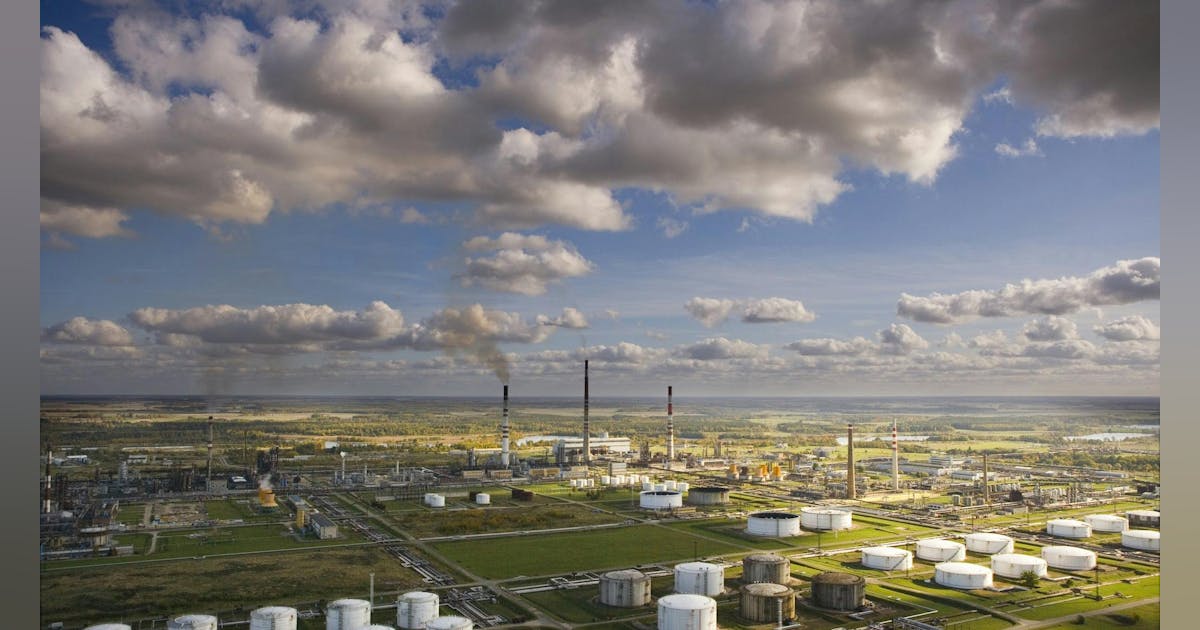
Orlen SA has brought a 42.2-Mw solar photovoltaic (PV) farm online to supply renewable energy that will help to power operations at subsidiary Orlen Lietuva AB’s 10.4-million tonne/year refinery in Mažeikiai, Lithuania. Operable as of Aug. 11 and designed to generate about 45 gigawatt-hours (Gw-hr)/year of electricity, the Mažeikiai solar farm aims to reduce the refinery’s electricity procurement costs by about €4 million/year while supporting Orlen’s goal of increasing the share of renewables across its portfolio, the company said. Located on site across 60 hectares on the refinery’s grounds, the solar farm consists of about 68,000 bifacial photovoltaic modules. Each module is rated at 620 w, the bifacial design of the modules enabling the capture of sunlight on both sides to improve energy output during lower-light conditions on cloudy days, according to Orlen. The solar PV farm’s generation of about 45 Gw-hr of electricity will cover roughly 7% of the Mažeikiai manufacturing complex, where it will be dedicated to supplying power for day-to-day refinery operations, office buildings, and other critical infrastructure at the site. Completed at an overall investment of nearly €35 million, Orlen said the solar farm project received €2.5 million in support from the European Union’s Modernization Fund. Energy transition, efficiency Alongside strengthening the refinery’s energy security by providing an on-site source of reliable electricity, the new solar farm advances Orlen’s commitment to advancing regional energy transition initiatives. “This is an important step towards reducing the environmental impact of our operations and lowering the [Mažeikiai] refinery’s operating costs,” said Dariusz Zonenberg, Orlen Lietuva’s chief executive officer. “The project will increase the share of Orlen Lietuva’s electricity demand met by its own renewable generation, strengthening the company’s competitiveness and supporting the Orlen Group’s long-term strategy,” Zonenberg added. Orlen said the project supports its 2035 strategy to expand renewable energy

Read More »

ADNOC Gas advances its largest-ever gas processing expansion

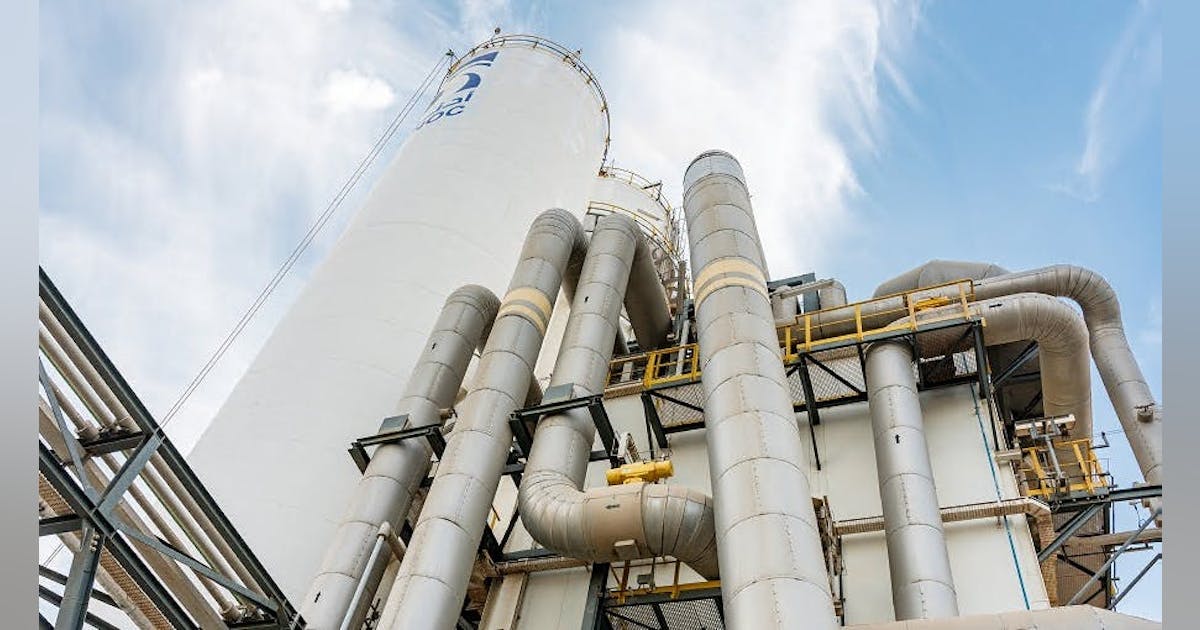
Abu Dhabi National Oil Co. (ADNOC) subsidiary ADNOC Gas PLC has let a contract to Tecnimont SPA—a subsidiary of Maire SPA—to provide a suite of services for the third phase of the operator’s broader multibillion-dollar, multiphased Rich Gas Development (RGD) project that aims to expand the company’s natural gas processing capacity to meet rising energy demand and secure the United Arab Emirates’ (UAE) reliability as a global energy supplier. As part of the $4.3-billion contract officially revealed on Aug. 10 following intimations to the market in releases dated June 4 and May 20 that withheld the identity of the operator and project, Tecnimont will deliver engineering, procurement, and construction (EPC) services for ADNOC Gas’ RGD Phase 3 expansion involving the addition of a fifth NGL fractionation unit at the Ruwais NGL complex in Abu Dhabi, Maire said. Alongside the NGL fractionation unit designed to separate various hydrocarbon components, as well as treatment and sweetening systems to remove impurities and ensure product quality, Maire confirmed Tecnimont’s scope of work also will cover EPC for a new regeneration gas treatment unit, a propane refrigeration system, ancillary systems, and associated storage installations of the RGD Phase 3 project. Scheduled for completion in 2030, the Phase 3 plant will have an output capacity of 23,000 tonnes/day, equivalent to about 8 million tonnes/year (tpy), according to the service provider. Confirmation of the Phase 3 contract award follows ADNOC Gas’ announcement earlier on Aug. 10 that it had taken final investment decision on both Phase 2 and Phase 3 of the RGD project, including the operator’s separate and concurrent award to Wison Engineering Ltd. for the project’s second phase. As part of the $3.9-billion RGD Phase 3 contract, Wison Engineering will deliver EPC services for a new 670-MMcfd natural gas processing train at the operator’s Habshan

Read More »

Texas Tightens Oversight of Data Center Development

Texas has spent the past decade building one of the most data center-friendly policy environments in the United States. But the state’s political posture is tightening. The emerging message from Austin is that continued data center growth will face greater scrutiny over grid costs, water use, tax incentives and community impacts. What is interesting about this policy conversation is that the Texas Legislature is not in regular session. The 89th regular session ended June 2, 2025, and the 90th Legislature does not convene until January 12, 2027. What has occurred instead is a concentrated period of interim committee work, gubernatorial recommendations, implementation of Senate Bill 6, calls for a special session, and regulatory action by the Public Utility Commission of Texas and the Electric Reliability Council of Texas. Together, those efforts are creating the framework for a broader legislative debate in 2027 while already affecting projects seeking ERCOT interconnection, infrastructure costs and site-selection decisions. Abbott Sets Out a New Policy Framework The policy shift accelerated June 10, when Gov. Greg Abbott directed the PUCT to require data centers to fully fund the electric infrastructure needed to serve their operations and directed PUCT and ERCOT to identify additional actions available under existing authority. Separately, Abbott pledged to work with lawmakers in 2027 on legislation requiring data centers to add electric capacity, use water-efficient cooling systems, report electricity and water use, phase out outdated tax incentives and adopt additional protections for neighboring communities. The most consequential shift began June 10, when Gov. Greg Abbott sent state electricity regulators a sweeping list of data center policy priorities. Abbott called for future legislation requiring new facilities to add generation to the Texas grid, pay the full cost of their interconnection and related infrastructure, use closed-loop or similarly water-efficient cooling systems, and file annual reports

Read More »

NVIDIA Pushes the AI Factory From Rack to Asset Class

Making Compute Underwritable Huang expanded the argument a day later in an NVIDIA blog describing AI factory compute as an emerging investable asset class. NVIDIA’s case begins with a definition. The company does not describe its compute platform simply as a GPU. It includes accelerated computing, networking, systems software, AI frameworks and the CUDA software ecosystem surrounding the hardware. That wider platform matters to the financing thesis because NVIDIA argues it increases the number of potential users for an installed AI system. An NVIDIA DSX AI factory could support language models, vision, speech, biological computing, robotics, physical AI and other workloads. The same infrastructure could potentially move among customers, clouds or operators as demand changes. In financial terms, NVIDIA is arguing for fungibility. That could become particularly important to lenders and infrastructure investors trying to determine what happens if an original customer disappears, a contract expires or the economics of a particular workload change. A GPU cluster tied economically to one speculative tenant is one thing. Compute that can be redeployed across a large global market of clouds, enterprises, AI developers and model providers is a different risk proposition. NVIDIA contends that this breadth of potential offtakers helps protect residual value. Whether institutional markets ultimately price that risk the way NVIDIA hopes remains to be seen. But the company is now explicitly trying to establish a financial framework around that premise. Challenging the Traditional Depreciation Curve NVIDIA’s second argument is that software can extend the economic life of installed hardware. CUDA is central to that case. The company maintains that successive software improvements can increase the performance and efficiency of systems that have already been deployed, allowing the same hardware to produce more useful work at lower cost over time. That does not eliminate hardware obsolescence. New GPU generations continue

Read More »

The Next Data Center Constraint: Trust

When Facts Aren’t Enough Few places offer a more revealing test case than Loudoun County, Virginia. Data Center Alley has spent decades living with data center development at a scale most emerging markets will never approach. Rizer said Loudoun’s experience gives the county an unusually deep record with which to answer questions about environmental impacts, infrastructure and economic benefits. But those facts increasingly struggle to penetrate the broader public debate. Rizer said Loudoun today has more than 250 data centers, while the entire sector uses less than 10% of the county water system. He also pointed to improved air quality over the past decade and approximately $1.2 billion in tax revenue from the industry. Yet he acknowledged that simply producing another data point does little good when residents no longer trust the people presenting it. “I call it community concern whack-a-mole, because every time you address one thing, there are three others that pop up,” Rizer said. The problem, in his view, has become partly emotional rather than informational. “You can’t change how people think until you change how they feel,” he said. “And right now they feel angry, they feel confused, they are fearful, they are mistrustful, both of government and the big tech industry.” That distinction matters. The industry’s instinct has often been to counter criticism with facts: tax receipts, job numbers, water-use calculations, emissions data or explanations of how a particular cooling system works. Those facts remain important. But Rizer’s argument is that the industry must first rebuild enough credibility for communities to hear them. The Industry’s Unforced Errors Not all of the distrust has arrived from outside the industry. Rizer and Waitkunas were equally pointed about mistakes by developers and operators that have given opponents powerful examples to use against data center projects elsewhere. “The industry

Read More »

Reports: Data Center Expansion Finds Its Contours

AI Density Is Arriving Unevenly Inside the data center, the AI transition remains equally uneven. Uptime’s 2026 survey found the average modal, or most common, rack density across respondents exceeding 11 kW for the first time, up from 9 kW in 2025. But that number requires context. A relatively small group of very high-density facilities pulls the average upward. Without those facilities, Uptime puts average modal rack density at 7.8 kW, only modestly higher than 7.5 kW in 2025. The industry therefore continues to operate two realities at once: a vast installed base running conventional rack densities and a rapidly emerging class of AI facilities pushing far beyond them. The latter is becoming more visible. Some 24% of Uptime respondents now report racks at 30 kW or higher, up from 19% last year. Much of the increase occurred above 50 kW, and some operators reported deployments exceeding 100 kW. Still, most surveyed facilities have no racks at 30 kW or above. AI inference is also moving up the density curve. For the first time in Uptime’s survey, generative AI inference matched AI training as a driver of respondents’ highest-density deployments, with 21% citing each workload. That matters because inference potentially pushes AI infrastructure requirements beyond a relatively concentrated population of model-training campuses and into a broader set of facilities and markets. Power Is Both Constraint and Risk No issue connects the three reports more consistently than power. It limits new site availability. It redirects development toward emerging markets. It shapes community debates. It affects density and cooling architecture. And once a facility is operating, it remains the largest source of outage risk. Uptime says 56% of operators who experienced an impactful outage identified power as the primary cause of their most recent incident. The institute cautions against treating the increase

Read More »

DCF Poll: What Will Constrain Data Center Growth Next?

Matt Vincent is Editor in Chief of Data Center Frontier, where he leads editorial strategy and coverage focused on the infrastructure powering cloud computing, artificial intelligence, and the digital economy. A veteran B2B technology journalist with more than two decades of experience, Vincent specializes in the intersection of data centers, power, cooling, and emerging AI-era infrastructure. Since assuming the EIC role in 2023, he has helped guide Data Center Frontier’s coverage of the industry’s transition into the gigawatt-scale AI era, with a focus on hyperscale development, behind-the-meter power strategies, liquid cooling architectures, and the evolving energy demands of high-density compute, while working closely with the Digital Infrastructure Group at Endeavor Business Media to expand the brand’s analytical and multimedia footprint. Vincent also hosts The Data Center Frontier Show podcast, where he interviews industry leaders across hyperscale, colocation, utilities, and the data center supply chain to examine the technologies and business models reshaping digital infrastructure. Since its inception he serves as Head of Content for the Data Center Frontier Trends Summit. Before becoming Editor in Chief, he served in multiple senior editorial roles across Endeavor Business Media’s digital infrastructure portfolio, with coverage spanning data centers and hyperscale infrastructure, structured cabling and networking, telecom and datacom, IP physical security, and wireless and Pro AV markets. He began his career in 2005 within PennWell’s Advanced Technology Division and later held senior editorial positions supporting brands such as Cabling Installation & Maintenance, Lightwave Online, Broadband Technology Report, and Smart Buildings Technology. Vincent is a frequent moderator, interviewer, and keynote speaker at industry events including the HPC Forum, where he delivers forward-looking analysis on how AI and high-performance computing are reshaping digital infrastructure. He graduated with honors from Indiana University Bloomington with a B.A. in English Literature and Creative Writing and lives in southern New Hampshire with

Read More »

Is your networking built for AI’s traffic patterns and data volumes?

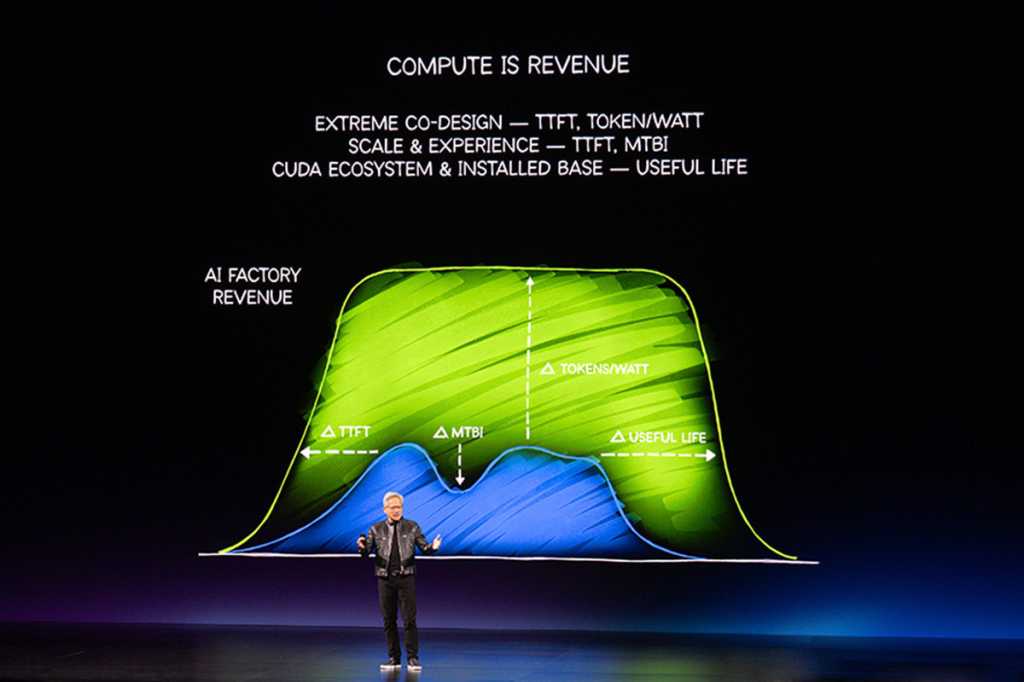
As data centers evolve into AI factories, compute has shifted from a cost center to a revenue driver. “Compute is revenue,” said Jensen Huang, co-founder and CEO of NVIDIA. “Without compute, there is no way to generate tokens. Without tokens, there’s no way to generate revenue. So, in this new world of AI, compute equals revenue.” This reframe changes an organizations’ calculus. If compute is revenue, what do you optimize for? Here are 5 questions to consider: Are you measuring what actually drives AI factory revenue? Most AI factories are power-constrained, so tokens per watt dictate how much revenue you can generate and the cost per token impacts the AI factory profit margin. But neither of these metrics should be evaluated at a single operating point. Batch jobs, real-time chat, and agentic workloads demand different points on the throughput-latency curve. AI chips that perform well at only a few points will underserve the full range of workloads. Additional key operational metrics like time to first token (TTFT), mean time between interruptions (MTBI), and platform useful life are the bedrock of AI factory efficiency. They dictate how quickly an AI factory comes online to generate tokens, the reliability of its revenue streams, and its long-term ability to remain productive as AI workloads evolve. How does agentic AI change what your CPU needs to deliver? Data center CPUs have historically been optimized for parallel throughput, where more cores improve aggregate capacity.  Agentic workloads run in loops and make different demands. The model reasons on the GPU, the CPU executes tool calls such as code compilation and data retrieval, and the result returns to the GPU so the model can reason again. Every step runs in sequence, gated by the one before it. Per-core performance and memory latency determine how fast each step

Read More »

Microsoft will invest $80B in AI data centers in fiscal 2025

And Microsoft isn’t the only one that is ramping up its investments into AI-enabled data centers. Rival cloud service providers are all investing in either upgrading or opening new data centers to capture a larger chunk of business from developers and users of large language models (LLMs).  In a report published in October 2024, Bloomberg Intelligence estimated that demand for generative AI would push Microsoft, AWS, Google, Oracle, Meta, and Apple would between them devote $200 billion to capex in 2025, up from $110 billion in 2023. Microsoft is one of the biggest spenders, followed closely by Google and AWS, Bloomberg Intelligence said. Its estimate of Microsoft’s capital spending on AI, at $62.4 billion for calendar 2025, is lower than Smith’s claim that the company will invest $80 billion in the fiscal year to June 30, 2025. Both figures, though, are way higher than Microsoft’s 2020 capital expenditure of “just” $17.6 billion. The majority of the increased spending is tied to cloud services and the expansion of AI infrastructure needed to provide compute capacity for OpenAI workloads. Separately, last October Amazon CEO Andy Jassy said his company planned total capex spend of $75 billion in 2024 and even more in 2025, with much of it going to AWS, its cloud computing division.

Read More »

John Deere unveils more autonomous farm machines to address skill labor shortage

Join our daily and weekly newsletters for the latest updates and exclusive content on industry-leading AI coverage. Learn More Self-driving tractors might be the path to self-driving cars. John Deere has revealed a new line of autonomous machines and tech across agriculture, construction and commercial landscaping. The Moline, Illinois-based John Deere has been in business for 187 years, yet it’s been a regular as a non-tech company showing off technology at the big tech trade show in Las Vegas and is back at CES 2025 with more autonomous tractors and other vehicles. This is not something we usually cover, but John Deere has a lot of data that is interesting in the big picture of tech. The message from the company is that there aren’t enough skilled farm laborers to do the work that its customers need. It’s been a challenge for most of the last two decades, said Jahmy Hindman, CTO at John Deere, in a briefing. Much of the tech will come this fall and after that. He noted that the average farmer in the U.S. is over 58 and works 12 to 18 hours a day to grow food for us. And he said the American Farm Bureau Federation estimates there are roughly 2.4 million farm jobs that need to be filled annually; and the agricultural work force continues to shrink. (This is my hint to the anti-immigration crowd). John Deere’s autonomous 9RX Tractor. Farmers can oversee it using an app. While each of these industries experiences their own set of challenges, a commonality across all is skilled labor availability. In construction, about 80% percent of contractors struggle to find skilled labor. And in commercial landscaping, 86% of landscaping business owners can’t find labor to fill open positions, he said. “They have to figure out how to do

Read More »

2025 playbook for enterprise AI success, from agents to evals

Join our daily and weekly newsletters for the latest updates and exclusive content on industry-leading AI coverage. Learn More 2025 is poised to be a pivotal year for enterprise AI. The past year has seen rapid innovation, and this year will see the same. This has made it more critical than ever to revisit your AI strategy to stay competitive and create value for your customers. From scaling AI agents to optimizing costs, here are the five critical areas enterprises should prioritize for their AI strategy this year. 1. Agents: the next generation of automation AI agents are no longer theoretical. In 2025, they’re indispensable tools for enterprises looking to streamline operations and enhance customer interactions. Unlike traditional software, agents powered by large language models (LLMs) can make nuanced decisions, navigate complex multi-step tasks, and integrate seamlessly with tools and APIs. At the start of 2024, agents were not ready for prime time, making frustrating mistakes like hallucinating URLs. They started getting better as frontier large language models themselves improved. “Let me put it this way,” said Sam Witteveen, cofounder of Red Dragon, a company that develops agents for companies, and that recently reviewed the 48 agents it built last year. “Interestingly, the ones that we built at the start of the year, a lot of those worked way better at the end of the year just because the models got better.” Witteveen shared this in the video podcast we filmed to discuss these five big trends in detail. Models are getting better and hallucinating less, and they’re also being trained to do agentic tasks. Another feature that the model providers are researching is a way to use the LLM as a judge, and as models get cheaper (something we’ll cover below), companies can use three or more models to

Read More »

OpenAI’s red teaming innovations define new essentials for security leaders in the AI era

Join our daily and weekly newsletters for the latest updates and exclusive content on industry-leading AI coverage. Learn More OpenAI has taken a more aggressive approach to red teaming than its AI competitors, demonstrating its security teams’ advanced capabilities in two areas: multi-step reinforcement and external red teaming. OpenAI recently released two papers that set a new competitive standard for improving the quality, reliability and safety of AI models in these two techniques and more. The first paper, “OpenAI’s Approach to External Red Teaming for AI Models and Systems,” reports that specialized teams outside the company have proven effective in uncovering vulnerabilities that might otherwise have made it into a released model because in-house testing techniques may have missed them. In the second paper, “Diverse and Effective Red Teaming with Auto-Generated Rewards and Multi-Step Reinforcement Learning,” OpenAI introduces an automated framework that relies on iterative reinforcement learning to generate a broad spectrum of novel, wide-ranging attacks. Going all-in on red teaming pays practical, competitive dividends It’s encouraging to see competitive intensity in red teaming growing among AI companies. When Anthropic released its AI red team guidelines in June of last year, it joined AI providers including Google, Microsoft, Nvidia, OpenAI, and even the U.S.’s National Institute of Standards and Technology (NIST), which all had released red teaming frameworks. Investing heavily in red teaming yields tangible benefits for security leaders in any organization. OpenAI’s paper on external red teaming provides a detailed analysis of how the company strives to create specialized external teams that include cybersecurity and subject matter experts. The goal is to see if knowledgeable external teams can defeat models’ security perimeters and find gaps in their security, biases and controls that prompt-based testing couldn’t find. What makes OpenAI’s recent papers noteworthy is how well they define using human-in-the-middle

Read More »