AI Density Is Arriving Unevenly
Inside the data center, the AI transition remains equally uneven.
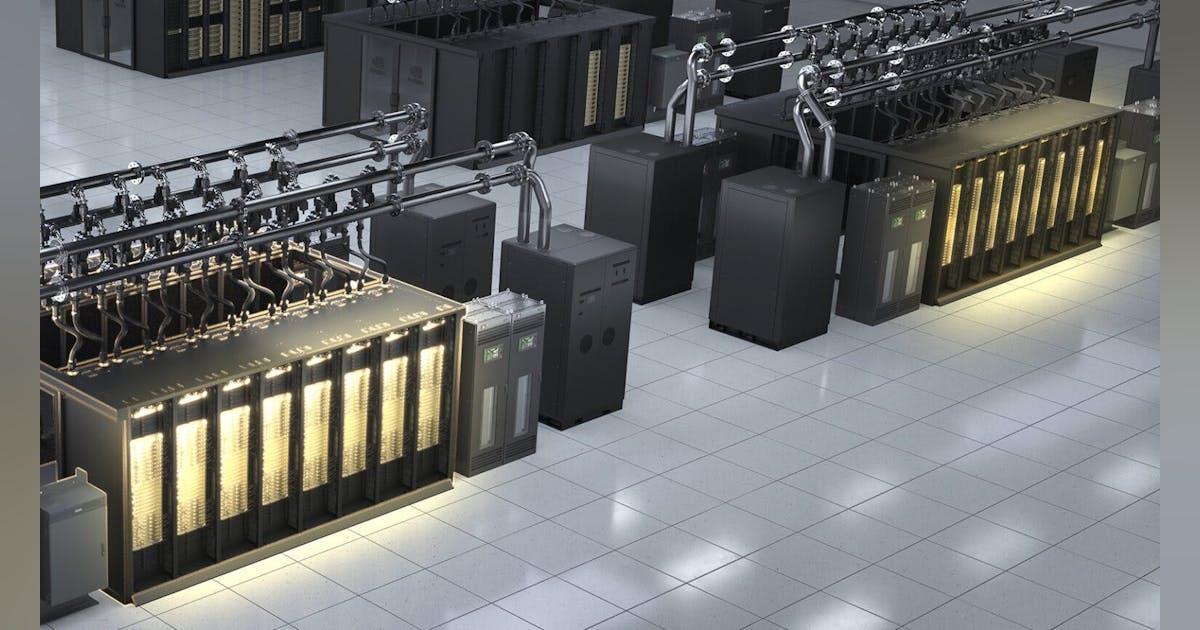
Uptime’s 2026 survey found the average modal, or most common, rack density across respondents exceeding 11 kW for the first time, up from 9 kW in 2025.
But that number requires context.
A relatively small group of very high-density facilities pulls the average upward. Without those facilities, Uptime puts average modal rack density at 7.8 kW, only modestly higher than 7.5 kW in 2025.
The industry therefore continues to operate two realities at once: a vast installed base running conventional rack densities and a rapidly emerging class of AI facilities pushing far beyond them.
The latter is becoming more visible. Some 24% of Uptime respondents now report racks at 30 kW or higher, up from 19% last year. Much of the increase occurred above 50 kW, and some operators reported deployments exceeding 100 kW. Still, most surveyed facilities have no racks at 30 kW or above.
AI inference is also moving up the density curve.
For the first time in Uptime’s survey, generative AI inference matched AI training as a driver of respondents’ highest-density deployments, with 21% citing each workload.
That matters because inference potentially pushes AI infrastructure requirements beyond a relatively concentrated population of model-training campuses and into a broader set of facilities and markets.
Power Is Both Constraint and Risk
No issue connects the three reports more consistently than power.
It limits new site availability. It redirects development toward emerging markets. It shapes community debates. It affects density and cooling architecture. And once a facility is operating, it remains the largest source of outage risk.
Uptime says 56% of operators who experienced an impactful outage identified power as the primary cause of their most recent incident. The institute cautions against treating the increase from 2025 as evidence of a sudden decline in resiliency, noting that power has historically accounted for more than half of major incidents in several recent years.
But the boundaries of power risk are expanding.
Uptime points to utility capacity, interconnection timelines, grid congestion, fuel logistics and equipment supply chains as factors increasingly affecting data center resiliency, particularly as operators consider more on-site generation and increasingly power-intensive facilities.
At the same time, operators continue making incremental progress on outage frequency. Fewer than half of respondents reported an impactful outage during the prior three years.
The financial consequences, however, are getting larger. Among respondents reporting significant, serious or severe incidents, 71% said their most damaging outage cost at least $100,000 in 2026, up from 57% in 2025.
Greater digital dependence means even stable outage severity can carry larger business consequences.
And technology alone does not solve the problem.
Uptime found that 89% of respondents who experienced impactful downtime believed the incident could have been avoided through better management, processes or configuration, up from 80% in 2024.
For an industry deploying unprecedented amounts of redundant electrical equipment, that is an important reminder: resilience still depends heavily on operating discipline.
Who Operates 66 GW?
The workforce question may become equally difficult.
More than half of Uptime respondents — 53% — reported difficulty finding qualified candidates for open positions, up from 46% in 2025. A third reported retention problems, including 28% who had employees hired away by competitors.
Electrical skills are becoming particularly scarce.
Uptime found the largest reported skills gaps in electrical and junior/mid-level operations roles, both at 38%, followed by operations management at 35% and mechanical roles at 34%.
Reported electrical skills gaps have increased 13 percentage points since 2023.
Uptime connects that directly to the scale of construction underway: gigawatts of new electrical infrastructure must be built, commissioned, maintained and operated at a time when many regions already face shortages of experienced electrical workers.
Against JLL’s 66 GW construction pipeline, the question becomes concrete.
The industry needs the land and power to build that capacity. It also needs the people capable of making it work.
Capital Continues to Find the Sector
For now, capital appears more accommodating than many of the physical constraints.
JLL estimates that North America’s construction pipeline will require more than $700 billion in permanent debt financing through 2028. Project-finance liquidity remains available across credit tiers, although pricing and leverage differ considerably depending on tenant credit and project risk.
Data center CMBS and ABS issuance totaled $17 billion during the first half of 2026, up 29% year over year. AI-related transactions generated more than $32 billion of high-yield bond issuance during the period.
Institutional capital is also paying increasingly large prices for access to operating platforms, development pipelines, power and hyperscale relationships.
JLL points to the $40 billion Aligned Data Centers transaction, the STT GDC take-private, the atNorth acquisition and SoftBank’s acquisition of DigitalBridge as evidence of deep investor conviction in digital infrastructure as a long-duration asset class.
Capital, in other words, is still trying to accelerate the buildout.
Much of the physical world surrounding data centers is applying the brakes.
The Execution Test
The combined findings from Synergy, JLL and Uptime suggest that 2026 may be remembered less as the year the industry discovered the size of AI demand than the year it began confronting what delivering that demand actually requires.
The numbers remain enormous.
Cloud infrastructure spending is accelerating. U.S. capacity is on course to double. North America has 66 GW under construction. Vacancy is effectively zero. Hyperscalers, neoclouds and AI companies are competing aggressively for capacity. Investors continue committing enormous pools of debt and equity.
None of those indicators point toward an industry preparing to stand still.
But the next phase will be governed increasingly by factors that do not scale as quickly as capital or compute demand.
Grid infrastructure takes years. Equipment supply chains remain constrained. Skilled operators and electricians cannot be created overnight. Communities are demanding a clearer account of local costs and benefits. Existing facilities must accommodate new density profiles without sacrificing resiliency. And the consequences of operational failure rise as more of the economy depends on the infrastructure.
Synergy’s capacity forecast, JLL’s construction pipeline and Uptime’s operator survey are therefore describing different parts of the same problem.
The opportunity is enormous.
So is the work required to deliver it.