Stay Ahead, Stay ONMINE

Energy Department Announces $500 Million to Secure America’s Critical Mineral and Battery Supply Chains

WASHINGTON—The U.S. Department of Energy’s (DOE) Office of Critical Minerals and Energy Innovation (CMEI) today announced $500 million for seven selected projects to expand critical mineral and material processing, battery manufacturing, and recycling capacity in the United States. In accordance with President Trump’s Executive Order, Unleashing American Energy, the selected projects advance the President’s agenda […]

WASHINGTON—The U.S. Department of Energy’s (DOE) Office of Critical Minerals and Energy Innovation (CMEI) today announced $500 million for seven selected projects to expand critical mineral and material processing, battery manufacturing, and recycling capacity in the United States. In accordance with President Trump’s Executive Order, Unleashing American Energy, the selected projects advance the President’s agenda to strengthen America’s domestic critical minerals and materials supply chains, reduce reliance on foreign sources, bolster national security, and advance American energy dominance.

“For too long, America has depended on foreign actors for critical materials essential to modern life that underpin our economy, energy security, and national security,” said U.S. Secretary of Energy Chris Wright. “President Trump is reversing that dependence by securing our critical supply chains, unleashing American industry, and bringing critical materials production and processing back to the United States.”

“DOE is taking decisive action to secure the critical supply chains necessary to power our nation,” said Assistant Secretary of Energy Audrey Robertson. “These projects underscore DOE’s commitment to driving innovation, reducing reliance on foreign sources, and promoting American energy dominance.”

This is the third round of funding from DOE’s Battery Materials Processing and Battery Manufacturing and Recycling programs, which support battery materials processing, recycling, and manufacturing projects. These include demonstration projects, construction of commercial-scale facilities, and retrofitting or retooling existing facilities. 

Critical minerals and materials are essential to American industry, energy production, and national security. Expanding domestic capacity will help ensure the resources America needs are processed, manufactured, and recycled in the United States. 

Information on the selected projects is available here and here.

Shape
Shape
Stay Ahead

Explore More Insights

Stay ahead with more perspectives on cutting-edge power, infrastructure, energy,  bitcoin and AI solutions. Explore these articles to uncover strategies and insights shaping the future of industries.

Shape

Golar contracts CIMC Raffles for fourth FLNG

Golar LNG Ltd. last week executed an engineering, procurement, and construction (EPC) contract with Yantai CIMC Raffles Offshore Ltd. (CIMC Raffles) for its fourth floating LNG (FLNG) and second MKII design FLNG vessel with an annual liquefaction capacity of 3.5 million tonnes/year (tpy). Golar’s fourth FLNG is expected to be

Read More »

Cerebras reimagines AI cluster design with switchless CS-4 architecture

Inside the Cerebras fabric, the trade-off is different. Direct Wafer Links are proprietary, so third-party accelerators cannot be added to the fabric. Scaling it requires additional Cerebras systems, Shah said. Faruqui said the operational divide may be more significant than the physical networking challenge. Existing orchestration environments are generally designed

Read More »

IBM moves closer to fault-tolerant quantum computing at scale

“This is our first shared ultra cold environment that allows multiple chips within to be connected together, and it really provides enough space for all the high-density wiring that’s needed,” explained IBM Fellow Jerry Chow, CTO, quantum-centric supercomputing, during a media briefing. “So we’re really starting to architect the entire

Read More »

Reports: Google partnering with AMD for next-gen hybrid TPU

For AMD, meanwhile, a role in Google’s next-generation TPU program would provide another indication that its CPU and chip-design technologies are becoming relevant to the rapidly expanding custom AI accelerator market. One analyst approved of the proposed alliance. “I think it makes good sense. AMD has more than proven that they’re

Read More »

Energy Department Announces $500 Million to Secure America’s Critical Mineral and Battery Supply Chains

WASHINGTON—The U.S. Department of Energy’s (DOE) Office of Critical Minerals and Energy Innovation (CMEI) today announced $500 million for seven selected projects to expand critical mineral and material processing, battery manufacturing, and recycling capacity in the United States. In accordance with President Trump’s Executive Order, Unleashing American Energy, the selected projects advance the President’s agenda to strengthen America’s domestic critical minerals and materials supply chains, reduce reliance on foreign sources, bolster national security, and advance American energy dominance. “For too long, America has depended on foreign actors for critical materials essential to modern life that underpin our economy, energy security, and national security,” said U.S. Secretary of Energy Chris Wright. “President Trump is reversing that dependence by securing our critical supply chains, unleashing American industry, and bringing critical materials production and processing back to the United States.” “DOE is taking decisive action to secure the critical supply chains necessary to power our nation,” said Assistant Secretary of Energy Audrey Robertson. “These projects underscore DOE’s commitment to driving innovation, reducing reliance on foreign sources, and promoting American energy dominance.” This is the third round of funding from DOE’s Battery Materials Processing and Battery Manufacturing and Recycling programs, which support battery materials processing, recycling, and manufacturing projects. These include demonstration projects, construction of commercial-scale facilities, and retrofitting or retooling existing facilities.  Critical minerals and materials are essential to American industry, energy production, and national security. Expanding domestic capacity will help ensure the resources America needs are processed, manufactured, and recycled in the United States.  Information on the selected projects is available here and here.

Read More »

bp lets Shah Deniz compression automation contract

bp has let a contract to Emerson to deliver automation technologies for the Shah Deniz Compression project offshore Azerbaijan. Emerson will provide integrated control and safety systems aimed at enhancing production, safety, and reliability on the new offshore compression platform. The contract includes systems to provide process control, safety shutdown, fire and gas detection, and power management. Together, these systems deliver real-time visibility and remote control of critical operations, Emerson said. The $2.9 billion Shah Deniz Compression project, which includes an electrically powered, normally unattended offshore production platform, is a next stage development of the Caspian Sea Shah Deniz field. Designed to access low-pressure gas reserves and maximize overall recovery, the platform will be equipped with four 11 Mw compressors and serve as the central compression hub for gas from the Shah Deniz Alpha and Bravo platforms. The platform will operate remotely from bp’s onshore Sangachal terminal 55 km south of Baku. The project is expected to enable about 50 billion cu m of additional gas and about 25 million bbl of condensate production and export. Construction is scheduled to be completed in 2029, with first gas compression expected from the Shah Deniz Alpha platform in 2029 and from the Shah Deniz Bravo platform in 2030. The agreement follows a previous automation contract bp signed with Emerson for the Azeri Central East and Shah Deniz Stage 2 developments. bp is operator at Shah Deniz (29.99%) with partners Lukoil (19.99%), TPAO (19%), Cenub Qaz Dehlizi (16.02%), NICO (10%), and MVM (5%).

Read More »

Federal court voids Texas GulfLink license over agency’s ‘serious procedural errors’

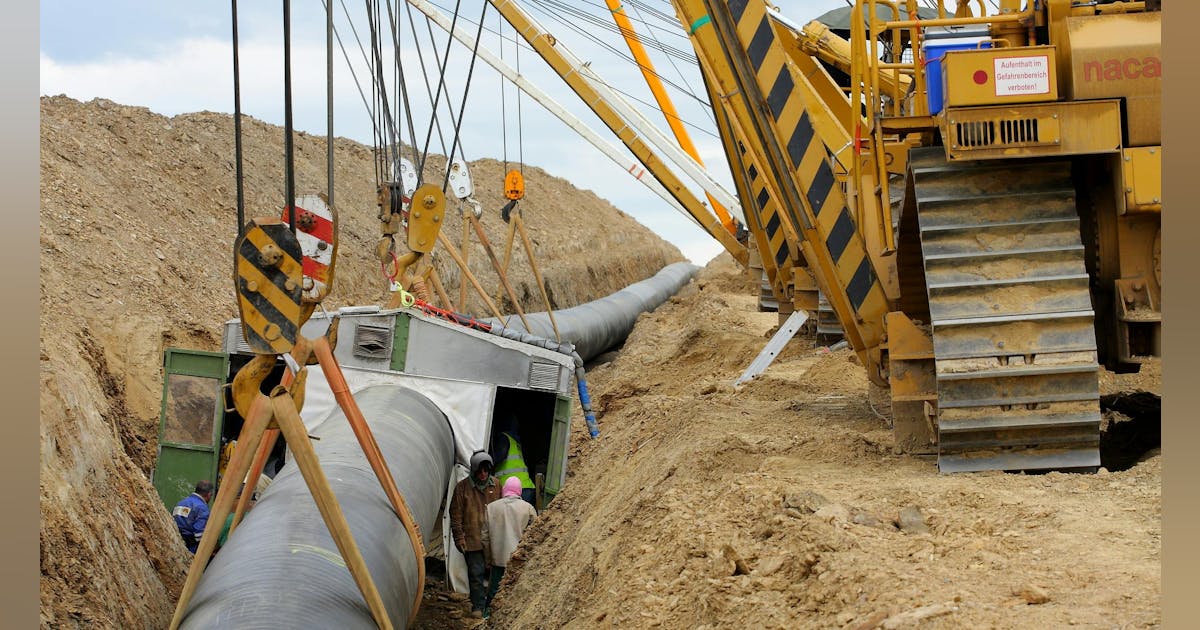
The ruling voids the license, halting all construction or progress. Sentinel Midstream declined comment on the ruling and would not answer questions about the status of construction. GulfLink, sited about 30 miles offshore Freeport, Tex., is designed to export up to 1 million b/d via Very Large Crude Carriers (VLCCs) to the government of Japan and Freeport Commodities. The project involves a 44-mile, 42-in. OD pipeline and was scheduled to begin operations around 2028. The estimated $2.1 billion investment was funded as part of a broader trade agreement between the US and Japan. The legal battle stems from a specific rule in the Deepwater Port Act of 1974 that dictates that the federal government can only permit one crude oil deepwater port, including any supporting infrastructure, within a single designated “application area.” Because the competing SPOT project’s pipeline route physically overlaps and intersects GulfLink’s lines, the plaintiff—Citizens for Clean Air & Clean Water in Brazoria County (Better Brazoria), represented by Earthjustice—successfully argued that MARAD violated the “one port” rule when issuing GulfLink’s license in February. The three-judge panel found that MARAD “improperly drew” the map designing the project’s official boundaries to exclude the pipelines and approved two overlapping projects in the same zone instead of only licensing one. The court wrote that the scope of the error made vacatur, not the less serious remand without vacatur, the appropriate remedy. Vacatur deems the license invalid and is used when the court finds “serious procedural errors” that cannot be easily explained or fixed with minor changes. Remand without vacatur sends the decision back to the agency for corrections but leaves the current license in place in the meantime. SPOT project status The $2.5-3-billion SPOT project, developed by Enterprise Products Partners in partnership with Enbridge Inc., also lies about 30 miles from Freeport. Designed to handle VLCCs,

Read More »

IEA: Emergency reserve withdrawals slow

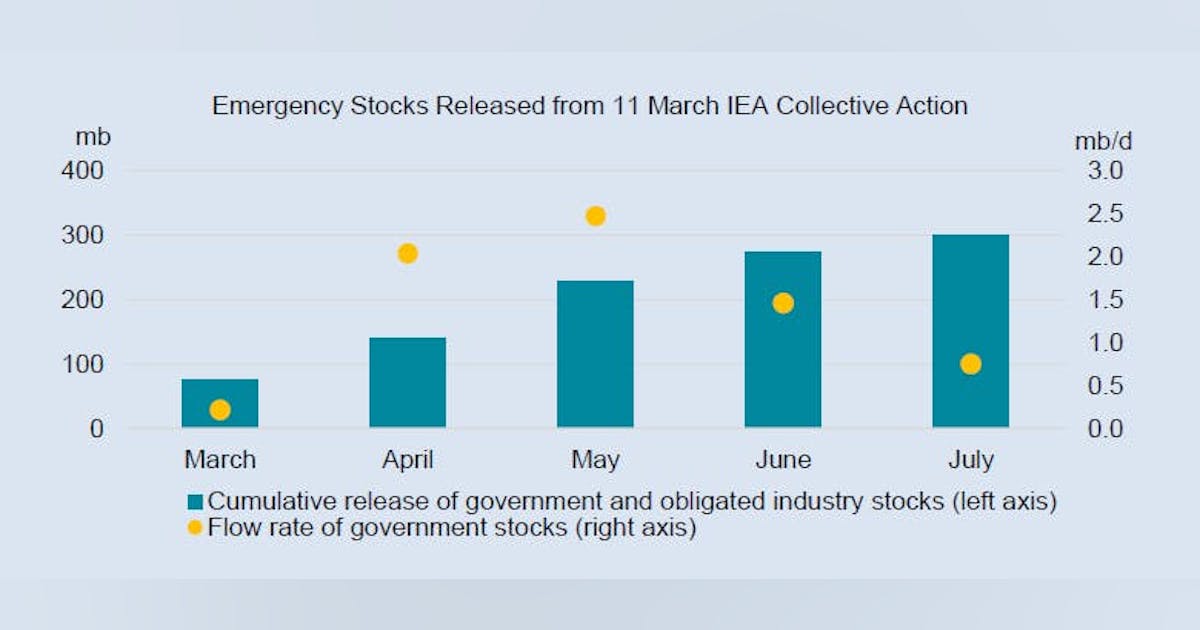
The International Energy Agency (IEA) member countries continued to release emergency oil stocks in July, but the pace of withdrawals slowed sharply as crude supply availability improved in parts of the Asia Pacific and the market faced increasing product tightness. IEA countries released 26 million bbl of emergency stocks in July, bringing cumulative releases to 300 million bbl since the agency announced a coordinated 400-million bbl action on Mar. 11. Government stock draws averaged 750,000 b/d in July, down from 1.5 million b/d in June and 2.5 million b/d in May. The slowdown was particularly pronounced among IEA members in Asia Oceania, which released 4 million bbl from emergency stocks in July, compared with 8 million bbl in June and 44 million bbl in May. The decline reflected improved crude oil supply availability in Japan and Korea. The US also reduced the pace of emergency stock releases. Withdrawals from the Strategic Petroleum Reserve totaled 17 million bbl in July, roughly half the volume released in June. More than 100 million bbl of the emergency stocks committed under the IEA’s 400-million bbl coordinated action has yet to reach the market. The timing of the remaining releases will depend on market developments and broader oil supply security considerations in coming months, according to the agency. Most of the remaining emergency stocks consist of crude oil, however, limiting their ability to ease increasingly tight oil product markets, IEA said. At the same time, global observed oil inventories fell sharply in July amid severely constrained shipping through the Strait of Hormuz. Stocks declined by 69 million bbl, equivalent to 2.2 million b/d, with oil on water accounting for more than 90% of the decline. Oil on water fell by 63 million bbl, or about 2 million b/d, reflecting higher arrivals and lower exports amid

Read More »

Devon takes FID on 4.5-bcfd Permian pipeline

Devon Energy Corp. has taken final investment decision (FID) on the Solitude Pipeline System, a WhiteWater-led joint venture that will build two 48-in. OD natural gas pipelines connecting the Permian basin to Katy, Tex. Devon describes Solitude as the latest in a series of steps it has taken to integrate and consolidate the infrastructure supporting its Delaware basin position. Solitude is designed for a phased build-out of 2.25 bcfd entering service second-half 2029, followed by a similarly sized second phase in 2030 and the ability to expand further to meet shipper demand. Construction and in-service timing remain subject to customary regulatory approvals. Devon has secured firm transportation capacity and will hold a 25% equity interest in the joint venture, alongside WhiteWater (50%), MPLX (10%), Diamondback Energy (7.5%) and Western Midstream Partners (7.5%). Permian producers have long absorbed volatile and periodically negative pricing at the Waha hub, where takeaway capacity has repeatedly failed to keep pace with associated gas growth. Devon says the pipeline will move the majority of its Delaware gas out of Waha and into markets that will be tied to expanding LNG export and power generation. Devon has initiated the process of securing international LNG-linked pricing, including a 100-MMcfd agreement beginning in 2027 and an additional 150 MMcfd in 2028. “Solitude is not a standalone investment; it is the next step in an integrated model we have been building for years,” said Clay Gaspar, Devon’s president and chief executive officer. “We have taken the hardest constraints in the Delaware [b]asin: water, processing, compression, takeaway and power, and have de-risked the physical constraints turning each one into a source of value rather than a tax on our returns. The company’s integrated model continues to lower our cost of supply, driving free cash flow higher and deepening our peer-leading Delaware

Read More »

JAPEX begins drilling second well for Tomakomai CCS Project

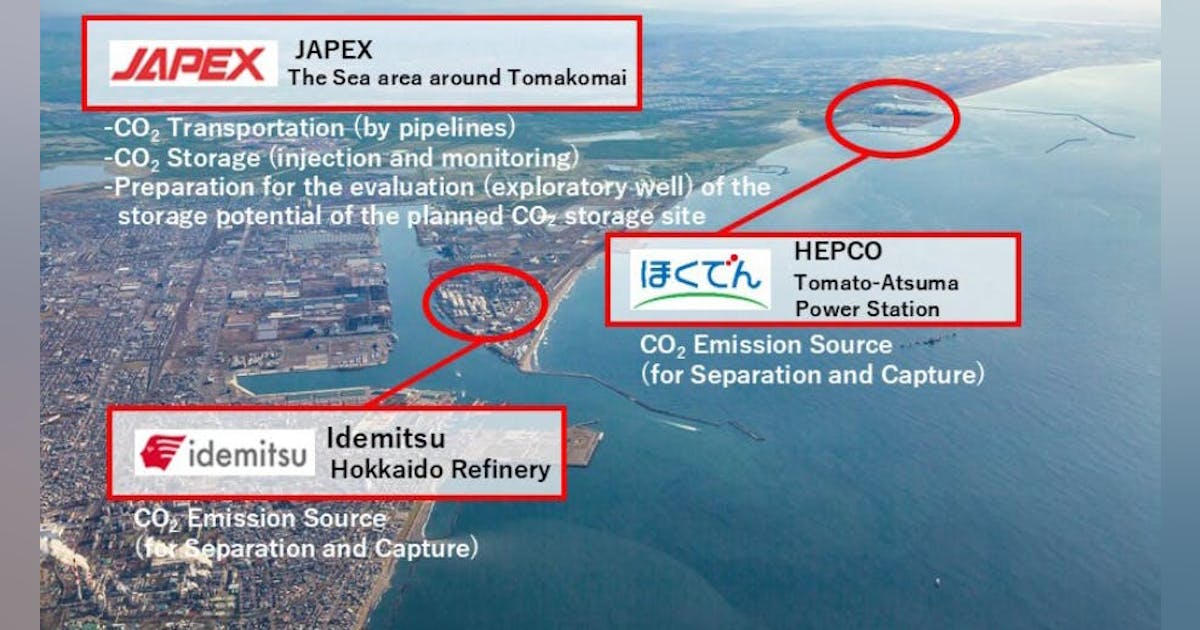
@import url(‘https://fonts.googleapis.com/css2?family=Inter:wght@100..900&display=swap’); .ebm-page__main h1, .ebm-page__main h2, .ebm-page__main h3, .ebm-page__main h4, .ebm-page__main h5, .ebm-page__main h6 { font-family: Inter; } body { line-height: 150%; letter-spacing: 0.025em; } button, .ebm-button-wrapper { font-family: Inter; } .label-style { text-transform: uppercase; color: var(–color-grey); font-weight: 600; font-size: 0.75rem; } .caption-style { font-size: 0.75rem; opacity: .6; } #onetrust-pc-sdk [id*=btn-handler], #onetrust-pc-sdk [class*=btn-handler] { background-color: #c19a06 !important; border-color: #c19a06 !important; } #onetrust-policy a, #onetrust-pc-sdk a, #ot-pc-content a { color: #c19a06 !important; } #onetrust-consent-sdk #onetrust-pc-sdk .ot-active-menu { border-color: #c19a06 !important; } #onetrust-consent-sdk #onetrust-accept-btn-handler, #onetrust-banner-sdk #onetrust-reject-all-handler, #onetrust-consent-sdk #onetrust-pc-btn-handler.cookie-setting-link { background-color: #c19a06 !important; border-color: #c19a06 !important; } #onetrust-consent-sdk .onetrust-pc-btn-handler { color: #c19a06 !important; border-color: #c19a06 !important; } Japan Petroleum Exploration (JAPEX) began drilling its second exploratory well for carbon dioxide (CO2) storage to advance the Tomakomai carbon capture and storage (CCS) project in the Tomakomai area of Hokkaido. Undertaken for drilling on Aug. 15, the well utilizes extended reach drilling from a drilling rig in Masago-cho, Tomakomai City, toward the seabed to confirm the existence of formations suitable for CO2 storage. Drilling of this second exploratory well follows start of exploratory drilling for the project in late 2025. Launched for initial study in 2023, the Tomakomai CCS project aims to separate and capture CO2 from Idemitsu Kosan Co. Ltd.’s Hokkaido refinery and Hokkaido Electric Power Co. Inc.’s Tomato Atsuma power station. The CO2 will be injected underground by JAPEX. While JAPEX said it intends to make a final investment decision (FID) on the Tomakomai CCS project based on combined results of both exploratory wells, the company did not specify a timeframe for when FID would occur. The partners previously said they intend to achieve a CO2-storage volume of 1.5-2 million tonnes/year in 2030. 

Read More »

Texas Tightens Oversight of Data Center Development

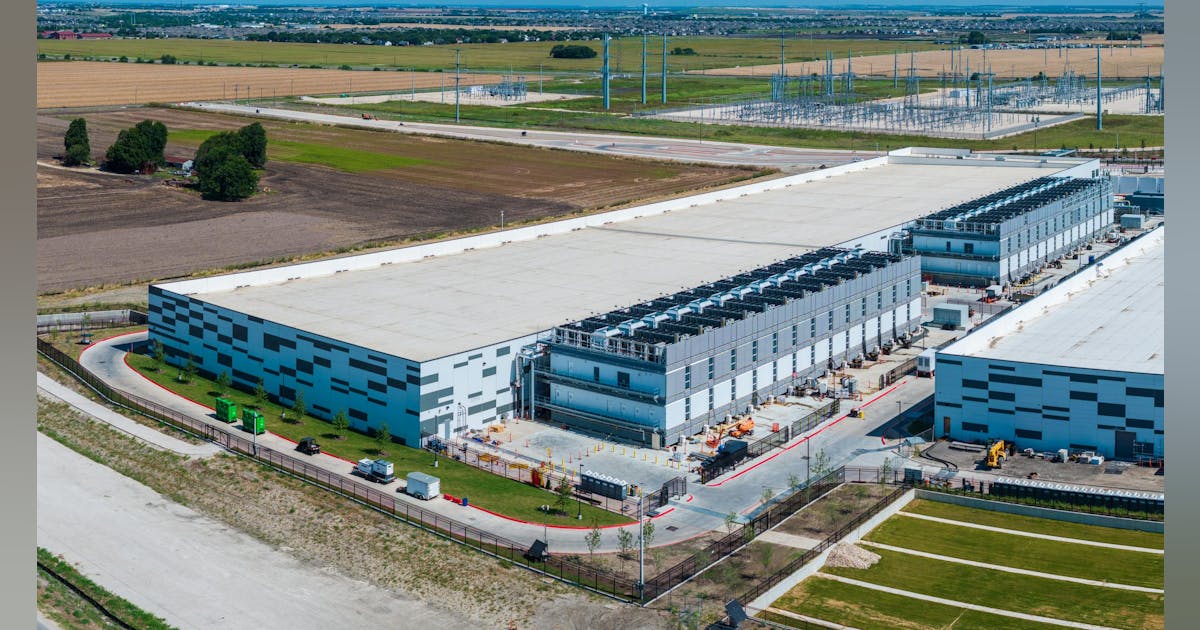
Texas has spent the past decade building one of the most data center-friendly policy environments in the United States. But the state’s political posture is tightening. The emerging message from Austin is that continued data center growth will face greater scrutiny over grid costs, water use, tax incentives and community impacts. What is interesting about this policy conversation is that the Texas Legislature is not in regular session. The 89th regular session ended June 2, 2025, and the 90th Legislature does not convene until January 12, 2027. What has occurred instead is a concentrated period of interim committee work, gubernatorial recommendations, implementation of Senate Bill 6, calls for a special session, and regulatory action by the Public Utility Commission of Texas and the Electric Reliability Council of Texas. Together, those efforts are creating the framework for a broader legislative debate in 2027 while already affecting projects seeking ERCOT interconnection, infrastructure costs and site-selection decisions. Abbott Sets Out a New Policy Framework The policy shift accelerated June 10, when Gov. Greg Abbott directed the PUCT to require data centers to fully fund the electric infrastructure needed to serve their operations and directed PUCT and ERCOT to identify additional actions available under existing authority. Separately, Abbott pledged to work with lawmakers in 2027 on legislation requiring data centers to add electric capacity, use water-efficient cooling systems, report electricity and water use, phase out outdated tax incentives and adopt additional protections for neighboring communities. The most consequential shift began June 10, when Gov. Greg Abbott sent state electricity regulators a sweeping list of data center policy priorities. Abbott called for future legislation requiring new facilities to add generation to the Texas grid, pay the full cost of their interconnection and related infrastructure, use closed-loop or similarly water-efficient cooling systems, and file annual reports

Read More »

NVIDIA Pushes the AI Factory From Rack to Asset Class

Making Compute Underwritable Huang expanded the argument a day later in an NVIDIA blog describing AI factory compute as an emerging investable asset class. NVIDIA’s case begins with a definition. The company does not describe its compute platform simply as a GPU. It includes accelerated computing, networking, systems software, AI frameworks and the CUDA software ecosystem surrounding the hardware. That wider platform matters to the financing thesis because NVIDIA argues it increases the number of potential users for an installed AI system. An NVIDIA DSX AI factory could support language models, vision, speech, biological computing, robotics, physical AI and other workloads. The same infrastructure could potentially move among customers, clouds or operators as demand changes. In financial terms, NVIDIA is arguing for fungibility. That could become particularly important to lenders and infrastructure investors trying to determine what happens if an original customer disappears, a contract expires or the economics of a particular workload change. A GPU cluster tied economically to one speculative tenant is one thing. Compute that can be redeployed across a large global market of clouds, enterprises, AI developers and model providers is a different risk proposition. NVIDIA contends that this breadth of potential offtakers helps protect residual value. Whether institutional markets ultimately price that risk the way NVIDIA hopes remains to be seen. But the company is now explicitly trying to establish a financial framework around that premise. Challenging the Traditional Depreciation Curve NVIDIA’s second argument is that software can extend the economic life of installed hardware. CUDA is central to that case. The company maintains that successive software improvements can increase the performance and efficiency of systems that have already been deployed, allowing the same hardware to produce more useful work at lower cost over time. That does not eliminate hardware obsolescence. New GPU generations continue

Read More »

The Next Data Center Constraint: Trust

When Facts Aren’t Enough Few places offer a more revealing test case than Loudoun County, Virginia. Data Center Alley has spent decades living with data center development at a scale most emerging markets will never approach. Rizer said Loudoun’s experience gives the county an unusually deep record with which to answer questions about environmental impacts, infrastructure and economic benefits. But those facts increasingly struggle to penetrate the broader public debate. Rizer said Loudoun today has more than 250 data centers, while the entire sector uses less than 10% of the county water system. He also pointed to improved air quality over the past decade and approximately $1.2 billion in tax revenue from the industry. Yet he acknowledged that simply producing another data point does little good when residents no longer trust the people presenting it. “I call it community concern whack-a-mole, because every time you address one thing, there are three others that pop up,” Rizer said. The problem, in his view, has become partly emotional rather than informational. “You can’t change how people think until you change how they feel,” he said. “And right now they feel angry, they feel confused, they are fearful, they are mistrustful, both of government and the big tech industry.” That distinction matters. The industry’s instinct has often been to counter criticism with facts: tax receipts, job numbers, water-use calculations, emissions data or explanations of how a particular cooling system works. Those facts remain important. But Rizer’s argument is that the industry must first rebuild enough credibility for communities to hear them. The Industry’s Unforced Errors Not all of the distrust has arrived from outside the industry. Rizer and Waitkunas were equally pointed about mistakes by developers and operators that have given opponents powerful examples to use against data center projects elsewhere. “The industry

Read More »

Reports: Data Center Expansion Finds Its Contours

AI Density Is Arriving Unevenly Inside the data center, the AI transition remains equally uneven. Uptime’s 2026 survey found the average modal, or most common, rack density across respondents exceeding 11 kW for the first time, up from 9 kW in 2025. But that number requires context. A relatively small group of very high-density facilities pulls the average upward. Without those facilities, Uptime puts average modal rack density at 7.8 kW, only modestly higher than 7.5 kW in 2025. The industry therefore continues to operate two realities at once: a vast installed base running conventional rack densities and a rapidly emerging class of AI facilities pushing far beyond them. The latter is becoming more visible. Some 24% of Uptime respondents now report racks at 30 kW or higher, up from 19% last year. Much of the increase occurred above 50 kW, and some operators reported deployments exceeding 100 kW. Still, most surveyed facilities have no racks at 30 kW or above. AI inference is also moving up the density curve. For the first time in Uptime’s survey, generative AI inference matched AI training as a driver of respondents’ highest-density deployments, with 21% citing each workload. That matters because inference potentially pushes AI infrastructure requirements beyond a relatively concentrated population of model-training campuses and into a broader set of facilities and markets. Power Is Both Constraint and Risk No issue connects the three reports more consistently than power. It limits new site availability. It redirects development toward emerging markets. It shapes community debates. It affects density and cooling architecture. And once a facility is operating, it remains the largest source of outage risk. Uptime says 56% of operators who experienced an impactful outage identified power as the primary cause of their most recent incident. The institute cautions against treating the increase

Read More »

DCF Poll: What Will Constrain Data Center Growth Next?

Matt Vincent is Editor in Chief of Data Center Frontier, where he leads editorial strategy and coverage focused on the infrastructure powering cloud computing, artificial intelligence, and the digital economy. A veteran B2B technology journalist with more than two decades of experience, Vincent specializes in the intersection of data centers, power, cooling, and emerging AI-era infrastructure. Since assuming the EIC role in 2023, he has helped guide Data Center Frontier’s coverage of the industry’s transition into the gigawatt-scale AI era, with a focus on hyperscale development, behind-the-meter power strategies, liquid cooling architectures, and the evolving energy demands of high-density compute, while working closely with the Digital Infrastructure Group at Endeavor Business Media to expand the brand’s analytical and multimedia footprint. Vincent also hosts The Data Center Frontier Show podcast, where he interviews industry leaders across hyperscale, colocation, utilities, and the data center supply chain to examine the technologies and business models reshaping digital infrastructure. Since its inception he serves as Head of Content for the Data Center Frontier Trends Summit. Before becoming Editor in Chief, he served in multiple senior editorial roles across Endeavor Business Media’s digital infrastructure portfolio, with coverage spanning data centers and hyperscale infrastructure, structured cabling and networking, telecom and datacom, IP physical security, and wireless and Pro AV markets. He began his career in 2005 within PennWell’s Advanced Technology Division and later held senior editorial positions supporting brands such as Cabling Installation & Maintenance, Lightwave Online, Broadband Technology Report, and Smart Buildings Technology. Vincent is a frequent moderator, interviewer, and keynote speaker at industry events including the HPC Forum, where he delivers forward-looking analysis on how AI and high-performance computing are reshaping digital infrastructure. He graduated with honors from Indiana University Bloomington with a B.A. in English Literature and Creative Writing and lives in southern New Hampshire with

Read More »

Is your networking built for AI’s traffic patterns and data volumes?

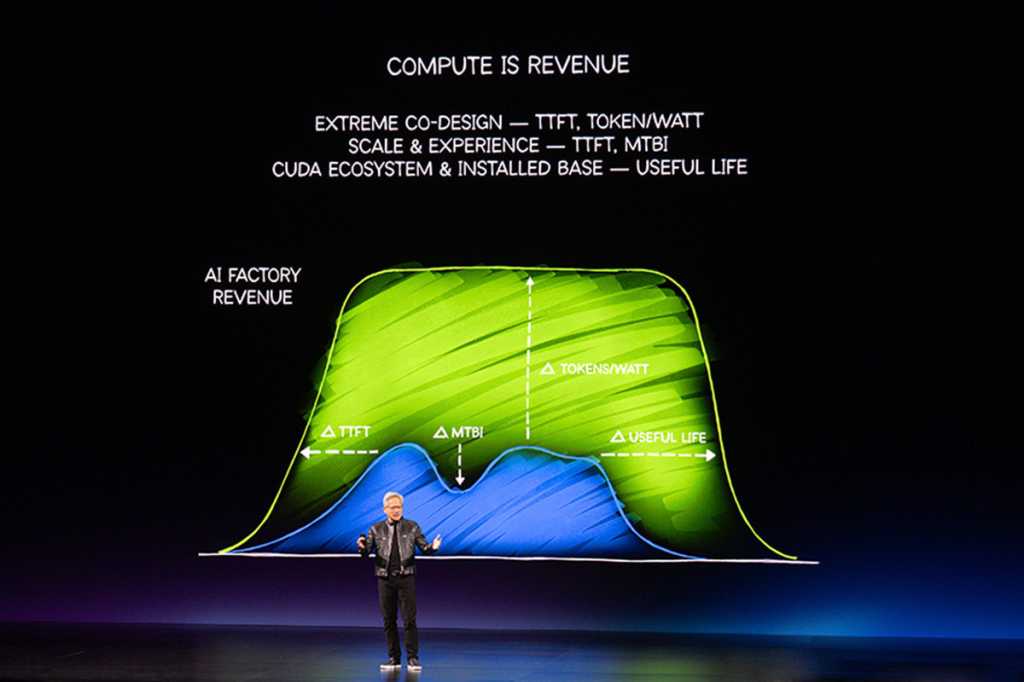
As data centers evolve into AI factories, compute has shifted from a cost center to a revenue driver. “Compute is revenue,” said Jensen Huang, co-founder and CEO of NVIDIA. “Without compute, there is no way to generate tokens. Without tokens, there’s no way to generate revenue. So, in this new world of AI, compute equals revenue.” This reframe changes an organizations’ calculus. If compute is revenue, what do you optimize for? Here are 5 questions to consider: Are you measuring what actually drives AI factory revenue? Most AI factories are power-constrained, so tokens per watt dictate how much revenue you can generate and the cost per token impacts the AI factory profit margin. But neither of these metrics should be evaluated at a single operating point. Batch jobs, real-time chat, and agentic workloads demand different points on the throughput-latency curve. AI chips that perform well at only a few points will underserve the full range of workloads. Additional key operational metrics like time to first token (TTFT), mean time between interruptions (MTBI), and platform useful life are the bedrock of AI factory efficiency. They dictate how quickly an AI factory comes online to generate tokens, the reliability of its revenue streams, and its long-term ability to remain productive as AI workloads evolve. How does agentic AI change what your CPU needs to deliver? Data center CPUs have historically been optimized for parallel throughput, where more cores improve aggregate capacity.  Agentic workloads run in loops and make different demands. The model reasons on the GPU, the CPU executes tool calls such as code compilation and data retrieval, and the result returns to the GPU so the model can reason again. Every step runs in sequence, gated by the one before it. Per-core performance and memory latency determine how fast each step

Read More »

Microsoft will invest $80B in AI data centers in fiscal 2025

And Microsoft isn’t the only one that is ramping up its investments into AI-enabled data centers. Rival cloud service providers are all investing in either upgrading or opening new data centers to capture a larger chunk of business from developers and users of large language models (LLMs).  In a report published in October 2024, Bloomberg Intelligence estimated that demand for generative AI would push Microsoft, AWS, Google, Oracle, Meta, and Apple would between them devote $200 billion to capex in 2025, up from $110 billion in 2023. Microsoft is one of the biggest spenders, followed closely by Google and AWS, Bloomberg Intelligence said. Its estimate of Microsoft’s capital spending on AI, at $62.4 billion for calendar 2025, is lower than Smith’s claim that the company will invest $80 billion in the fiscal year to June 30, 2025. Both figures, though, are way higher than Microsoft’s 2020 capital expenditure of “just” $17.6 billion. The majority of the increased spending is tied to cloud services and the expansion of AI infrastructure needed to provide compute capacity for OpenAI workloads. Separately, last October Amazon CEO Andy Jassy said his company planned total capex spend of $75 billion in 2024 and even more in 2025, with much of it going to AWS, its cloud computing division.

Read More »

John Deere unveils more autonomous farm machines to address skill labor shortage

Join our daily and weekly newsletters for the latest updates and exclusive content on industry-leading AI coverage. Learn More Self-driving tractors might be the path to self-driving cars. John Deere has revealed a new line of autonomous machines and tech across agriculture, construction and commercial landscaping. The Moline, Illinois-based John Deere has been in business for 187 years, yet it’s been a regular as a non-tech company showing off technology at the big tech trade show in Las Vegas and is back at CES 2025 with more autonomous tractors and other vehicles. This is not something we usually cover, but John Deere has a lot of data that is interesting in the big picture of tech. The message from the company is that there aren’t enough skilled farm laborers to do the work that its customers need. It’s been a challenge for most of the last two decades, said Jahmy Hindman, CTO at John Deere, in a briefing. Much of the tech will come this fall and after that. He noted that the average farmer in the U.S. is over 58 and works 12 to 18 hours a day to grow food for us. And he said the American Farm Bureau Federation estimates there are roughly 2.4 million farm jobs that need to be filled annually; and the agricultural work force continues to shrink. (This is my hint to the anti-immigration crowd). John Deere’s autonomous 9RX Tractor. Farmers can oversee it using an app. While each of these industries experiences their own set of challenges, a commonality across all is skilled labor availability. In construction, about 80% percent of contractors struggle to find skilled labor. And in commercial landscaping, 86% of landscaping business owners can’t find labor to fill open positions, he said. “They have to figure out how to do

Read More »

2025 playbook for enterprise AI success, from agents to evals

Join our daily and weekly newsletters for the latest updates and exclusive content on industry-leading AI coverage. Learn More 2025 is poised to be a pivotal year for enterprise AI. The past year has seen rapid innovation, and this year will see the same. This has made it more critical than ever to revisit your AI strategy to stay competitive and create value for your customers. From scaling AI agents to optimizing costs, here are the five critical areas enterprises should prioritize for their AI strategy this year. 1. Agents: the next generation of automation AI agents are no longer theoretical. In 2025, they’re indispensable tools for enterprises looking to streamline operations and enhance customer interactions. Unlike traditional software, agents powered by large language models (LLMs) can make nuanced decisions, navigate complex multi-step tasks, and integrate seamlessly with tools and APIs. At the start of 2024, agents were not ready for prime time, making frustrating mistakes like hallucinating URLs. They started getting better as frontier large language models themselves improved. “Let me put it this way,” said Sam Witteveen, cofounder of Red Dragon, a company that develops agents for companies, and that recently reviewed the 48 agents it built last year. “Interestingly, the ones that we built at the start of the year, a lot of those worked way better at the end of the year just because the models got better.” Witteveen shared this in the video podcast we filmed to discuss these five big trends in detail. Models are getting better and hallucinating less, and they’re also being trained to do agentic tasks. Another feature that the model providers are researching is a way to use the LLM as a judge, and as models get cheaper (something we’ll cover below), companies can use three or more models to

Read More »

OpenAI’s red teaming innovations define new essentials for security leaders in the AI era

Join our daily and weekly newsletters for the latest updates and exclusive content on industry-leading AI coverage. Learn More OpenAI has taken a more aggressive approach to red teaming than its AI competitors, demonstrating its security teams’ advanced capabilities in two areas: multi-step reinforcement and external red teaming. OpenAI recently released two papers that set a new competitive standard for improving the quality, reliability and safety of AI models in these two techniques and more. The first paper, “OpenAI’s Approach to External Red Teaming for AI Models and Systems,” reports that specialized teams outside the company have proven effective in uncovering vulnerabilities that might otherwise have made it into a released model because in-house testing techniques may have missed them. In the second paper, “Diverse and Effective Red Teaming with Auto-Generated Rewards and Multi-Step Reinforcement Learning,” OpenAI introduces an automated framework that relies on iterative reinforcement learning to generate a broad spectrum of novel, wide-ranging attacks. Going all-in on red teaming pays practical, competitive dividends It’s encouraging to see competitive intensity in red teaming growing among AI companies. When Anthropic released its AI red team guidelines in June of last year, it joined AI providers including Google, Microsoft, Nvidia, OpenAI, and even the U.S.’s National Institute of Standards and Technology (NIST), which all had released red teaming frameworks. Investing heavily in red teaming yields tangible benefits for security leaders in any organization. OpenAI’s paper on external red teaming provides a detailed analysis of how the company strives to create specialized external teams that include cybersecurity and subject matter experts. The goal is to see if knowledgeable external teams can defeat models’ security perimeters and find gaps in their security, biases and controls that prompt-based testing couldn’t find. What makes OpenAI’s recent papers noteworthy is how well they define using human-in-the-middle

Read More »