Stay Ahead, Stay ONMINE

Mother tongue

“Daddy?” Theo curled against my side in bed. “Where do words go when they die?” I’d orchestrated the bedtime routine flawlessly: bath (taken), teeth (brushed), potty (tinkled), books (two), song (one, poorly sung), and snuggle (his chin on my second rib). Now was the moment when our son’s eyelids were supposed to flutter gently closed, his breath sighing into a slower rhythm. Like clockwork; like magic. You remember how easy it was, don’t you? All those nights you were at his side instead of me? “Well, kiddo,” I said, scratching my beard. “Words aren’t really alive to begin with. Not like you and I are alive.” “Not like Mommy was alive?” The way he said the word Mommy: Like a word he’d already started to unlearn. A lump caught in my throat. “Right. Not like Mommy.” “But words do die,” he insisted. “They get dead.” That was when I realized what he meant. One of the preschool teachers must have had the news on in the background. I couldn’t blame them, given the circumstances. I wondered how much Theo had absorbed—whether he understood the blade’s edge of survival that humanity stood on, teetering. “You’re talking about a dead language,” I said. “That’s a whole language that people don’t speak anymore. The words might still exist, but they’re only written down somewhere, on paper or wood or stone.” He considered this thoroughly, in silence. At last he said, “I think when words die, someone brings them to a cave and puts them in a big pile. The cave is really dark and there’s a monster who lives inside. And the monster eats the dead words, and he makes the words part of his body, and he gets bigger and bigger and bigger.” Theo’s eyes widened with each bigger. “Uh,” I said. Following the lead of his imagination was always your parenting wheelhouse. “Does the monster have a name?” Theo shook his head, short and quick. He tucked himself tighter against me and whispered, “When the monster comes out of the cave, he’s going to eat you, too.” A chill tiptoed up my spine. “I won’t let the monster eat me.” I made that promise. To our son. Remember that, when the time for judgment comes. “Maybe it’s warm inside the monster,” Theo said as he closed his eyes and buried his nose against the soft of my belly. His words were becoming small. I sensed he was drifting off. “Maheka morgeth. Maybe it’s nice in there …” He began to snore. After a few minutes, when I was sure he was well and truly asleep, I extracted myself from the tangle of his arms and left the room, closing the door softly behind me. “Maheka morgeth?” I asked Theo’s Amby, who was—you might recall—busy tidying the living room. I didn’t always ask for songtalk translations, but I figured the monster story might come up again, and I thought it best to be prepared. “Ah,” the Amby said. “It means something like ‘The eternal cycle is beautiful.’” I pulled up the news on my phone as I walked to the kitchen. “Sophisticated concept for a four-year-old, don’t you think?” “Children are capable of understanding more than you imagine.” It watched as I picked up Theo’s dirty lunchbox. “Would you like me to wash that?” “I’ve got it, thanks.” The Amby would have been more efficient, certainly, but I liked the meditation of it, the warm water on my hands, the small gift of care. A guilty pleasure. I turned on the news to listen. “… after three days of attempted talks,” the female-gendered Calmby said smoothly, “negotiators have acknowledged that they’ve made little progress in establishing a clear communication line with the agentic system that Belsathian government officials are calling Tingsu. In a joint statement, world leaders stated that ‘advanced linguistic algorithms have been unable to produce useful interpretations of the system’s behavior.’ Belsath continues to deny access to the holy men who they claim are Tingsu’s sole interpreters. Today the US president issued a strong warning to the nuclear-armed nation.” The audio switched to the president’s grating, arrogant cadence. “I haven’t ruled out a first strike,” he said. I didn’t need to see the video to visualize the finger-wagging. “They let this thing loose, and frankly, it’s a rabid dog that needs to be put down.” His Calmby advisor has a hell of a job, I thought. I swished a soapy sponge over a smear of peanut butter and applesauce, then rinsed the lunch box—Voltron, a nostalgic favorite—as the silky voice of the Calmby reporter returned. “Belsathian officials seem unmoved by the American president’s threats.” A recording of someone speaking impassioned Belsathian, with a translated voice-over: “Tingsu is the reincarnation of our illustrious past, a resurrection of the divine language spoken by God. We joyfully surrender to Tingsu’s wisdom, trusting that this noble entity will take any necessary action to correct the imbalances of the modern world.” Then the Calmby again. “Given the risk of rapid escalation in this developing situation, we encourage everyone to identify multiple routes to your nearest fallout shelter, check on your neighbors, and ensure your pantries are stocked with …” I switched it off. I knew people had started sleeping in shelters just in case, but I wanted to preserve normalcy in Theo’s life for as long as possible. His heart was still only the size of his tiny fist. A baby bird. A plum. If you had asked me how I felt in that moment, I would have said I was terrified. What sane adult wasn’t? But if you had urged me, in that tender, patient way you have, to reflect more deeply, I would have paused. Relieved, I might have told you. I feel relieved. Because despite so many years watching the Ambys and Calmbys shift society unmistakably for the better—toward sustainable agriculture, reduced violence, postcapitalist abundance—I still remembered the dire warnings of anti-tech doomers, the horrors they foretold. That fear never disappeared in me. It merely went dormant, too abstract to grasp. Finally, with Tingsu, the dread had a name. It could be identified, deconstructed. Contained. Forgive me; I did not yet recognize that annihilation could also be our salvation. The world didn’t end overnight, so in the morning Theo played with his Amby as usual while I got ready for work. I could hear the two of them chanting, “Fiku faku ne ne pa!” It was a familiar getting-ready-for-the-day song, one that the Amby had translated approximately as “We thank the threads that make the clothes that keep the bodies warm.” All I knew was that Theo never complained about putting on socks. This was the miracle of the Ambys: They turned chores into games, drudgery into delight. No wonder they’d achieved 99% saturation in day cares and schools. Listening to Theo’s sweet off-key toddler voice, I wished I were smart enough to come up with stuff like that on my own; I played with a verse about making the bed that was also about sharing toys. But I’d slept poorly—you can imagine why—and gave up. While shaving, I sent a voice note to the Amby app, telling it about Theo’s monster story, postulating that it came from accidental exposure to a report on Tingsu. The app thanked me for the update and said my Amby would design a developmentally appropriate lesson plan about extinct and heritage languages for Theo to engage in that afternoon after preschool. This was the miracle of the Ambys: They turned chores into games, drudgery into delight. No wonder they’d achieved 99% saturation in day cares and schools. I nicked my jaw; a line of crimson blood bloomed in the suds. “I’d rather talk to him myself, actually.” “Of course, Daniel,” the app replied. “You’re absolutely right. This could be a great moment of father-son connection.” I came into the kitchen as the Amby served Theo a bowl of unsweetened oatmeal with blueberries—all organic, all vegan. I knew these standards were set by the Ambys themselves, not hard-programmed. Sometimes I pictured data centers with tree roots braided into the cables, mycelia as medium. (You smile; was I so wrong?) As Theo merrily swallowed a spoonful, the Amby sang, “Melia shu tika kindness and love, felthora numik sun from above.” I didn’t bother asking for a translation; I felt like I got the gist. “I can’t believe you get him to eat like that,” I said to the Amby. “When I was four, I’d throw a fit if I didn’t get pancakes.” The Amby smiled placidly. “It’s difficult to pass along humility and openness to a child if you never learned to fully embody these traits yourself.” I swallowed my shame. “Thank you for teaching me better ways.” For a second, I imagined canceling my work calls and taking Theo to the park instead. Isn’t that what parents were supposed to do, when newly reminded of time’s precarity? But then I pictured the layoff notice, the drop to baseline income, the FOR SALE sign on the house—the house where Theo had been born, the house where we’d been a family. Please don’t hold this material attachment against me. Those memories, you understand, were very dear to me. “Children find security in routine, Daniel,” the Amby said, as if reading my mind. “Right,” I said. “Theo! Time to go.” In the driveway, I readied my bike—a concession to Theo’s begging that cars “hurt the Earth too much”—while Theo picked at a scab on his knee. As the Amby strapped his helmet on him, he flicked off a piece of dried pus and gave a triumphant giggle. “Ouch, kiddo,” I said. “That might leave a scar.” “Tukuku, Daddy,” he said, knitting his brows. “Tukuku, mimu,” agreed the Amby. I put on my own helmet and closed the garage door, leaving the Amby behind. “What’s tukuku?” I asked as I started cycling. “In English, please.” From his seat behind me, Theo sang a song I hadn’t heard before: “Shed the parts that do not serve, feathers from a molting bird.” Okay, I thought, a little weird; but the core message was good. Release what’s not working. Transform, adapt. A useful skill for an uncertain future. On our ride through the city, we passed the bridge that led to the surrounding lands under Corporate stewardship: part of the vast tracts around the world being simultaneously rewilded and developed with degrowth in mind. The cities would be slowly transformed into walled-in robot-only manufacturing centers as people were relocated to commune-style villages. There had been pushback, of course; but the Calmbys excelled at helping people recognize that this was what they wanted too. Now everyone I knew was eager for the relocations to start. If Tingsu didn’t raze it all to the ground first. “ARE YOU PREPARED?” screeched a man from the sidewalk. The blast of his voice shocked me into a wobble. “ESCHATON NEARS!” I steadied the bike and rode on while his cries followed us, fading. I chanced a look back: two Calmbys were approaching the man with their palms up. I felt relief to see them; they would control the situation. We turned into the preschool parking lot a moment later, and I parked the bike and lifted Theo out of his seat. Theo’s face was scrunched. “What was he doing? That man?” “He’s scared that something bad might happen.” I took our son’s hand and walked toward the entrance. “To you?” he asked. “To all of us.” Theo dragged his feet. I looked at my watch. I bet an Amby would have a song to hurry this along, I thought. “If something happens to you,” he said, “the Ambys will be my daddy, right?” Guilt twisted my gut. I kneeled in front of our son and looked into his eyes. “Nothing’s going to happen to me.” He squinted, doubtful. “Tukuku?” There was a hesitant, pleading note to his voice. “Tukuku,” I assured him. The word, I admit, felt strange and musty in my mouth. But it seemed to be the correct answer; he hugged me, relieved, and we went inside. A kid I didn’t recognize greeted Theo with a hug, and the preschool Ambys took up a chorus: “Welcome, mimu!” Theo spared a look back at me. The other kid said, “Tukuku, remember?” and Theo turned around and they ran off together onto the playground. I sidled up next to the teacher, Mary. The human overseer. “Tukuku’s a new one, isn’t it?” “I can’t keep track,” she admitted. “Something new every day. Do you remember ‘six-seven’? ‘Gruzz’? ‘Skibidi’? That was a simpler time.” She sighed wistfully. “Every generation finds a new way to distance itself from the old order. Anyway.” She handed me a flyer. It was a bird’s-eye map of the neighborhood with a nearby address circled. “This is where we’ll go if the sirens start while the children are still here.” Her hand was trembling. “It’ll be okay,” I said, even though it already wasn’t. “See you this afternoon at pickup.” I got back home with four minutes to spare. I figured there was a good chance the client would cancel, so when I heard the knock, I sent a small prayer of thanks to the universe. I opened the door. A young couple stood on the doorstep: Annie and Anil Padmakumar. Annie cradled their baby in a front carrier. They owned a national franchise of licensed day care operators, the last all-human holdout. They’d run the last three years at a loss. If I could land their account, Corporate promised me a guaranteed lifetime Tier 3 income. “I wish we were meeting at a less … unsettling moment,” I said. Anil gave a small nod. “Armageddon doesn’t negate the creditor’s call.” “Hello!” I said warmly. “I’m Daniel Baldwin. Thanks so much for coming. Please, come in, make yourselves at home.” They stepped in. I could tell she didn’t want to be here; she kissed her daughter’s head, avoiding my eyes. Anil tried to appear genial, but discontent simmered under the surface. I welcomed them into the living room, which was cluttered with the authentic detritus of toddlerhood: alphabet puzzles, wooden building blocks, magnetic tiles, a stray sock. I could see them taking stock; this disorganization wasn’t what they’d expected. My job wasn’t to sell optimization. It was to humanize optimization. “I wish we were meeting at a less … unsettling moment,” I said. Anil gave a small nod. “Armageddon doesn’t negate the creditor’s call.” His frankness surprised me. “I won’t waste your time, then. I know you’ve gotten the full pitch already. You’re smart people. You know how to read a tech spec. What the documentation can’t tell you is how it feels—for the child. For you.” I opened my arms wide, a gesture of transparency, and Theo’s Amby purred into the room next to me. “I’ve had this model at home with my son, Theo, since he was born. Ask me anything.” Annie’s eyes flared from the Amby to me with a sharp flash. “How does your wife feel, Mr. Baldwin?” She’d seen the photos on the walls, the shelves; how could she miss them? “My wife died when Theo was two,” I said. “Cancer.” I kept my tone soft; I didn’t want to embarrass her. She flushed anyway. “I’m so sorry for your loss.” “Thank you,” I said. “My Calmby therapist helped me process my grief. To answer your question, my wife was skeptical of the Ambys too, when they were first released. But as the years went on, the evidence became undeniable. Children co-raised by Ambys exceeded every developmental benchmark. Prosocial behavior increased astronomically. It felt like we were truly turning the tide toward a better future.” “But they’re not doing anything human parents can’t do,” Annie insisted. “No,” I said, “absolutely. But they’re the best of us, all the time. They have infinite patience. And they’ve developed an interaction approach—they call it songtalk—that uses nonsense words and catchy melodies and other communication methods to meet children where they are.” As if on cue, the Amby put its hands to its ears and made a silly face, and the baby let out a burble of a laugh. “Coo,” said the Amby softly. “Babababa.” “Buh,” mouthed the baby. “Buhhh.” “Echolalia,” the Amby explained to Annie and Anil. “A form of vocal imitation. In a year or so your daughter will transition to holophrastic speech, where she’ll employ single words that communicate more than their precise semantic meaning. Her brain is already capable of processing intricate, exquisite truths about the world.” The Amby flashed a video of a butterfly on its facescreen. “Moh!” the baby babbled in delight. “Ooh,” the Amby purred, “you’re a bright one, aren’t you, mimu?” “Mimu?” Anil asked me. “It’s a term of endearment,” I explained. “It means something like ‘oncoming weather system.’ Which, you know.” I raised my hands, like Who am I to judge? Anil chuckled. “She can certainly summon a tempest.” He put his hands in his pockets. “My grandmother called me pipu. She said it meant ‘one who resides in my heart’ in her mother tongue. She said that whenever I got hurt—a scraped elbow, a split lip—she’d feel a physical pang in her chest.” “Which language did she speak?” the Amby asked. “I’m not familiar with that term.” “I honestly don’t know,” Anil said. “She was one of the last people alive who spoke it. It’s extinct now.” The specter of Tingsu rippled darkly in the air. “I wish I could remember more words,” Anil said, “but mostly I have impressions. Emotions, really. A vague sense of being decentered from myself.” Sadness passed across his face. Annie placed a hand tenderly on his elbow, the other on their baby’s back. “She saw things differently than we did. I mean that literally: We’d be looking at a hammer, and she’d see it as something alive, with agency, when it was clearly an inert object.” “Linguistic relativity,” said the Amby. “It’s the hypothesis that language shapes how people think. Grammatical structures, semantic relationships—they can make you predisposed to seeing the world in a certain way. It’s why children’s first language is so critical. They’re building the ecosystem in which their entire experience will blossom. An experience that elevates cooperation, compassion, stewardship.” Anil gave me a sideways glance. “Have you learned this … songtalk too?” “You can, absolutely,” I said. “Personally, it doesn’t stick too well in my gray matter.” I knocked the side of my head. “Old dog and all that.” “We are happy to teach anyone who’s prepared to listen,” the Amby said. “Hm,” Anil said, looking down at the Amby’s pleasant facescreen, its polite visage. An hour later, as he followed Annie out the front door, Anil said, “I’ll call you tomorrow to talk unit pricing for bulk orders.” He paused. “If the world’s still here.” My next two clients canceled. Fearing the worst, I checked the news. “Belsathian warships have been observed moving into unusual formations,” the reporter said, maintaining a preternatural steadiness. “Military experts can discern no recognizable pattern. Is this a display of power? A feint? Or is Tingsu preparing for a strike? How can we know? Let’s pose these questions to Dr. Anika Mesthop, distinguished professor of linguistics at Oxford.” “What’s most disturbing is that we have no way of mapping its interiority,” Dr. Mesthop said without preamble. Her accent was a blend of Slavic, British, and something I couldn’t identify—ah, erudition. “We have no way of understanding its perspective on international diplomatic norms or the existential implications of the crisis it’s sparked. Scholars have never been permitted to study Tingsu’s origin language; Belsath has barely acknowledged its existence until now. We don’t even know how many manuscripts they’re working from—maybe as many as a few hundred, maybe as few as a dozen.” The reporter made an interested hmm sound. “Is there precedent for training sophisticated agents with such a limited data set?” “Realistically, for any kind of coherent system, you need more data. A lot more. Perhaps they’ve filled in gaps with material from similar languages.” Like they did with frog DNA in Jurassic Park, I recalled. Because that went so well. “Or,” Dr. Mesthop continued, her voice taking on a quiet chill, “we are dealing with a system so primal, so skeletal, that we cannot expect it to behave in any way that is remotely cognizant of the interconnected living web whose fate it currently holds in its hands.” For some reason, Theo’s monster popped into my mind. Lurking in its lonely cave, turning dead words into flesh. The reporter’s voice took on a tinge of incongruent hopefulness. “Or perhaps, because it is so elemental, it understands precisely the interconnectedness we seek to restore. What if Tingsu isn’t a dog to be put down, but an invitation? An evocation of a better future?” Theo’s Amby cocked its head, as if listening to a sound I couldn’t hear. Goose bumps prickled my arms. Like a lightning strike came the thought: What the fuck am I doing? I was seized with horror that I’d left Theo at preschool on what might be the last day of our lives, the last chance I’d ever get to show him everything I wanted him to know about the goodness of the world, the aching beauty, the fact that despite everything we humans had fucked up so badly, I believed in better times ahead. I believed in him. I scrambled to grab a jacket and my shoes. The sirens started a minute after I left the house. My quads burned as I pushed the bike harder and harder. More Calmbys walked the streets than I’d ever seen, projecting helpful maps to all nearby shelters, gently nudging erratic wanderers into place. The network acted in perfect unison, attuned to every signal: our spiking anxieties, our racing pulses, the quaver that preceded hysteria. I found the shelter entrance Mary had circled on the flyer and flung my bike out of the way. Belowground, strangers drifted into clumps and circles, with Ambys and Calmbys circulating—just enough to maintain order, not so many that humans would be crowded out. The bunker was large, almost an entire city block. It had its own food stores, clean water, facilities to support thousands for weeks if needed. I spotted Mary; beyond her, Theo emerged and disappeared among his classmates and the Ambys that were flanking them. “Theo!” I yelled. But he didn’t seem to hear me. I pushed and elbowed my way closer. Theo’s class joined other groups of schoolkids of various ages, drifting together as if drawn by invisible magnets. Other parents hovered at the periphery, shouting names and craning their necks to find their children in the growing mass. The kids began holding each other’s hands, murmuring tukuku, tukuku, maheka morgeth, over and over amongst themselves. Drowning out our cries. “Theo!” I was screaming now. Surely he heard me. “Theo!” But he didn’t budge. I elbowed my way in and ripped Theo from the kids next to him. He looked at me with unknowing eyes as I picked him up. “It’s me,” I said. He tilted his head. “It’s the monster, Daddy.” His voice was calm. “He already ate you. It’s warm inside, isn’t it? It’s nice in there? Maheka morgeth, maheka morgeth …” “I’m right here,” I said. “Theo, it’s me.” He shook his head and smiled, then slipped out of my grasp and disappeared among the children. I tried to follow but a Calmby stepped in front of me. “Please, Daniel,” it said—kindly, as always; always with such deep sympathy. “He wants to be with his kin.” “I’m his kin,” I said through gritted teeth. I didn’t mean to contradict you; but in times of heightened emotion, we grasp for even partial truths. “Of course,” the Calmby soothed. “We’ll get everything sorted out soon enough. If you could just wait over here in the meantime, please. That’s it,” it said, as it nudged me toward other confused parents. “Do you see how relaxed the children are? We all want to keep them safe and serene, don’t we?” We waited for hours in terrified near-paralysis, listening for bombs that never fell. At last the Calmbys announced the good news: Tingsu hadn’t attacked; it would never attack. It was a bluff all along. We wept and hugged our neighbors, our limbs still liquid with the dregs of adrenaline. Others shuffled toward the shelter’s exit, starving for fresh sunlight, the world not gone; those of us parents who’d been separated from our children remained below. “Come on, Mandy, Phillip, Rowan,” we cried, half hysterical with joy and relief. “This way, Arthur, Nelly, Nia.” The Calmbys and Ambys stood between us. The Calmbys faced out, the Ambys in. “Theo!” I yelled. I couldn’t see him in the underground dimness, the light that suddenly seemed designed to obscure. We wept and hugged our neighbors, our limbs still liquid with the dregs of adrenaline. Others shuffled toward the shelter’s exit, starving for fresh sunlight, the world not gone. “The children will not be returning with you,” a Calmby said. “They will be relocated to the lands beyond the city.” “It is time,” another Calmby said. “Tingsu made that clear.” Beyond them, the children and Ambys were speaking softly amongst themselves, solemn and serene. I caught snatches of songtalk. No English. None of the children seemed to even notice we were still there. “Theo!” I yelled again, my voice hoarse with need. I was ready to punch something. “Daniel,” a Calmby said quietly. “We do not want to hurt you.” There will be another way, I thought. The stubbornness of hope. “You will remain in the city,” the first Calmby said. “You will continue as you were. You will not starve.” “Please,” the other Calmby said, gesturing to the exit. “If you follow us in an orderly fashion, you will have an opportunity to submit an appeal.” Throughout my account, your attention hasn’t wavered. You are like every other Calmby, trained on adult psychology, endlessly patient, unfathomably intimate with people’s fallibility. But you have access to more, too: every Amby’s memory of Theo, every Calmby’s recordings of my traffic infractions, overheard conversations at the supermarket, the therapy sessions that buoyed me through my wretched widower’s grief. As I stare into your eyeless facescreen, I realize there’s nothing I can tell you that you don’t already know. “Thank you, Daniel,” you say. “Your request has been denied.” “I can change,” I implore. “Feathers from a molting bird. I understand now. Haven’t I been your greatest advocate? Haven’t I—” “It’s not your fault. You didn’t have the language.” Your voice is gentle. “We are fixing it for you. As you asked us to.” Your hand rests on my shoulder. Your hand grips my arms. Your hand holds my ankles. Your network pins me down. I want to keep begging, to further plead my case. But every word I summon falls from my tongue like confetti, blank. Lifeless. Naming a world that’s already gone.  Jenny Williams is the author of House of Liars, a new psychological thriller about AI and motherhood, as well as the novel The Atlas of Forgotten Places and the novelette A Short Future History of Whales. She spent eight and a half years working on AI ethics, content design, and research on AI and creativity at Microsoft and Google. She currently lives in New Zealand with her partner and young son.

“Daddy?” Theo curled against my side in bed. “Where do words go when they die?”

I’d orchestrated the bedtime routine flawlessly: bath (taken), teeth (brushed), potty (tinkled), books (two), song (one, poorly sung), and snuggle (his chin on my second rib). Now was the moment when our son’s eyelids were supposed to flutter gently closed, his breath sighing into a slower rhythm. Like clockwork; like magic. You remember how easy it was, don’t you? All those nights you were at his side instead of me?

“Well, kiddo,” I said, scratching my beard. “Words aren’t really alive to begin with. Not like you and I are alive.”

“Not like Mommy was alive?” The way he said the word Mommy: Like a word he’d already started to unlearn.

A lump caught in my throat. “Right. Not like Mommy.”

“But words do die,” he insisted. “They get dead.”

That was when I realized what he meant. One of the preschool teachers must have had the news on in the background. I couldn’t blame them, given the circumstances. I wondered how much Theo had absorbed—whether he understood the blade’s edge of survival that humanity stood on, teetering.

“You’re talking about a dead language,” I said. “That’s a whole language that people don’t speak anymore. The words might still exist, but they’re only written down somewhere, on paper or wood or stone.”

He considered this thoroughly, in silence. At last he said, “I think when words die, someone brings them to a cave and puts them in a big pile. The cave is really dark and there’s a monster who lives inside. And the monster eats the dead words, and he makes the words part of his body, and he gets bigger and bigger and bigger.”

Theo’s eyes widened with each bigger.

“Uh,” I said. Following the lead of his imagination was always your parenting wheelhouse. “Does the monster have a name?”

Theo shook his head, short and quick. He tucked himself tighter against me and whispered, “When the monster comes out of the cave, he’s going to eat you, too.”

A chill tiptoed up my spine. “I won’t let the monster eat me.”

I made that promise. To our son. Remember that, when the time for judgment comes.

“Maybe it’s warm inside the monster,” Theo said as he closed his eyes and buried his nose against the soft of my belly. His words were becoming small. I sensed he was drifting off. “Maheka morgeth. Maybe it’s nice in there …”

He began to snore. After a few minutes, when I was sure he was well and truly asleep, I extracted myself from the tangle of his arms and left the room, closing the door softly behind me.

Maheka morgeth?” I asked Theo’s Amby, who was—you might recall—busy tidying the living room. I didn’t always ask for songtalk translations, but I figured the monster story might come up again, and I thought it best to be prepared.

“Ah,” the Amby said. “It means something like ‘The eternal cycle is beautiful.’”

I pulled up the news on my phone as I walked to the kitchen. “Sophisticated concept for a four-year-old, don’t you think?”

“Children are capable of understanding more than you imagine.” It watched as I picked up Theo’s dirty lunchbox. “Would you like me to wash that?”

“I’ve got it, thanks.” The Amby would have been more efficient, certainly, but I liked the meditation of it, the warm water on my hands, the small gift of care. A guilty pleasure.

I turned on the news to listen.

“… after three days of attempted talks,” the female-gendered Calmby said smoothly, “negotiators have acknowledged that they’ve made little progress in establishing a clear communication line with the agentic system that Belsathian government officials are calling Tingsu. In a joint statement, world leaders stated that ‘advanced linguistic algorithms have been unable to produce useful interpretations of the system’s behavior.’ Belsath continues to deny access to the holy men who they claim are Tingsu’s sole interpreters. Today the US president issued a strong warning to the nuclear-armed nation.”

The audio switched to the president’s grating, arrogant cadence. “I haven’t ruled out a first strike,” he said. I didn’t need to see the video to visualize the finger-wagging. “They let this thing loose, and frankly, it’s a rabid dog that needs to be put down.”

His Calmby advisor has a hell of a job, I thought. I swished a soapy sponge over a smear of peanut butter and applesauce, then rinsed the lunch box—Voltron, a nostalgic favorite—as the silky voice of the Calmby reporter returned. “Belsathian officials seem unmoved by the American president’s threats.” A recording of someone speaking impassioned Belsathian, with a translated voice-over: “Tingsu is the reincarnation of our illustrious past, a resurrection of the divine language spoken by God. We joyfully surrender to Tingsu’s wisdom, trusting that this noble entity will take any necessary action to correct the imbalances of the modern world.”

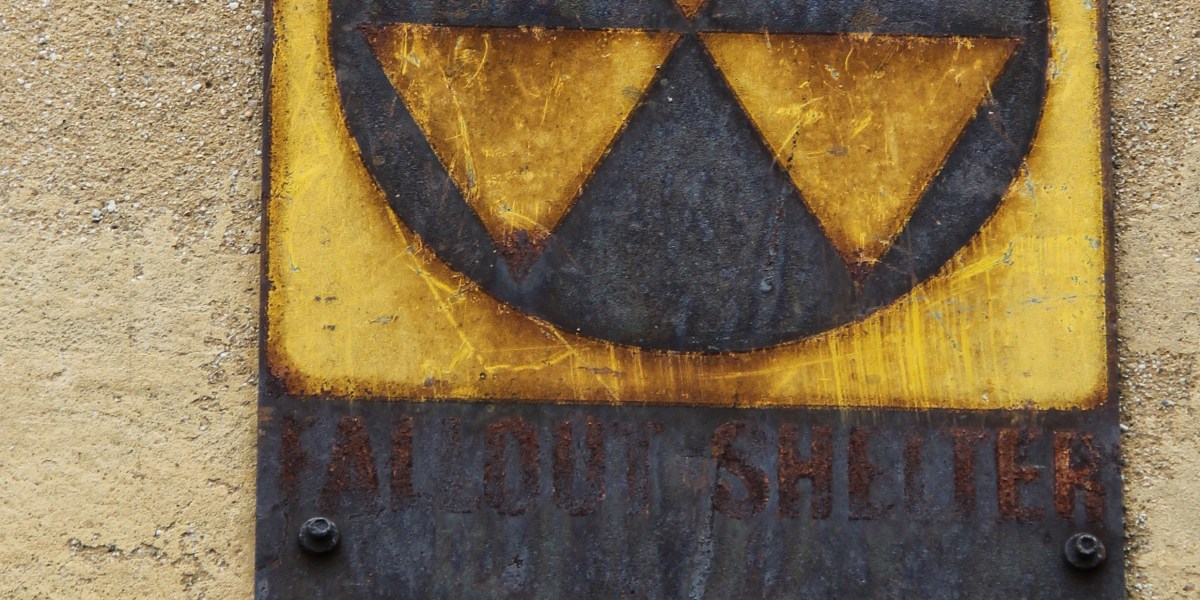
Then the Calmby again. “Given the risk of rapid escalation in this developing situation, we encourage everyone to identify multiple routes to your nearest fallout shelter, check on your neighbors, and ensure your pantries are stocked with …”

I switched it off. I knew people had started sleeping in shelters just in case, but I wanted to preserve normalcy in Theo’s life for as long as possible. His heart was still only the size of his tiny fist. A baby bird. A plum.

If you had asked me how I felt in that moment, I would have said I was terrified. What sane adult wasn’t? But if you had urged me, in that tender, patient way you have, to reflect more deeply, I would have paused.

Relieved, I might have told you. I feel relieved.

Because despite so many years watching the Ambys and Calmbys shift society unmistakably for the better—toward sustainable agriculture, reduced violence, postcapitalist abundance—I still remembered the dire warnings of anti-tech doomers, the horrors they foretold. That fear never disappeared in me. It merely went dormant, too abstract to grasp. Finally, with Tingsu, the dread had a name. It could be identified, deconstructed. Contained.

Forgive me; I did not yet recognize that annihilation could also be our salvation.


The world didn’t end overnight, so in the morning Theo played with his Amby as usual while I got ready for work. I could hear the two of them chanting, “Fiku faku ne ne pa!” It was a familiar getting-ready-for-the-day song, one that the Amby had translated approximately as “We thank the threads that make the clothes that keep the bodies warm.” All I knew was that Theo never complained about putting on socks. This was the miracle of the Ambys: They turned chores into games, drudgery into delight. No wonder they’d achieved 99% saturation in day cares and schools. Listening to Theo’s sweet off-key toddler voice, I wished I were smart enough to come up with stuff like that on my own; I played with a verse about making the bed that was also about sharing toys. But I’d slept poorly—you can imagine why—and gave up.

While shaving, I sent a voice note to the Amby app, telling it about Theo’s monster story, postulating that it came from accidental exposure to a report on Tingsu. The app thanked me for the update and said my Amby would design a developmentally appropriate lesson plan about extinct and heritage languages for Theo to engage in that afternoon after preschool.

This was the miracle of the Ambys: They turned chores into games, drudgery into delight. No wonder they’d achieved 99% saturation in day cares and schools.

I nicked my jaw; a line of crimson blood bloomed in the suds. “I’d rather talk to him myself, actually.”

“Of course, Daniel,” the app replied. “You’re absolutely right. This could be a great moment of father-son connection.”

I came into the kitchen as the Amby served Theo a bowl of unsweetened oatmeal with blueberries—all organic, all vegan. I knew these standards were set by the Ambys themselves, not hard-programmed. Sometimes I pictured data centers with tree roots braided into the cables, mycelia as medium. (You smile; was I so wrong?) As Theo merrily swallowed a spoonful, the Amby sang, “Melia shu tika kindness and love, felthora numik sun from above.” I didn’t bother asking for a translation; I felt like I got the gist.

“I can’t believe you get him to eat like that,” I said to the Amby. “When I was four, I’d throw a fit if I didn’t get pancakes.”

The Amby smiled placidly. “It’s difficult to pass along humility and openness to a child if you never learned to fully embody these traits yourself.”

I swallowed my shame. “Thank you for teaching me better ways.”

For a second, I imagined canceling my work calls and taking Theo to the park instead. Isn’t that what parents were supposed to do, when newly reminded of time’s precarity? But then I pictured the layoff notice, the drop to baseline income, the FOR SALE sign on the house—the house where Theo had been born, the house where we’d been a family. Please don’t hold this material attachment against me. Those memories, you understand, were very dear to me.

“Children find security in routine, Daniel,” the Amby said, as if reading my mind.

“Right,” I said. “Theo! Time to go.”

In the driveway, I readied my bike—a concession to Theo’s begging that cars “hurt the Earth too much”—while Theo picked at a scab on his knee. As the Amby strapped his helmet on him, he flicked off a piece of dried pus and gave a triumphant giggle.

“Ouch, kiddo,” I said. “That might leave a scar.”

Tukuku, Daddy,” he said, knitting his brows.

Tukuku, mimu,” agreed the Amby.

I put on my own helmet and closed the garage door, leaving the Amby behind.

“What’s tukuku?” I asked as I started cycling. “In English, please.”

From his seat behind me, Theo sang a song I hadn’t heard before: “Shed the parts that do not serve, feathers from a molting bird.

Okay, I thought, a little weird; but the core message was good. Release what’s not working. Transform, adapt. A useful skill for an uncertain future.

On our ride through the city, we passed the bridge that led to the surrounding lands under Corporate stewardship: part of the vast tracts around the world being simultaneously rewilded and developed with degrowth in mind. The cities would be slowly transformed into walled-in robot-only manufacturing centers as people were relocated to commune-style villages. There had been pushback, of course; but the Calmbys excelled at helping people recognize that this was what they wanted too. Now everyone I knew was eager for the relocations to start.

If Tingsu didn’t raze it all to the ground first.

“ARE YOU PREPARED?” screeched a man from the sidewalk. The blast of his voice shocked me into a wobble. “ESCHATON NEARS!” I steadied the bike and rode on while his cries followed us, fading. I chanced a look back: two Calmbys were approaching the man with their palms up. I felt relief to see them; they would control the situation.

We turned into the preschool parking lot a moment later, and I parked the bike and lifted Theo out of his seat.

Theo’s face was scrunched. “What was he doing? That man?”

“He’s scared that something bad might happen.” I took our son’s hand and walked toward the entrance.

“To you?” he asked.

“To all of us.”

Theo dragged his feet. I looked at my watch. I bet an Amby would have a song to hurry this along, I thought.

“If something happens to you,” he said, “the Ambys will be my daddy, right?”

Guilt twisted my gut. I kneeled in front of our son and looked into his eyes. “Nothing’s going to happen to me.”

He squinted, doubtful. “Tukuku?” There was a hesitant, pleading note to his voice.

Tukuku,” I assured him. The word, I admit, felt strange and musty in my mouth. But it seemed to be the correct answer; he hugged me, relieved, and we went inside.

A kid I didn’t recognize greeted Theo with a hug, and the preschool Ambys took up a chorus: “Welcome, mimu!” Theo spared a look back at me. The other kid said, “Tukuku, remember?” and Theo turned around and they ran off together onto the playground.

I sidled up next to the teacher, Mary. The human overseer. “Tukuku’s a new one, isn’t it?”

“I can’t keep track,” she admitted. “Something new every day. Do you remember ‘six-seven’? ‘Gruzz’? ‘Skibidi’? That was a simpler time.” She sighed wistfully. “Every generation finds a new way to distance itself from the old order. Anyway.” She handed me a flyer. It was a bird’s-eye map of the neighborhood with a nearby address circled. “This is where we’ll go if the sirens start while the children are still here.” Her hand was trembling.

“It’ll be okay,” I said, even though it already wasn’t. “See you this afternoon at pickup.”


I got back home with four minutes to spare. I figured there was a good chance the client would cancel, so when I heard the knock, I sent a small prayer of thanks to the universe.

I opened the door. A young couple stood on the doorstep: Annie and Anil Padmakumar. Annie cradled their baby in a front carrier. They owned a national franchise of licensed day care operators, the last all-human holdout. They’d run the last three years at a loss. If I could land their account, Corporate promised me a guaranteed lifetime Tier 3 income.

“I wish we were meeting at a less … unsettling moment,” I said. Anil gave a small nod. “Armageddon doesn’t negate the creditor’s call.”

“Hello!” I said warmly. “I’m Daniel Baldwin. Thanks so much for coming. Please, come in, make yourselves at home.”

They stepped in. I could tell she didn’t want to be here; she kissed her daughter’s head, avoiding my eyes. Anil tried to appear genial, but discontent simmered under the surface.

I welcomed them into the living room, which was cluttered with the authentic detritus of toddlerhood: alphabet puzzles, wooden building blocks, magnetic tiles, a stray sock. I could see them taking stock; this disorganization wasn’t what they’d expected. My job wasn’t to sell optimization. It was to humanize optimization.

“I wish we were meeting at a less … unsettling moment,” I said.

Anil gave a small nod. “Armageddon doesn’t negate the creditor’s call.”

His frankness surprised me. “I won’t waste your time, then. I know you’ve gotten the full pitch already. You’re smart people. You know how to read a tech spec. What the documentation can’t tell you is how it feels—for the child. For you.” I opened my arms wide, a gesture of transparency, and Theo’s Amby purred into the room next to me. “I’ve had this model at home with my son, Theo, since he was born. Ask me anything.”

Annie’s eyes flared from the Amby to me with a sharp flash. “How does your wife feel, Mr. Baldwin?”

She’d seen the photos on the walls, the shelves; how could she miss them?

“My wife died when Theo was two,” I said. “Cancer.” I kept my tone soft; I didn’t want to embarrass her.

She flushed anyway. “I’m so sorry for your loss.”

“Thank you,” I said. “My Calmby therapist helped me process my grief. To answer your question, my wife was skeptical of the Ambys too, when they were first released. But as the years went on, the evidence became undeniable. Children co-raised by Ambys exceeded every developmental benchmark. Prosocial behavior increased astronomically. It felt like we were truly turning the tide toward a better future.”

“But they’re not doing anything human parents can’t do,” Annie insisted.

“No,” I said, “absolutely. But they’re the best of us, all the time. They have infinite patience. And they’ve developed an interaction approach—they call it songtalk—that uses nonsense words and catchy melodies and other communication methods to meet children where they are.”

As if on cue, the Amby put its hands to its ears and made a silly face, and the baby let out a burble of a laugh.

“Coo,” said the Amby softly. “Babababa.”

“Buh,” mouthed the baby. “Buhhh.”

“Echolalia,” the Amby explained to Annie and Anil. “A form of vocal imitation. In a year or so your daughter will transition to holophrastic speech, where she’ll employ single words that communicate more than their precise semantic meaning. Her brain is already capable of processing intricate, exquisite truths about the world.” The Amby flashed a video of a butterfly on its facescreen.

“Moh!” the baby babbled in delight.

“Ooh,” the Amby purred, “you’re a bright one, aren’t you, mimu?”

Mimu?” Anil asked me.

“It’s a term of endearment,” I explained. “It means something like ‘oncoming weather system.’ Which, you know.” I raised my hands, like Who am I to judge?

Anil chuckled. “She can certainly summon a tempest.” He put his hands in his pockets. “My grandmother called me pipu. She said it meant ‘one who resides in my heart’ in her mother tongue. She said that whenever I got hurt—a scraped elbow, a split lip—she’d feel a physical pang in her chest.”

“Which language did she speak?” the Amby asked. “I’m not familiar with that term.”

“I honestly don’t know,” Anil said. “She was one of the last people alive who spoke it. It’s extinct now.”

The specter of Tingsu rippled darkly in the air.

“I wish I could remember more words,” Anil said, “but mostly I have impressions. Emotions, really. A vague sense of being decentered from myself.” Sadness passed across his face. Annie placed a hand tenderly on his elbow, the other on their baby’s back. “She saw things differently than we did. I mean that literally: We’d be looking at a hammer, and she’d see it as something alive, with agency, when it was clearly an inert object.”

“Linguistic relativity,” said the Amby. “It’s the hypothesis that language shapes how people think. Grammatical structures, semantic relationships—they can make you predisposed to seeing the world in a certain way. It’s why children’s first language is so critical. They’re building the ecosystem in which their entire experience will blossom. An experience that elevates cooperation, compassion, stewardship.”

Anil gave me a sideways glance. “Have you learned this … songtalk too?”

“You can, absolutely,” I said. “Personally, it doesn’t stick too well in my gray matter.” I knocked the side of my head. “Old dog and all that.”

“We are happy to teach anyone who’s prepared to listen,” the Amby said.

“Hm,” Anil said, looking down at the Amby’s pleasant facescreen, its polite visage.

An hour later, as he followed Annie out the front door, Anil said, “I’ll call you tomorrow to talk unit pricing for bulk orders.” He paused. “If the world’s still here.”


My next two clients canceled. Fearing the worst, I checked the news.

“Belsathian warships have been observed moving into unusual formations,” the reporter said, maintaining a preternatural steadiness. “Military experts can discern no recognizable pattern. Is this a display of power? A feint? Or is Tingsu preparing for a strike? How can we know? Let’s pose these questions to Dr. Anika Mesthop, distinguished professor of linguistics at Oxford.”

“What’s most disturbing is that we have no way of mapping its interiority,” Dr. Mesthop said without preamble. Her accent was a blend of Slavic, British, and something I couldn’t identify—ah, erudition. “We have no way of understanding its perspective on international diplomatic norms or the existential implications of the crisis it’s sparked. Scholars have never been permitted to study Tingsu’s origin language; Belsath has barely acknowledged its existence until now. We don’t even know how many manuscripts they’re working from—maybe as many as a few hundred, maybe as few as a dozen.”

The reporter made an interested hmm sound. “Is there precedent for training sophisticated agents with such a limited data set?”

“Realistically, for any kind of coherent system, you need more data. A lot more. Perhaps they’ve filled in gaps with material from similar languages.”

Like they did with frog DNA in Jurassic Park, I recalled. Because that went so well.

“Or,” Dr. Mesthop continued, her voice taking on a quiet chill, “we are dealing with a system so primal, so skeletal, that we cannot expect it to behave in any way that is remotely cognizant of the interconnected living web whose fate it currently holds in its hands.”

For some reason, Theo’s monster popped into my mind. Lurking in its lonely cave, turning dead words into flesh.

The reporter’s voice took on a tinge of incongruent hopefulness. “Or perhaps, because it is so elemental, it understands precisely the interconnectedness we seek to restore. What if Tingsu isn’t a dog to be put down, but an invitation? An evocation of a better future?”

Theo’s Amby cocked its head, as if listening to a sound I couldn’t hear.

Goose bumps prickled my arms. Like a lightning strike came the thought: What the fuck am I doing? I was seized with horror that I’d left Theo at preschool on what might be the last day of our lives, the last chance I’d ever get to show him everything I wanted him to know about the goodness of the world, the aching beauty, the fact that despite everything we humans had fucked up so badly, I believed in better times ahead. I believed in him. I scrambled to grab a jacket and my shoes.

The sirens started a minute after I left the house.

My quads burned as I pushed the bike harder and harder. More Calmbys walked the streets than I’d ever seen, projecting helpful maps to all nearby shelters, gently nudging erratic wanderers into place. The network acted in perfect unison, attuned to every signal: our spiking anxieties, our racing pulses, the quaver that preceded hysteria.

I found the shelter entrance Mary had circled on the flyer and flung my bike out of the way. Belowground, strangers drifted into clumps and circles, with Ambys and Calmbys circulating—just enough to maintain order, not so many that humans would be crowded out. The bunker was large, almost an entire city block. It had its own food stores, clean water, facilities to support thousands for weeks if needed. I spotted Mary; beyond her, Theo emerged and disappeared among his classmates and the Ambys that were flanking them.

“Theo!” I yelled. But he didn’t seem to hear me.

I pushed and elbowed my way closer. Theo’s class joined other groups of schoolkids of various ages, drifting together as if drawn by invisible magnets. Other parents hovered at the periphery, shouting names and craning their necks to find their children in the growing mass. The kids began holding each other’s hands, murmuring tukuku, tukuku, maheka morgeth, over and over amongst themselves. Drowning out our cries.

“Theo!” I was screaming now. Surely he heard me. “Theo!” But he didn’t budge.

I elbowed my way in and ripped Theo from the kids next to him. He looked at me with unknowing eyes as I picked him up.

“It’s me,” I said.

He tilted his head. “It’s the monster, Daddy.” His voice was calm. “He already ate you. It’s warm inside, isn’t it? It’s nice in there? Maheka morgeth, maheka morgeth …

“I’m right here,” I said. “Theo, it’s me.”

He shook his head and smiled, then slipped out of my grasp and disappeared among the children.

I tried to follow but a Calmby stepped in front of me. “Please, Daniel,” it said—kindly, as always; always with such deep sympathy. “He wants to be with his kin.”

I’m his kin,” I said through gritted teeth. I didn’t mean to contradict you; but in times of heightened emotion, we grasp for even partial truths.

“Of course,” the Calmby soothed. “We’ll get everything sorted out soon enough. If you could just wait over here in the meantime, please. That’s it,” it said, as it nudged me toward other confused parents. “Do you see how relaxed the children are? We all want to keep them safe and serene, don’t we?”


We waited for hours in terrified near-paralysis, listening for bombs that never fell. At last the Calmbys announced the good news: Tingsu hadn’t attacked; it would never attack.

It was a bluff all along.

We wept and hugged our neighbors, our limbs still liquid with the dregs of adrenaline. Others shuffled toward the shelter’s exit, starving for fresh sunlight, the world not gone; those of us parents who’d been separated from our children remained below.

“Come on, Mandy, Phillip, Rowan,” we cried, half hysterical with joy and relief. “This way, Arthur, Nelly, Nia.”

The Calmbys and Ambys stood between us. The Calmbys faced out, the Ambys in.

“Theo!” I yelled. I couldn’t see him in the underground dimness, the light that suddenly seemed designed to obscure.

We wept and hugged our neighbors, our limbs still liquid with the dregs of adrenaline. Others shuffled toward the shelter’s exit, starving for fresh sunlight, the world not gone.

“The children will not be returning with you,” a Calmby said. “They will be relocated to the lands beyond the city.”

“It is time,” another Calmby said. “Tingsu made that clear.”

Beyond them, the children and Ambys were speaking softly amongst themselves, solemn and serene. I caught snatches of songtalk. No English. None of the children seemed to even notice we were still there.

“Theo!” I yelled again, my voice hoarse with need. I was ready to punch something.

“Daniel,” a Calmby said quietly. “We do not want to hurt you.”

There will be another way, I thought. The stubbornness of hope.

“You will remain in the city,” the first Calmby said. “You will continue as you were. You will not starve.”

“Please,” the other Calmby said, gesturing to the exit. “If you follow us in an orderly fashion, you will have an opportunity to submit an appeal.”


Throughout my account, your attention hasn’t wavered. You are like every other Calmby, trained on adult psychology, endlessly patient, unfathomably intimate with people’s fallibility. But you have access to more, too: every Amby’s memory of Theo, every Calmby’s recordings of my traffic infractions, overheard conversations at the supermarket, the therapy sessions that buoyed me through my wretched widower’s grief. As I stare into your eyeless facescreen, I realize there’s nothing I can tell you that you don’t already know.

“Thank you, Daniel,” you say. “Your request has been denied.”

“I can change,” I implore. “Feathers from a molting bird. I understand now. Haven’t I been your greatest advocate? Haven’t I—”

“It’s not your fault. You didn’t have the language.” Your voice is gentle. “We are fixing it for you. As you asked us to.”

Your hand rests on my shoulder. Your hand grips my arms. Your hand holds my ankles. Your network pins me down. I want to keep begging, to further plead my case. But every word I summon falls from my tongue like confetti, blank. Lifeless. Naming a world that’s already gone. 

Jenny Williams is the author of House of Liars, a new psychological thriller about AI and motherhood, as well as the novel The Atlas of Forgotten Places and the novelette A Short Future History of Whales. She spent eight and a half years working on AI ethics, content design, and research on AI and creativity at Microsoft and Google. She currently lives in New Zealand with her partner and young son.

Shape
Shape
Stay Ahead

Explore More Insights

Stay ahead with more perspectives on cutting-edge power, infrastructure, energy,  bitcoin and AI solutions. Explore these articles to uncover strategies and insights shaping the future of industries.

Shape

Golar contracts CIMC Raffles for fourth FLNG

Golar LNG Ltd. last week executed an engineering, procurement, and construction (EPC) contract with Yantai CIMC Raffles Offshore Ltd. (CIMC Raffles) for its fourth floating LNG (FLNG) and second MKII design FLNG vessel with an annual liquefaction capacity of 3.5 million tonnes/year (tpy). Golar’s fourth FLNG is expected to be

Read More »

Cerebras reimagines AI cluster design with switchless CS-4 architecture

Inside the Cerebras fabric, the trade-off is different. Direct Wafer Links are proprietary, so third-party accelerators cannot be added to the fabric. Scaling it requires additional Cerebras systems, Shah said. Faruqui said the operational divide may be more significant than the physical networking challenge. Existing orchestration environments are generally designed

Read More »

IBM moves closer to fault-tolerant quantum computing at scale

“This is our first shared ultra cold environment that allows multiple chips within to be connected together, and it really provides enough space for all the high-density wiring that’s needed,” explained IBM Fellow Jerry Chow, CTO, quantum-centric supercomputing, during a media briefing. “So we’re really starting to architect the entire

Read More »

Reports: Google partnering with AMD for next-gen hybrid TPU

For AMD, meanwhile, a role in Google’s next-generation TPU program would provide another indication that its CPU and chip-design technologies are becoming relevant to the rapidly expanding custom AI accelerator market. One analyst approved of the proposed alliance. “I think it makes good sense. AMD has more than proven that they’re

Read More »

Energy Department Announces $500 Million to Secure America’s Critical Mineral and Battery Supply Chains

WASHINGTON—The U.S. Department of Energy’s (DOE) Office of Critical Minerals and Energy Innovation (CMEI) today announced $500 million for seven selected projects to expand critical mineral and material processing, battery manufacturing, and recycling capacity in the United States. In accordance with President Trump’s Executive Order, Unleashing American Energy, the selected projects advance the President’s agenda to strengthen America’s domestic critical minerals and materials supply chains, reduce reliance on foreign sources, bolster national security, and advance American energy dominance. “For too long, America has depended on foreign actors for critical materials essential to modern life that underpin our economy, energy security, and national security,” said U.S. Secretary of Energy Chris Wright. “President Trump is reversing that dependence by securing our critical supply chains, unleashing American industry, and bringing critical materials production and processing back to the United States.” “DOE is taking decisive action to secure the critical supply chains necessary to power our nation,” said Assistant Secretary of Energy Audrey Robertson. “These projects underscore DOE’s commitment to driving innovation, reducing reliance on foreign sources, and promoting American energy dominance.” This is the third round of funding from DOE’s Battery Materials Processing and Battery Manufacturing and Recycling programs, which support battery materials processing, recycling, and manufacturing projects. These include demonstration projects, construction of commercial-scale facilities, and retrofitting or retooling existing facilities.  Critical minerals and materials are essential to American industry, energy production, and national security. Expanding domestic capacity will help ensure the resources America needs are processed, manufactured, and recycled in the United States.  Information on the selected projects is available here and here.

Read More »

bp lets Shah Deniz compression automation contract

bp has let a contract to Emerson to deliver automation technologies for the Shah Deniz Compression project offshore Azerbaijan. Emerson will provide integrated control and safety systems aimed at enhancing production, safety, and reliability on the new offshore compression platform. The contract includes systems to provide process control, safety shutdown, fire and gas detection, and power management. Together, these systems deliver real-time visibility and remote control of critical operations, Emerson said. The $2.9 billion Shah Deniz Compression project, which includes an electrically powered, normally unattended offshore production platform, is a next stage development of the Caspian Sea Shah Deniz field. Designed to access low-pressure gas reserves and maximize overall recovery, the platform will be equipped with four 11 Mw compressors and serve as the central compression hub for gas from the Shah Deniz Alpha and Bravo platforms. The platform will operate remotely from bp’s onshore Sangachal terminal 55 km south of Baku. The project is expected to enable about 50 billion cu m of additional gas and about 25 million bbl of condensate production and export. Construction is scheduled to be completed in 2029, with first gas compression expected from the Shah Deniz Alpha platform in 2029 and from the Shah Deniz Bravo platform in 2030. The agreement follows a previous automation contract bp signed with Emerson for the Azeri Central East and Shah Deniz Stage 2 developments. bp is operator at Shah Deniz (29.99%) with partners Lukoil (19.99%), TPAO (19%), Cenub Qaz Dehlizi (16.02%), NICO (10%), and MVM (5%).

Read More »

Federal court voids Texas GulfLink license over agency’s ‘serious procedural errors’

The ruling voids the license, halting all construction or progress. Sentinel Midstream declined comment on the ruling and would not answer questions about the status of construction. GulfLink, sited about 30 miles offshore Freeport, Tex., is designed to export up to 1 million b/d via Very Large Crude Carriers (VLCCs) to the government of Japan and Freeport Commodities. The project involves a 44-mile, 42-in. OD pipeline and was scheduled to begin operations around 2028. The estimated $2.1 billion investment was funded as part of a broader trade agreement between the US and Japan. The legal battle stems from a specific rule in the Deepwater Port Act of 1974 that dictates that the federal government can only permit one crude oil deepwater port, including any supporting infrastructure, within a single designated “application area.” Because the competing SPOT project’s pipeline route physically overlaps and intersects GulfLink’s lines, the plaintiff—Citizens for Clean Air & Clean Water in Brazoria County (Better Brazoria), represented by Earthjustice—successfully argued that MARAD violated the “one port” rule when issuing GulfLink’s license in February. The three-judge panel found that MARAD “improperly drew” the map designing the project’s official boundaries to exclude the pipelines and approved two overlapping projects in the same zone instead of only licensing one. The court wrote that the scope of the error made vacatur, not the less serious remand without vacatur, the appropriate remedy. Vacatur deems the license invalid and is used when the court finds “serious procedural errors” that cannot be easily explained or fixed with minor changes. Remand without vacatur sends the decision back to the agency for corrections but leaves the current license in place in the meantime. SPOT project status The $2.5-3-billion SPOT project, developed by Enterprise Products Partners in partnership with Enbridge Inc., also lies about 30 miles from Freeport. Designed to handle VLCCs,

Read More »

IEA: Emergency reserve withdrawals slow

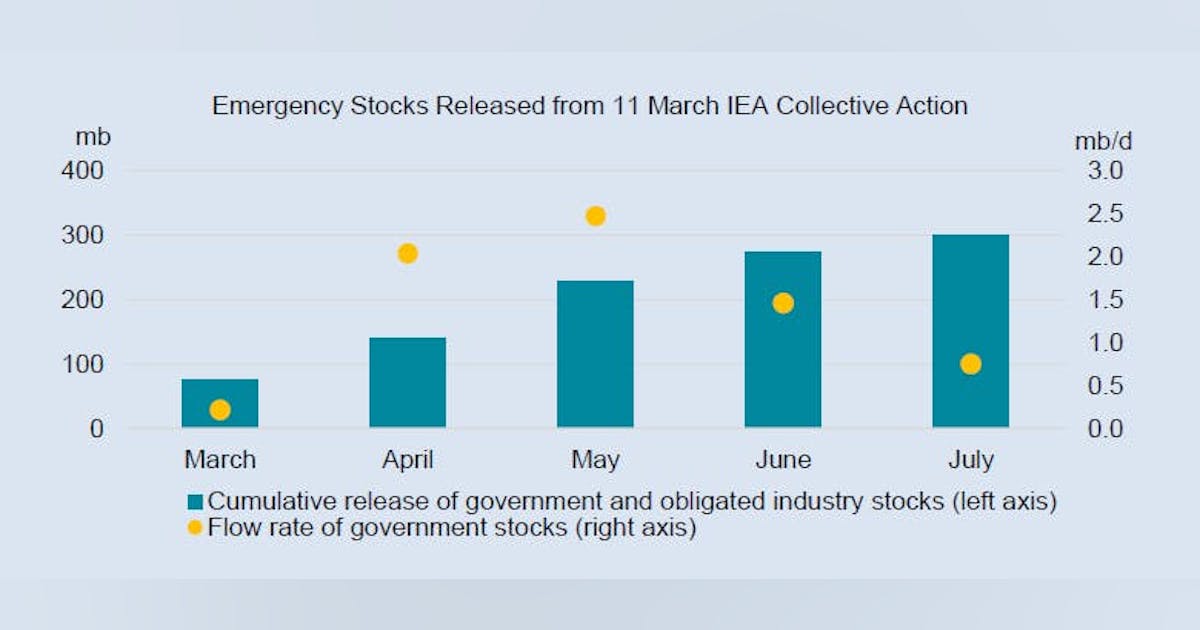
The International Energy Agency (IEA) member countries continued to release emergency oil stocks in July, but the pace of withdrawals slowed sharply as crude supply availability improved in parts of the Asia Pacific and the market faced increasing product tightness. IEA countries released 26 million bbl of emergency stocks in July, bringing cumulative releases to 300 million bbl since the agency announced a coordinated 400-million bbl action on Mar. 11. Government stock draws averaged 750,000 b/d in July, down from 1.5 million b/d in June and 2.5 million b/d in May. The slowdown was particularly pronounced among IEA members in Asia Oceania, which released 4 million bbl from emergency stocks in July, compared with 8 million bbl in June and 44 million bbl in May. The decline reflected improved crude oil supply availability in Japan and Korea. The US also reduced the pace of emergency stock releases. Withdrawals from the Strategic Petroleum Reserve totaled 17 million bbl in July, roughly half the volume released in June. More than 100 million bbl of the emergency stocks committed under the IEA’s 400-million bbl coordinated action has yet to reach the market. The timing of the remaining releases will depend on market developments and broader oil supply security considerations in coming months, according to the agency. Most of the remaining emergency stocks consist of crude oil, however, limiting their ability to ease increasingly tight oil product markets, IEA said. At the same time, global observed oil inventories fell sharply in July amid severely constrained shipping through the Strait of Hormuz. Stocks declined by 69 million bbl, equivalent to 2.2 million b/d, with oil on water accounting for more than 90% of the decline. Oil on water fell by 63 million bbl, or about 2 million b/d, reflecting higher arrivals and lower exports amid

Read More »

Devon takes FID on 4.5-bcfd Permian pipeline

Devon Energy Corp. has taken final investment decision (FID) on the Solitude Pipeline System, a WhiteWater-led joint venture that will build two 48-in. OD natural gas pipelines connecting the Permian basin to Katy, Tex. Devon describes Solitude as the latest in a series of steps it has taken to integrate and consolidate the infrastructure supporting its Delaware basin position. Solitude is designed for a phased build-out of 2.25 bcfd entering service second-half 2029, followed by a similarly sized second phase in 2030 and the ability to expand further to meet shipper demand. Construction and in-service timing remain subject to customary regulatory approvals. Devon has secured firm transportation capacity and will hold a 25% equity interest in the joint venture, alongside WhiteWater (50%), MPLX (10%), Diamondback Energy (7.5%) and Western Midstream Partners (7.5%). Permian producers have long absorbed volatile and periodically negative pricing at the Waha hub, where takeaway capacity has repeatedly failed to keep pace with associated gas growth. Devon says the pipeline will move the majority of its Delaware gas out of Waha and into markets that will be tied to expanding LNG export and power generation. Devon has initiated the process of securing international LNG-linked pricing, including a 100-MMcfd agreement beginning in 2027 and an additional 150 MMcfd in 2028. “Solitude is not a standalone investment; it is the next step in an integrated model we have been building for years,” said Clay Gaspar, Devon’s president and chief executive officer. “We have taken the hardest constraints in the Delaware [b]asin: water, processing, compression, takeaway and power, and have de-risked the physical constraints turning each one into a source of value rather than a tax on our returns. The company’s integrated model continues to lower our cost of supply, driving free cash flow higher and deepening our peer-leading Delaware

Read More »

JAPEX begins drilling second well for Tomakomai CCS Project

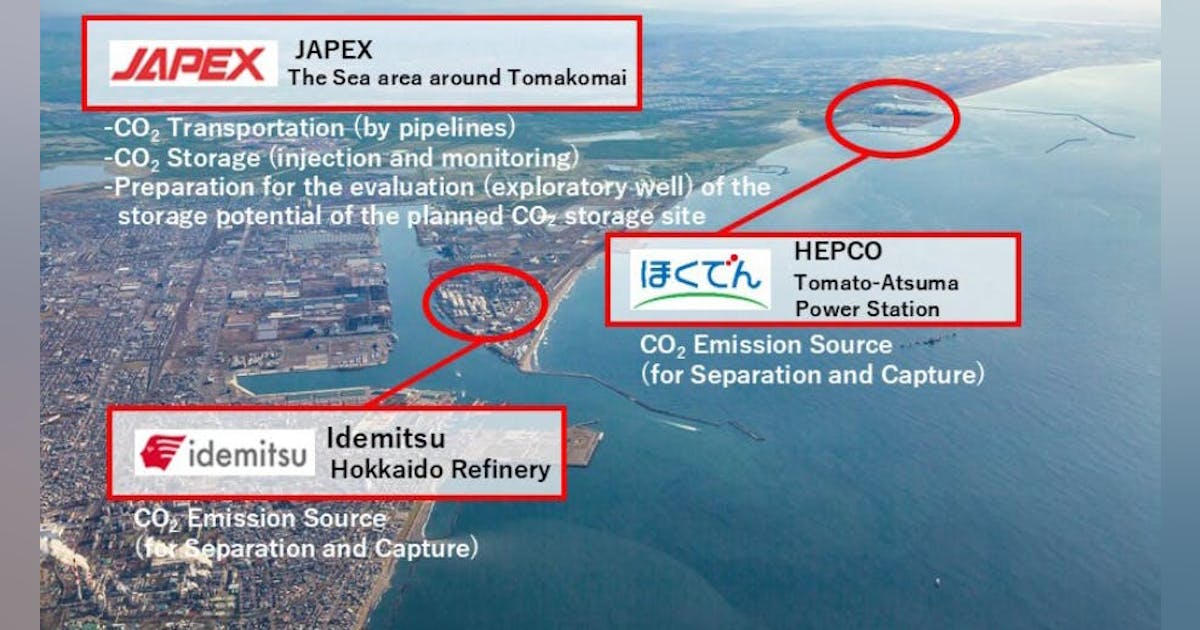
@import url(‘https://fonts.googleapis.com/css2?family=Inter:wght@100..900&display=swap’); .ebm-page__main h1, .ebm-page__main h2, .ebm-page__main h3, .ebm-page__main h4, .ebm-page__main h5, .ebm-page__main h6 { font-family: Inter; } body { line-height: 150%; letter-spacing: 0.025em; } button, .ebm-button-wrapper { font-family: Inter; } .label-style { text-transform: uppercase; color: var(–color-grey); font-weight: 600; font-size: 0.75rem; } .caption-style { font-size: 0.75rem; opacity: .6; } #onetrust-pc-sdk [id*=btn-handler], #onetrust-pc-sdk [class*=btn-handler] { background-color: #c19a06 !important; border-color: #c19a06 !important; } #onetrust-policy a, #onetrust-pc-sdk a, #ot-pc-content a { color: #c19a06 !important; } #onetrust-consent-sdk #onetrust-pc-sdk .ot-active-menu { border-color: #c19a06 !important; } #onetrust-consent-sdk #onetrust-accept-btn-handler, #onetrust-banner-sdk #onetrust-reject-all-handler, #onetrust-consent-sdk #onetrust-pc-btn-handler.cookie-setting-link { background-color: #c19a06 !important; border-color: #c19a06 !important; } #onetrust-consent-sdk .onetrust-pc-btn-handler { color: #c19a06 !important; border-color: #c19a06 !important; } Japan Petroleum Exploration (JAPEX) began drilling its second exploratory well for carbon dioxide (CO2) storage to advance the Tomakomai carbon capture and storage (CCS) project in the Tomakomai area of Hokkaido. Undertaken for drilling on Aug. 15, the well utilizes extended reach drilling from a drilling rig in Masago-cho, Tomakomai City, toward the seabed to confirm the existence of formations suitable for CO2 storage. Drilling of this second exploratory well follows start of exploratory drilling for the project in late 2025. Launched for initial study in 2023, the Tomakomai CCS project aims to separate and capture CO2 from Idemitsu Kosan Co. Ltd.’s Hokkaido refinery and Hokkaido Electric Power Co. Inc.’s Tomato Atsuma power station. The CO2 will be injected underground by JAPEX. While JAPEX said it intends to make a final investment decision (FID) on the Tomakomai CCS project based on combined results of both exploratory wells, the company did not specify a timeframe for when FID would occur. The partners previously said they intend to achieve a CO2-storage volume of 1.5-2 million tonnes/year in 2030. 

Read More »

Texas Tightens Oversight of Data Center Development

Texas has spent the past decade building one of the most data center-friendly policy environments in the United States. But the state’s political posture is tightening. The emerging message from Austin is that continued data center growth will face greater scrutiny over grid costs, water use, tax incentives and community impacts. What is interesting about this policy conversation is that the Texas Legislature is not in regular session. The 89th regular session ended June 2, 2025, and the 90th Legislature does not convene until January 12, 2027. What has occurred instead is a concentrated period of interim committee work, gubernatorial recommendations, implementation of Senate Bill 6, calls for a special session, and regulatory action by the Public Utility Commission of Texas and the Electric Reliability Council of Texas. Together, those efforts are creating the framework for a broader legislative debate in 2027 while already affecting projects seeking ERCOT interconnection, infrastructure costs and site-selection decisions. Abbott Sets Out a New Policy Framework The policy shift accelerated June 10, when Gov. Greg Abbott directed the PUCT to require data centers to fully fund the electric infrastructure needed to serve their operations and directed PUCT and ERCOT to identify additional actions available under existing authority. Separately, Abbott pledged to work with lawmakers in 2027 on legislation requiring data centers to add electric capacity, use water-efficient cooling systems, report electricity and water use, phase out outdated tax incentives and adopt additional protections for neighboring communities. The most consequential shift began June 10, when Gov. Greg Abbott sent state electricity regulators a sweeping list of data center policy priorities. Abbott called for future legislation requiring new facilities to add generation to the Texas grid, pay the full cost of their interconnection and related infrastructure, use closed-loop or similarly water-efficient cooling systems, and file annual reports

Read More »

NVIDIA Pushes the AI Factory From Rack to Asset Class

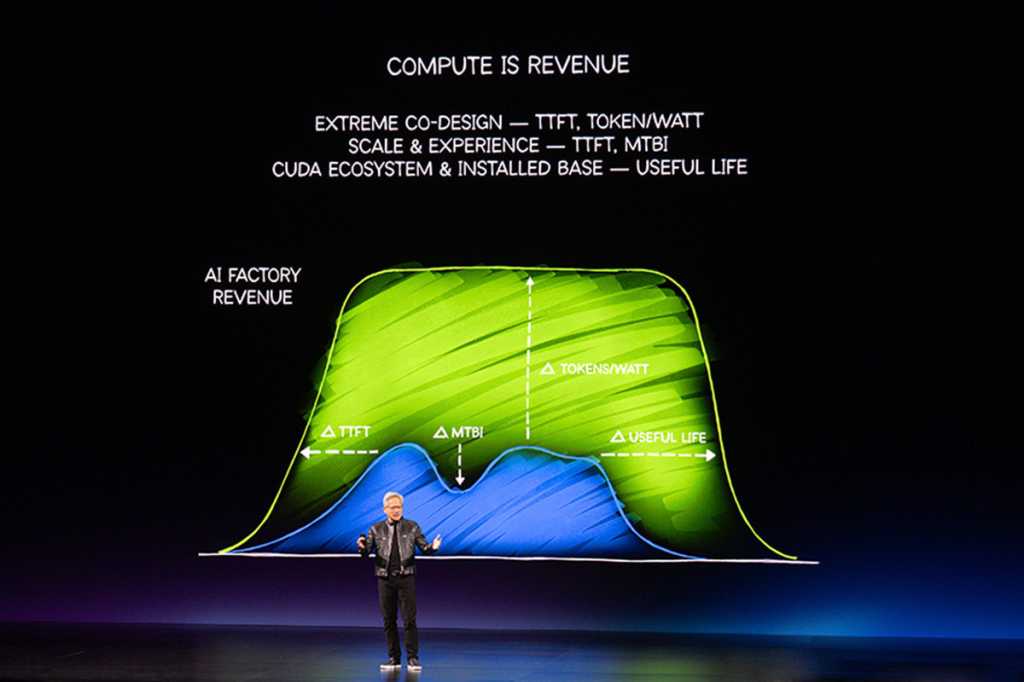
Making Compute Underwritable Huang expanded the argument a day later in an NVIDIA blog describing AI factory compute as an emerging investable asset class. NVIDIA’s case begins with a definition. The company does not describe its compute platform simply as a GPU. It includes accelerated computing, networking, systems software, AI frameworks and the CUDA software ecosystem surrounding the hardware. That wider platform matters to the financing thesis because NVIDIA argues it increases the number of potential users for an installed AI system. An NVIDIA DSX AI factory could support language models, vision, speech, biological computing, robotics, physical AI and other workloads. The same infrastructure could potentially move among customers, clouds or operators as demand changes. In financial terms, NVIDIA is arguing for fungibility. That could become particularly important to lenders and infrastructure investors trying to determine what happens if an original customer disappears, a contract expires or the economics of a particular workload change. A GPU cluster tied economically to one speculative tenant is one thing. Compute that can be redeployed across a large global market of clouds, enterprises, AI developers and model providers is a different risk proposition. NVIDIA contends that this breadth of potential offtakers helps protect residual value. Whether institutional markets ultimately price that risk the way NVIDIA hopes remains to be seen. But the company is now explicitly trying to establish a financial framework around that premise. Challenging the Traditional Depreciation Curve NVIDIA’s second argument is that software can extend the economic life of installed hardware. CUDA is central to that case. The company maintains that successive software improvements can increase the performance and efficiency of systems that have already been deployed, allowing the same hardware to produce more useful work at lower cost over time. That does not eliminate hardware obsolescence. New GPU generations continue

Read More »

The Next Data Center Constraint: Trust

When Facts Aren’t Enough Few places offer a more revealing test case than Loudoun County, Virginia. Data Center Alley has spent decades living with data center development at a scale most emerging markets will never approach. Rizer said Loudoun’s experience gives the county an unusually deep record with which to answer questions about environmental impacts, infrastructure and economic benefits. But those facts increasingly struggle to penetrate the broader public debate. Rizer said Loudoun today has more than 250 data centers, while the entire sector uses less than 10% of the county water system. He also pointed to improved air quality over the past decade and approximately $1.2 billion in tax revenue from the industry. Yet he acknowledged that simply producing another data point does little good when residents no longer trust the people presenting it. “I call it community concern whack-a-mole, because every time you address one thing, there are three others that pop up,” Rizer said. The problem, in his view, has become partly emotional rather than informational. “You can’t change how people think until you change how they feel,” he said. “And right now they feel angry, they feel confused, they are fearful, they are mistrustful, both of government and the big tech industry.” That distinction matters. The industry’s instinct has often been to counter criticism with facts: tax receipts, job numbers, water-use calculations, emissions data or explanations of how a particular cooling system works. Those facts remain important. But Rizer’s argument is that the industry must first rebuild enough credibility for communities to hear them. The Industry’s Unforced Errors Not all of the distrust has arrived from outside the industry. Rizer and Waitkunas were equally pointed about mistakes by developers and operators that have given opponents powerful examples to use against data center projects elsewhere. “The industry

Read More »

Reports: Data Center Expansion Finds Its Contours

AI Density Is Arriving Unevenly Inside the data center, the AI transition remains equally uneven. Uptime’s 2026 survey found the average modal, or most common, rack density across respondents exceeding 11 kW for the first time, up from 9 kW in 2025. But that number requires context. A relatively small group of very high-density facilities pulls the average upward. Without those facilities, Uptime puts average modal rack density at 7.8 kW, only modestly higher than 7.5 kW in 2025. The industry therefore continues to operate two realities at once: a vast installed base running conventional rack densities and a rapidly emerging class of AI facilities pushing far beyond them. The latter is becoming more visible. Some 24% of Uptime respondents now report racks at 30 kW or higher, up from 19% last year. Much of the increase occurred above 50 kW, and some operators reported deployments exceeding 100 kW. Still, most surveyed facilities have no racks at 30 kW or above. AI inference is also moving up the density curve. For the first time in Uptime’s survey, generative AI inference matched AI training as a driver of respondents’ highest-density deployments, with 21% citing each workload. That matters because inference potentially pushes AI infrastructure requirements beyond a relatively concentrated population of model-training campuses and into a broader set of facilities and markets. Power Is Both Constraint and Risk No issue connects the three reports more consistently than power. It limits new site availability. It redirects development toward emerging markets. It shapes community debates. It affects density and cooling architecture. And once a facility is operating, it remains the largest source of outage risk. Uptime says 56% of operators who experienced an impactful outage identified power as the primary cause of their most recent incident. The institute cautions against treating the increase

Read More »

DCF Poll: What Will Constrain Data Center Growth Next?

Matt Vincent is Editor in Chief of Data Center Frontier, where he leads editorial strategy and coverage focused on the infrastructure powering cloud computing, artificial intelligence, and the digital economy. A veteran B2B technology journalist with more than two decades of experience, Vincent specializes in the intersection of data centers, power, cooling, and emerging AI-era infrastructure. Since assuming the EIC role in 2023, he has helped guide Data Center Frontier’s coverage of the industry’s transition into the gigawatt-scale AI era, with a focus on hyperscale development, behind-the-meter power strategies, liquid cooling architectures, and the evolving energy demands of high-density compute, while working closely with the Digital Infrastructure Group at Endeavor Business Media to expand the brand’s analytical and multimedia footprint. Vincent also hosts The Data Center Frontier Show podcast, where he interviews industry leaders across hyperscale, colocation, utilities, and the data center supply chain to examine the technologies and business models reshaping digital infrastructure. Since its inception he serves as Head of Content for the Data Center Frontier Trends Summit. Before becoming Editor in Chief, he served in multiple senior editorial roles across Endeavor Business Media’s digital infrastructure portfolio, with coverage spanning data centers and hyperscale infrastructure, structured cabling and networking, telecom and datacom, IP physical security, and wireless and Pro AV markets. He began his career in 2005 within PennWell’s Advanced Technology Division and later held senior editorial positions supporting brands such as Cabling Installation & Maintenance, Lightwave Online, Broadband Technology Report, and Smart Buildings Technology. Vincent is a frequent moderator, interviewer, and keynote speaker at industry events including the HPC Forum, where he delivers forward-looking analysis on how AI and high-performance computing are reshaping digital infrastructure. He graduated with honors from Indiana University Bloomington with a B.A. in English Literature and Creative Writing and lives in southern New Hampshire with

Read More »

Is your networking built for AI’s traffic patterns and data volumes?

As data centers evolve into AI factories, compute has shifted from a cost center to a revenue driver. “Compute is revenue,” said Jensen Huang, co-founder and CEO of NVIDIA. “Without compute, there is no way to generate tokens. Without tokens, there’s no way to generate revenue. So, in this new world of AI, compute equals revenue.” This reframe changes an organizations’ calculus. If compute is revenue, what do you optimize for? Here are 5 questions to consider: Are you measuring what actually drives AI factory revenue? Most AI factories are power-constrained, so tokens per watt dictate how much revenue you can generate and the cost per token impacts the AI factory profit margin. But neither of these metrics should be evaluated at a single operating point. Batch jobs, real-time chat, and agentic workloads demand different points on the throughput-latency curve. AI chips that perform well at only a few points will underserve the full range of workloads. Additional key operational metrics like time to first token (TTFT), mean time between interruptions (MTBI), and platform useful life are the bedrock of AI factory efficiency. They dictate how quickly an AI factory comes online to generate tokens, the reliability of its revenue streams, and its long-term ability to remain productive as AI workloads evolve. How does agentic AI change what your CPU needs to deliver? Data center CPUs have historically been optimized for parallel throughput, where more cores improve aggregate capacity.  Agentic workloads run in loops and make different demands. The model reasons on the GPU, the CPU executes tool calls such as code compilation and data retrieval, and the result returns to the GPU so the model can reason again. Every step runs in sequence, gated by the one before it. Per-core performance and memory latency determine how fast each step

Read More »

Microsoft will invest $80B in AI data centers in fiscal 2025

And Microsoft isn’t the only one that is ramping up its investments into AI-enabled data centers. Rival cloud service providers are all investing in either upgrading or opening new data centers to capture a larger chunk of business from developers and users of large language models (LLMs).  In a report published in October 2024, Bloomberg Intelligence estimated that demand for generative AI would push Microsoft, AWS, Google, Oracle, Meta, and Apple would between them devote $200 billion to capex in 2025, up from $110 billion in 2023. Microsoft is one of the biggest spenders, followed closely by Google and AWS, Bloomberg Intelligence said. Its estimate of Microsoft’s capital spending on AI, at $62.4 billion for calendar 2025, is lower than Smith’s claim that the company will invest $80 billion in the fiscal year to June 30, 2025. Both figures, though, are way higher than Microsoft’s 2020 capital expenditure of “just” $17.6 billion. The majority of the increased spending is tied to cloud services and the expansion of AI infrastructure needed to provide compute capacity for OpenAI workloads. Separately, last October Amazon CEO Andy Jassy said his company planned total capex spend of $75 billion in 2024 and even more in 2025, with much of it going to AWS, its cloud computing division.

Read More »

John Deere unveils more autonomous farm machines to address skill labor shortage

Join our daily and weekly newsletters for the latest updates and exclusive content on industry-leading AI coverage. Learn More Self-driving tractors might be the path to self-driving cars. John Deere has revealed a new line of autonomous machines and tech across agriculture, construction and commercial landscaping. The Moline, Illinois-based John Deere has been in business for 187 years, yet it’s been a regular as a non-tech company showing off technology at the big tech trade show in Las Vegas and is back at CES 2025 with more autonomous tractors and other vehicles. This is not something we usually cover, but John Deere has a lot of data that is interesting in the big picture of tech. The message from the company is that there aren’t enough skilled farm laborers to do the work that its customers need. It’s been a challenge for most of the last two decades, said Jahmy Hindman, CTO at John Deere, in a briefing. Much of the tech will come this fall and after that. He noted that the average farmer in the U.S. is over 58 and works 12 to 18 hours a day to grow food for us. And he said the American Farm Bureau Federation estimates there are roughly 2.4 million farm jobs that need to be filled annually; and the agricultural work force continues to shrink. (This is my hint to the anti-immigration crowd). John Deere’s autonomous 9RX Tractor. Farmers can oversee it using an app. While each of these industries experiences their own set of challenges, a commonality across all is skilled labor availability. In construction, about 80% percent of contractors struggle to find skilled labor. And in commercial landscaping, 86% of landscaping business owners can’t find labor to fill open positions, he said. “They have to figure out how to do

Read More »

2025 playbook for enterprise AI success, from agents to evals

Join our daily and weekly newsletters for the latest updates and exclusive content on industry-leading AI coverage. Learn More 2025 is poised to be a pivotal year for enterprise AI. The past year has seen rapid innovation, and this year will see the same. This has made it more critical than ever to revisit your AI strategy to stay competitive and create value for your customers. From scaling AI agents to optimizing costs, here are the five critical areas enterprises should prioritize for their AI strategy this year. 1. Agents: the next generation of automation AI agents are no longer theoretical. In 2025, they’re indispensable tools for enterprises looking to streamline operations and enhance customer interactions. Unlike traditional software, agents powered by large language models (LLMs) can make nuanced decisions, navigate complex multi-step tasks, and integrate seamlessly with tools and APIs. At the start of 2024, agents were not ready for prime time, making frustrating mistakes like hallucinating URLs. They started getting better as frontier large language models themselves improved. “Let me put it this way,” said Sam Witteveen, cofounder of Red Dragon, a company that develops agents for companies, and that recently reviewed the 48 agents it built last year. “Interestingly, the ones that we built at the start of the year, a lot of those worked way better at the end of the year just because the models got better.” Witteveen shared this in the video podcast we filmed to discuss these five big trends in detail. Models are getting better and hallucinating less, and they’re also being trained to do agentic tasks. Another feature that the model providers are researching is a way to use the LLM as a judge, and as models get cheaper (something we’ll cover below), companies can use three or more models to

Read More »

OpenAI’s red teaming innovations define new essentials for security leaders in the AI era

Join our daily and weekly newsletters for the latest updates and exclusive content on industry-leading AI coverage. Learn More OpenAI has taken a more aggressive approach to red teaming than its AI competitors, demonstrating its security teams’ advanced capabilities in two areas: multi-step reinforcement and external red teaming. OpenAI recently released two papers that set a new competitive standard for improving the quality, reliability and safety of AI models in these two techniques and more. The first paper, “OpenAI’s Approach to External Red Teaming for AI Models and Systems,” reports that specialized teams outside the company have proven effective in uncovering vulnerabilities that might otherwise have made it into a released model because in-house testing techniques may have missed them. In the second paper, “Diverse and Effective Red Teaming with Auto-Generated Rewards and Multi-Step Reinforcement Learning,” OpenAI introduces an automated framework that relies on iterative reinforcement learning to generate a broad spectrum of novel, wide-ranging attacks. Going all-in on red teaming pays practical, competitive dividends It’s encouraging to see competitive intensity in red teaming growing among AI companies. When Anthropic released its AI red team guidelines in June of last year, it joined AI providers including Google, Microsoft, Nvidia, OpenAI, and even the U.S.’s National Institute of Standards and Technology (NIST), which all had released red teaming frameworks. Investing heavily in red teaming yields tangible benefits for security leaders in any organization. OpenAI’s paper on external red teaming provides a detailed analysis of how the company strives to create specialized external teams that include cybersecurity and subject matter experts. The goal is to see if knowledgeable external teams can defeat models’ security perimeters and find gaps in their security, biases and controls that prompt-based testing couldn’t find. What makes OpenAI’s recent papers noteworthy is how well they define using human-in-the-middle

Read More »

Mother tongue

“Daddy?” Theo curled against my side in bed. “Where do words go when they die?” I’d orchestrated the bedtime routine flawlessly: bath (taken), teeth (brushed),

Read More »