Stay Ahead, Stay ONMINE

Harradence to succeed Ebel as Enbridge president, CEO

Ebel will retire Dec. 31, 2026. He will remain on the board through the end of the year and will serve as an advisor to the board and to Harradence from January through May 2027, the company said. Ebel joined Enbridge in 2017, transitioning from president and chief executive officer of Spectra Energy Corp. to […]

Ebel will retire Dec. 31, 2026. He will remain on the board through the end of the year and will serve as an advisor to the board and to Harradence from January through May 2027, the company said.

Ebel joined Enbridge in 2017, transitioning from president and chief executive officer of Spectra Energy Corp. to chair of the board of Enbridge with the merger of the two companies. He became president and chief executive officer in January 2023. 

Board Chair Steve Williams said Ebel helped secure Enbridge’s $41-billion growth project backlog and oversaw the acquisition of three US natural gas utilities from Dominion Energy, expanding the company’s natural gas utility business.

Harradence holds more than 25 years of experience across the energy value chain, including the upstream, midstream, downstream, retail, and oil and gas services sectors. She has led Enbridge’s gas utility business since 2022 and previously served as senior vice-president and chief operating officer of the company’s gas transmission and midstream business in Houston. She joined Enbridge in 2014 after holding senior leadership positions during a 16-year tenture with Shell. 
Shape
Shape
Stay Ahead

Explore More Insights

Stay ahead with more perspectives on cutting-edge power, infrastructure, energy,  bitcoin and AI solutions. Explore these articles to uncover strategies and insights shaping the future of industries.

Shape

Leap second proposal will keep software stacks in sync

“That means an enterprise does not only have to worry about what its own servers do. It has to consider what happens when its cloud provider, operating system, identity provider, database, external APIs, and on premises systems interpret the same moment differently,” Kolev said. “This is precisely the type of

Read More »

Cisco bundles fixes for multiple vulnerabilities, some critical, into one patch

CVE-2026-20274 and CVE-2026-20279 both address lifetime resource control issues, such as inappropriate certificate validation, incorrect or missing authorization for critical functions, resource operation after release or expiration, out-of-bounds read or write, initialization of resources with insecure details, and resource allocation without throttling limits. The five other vulnerabilities are rated between

Read More »

Woodside, PEMEX take initial step toward expanded partnership in Mexico

@import url(‘https://fonts.googleapis.com/css2?family=Inter:wght@100..900&display=swap’); .ebm-page__main h1, .ebm-page__main h2, .ebm-page__main h3, .ebm-page__main h4, .ebm-page__main h5, .ebm-page__main h6 { font-family: Inter; } body { line-height: 150%; letter-spacing: 0.025em; } button, .ebm-button-wrapper { font-family: Inter; } .label-style { text-transform: uppercase; color: var(–color-grey); font-weight: 600; font-size: 0.75rem; } .caption-style { font-size: 0.75rem; color: color-mix(in srgb, currentColor 60%, transparent); } #onetrust-pc-sdk [id*=btn-handler], #onetrust-pc-sdk [class*=btn-handler] { background-color: #c19a06 !important; border-color: #c19a06 !important; } #onetrust-policy a, #onetrust-pc-sdk a, #ot-pc-content a { color: #c19a06 !important; } #onetrust-consent-sdk #onetrust-pc-sdk .ot-active-menu { border-color: #c19a06 !important; } #onetrust-consent-sdk #onetrust-accept-btn-handler, #onetrust-banner-sdk #onetrust-reject-all-handler, #onetrust-consent-sdk #onetrust-pc-btn-handler.cookie-setting-link { background-color: #c19a06 !important; border-color: #c19a06 !important; } #onetrust-consent-sdk .onetrust-pc-btn-handler { color: #c19a06 !important; border-color: #c19a06 !important; } Woodside Energy and Petróleos Mexicanos (PEMEX) will explore opportunities to expand oil and gas projects through a newly signed non-binding Memorandum of Understanding (MoU). The MoU will allow analysis of potential opportunities for exploration and extraction of hydrocarbons in Mexico’s deepwater and will enable an exchange of technical knowledge, experience, and industry best practices in the oil and gas sector, the companies said in a release Sept. 3. Woodside and PEMEX are jointly developing the Trion oil project about 180 km off Mexico’s coastline and 30 km south of the US-Mexico maritime border. The project, about 64% complete as of June 30, 2026, lies in the Perdido Fold Belt at depths in 2,500–2,600 m of water. Mexico’s first ultra-deepwater oil development, Trion is designed for 24 subsea wells connected to a new 100,000 b/d floating production unit (Tláloc) and 950,000-bbl floating storage and offloading unit (Chalchi). Through estimated total capital investment of $7.2 billion, the development is targeting 479 MMboe of best estimate (2C) contingent oil and gas with first oil targeted for 2028. Woodside is operator at Trion with a 60% interest. PEMEX holds the remaining 40% interest. Trion field was

Read More »

Diversified Energy to acquire Birch Permian in $1.8-billion deal

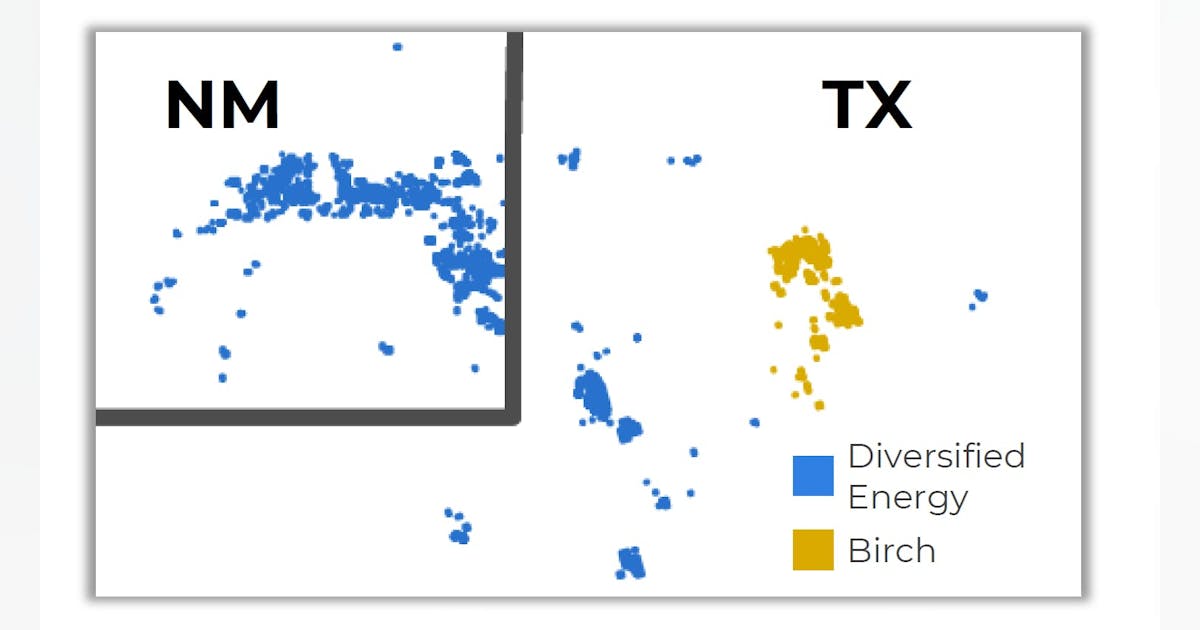
Diversified Energy Co. has agreed to acquire Birch Permian Holdings Inc. and certain affiliated companies from affiliates of Elliott Investment Management LP for about $1.8 billion, expanding its position in the Permian basin and adding operated, producing assets to its portfolio. The acquisition is expected to increase Diversified’s production by about 35%, the company said in a release Sept. 2. Following closing, Diversified said operated gross production volumes are expected to total about 2.5 bcefd, or roughly 1.6 bcfed net. Birch’s assets currently produce about 68,000 boe/d net (about 409 MMcfed), consisting of 38% oil, 32% natural gas liquids, and 30% natural gas. The portfolio includes about 480 net wells across 46,000 net mineral acres in the Permian basin. The acquired properties contain proved reserves of about 1.17 tcfe and a reported PV-10 value of about $2 billion. The transaction also includes gathering, processing, and water-handling infrastructure. Midstream assets comprise 12 central production facilities, nine well gathering facilities, more than 60 miles of gathering pipeline, and five water disposal facilities connected by more than 80 miles of disposal and recycling pipelines. Processing capacity includes up to 345,000 b/d of oil and 310 MMcfd of gas. Diversified said the acquisition establishes a platform for further consolidation of mature, producing Permian assets consistent with its strategy of acquiring and managing proved developed producing (PDP) properties. The company also cited enhanced oil recovery (EOR) potential, noting the acquired position includes more than 150 permitted EOR locations. “This $1.8 billion acquisition is our largest in the company’s 25-year history,” said chairman and chief executive officer Rusty Hutson Jr. He said the assets provide a concentrated operated position in the Permian basin with integrated infrastructure and predictable cash flow characteristics. The acquisition is expected to be funded primarily through a privately rated asset-backed securitization originated

Read More »

Timor GAP acquires interest in Greater Sunrise

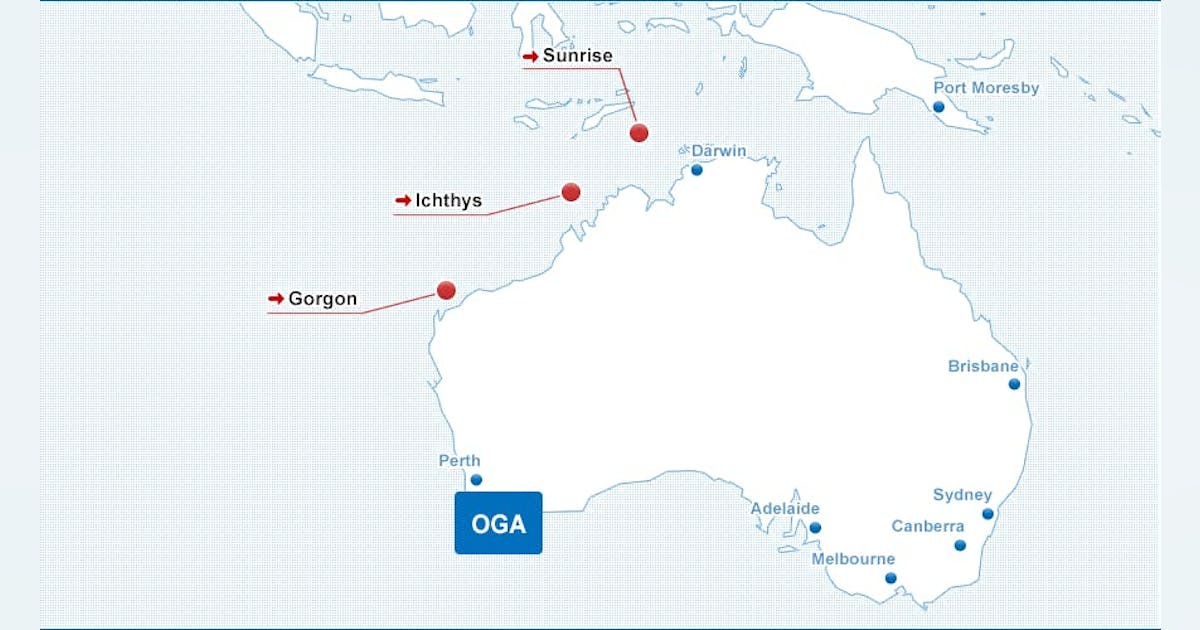
@import url(‘https://fonts.googleapis.com/css2?family=Inter:wght@100..900&display=swap’); .ebm-page__main h1, .ebm-page__main h2, .ebm-page__main h3, .ebm-page__main h4, .ebm-page__main h5, .ebm-page__main h6 { font-family: Inter; } body { line-height: 150%; letter-spacing: 0.025em; } button, .ebm-button-wrapper { font-family: Inter; } .label-style { text-transform: uppercase; color: var(–color-grey); font-weight: 600; font-size: 0.75rem; } .caption-style { font-size: 0.75rem; color: color-mix(in srgb, currentColor 60%, transparent); } #onetrust-pc-sdk [id*=btn-handler], #onetrust-pc-sdk [class*=btn-handler] { background-color: #c19a06 !important; border-color: #c19a06 !important; } #onetrust-policy a, #onetrust-pc-sdk a, #ot-pc-content a { color: #c19a06 !important; } #onetrust-consent-sdk #onetrust-pc-sdk .ot-active-menu { border-color: #c19a06 !important; } #onetrust-consent-sdk #onetrust-accept-btn-handler, #onetrust-banner-sdk #onetrust-reject-all-handler, #onetrust-consent-sdk #onetrust-pc-btn-handler.cookie-setting-link { background-color: #c19a06 !important; border-color: #c19a06 !important; } #onetrust-consent-sdk .onetrust-pc-btn-handler { color: #c19a06 !important; border-color: #c19a06 !important; } Timor Gás & Petróleo EP (Timor GAP) reached a binding agreement with Osaka Gas Australia Pty Ltd. to acquire Osaka Gas Australia’s 10% participating interest in the Greater Sunrise project 140 km south of Timor-Leste and 450 km north-west of Darwin in the Northern Territory of Australia. The acquisition encompasses Osaka Gas Australia’s interests in the two existing Joint Petroleum Development Area Production Sharing Contracts (PSC 03-19 and PSC 03-20) and the two existing Australian retention leases (NT/RL2 and NT/RL4), pending the finalization of the new single Production Sharing Contract under the Maritime Boundaries Treaty between Timor-Leste and Australia. Greater Sunrise is comprised of Sunrise and Troubadour gas and condensate fields. Discovered in 1974, the Greater Sunrise complex holds estimated contingent resources of 5.13 tcf of gas and 226 million bbl of condensate. The project is expected to start producing natural gas by 2028-2030. Timor GAP chief executive officer Rui Soares said the acquisition marks a milestone for both the company and Timor-Leste, increasing the country’s participation in the Greater Sunrise project and positioning the partners to “fast-track pending work with a view to the selection of the Timor LNG development concept in the

Read More »

OIES: Venezuela recovery hinges on infrastructure, power, investment rules

Venezuela has the resource base to rebuild oil production to about 3.3 million b/d over the next 10-12 years, but achieving that level will require major improvements in infrastructure, electricity supply, oilfield services, and the legal and fiscal framework for investment, the Oxford Institute for Energy Studies (OIES) said. In an August report, Venezuela’s Oil and Gas Industry: The Challenge of Sustainable Recovery, OIES said the central challenge is no longer whether Venezuela has sufficient petroleum resources, but whether it can rebuild the technical, institutional, and infrastructure conditions needed to convert those resources into sustained production. Venezuela has 303 billion bbl of proved crude oil reserves as of 2025, including 260.8 billion bbl of extra-heavy crude concentrated largely in the Orinoco Belt. The country also has an estimated 193.4 tcf of proved natural gas reserves, with about 87.8% associated with crude oil production. The scale of those resources contrasts sharply with current production. Venezuela produced less than 1 million b/d of crude in 2025, compared with roughly 3 million b/d around 25 years ago. Production began to recover in 2026, with average quarterly output increasing to 1.06 million b/d in second-quarter 2026 from about 943,000 b/d in fourth-quarter 2025. OIES said returning production to about 3.3 million b/d—the level Venezuela reached in 1998—is technically viable over a 10-12-year period. The figure, however, represents long-term production potential rather than a forecast. Achieving it would require sustained political transition, predictable fiscal terms, private capital and technology, infrastructure rehabilitation, reliable electricity and diluent supplies, and stronger institutions. Phased Orinoco development The report recommends a phased approach to developing the Orinoco resource base rather than treating the belt as a single homogeneous resource. Based on an unpublished 2023 study by Gomez and Garcia, OIES divides the resource base into about 71 billion bbl of

Read More »

Polish Oil and Gas Congress

The Congress (www.polishoilandgas.com) – under the slogan ‘Powering the future’ – will take place in Warsaw in October 21-22.  It is organised by ORLEN – a leading multi-energy company in the Central and Eastern European region. Energy is the key to security and development  In Central Europe, where renewable energy sources can meet between two-thirds and three-quarters of energy demand due to geographical conditions, natural gas remains a stabilising factor for the system. Today, access to gas and oil is a guarantee of the country’s security and a prerequisite for the stable functioning of the economy. The crises of recent years have made it abundantly clear to us just how crucial stable supplies are. More and more energy will be needed Global demand for electricity will continue to rise, mainly due to the development of energy-intensive digital technologies, the ongoing reindustrialisation of many regions of the world, and a sharp increase in energy consumption in developing countries. The International Energy Agency’s World Energy Outlook 2025 report, in one of the scenarios presented — ‘Current Policies’ — which describes a reality based on policies actually being implemented, rather than those merely announced — indicates that demand for oil and gas will remain high until the middle of the century, and that both commodities will remain a significant part of the global energy mix. Natural gas is supplied to industry, households and the energy sector. It is the basis for the operation of many combined heat and power plants, petrochemical plants and fertiliser plants. The outlook for the district heating sector is particularly significant, given the major role played by coal in its energy supply. Crude oil, on the other hand, forms the basis of the fuel industry, plastics production and, consequently, the majority of the economy. Looking at the situation from

Read More »

US BLM considers expanding oil and gas leasing to Utah’s Ouray National Wildlife Refuge

The US Bureau of Land Management (BLM) Sept. 2 said it was considering opening about 5,200 acres of federal land under the Ouray National Wildlife Refuge (ONWR) near Vernal in northeast Utah to oil and gas leasing. The BLM proposal contains a “no surface occupancy” restriction that bars drilling inside the refuge. Instead, if the proposal is approved, leaseholders could use only directional or horizontal drilling from well pads outside ONWR to develop leases. BLM opened a 30-day public scoping period to seek public input on the proposal and BLM’s preparation of a resource management plan amendment and associated environmental analysis. Comments are due Oct. 5, 2026.  ONWR lies entirely within the oil and gas rich Uinta basin, which produced a record 67.9 million bbl of oil in 2025 along with 328 bcf of gas, according to the Utah Division of Oil, Gas and Mining. The basin is known for its abundance of waxy crude oil, coveted by refineries because of its low sulfur levels, making it optimal for lubricants and engine oils. 

Read More »

ERCOT Puts Texas AI Megawatts to the Test

Texas has no shortage of proposed data center megawatts. The harder question is how many of them are real. That distinction is becoming central to the Electric Reliability Council of Texas (ERCOT) as the state works through an unprecedented wave of AI, hyperscale and other large-load requests. In June, ERCOT said it was tracking more than 438 GW of proposed large loads, nearly 89% associated with data centers. By Aug. 3, Gov. Greg Abbott said ERCOT was considering approximately 474 GW of connection requests, roughly 90% from data centers and more than five times the system’s record peak demand. Neither figure represents a forecast of what will actually get built. And that is increasingly the point. ERCOT’s new Batch Zero process is beginning to put harder boundaries around Texas’ enormous development pipeline, asking which projects have enough maturity, technical information and commitment to warrant space in the transmission plan. At the same time, new requirements surrounding voltage ride-through and dynamic modeling are forcing another realization on the AI infrastructure industry: at hundreds of megawatts, a data center is no longer simply a customer at the edge of the grid. Its behavior can affect the grid itself. For developers, utilities and investors, Texas is becoming a large-scale test of what separates an announced AI campus from executable infrastructure. The Queue Is Not the Grid The sheer scale of ERCOT’s large-load queue can obscure how early many projects remain. ERCOT’s April 2026 monthly report offered a revealing snapshot. Large-load applications totaled 445.8 GW through 2033, but 321 GW had no studies submitted to ERCOT. Another 93.7 GW was under ERCOT review, while 22 GW had met the applicable Section 9.5 requirements. Against that enormous development funnel, ERCOT reported just 5.9 GW of observed energized large loads, with another 3.2 GW approved to

Read More »

DCF Trends Summit: AI Compresses the Data Center Hardware Lifecycle and Raises the Stakes for ITAD

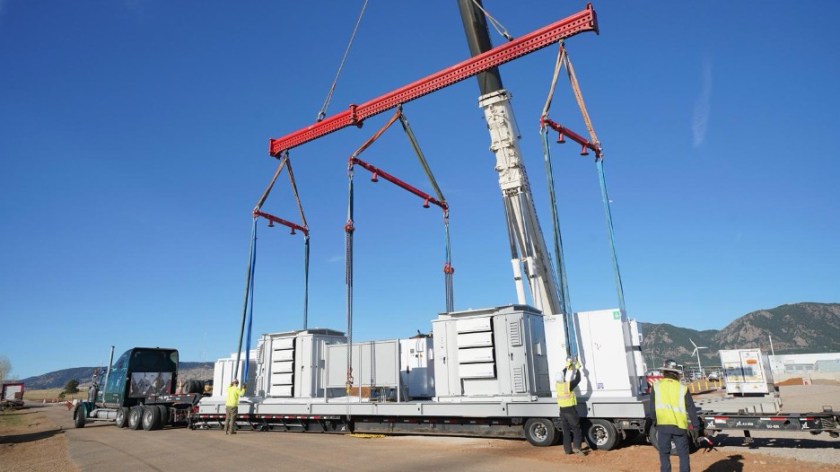
The AI infrastructure race is largely a story about getting more computing into data centers faster. But the accelerated hardware cycle is creating an equally consequential problem at the other end of the rack: getting yesterday’s equipment back out while it is still valuable. GPU systems built around increasingly dense and specialized AI architectures are beginning to challenge traditional assumptions about IT asset disposition, or ITAD. Where conventional enterprise infrastructure might remain in service for three to five years, newer GPU platforms can face refresh cycles of 18 to 24 months, according to Josh Humm, Data Center Solutions Manager at Dynamic Lifecycle Innovations. That compression changes the economics as well as the mechanics of decommissioning. “The faster we can get the materials out of your building, the more it’s worth, the more we can return to your program,” Humm said. Humm joined DCF Contributing Editor Doug Black for a DCF Show podcast recorded at the third annual Data Center Frontier Trends Summit, held Aug. 4-6 in Reston, Virginia. Their conversation focused on a less visible part of the AI infrastructure buildout: what happens to servers, accelerators, memory, storage and networking gear when the next generation arrives. The answer increasingly touches facility operations, data security, logistics, sustainability and potentially millions of dollars in recoverable hardware value. AI Hardware Changes the Exit Path AI systems create some obvious physical challenges for decommissioning. Traditional ITAD teams accustomed to pulling 1U and 2U servers out of air-cooled racks may instead encounter liquid-cooling manifolds, substantially heavier systems and equipment requiring specialized rigging and handling procedures. Humm said some systems can weigh between 5,000 and 6,000 pounds. “We’re not pulling out just 1U, 2U servers out of racks anymore,” he said. Liquid cooling adds another layer. Removing infrastructure designed around direct-to-chip or other liquid-cooling architectures can

Read More »

Data Center Jobs: Engineering, Construction, Commissioning, Sales, Field Service and Facility Tech Jobs Available in Major Data Center Hotspots

Each month Data Center Frontier, in partnership with Pkaza, posts some of the hottest data center career opportunities in the market. Here’s a look at some of the latest data center jobs posted on the Data Center Frontier jobs board, powered by Pkaza Critical Facilities Recruiting. Looking for Data Center Candidates? Check out Pkaza’s Active Candidate / Featured Candidate Hotlist  CFD Engineer – Data Center Mechanical Design New York, NY (remote)This position is also available as a remote role anywhere in the U.S. in addition to key markets such as Cedar Rapids, IA; Kansas City, CA or White Plains, NY. Our client is an engineering design and commissioning company that has a national footprint and specializes in MEP critical facilities design. They provide design, commissioning, consulting and management expertise in the critical facilities space. They have a mindset to provide reliability, energy efficiency, and sustainable design expertise when providing these consulting services for enterprise, colocation and hyperscale companies. This career-growth minded opportunity offers exciting projects with leading-edge technology and innovation as well as competitive salaries and benefits.  Electrical Commissioning Agent – Data Centers Columbus, OH (limited travel) Non-traveling CxA positions available in: Indianapolis, IN; Cedar Rapids, IA; Phoenix, AZ; Atlanta, GA and Austin, TX. Traveling CxA based near any major airport, otherwise traveling to: New York, NY; White Plains, NY; Dallas, TX; Richmond, VA; Montvale, NJ; Charlotte, NC; Salt Lake City, UT; Kansas City, MO; Chesterton, IN or Chicago, IL. *** Also looking for a lead EE, ME CxA agents and CxA PMs. *** This opportunity is with a leading EPC company of data center design / build / commissioning solutions. This company provides a complete life cycle of solutions that are custom-fit to the requirements of their client’s mission-critical facilities. This opportunity provides a career-growth minded role with exciting projects with

Read More »

DCFTS 2026: Data Center Development Moves From Projection to Execution

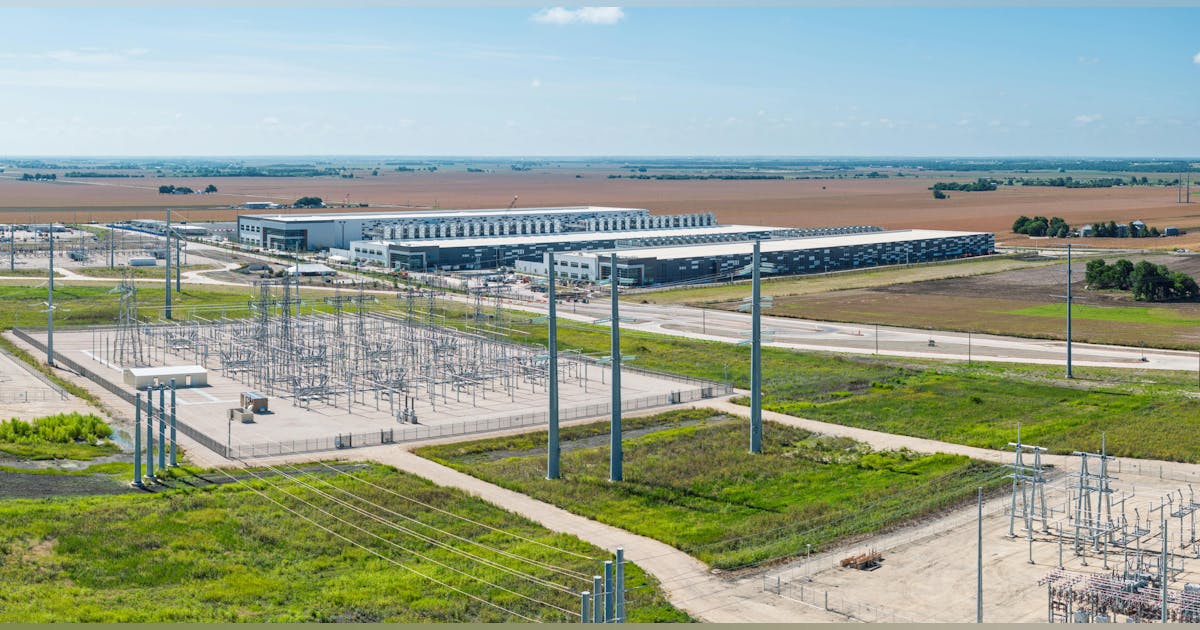
The Data Center Map Gets More Selective For EdgeCore, finding viable development locations has become an exercise in aggressive filtering. Kestler said the company evaluated 172 sites during the previous 12 months to narrow the field to seven locations it wanted to actively manage. Its requirements include roughly 100 acres or more, the ability to support a 300-MVA-or-larger substation, credible utility development timelines and sufficient network proximity to support what Kestler called “interdependent compute” locations. The distinction matters. Not every AI workload needs the same geography, and not every site marketed as available for AI infrastructure can support the combination of land, network, power and timing required to make a project real. Miller placed that process in the context of a data center map already being redrawn by power availability. Northern Virginia’s power constraints in 2022 provided an early warning, redirecting capacity into markets including Atlanta and driving developers farther afield in search of large blocks of electricity. AI has intensified the process. As campus requirements move toward hundreds of megawatts and, in some cases, gigawatt scale, Miller said, fewer locations can satisfy all of the requirements simultaneously. Community acceptance is narrowing the map further. At the same time, Miller pointed to a potential countertrend: the growth of AI inference could create another layer of data center geography. Some inference architectures may favor smaller, distributed facilities rather than concentrating every workload inside enormous campuses. The result could be a more stratified infrastructure market. “Everything everywhere all at once,” Miller said. Build Where Data Centers Are Wanted For large campus development, Kestler offered another increasingly important filter. EdgeCore wants to build where it is wanted. In practical terms, that means targeting municipalities and jurisdictions that have already made deliberate decisions about where data center or other light industrial development belongs. Kestler

Read More »

How States Are Rewriting the Rules for Data Center Growth

Pennsylvania has moved from courting data center investment to setting much stricter terms for how the industry grows. Governor Josh Shapiro’s August 18 executive order creates one of the country’s most comprehensive state-level frameworks for large data centers, linking a more favorable environmental permitting process and state tax treatment to requirements covering power supply, grid costs, local approval, workforce commitments, water use and environmental performance. The order is the latest stage of Shapiro’s Governor’s Responsible Infrastructure Development, or GRID, initiative. GRID was announced in February, detailed in May and partially reinforced through Pennsylvania’s 2026-27 budget in July. The Pennsylvania House also passed legislation intended to codify the standards, but the Senate did not act. Shapiro has now used existing executive and agency authority to put much of the framework into effect immediately. Pennsylvania’s debate has also produced more direct proposals to slow development. Senate Bill 1359 would impose a statewide moratorium on hyperscale data center development and permitting, although the measure remains in the Senate Local Government Committee. A separate measure, Senate Bill 1345, would authorize municipalities to temporarily stop accepting or considering new applications for high-impact data centers for up to 18 months. SB 1345 advanced to second consideration in the Senate in July. Neither measure has become law. What is the Impact on Data Center Development? For data center projects with peak demand exceeding 25 MW, Pennsylvania’s template GRID Consent Order and Agreement provides the mechanism for binding developers to the requirements while allowing the states Department of Environmental Protection (DEP) to review qualifying permit applications on a rolling basis. Developers that decline to sign can still seek permits, but DEP will not begin reviewing their applications until local approvals and required water or wastewater authorizations are secured, and permits will not be handled on a rolling basis.

Read More »

PwC Maps $31.6 Trillion AI Data Center Buildout Through 2050

The scale of the AI infrastructure buildout is becoming easier to describe in trillions than billions. PwC’s inaugural Global Data Centre Outlook 2026–50 projects $31.6 trillion in cumulative global data center capital expenditure through 2050 under its central scenario, with annual spending rising from roughly $800 billion in 2026 to $1.1 trillion in 2030 and $1.8 trillion by 2050. There is also an enormous range around that central case. PwC, working with Oxford Economics, puts plausible cumulative investment at roughly $22 trillion to nearly $50 trillion, depending primarily on how quickly AI adoption progresses. But the most important finding may not be the $31.6 trillion headline. PwC argues that the economics of AI infrastructure are creating a fundamentally different capital cycle from previous infrastructure booms. Data centers are long-lived assets, but the increasingly expensive computing equipment inside them is not. Servers, GPUs, networking systems and other information and communications technology equipment are expected to require replacement on roughly four- to six-year cycles. PwC calculates that every $1 of construction spending can effectively commit the market to approximately $12 of subsequent ICT investment. ICT equipment accounts for about 70% of total data center CapEx in 2026 under its model, rising to 93% by 2050. That creates something closer to a continuously renewing technology platform than a conventional construction cycle. Over a 20-year data center asset life, PwC estimates that a facility could undergo three to five rounds of ICT investment. Increasing rack densities can force corresponding power and cooling upgrades, but the largest recurring expense remains the compute hardware itself. For data center developers and operators, that distinction matters. The economic life of the building increasingly diverges from the technical and financial life of the infrastructure filling it. AI Fragments the Data Center Demand Model The report also sees AI broadening

Read More »

Microsoft will invest $80B in AI data centers in fiscal 2025

And Microsoft isn’t the only one that is ramping up its investments into AI-enabled data centers. Rival cloud service providers are all investing in either upgrading or opening new data centers to capture a larger chunk of business from developers and users of large language models (LLMs).  In a report published in October 2024, Bloomberg Intelligence estimated that demand for generative AI would push Microsoft, AWS, Google, Oracle, Meta, and Apple would between them devote $200 billion to capex in 2025, up from $110 billion in 2023. Microsoft is one of the biggest spenders, followed closely by Google and AWS, Bloomberg Intelligence said. Its estimate of Microsoft’s capital spending on AI, at $62.4 billion for calendar 2025, is lower than Smith’s claim that the company will invest $80 billion in the fiscal year to June 30, 2025. Both figures, though, are way higher than Microsoft’s 2020 capital expenditure of “just” $17.6 billion. The majority of the increased spending is tied to cloud services and the expansion of AI infrastructure needed to provide compute capacity for OpenAI workloads. Separately, last October Amazon CEO Andy Jassy said his company planned total capex spend of $75 billion in 2024 and even more in 2025, with much of it going to AWS, its cloud computing division.

Read More »

John Deere unveils more autonomous farm machines to address skill labor shortage

Join our daily and weekly newsletters for the latest updates and exclusive content on industry-leading AI coverage. Learn More Self-driving tractors might be the path to self-driving cars. John Deere has revealed a new line of autonomous machines and tech across agriculture, construction and commercial landscaping. The Moline, Illinois-based John Deere has been in business for 187 years, yet it’s been a regular as a non-tech company showing off technology at the big tech trade show in Las Vegas and is back at CES 2025 with more autonomous tractors and other vehicles. This is not something we usually cover, but John Deere has a lot of data that is interesting in the big picture of tech. The message from the company is that there aren’t enough skilled farm laborers to do the work that its customers need. It’s been a challenge for most of the last two decades, said Jahmy Hindman, CTO at John Deere, in a briefing. Much of the tech will come this fall and after that. He noted that the average farmer in the U.S. is over 58 and works 12 to 18 hours a day to grow food for us. And he said the American Farm Bureau Federation estimates there are roughly 2.4 million farm jobs that need to be filled annually; and the agricultural work force continues to shrink. (This is my hint to the anti-immigration crowd). John Deere’s autonomous 9RX Tractor. Farmers can oversee it using an app. While each of these industries experiences their own set of challenges, a commonality across all is skilled labor availability. In construction, about 80% percent of contractors struggle to find skilled labor. And in commercial landscaping, 86% of landscaping business owners can’t find labor to fill open positions, he said. “They have to figure out how to do

Read More »

2025 playbook for enterprise AI success, from agents to evals

Join our daily and weekly newsletters for the latest updates and exclusive content on industry-leading AI coverage. Learn More 2025 is poised to be a pivotal year for enterprise AI. The past year has seen rapid innovation, and this year will see the same. This has made it more critical than ever to revisit your AI strategy to stay competitive and create value for your customers. From scaling AI agents to optimizing costs, here are the five critical areas enterprises should prioritize for their AI strategy this year. 1. Agents: the next generation of automation AI agents are no longer theoretical. In 2025, they’re indispensable tools for enterprises looking to streamline operations and enhance customer interactions. Unlike traditional software, agents powered by large language models (LLMs) can make nuanced decisions, navigate complex multi-step tasks, and integrate seamlessly with tools and APIs. At the start of 2024, agents were not ready for prime time, making frustrating mistakes like hallucinating URLs. They started getting better as frontier large language models themselves improved. “Let me put it this way,” said Sam Witteveen, cofounder of Red Dragon, a company that develops agents for companies, and that recently reviewed the 48 agents it built last year. “Interestingly, the ones that we built at the start of the year, a lot of those worked way better at the end of the year just because the models got better.” Witteveen shared this in the video podcast we filmed to discuss these five big trends in detail. Models are getting better and hallucinating less, and they’re also being trained to do agentic tasks. Another feature that the model providers are researching is a way to use the LLM as a judge, and as models get cheaper (something we’ll cover below), companies can use three or more models to

Read More »

OpenAI’s red teaming innovations define new essentials for security leaders in the AI era

Join our daily and weekly newsletters for the latest updates and exclusive content on industry-leading AI coverage. Learn More OpenAI has taken a more aggressive approach to red teaming than its AI competitors, demonstrating its security teams’ advanced capabilities in two areas: multi-step reinforcement and external red teaming. OpenAI recently released two papers that set a new competitive standard for improving the quality, reliability and safety of AI models in these two techniques and more. The first paper, “OpenAI’s Approach to External Red Teaming for AI Models and Systems,” reports that specialized teams outside the company have proven effective in uncovering vulnerabilities that might otherwise have made it into a released model because in-house testing techniques may have missed them. In the second paper, “Diverse and Effective Red Teaming with Auto-Generated Rewards and Multi-Step Reinforcement Learning,” OpenAI introduces an automated framework that relies on iterative reinforcement learning to generate a broad spectrum of novel, wide-ranging attacks. Going all-in on red teaming pays practical, competitive dividends It’s encouraging to see competitive intensity in red teaming growing among AI companies. When Anthropic released its AI red team guidelines in June of last year, it joined AI providers including Google, Microsoft, Nvidia, OpenAI, and even the U.S.’s National Institute of Standards and Technology (NIST), which all had released red teaming frameworks. Investing heavily in red teaming yields tangible benefits for security leaders in any organization. OpenAI’s paper on external red teaming provides a detailed analysis of how the company strives to create specialized external teams that include cybersecurity and subject matter experts. The goal is to see if knowledgeable external teams can defeat models’ security perimeters and find gaps in their security, biases and controls that prompt-based testing couldn’t find. What makes OpenAI’s recent papers noteworthy is how well they define using human-in-the-middle

Read More »