Stay Ahead, Stay ONMINE

Shell agrees to acquire interest in Bay du Nord project

Shell plc and Equinor ASA have signed an agreement under which Shell will acquire a 30% interest in the Bay du Nord project offshore Newfoundland and Labrador in Canada. Equinor will retain a 70% interest and remain as the operator of the project. The transaction supports the continued maturation of Bay du Nord towards an investment […]

Shell plc and Equinor ASA have signed an agreement under which Shell will acquire a 30% interest in the Bay du Nord project offshore Newfoundland and Labrador in Canada.

Equinor will retain a 70% interest and remain as the operator of the project.

The transaction supports the continued maturation of Bay du Nord towards an investment decision currently targeted for early 2027, Equinor said.

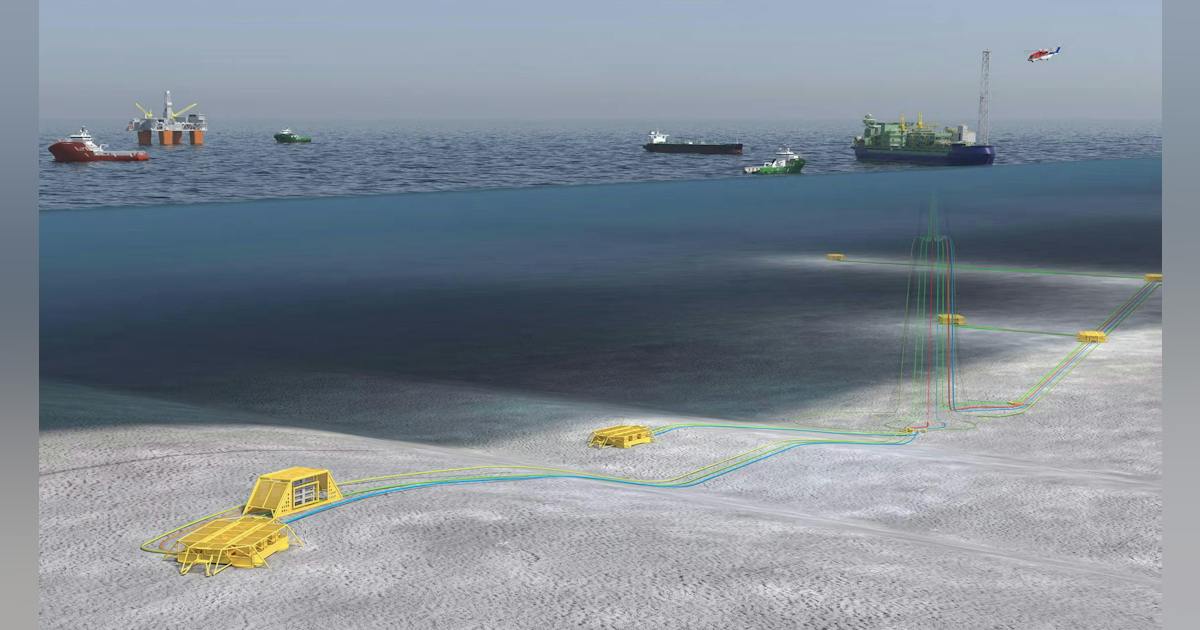
Bay du Nord is in Flemish Pass basin, about 500 km offshore Newfoundland and Labrador in 600–1,170 m of water. The development concept is based on a floating production, storage, and offloading vessel (FPSO).

Bay du Nord and Cambriol discoveries are included in the initial phase, with potential future subsea tiebacks to Cappahayden, Harpoon, and Baccalieu.

Estimated recoverable resources in the initial phase are more than 400 MMbbl of oil. First oil is anticipated in 2031, Equinor said.

The project is currently finalizing front-end engineering and design (FEED), with continued work focused on strengthening capital efficiency, execution planning, and overall project robustness.

Engagement with provincial and federal governments has supported progress through key milestones, according to the company.

Equinor and Shell said they will continue to mature the project towards an investment decision subject to market conditions, regulatory approvals, and the companies’ internal decision processes.

The project will require a toal investment of about $14 billion (Can.; US$12.6 billion), Equinor said.

Shape
Shape
Stay Ahead

Explore More Insights

Stay ahead with more perspectives on cutting-edge power, infrastructure, energy,  bitcoin and AI solutions. Explore these articles to uncover strategies and insights shaping the future of industries.

Shape

Tool sprawl, AI complicate enterprise network operations

Enterprises can use AI to help correlate information and automate operations, but it doesn’t eliminate the need to address underlying operational problems. “AI can overcome data fragmentation across tools, but it’s not going to overcome bad data and bad operations in general,” McGillicuddy said. AI takes on more of the

Read More »

Shell agrees to acquire interest in Bay du Nord project

Shell plc and Equinor ASA have signed an agreement under which Shell will acquire a 30% interest in the Bay du Nord project offshore Newfoundland and Labrador in Canada. Equinor will retain a 70% interest and remain as the operator of the project. The transaction supports the continued maturation of Bay du Nord towards an investment decision currently targeted for early 2027, Equinor said. Bay du Nord is in Flemish Pass basin, about 500 km offshore Newfoundland and Labrador in 600–1,170 m of water. The development concept is based on a floating production, storage, and offloading vessel (FPSO). Bay du Nord and Cambriol discoveries are included in the initial phase, with potential future subsea tiebacks to Cappahayden, Harpoon, and Baccalieu. Estimated recoverable resources in the initial phase are more than 400 MMbbl of oil. First oil is anticipated in 2031, Equinor said. The project is currently finalizing front-end engineering and design (FEED), with continued work focused on strengthening capital efficiency, execution planning, and overall project robustness. Engagement with provincial and federal governments has supported progress through key milestones, according to the company. Equinor and Shell said they will continue to mature the project towards an investment decision subject to market conditions, regulatory approvals, and the companies’ internal decision processes. The project will require a toal investment of about $14 billion (Can.; US$12.6 billion), Equinor said.

Read More »

Dangote taps EIL for Kenya grassroots refinery project

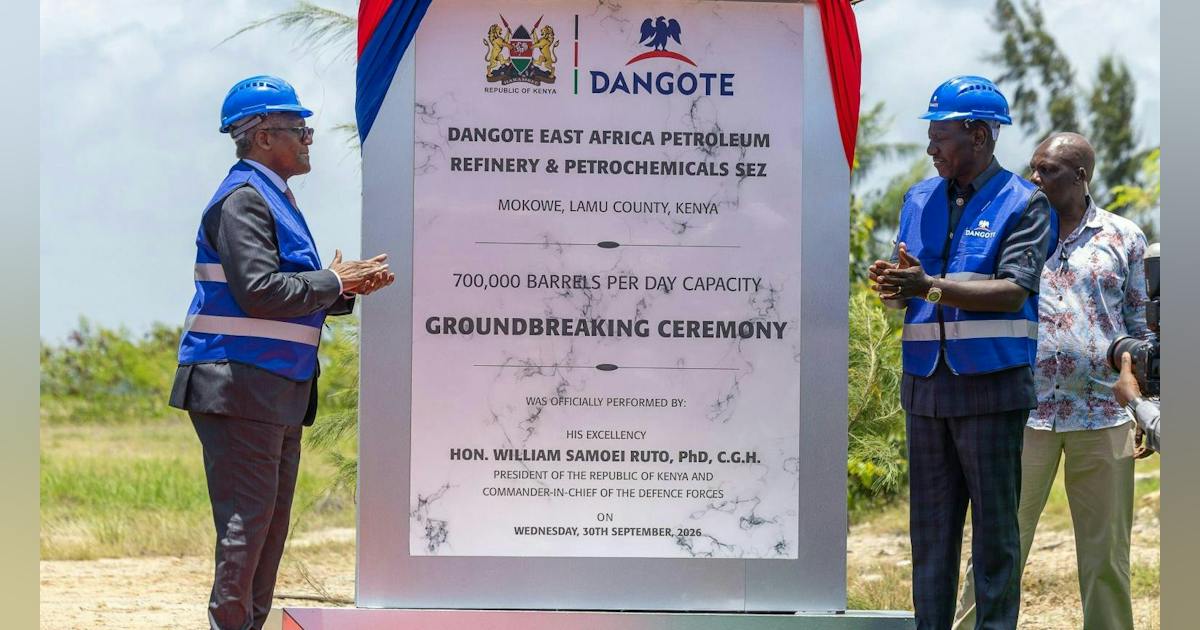
Dangote Group has enlisted Engineers India Ltd. (EIL) to deliver project management and engineering, procurement, and construction management (EPCM) services for subsidiary Dangote East Africa Petroleum Refinery & Petrochemicals SEZ’s proposed 700,000-b/d grassroots integrated refinery and petrochemical complex to be built in Mokowe, Lamu County, Kenya. As part of the more than $450-million contract, EIL will serve as project management consultant (PMC) and EPCM consultant for the project, the service provider said in separate regulatory filings to BSE Ltd. and The National Stock Exchange of India Ltd. The proposed complex is planned near Lamu Port and the Lamu Port-South Sudan-Ethiopia Transport (LAPSSET) corridor, which will connect the site with inland and regional markets by providing a coastal location for importing construction materials and crude as well as exporting refined products. EIL said award of the PMC-EPCM consultancy contract for the Lamu refinery follows its previous role as PMC-EPCM consultant for Dangote Petroleum Refinery and Petrochemicals FZE (DPRP) 650,000-b/d refinery and petrochemical complex in the Lekki Free Zone near Lagos, Nigeria, which is currently being expanded to 1.4 million b/d. At a Sept. 30 groundbreaking ceremony for the Lamu refinery, Dangote described the $16-billion investment as a project aimed at expanding refined-product supply in East Africa that will serve markets both within and beyond Kenya. While the refinery will presumably process Kenya’s production of domestic crude such as volumes from South Lokichar basin—which could which could begin production before December 2026 at a rate of about 20,000 b/d—the integrated complex also will process crude sourced from other African producers, including Uganda, the African Export-Import Bank (Afreximbank) said in a release Oct. 1. Honeywell to license technologies The EIL contract joins a separate $300-million contract awarded to Honeywell Technologies for delivery process technology and related services at Lamu, including technology licensing, engineering

Read More »

Energy Department Announces New Genesis Mission Awards to Advance Super Intelligence for Science

WASHINGTON—The U.S. Department of Energy (DOE) today announced 12 Phase II Genesis Mission project awards totaling $159 million. Building on the Genesis Mission’s growing portfolio of projects, first announced in July, these Phase II project awards will unleash scientific discoveries with Super Intelligence (SI). President Trump launched the Genesis Mission in November 2025 to accelerate discovery and strengthen U.S. leadership in science, medicine, and technology. “These projects represent a critical step in turning the promise of Super Intelligence for science into transformative scientific capability,” said DOE Under Secretary for Science Dr. Darío Gil. “The Phase II teams have already demonstrated what is possible when SI is integrated with scientific expertise, data, and computing. These awards give them the opportunity to take that work to the next level. By bringing together our National Labs, universities, and industry partners, we are building on extraordinary work already underway and accelerating the pace of discovery.” The Phase II awards are developing new, powerful capabilities to tackle the Nation’s most complex National Science and Technology Challenges. By connecting America’s leading scientists with advanced SI, supercomputing, scientific data, and DOE’s world-class research infrastructure, the Genesis Mission is strengthening U.S. leadership at the frontiers of science and technology. Awarded Projects Through DOE’s Office of Science, the 12 newly awarded projects are: Accelerating the path to commercial fusion energy via an AI-enabled digital twin platform for SPARC: Led by Commonwealth Fusion Systems, this project will build a digital twin to simulate and optimize operations of a fusion demonstration device.  Decoding the RNA Structurome to Secure AI Advantage for the Bioeconomy: Led by the University of California San Diego, the project will expand the RNA structure database five-fold for training SI models to unlock the ability to engineer resilient crops and sustainable microbes.  Lattice Quantum Chromodynamics (LQCD) at the

Read More »

Energy Department Launches Genesis Mission Graduate Fellowship to Advance American Scientific Leadership

WASHINGTON—The U.S. Department of Energy (DOE) today announced the Genesis Mission Graduate Fellowship Pilot, a new funding opportunity designed to develop the next generation of American scientists and engineers and strengthen U.S. scientific leadership. Through accelerated, four-year doctoral pathways, the program will equip domestic graduate students with critical expertise in both Super Intelligence (SI) and core scientific and engineering disciplines. The inaugural fellowship advances President Trump’s historic Genesis Mission by investing in the education, development, and retention of domestic talent needed to accelerate U.S. scientific discovery and innovation. “To secure America’s position at the forefront of global scientific innovation, we must cultivate a workforce that is fluent in both foundational sciences and advanced Super Intelligence,” said DOE Under Secretary for Science Dr. Darío Gil. “The Genesis Mission Graduate Fellowship will bridge this critical gap by combining rigorous academic training with hands-on, high-impact experiences across our National Laboratories and industry partners.” DOE will fund an inaugural group of pilot projects led by domestic doctoral-granting institutions, supporting an initial cohort of approximately 100 Ph.D. fellows. As part of their four-year doctoral pathways, fellows will complete two high-impact, hands-on research experiences—one at a DOE National Laboratory or DOE User Facility and one with an industry partner—preparing them to lead the next generation of scientific discovery and innovation. Total planned funding is up to $100 million, with $20 million in Fiscal Year 2027, and outyear funding contingent on congressional appropriations. A webinar will be held on November 4, 2026, 4:00 PM ET. Register on Zoom. For more information, please visit the DOE Office of Science Funding Opportunities page.

Read More »

U.S. Department of Energy Awards $96 Million to 67 Early Career Scientists

WASHINGTON—The U.S. Department of Energy’s (DOE) Office of Science today announced the selection of 67 early career scientists to receive a combined $96 million through the 2026 Early Career Research Program (ECRP). Today’s announcement advances President Trump’s Executive Order Restoring Gold Standard Science by supporting exceptional researchers pursuing rigorous, mission-driven research in areas critical to America’s scientific and technological leadership, including Super Intelligence (SI), fusion energy, and quantum science. “Groundbreaking science begins with empowering extraordinary people,” said DOE Under Secretary for Science Dr. Darío Gil. “These 67 early career researchers represent the very best of American ingenuity. DOE is proud to invest in their vision as they push the boundaries of knowledge and cement U.S. leadership in the technologies that will define our century.” The 2026 Early Career Research Program (ECRP) selectees represent 39 universities, 11 DOE National Laboratories and Office of Science User Facilities, and 26 states. By investing in exceptional researchers at a pivotal stage in their careers, ECRP empowers the next generation of STEM leaders to pursue bold, innovative research that drives DOE’s mission and ensures America continues to lead the world in science and innovation. Since its inception in 2010, the program has made 1,238 awards, including 797 to university researchers and 441 to DOE National Laboratory researchers. Awards to scientists at institutions of higher education are approximately $875,000 over five years, while awards to scientists at DOE National Laboratories or Office of Science User Facilities are approximately $2,750,000 over five years. Information about the 67 selectees and their research projects is available on the Office of Science Awards page. Profiles of previous award recipients, including information about how the program helped advance their research and careers, are available on the Early Career Program profiles page. Selection for award negotiations is not a commitment by DOE

Read More »

National Hydrogen and Fuel Cell Day 2026: Celebrating the “Swiss Army Knife” of the Periodic Table

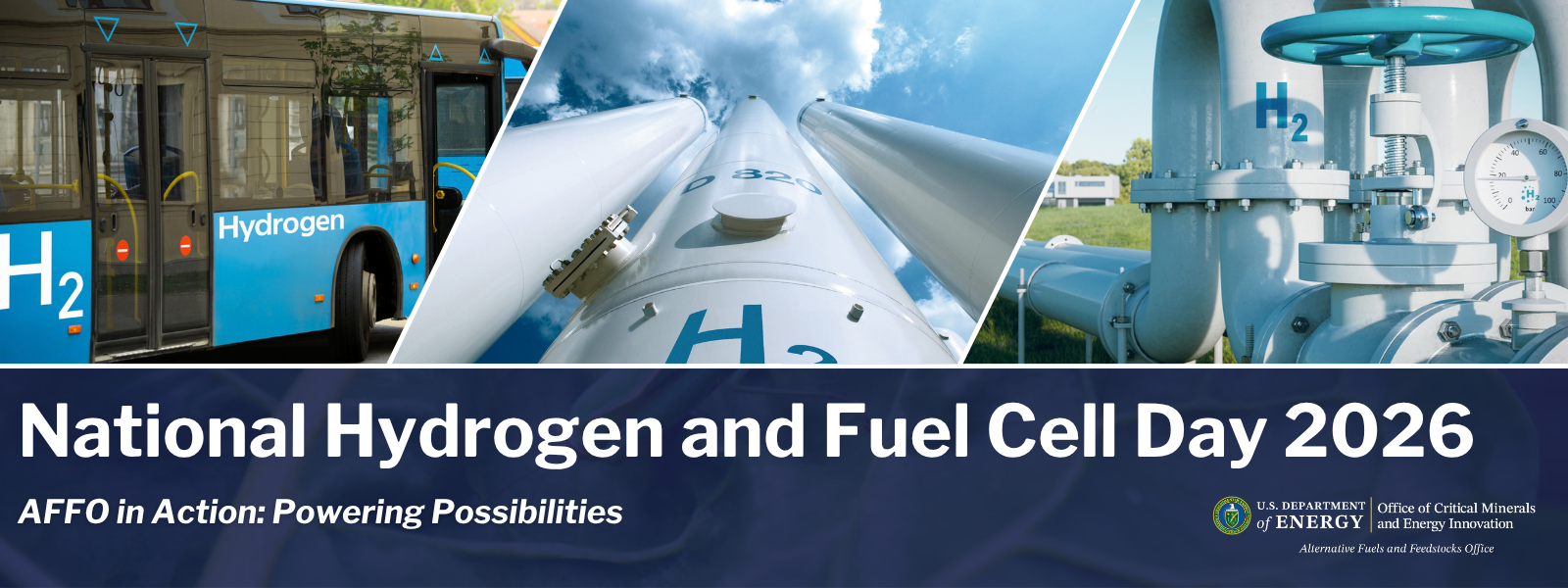
Today is National Hydrogen and Fuel Cell Day, a daylong celebration of all things hydrogen. Those new to the event will naturally ask, “why today?” Because October 8 is 10/08, and 1.008 is hydrogen’s atomic weight. This annual event is recognized and celebrated by interested communities around the world.  As any hydrogen researcher can confirm, hydrogen is the Swiss Army knife of the energy world. It is the oldest and most abundant element in the universe, comprising about 90% of all atoms. It sits atop the periodic table as element number one. Like the Swiss Army knife, its versatility enables a wide range of applications.  Hydrogen can serve as a feedstock for industrial and manufacturing applications, including steelmaking and high-heat processes. It can be combined with carbon monoxide to form electrofuels. It can support grid balancing by storing surplus energy for long periods of time. It can serve as transportation fuel for a wide range of applications. Hydrogen fuel cells are increasingly valuable as both primary and backup power sources for large facilities such as data centers and can deliver reliable power to hard-to-electrify remote regions.  Hydrogen and Fuel Cell Day celebrates that versatility. This year, the Department of Energy’s Alternative Fuels and Feedstocks Office (AFFO) is highlighting its updated key areas of research, development, and demonstration, which directly support DOE’s objective to expand American energy abundance. These areas include: Strengthening Domestic Chemicals Production DOE’s Billion-Ton Report establishes the potential for more than one billion tons of domestic biomass production annually. These resources are distributed across the country in agricultural and forestry residues, wastes, and energy crops. That creates an opportunity to turn domestic feedstocks into higher-value chemicals and materials while reducing import dependence, improving supply-chain resilience, creating economic opportunities, and finding productive uses for waste streams. America has both the feedstock resources and

Read More »

DCF Global: Five Markets Redrawing the AI Infrastructure Map

The Global Constraint Is Execution These five markets demonstrate that the worldwide AI infrastructure buildout is no longer organized around a single development model. Spain is using permitting reform to attract investment. China is concentrating construction around energy resources. India is translating enormous capital commitments into an expanding development pipeline. Latin America is combining hyperscale growth with national industrial objectives. And Southeast Asia is creating interconnected infrastructure markets whose boundaries increasingly extend beyond individual cities and countries. Not every market is competing for the same business. Sovereign cloud services, enterprise applications, AI training clusters, and large-scale inference platforms carry different requirements involving power, connectivity, latency, data residency, and operating economics. But the infrastructure questions remain remarkably consistent. Can a project obtain enough electricity? Can transmission and supporting networks be delivered on schedule? Will the supply chain provide the required equipment? Can the facility be constructed and commissioned efficiently? And will the development retain the regulatory certainty and community acceptance required to operate for decades? The gap between announced development and actual capacity is becoming a defining measurement of the industry. Cushman & Wakefield estimates that Asia-Pacific alone had approximately 26.5 GW of data center capacity in its development pipeline during H1 2026. Of that total, roughly 4.8 GW was under construction, with another 21.7 GW in planning. Those figures reveal both the extraordinary scale of the opportunity and the considerable infrastructure work still required to realize it. What the Global Buildout Means for North America For U.S. data center operators, developers, engineering firms, equipment suppliers, and investors, international expansion is not a separate story. It is increasingly part of the same global competition for capital, equipment, power infrastructure, and specialized expertise. The transformers, switchgear, generators, advanced cooling systems, fiber networks, and electrical distribution equipment required by a major AI campus

Read More »

Bidding war over key component could eliminate third hard disk maker

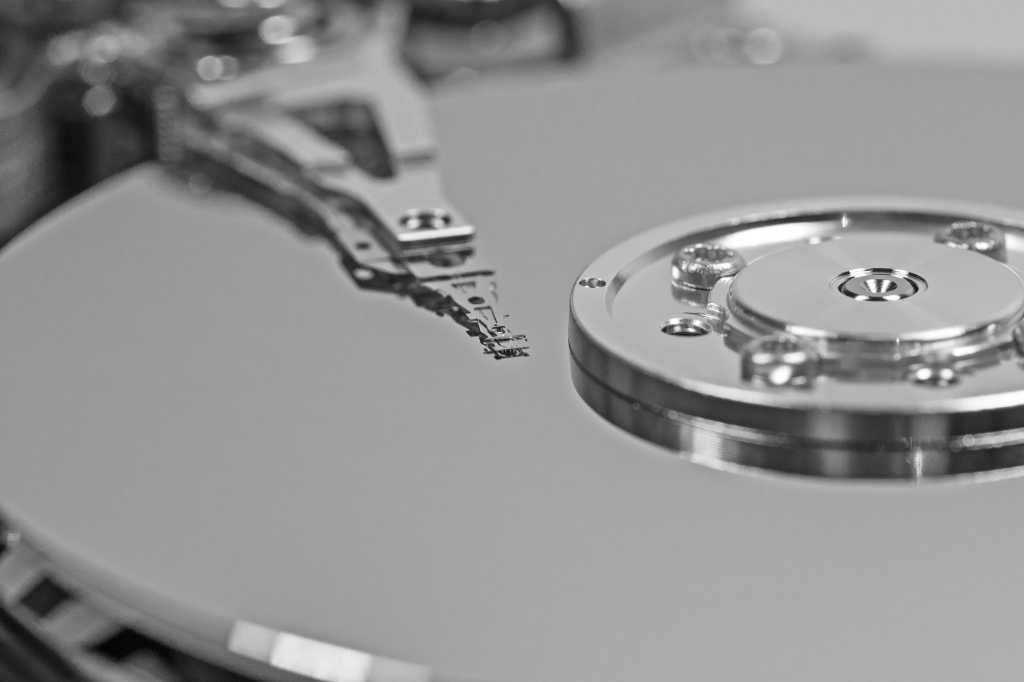
What if the three remaining hard disk manufacturers became two? Seagate Technology and Western Digital control 90% of the market, according to market researcher TrendForce, with Toshiba picking up the crumbs. Seagate and WD both make their own magnetic drive heads, but Toshiba relies on a third party, TDK, which also sells to Seagate and WD when they need extra capacity. Seeking to guarantee supplies of this critical component, Toshiba made a bid for TDK’s drive head business earlier this year, according to Bloomberg. Concerned that this could affect its ability to meet the growing demand for hard disks from AI data centers, Seagate made a counteroffer, Bloomberg reported. TDK is staying mum.

Read More »

Oracle reportedly lands $7B GPU deal for Tencent

Oracle has reportedly signed a five-year, $7 billion agreement to provide Chinese technology conglomerate Tencent with access to roughly 100,000 advanced AI accelerators deployed in Oracle data centers across Southeast Asia, helping Tencent to sidestep restrictions on advanced AI equipment.  The deal, first reported by the Financial Times, would represent Tencent’s largest overseas cloud commitment with a U.S. provider. Neither Oracle nor Tencent has publicly confirmed the agreement or disclosed the specific AI processors involved. Under the reported terms, Tencent would pay about 30% of the contract value upfront—roughly $2.1 billion—with the remainder paid over the five-year term. That would give Oracle a substantial source of upfront funding for the expensive data center infrastructure required to build out the infrastructure.

Read More »

NVIDIA’s DSX Ready Brings Power and Cooling Into the AI Factory Blueprint

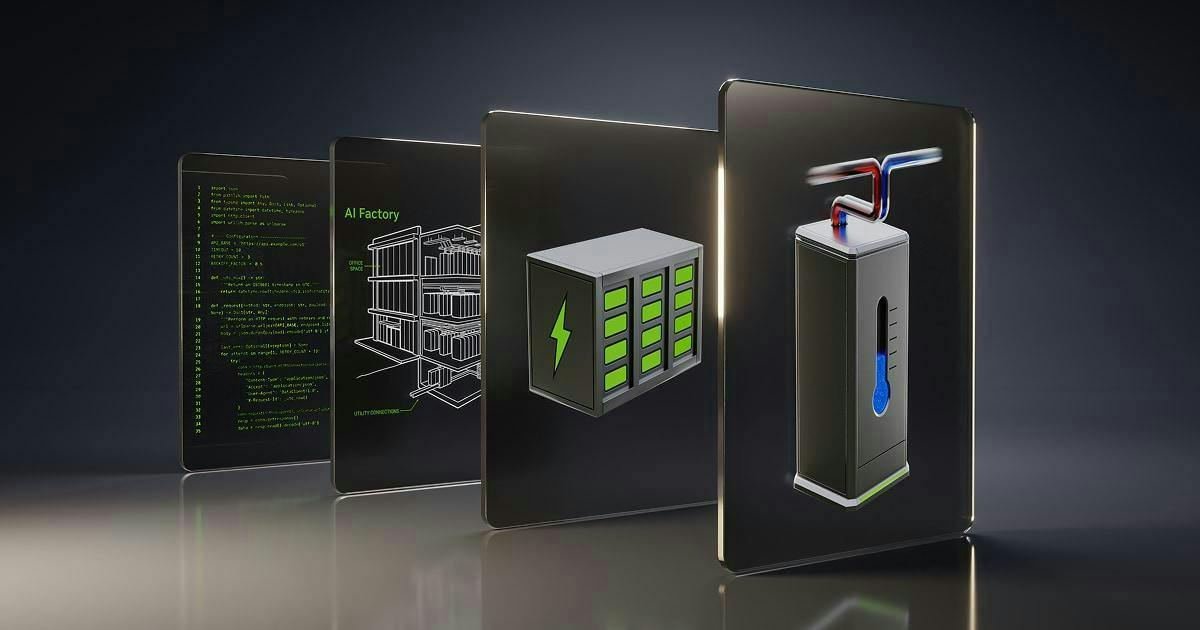
NVIDIA is extending its influence over AI infrastructure beyond the GPU, server rack and network, introducing qualification requirements for the power and cooling systems that increasingly determine the scale and performance of AI data centers. The company’s new NVIDIA DSX Ready program, announced September 21, establishes requirements for specific infrastructure products intended for use with NVIDIA’s DSX AI factory reference designs. Its first two categories—battery energy storage systems (BESS) and coolant distribution units (CDUs)—address two of the most pressing engineering challenges in AI infrastructure: managing rapidly changing electrical demand and removing heat from increasingly dense computing systems. The initial qualified suppliers are Hitachi Energy, LG Energy Solution and Tesla for battery storage, and LG Electronics, LiquidStack and Vertiv for liquid cooling. While the announcement might initially resemble another NVIDIA partner program, its technical details suggest something more consequential. The company is establishing performance criteria for the electrical and mechanical equipment supporting its computing platforms, connecting those requirements to an expanding ecosystem of qualified suppliers. Subsequent partner announcements offer a clearer view of what that means in practice. They describe battery systems designed to respond to AI load fluctuations, coolant distribution equipment operating at multi-megawatt capacities, and integrated cooling architectures intended to make more of a data center’s available power usable for computing. The initiative also coincides with the arrival of Chris Malone, formerly a data center infrastructure executive at OpenAI, Meta and Google, as NVIDIA’s vice president of the DSX Platform. Together, the developments point toward a closer relationship between computing architecture and facility engineering, with NVIDIA seeking to influence not only the processors deployed in AI factories but the infrastructure requirements that support their operation. From Reference Design to Infrastructure Qualification DSX Ready is an extension of the broader NVIDIA DSX AI Factory Platform, introduced in May 2026. As

Read More »

Brookfield’s AREP Deal Extends the AI Infrastructure Stack to Powered Land

The transaction goes beyond Brookfield investing in another portfolio of buildings. It is investing in a developer whose principal product increasingly begins before the building, with land, entitlements, substations, transmission access and utility capacity. PowerHouse Has Become a Gigawatt-Scale Development Platform PowerHouse was founded with a strong Northern Virginia orientation, but its development map now stretches well beyond Data Center Alley as its current portfolio includes projects in Virginia, Texas, Pennsylvania, North Carolina, Nevada, Indiana, Illinois and Kentucky. The company lists 515 MW across its Northern VA Ashburn properties, another 900 MW at its PH 95 development in Spotsylvania, 1.35 GW in Carlisle, Pennsylvania, 1.8 GW at Joliet, Illinois, and substantial campuses across multiple Texas and Indiana locations. The various projects do a good job of illustrating how the definition of a hyperscale development site is changing. At PowerHouse Arcola in Loudoun County, Virginia, PowerHouse announced a long-term hyperscale lease earlier this year. The 37-acre campus includes two planned data center buildings totaling approximately 615,000 square feet and is designed for up to 120 MW of utility capacity. PowerHouse emphasizes not only the buildings but the campus’s on-site substation, fiber access, power security and support for high-density GPU and liquid-cooled deployments. In Texas, it might be that everything really is bigger, and PowerHouse’s Grand Prairie development covers approximately 810 acres and 8.5 million developable square feet. Its project page cites maximum utility power of 1.8 GW and a development schedule extending through 2029 and beyond. The Texas development plans also include a proposed Circle T campus in Westlake outside Fort Worth, which calls for as many as four roughly 300,000-square-foot facilities totaling approximately 300 MW. According to reporting on local filings, PowerHouse has funded a 350-MW Oncor substation intended to serve the campus and the town’s pump station. The company’s development in

Read More »

AI Is Turning Energy Storage Into Active Power Infrastructure

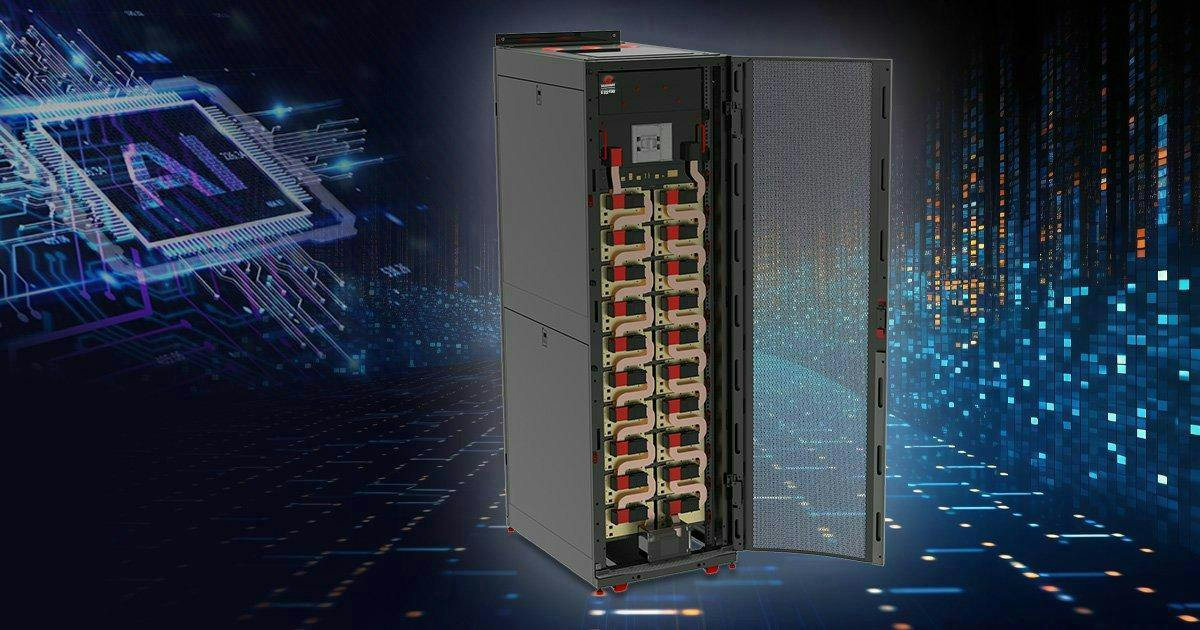
AI Turns the Power Problem Into a Transient Problem At the heart of the issue is the changing behavior of the IT load. In a conventional data center, DeLattre said, large numbers of independent loads create a relatively predictable electrical profile. AI clusters introduce much greater synchronization. As GPUs begin processing a common workload, large numbers of accelerators can increase their power consumption simultaneously. Instead of asking the electrical infrastructure to serve a relatively smooth load, the facility can experience fast power pulses moving through the system. Hybrid supercapacitors are intended to act as a buffer between that dynamic compute load and the infrastructure supplying it. During an upward transient, storage provides some of the incremental power demanded by the IT load. When demand falls, the storage system recharges. The objective is not to create additional energy. It is to keep every upstream component — from the UPS to generators and ultimately the utility connection — from having to respond directly to every rapid change taking place inside the AI cluster. From the perspective of the upstream power source, DeLattre said, the goal is to make a highly dynamic AI load appear significantly smoother. That distinction between energy and power is central to Musashi’s argument for hybrid supercapacitors. A conventional supercapacitor, also known as an electric double-layer capacitor, can deliver very high power almost instantly but stores relatively little energy. A lithium-ion battery can store considerably more energy, but DeLattre argues that it is less suited to being aggressively charged and discharged tens or hundreds of thousands of times. Musashi’s hybrid technology uses a capacitor architecture with a lithium-doped graphite electrode intended to increase energy density while preserving the fast response and high cycling capability associated with capacitors. DeLattre reduces the distinction to a simple formulation. “Batteries are very good

Read More »

Microsoft will invest $80B in AI data centers in fiscal 2025

And Microsoft isn’t the only one that is ramping up its investments into AI-enabled data centers. Rival cloud service providers are all investing in either upgrading or opening new data centers to capture a larger chunk of business from developers and users of large language models (LLMs).  In a report published in October 2024, Bloomberg Intelligence estimated that demand for generative AI would push Microsoft, AWS, Google, Oracle, Meta, and Apple would between them devote $200 billion to capex in 2025, up from $110 billion in 2023. Microsoft is one of the biggest spenders, followed closely by Google and AWS, Bloomberg Intelligence said. Its estimate of Microsoft’s capital spending on AI, at $62.4 billion for calendar 2025, is lower than Smith’s claim that the company will invest $80 billion in the fiscal year to June 30, 2025. Both figures, though, are way higher than Microsoft’s 2020 capital expenditure of “just” $17.6 billion. The majority of the increased spending is tied to cloud services and the expansion of AI infrastructure needed to provide compute capacity for OpenAI workloads. Separately, last October Amazon CEO Andy Jassy said his company planned total capex spend of $75 billion in 2024 and even more in 2025, with much of it going to AWS, its cloud computing division.

Read More »

John Deere unveils more autonomous farm machines to address skill labor shortage

Join our daily and weekly newsletters for the latest updates and exclusive content on industry-leading AI coverage. Learn More Self-driving tractors might be the path to self-driving cars. John Deere has revealed a new line of autonomous machines and tech across agriculture, construction and commercial landscaping. The Moline, Illinois-based John Deere has been in business for 187 years, yet it’s been a regular as a non-tech company showing off technology at the big tech trade show in Las Vegas and is back at CES 2025 with more autonomous tractors and other vehicles. This is not something we usually cover, but John Deere has a lot of data that is interesting in the big picture of tech. The message from the company is that there aren’t enough skilled farm laborers to do the work that its customers need. It’s been a challenge for most of the last two decades, said Jahmy Hindman, CTO at John Deere, in a briefing. Much of the tech will come this fall and after that. He noted that the average farmer in the U.S. is over 58 and works 12 to 18 hours a day to grow food for us. And he said the American Farm Bureau Federation estimates there are roughly 2.4 million farm jobs that need to be filled annually; and the agricultural work force continues to shrink. (This is my hint to the anti-immigration crowd). John Deere’s autonomous 9RX Tractor. Farmers can oversee it using an app. While each of these industries experiences their own set of challenges, a commonality across all is skilled labor availability. In construction, about 80% percent of contractors struggle to find skilled labor. And in commercial landscaping, 86% of landscaping business owners can’t find labor to fill open positions, he said. “They have to figure out how to do

Read More »

2025 playbook for enterprise AI success, from agents to evals

Join our daily and weekly newsletters for the latest updates and exclusive content on industry-leading AI coverage. Learn More 2025 is poised to be a pivotal year for enterprise AI. The past year has seen rapid innovation, and this year will see the same. This has made it more critical than ever to revisit your AI strategy to stay competitive and create value for your customers. From scaling AI agents to optimizing costs, here are the five critical areas enterprises should prioritize for their AI strategy this year. 1. Agents: the next generation of automation AI agents are no longer theoretical. In 2025, they’re indispensable tools for enterprises looking to streamline operations and enhance customer interactions. Unlike traditional software, agents powered by large language models (LLMs) can make nuanced decisions, navigate complex multi-step tasks, and integrate seamlessly with tools and APIs. At the start of 2024, agents were not ready for prime time, making frustrating mistakes like hallucinating URLs. They started getting better as frontier large language models themselves improved. “Let me put it this way,” said Sam Witteveen, cofounder of Red Dragon, a company that develops agents for companies, and that recently reviewed the 48 agents it built last year. “Interestingly, the ones that we built at the start of the year, a lot of those worked way better at the end of the year just because the models got better.” Witteveen shared this in the video podcast we filmed to discuss these five big trends in detail. Models are getting better and hallucinating less, and they’re also being trained to do agentic tasks. Another feature that the model providers are researching is a way to use the LLM as a judge, and as models get cheaper (something we’ll cover below), companies can use three or more models to

Read More »

OpenAI’s red teaming innovations define new essentials for security leaders in the AI era

Join our daily and weekly newsletters for the latest updates and exclusive content on industry-leading AI coverage. Learn More OpenAI has taken a more aggressive approach to red teaming than its AI competitors, demonstrating its security teams’ advanced capabilities in two areas: multi-step reinforcement and external red teaming. OpenAI recently released two papers that set a new competitive standard for improving the quality, reliability and safety of AI models in these two techniques and more. The first paper, “OpenAI’s Approach to External Red Teaming for AI Models and Systems,” reports that specialized teams outside the company have proven effective in uncovering vulnerabilities that might otherwise have made it into a released model because in-house testing techniques may have missed them. In the second paper, “Diverse and Effective Red Teaming with Auto-Generated Rewards and Multi-Step Reinforcement Learning,” OpenAI introduces an automated framework that relies on iterative reinforcement learning to generate a broad spectrum of novel, wide-ranging attacks. Going all-in on red teaming pays practical, competitive dividends It’s encouraging to see competitive intensity in red teaming growing among AI companies. When Anthropic released its AI red team guidelines in June of last year, it joined AI providers including Google, Microsoft, Nvidia, OpenAI, and even the U.S.’s National Institute of Standards and Technology (NIST), which all had released red teaming frameworks. Investing heavily in red teaming yields tangible benefits for security leaders in any organization. OpenAI’s paper on external red teaming provides a detailed analysis of how the company strives to create specialized external teams that include cybersecurity and subject matter experts. The goal is to see if knowledgeable external teams can defeat models’ security perimeters and find gaps in their security, biases and controls that prompt-based testing couldn’t find. What makes OpenAI’s recent papers noteworthy is how well they define using human-in-the-middle

Read More »