The next wave of nuclear power for AI data centers may come not from new reactors, but from generating stations that have been operating for decades.
In a pair of agreements announced just a week apart, Google and Amazon committed to long-term electricity purchases supporting approximately 1,080 MW of additional nuclear generating capacity from Constellation Energy’s existing fleet. The transactions follow earlier commitments by Meta to support reactor upgrades at operating nuclear facilities in Ohio, Pennsylvania and Illinois, establishing a broader commercial model in which hyperscale technology companies help finance increases in nuclear output.
Under its October 6 agreement with Google, Constellation plans to invest more than $4.3 billion in equipment and technology upgrades at 11 operating reactor units across Illinois, Pennsylvania and New Jersey. The 20-year power purchase agreement supports 890 MW of new generating capacity, with the first upgrades expected to begin delivering additional electricity in 2028. A separate 15-year agreement covers 2,700 MW of existing nuclear generation, underscoring the distinction between securing today’s electricity supply and financing additional capacity. Amazon’s September 30 agreement similarly supports 190 MW of new generation at Maryland’s Calvert Cliffs nuclear station, alongside purchases of existing output. Together, the two arrangements underpin more than $7 billion in planned infrastructure investment.
Unlike proposed advanced reactors, these facilities already have operating licenses, grid connections, established workforces and decades of operating experience. Increasing their output avoids some of the cost, permitting and construction challenges associated with building entirely new nuclear plants, although significant upgrades still require extensive engineering, equipment modifications and regulatory approval.
The potential scale is substantial. According to the Nuclear Regulatory Commission’s current application schedule, the agency anticipates 31 applications for reactor power uprates through 2032, representing approximately 2,421 MW of potential additional electrical generating capacity. That is roughly equivalent to the output of two large nuclear reactors without constructing new reactor units. However, these figures represent anticipated applications, not approved projects or guaranteed additions to the grid.
For data center developers facing immediate power shortages, the strategy offers no quick fix. Many of the largest upgrades will not be completed until the early 2030s, and additional generation entering a regional transmission system does not necessarily resolve local power-delivery constraints. Nevertheless, the emergence of long-term, hyperscaler-backed financing for nuclear uprates marks an important shift: major technology companies are investing not only in securing existing electricity supplies, but also in expanding the generating capacity available to the grid.
Google Brings Agentic AI to Nuclear Operations
Interestingly, beyond financing additional generating capacity, Google’s agreement with Constellation includes an expanded five-year technology partnership to deploy Google Cloud and Gemini Enterprise across the utility’s operations.
Constellation plans to use agentic AI workflows for engineering and permitting, power-flow modeling, interconnection planning, equipment monitoring and outage management. The companies also envision using Google Cloud technologies to strengthen security across operational technology networks supporting critical infrastructure.
The arrangement illustrates how AI is beginning to influence both sides of the electricity equation: driving demand for additional generation while providing tools intended to accelerate infrastructure development and improve operating efficiency. Those benefits remain prospective, however. Constellation has not demonstrated measurable improvements from the new deployment, and AI-assisted planning does not eliminate the engineering, safety and regulatory requirements governing nuclear uprates.
Inside a Nuclear Uprate: What Actually Changes?
Increasing the output of an operating nuclear plant is not simply a matter of turning up the reactor. Depending on the scope of the project, a power uprate can require changes to instrumentation, control systems, turbines, generators, cooling equipment and other infrastructure, along with engineering analysis demonstrating that the plant can operate safely at higher power levels.
The approach is well established. According to the Nuclear Regulatory Commission, uprates approved over the past 20 years have added approximately 6 GW of electrical generating capacity to the U.S. grid, equivalent to the output of roughly six large reactors.
The NRC recognizes three principal categories of reactor power uprates:
-
Measurement uncertainty recapture uprates generally increase licensed reactor power by less than 2%, using improved instrumentation and more accurate measurement of operating conditions, particularly feedwater flow.
-
Stretch uprates typically increase licensed power by approximately 2% to 7%, taking advantage of operating margins already incorporated into a plant’s design. These projects generally require limited equipment modifications.
-
Extended power uprates involve larger increases, sometimes reaching 20%, and can require extensive modifications to high-pressure turbines, condensate pumps, motors, generators, transformers and other plant systems.
The distinction matters because nuclear reactors are licensed according to their thermal power output, measured in megawatts thermal (MWt), rather than simply the electricity ultimately delivered to the grid. Increasing reactor thermal power can affect steam production, heat removal, cooling requirements and the operating limits of equipment throughout the facility.
Improvements to turbine efficiency and other conventional generating equipment can also increase electrical output without necessarily raising reactor thermal power. Those gains should be distinguished from formal reactor power uprates, which require NRC approval to increase the licensed thermal operating limit.
The engineering implications become particularly significant for larger uprates. Equipment replacements must be coordinated with scheduled refueling outages, while safety analyses must demonstrate that critical plant systems can accommodate the proposed operating conditions. For utilities, that creates a complex project-management challenge involving component procurement, outage scheduling, engineering and regulatory review.
The advantage is that much of the most expensive infrastructure already exists. Reactors, turbine buildings, cooling systems, transmission connections and supporting facilities can often be modernized rather than constructed from scratch. But the work is neither automatic nor risk-free, and the size of the proposed capacity increase does not necessarily indicate how quickly or easily it can be delivered.
Amazon’s Calvert Cliffs Pivot: From On-Site Development to Grid Supply
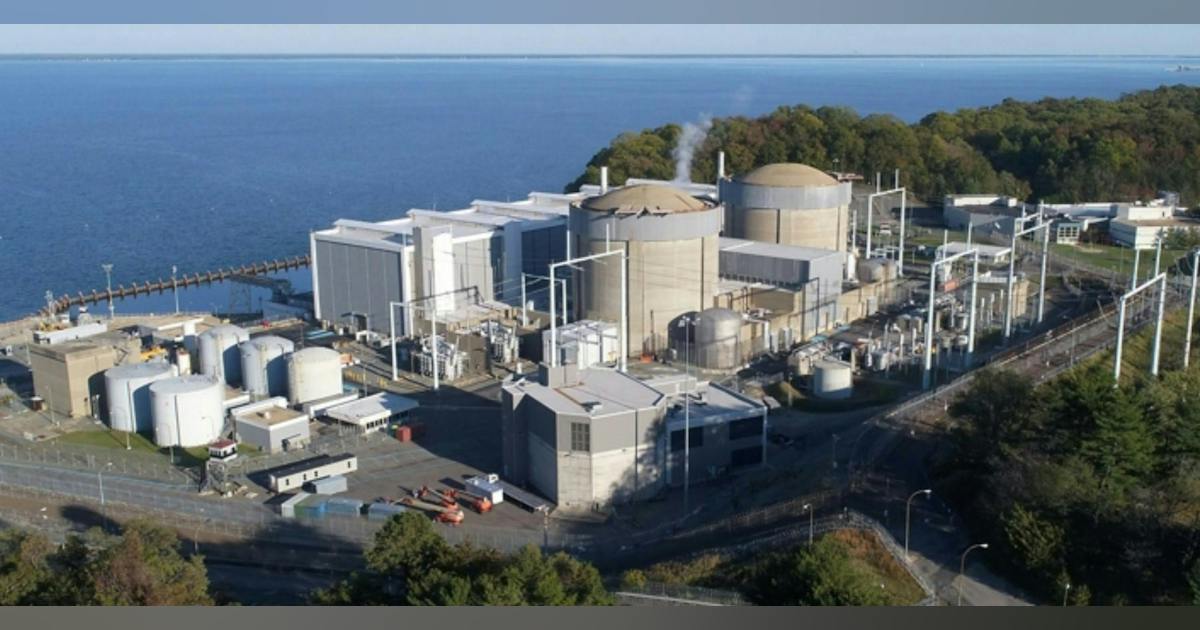
Amazon’s September 30 agreement with Constellation illustrates a different approach to securing nuclear power for AI infrastructure. Following the withdrawal of a proposed data center development at Maryland’s Calvert Cliffs Clean Energy Center amid local opposition, the companies reached a 20-year electricity agreement supporting more than $3 billion in upgrades to the existing nuclear facility.
The agreement covers 690 MW of nuclear power, including approximately 190 MW of new generating capacity expected to come online between 2030 and 2032. That represents an increase of roughly 10.6% over Calvert Cliffs’ current 1,790 MW capacity. The companies also signed a related retail electricity supply agreement supporting Amazon’s operations across the 13-state PJM market.
Beyond the additional generation, Amazon’s long-term commitment provides revenue certainty for Constellation to pursue another 20 years of licensed operation at Calvert Cliffs. The plant’s two reactors currently have licenses expiring in 2034 and 2036, respectively, making the agreement significant for preserving existing nuclear capacity as well as expanding output.
Under the revised arrangement, all electricity generated at Calvert Cliffs will continue flowing into the PJM regional grid rather than being dedicated to an on-site data center. The model avoids some of the regulatory and community challenges associated with directly colocating large computing facilities at nuclear plants, while allowing Amazon to support incremental generation through a long-term commercial commitment. It does not, however, eliminate the transmission and local distribution constraints affecting where data center capacity can actually be deployed.
Meta Backs 433 MW of Nuclear Uprates Across PJM
Meta’s broader nuclear power strategy includes 20-year agreements with Vistra to support both existing generation and capacity expansions at three operating plants in the PJM electricity market. Announced in January 2026, the agreements cover 2,609 MW of nuclear energy and capacity, including 2,176 MW from existing generation at Perry and Davis-Besse in Ohio and 433 MW of planned uprates across those facilities and Beaver Valley in Pennsylvania.
According to Vistra’s January filing with the Securities and Exchange Commission, the proposed capacity increases comprise 213 MW at Perry, 80 MW at Davis-Besse and 140 MW at Beaver Valley. Purchases from existing generation are expected to begin in late 2026 and reach full delivery by the end of 2027. The first uprated capacity is targeted for delivery by 2031, with the full 433 MW expected by the end of 2034.
The agreements also provide long-term revenue certainty supporting Vistra’s plans to seek additional 20-year operating license extensions for all three facilities. That makes the arrangement a strategy for preserving existing nuclear generation as well as financing incremental capacity.
Meta has identified its Prometheus AI supercluster in New Albany, Ohio among the operations supported by its expanding nuclear procurement strategy. However, the Vistra projects do not involve dedicated transmission connections to the campus. Electricity from the participating plants will continue entering the PJM grid, adding regional generating capacity without guaranteeing physical delivery to any particular data center.
The distinction is important. Meta’s commitments help support continued operation of existing nuclear assets while underwriting new generation that can serve the broader electricity system. But the benefits for individual customers will depend on transmission constraints, market conditions and the timing of the upgrades, rather than the contractual commitments alone.
Federal Financing Adds a Second Layer to Meta’s Nuclear Strategy
A second source of potential investment emerged on October 5, when the Department of Energy’s Office of Energy Dominance Financing announced a conditional loan commitment of up to $4.2 billion to support Vistra’s nuclear uprates and modernization projects in Ohio and Pennsylvania.
The financing would support the same 433 MW of incremental generating capacity covered by Meta’s long-term electricity agreements, rather than a separate expansion. It would also help preserve nearly 4 GW of existing nuclear generation and support plant improvements associated with Vistra’s plans to seek an additional 20 years of licensed operation at Perry, Davis-Besse and Beaver Valley, subject to NRC approval. The DOE estimates that the projects will support approximately 3,000 jobs in engineering, construction and planned outage work.
For the AI infrastructure industry, the convergence of corporate power commitments and federal financing is significant. Meta’s 20-year agreements provide long-term revenue certainty, while the prospective DOE loan could help finance the capital improvements required to deliver additional electricity. Unlike federally supported reactor restarts and new nuclear development, the Vistra program would increase output from operating plants already connected to the PJM grid.
The conditional commitment also includes an option to finance potential future uprates at Vistra’s Comanche Peak nuclear facility in Texas, although those projects are not part of the announced 433 MW expansion.
Crucially, the $4.2 billion commitment is not an executed or funded loan. Vistra must satisfy technical, legal, environmental and financial conditions before definitive financing agreements can be completed. The additional generating capacity also remains subject to engineering work and regulatory approvals. The arrangement illustrates an emerging financing model for nuclear expansion, but neither the federal commitment nor Meta’s electricity contracts guarantee that the proposed capacity will be delivered on schedule.
Clinton: Preserving Nuclear Capacity While Adding 30 MW
Meta’s nuclear strategy also extends beyond PJM through a 20-year agreement with Constellation Energy supporting continued operation of the Clinton Clean Energy Center in Illinois. Announced in June 2025, the agreement covers approximately 1,121 MW of existing nuclear generation while enabling a planned 30 MW uprate, with the additional output entering the Midcontinent Independent System Operator (MISO) market.
The commercial importance extends beyond those 30 MW. Clinton had previously faced closure because of financial pressures and was sustained by Illinois’ zero-emission credit program, which expires in 2027. Meta’s long-term electricity commitment, beginning in June 2027, provides a market-based replacement for that support, helping secure the plant’s continued operation without reliance on the expiring state program.
The arrangement has already supported an important regulatory milestone. In December 2025, the Nuclear Regulatory Commission approved Clinton’s 20-year operating license renewal, authorizing operation through April 2047. The planned uprate remains a separate capacity-expansion initiative.
Clinton illustrates an important feature of the emerging nuclear market: preserving more than a gigawatt of existing generating capacity can be as consequential to long-term electricity supply as adding a smaller increment of new output.
Google and Georgia Power Introduce a Nuclear Uprate Tariff
The hyperscaler-backed uprate model is also taking shape in the Southeast, where Southern Company’s expanding generation plans reflect the growing electricity requirements of AI infrastructure.
On September 21, Google and Georgia Power announced an agreement supporting approximately 96 MW of additional generating capacity attributable to Georgia Power’s ownership interests in the existing nuclear units at Plant Vogtle and Plant Hatch. The improvements involve Vogtle Units 1 and 2 and Hatch Units 1 and 2, rather than the newer Vogtle Units 3 and 4.
Unlike a conventional power purchase agreement, the arrangement uses Georgia Power’s new Nuclear Uprates (NU-1) tariff. Google will subscribe to the program and receive zero-emission credits associated with the additional nuclear output, while the electricity itself remains available to serve Georgia Power customers. The structure is designed to help finance generating improvements without requiring other customers to absorb the incremental costs of the upgrades.
The Georgia Public Service Commission approved the NU-1 tariff and the proposed Hatch uprates in October, following earlier state approval of the Vogtle Units 1 and 2 expansion. The projects still require applicable federal regulatory approvals and engineering work before additional generating capacity can enter service. Georgia Power estimates that Google’s participation could provide approximately $900 million in customer benefits over the operating lives of the participating units, although those savings remain projections rather than guaranteed financial outcomes.
The Georgia projects also form part of Southern Company’s broader nuclear modernization effort. The Department of Energy has identified planned uprates at six reactor units across Hatch, Vogtle and Alabama’s Farley plant that could collectively add approximately 345 MW of generating capacity. The 96 MW associated with Google’s agreement represents Georgia Power’s share of the relevant upgrades, not a separate 96 MW project to be added to the larger total.
The modernization effort is among the investments supported by a $26.5 billion federal loan package closed in February 2026 for Southern Company subsidiaries Georgia Power and Alabama Power. That financing covers a much broader portfolio of electricity infrastructure, including natural gas generation, hydropower improvements, transmission upgrades and nuclear modernization.
The Georgia arrangement is particularly noteworthy because it extends hyperscaler participation in nuclear expansion beyond traditional wholesale electricity contracts. By linking private-sector clean-energy commitments to regulated utility investment and customer protections, it offers another potential model for financing incremental generation as data center electricity demand grows.
Beyond Big Tech: Nuclear Uprates Expand Across the U.S.
While Google, Amazon and Meta are providing substantial commercial backing for nuclear expansion, the effort to increase output from America’s existing reactor fleet extends well beyond hyperscaler power agreements. Utilities are pursuing uprates to address broader regional electricity demand, while other large corporate customers are beginning to support similar investments.
Duke Energy: Approximately 251 MW Planned in the Carolinas
Duke Energy is pursuing upgrades at three nuclear generating stations in North Carolina and South Carolina. Its plans include measurement uncertainty recapture uprates at Brunswick Units 1 and 2, each adding approximately 13 MW, and extended power uprates at McGuire Units 1 and 2 and Catawba Unit 1, each targeting approximately 75 MW. Together, the five projects represent approximately 251 MW of potential additional generating capacity.
The Nuclear Regulatory Commission’s anticipated application schedule lists submissions for Brunswick and McGuire in 2027 and Catawba in 2028. Duke’s resource planning targets implementation of the larger McGuire and Catawba uprates between 2029 and 2031, subject to regulatory approvals and completion of equipment modifications. The investments are intended to strengthen the company’s broader generation portfolio as electricity requirements increase across the Carolinas.
Columbia Generating Station: 186 MW Through Uprates and Efficiency Improvements
In Washington state, Energy Northwest and the Bonneville Power Administration are advancing an approximately $700 million project to expand output at the Columbia Generating Station near Richland. BPA approved implementation in May 2025, with the extended power uprate expected to add 162 MW by 2031.
The project involves approximately 30 equipment upgrades, including modifications to turbines, heat exchangers, pumps, motors and the generator. Installation is being coordinated with scheduled refueling outages in 2027, 2029 and 2031, reducing the need for separate extended shutdowns. Additional efficiency improvements are expected to contribute another 24 MW, bringing the combined potential increase to approximately 186 MW.
Unlike the hyperscaler-backed agreements, Columbia’s expansion is being developed for BPA’s broader public-power system, which serves consumer-owned utilities across six Northwestern states. The project illustrates how existing nuclear infrastructure can be upgraded to address regional load growth without relying on a dedicated technology-company power purchase agreement.
Dresden: Walmart Extends the Model Beyond Data Centers
Corporate support for nuclear uprates is also extending beyond the technology sector. In June 2026, Constellation announced a long-term electricity agreement with Walmart covering approximately 176 MW of nuclear supply from the Dresden Clean Energy Center in Illinois, including 30 MW of additional generating capacity from planned upgrades.
Walmart will purchase electricity, capacity and environmental attributes through two 15-year contractual terms beginning in 2029 and 2030. The agreement supports the company’s planned high-tech perishable distribution center in Belvidere, Illinois, while helping finance improvements at an existing nuclear facility.
Together, these projects demonstrate that nuclear uprates are becoming part of a broader electricity infrastructure strategy, rather than a procurement tool exclusive to AI companies. Their common advantage is the ability to increase generation at operating plants, although actual delivery remains dependent on engineering schedules, regulatory approvals and the capabilities of the surrounding transmission system.
Nuclear Uprates Face PJM’s Large-Load Regulatory Test
The commercial momentum behind nuclear uprates is developing alongside an unsettled regulatory framework for connecting large new electricity customers to the PJM grid. Even as hyperscalers commit billions of dollars to expanding generation, the question of how that additional capacity will support individual data center developments remains complicated.
On October 9, the Federal Energy Regulatory Commission (FERC) rejected major portions of PJM’s proposed large-load interconnection framework, including its Interim Resource Adequacy Service (IRAS) and related Bring Your Own New Capacity (BYONC) provisions. The decision followed months of industry debate over PJM’s proposed requirements for large electricity customers, particularly data centers seeking substantial new capacity.
Under the rejected proposal, electricity suppliers serving new large loads generally would have needed to secure corresponding new generating capacity or face provisions allowing load reductions during capacity shortages. FERC raised concerns about whether portions of the framework exceeded its jurisdiction over wholesale electricity markets and whether the proposed treatment of different customers and capacity resources was adequately justified.
The commission did approve PJM’s definition of large loads, generally encompassing facilities with peak demand of at least 50 MW, along with a registry intended to improve forecasting and transmission planning. But the broader rules governing interim service, capacity obligations and the treatment of customer-backed generation remain unresolved. PJM was directed to submit conforming tariff revisions within 30 days and may pursue a revised proposal.
That uncertainty is particularly relevant to Google’s agreement with Constellation, which the companies explicitly characterized as a response to PJM’s Bring Your Own Power approach. Their commitment to add 890 MW of nuclear generating capacity remains commercially significant, regardless of the commission’s decision. The ruling does not invalidate voluntary electricity agreements or prevent utilities from pursuing reactor upgrades.
However, financing additional generation does not automatically establish how that capacity will be credited toward a particular data center’s resource requirements, nor does it guarantee transmission access or local utility service. Those questions depend on the applicable market rules, capacity accreditation, transmission constraints and individual interconnection arrangements.
As DCF’s recent examination of Virginia’s changing data center development landscape underscored, securing electricity supply is increasingly inseparable from demonstrating how projects will pay for, connect to and ultimately receive that power.
For nuclear uprates, the distinction is consequential. The investments can expand generating capacity across PJM without dedicating existing reactor output to individual hyperscalers. But translating those system-wide additions into dependable power for new AI campuses will require more than long-term commercial agreements.
More Nuclear Generation Doesn’t Guarantee Power at the Data Center
The commercial appeal of nuclear uprates rests partly on their ability to increase electricity production from facilities already connected to the grid. Unlike behind-the-meter generation dedicated to a particular site, the additional output can enter regional transmission markets and contribute to the broader electricity supply.
But the distinction between generating capacity and deliverable power remains critical for data center developers.
A hyperscaler may finance additional nuclear generation through a long-term power purchase agreement without obtaining a dedicated physical connection between the generating station and its computing facilities. Electricity entering a regional grid is dispatched according to system conditions, while contractual arrangements determine the associated commercial and environmental rights.
For example, an uprate at a PJM-connected nuclear plant in Maryland or Ohio may increase generating capacity available to the regional system without resolving transmission congestion, substation limitations or utility-service requirements for a new AI campus in Northern Virginia.
Those constraints can impose their own development schedules. A reactor uprate may be completed before the necessary transmission reinforcements, distribution upgrades or local interconnection arrangements are ready to serve additional data center load.
As DCF has previously examined in its reporting on the growing importance of time to power, the challenge for developers is no longer simply identifying sufficient generating capacity. It is securing usable electricity at a specific location, in the required quantity, on a commercially viable schedule.
That remains true even as new financing arrangements make nuclear uprates more attractive to utilities and plant operators. Additional regional generation can improve the supply picture, but a long-term electricity contract is not a substitute for the infrastructure and approvals required to energize an individual data center.
The Nuclear Uprate Opportunity: Capacity, Capital and Time to Power
The most consequential development in the nuclear industry’s response to AI infrastructure demand may not be a new reactor design or an ambitious construction announcement. It may be the emergence of a financing model that allows technology companies and other large electricity customers to support measurable increases in output from operating nuclear plants.
Google, Amazon and Meta are demonstrating how long-term commercial commitments can help finance equipment modernization, extend the economic life of existing facilities and support additional generating capacity. Federal financing and regulated utility investment are adding other mechanisms for advancing similar projects.
The result is a growing pipeline of potential capacity additions that could reach the grid without the expense and uncertainty of constructing entirely new nuclear facilities. The NRC’s anticipated applications through 2032 represent approximately 2.4 GW of potential new electrical output, although not all of those projects have entered formal licensing review, and none of the projected capacity should be treated as guaranteed.
Execution will determine how much of that opportunity becomes reality. Operators must complete complex equipment upgrades, manage scheduled outages, obtain regulatory approvals and demonstrate that the additional generation can be safely and reliably delivered. The first major hyperscaler-supported uprates are expected to begin entering service in 2028, with larger programs extending into the early 2030s.
That timing exposes the central limitation for AI infrastructure. Nuclear uprates cannot resolve the immediate electricity shortages confronting developers seeking to energize large computing campuses today. Nor can additional generation, by itself, eliminate transmission bottlenecks or uncertainties surrounding large-load interconnection.
What the strategy does offer is a potentially more executable path to incremental nuclear capacity over the coming decade, backed by customers willing to make long-term commitments to the electricity system.
For an AI industry increasingly defined by the race to secure power, that is a meaningful development. The next test is whether these financial agreements and engineering plans can be converted into operating megawatts on schedules that matter to the infrastructure they are intended to support.