DC BLOX: Community Engagement Must Go Beyond Public Relations
The afternoon program shifted attention from electrical infrastructure to the growing challenges surrounding data center development and community acceptance.
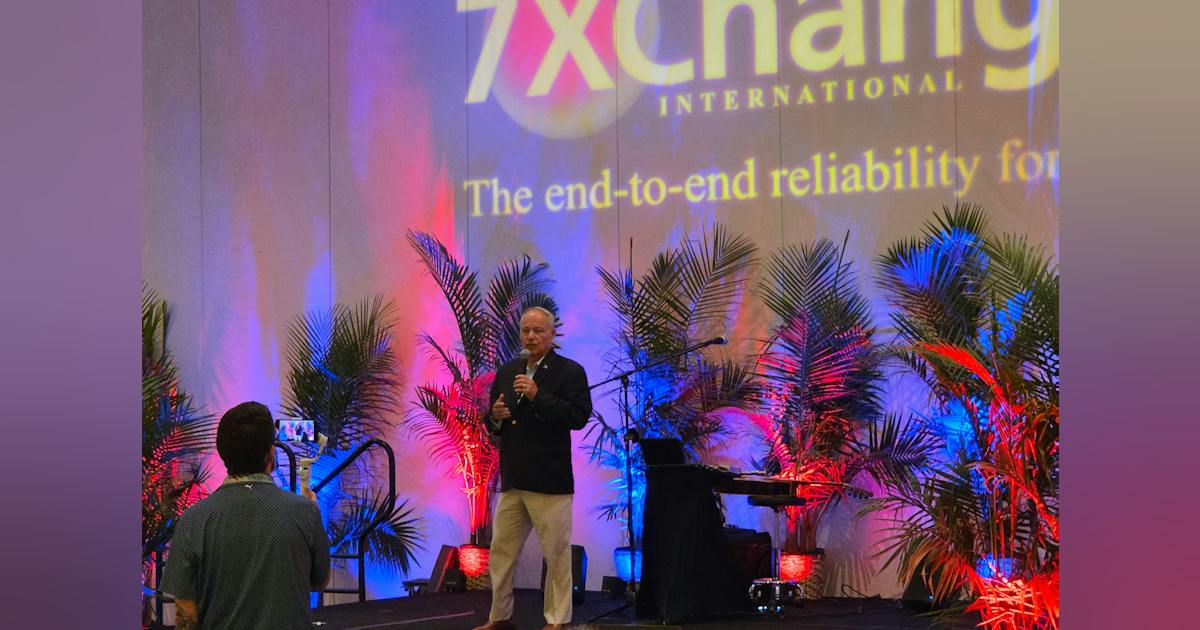
In a discussion moderated by Juli Ierulli, strategic account manager at Environmental Air Systems and vice president of 7×24 Exchange International, Michael Clark, senior vice president of data center construction at DC BLOX, described how the company has revised its approach to engaging communities as it expands into new markets.
Clark acknowledged that DC BLOX had encountered significant opposition after entering markets where it lacked the established relationships that had supported earlier developments across the Southeast.
“We made multiple stumbles in some of those new markets,” he said, describing how the company sometimes found itself responding to negative publicity rather than presenting a clear explanation of its plans and commitments.
The experience led DC BLOX to develop a more systematic approach to community engagement, emphasizing early communication, site-specific websites, accessible explanations of resource consumption and written commitments that residents and officials can evaluate.
Clark also pointed to what he called the industry’s “NDA hangover,” reflecting years of development activity conducted under confidentiality agreements that frequently left neighboring communities unaware of what was being planned.
But perhaps the most revealing moment came when Clark recounted a conversation with residents near a DC BLOX development in Rockdale County, Georgia.
After the company outlined the countywide economic and community benefits expected from the project, one neighbor challenged the distribution of those benefits.
“So the rest of the county gets the benefit and we have to pay all the costs,” the resident observed, according to Clark.
The question captured a fundamental tension in the industry’s community engagement efforts: tax revenues and economic development benefits may extend across a county, while nearby residents experience the immediate effects of construction activity, traffic, noise and changes to the landscape.
Clark acknowledged that he had no satisfactory answer.
“I don’t have a good answer for you,” he recalled telling the resident.
The exchange illustrated why conventional presentations emphasizing tax receipts and employment forecasts may be insufficient to win support from neighborhoods directly affected by development.
Clark offered more concrete examples from DC BLOX’s Indianapolis project, where community input led to commitments involving lower-noise generator enclosures, diesel particulate filters, additional green space and the use of local union labor.
The company has also explored supporting local organizations and services identified as priorities by community members, including discussions about replacing services lost when a neighborhood YMCA closed.
Those efforts reflect a broader recognition that community engagement must produce tangible outcomes rather than simply improve the industry’s messaging.
Clark also challenged the effectiveness of traditional job-creation arguments, observing that promises of a few dozen permanent data center positions often fail to resonate with skeptical residents. The broader ecosystem of construction, equipment manufacturing, maintenance and service employment may be more substantial, but remains difficult to communicate convincingly.
The unresolved question is how developers can create meaningful benefits for the immediate neighbors who experience a project’s greatest localized impacts.
Suggestions raised during the discussion included neighborhood improvements, targeted grants and potential property tax relief for nearby homeowners. Clark acknowledged that the industry has yet to establish a consistent answer.
His message nevertheless emphasized a practical change in approach: listening to communities, responding to specific concerns and making commitments that can be measured.
“Give them a voice, give them the facts, and in time the temperature will come down,” he said.