Argon can generate thousands of varied, simulated practice runs from a real-world camera scene and build a realistic digital twin. Combined with real training demonstrations, this enables the robot to more quickly generalize to new scenes and objects. Argon can also help researchers hypothesize why task failures happen from video footage and test the best improvements both in simulation and directly on real robots.
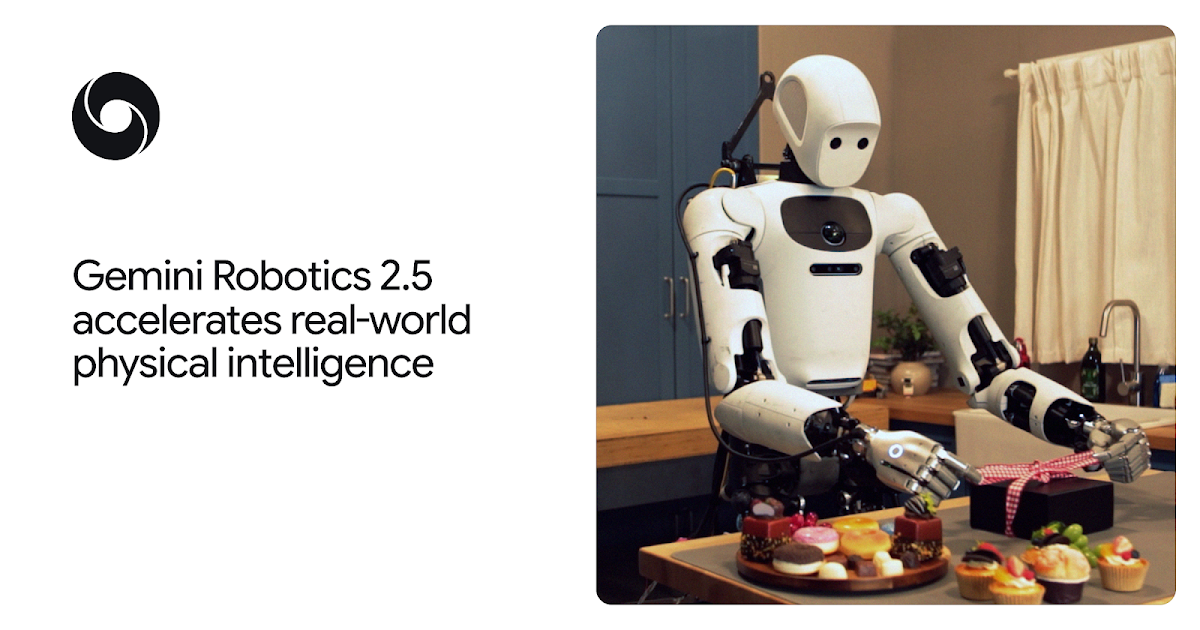
Accelerated by frontier intelligence models like Gemini 4 Argon, Gemini Robotics 2.5 marks an important milestone on the path toward solving physical AGI. By advancing in dexterity, real-world reliability, and rigorous safety, we are building the physical intelligence necessary for robots to work alongside people and solve real-world challenges
Acknowledgements
This work was developed by the Gemini Robotics team. For their leadership and support of this effort, we’d like to thank: Huizhong Chen, Radu Soricut, Jean-Baptiste Alayrac, Melvin Johnson, Edward Grefenstette, Claire Cui, Jon Shlens, David Thacker, Zoubin Ghahramani, Clement Farabet, Koray Kavukcuoglu, and Demis Hassabis. We’d like to recognize the many teams across Google and Google DeepMind that have contributed to this effort including Research, Legal, Marketing, Communications, Responsibility and Safety Council, Responsible Development and Innovation, Policy, Strategy and Operations, and our Business and Corporate Development teams. Finally, we’d like to thank our partners: Agile, Apptronik, and Mercedes-Benz teams for their support on this release.