Stay Ahead, Stay ONMINE

Alberta’s Gigawatt Play: Why Building Data Centers Means Building an Industry

For Alberta’s emerging data center industry, the difference between a roadmap and an excavator has become increasingly consequential. A few years ago, Western Canada’s data center conversation revolved around the possibilities: abundant energy resources, available land, a favorable climate and the prospect of attracting hyperscale investment to a region better known for oil, gas and […]

For Alberta’s emerging data center industry, the difference between a roadmap and an excavator has become increasingly consequential.

A few years ago, Western Canada’s data center conversation revolved around the possibilities: abundant energy resources, available land, a favorable climate and the prospect of attracting hyperscale investment to a region better known for oil, gas and other industrial development. Today, earthmoving equipment is preparing the ground for what is expected to become Canada’s largest data center, and the questions facing the province have changed accordingly.

The shift was on display at Data Centre West 2026, held in Calgary in September, where some 500 industry and government leaders gathered to examine the infrastructure and policy requirements of Alberta’s rapidly expanding digital economy. But for conference founder Vlad Oujegov, the most revealing development wasn’t simply the appearance of projects measured in gigawatts. It was the growing recognition that building those projects will require Alberta to develop an entire supporting industry, while confronting the environmental, political and community questions that increasingly accompany large-scale AI infrastructure.

“The theme last year was the data center roadmap,” Oujegov told Data Center Frontier Editor in Chief Matt Vincent during a new episode of the Data Center Frontier Show podcast. “This year’s theme really to me was about execution and actually getting things done, actually seeing projects materialize and construction beginning.”

Oujegov is president and founder of the Western Canada Data Centre Alliance, which organizes Data Centre West, and serves as National Data Center Power Systems Lead at Schneider Electric. His perspective draws on both Alberta’s emerging development pipeline and the wider industrial ecosystem now being assembled around it.

In DCF’s earlier reporting from Data Centre West 2026, the central question was how quickly Alberta could convert growing hyperscale demand into deliverable capacity. The latest podcast conversation takes that question further, examining what happens when a relatively small digital infrastructure market begins preparing for growth on a scale that can transform its regional economy.

The resulting challenges extend beyond power availability and construction schedules. They encompass skilled labor, service networks, development credibility, public accountability and the increasingly complicated relationship between the data center industry and the communities being asked to accommodate it.

From Roadmap to Earthworks

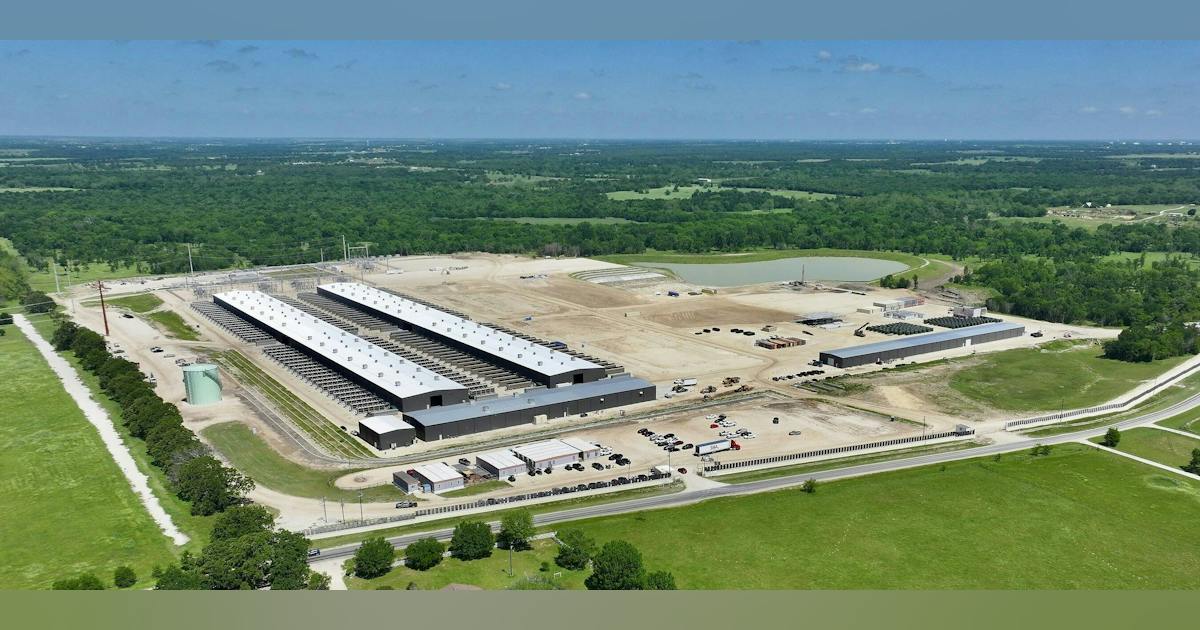
The clearest example of Alberta’s transition is Meta’s newly announced data center campus in Sturgeon County, northeast of Edmonton.

Announced in July 2026, the planned 1-gigawatt, AI-optimized campus represents an investment of more than CAD $13 billion and will become Meta’s first data center in Canada. The company anticipates approximately 3,000 construction workers at peak activity and more than 300 permanent operational jobs, along with approximately CAD $60 million in local road and water infrastructure improvements.

The campus is located in Alberta’s Industrial Heartland, an established industrial region supporting energy production, petrochemicals and related infrastructure. The provincial government’s major projects registry identifies the development as under construction, with site grading having begun under a permit issued earlier in 2026.

Its supporting energy infrastructure represents another substantial undertaking. The development is paired with the planned 932-MW Greenlight Electricity Centre, a dedicated natural gas generation project intended to help supply the campus. While construction activity has begun at the data center site, full delivery of its associated power infrastructure remains a longer-term proposition.

That distinction matters. Breaking ground is an important step toward execution, but it is not the same as delivering a fully commissioned gigawatt of computing capacity.

Nevertheless, the physical progress is striking for a market that Oujegov estimates had less than 100 MW of total data center load only a few years ago. A single development now under construction is larger than the province’s earlier installed base by an order of magnitude, illustrating both the scale of the opportunity and the challenge of accommodating it.

For Oujegov, satellite images showing the site’s developing earthworks provide a tangible illustration of how far Alberta has moved from theoretical discussions.

“It’s really cool for me to see,” he said, pointing to visible construction activity following years of preparation.

The project also illustrates a broader change in the province’s industrial positioning. Alberta is no longer simply attempting to persuade global operators that it belongs on the data center map. It must now demonstrate that its utilities, suppliers, construction industry and local institutions can support developments of a size and complexity previously uncommon in the region.

The Challenge of Growing an Industry Tenfold

For all the attention paid to headline investment figures, Oujegov argues that the secondary industrial requirements of hyperscale development are often underestimated.

“10x-ing any industry is a massive endeavor,” he observed.

His comparison was deliberately straightforward: Imagine an established manufacturing community with one major industrial facility suddenly preparing to support ten comparable operations within several years. Even with appropriate land, favorable policy and strong investor interest, the resulting requirements would be extraordinary.

Data centers are no exception.

A hyperscale campus requires far more than its principal construction contractor and equipment suppliers. It depends on a network of electrical and mechanical specialists, equipment installers, commissioning teams, field service technicians, maintenance providers, logistics operations and regional distributors capable of supporting the facility throughout its operating life.

In established markets such as Northern Virginia, many of those resources are already present. Equipment suppliers maintain regional offices, contractors are familiar with data center specifications, and specialized service providers operate within an industrial environment shaped by decades of development.

In Alberta, portions of that supporting infrastructure must be established alongside the projects themselves.

“When you’re building in new jurisdictions, kind of like the ones that we’re talking about now, near Edmonton, Alberta, some of those service networks don’t exist,” Oujegov said. “Some of those warehouses don’t even exist.”

He expects many vendors serving new campuses to establish local offices, service teams and warehousing operations. The resulting investment could provide regional economic benefits extending well beyond the direct employment numbers associated with individual data centers.

It could also introduce considerable short-term pressure. Demand for qualified electrical and mechanical trades is likely to intensify during major construction phases, potentially contributing to wage inflation and competition for skilled workers already supporting Alberta’s established industries.

There is a difference, moreover, between building a facility and supporting it for decades. Construction employment can rise sharply and then decline as individual projects are completed. Long-term economic development requires a durable operational ecosystem, with trained personnel and suppliers positioned to service an expanding regional portfolio of infrastructure.

That makes workforce preparation, technical education, local business development and institutional partnerships more than incidental community benefits. They become elements of the delivery strategy itself.

Oujegov’s point is that Alberta must build not only the data centers, but also the industry required to keep those data centers operating.

An Industry Becoming More Self-Aware

Perhaps the most unexpected theme emerging from Data Centre West, according to Oujegov, was not directly related to construction or power infrastructure.

It was the degree to which the industry appeared increasingly conscious of its own environmental and societal responsibilities.

“One thing that kept coming up that I really liked,” he said, “is that this industry is very self-aware.”

Across conference discussions involving power, policy, cooling, technology and community relations, Oujegov heard repeated references to reducing water consumption, lowering emissions, improving efficiency and expanding local economic participation.

Many of those initiatives were being advanced as voluntary industry commitments, rather than simply responses to new regulatory requirements.

For Oujegov, the change was notable even against the previous year’s conference. Hyperscale operators have become more public about their environmental commitments and their efforts to address community impacts, while suppliers and technology developers continue to pursue incremental improvements in energy and water performance.

The same pattern is appearing locally, he said, through discussions of employment opportunities, workforce training and collaboration with universities.

That observation introduces an interesting paradox.

The data center industry has spent decades pursuing energy efficiency, improved thermal management, operational reliability and more sophisticated environmental practices. Yet as its infrastructure becomes larger and more visible, the industry is experiencing one of its most difficult periods of public scrutiny.

In part, that scrutiny reflects the transformation of the underlying facilities. Data centers that once operated largely beyond public attention are now being proposed as industrial campuses requiring hundreds of megawatts or even gigawatts of power, with associated generation, transmission and construction requirements.

The industry’s historical preference for a relatively low public profile is increasingly incompatible with the scale of its development ambitions.

Oujegov acknowledges that the transition remains incomplete. The industry is improving, he believes, but still has considerable ground to cover in adapting to its heightened public visibility.

And voluntary commitments, while potentially important, are not substitutes for demonstrated environmental or operational performance. A promised reduction in water use is different from a measured result, just as an announced infrastructure investment remains distinct from a completed facility.

The greater significance of the trend may be that operators and suppliers are beginning to address these concerns earlier in project planning, rather than treating them primarily as public communications challenges after development decisions have been made.

Meta’s Industrial-Siting Example

Meta’s Sturgeon County development provides an example of how these considerations are becoming part of the initial infrastructure proposition.

In discussing the project, Oujegov highlighted its location within an established industrial district, where large-scale power production and other industrial activities are already part of the surrounding land-use environment.

He also pointed to Meta’s proposed cooling design and infrastructure investments as evidence that the company is attempting to incorporate environmental and community considerations into the project from the outset.

According to Meta’s project announcement, the campus will use closed-loop liquid cooling with dry cooling equipment, eliminating operational water use for the cooling system. Water would still be required for domestic purposes, fire protection and equipment maintenance.

The distinction is important, particularly given the public attention surrounding water consumption by AI data centers. Closed-loop cooling can substantially reduce onsite water demand, but it does not eliminate all water requirements or the need to assess water use associated with supporting infrastructure.

Similarly, the planned natural gas generating facility introduces environmental questions beyond those presented by the data center buildings themselves. The design and siting of a computing campus cannot be evaluated entirely separately from the energy infrastructure required to operate it.

These considerations illustrate why industrial siting has become central to the development conversation. Locating very large data centers alongside existing industrial operations may offer advantages in land compatibility and infrastructure planning, but those advantages must still be considered against cumulative environmental impacts, community interests and the specific characteristics of each site.

For Oujegov, Meta’s project represents a significant early demonstration of Alberta’s approach. It also reinforces the importance of matching projects with appropriate locations rather than assuming that every available tract of land is suitable for hyperscale development.

Why Real Megawatts Matter More Than Announced Megawatts

The distinction between credible projects and speculative announcements emerged repeatedly during the Calgary conference.

Oujegov described an industry increasingly conscious of the damage that poorly conceived development proposals can cause, particularly when they attract public controversy before their technical or commercial feasibility has been established.

There is an important nuance here. Early-stage data center developers serve an essential function in the industry’s expansion.

They acquire land, pursue rezoning and entitlements, investigate utility service, begin permitting and undertake other forms of development preparation before a hyperscale customer or colocation operator has necessarily committed to the site.

These activities involve substantial risk. Without developers willing to make such early investments, the industry’s pipeline of available and potentially buildable sites would be considerably smaller.

But not every proposed campus has a credible path to execution.

Some announcements involve unrealistic power requirements, inadequate infrastructure planning or locations poorly suited to the scale of development being proposed. As scrutiny increases, those deficiencies can have consequences extending beyond the projects themselves.

Oujegov said unrealistic proposals have sometimes galvanized public opposition, damaging confidence in other developments that may be more technically viable and appropriately located.

The problem becomes especially pronounced when announced capacity is treated as though it represents future operating infrastructure, rather than an early-stage expression of developer interest.

DCF has examined similar dynamics in other markets. In Texas, ERCOT’s efforts to distinguish credible projects from speculative large-load requests reflect a growing recognition that enormous interconnection queues cannot be treated as reliable forecasts of actual data center construction.

The same issue informed DCF’s recent poll on real versus “ghost” data center demand, which examined what evidence utilities should require before reserving power or planning infrastructure around major load requests.

Oujegov sees the resulting market discipline as necessary, though not without complications.

An industry that discourages all speculative development could inadvertently weaken the pipeline of projects it needs for future growth. But an industry that gives every proposed gigawatt equal credibility risks undermining its relationship with policymakers, utilities and communities.

The challenge is to preserve legitimate early-stage development while becoming more selective about which sites, proposals and partners deserve confidence.

“Not every place is a great place for a data center,” Oujegov said.

That recognition may be one of the most important signs of a maturing market.

The Question of Regulatory Fairness

The industry’s increased visibility is also reshaping its relationship with regulators.

Oujegov believes data center developers should be expected to address environmental impacts, infrastructure requirements and community concerns. But he also questions whether exceptional public attention should automatically translate into regulatory burdens beyond those applied to comparable industrial facilities.

He raised the example of a fertilizer or chemical plant being permitted on appropriately zoned industrial land while a data center in a similar setting might encounter additional political and regulatory obstacles.

For Oujegov, the concern is not that data centers should avoid scrutiny. It is that regulatory expectations should reflect the actual characteristics and impacts of a proposed development, rather than the intensity of media attention surrounding the industry.

Yet the comparison is not straightforward.

A gigawatt-scale AI campus can have an unusually concentrated electrical demand, require substantial new power generation or grid infrastructure, and generate economic and environmental impacts that differ significantly from those of other industrial facilities.

Such differences may justify distinct technical requirements or more extensive review. The relevant question is whether those requirements are grounded in measurable impacts and consistent policy objectives.

Alberta’s government has sought to frame its approach around that distinction. Its published environmental framework emphasizes that data centers and the power plants serving them are subject to established industrial environmental laws, including applicable approvals, emissions limits, water licensing and noise requirements.

At the same time, the province has made the protection of existing electricity customers, water resources and communities a prominent part of its data center policy.

That is the tension the industry must navigate: greater transparency and accountability without substituting political visibility for objective regulation.

Oujegov does not claim that the proper balance has been found. In fact, he openly acknowledges uncertainty about where that line should be drawn.

What he advocates is a more objective discussion of which facilities belong in which locations, what their impacts will be, and how their benefits and costs should be considered by the communities hosting them.

When AI Anxiety Becomes Data Center Opposition

The need for that discussion has become increasingly evident in Alberta itself.

The provincial government held a series of public engagement sessions during August and September 2026, including meetings in Lacombe, Sturgeon County and Grande Prairie, along with a virtual town hall.

According to Alberta’s published account of those sessions, participants raised concerns about the desirability of AI infrastructure and the government’s ability to regulate it effectively. Provincial officials responded with assurances regarding appropriate siting, developer responsibility for infrastructure costs, and protection of existing power and water users.

Premier Danielle Smith has also taken the unusual step of addressing data center development directly through a public video explaining the government’s approach, including questions about electricity, water, land use and local impacts.

Oujegov sees that willingness to engage directly as an important development, particularly because public opposition is not necessarily confined to the physical characteristics of data center facilities.

Some concerns, he suggested, arise from artificial intelligence itself.

As AI becomes more prominent in public debate, data centers have increasingly become its visible physical manifestation. Questions about employment disruption, privacy, technological change and the broader social consequences of AI can become entangled with local questions about electricity infrastructure, land use, water and noise.

“Not all data centers are AI data centers,” Oujegov observed.

The distinction is basic but increasingly important. Data centers support cloud services, enterprise computing, financial transactions, communications and countless other digital applications, in addition to AI training and inference.

The current investment cycle is being driven heavily by AI, but the facilities supporting the digital economy are not interchangeable, nor do they all have the same operating characteristics or community impacts.

The industry may also have contributed to the confusion through its own messaging, often emphasizing AI as the dominant rationale for new infrastructure without clearly explaining the wider services those facilities provide.

Separating those conversations is not an argument for dismissing concerns about AI. Rather, it allows communities to evaluate proposed physical infrastructure on its specific merits while maintaining a distinct discussion about the broader social and economic effects of the technologies it supports.

The distinction could become increasingly important as data center development expands into regions without the long institutional experience of established hyperscale markets.

What Alberta Can Learn From Data Center Alley

One of the most valuable perspectives at Data Centre West came from Buddy Rizer, executive director of Loudoun County Economic Development in Northern Virginia, whose jurisdiction has spent decades managing the growth of one of the world’s largest concentrations of data centers.

Rizer’s message, as Oujegov recalled it, was that successful development frameworks must ultimately reflect local conditions.

There is no single model that can be transferred wholesale from Northern Virginia to Alberta, Texas or another emerging data center market. Each region brings different electricity infrastructure, land-use considerations, economic priorities, political institutions and community expectations.

DCF explored the changing nature of this relationship in an earlier podcast feature, The Next Data Center Constraint: Trust, in which Rizer argued that economic development success and community confidence represent separate challenges requiring sustained attention.

For Alberta, the implication is that the province cannot simply reproduce the scale of an established hyperscale market without developing the institutional practices that help make that scale sustainable.

That includes clear permitting expectations, meaningful public engagement, credible developer commitments and a willingness to acknowledge that some proposed locations are inappropriate.

It also requires stronger coordination among the many participants involved in bringing projects to market.

Oujegov emphasized that this was one reason Data Centre West was deliberately designed to bring hyperscalers, operators, utilities, developers, power producers, technology suppliers, policymakers and regional economic development leaders into the same room.

These are not independent interests that can make decisions entirely in isolation. Their work must increasingly be coordinated if projects are to move from concept to construction and ultimately into operation.

For Alberta, that coordination will help determine whether its initial wave of investment develops into a lasting regional digital infrastructure industry.

The Real Test Is Still Ahead

The experience of Data Centre West 2026 suggests that Alberta has crossed an important threshold. The province has attracted meaningful hyperscale investment, established a clearer development framework and begun translating years of discussion into physical construction.

But the next phase may prove more demanding than the first.

The industry must deliver new generation and electrical infrastructure, develop a larger regional workforce, establish local supply networks and maintain confidence among communities increasingly conscious of the scale and consequences of AI development.

It must also learn to distinguish credible projects from speculative ambition, while demonstrating that voluntary environmental and community commitments can translate into measurable results.

In that sense, Alberta’s challenge is not fundamentally different from the one confronting the broader North American data center industry. It is simply arriving in a particularly concentrated form.

The old development proposition was largely about securing power, land, capital and customers. The emerging proposition is more complicated: assembling a functioning industrial ecosystem that can deliver infrastructure reliably while remaining accountable to the communities and institutions supporting it.

Alberta is beginning to prove that it can attract gigawatt-scale investment. The more consequential question is whether it can build the industrial capacity, public confidence and long-term operating framework necessary to sustain it.

That is the difference between building data centers and building a data center industry.

Shape
Shape
Stay Ahead

Explore More Insights

Stay ahead with more perspectives on cutting-edge power, infrastructure, energy,  bitcoin and AI solutions. Explore these articles to uncover strategies and insights shaping the future of industries.

Shape

Venture Global moves up first LNG date for CP2

The leaders of Venture Global Inc., Arlington, Va., have moved up to July the date at which they expect to produce the company’s first LNG from its CP2 complex in Louisiana. Chief executive officer Mike Sabel had previously told investors that Venture Global were targeting the second half of 2027

Read More »

Oracle cancels $7 billion Tencent AI chip deal

U.S. export controls restrict Chinese companies’ access to some of the most advanced AI accelerators, such as high-performance processors from Nvidia. Leasing computing capacity outside China offers another route to obtaining access to such hardware, although overseas arrangements can still attract scrutiny from U.S. authorities. After all, what’s the performance

Read More »

North America rig numbers dip

Total drilling activity in North America decreased slightly the week ended Nov. 6 with a total of 827 rigs working, reported Baker Hughes. A 1-rig increase in the US helped offset a 3-rig loss in Canada. The total North American rig count is down 2 units from this time last

Read More »

Chevron signs Namibia license farm-out deal with QatarEnergy

@import url(‘https://fonts.googleapis.com/css2?family=Inter:wght@100..900&display=swap’); .ebm-page__main h1, .ebm-page__main h2, .ebm-page__main h3, .ebm-page__main h4, .ebm-page__main h5, .ebm-page__main h6 { font-family: Inter; } body { line-height: 150%; letter-spacing: 0.025em; } button, .ebm-button-wrapper { font-family: Inter; } .label-style { text-transform: uppercase; color: var(–color-grey); font-weight: 600; font-size: 0.75rem; } .caption-style { font-size: 0.75rem; color: color-mix(in srgb, currentColor 60%, transparent); } Chevron Corp. has agreed to farm out to QatarEnergy a partial, non-operated interest in an exploration block offshore Namibia. Financial details were not disclosed.   Through the agreement, Chevron subsidiary Chevron Namibia Exploration II Ltd. will farm out 25% interest in Petroleum Exploration License 0082 (PEL82), comprising blocks 2112B and 2212A in Walvis basin, QatarEnergy said in a release this week. Upon completion of the deal, Chevron will remain operator of the block with 55% interest. Namcor E&P and Custos Energy will each hold a 10% interest. PEL82 covers an area of about 11,444 sq km in water depths of 350-2,300 m. Chevron acquired an 80% operated interest in the license in 2024 through a farm-in deal with National Petroleum Corp. of Namibia (Namcor). At the time of Chevron’s farmout with Namcor, about 70% of the total block area was covered by existing seismic (3,500 km of 2D and 9,500 sq km of 3D) data. Previous drilling activity on the license included the Murombe-1 and Wingat-1 wells. Results confirmed regional extension and presence of the Barremian-Aptianoil-prone source rock (Kudu shale). The Murombe-1 penetrated the Baobab sands with about 20% porosity. The Wingat-1 well recovered 38-41° API oil to surface.

Read More »

Energy Department Closes $480 Million Loan to Expand American Energy Production and Strengthen Offshore Infrastructure in the Gulf of America

The U.S. Department of Energy’s (DOE) Office of Energy Dominance Financing (EDF) today announced the financial close of a $480 million loan for Arena Energy’s Project Elkhorn to increase oil and natural gas production across the Gulf of America shelf. The project will modernize 22 offshore platforms off the coast of Louisiana and, at peak production, is expected to add up to 38,600 barrels of oil per day and up to 77 million cubic feet of natural gas per day to U.S. energy production. Today’s announcement is made possible by President Trump’s Working Families Tax Cut and marks the Energy Department’s first closed loan supporting domestic oil and natural gas production, underscoring DOE’s commitment to advancing American energy dominance and delivering affordable, reliable, and secure energy for American families and businesses. “The United States is the world’s largest producer and exporter of oil and natural gas, and thanks to President Trump, American energy production will continue to grow,” said U.S. Secretary of Energy Chris Wright. “Project Elkhorn will increase oil production by up to 38,600 barrels per day and create thousands of jobs. By providing financing for projects like Project Elkhorn, the Energy Department is expanding domestic production and strengthening our energy security to power American prosperity for decades to come.” Arena Energy currently produces approximately 30,000 barrels of oil per day offshore in the Gulf of America. Project Elkhorn will modernize existing offshore infrastructure and expand production capacity—adding approximately 125 million barrels of oil and 250 billion cubic feet of natural gas to U.S. energy production over the life of the project. The project will create 2,400 construction-related jobs and 400 operations jobs in one of the nation’s most important offshore energy corridors. “Thanks to President Trump and Secretary Wright’s leadership, EDF is putting existing energy infrastructure back to work for the American people,” said EDF Director Gregory A. Beard. “Project Elkhorn will expand domestic oil and natural gas production, create good-paying

Read More »

Oil falls below $90 amid easing US-Iran tensions

Oil prices extended their decline on Tuesday, Nov. 10, as recovering Middle Eastern production and expectations of a global supply surplus added pressure to a market already retreating on signs of easing US-Iran tensions. Brent crude fell below $90/bbl for the first time since late August. The international benchmark has now retreated nearly 24% from its Oct. 30 intraday high of $118/bbl, while US West Texas Intermediate (WTI) futures also recorded losses. The selloff reflects a reassessment of supply risks as Middle Eastern oil production recovers despite continuing disruptions to regional shipping. OPEC crude production increased by 1.38 million b/d in October to 22.87 million b/d, according to a Reuters survey. Gains were led by Saudi Arabia, Kuwait, and Iraq, bringing output among the 11 producers surveyed to about 90% of February’s prewar level. The recovery in exports has been less consistent. Preliminary Kpler data showed crude and condensate shipments through the Strait of Hormuz, Red Sea, and Gulf of Oman averaging about 16.1 million b/d in October, down from 17.09 million b/d in September. Kpler cautioned that the October figure could be revised upward as additional shipment information becomes available. Meanwhile, the broader global supply-demand balance has weakened. JPMorgan estimated that the oil market shifted into a surplus of 1.1 million b/d in September, widening to 1.4 million b/d in October. The bank attributed the change to recovering Middle Eastern exports, additional supply from other producing regions, and weaker consumption following months of elevated energy prices. Easing geopolitical concerns have added to the downward pressure. US President Donald Trump said Monday that further military strikes against Iran were unlikely in the near-term following appeals from regional leaders. After meeting Qatar’s prime minister at the White House, Trump suggested that the conflict could end “fairly soon,” although he indicated that

Read More »

Diamondback, KKR to jointly own entirety of Midland basin water network Deep Blue

Diamondback Energy Inc., Midland, Tex., and investment firm KKR agreed to jointly acquire Five Point Infrastructure LLC’s 70% stake in Deep Blue Midland Basin LLC, a full-cycle water infrastructure platform in the Permian’s Midland basin. Financial details were not disclosed. Upon closing, which is expected in this year’s fourth quarter subject to regulatory approvals and closing conditions, Diamondback and KKR will jointly own 100% of Deep Blue, building on Diamondback’s existing 30% ownership interest. Deep Blue, which was formed in 2023 as a joint venture between Diamondback and private equity and infrastructure investor Five Point, operates an integrated water infrastructure network that provides water services including sourcing, transportation, storage, recycling, and disposal. “The Deep Blue system is critical for Diamondback’s core operations, which require reliable transportation of nearly 2 million barrels of water per day,” said Kaes Van’t Hof, Diamondback’s chief executive officer. The acquisition is aimed at supporting Deep Blue’s continued investment traditional full-cycle water infrastructure across West Texas, and, said Van’t Hof, “establishes a strategic partnership that is well positioned for traditional growth with additional opportunities to expand outside of oil and gas through advancements in new technology and potential industrial use cases in the Permian basin.” In addition to robust Permian oil and gas activity, the rapid expansion of AI data centers in West Texas is creating a water-demand challenge, prompting industry interest in treating and reusing the Permian’s vast volumes of produced water as a potential cooling-water source.

Read More »

Are data centers really paying their share? AES Indiana’s Google deal highlights a thorny question

Listen to the article 9 min This audio is auto-generated. Please let us know if you have feedback. The Indiana Utility Regulatory Commission recently approved AES Indiana’s plan to serve a Google data center in a contested case that highlights the complex challenges regulators and utilities face in allocating system costs for large computational loads. According to the Oct. 7 order, AES will acquire or build new generation, storage and grid infrastructure for a 390-MW data center planned for Monrovia, a town Southwest of Indianapolis, at an estimated project cost of about $737 million.  The new generation, storage and transmission assets included in the Monrovia Project will go into the utility’s rate base.  AES says its electric service agreement with Google is designed to ensure the revenues will be sufficient to “reimburse at least 100%” of the project’s incremental direct costs. But the contract itself is heavily redacted, and an estimated $74 million in network upgrades has been explicitly allocated to all customers as a reliability need, prompting criticism from consumer advocates that the arrangement is shifting costs onto other ratepayers. What are ‘reasonably allocable’ costs?  Indiana state law requires large load customers to reimburse at least 80% of project costs “reasonably allocable” to them.  Claire Wayner, a senior associate at the clean energy nonprofit RMI, said in an interview that while local projects are fairly easy to trace back to a specific data center, broader regional system upgrades raise more complex questions about who benefits and how costs are allocated across jurisdictions. “Maybe they’re upgrading a part of the grid that they were going to have to upgrade anyway because it’s aging infrastructure,” Wayner said. “If that’s the case, they should have to demonstrate that, and then maybe cross socialization makes sense.” But, she continued, “If that upgrade was

Read More »

Market Focus: Balancing AI opportunities and risks in upstream operations

Robert Plumb is an executive vice-president at CAC, part of The Baldwin Group. Robert co-founded the Energy Practice of CAC Specialty in July 2016 with Josh Kirklin. Prior to joining CAC, Robert began his career as an oil and gas underwriter, working for both Travelers and the boutique energy wholesaler & MGA outfit, J.H. Blades & Co. Through these positions, he has drafted insurance policies and written thousands of General Liability, Umbrella, Well Control, Builders Risk, Loss of Production Income, Pollution, Property, Workers Compensation, and auto policies. In his underwriting career he was responsible for an aggregate portfolio of more than $500 million in gross written premium on behalf of various carriers including domestic and international markets, specifically Lloyd’s of London securities. Robert brings unique market perspective on how carriers analyze energy risks, and he specializes in property and casualty lines for on energy accounts worldwide. Robert has a bachelor’s degree in Corporate Communications and a Minor in Business Foundation from the University of Texas at Austin.  

Read More »

Alberta’s Gigawatt Play: Why Building Data Centers Means Building an Industry

For Alberta’s emerging data center industry, the difference between a roadmap and an excavator has become increasingly consequential. A few years ago, Western Canada’s data center conversation revolved around the possibilities: abundant energy resources, available land, a favorable climate and the prospect of attracting hyperscale investment to a region better known for oil, gas and other industrial development. Today, earthmoving equipment is preparing the ground for what is expected to become Canada’s largest data center, and the questions facing the province have changed accordingly. The shift was on display at Data Centre West 2026, held in Calgary in September, where some 500 industry and government leaders gathered to examine the infrastructure and policy requirements of Alberta’s rapidly expanding digital economy. But for conference founder Vlad Oujegov, the most revealing development wasn’t simply the appearance of projects measured in gigawatts. It was the growing recognition that building those projects will require Alberta to develop an entire supporting industry, while confronting the environmental, political and community questions that increasingly accompany large-scale AI infrastructure. “The theme last year was the data center roadmap,” Oujegov told Data Center Frontier Editor in Chief Matt Vincent during a new episode of the Data Center Frontier Show podcast. “This year’s theme really to me was about execution and actually getting things done, actually seeing projects materialize and construction beginning.” Oujegov is president and founder of the Western Canada Data Centre Alliance, which organizes Data Centre West, and serves as National Data Center Power Systems Lead at Schneider Electric. His perspective draws on both Alberta’s emerging development pipeline and the wider industrial ecosystem now being assembled around it. In DCF’s earlier reporting from Data Centre West 2026, the central question was how quickly Alberta could convert growing hyperscale demand into deliverable capacity. The latest podcast conversation takes that

Read More »

Data center champions lose badly as ballot initiatives target AI infrastructure

In other locales, data centers lost badly. In Joliet Township, Illinois, a restriction on new data centers passed with 80% of the vote. In Hubbard, Ohio, more than three-quarters of voters gave data centers a thumbs down. Ohio emerged as the main battleground, accounting for 21 of the 50 measures tracked by Ballotpedia. The votes covered several different approaches to controlling development: outright bans, power-consumption thresholds, temporary permitting moratoriums, mandatory public votes and requirements for developers seeking tax incentives. California and Florida saw outright bans. California voters in the cities of Alhambra and Monterey Park, where voters approved a measure prohibiting data centers. In Florida, Edgewater voters approved a charter amendment opposing new data centers and expansions of existing facilities.

Read More »

Land & Expand: Texas’ AI Boom Meets a New Political Reality

Hut 8 Advances a Gigawatt-Scale Campus Near Corpus Christi Another significant development came November 4, when Hut 8 reported continued progress on its Beacon Point AI data center campus in the Corpus Christi region. The company said that its previously announced second 352 MW IT-capacity lease had fully commercialized the campus, bringing the total contracted IT capacity associated with the two phases to 704 MW. The campus is designed around approximately 1 GW of utility capacity, a separate measure from the critical IT load under lease. Hut 8 estimates approximately $19.6 billion in base-term contract value across the two phases. In its third-quarter results, the company said construction of the campus substation had begun, alongside foundation and underground utility work for the first phase. Initial data hall delivery is targeted for the third quarter of 2027, with the second phase targeted for the second quarter of 2028. The company also disclosed agreements to acquire two energized sites in West Texas, with up to 230 MW of utility capacity at full energization, subject to outstanding approvals and infrastructure development. Those acquisitions point to another important trend: the increasing value of existing electrical infrastructure and sites that can potentially be adapted to serve advanced computing. As new greenfield projects face lengthy power studies and regulatory requirements, already energized locations may offer an alternative route to capacity. The distinction is especially important in markets such as Dallas-Fort Worth, where DCF’s analysis of CBRE’s first-half 2026 data found that approximately 95% of the region’s 765 MW under construction had already been preleased. PowerHouse and Big Watt Win Approval for Taylor Technology Campus Not every large new project is meeting resistance at the municipal level. On October 8, the City of Taylor approved a development agreement with PowerHouse Data Centers and Big Watt Digital for

Read More »

Google targets AI’s next infrastructure bottlenecks with two new TPUs

“It’s like adding more lanes to the highway,” he observed. “We’re not necessarily making each car travel faster, we’re creating more capacity so more traffic can move through the system at the same time.” Handling bursts, idling However, an agentic workload doesn’t behave exactly like a traditional inference workload. “It is bursty, long running, but often idle,” Lohmeyer noted. While it might generate outputs and call tools, it still has to wait for a response, maybe from a human, “literally for days.” During that time, it doesn’t need to do anything; it just needs to preserve context. But if resources are tied up for that entire multi-day period, they’re being wasted “90% plus of the time,” he said. Google Cloud’s open source TPU Sync is designed to address these issues by unifying memory, storage, and networking in software. The model-state layer for TPUs turns chip high bandwidth memory (HBM), host DRAM, shared storage, and the data center network into a “single, co-designed memory hierarchy,” the company said. It automatically tiers KV caches off the chip in milliseconds, streams context across nodes, and synchronizes RL weights to cut transfer latency and Time to First Token (TTFT) by more than 90%.

Read More »

DCF Global: Britain’s New Bargain With the AI Data Center Industry

The Global Perspective: A New Bargain for the AI Economy? Britain’s new Data Centre Covenant may ultimately prove important well beyond the United Kingdom. Governments across the world are attempting to reconcile the economic promise of AI infrastructure with the extraordinary physical requirements of building it. Electricity networks must accommodate loads measured in hundreds of megawatts. Utilities must plan transmission and generation investments years in advance. Communities are being asked to host facilities whose construction costs can run into billions, but whose permanent employment footprints may be relatively modest. At the same time, national governments increasingly view domestic computing capacity as a strategic asset. Britain is attempting to connect those issues within a single policy framework. Its approach differs in important respects from the fragmented regulatory environment in the United States, where utility commissions, state governments, local authorities, and regional grid operators exercise separate—and sometimes competing—powers over development. Nevertheless, the underlying questions are increasingly similar. In DCF’s October examination of Virginia’s changing data center policies, the industry’s largest established market was confronting new expectations concerning infrastructure costs, utility commitments, community impacts, and the conditions under which large facilities should receive development approval. Britain’s Covenant addresses comparable pressures through a more coordinated national initiative. It effectively proposes that preferential treatment for strategically important data center development should be accompanied by demonstrable public value. That is a meaningful evolution in the relationship between government and the industry. For years, data center investment announcements have emphasized capital expenditure, construction employment, technological leadership, and economic development. Those considerations remain important. But Britain’s emerging framework asks a more demanding set of questions: Can the project obtain real electricity capacity? Will it pay its fair share of infrastructure costs? Does it contribute to domestic capability? What obligations does it have to its host community? And can

Read More »

Don’t mention the data center: OpenAI calls them ‘compute campuses’ instead

Data centers’ increasing power consumption is straining the grid, with AI servers accounting for an ever larger share of that consumption, with further increases forecast. These demands are leading to a growing number of protests against the development of data centers, which could lead to construction delays. OpenAI claims that its Grid Protectors Program will meet some of those issues head-on by taking into account future capacity needs and working to make power flexibility a key element in data center, sorry, compute campus, design. The company said that the approach would differ, region by region. It has yet to finalize all the details of the scheme, but it hopes to head off some of the protests. It remains to be seen whether it has this effect. Google recently took the opposite approach to the peak consumption problem, proposing to pay people to turn off their appliances at times of high demand so that it can continue to power its data centers.

Read More »

Microsoft will invest $80B in AI data centers in fiscal 2025

And Microsoft isn’t the only one that is ramping up its investments into AI-enabled data centers. Rival cloud service providers are all investing in either upgrading or opening new data centers to capture a larger chunk of business from developers and users of large language models (LLMs).  In a report published in October 2024, Bloomberg Intelligence estimated that demand for generative AI would push Microsoft, AWS, Google, Oracle, Meta, and Apple would between them devote $200 billion to capex in 2025, up from $110 billion in 2023. Microsoft is one of the biggest spenders, followed closely by Google and AWS, Bloomberg Intelligence said. Its estimate of Microsoft’s capital spending on AI, at $62.4 billion for calendar 2025, is lower than Smith’s claim that the company will invest $80 billion in the fiscal year to June 30, 2025. Both figures, though, are way higher than Microsoft’s 2020 capital expenditure of “just” $17.6 billion. The majority of the increased spending is tied to cloud services and the expansion of AI infrastructure needed to provide compute capacity for OpenAI workloads. Separately, last October Amazon CEO Andy Jassy said his company planned total capex spend of $75 billion in 2024 and even more in 2025, with much of it going to AWS, its cloud computing division.

Read More »

John Deere unveils more autonomous farm machines to address skill labor shortage

Join our daily and weekly newsletters for the latest updates and exclusive content on industry-leading AI coverage. Learn More Self-driving tractors might be the path to self-driving cars. John Deere has revealed a new line of autonomous machines and tech across agriculture, construction and commercial landscaping. The Moline, Illinois-based John Deere has been in business for 187 years, yet it’s been a regular as a non-tech company showing off technology at the big tech trade show in Las Vegas and is back at CES 2025 with more autonomous tractors and other vehicles. This is not something we usually cover, but John Deere has a lot of data that is interesting in the big picture of tech. The message from the company is that there aren’t enough skilled farm laborers to do the work that its customers need. It’s been a challenge for most of the last two decades, said Jahmy Hindman, CTO at John Deere, in a briefing. Much of the tech will come this fall and after that. He noted that the average farmer in the U.S. is over 58 and works 12 to 18 hours a day to grow food for us. And he said the American Farm Bureau Federation estimates there are roughly 2.4 million farm jobs that need to be filled annually; and the agricultural work force continues to shrink. (This is my hint to the anti-immigration crowd). John Deere’s autonomous 9RX Tractor. Farmers can oversee it using an app. While each of these industries experiences their own set of challenges, a commonality across all is skilled labor availability. In construction, about 80% percent of contractors struggle to find skilled labor. And in commercial landscaping, 86% of landscaping business owners can’t find labor to fill open positions, he said. “They have to figure out how to do

Read More »

2025 playbook for enterprise AI success, from agents to evals

Join our daily and weekly newsletters for the latest updates and exclusive content on industry-leading AI coverage. Learn More 2025 is poised to be a pivotal year for enterprise AI. The past year has seen rapid innovation, and this year will see the same. This has made it more critical than ever to revisit your AI strategy to stay competitive and create value for your customers. From scaling AI agents to optimizing costs, here are the five critical areas enterprises should prioritize for their AI strategy this year. 1. Agents: the next generation of automation AI agents are no longer theoretical. In 2025, they’re indispensable tools for enterprises looking to streamline operations and enhance customer interactions. Unlike traditional software, agents powered by large language models (LLMs) can make nuanced decisions, navigate complex multi-step tasks, and integrate seamlessly with tools and APIs. At the start of 2024, agents were not ready for prime time, making frustrating mistakes like hallucinating URLs. They started getting better as frontier large language models themselves improved. “Let me put it this way,” said Sam Witteveen, cofounder of Red Dragon, a company that develops agents for companies, and that recently reviewed the 48 agents it built last year. “Interestingly, the ones that we built at the start of the year, a lot of those worked way better at the end of the year just because the models got better.” Witteveen shared this in the video podcast we filmed to discuss these five big trends in detail. Models are getting better and hallucinating less, and they’re also being trained to do agentic tasks. Another feature that the model providers are researching is a way to use the LLM as a judge, and as models get cheaper (something we’ll cover below), companies can use three or more models to

Read More »

OpenAI’s red teaming innovations define new essentials for security leaders in the AI era

Join our daily and weekly newsletters for the latest updates and exclusive content on industry-leading AI coverage. Learn More OpenAI has taken a more aggressive approach to red teaming than its AI competitors, demonstrating its security teams’ advanced capabilities in two areas: multi-step reinforcement and external red teaming. OpenAI recently released two papers that set a new competitive standard for improving the quality, reliability and safety of AI models in these two techniques and more. The first paper, “OpenAI’s Approach to External Red Teaming for AI Models and Systems,” reports that specialized teams outside the company have proven effective in uncovering vulnerabilities that might otherwise have made it into a released model because in-house testing techniques may have missed them. In the second paper, “Diverse and Effective Red Teaming with Auto-Generated Rewards and Multi-Step Reinforcement Learning,” OpenAI introduces an automated framework that relies on iterative reinforcement learning to generate a broad spectrum of novel, wide-ranging attacks. Going all-in on red teaming pays practical, competitive dividends It’s encouraging to see competitive intensity in red teaming growing among AI companies. When Anthropic released its AI red team guidelines in June of last year, it joined AI providers including Google, Microsoft, Nvidia, OpenAI, and even the U.S.’s National Institute of Standards and Technology (NIST), which all had released red teaming frameworks. Investing heavily in red teaming yields tangible benefits for security leaders in any organization. OpenAI’s paper on external red teaming provides a detailed analysis of how the company strives to create specialized external teams that include cybersecurity and subject matter experts. The goal is to see if knowledgeable external teams can defeat models’ security perimeters and find gaps in their security, biases and controls that prompt-based testing couldn’t find. What makes OpenAI’s recent papers noteworthy is how well they define using human-in-the-middle

Read More »