Stay Ahead, Stay ONMINE

The quest to defend against tech in intimate partner violence

After Gioia had her first child with her then husband, he installed baby monitors throughout their Massachusetts home—to “watch what we were doing,” she says, while he went to work. She’d turn them off; he’d get angry. By the time their third child turned seven, Gioia and her husband had divorced, but he still found ways to monitor her behavior. One Christmas, he gave their youngest a smartwatch. Gioia showed it to a tech-savvy friend, who found that the watch had a tracking feature turned on. It could be turned off only by the watch’s owner—her ex. “What am I supposed to tell my daughter?” says Gioia, who is going by a pseudonym in this story out of safety concerns. “She’s so excited but doesn’t realize [it’s] a monitoring device for him to see where we are.” In the end, she decided not to confiscate the watch. Instead, she told her daughter to leave it at home whenever they went out together, saying that this way it wouldn’t get lost.  Gioia says she has informed a family court of this and many other instances in which her ex has used or appeared to use technology to stalk her, but so far this hasn’t helped her get full custody of her children. The court’s failure to recognize these tech-facilitated tactics for maintaining power and control has left her frustrated to the point where she yearns for visible bruises. “I wish he was breaking my arms and punching me in the face,” she says, “because then people could see it.” People I spoke with for this article described combating tech-facilitated abuse as playing “whack-a-mole.” Just as you figure out how to alert people to smartphone location sharing, enter smart cars. This sentiment is unfortunately common among people experiencing what’s become known as TFA, or tech-­facilitated abuse. Defined by the National Network to End Domestic Violence as “the use of digital tools, online platforms, or electronic devices to control, harass, monitor, or harm someone,” these often invisible or below-the-radar methods include using spyware and hidden cameras; sharing intimate images on social media without consent; logging into and draining a partner’s online bank account; and using device-based location tracking, as Gioia’s ex did with their daughter’s smartwatch. Because technology is so ubiquitous, TFA occurs in most cases of intimate partner violence. And those whose jobs entail protecting victims and survivors and holding abusive actors accountable struggle to get a handle on this multi­faceted problem. An Australian study from October 2024, which drew on in-depth interviews with victims and survivors of TFA, found a “considerable gap” in the understanding of TFA among frontline workers like police and victim service providers, with the result that police repeatedly dismissed TFA reports and failed to identify such incidents as examples of intimate partner violence. The study also identified a significant shortage of funding for specialists—that is, computer scientists skilled in conducting safety scans on the devices of people experiencing TFA.  The dearth of understanding is particularly concerning because keeping up with the many faces of tech-facilitated abuse requires significant expertise and vigilance. As internet-connected cars and homes become more common and location tracking is increasingly normalized, novel opportunities are emerging to use technology to stalk and harass. In reporting this piece, I heard chilling tales of abusers who remotely locked partners in their own “smart homes,” sometimes turning up the heat for added torment. One woman who fled her abusive partner found an ominous message when she opened her Netflix account miles away: “Bitch I’m Watching You” spelled out where the names of the accounts’ users should be.  Despite the range of tactics, a 2022 survey of TFA-focused studies across a number of English-speaking countries found that the results readily map onto the Power and Control Wheel, a tool developed in Duluth, Minnesota, in the 1980s that categorizes the all-encompassing ways abusive partners exert power and control over victims: economically, emotionally, through threats, using children, and more. Michaela Rogers, the lead author of the study and a senior lecturer at the University of Sheffield in the UK, says she noted “paranoia, anxiety, depression, trauma and PTSD, low self-esteem … and self-harm” among TFA survivors in the wake of abuse that often pervaded every aspect of their lives. This kind of abuse is taxing and tricky to resolve alone. Service providers and victim advocates strive to help, but many lack tech skills, and they can’t stop tech companies from bringing products to market. Some work with those companies to help create safeguards, but there are limits to what businesses can do to hold abusive actors accountable. To establish real guardrails and dole out serious consequences, robust legal frameworks are needed.  It’s been slow work, but there have been concerted efforts to address TFA at each of these levels in the past couple of years. Some US states have passed laws against using smart car technology or location trackers such as Apple AirTags for stalking and harassment. Tech companies, including Apple and Meta, have hired people with experience in victim services to guide development of product safeguards, and advocates for victims and survivors are seeking out more specialized tech education.  But the ever-evolving nature of technology makes it nearly impossible to create a permanent fix. People I spoke with for this article described the effort as playing “whack-a-mole.” Just as you figure out how to alert people to smartphone location sharing, enter smart cars. Outlaw AirTag stalking and a newer, more effective tool appears that can legally track your ex. That’s why groups that uniquely address TFA, like the Clinic to End Tech Abuse (CETA) at Cornell Tech in New York City, are working to create permanent infrastructure. A problem that has typically been seen as a side focus for service organizations can finally get the treatment it deserves as a ubiquitous and potentially life-endangering aspect of intimate partner violence.   Volunteer tech support CETA saw its first client seven years ago. In a small white room on Cornell Tech’s Roosevelt Island campus, two computer scientists sat down with someone whose abuser had been accessing the photos on their iPhone. The person didn’t know how this was happening.  “We worked with our client for about an hour and a half,” says one of the scientists, Thomas Ristenpart, “and realized it was probably an iCloud Family Sharing issue.” At the time, CETA was one of just two clinics in the country created to address TFA (the other being the Technology Enabled Coercive Control Clinic in Seattle), and it remains on the cutting edge of the issue.  Picture a Venn diagram, with one circle representing computer scientists and the other service providers for domestic violence victims. It’s practically two separate circles, with CETA occupying a thin overlapping slice. Tech experts are much more likely to be drawn to profitable companies or research institutions than social-work nonprofits, so it’s unexpected that a couple of academic researchers identified TFA as a problem and chose to dedicate their careers to combating it. Their work has won results, but the learning curve was steep.  CETA grew out of an interest in measuring the “internet spyware software ecosystem” exploited in intimate partner violence, says Ristenpart. He and cofounder Nicola Dell initially figured they could help by building a tool that could scan phones for intrusive software. They quickly realized that this alone wouldn’t solve the problem—and could even compromise people’s safety if done carelessly, since it could alert abusers that their surveillance had been detected and was actively being thwarted. In December, Ohio passed a law making AirTag stalking a crime. Florida is considering increasing penalties for people who use tracking devices to “commit or facilitate commission of dangerous crimes.”ONUR BINAY/UNSPLASH Instead, Dell and Ristenpart studied the dynamics of coercive control. They conducted about 14 focus groups with professionals who worked daily with victims and survivors. They connected with organizations like the Anti-Violence Project and New York’s Family Justice Centers to get referrals. With the covid-19 pandemic, CETA went virtual and stayed that way. Its services now resemble “remote tech support,” Dell says. A handful of volunteers, many of whom work in Big Tech, receive clients’ intake information and guide them through processes for stopping unwanted location sharing, for example, on their devices. Remote support has sufficed because abusers generally aren’t carrying out the type of sophisticated attack that can be foiled only by disassembling a device. “For the most part, people are using standard tools in the way that they were designed to be used,” says Dell. For example, someone might throw an AirTag into a stroller to keep track of its whereabouts (and those of the person pushing it), or act as the admin of a shared online bank account.  Though CETA stands out as a tech-­centric service organization for survivors, anti-domestic-violence groups have been encountering and combating TFA for decades. When Cindy Southworth started her career in the domestic violence field in the 1990s, she heard of abusers doing rough location tracking using car odometers—the mileage could suggest, for instance, that a driver pretending to set out for the supermarket had instead left town to seek support. Later, when Southworth joined the Pennsylvania Coalition Against Domestic Violence, the advocacy community was looking at caller ID as “not only an incredibly powerful tool for survivors to be able to see who’s calling,” she recalls, “but also potentially a risky technology, if an abuser could see.”  As technology evolved, the ways abusers took advantage evolved too. Realizing that the advocacy community “was not up on tech,” Southworth founded the National Network to End Domestic Violence’s Safety Net Project in 2000 to provide a comprehensive training curriculum on how to “harness [technology] to help victims” and hold abusers accountable when they misuse it. Today, the project offers resources on its website, like tool kits that include guidance on strategies such as creating strong passwords and security questions. “When you’re in a relationship with someone,” explains director Audace Garnett, “they may know your mother’s maiden name.”  Big Tech safeguards Southworth’s efforts later extended to advising tech companies on how to protect users who have experienced intimate partner violence. In 2020, she joined Facebook (now Meta) as its head of women’s safety. “What really drew me to Facebook was the work on intimate image abuse,” she says, noting that the company had come up with one of the first “sextortion” policies in 2012. Now she works on “reactive hashing,” which adds “digital fingerprints” to images that have been identified as nonconsensual so that survivors only need to report them once for all repeats to get blocked. Other areas of concern include “cyberflashing,” in which someone might share, say, unwanted explicit photos. Meta has worked to prevent that on Instagram by not allowing accounts to send images, videos, or voice notes unless they follow you. Besides that, though, many of Meta’s practices surrounding potential abuse appear to be more reactive than proactive. The company says it removes online threats that violate its policies against bullying and that promote “offline violence.” But earlier this year, Meta made its policies about speech on its platforms more permissive. Now users are allowed to refer to women as “household objects,” reported CNN, and to post transphobic and homophobic comments that had formerly been banned. A key challenge is that the very same tech can be used for good or evil: A tracking function that’s dangerous for someone whose partner is using it to stalk them might help someone else stay abreast of a stalker’s whereabouts. When I asked sources what tech companies should be doing to mitigate technology-assisted abuse, researchers and lawyers alike tended to throw up their hands. One cited the problem of abusers using parental controls to monitor adults instead of children—tech companies won’t do away with those important features for keeping children safe, and there is only so much they can do to limit how customers use or misuse them. Safety Net’s Garnett said companies should design technology with safety in mind “from the get-go” but pointed out that in the case of many well-established products, it’s too late for that. A couple of computer scientists pointed to Apple as a company with especially effective security measures: Its closed ecosystem can block sneaky third-party apps and alert users when they’re being tracked. But these experts also acknowledged that none of these measures are foolproof.  Over roughly the past decade, major US-based tech companies including Google, Meta, Airbnb, Apple, and Amazon have launched safety advisory boards to address this conundrum. The strategies they have implemented vary. At Uber, board members share feedback on “potential blind spots” and have influenced the development of customizable safety tools, says Liz Dank, who leads work on women’s and personal safety at the company. One result of this collaboration is Uber’s PIN verification feature, in which riders have to give drivers a unique number assigned by the app in order for the ride to start. This ensures that they’re getting into the right car.  Apple’s approach has included detailed guidance in the form of a 140-page “Personal Safety User Guide.” Under one heading, “I want to escape or am considering leaving a relationship that doesn’t feel safe,” it provides links to pages about blocking and evidence collection and “safety steps that include unwanted tracking alerts.”  Creative abusers can bypass these sorts of precautions. Recently Elizabeth (for privacy, we’re using her first name only) found an AirTag her ex had hidden inside a wheel well of her car, attached to a magnet and wrapped in duct tape. Months after the AirTag debuted, Apple had received enough reports about unwanted tracking to introduce a security measure letting users who’d been alerted that an AirTag was following them locate the device via sound. “That’s why he’d wrapped it in duct tape,” says Elizabeth. “To muffle the sound.” Laws play catch-up If tech companies can’t police TFA, law enforcement should—but its responses vary. “I’ve seen police say to a victim, ‘You shouldn’t have given him the picture,’” says Lisa Fontes, a psychologist and an expert on coercive control, about cases where intimate images are shared nonconsensually. When people have brought police hidden “nanny cams” planted by their abusers, Fontes has heard responses along the lines of “You can’t prove he bought it [or] that he was actually spying on you. So there’s nothing we can do.”  Places like the Queens Family Justice Center in New York City aim to remedy these law enforcement challenges. Navigating its mazelike halls, you can’t avoid bumping into a mix of attorneys, social workers, and case managers—which I did when executive director Susan Jacob showed me around after my visit to CETA. That’s by design. The center, one of more than 100 throughout the US, provides multiple services for those affected by gender-based and domestic violence. As I left, I passed a police officer escorting a man in handcuffs. CETA is in the process of moving its services here—and then to centers in the city’s other four boroughs. Having tech clinics at these centers will put the techies right next to lawyers who may be prosecuting cases. It’s tricky to prove the identity of people connected with anonymous forms of tech harassment like social media posts and spoofed phone calls, but the expert help could make it easier for lawyers to build cases for search warrants and protection orders. Law enforcement’s responses to allegations of tech-facilitated abuse vary. “I’ve seen police say to a victim, ‘You shouldn’t have given him the picture.’” Lisa Fontes, psychologist and expert on coercive control Lawyers pursuing cases with tech components don’t always have the legal framework to back them up. But laws in most US states do prohibit remote, covert tracking and the nonconsensual sharing of intimate images, while laws relating to privacy invasion, computer crimes, and stalking might cover aspects of TFA. In December, Ohio passed a law making AirTag stalking a crime, and Florida is considering an amendment that would increase penalties for people who use tracking devices to “commit or facilitate commission of dangerous crimes.” But keeping up with evolving tech requires additional legal specificity. “Tech comes first,” explains Lindsey Song, associate program director of the Queens center’s family law project. “People use it well. Abusers figure out how to misuse it. The law and policy come way, way, way later.” California is leading the charge in legislation addressing harassment via smart vehicles. Signed into law in September 2024, Senate Bill 1394 requires connected vehicles to notify users if someone has accessed their systems remotely and provide a way for drivers to stop that access. “Many lawmakers were shocked to learn how common this problem is,” says Akilah Weber Pierson, a state senator who coauthored the bill. “Once I explained how survivors were being stalked or controlled through features designed for convenience, there was a lot of support.” At the federal level, the Safe Con­nections Act signed into law in 2022 requires mobile service providers to honor survivors’ requests to separate from abusers’ plans. As of 2024, the Federal Communications Commission has been examining how to incorporate smart-car-­facilitated abuse into the act’s purview. And in May, President Trump signed a bill prohibiting the online publication of sexually explicit images without consent. But there has been little progress on other fronts. The Tech Safety for Victims of Domestic Violence, Dating Violence, Sexual Assault, and Stalking Act would have authorized a pilot program, run by the Justice Department’s Office on Violence Against Women, to create as many as 15 TFA clinics for survivors. But since its introduction in the House of Representatives in November 2023, the bill has gone nowhere. Tech abuse isn’t about tech With changes happening so slowly at the legislative level, it remains largely up to folks on the ground to protect survivors from TFA. Rahul Chatterjee, an assistant professor of computer science at the University of Wisconsin–Madison, has taken a particularly hands-on approach. In 2021, he founded the Madison Tech Clinic after working at CETA as a graduate student. He and his team are working on a physical tool that can detect hidden cameras and other monitoring devices. The aim is to use cheap hardware like Raspberry Pis and ESP32s to keep it affordable. Chatterjee has come across products online that purport to provide such protection, like radio frequency monitors for the impossibly low price of $20 and red-light devices claiming to detect invisible cameras. But they’re “snake oil,” he says. “We test them in the lab, and they don’t work.”  With the Trump administration slashing academic funding, folks who run tech clinics have expressed concern about sustainability. Dell, at least, received $800,000 from the MacArthur Foundation in 2024, some of which she plans to put toward launching new CETA-like clinics. The tech clinic in Queens got some seed funding from CETA for its first year, but it is “actively seeking fundraising to continue the program,” says Jennifer Friedman, a lawyer with the nonprofit Sanctuary for Families, which is overseeing the clinic.  While these clinics expose all sorts of malicious applications of technology, the moral of this story isn’t that you should fear your tech. It’s that people who aim to cause harm will take advantage of whatever new tools are available. “[TFA] is not about the technology—it’s about the abuse,” says Garnett. “With or without the technology, the harm can still happen.” Ultimately, the only way to stem gender-based and intimate partner violence is at a societal level, through thoughtful legislation, amply funded antiviolence programs, and academic research that makes clinics like CETA possible. In the meantime, to protect themselves, survivors like Gioia make do with Band-Aid fixes. She bought her kids separate smartphones and sports gear to use at her house so her ex couldn’t slip tracking devices into the equipment he’d provided. “I’m paying extra,” she says, “so stuff isn’t going back and forth.” She got a new number and a new phone.  “Believe the people that [say this is happening to them],” she says, “because it’s going on, and it’s rampant.”  Jessica Klein is a Philadelphia-based freelance journalist covering intimate partner violence, cryptocurrency, and other topics.

After Gioia had her first child with her then husband, he installed baby monitors throughout their Massachusetts home—to “watch what we were doing,” she says, while he went to work. She’d turn them off; he’d get angry. By the time their third child turned seven, Gioia and her husband had divorced, but he still found ways to monitor her behavior. One Christmas, he gave their youngest a smartwatch. Gioia showed it to a tech-savvy friend, who found that the watch had a tracking feature turned on. It could be turned off only by the watch’s owner—her ex.

“What am I supposed to tell my daughter?” says Gioia, who is going by a pseudonym in this story out of safety concerns. “She’s so excited but doesn’t realize [it’s] a monitoring device for him to see where we are.” In the end, she decided not to confiscate the watch. Instead, she told her daughter to leave it at home whenever they went out together, saying that this way it wouldn’t get lost. 

Gioia says she has informed a family court of this and many other instances in which her ex has used or appeared to use technology to stalk her, but so far this hasn’t helped her get full custody of her children. The court’s failure to recognize these tech-facilitated tactics for maintaining power and control has left her frustrated to the point where she yearns for visible bruises. “I wish he was breaking my arms and punching me in the face,” she says, “because then people could see it.”

People I spoke with for this article described combating tech-facilitated abuse as playing “whack-a-mole.” Just as you figure out how to alert people to smartphone location sharing, enter smart cars.

This sentiment is unfortunately common among people experiencing what’s become known as TFA, or tech-­facilitated abuse. Defined by the National Network to End Domestic Violence as “the use of digital tools, online platforms, or electronic devices to control, harass, monitor, or harm someone,” these often invisible or below-the-radar methods include using spyware and hidden cameras; sharing intimate images on social media without consent; logging into and draining a partner’s online bank account; and using device-based location tracking, as Gioia’s ex did with their daughter’s smartwatch.

Because technology is so ubiquitous, TFA occurs in most cases of intimate partner violence. And those whose jobs entail protecting victims and survivors and holding abusive actors accountable struggle to get a handle on this multi­faceted problem. An Australian study from October 2024, which drew on in-depth interviews with victims and survivors of TFA, found a “considerable gap” in the understanding of TFA among frontline workers like police and victim service providers, with the result that police repeatedly dismissed TFA reports and failed to identify such incidents as examples of intimate partner violence. The study also identified a significant shortage of funding for specialists—that is, computer scientists skilled in conducting safety scans on the devices of people experiencing TFA. 

The dearth of understanding is particularly concerning because keeping up with the many faces of tech-facilitated abuse requires significant expertise and vigilance. As internet-connected cars and homes become more common and location tracking is increasingly normalized, novel opportunities are emerging to use technology to stalk and harass. In reporting this piece, I heard chilling tales of abusers who remotely locked partners in their own “smart homes,” sometimes turning up the heat for added torment. One woman who fled her abusive partner found an ominous message when she opened her Netflix account miles away: “Bitch I’m Watching You” spelled out where the names of the accounts’ users should be. 

Despite the range of tactics, a 2022 survey of TFA-focused studies across a number of English-speaking countries found that the results readily map onto the Power and Control Wheel, a tool developed in Duluth, Minnesota, in the 1980s that categorizes the all-encompassing ways abusive partners exert power and control over victims: economically, emotionally, through threats, using children, and more. Michaela Rogers, the lead author of the study and a senior lecturer at the University of Sheffield in the UK, says she noted “paranoia, anxiety, depression, trauma and PTSD, low self-esteem … and self-harm” among TFA survivors in the wake of abuse that often pervaded every aspect of their lives.

This kind of abuse is taxing and tricky to resolve alone. Service providers and victim advocates strive to help, but many lack tech skills, and they can’t stop tech companies from bringing products to market. Some work with those companies to help create safeguards, but there are limits to what businesses can do to hold abusive actors accountable. To establish real guardrails and dole out serious consequences, robust legal frameworks are needed. 

It’s been slow work, but there have been concerted efforts to address TFA at each of these levels in the past couple of years. Some US states have passed laws against using smart car technology or location trackers such as Apple AirTags for stalking and harassment. Tech companies, including Apple and Meta, have hired people with experience in victim services to guide development of product safeguards, and advocates for victims and survivors are seeking out more specialized tech education. 

But the ever-evolving nature of technology makes it nearly impossible to create a permanent fix. People I spoke with for this article described the effort as playing “whack-a-mole.” Just as you figure out how to alert people to smartphone location sharing, enter smart cars. Outlaw AirTag stalking and a newer, more effective tool appears that can legally track your ex. That’s why groups that uniquely address TFA, like the Clinic to End Tech Abuse (CETA) at Cornell Tech in New York City, are working to create permanent infrastructure. A problem that has typically been seen as a side focus for service organizations can finally get the treatment it deserves as a ubiquitous and potentially life-endangering aspect of intimate partner violence.  

Volunteer tech support

CETA saw its first client seven years ago. In a small white room on Cornell Tech’s Roosevelt Island campus, two computer scientists sat down with someone whose abuser had been accessing the photos on their iPhone. The person didn’t know how this was happening. 

“We worked with our client for about an hour and a half,” says one of the scientists, Thomas Ristenpart, “and realized it was probably an iCloud Family Sharing issue.”

At the time, CETA was one of just two clinics in the country created to address TFA (the other being the Technology Enabled Coercive Control Clinic in Seattle), and it remains on the cutting edge of the issue. 

Picture a Venn diagram, with one circle representing computer scientists and the other service providers for domestic violence victims. It’s practically two separate circles, with CETA occupying a thin overlapping slice. Tech experts are much more likely to be drawn to profitable companies or research institutions than social-work nonprofits, so it’s unexpected that a couple of academic researchers identified TFA as a problem and chose to dedicate their careers to combating it. Their work has won results, but the learning curve was steep. 

CETA grew out of an interest in measuring the “internet spyware software ecosystem” exploited in intimate partner violence, says Ristenpart. He and cofounder Nicola Dell initially figured they could help by building a tool that could scan phones for intrusive software. They quickly realized that this alone wouldn’t solve the problem—and could even compromise people’s safety if done carelessly, since it could alert abusers that their surveillance had been detected and was actively being thwarted.

close-up of a hand holding an Apple AirTag
In December, Ohio passed a law making AirTag stalking a crime. Florida is considering increasing penalties for people who use tracking devices to “commit or facilitate commission of dangerous crimes.”
ONUR BINAY/UNSPLASH

Instead, Dell and Ristenpart studied the dynamics of coercive control. They conducted about 14 focus groups with professionals who worked daily with victims and survivors. They connected with organizations like the Anti-Violence Project and New York’s Family Justice Centers to get referrals. With the covid-19 pandemic, CETA went virtual and stayed that way. Its services now resemble “remote tech support,” Dell says. A handful of volunteers, many of whom work in Big Tech, receive clients’ intake information and guide them through processes for stopping unwanted location sharing, for example, on their devices.

Remote support has sufficed because abusers generally aren’t carrying out the type of sophisticated attack that can be foiled only by disassembling a device. “For the most part, people are using standard tools in the way that they were designed to be used,” says Dell. For example, someone might throw an AirTag into a stroller to keep track of its whereabouts (and those of the person pushing it), or act as the admin of a shared online bank account. 

Though CETA stands out as a tech-­centric service organization for survivors, anti-domestic-violence groups have been encountering and combating TFA for decades. When Cindy Southworth started her career in the domestic violence field in the 1990s, she heard of abusers doing rough location tracking using car odometers—the mileage could suggest, for instance, that a driver pretending to set out for the supermarket had instead left town to seek support. Later, when Southworth joined the Pennsylvania Coalition Against Domestic Violence, the advocacy community was looking at caller ID as “not only an incredibly powerful tool for survivors to be able to see who’s calling,” she recalls, “but also potentially a risky technology, if an abuser could see.” 

As technology evolved, the ways abusers took advantage evolved too. Realizing that the advocacy community “was not up on tech,” Southworth founded the National Network to End Domestic Violence’s Safety Net Project in 2000 to provide a comprehensive training curriculum on how to “harness [technology] to help victims” and hold abusers accountable when they misuse it. Today, the project offers resources on its website, like tool kits that include guidance on strategies such as creating strong passwords and security questions. “When you’re in a relationship with someone,” explains director Audace Garnett, “they may know your mother’s maiden name.” 

Big Tech safeguards

Southworth’s efforts later extended to advising tech companies on how to protect users who have experienced intimate partner violence. In 2020, she joined Facebook (now Meta) as its head of women’s safety. “What really drew me to Facebook was the work on intimate image abuse,” she says, noting that the company had come up with one of the first “sextortion” policies in 2012. Now she works on “reactive hashing,” which adds “digital fingerprints” to images that have been identified as nonconsensual so that survivors only need to report them once for all repeats to get blocked.

Other areas of concern include “cyberflashing,” in which someone might share, say, unwanted explicit photos. Meta has worked to prevent that on Instagram by not allowing accounts to send images, videos, or voice notes unless they follow you. Besides that, though, many of Meta’s practices surrounding potential abuse appear to be more reactive than proactive. The company says it removes online threats that violate its policies against bullying and that promote “offline violence.” But earlier this year, Meta made its policies about speech on its platforms more permissive. Now users are allowed to refer to women as “household objects,” reported CNN, and to post transphobic and homophobic comments that had formerly been banned.

A key challenge is that the very same tech can be used for good or evil: A tracking function that’s dangerous for someone whose partner is using it to stalk them might help someone else stay abreast of a stalker’s whereabouts. When I asked sources what tech companies should be doing to mitigate technology-assisted abuse, researchers and lawyers alike tended to throw up their hands. One cited the problem of abusers using parental controls to monitor adults instead of children—tech companies won’t do away with those important features for keeping children safe, and there is only so much they can do to limit how customers use or misuse them. Safety Net’s Garnett said companies should design technology with safety in mind “from the get-go” but pointed out that in the case of many well-established products, it’s too late for that. A couple of computer scientists pointed to Apple as a company with especially effective security measures: Its closed ecosystem can block sneaky third-party apps and alert users when they’re being tracked. But these experts also acknowledged that none of these measures are foolproof. 

Over roughly the past decade, major US-based tech companies including Google, Meta, Airbnb, Apple, and Amazon have launched safety advisory boards to address this conundrum. The strategies they have implemented vary. At Uber, board members share feedback on “potential blind spots” and have influenced the development of customizable safety tools, says Liz Dank, who leads work on women’s and personal safety at the company. One result of this collaboration is Uber’s PIN verification feature, in which riders have to give drivers a unique number assigned by the app in order for the ride to start. This ensures that they’re getting into the right car. 

Apple’s approach has included detailed guidance in the form of a 140-page “Personal Safety User Guide.” Under one heading, “I want to escape or am considering leaving a relationship that doesn’t feel safe,” it provides links to pages about blocking and evidence collection and “safety steps that include unwanted tracking alerts.” 

Creative abusers can bypass these sorts of precautions. Recently Elizabeth (for privacy, we’re using her first name only) found an AirTag her ex had hidden inside a wheel well of her car, attached to a magnet and wrapped in duct tape. Months after the AirTag debuted, Apple had received enough reports about unwanted tracking to introduce a security measure letting users who’d been alerted that an AirTag was following them locate the device via sound. “That’s why he’d wrapped it in duct tape,” says Elizabeth. “To muffle the sound.”

Laws play catch-up

If tech companies can’t police TFA, law enforcement should—but its responses vary. “I’ve seen police say to a victim, ‘You shouldn’t have given him the picture,’” says Lisa Fontes, a psychologist and an expert on coercive control, about cases where intimate images are shared nonconsensually. When people have brought police hidden “nanny cams” planted by their abusers, Fontes has heard responses along the lines of “You can’t prove he bought it [or] that he was actually spying on you. So there’s nothing we can do.” 

Places like the Queens Family Justice Center in New York City aim to remedy these law enforcement challenges. Navigating its mazelike halls, you can’t avoid bumping into a mix of attorneys, social workers, and case managers—which I did when executive director Susan Jacob showed me around after my visit to CETA. That’s by design. The center, one of more than 100 throughout the US, provides multiple services for those affected by gender-based and domestic violence. As I left, I passed a police officer escorting a man in handcuffs.

CETA is in the process of moving its services here—and then to centers in the city’s other four boroughs. Having tech clinics at these centers will put the techies right next to lawyers who may be prosecuting cases. It’s tricky to prove the identity of people connected with anonymous forms of tech harassment like social media posts and spoofed phone calls, but the expert help could make it easier for lawyers to build cases for search warrants and protection orders.

Law enforcement’s responses to allegations of tech-facilitated abuse vary. “I’ve seen police say to a victim, ‘You shouldn’t have given him the picture.’”

Lisa Fontes, psychologist and expert on coercive control

Lawyers pursuing cases with tech components don’t always have the legal framework to back them up. But laws in most US states do prohibit remote, covert tracking and the nonconsensual sharing of intimate images, while laws relating to privacy invasion, computer crimes, and stalking might cover aspects of TFA. In December, Ohio passed a law making AirTag stalking a crime, and Florida is considering an amendment that would increase penalties for people who use tracking devices to “commit or facilitate commission of dangerous crimes.” But keeping up with evolving tech requires additional legal specificity. “Tech comes first,” explains Lindsey Song, associate program director of the Queens center’s family law project. “People use it well. Abusers figure out how to misuse it. The law and policy come way, way, way later.”

California is leading the charge in legislation addressing harassment via smart vehicles. Signed into law in September 2024, Senate Bill 1394 requires connected vehicles to notify users if someone has accessed their systems remotely and provide a way for drivers to stop that access. “Many lawmakers were shocked to learn how common this problem is,” says Akilah Weber Pierson, a state senator who coauthored the bill. “Once I explained how survivors were being stalked or controlled through features designed for convenience, there was a lot of support.”

At the federal level, the Safe Con­nections Act signed into law in 2022 requires mobile service providers to honor survivors’ requests to separate from abusers’ plans. As of 2024, the Federal Communications Commission has been examining how to incorporate smart-car-­facilitated abuse into the act’s purview. And in May, President Trump signed a bill prohibiting the online publication of sexually explicit images without consent. But there has been little progress on other fronts. The Tech Safety for Victims of Domestic Violence, Dating Violence, Sexual Assault, and Stalking Act would have authorized a pilot program, run by the Justice Department’s Office on Violence Against Women, to create as many as 15 TFA clinics for survivors. But since its introduction in the House of Representatives in November 2023, the bill has gone nowhere.

Tech abuse isn’t about tech

With changes happening so slowly at the legislative level, it remains largely up to folks on the ground to protect survivors from TFA. Rahul Chatterjee, an assistant professor of computer science at the University of Wisconsin–Madison, has taken a particularly hands-on approach. In 2021, he founded the Madison Tech Clinic after working at CETA as a graduate student. He and his team are working on a physical tool that can detect hidden cameras and other monitoring devices. The aim is to use cheap hardware like Raspberry Pis and ESP32s to keep it affordable.

Chatterjee has come across products online that purport to provide such protection, like radio frequency monitors for the impossibly low price of $20 and red-light devices claiming to detect invisible cameras. But they’re “snake oil,” he says. “We test them in the lab, and they don’t work.” 

With the Trump administration slashing academic funding, folks who run tech clinics have expressed concern about sustainability. Dell, at least, received $800,000 from the MacArthur Foundation in 2024, some of which she plans to put toward launching new CETA-like clinics. The tech clinic in Queens got some seed funding from CETA for its first year, but it is “actively seeking fundraising to continue the program,” says Jennifer Friedman, a lawyer with the nonprofit Sanctuary for Families, which is overseeing the clinic. 

While these clinics expose all sorts of malicious applications of technology, the moral of this story isn’t that you should fear your tech. It’s that people who aim to cause harm will take advantage of whatever new tools are available.

“[TFA] is not about the technology—it’s about the abuse,” says Garnett. “With or without the technology, the harm can still happen.” Ultimately, the only way to stem gender-based and intimate partner violence is at a societal level, through thoughtful legislation, amply funded antiviolence programs, and academic research that makes clinics like CETA possible.

In the meantime, to protect themselves, survivors like Gioia make do with Band-Aid fixes. She bought her kids separate smartphones and sports gear to use at her house so her ex couldn’t slip tracking devices into the equipment he’d provided. “I’m paying extra,” she says, “so stuff isn’t going back and forth.” She got a new number and a new phone. 

“Believe the people that [say this is happening to them],” she says, “because it’s going on, and it’s rampant.” 

Jessica Klein is a Philadelphia-based freelance journalist covering intimate partner violence, cryptocurrency, and other topics.


Shape
Shape
Stay Ahead

Explore More Insights

Stay ahead with more perspectives on cutting-edge power, infrastructure, energy,  bitcoin and AI solutions. Explore these articles to uncover strategies and insights shaping the future of industries.

Shape

ExxonMobil bumps up 2030 target for Permian production

ExxonMobil Corp., Houston, is looking to grow production in the Permian basin to about 2.5 MMboe/d by 2030, an increase of 200,000 boe/d from executives’ previous forecasts and a jump of more than 45% from this year’s output. Helping drive that higher target is an expected 2030 cost profile that

Read More »

OPEC Data Points to Balanced Global Oil Market in 2026

OPEC kept forecasts for global oil supplies and demand in 2026 steady, pointing to a balanced world market that clashes with widespread predictions of a surplus. The Organization of the Petroleum Exporting Countries and its allies will need to produce an average of 43 million barrels a day next year to balance supply and demand, roughly in line with the amount pumped last month, according to a report on OPEC’s website. This runs counter to prevailing industry expectations for a supply excess in 2026. Top trader Trafigura Group said this week it could amount to a “super glut,” and the International Energy Agency — while paring its projections in its report earlier Thursday — continues to expect a record overhang. Key OPEC+ nations led by Saudi Arabia acknowledged the fragile backdrop last month by agreeing to pause further output increases during the first quarter after rapidly ramping up production earlier this year.  The outlook from OPEC’s Vienna-based secretariat has proven excessively bullish in recent years. Last year, OPEC was ultimately forced to slash demand projections by 32% over the course of six monthly downgrades. In late 2023, it forecast a record inventory deficit that never materialized. WHAT DO YOU THINK? Generated by readers, the comments included herein do not reflect the views and opinions of Rigzone. All comments are subject to editorial review. Off-topic, inappropriate or insulting comments will be removed.

Read More »

Antero adds to Marcellus portfolio, Infinity picks up divested Ohio Utica interests

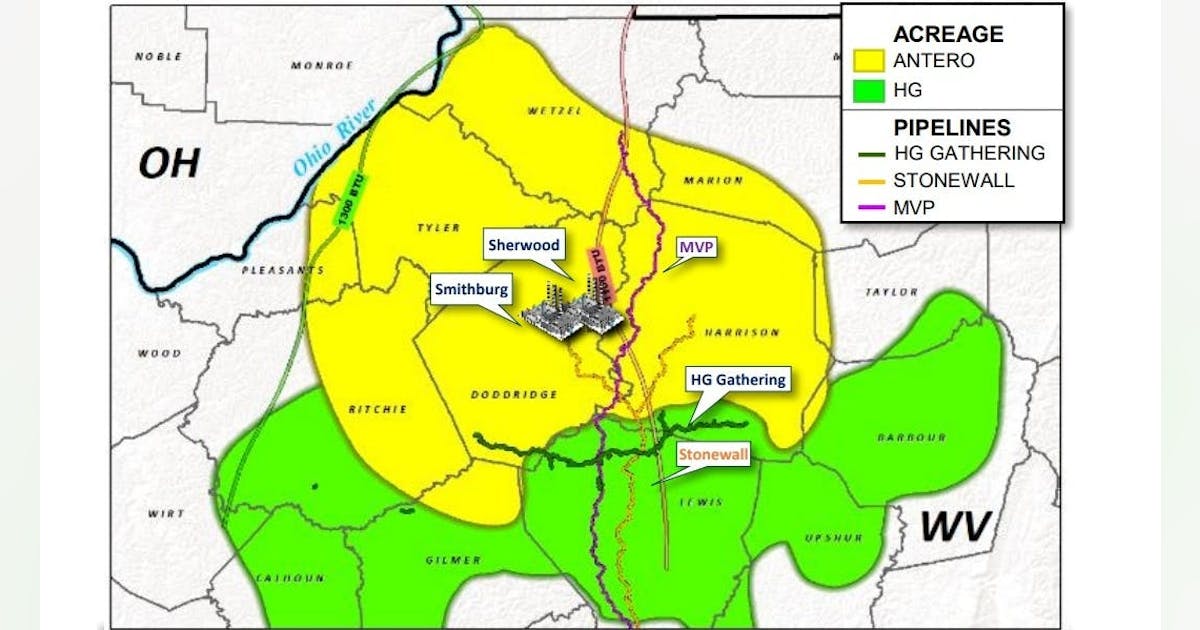
Antero Resources Corp., Denver, Co., has signed deals to expand its Marcellus shale footprint in West Virginia and to divest its certain Ohio Utica shale assets. Adding the Marcellus assets expands Antero Resources’ core acreage position, enhancing its position “as the premier liquids developer in the Marcellus,” and provides the company “with further dry gas optionality for local demand from data centers and natural gas fired power plants,” said Michael Kennedy, president and chief executive officer, in a release Dec. 8. Marcellus acquisition from HG Energy Through a deal to acquire the upstream assets of HG Energy II LLC, Parkersburg, WV, Antero aims to add 850 MMcfed of expected Marcellus production in 2026. The deal, expected to close in second-quarter 2026, was signed for $2.8 billion in cash plus the assumption of HG Energy’s commodity hedge book. Antero said about 90% of HG natural gas production is hedged in 2026 and 2027 at average NYMEX prices of $4.00 and $3.88, respectively. The deal adds 385,000 net acres offsetting Antero’s existing 475,000 net core Marcellus acreage position and includes over 400 additional locations that immediately compete for capital (75% liquids), the company said in a related investor presentation.  Antero said it anticipates capital synergies of about $550 million inclusive of development planning optimization and drilling and completions savings. Another $400 in income-related synergies is expected. Separately, Antero Midstream agreed to acquire the midstream assets from HG Energy for $1.1 billion in cash. The deal includes about 50 miles of bi-directional dry and rich gas gathering pipelines and water assets in which Antero plans to invest about $25 million to integrate with its legacy gathering and water system. Utica sale to Infinity Natural Resources Infinity Natural Resources Inc., in a release Dec. 8, said subsidiary Infinity Natural Resources LLC will acquire upstream and

Read More »

Market Focus: Oversupply takes center stage, fundamentals catch up with the market

@import url(‘https://fonts.googleapis.com/css2?family=Inter:[email protected]&display=swap’); a { color: var(–color-primary-main); } .ebm-page__main h1, .ebm-page__main h2, .ebm-page__main h3, .ebm-page__main h4, .ebm-page__main h5, .ebm-page__main h6 { font-family: Inter; } body { line-height: 150%; letter-spacing: 0.025em; font-family: Inter; } button, .ebm-button-wrapper { font-family: Inter; } .label-style { text-transform: uppercase; color: var(–color-grey); font-weight: 600; font-size: 0.75rem; } .caption-style { font-size: 0.75rem; opacity: .6; } #onetrust-pc-sdk [id*=btn-handler], #onetrust-pc-sdk [class*=btn-handler] { background-color: #c19a06 !important; border-color: #c19a06 !important; } #onetrust-policy a, #onetrust-pc-sdk a, #ot-pc-content a { color: #c19a06 !important; } #onetrust-consent-sdk #onetrust-pc-sdk .ot-active-menu { border-color: #c19a06 !important; } #onetrust-consent-sdk #onetrust-accept-btn-handler, #onetrust-banner-sdk #onetrust-reject-all-handler, #onetrust-consent-sdk #onetrust-pc-btn-handler.cookie-setting-link { background-color: #c19a06 !important; border-color: #c19a06 !important; } #onetrust-consent-sdk .onetrust-pc-btn-handler { color: #c19a06 !important; border-color: #c19a06 !important; } <!–> In this Market Focus episode of the Oil & Gas Journal ReEnterprised podcast, Conglin Xu, managing editor, economics, takes a look at the growing oversupply in global crude markets and the shift now under way as fundamentals begin overtaking sentiment and geopolitics as the primary price driver. ]–>

Read More »

Aramco, ExxonMobil weigh new chemical complex for Samref refinery

Saudi Aramco and partner ExxonMobil Corp. subsidiary Mobil Yanbu Refining Co. Inc. are discussing the possibility of executing a major overhaul and expansion of 50-50 joint venture Saudi Aramco-Mobil Refinery Co. Ltd.’s (Samref) 400,000-b/d Samref refinery in Yanbu, Saudi Arabia. As part of a venture framework agreement (VFA) signed on Dec. 8, the partners will evaluate potential capital investments to expand and diversify the refinery’s existing production slate, including the addition of a grassroots petrochemical complex at the site, Aramco said in a statement. In addition to upgrading and diversifying Samref’s production to include lower-emission, high-quality distillates and high-performance chemicals, the project scope would involve works to improve the refinery’s energy efficiency and implement a sitewide integrated emissions reduction strategy, according to Aramco. With the VFA now signed, the companies said they will begin the project’s preliminary front-end engineering and design (pre-FEED) study, which will focus on opportunities to maximize the site’s operational advantage and enhance its competitiveness while meeting Saudi Arabia’s growing demand for high-quality petrochemical products. For Aramco, the proposed project—the design of which aims to increase the conversion of crude oil and other petroleum liquids into higher-value chemicals—further reinforces the company’s commitment to creating further value of its overall downstream business as well as its liquids-to-chemicals strategy, according to Mohammed Y. Al Qahtani, Aramco’s downstream president. “[The proposed expansion and integration project] will also position Samref as a key driver in the growth of [Saudi Arabia’s] petrochemical sector,” Al Qahtani added. Without disclosing a timeline as to when the partners expect to complete the pre-FEED study or reach final investment decision, Aramco confirmed existing plans for the potential project would remain subject to market conditions and necessary regulatory approvals. Samref previously completed modifications and renovations at the Yanbu refinery in 2014-15 related to a two-phased clean-fuels project

Read More »

Harbour Energy to add North Sea assets through Waldorf acquisition

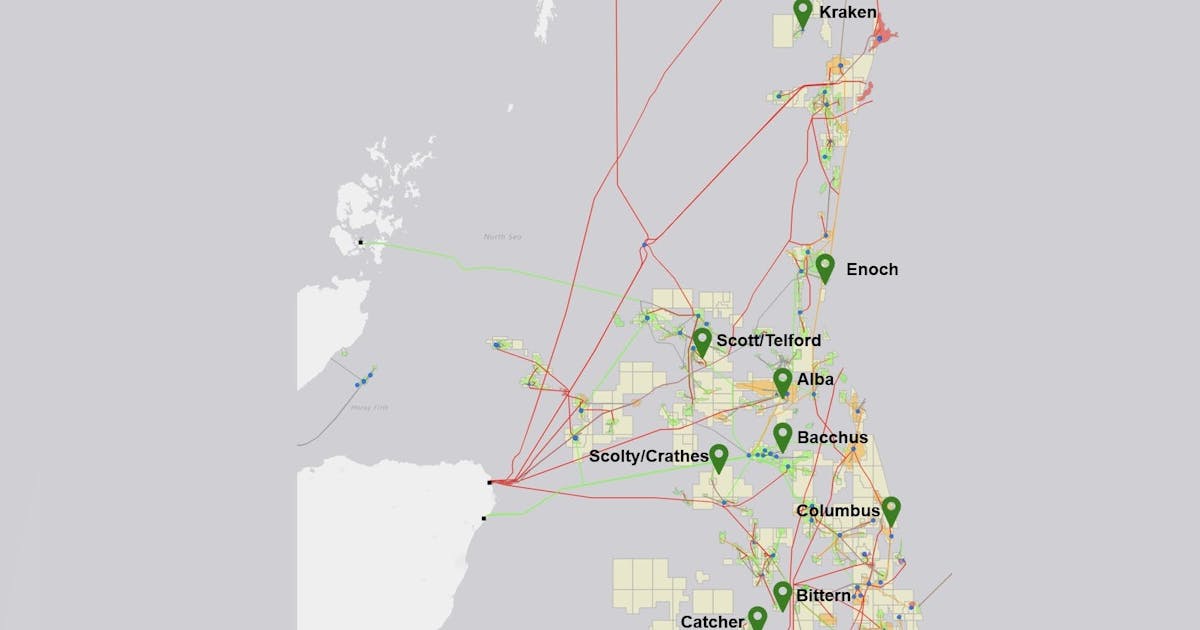
@import url(‘https://fonts.googleapis.com/css2?family=Inter:[email protected]&display=swap’); a { color: var(–color-primary-main); } .ebm-page__main h1, .ebm-page__main h2, .ebm-page__main h3, .ebm-page__main h4, .ebm-page__main h5, .ebm-page__main h6 { font-family: Inter; } body { line-height: 150%; letter-spacing: 0.025em; font-family: Inter; } button, .ebm-button-wrapper { font-family: Inter; } .label-style { text-transform: uppercase; color: var(–color-grey); font-weight: 600; font-size: 0.75rem; } .caption-style { font-size: 0.75rem; opacity: .6; } #onetrust-pc-sdk [id*=btn-handler], #onetrust-pc-sdk [class*=btn-handler] { background-color: #c19a06 !important; border-color: #c19a06 !important; } #onetrust-policy a, #onetrust-pc-sdk a, #ot-pc-content a { color: #c19a06 !important; } #onetrust-consent-sdk #onetrust-pc-sdk .ot-active-menu { border-color: #c19a06 !important; } #onetrust-consent-sdk #onetrust-accept-btn-handler, #onetrust-banner-sdk #onetrust-reject-all-handler, #onetrust-consent-sdk #onetrust-pc-btn-handler.cookie-setting-link { background-color: #c19a06 !important; border-color: #c19a06 !important; } #onetrust-consent-sdk .onetrust-pc-btn-handler { color: #c19a06 !important; border-color: #c19a06 !important; } Harbour Energy plc has agreed to acquire substantially all the subsidiaries of Waldorf Energy Partners Ltd. and Waldorf Production Ltd., currently in administration, for $170 million. The company, in a release Dec. 12, said the deal would add oil-weighted production of 20,000 boe/d and 2P reserves of 35 MMboe. In addition, the deal would increase Harbour’s interest in its operated Catcher oil and gas field to 90% from 50% and provide a new production base  for Harbour in the northern North Sea with the addition of a 29.5% non-operated interest in the EnQuest plc-operated Kraken oil field. The deal is expected to close in second-quarter 2026, subject to regulatory approvals and full and final settlement of all creditor claims against Waldorf’s subsidiaries.

Read More »

EIA: US oil inventories drop 1.8 million bbl

US commercial crude inventories for the week ended Dec. 5, excluding those in the Strategic Petroleum Reserve, dropped 1.8 million bbl from the previous week to 425.7 million bbl, which is about 4% below the average range for this time of year, according to the US Energy Information Administration’s (EIA) Weekly Petroleum Status Report. Total motor gasoline inventories gained 6.4 million bbl last week and are about 1% below the 5-year average range for this time of year. Finished gasoline inventories and blending components inventories rose. Distillate fuel inventories increased by 2.5 million bbl but are 7% below the 5-year average for this time of year. EIA reported that US crude refinery inputs last week averaged 16.9 million b/d, down 17,000 b/d from the previous week’s average. Refineries operated at 94.5% of their operable capacity. Gasoline production decreased to 9.6 million b/d, while distillate fuel production increased by 380,000 b/d, averaging 5.4 million b/d. US crude imports averaged 6.6 million b/d, up 609,000 b/d from the previous week’s average. Over the last 4 weeks, crude imports averaged 6.2 million b/d, down 7.7% from the same 4-week period last year. Total motor gasoline imports, including both finished gasoline and gasoline blending components, averaged 659,000 b/d. Distillate fuel imports averaged 181,000 b/d last week.

Read More »

Executive Roundtable: Converging Disciplines in the AI Buildout

At Data Center Frontier, we rely on industry leaders to help us understand the most urgent challenges facing digital infrastructure. And in the fourth quarter of 2025, the data center industry is adjusting to a new kind of complexity.  AI-scale infrastructure is redefining what “mission critical” means, from megawatt density and modular delivery to the chemistry of cooling fluids and the automation of energy systems. Every project has arguably in effect now become an ecosystem challenge, demanding that electrical, mechanical, construction, and environmental disciplines act as one.  For this quarter’s Executive Roundtable, DCF convened subject matter experts from Ecolab, EdgeConneX, Rehlko and Schneider Electric – leaders spanning the full chain of facilities design, deployment, and operation. Their insights illuminate how liquid cooling, energy management, and sustainable process design in data centers are now converging to set the pace for the AI era. Our distinguished executive panelists for this quarter include: Rob Lowe, Director RD&E – Global High Tech, Ecolab Phillip Marangella, Chief Marketing and Product Officer, EdgeConneX Ben Rapp, Manager, Strategic Project Development, Rehlko Joe Reele, Vice President, Datacenter Solution Architects, Schneider Electric Today: Engineering the New Normal – Liquid Cooling at Scale  Today’s kickoff article grapples with how, as liquid cooling technology transitions to default hyperscale design, the challenge is no longer if, but how to scale builds safely, repeatably, and globally.  Cold plates, immersion, dielectric fluids, and liquid-to-chip loops are converging into factory-integrated building blocks, yet variability in chemistry, serviceability, materials, commissioning practices, and long-term maintenance threatens to fragment adoption just as demand accelerates.  Success now hinges on shared standards and tighter collaboration across OEMs, builders, and process specialists worldwide. So how do developers coordinate across the ecosystem to make liquid cooling a safe, maintainable global default? What’s Ahead in the Roundtable Over the coming days, our panel

Read More »

DCF Trends Summit 2025: AI for Good – How Operators, Vendors and Cooling Specialists See the Next Phase of AI Data Centers

At the 2025 Data Center Frontier Trends Summit (Aug. 26-28) in Reston, Va., the conversation around AI and infrastructure moved well past the hype. In a panel sponsored by Schneider Electric—“AI for Good: Building for AI Workloads and Using AI for Smarter Data Centers”—three industry leaders explored what it really means to design, cool and operate the new class of AI “factories,” while also turning AI inward to run those facilities more intelligently. Moderated by Data Center Frontier Editor in Chief Matt Vincent, the session brought together: Steve Carlini, VP, Innovation and Data Center Energy Management Business, Schneider Electric Sudhir Kalra, Chief Data Center Operations Officer, Compass Datacenters Andrew Whitmore, VP of Sales, Motivair Together, they traced both sides of the “AI for Good” equation: building for AI workloads at densities that would have sounded impossible just a few years ago, and using AI itself to reduce risk, improve efficiency and minimize environmental impact. From Bubble Talk to “AI Factories” Carlini opened by acknowledging the volatility surrounding AI investments, citing recent headlines and even Sam Altman’s public use of the word “bubble” to describe the current phase of exuberance. “It’s moving at an incredible pace,” Carlini noted, pointing out that roughly half of all VC money this year has flowed into AI, with more already spent than in all of the previous year. Not every investor will win, he said, and some companies pouring in hundreds of billions may not recoup their capital. But for infrastructure, the signal is clear: the trajectory is up and to the right. GPU generations are cycling faster than ever. Densities are climbing from high double-digits per rack toward hundreds of kilowatts. The hyperscale “AI factories,” as NVIDIA calls them, are scaling to campus capacities measured in gigawatts. Carlini reminded the audience that in 2024,

Read More »

FinOps Foundation sharpens FOCUS to reduce cloud cost chaos

“The big change that’s really started to happen in late 2024 early 2025 is that the FinOps practice started to expand past the cloud,” Storment said. “A lot of organizations got really good at using FinOps to manage the value of cloud, and then their organizations went, ‘oh, hey, we’re living in this happily hybrid state now where we’ve got cloud, SaaS, data center. Can you also apply the FinOps practice to our SaaS? Or can you apply it to our Snowflake? Can you apply it to our data center?’” The FinOps Foundation’s community has grown to approximately 100,000 practitioners. The organization now includes major cloud vendors, hardware providers like Nvidia and AMD, data center operators and data cloud platforms like Snowflake and Databricks. Some 96 of the Fortune 100 now participate in FinOps Foundation programs. The practice itself has shifted in two directions. It has moved left into earlier architectural and design processes, becoming more proactive rather than reactive. It has also moved up organizationally, from director-level cloud management roles to SVP and COO positions managing converged technology portfolios spanning multiple infrastructure types. This expansion has driven the evolution of FOCUS beyond its original cloud billing focus. Enterprises are implementing FOCUS as an internal standard for chargeback reporting even when their providers don’t generate native FOCUS data. Some newer cloud providers, particularly those focused on AI infrastructure, are using the FOCUS specification to define their billing data structures from the ground up rather than retrofitting existing systems. The FOCUS 1.3 release reflects this maturation, addressing technical gaps that have emerged as organizations apply cost management practices across increasingly complex hybrid environments. FOCUS 1.3 exposes cost allocation logic for shared infrastructure The most significant technical enhancement in FOCUS 1.3 addresses a gap in how shared infrastructure costs are allocated and

Read More »

Aetherflux joins the race to launch orbital data centers by 2027

Enterprises will connect to and manage orbital workloads “the same way they manage cloud workloads today,” using optical links, the spokesperson added. The company’s approach is to “continuously launch new hardware and quickly integrate the latest architectures,” with older systems running lower-priority tasks to serve out the full useful lifetime of their high-end GPUs. The company declined to disclose pricing. Aetherflux plans to launch about 30 satellites at a time on SpaceX Falcon 9 rockets. Before the data center launch, the company will launch a power-beaming demonstration satellite in 2026 to test transmission of one kilowatt of energy from orbit to ground stations, using infrared lasers. Competition in the sector has intensified in recent months. In November, Starcloud launched its Starcloud-1 satellite carrying an Nvidia H100 GPU, which is 100 times more powerful than any previous GPU flown in space, according to the company, and demonstrated running Google’s Gemma AI model in orbit. In the same month, Google announced Project Suncatcher, with a 2027 demonstration mission planned. Analysts see limited near-term applications Despite the competitive activity, orbital data centers won’t replace terrestrial cloud regions for general hosting through 2030, said Ashish Banerjee, senior principal analyst at Gartner. Instead, they suit specific workloads, including meeting data sovereignty requirements for jurisdictionally complex scenarios, offering disaster recovery immune to terrestrial risks, and providing asynchronous high-performance computing, he said. “Orbital centers are ideal for high-compute, low-I/O batch jobs,” Banerjee said. “Think molecular folding simulations for pharma, massive Monte Carlo financial simulations, or training specific AI model weights. If the job takes 48 hours, the 500ms latency penalty of LEO is irrelevant.” One immediate application involves processing satellite-generated data in orbit, he said. Earth observation satellites using synthetic aperture radar generate roughly 10 gigabytes per second, but limited downlink bandwidth creates bottlenecks. Processing data in

Read More »

Here’s what Oracle’s soaring infrastructure spend could mean for enterprises

He said he had earlier told analysts in a separate call that margins for AI workloads in these data centers would be in the 30% to 40% range over the life of a customer contract. Kehring reassured that there would be demand for the data centers when they were completed, pointing to Oracle’s increasing remaining performance obligations, or services contracted but not yet delivered, up $68 billion on the previous quarter, saying that Oracle has been seeing unprecedented demand for AI workloads driven by the likes of Meta and Nvidia. Rising debt and margin risks raise flags for CIOs For analysts, though, the swelling debt load is hard to dismiss, even with Oracle’s attempts to de-risk its spend and squeeze more efficiency out of its buildouts. Gogia sees Oracle already under pressure, with the financial ecosystem around the company pricing the risk — one of the largest debts in corporate history, crossing $100 billion even before the capex spend this quarter — evident in the rising cost of insuring the debt and the shift in credit outlook. “The combination of heavy capex, negative free cash flow, increasing financing cost and long-dated revenue commitments forms a structural pressure that will invariably finds its way into the commercial posture of the vendor,” Gogia said, hinting at an “eventual” increase in pricing of the company’s offerings. He was equally unconvinced by Magouyrk’s assurances about the margin profile of AI workloads as he believes that AI infrastructure, particularly GPU-heavy clusters, delivers significantly lower margins in the early years because utilisation takes time to ramp.

Read More »

New Nvidia software gives data centers deeper visibility into GPU thermals and reliability

Addressing the challenge Modern AI accelerators now draw more than 700W per GPU, and multi-GPU nodes can reach 6kW, creating concentrated heat zones, rapid power swings, and a higher risk of interconnect degradation in dense racks, according to Manish Rawat, semiconductor analyst at TechInsights. Traditional cooling methods and static power planning increasingly struggle to keep pace with these loads. “Rich vendor telemetry covering real-time power draw, bandwidth behavior, interconnect health, and airflow patterns shifts operators from reactive monitoring to proactive design,” Rawat said. “It enables thermally aware workload placement, faster adoption of liquid or hybrid cooling, and smarter network layouts that reduce heat-dense traffic clusters.” Rawat added that the software’s fleet-level configuration insights can also help operators catch silent errors caused by mismatched firmware or driver versions. This can improve training reproducibility and strengthen overall fleet stability. “Real-time error and interconnect health data also significantly accelerates root-cause analysis, reducing MTTR and minimizing cluster fragmentation,” Rawat said. These operational pressures can shape budget decisions and infrastructure strategy at the enterprise level.

Read More »

Microsoft will invest $80B in AI data centers in fiscal 2025

And Microsoft isn’t the only one that is ramping up its investments into AI-enabled data centers. Rival cloud service providers are all investing in either upgrading or opening new data centers to capture a larger chunk of business from developers and users of large language models (LLMs).  In a report published in October 2024, Bloomberg Intelligence estimated that demand for generative AI would push Microsoft, AWS, Google, Oracle, Meta, and Apple would between them devote $200 billion to capex in 2025, up from $110 billion in 2023. Microsoft is one of the biggest spenders, followed closely by Google and AWS, Bloomberg Intelligence said. Its estimate of Microsoft’s capital spending on AI, at $62.4 billion for calendar 2025, is lower than Smith’s claim that the company will invest $80 billion in the fiscal year to June 30, 2025. Both figures, though, are way higher than Microsoft’s 2020 capital expenditure of “just” $17.6 billion. The majority of the increased spending is tied to cloud services and the expansion of AI infrastructure needed to provide compute capacity for OpenAI workloads. Separately, last October Amazon CEO Andy Jassy said his company planned total capex spend of $75 billion in 2024 and even more in 2025, with much of it going to AWS, its cloud computing division.

Read More »

John Deere unveils more autonomous farm machines to address skill labor shortage

Join our daily and weekly newsletters for the latest updates and exclusive content on industry-leading AI coverage. Learn More Self-driving tractors might be the path to self-driving cars. John Deere has revealed a new line of autonomous machines and tech across agriculture, construction and commercial landscaping. The Moline, Illinois-based John Deere has been in business for 187 years, yet it’s been a regular as a non-tech company showing off technology at the big tech trade show in Las Vegas and is back at CES 2025 with more autonomous tractors and other vehicles. This is not something we usually cover, but John Deere has a lot of data that is interesting in the big picture of tech. The message from the company is that there aren’t enough skilled farm laborers to do the work that its customers need. It’s been a challenge for most of the last two decades, said Jahmy Hindman, CTO at John Deere, in a briefing. Much of the tech will come this fall and after that. He noted that the average farmer in the U.S. is over 58 and works 12 to 18 hours a day to grow food for us. And he said the American Farm Bureau Federation estimates there are roughly 2.4 million farm jobs that need to be filled annually; and the agricultural work force continues to shrink. (This is my hint to the anti-immigration crowd). John Deere’s autonomous 9RX Tractor. Farmers can oversee it using an app. While each of these industries experiences their own set of challenges, a commonality across all is skilled labor availability. In construction, about 80% percent of contractors struggle to find skilled labor. And in commercial landscaping, 86% of landscaping business owners can’t find labor to fill open positions, he said. “They have to figure out how to do

Read More »

2025 playbook for enterprise AI success, from agents to evals

Join our daily and weekly newsletters for the latest updates and exclusive content on industry-leading AI coverage. Learn More 2025 is poised to be a pivotal year for enterprise AI. The past year has seen rapid innovation, and this year will see the same. This has made it more critical than ever to revisit your AI strategy to stay competitive and create value for your customers. From scaling AI agents to optimizing costs, here are the five critical areas enterprises should prioritize for their AI strategy this year. 1. Agents: the next generation of automation AI agents are no longer theoretical. In 2025, they’re indispensable tools for enterprises looking to streamline operations and enhance customer interactions. Unlike traditional software, agents powered by large language models (LLMs) can make nuanced decisions, navigate complex multi-step tasks, and integrate seamlessly with tools and APIs. At the start of 2024, agents were not ready for prime time, making frustrating mistakes like hallucinating URLs. They started getting better as frontier large language models themselves improved. “Let me put it this way,” said Sam Witteveen, cofounder of Red Dragon, a company that develops agents for companies, and that recently reviewed the 48 agents it built last year. “Interestingly, the ones that we built at the start of the year, a lot of those worked way better at the end of the year just because the models got better.” Witteveen shared this in the video podcast we filmed to discuss these five big trends in detail. Models are getting better and hallucinating less, and they’re also being trained to do agentic tasks. Another feature that the model providers are researching is a way to use the LLM as a judge, and as models get cheaper (something we’ll cover below), companies can use three or more models to

Read More »

OpenAI’s red teaming innovations define new essentials for security leaders in the AI era

Join our daily and weekly newsletters for the latest updates and exclusive content on industry-leading AI coverage. Learn More OpenAI has taken a more aggressive approach to red teaming than its AI competitors, demonstrating its security teams’ advanced capabilities in two areas: multi-step reinforcement and external red teaming. OpenAI recently released two papers that set a new competitive standard for improving the quality, reliability and safety of AI models in these two techniques and more. The first paper, “OpenAI’s Approach to External Red Teaming for AI Models and Systems,” reports that specialized teams outside the company have proven effective in uncovering vulnerabilities that might otherwise have made it into a released model because in-house testing techniques may have missed them. In the second paper, “Diverse and Effective Red Teaming with Auto-Generated Rewards and Multi-Step Reinforcement Learning,” OpenAI introduces an automated framework that relies on iterative reinforcement learning to generate a broad spectrum of novel, wide-ranging attacks. Going all-in on red teaming pays practical, competitive dividends It’s encouraging to see competitive intensity in red teaming growing among AI companies. When Anthropic released its AI red team guidelines in June of last year, it joined AI providers including Google, Microsoft, Nvidia, OpenAI, and even the U.S.’s National Institute of Standards and Technology (NIST), which all had released red teaming frameworks. Investing heavily in red teaming yields tangible benefits for security leaders in any organization. OpenAI’s paper on external red teaming provides a detailed analysis of how the company strives to create specialized external teams that include cybersecurity and subject matter experts. The goal is to see if knowledgeable external teams can defeat models’ security perimeters and find gaps in their security, biases and controls that prompt-based testing couldn’t find. What makes OpenAI’s recent papers noteworthy is how well they define using human-in-the-middle

Read More »