Stay Ahead, Stay ONMINE

AI Infrastructure Brief: Power, Capital, and Silicon Collide in the Next Phase of the Data Center Buildout

The global race to build infrastructure for artificial intelligence is accelerating across North America, reshaping the economics, politics, and physical footprint of the data center industry. New hyperscale campuses, multi-gigawatt development pipelines, power generation partnerships, and escalating policy debates illustrate how quickly the digital infrastructure landscape is evolving. At the same time, the industry is […]

The global race to build infrastructure for artificial intelligence is accelerating across North America, reshaping the economics, politics, and physical footprint of the data center industry.

New hyperscale campuses, multi-gigawatt development pipelines, power generation partnerships, and escalating policy debates illustrate how quickly the digital infrastructure landscape is evolving. At the same time, the industry is confronting rising scrutiny from communities and policymakers concerned about energy consumption and grid capacity.

From Memphis and Texas to Wisconsin and Northern Virginia, recent developments highlight a central reality: AI infrastructure is now scaling at industrial magnitude.

AI Cloud Providers Race to Deploy Blackwell Infrastructure

Several announcements this week underscore the enormous scale of compute infrastructure now being deployed to support next-generation AI workloads.

AI cloud provider CoreWeave said it plans to add roughly 5 gigawatts of additional data center capacity by 2030, while projecting that capital expenditures in 2026 could double as the company deploys NVIDIA’s next generation of GPU systems.

Much of that spending is expected to center on NVIDIA’s Blackwell architecture, particularly the GB200 NVL72 platform, which is designed to support massive AI training clusters. Industry analysts note that CoreWeave’s GPU capacity for 2026 is already largely sold out, reflecting the extraordinary demand for AI compute from hyperscalers, model developers, and enterprise customers.

Elsewhere, xAI, the artificial intelligence company founded by Elon Musk, filed permits totaling $659 million tied to expansion of its Memphis “Colossus” campus. The original facility, built in partnership with infrastructure providers including Supermicro, houses one of the largest GPU clusters in the world supporting the company’s Grok models.

At the infrastructure layer, hardware vendors are also adapting their architectures to AI scale.

NVIDIA and optical component manufacturer Coherent announced a strategic partnership to develop next-generation optical interconnect technology, addressing one of the biggest bottlenecks in AI cluster design: moving massive volumes of data between GPUs at ultra-low latency.

Meanwhile, Super Micro Computer continues pushing modular data center architectures designed to accelerate deployment of AI clusters by enabling faster assembly of compute infrastructure at scale.

AI Factories and the Rise of Gigawatt Campuses

The next generation of data center campuses is increasingly measured in hundreds of megawatts and, as you might’ve heard, even gigawatts.

A prominent example is Nebius, which refers to its facilities as “AI Factories.” The company’s planned campus in Independence, Missouri will serve as its flagship U.S. deployment and recently secured local approval for an extraordinary $150.6 billion Chapter 100 bond issuance, believed to be one of the largest economic development incentives ever approved at the municipal level.

Other projects across the country highlight the same trend toward hyperscale development.

In West Virginia, developer Penzance is targeting a 600-megawatt campus, reflecting growing interest in regions with available land and power infrastructure.

Prometheus Hyperscale has detailed plans for a major Dallas-area campus, positioning the site as a large-scale AI infrastructure hub within the rapidly expanding Texas data center market.

Texas itself is emerging as one of the epicenters of AI infrastructure growth. Google recently filed plans for a fifth data center building at its Midlothian campus, part of a much broader $40 billion investment in Texas through 2027 that includes additional campuses planned in Armstrong and Haskell Counties.

Hyperscale development continues across the Midwest as well. Meta Platforms recently signed a pre-development agreement for a campus in Beloit, Wisconsin, even as another Meta project in Beaver Dam has become a focal point for debate over power consumption. Regulatory filings indicate that the Beaver Dam site could require roughly 220 megawatts of electricity, a load large enough to rival that of many small cities.

Real Estate Capital Floods Into AI Infrastructure

The rapid expansion of AI infrastructure has attracted enormous interest from institutional investors.

Private equity giant Blackstone is reportedly exploring the creation of a publicly traded vehicle focused on acquiring AI data center assets. The proposed entity could raise tens of billions of dollars from retail investors, extending digital infrastructure investment beyond traditional pension funds and sovereign wealth investors.

In Northern Virginia, HighBrook Investors recently closed an inaugural data center fund targeting 300 megawatts of development capacity, reinforcing the region’s continuing status as the largest data center market in the world.

Other recent transactions include GI Partners acquiring two Baltimore-area facilities and Harrison Street selling two powered-shell sites in Maryland, reflecting the ongoing flow of capital into the sector.

Meanwhile, Canadian institutional investor La Caisse committed C$240 million to support construction of Cologix’s MTL8 facility in Montréal, an AI-ready data center designed to leverage Quebec’s hydroelectric power resources.

The Power Question Becomes Central

Behind almost every data center announcement today lies a deeper question: where will the electricity come from?

That challenge was highlighted by a major power infrastructure project involving Babcock & Wilcox, which received approval to develop a $2.4 billion natural-gas generation facility that will supply power to Applied Digital’s expanding AI campuses.

B&W has received full notice to proceed on a $2.4 billion design-build agreement with Base Electron, an independent power producer (IPP) backed by Applied Digital (NASDAQ: APLD) to deliver 1.2 GW of new generation capacity. The generation is intended to supply power to Applied Digital AI Factory campuses under separate power supply agreements. The project includes four 300-megawatt natural gas-fired boilers and steam turbine generator systems.

Base Electron, the IPP backed by Applied Digital, is focused on developing and owning generation assets that deliver new, dispatchable capacity to the grid and to contracted customers, including power supply agreements supporting Applied Digital’s high-density AI data center campuses.

Under its agreement with Base Electron, B&W will engineer, procure and construct the facility, with engineering and manufacturing activities already underway. Siemens Energy has been formally released to design and supply the steam turbine generator sets.

The project reflects the growing industry shift toward dedicated energy infrastructure.

Elsewhere, Atlantic Energy was selected to provide power for a 380,000-square-foot data center in Akron developed by Viking Data Centers, with plans for expansion to 150 megawatts.

In Canada, an agreement among TransAlta, Brookfield, and the Canada Pension Plan Investment Board outlines plans for a 230-megawatt data center project in Alberta, leveraging the province’s abundant energy resources.

These projects illustrate what many industry executives now describe as the “power island” trend: large data center campuses increasingly pairing with dedicated behind-the-meter generation rather than relying entirely on grid capacity.

In effect, the industry is beginning to shift from grid-dependent infrastructure toward hybrid or partially grid-independent models, a structural change that could reshape how AI campuses are designed and financed.

Hyperscale Expansion Continues

Major operators continue expanding their U.S. footprints.

NTT Global Data Centers recently secured four U.S. leases totaling approximately 115 megawatts, reflecting continued demand from hyperscale cloud providers and AI platform companies.

Amazon, meanwhile, has acquired a university campus in Virginia that could eventually be redeveloped into a data center site, another example of hyperscalers securing land for future expansion.

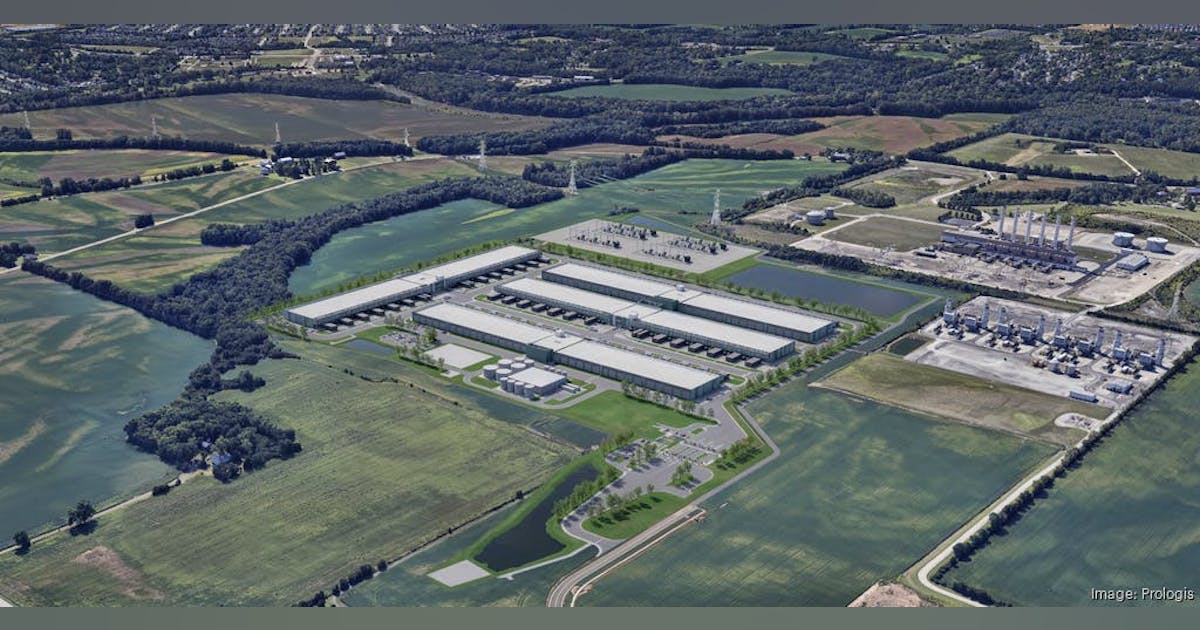
Industrial real estate giant Prologis has also revealed plans for a hyperscale development in Butler County near Cincinnati, Ohio, highlighting the growing role of logistics real estate developers in the digital infrastructure ecosystem. The San Francisco-based real estate development firm is planning the data center campus, called “Project Mila,” on 141 acres in the city of Trenton’s industrial park.

Prologis is recognized as the world’s largest industrial real estate investment trust (REIT) and one of the largest, most valuable real estate companies globally, with over $200 billion in assets under management and 1.3 billion square feet of logistics space.

Construction Firms Ride the Data Center Boom

The surge in hyperscale development is also transforming the construction industry.

Turner Construction reported record revenue of $29.2 billion in 2025, with data center projects representing a significant driver of that growth.

The company is one of several engineering and construction firms benefiting from the industrialization of data center development, where projects increasingly resemble large energy or manufacturing facilities in scale.

Turner said its project backlog rose 34% year over year to $44.3 billion, the largest year-end backlog in the company’s history. Data center construction now accounts for roughly 37% of that pipeline, reflecting sustained investment in artificial intelligence infrastructure and digital capacity.

Political Scrutiny and Community Resistance Grow

As the industry expands, political scrutiny is intensifying.

In Birmingham, Alabama, the City Council approved a 180-day moratorium on new data center applications on March 3. The measure exempts facilities under 20 megawatts as well as projects with existing permits, including the Nebius site on Lakeshore Parkway.

In Oregon, lawmakers are considering revisions to House Bill 4084, which would temporarily suspend the ability of data centers to qualify for extended 10-year property tax exemptions in enterprise zones. While not a ban on data centers, the proposal reflects growing debate about the public incentives used to attract large projects.

Community opposition has also halted some projects. A proposed campus in Apex, North Carolina, was withdrawn after local resistance, while a West Louisville data center was approved despite significant community concerns.

Even the political arena is beginning to reflect the industry’s growing influence. Data center development has surfaced as an issue in North Carolina primary elections, where candidates have debated the role of digital infrastructure in local economic development.

The Bottom Line

Look past the individual announcements and a clearer pattern emerges: the architecture of the AI data center economy is changing.

Compute is scaling faster than traditional infrastructure models were designed to support. The rapid deployment of Blackwell-era GPU clusters is pushing facilities toward unprecedented density and power demand. At the same time, developers are pursuing hundreds-of-megawatts campuses as the new baseline, with gigawatt-scale planning increasingly common.

The capital markets are responding in kind. Institutional investors and infrastructure funds continue pouring billions into data center development, while new investment vehicles, such as Blackstone’s proposed public data center platform, suggest that AI infrastructure is beginning to look less like niche real estate and more like a new asset class.

But the real pivot point is energy. For decades, the data center industry largely followed the power grid. Today, the relationship is beginning to invert. Faced with transmission bottlenecks and multi-year interconnection queues, developers are increasingly designing projects around dedicated generation, hybrid grid connections, and behind-the-meter energy systems.

The emerging gigawatt era of digital infrastructure is a phase defined not simply by larger buildings, but by a fundamental rethinking of how compute, capital, and energy systems converge. In effect, the modern AI campus is evolving into something closer to a digital industrial complex: part data center, part power plant.

That shift is already visible in projects pairing hyperscale facilities with gas generation, renewable portfolios, or emerging nuclear technologies. It is also why political debates around energy policy, tax incentives, and land use are becoming inseparable from the data center conversation.

Shape
Shape
Stay Ahead

Explore More Insights

Stay ahead with more perspectives on cutting-edge power, infrastructure, energy,  bitcoin and AI solutions. Explore these articles to uncover strategies and insights shaping the future of industries.

Shape

Equinor, Wellesley Petroleum agree to HPHT exploration

Equinor and Wellesley Petroleum agreed to establish a joint exploration project aimed at increasing high-pressure, high-temperature (HPHT) exploration activity on the Norwegian Continental Shelf (NCS) and contributing to long-term production from existing infrastructure. Equinor will bring regional knowledge, subsurface experience, and infrastructure to the project, while Wellesley will focus on

Read More »

Occidental Petroleum, 1PointFive STRATOS DAC plant nears startup in Texas Permian basin

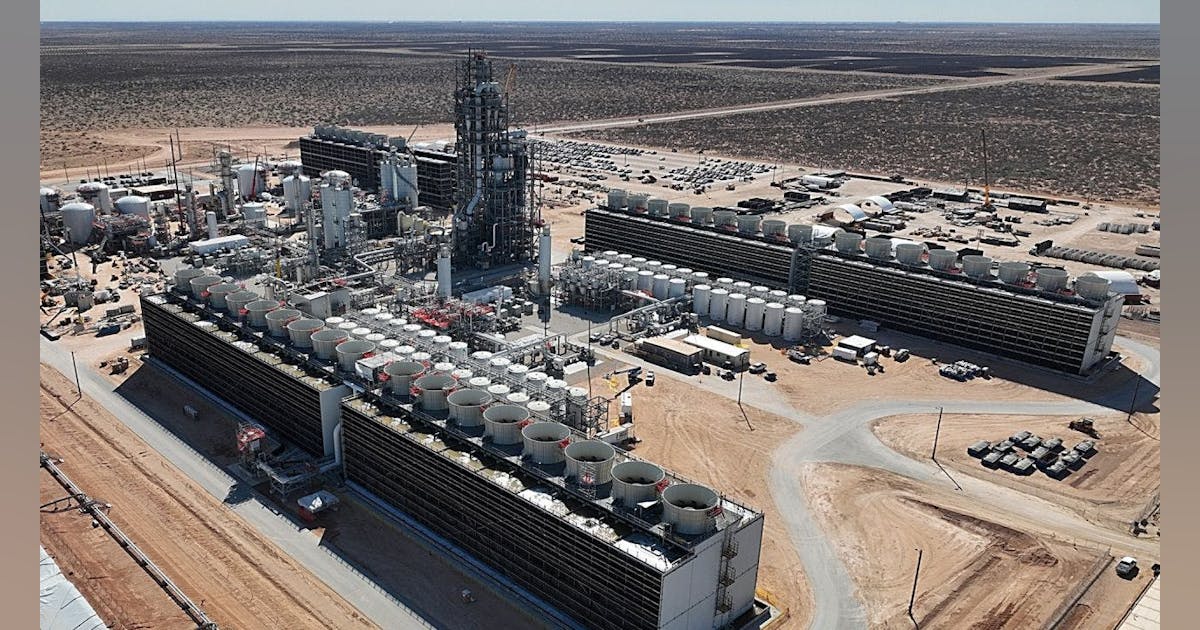
Occidental Petroleum Corp. and its subsidiary 1PointFive expect Phase 1 of the STRATOS direct air capture (DAC) plant in Texas’ Permian basin to come online in this year’s second quarter. In a post to LinkedIn, 1PointFive said Phase 1 “is in the final stage of startup” and that Phase 2, which incorporates learnings from research and development and Phase 1 construction activities, “will also begin commissioning in Q2, with operational ramp-up continuing through the rest of the year.” Once fully operational, STRATOS is designed to capture up to 500,000 tonnes/year (tpy) of CO2. As part of the US Environmental Protection Agency (EPA) Class VI permitting process and approval, it was reported that STRATOS is expected to include three wells to store about 722,000 tpy of CO2 in saline formations at a depth of about 4,400 ft. The company said a few activities before start-up remain, including ramping up remaining pellet reactors, completing calciner final commissioning in parallel, and beginning CO2 injection. Start-up milestones achieved include: Completed wet commissioning with water circulation. Received Class VI permits to sequester CO2. Ran CO2 compression system at design pressure. Added potassium hydroxide (KOH) to capture CO2 from the atmosphere. Building pellet inventory. Burners tested on calciner.  

Read More »

Brava Energia weighs Phase 3 at Atlanta to extend production plateau

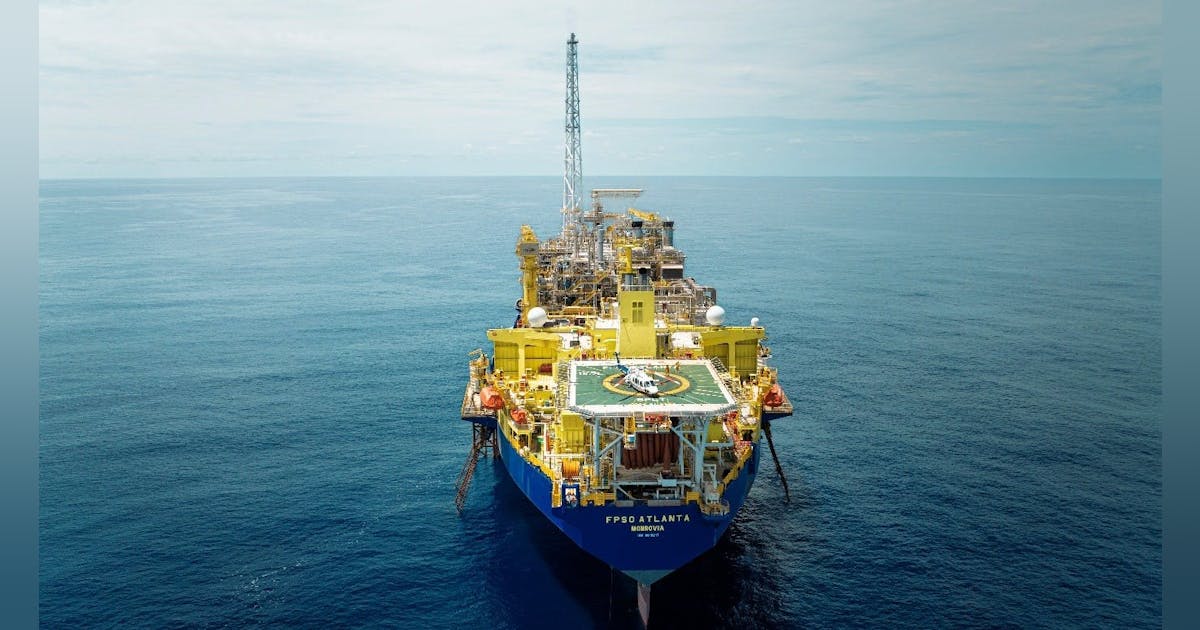
Just 2 months after bringing its flagship Atlanta field onstream with the new FPSO Atlanta, Brazil’s independent operator Brava Energia SA is evaluating a potential third development phase that could add roughly 25 million bbl of reserves and help sustain peak production longer than originally planned. The Phase 3 project, still at an early technical and economic evaluation stage, focuses on the Atlanta Nordeste area; a separate, shallower reservoir discovered in 2006 by Shell’s 9-SHEL-19D-RJS well. According to André Fagundes, vice-president of research (Brazil) at Welligence Energy Analytics, Phase 2 has four wells still to be developed: two expected in 2027 and two in 2029. Phase 3 would involve drilling two additional wells in 2031, bringing total development to 12 producing wells. Until recently, full-field development was understood to comprise 10 wells, but Brava has since updated guidance to reflect a 12-well development concept. Atlanta field upside The primary objective is clear. “We believe its main objective is to extend the production plateau,” Fagundes said. Welligence estimates incremental recovery could reach 25 MMbbl, increasing the field’s overall recovery factor by roughly 1.5%. Lying outside Atlanta’s main Cretaceous reservoir, Atlanta Nordeste represents a genuine upside opportunity, Fagundes explained. The field benefits from strong natural aquifer support, and no water or gas injection is anticipated. Water-handling constraints that affected early production using the Petrojarl I—limited to 11,500 b/d of water treatment—are no longer a bottleneck. FPSO Atlanta can process up to 140,000 b/d of water. Reservoir performance to date has been solid, albeit with difficulties. Recurrent electric submersible pump (ESP) failures and processing limits on the previous FPSO complicated full validation of original reservoir models. With the new 50,000-b/d FPSO in operation since late 2024, reservoir deliverability has become the main constraint. Phase 3 wells would also use ESPs and require additional subsea

Read More »

California Resources eyes ‘measured’ capex ramp on way to 12% production growth thanks to Berry buy

@import url(‘https://fonts.googleapis.com/css2?family=Inter:[email protected]&display=swap’); a { color: var(–color-primary-main); } .ebm-page__main h1, .ebm-page__main h2, .ebm-page__main h3, .ebm-page__main h4, .ebm-page__main h5, .ebm-page__main h6 { font-family: Inter; } body { line-height: 150%; letter-spacing: 0.025em; font-family: Inter; } button, .ebm-button-wrapper { font-family: Inter; } .label-style { text-transform: uppercase; color: var(–color-grey); font-weight: 600; font-size: 0.75rem; } .caption-style { font-size: 0.75rem; opacity: .6; } #onetrust-pc-sdk [id*=btn-handler], #onetrust-pc-sdk [class*=btn-handler] { background-color: #c19a06 !important; border-color: #c19a06 !important; } #onetrust-policy a, #onetrust-pc-sdk a, #ot-pc-content a { color: #c19a06 !important; } #onetrust-consent-sdk #onetrust-pc-sdk .ot-active-menu { border-color: #c19a06 !important; } #onetrust-consent-sdk #onetrust-accept-btn-handler, #onetrust-banner-sdk #onetrust-reject-all-handler, #onetrust-consent-sdk #onetrust-pc-btn-handler.cookie-setting-link { background-color: #c19a06 !important; border-color: #c19a06 !important; } #onetrust-consent-sdk .onetrust-pc-btn-handler { color: #c19a06 !important; border-color: #c19a06 !important; } The leaders of California Resources Corp., Long Beach, plan to have the company’s total production average 152,000-157,000 boe/d in 2026, with each quarter expected to be in that range. That output would equate to an increase of more than 12% from the operator’s 137,000 boe/d during fourth-quarter 2025, due mostly to the mid-December acquisition of Berry Corp. Fourth-quarter results folded in 14 days of Berry production and included 109,000 b/d of oil, with the company’s assets in the San Joaquin and Los Angeles basins accounting for 99,000 b/d of that total. The company dilled 31 new wells during the quarter and 76 in all of 2025—all in the San Joaquin—but that number will grow significantly to about 260 this year as state officials have resumed issuing permits following the passage last fall of a bill focused on Kern County production. Speaking to analysts after CRC reported fourth-quarter net income of $12 million on $924 million in revenues, president and chief executive officer Francisco Leon and chief financial officer Clio Crespy said the goal is to manage 2026 output decline to roughly 0.5% per quarter while operating four rigs and

Read More »

Petro-Victory Energy spuds São João well in Brazil

@import url(‘https://fonts.googleapis.com/css2?family=Inter:[email protected]&display=swap’); a { color: var(–color-primary-main); } .ebm-page__main h1, .ebm-page__main h2, .ebm-page__main h3, .ebm-page__main h4, .ebm-page__main h5, .ebm-page__main h6 { font-family: Inter; } body { line-height: 150%; letter-spacing: 0.025em; font-family: Inter; } button, .ebm-button-wrapper { font-family: Inter; } .label-style { text-transform: uppercase; color: var(–color-grey); font-weight: 600; font-size: 0.75rem; } .caption-style { font-size: 0.75rem; opacity: .6; } #onetrust-pc-sdk [id*=btn-handler], #onetrust-pc-sdk [class*=btn-handler] { background-color: #c19a06 !important; border-color: #c19a06 !important; } #onetrust-policy a, #onetrust-pc-sdk a, #ot-pc-content a { color: #c19a06 !important; } #onetrust-consent-sdk #onetrust-pc-sdk .ot-active-menu { border-color: #c19a06 !important; } #onetrust-consent-sdk #onetrust-accept-btn-handler, #onetrust-banner-sdk #onetrust-reject-all-handler, #onetrust-consent-sdk #onetrust-pc-btn-handler.cookie-setting-link { background-color: #c19a06 !important; border-color: #c19a06 !important; } #onetrust-consent-sdk .onetrust-pc-btn-handler { color: #c19a06 !important; border-color: #c19a06 !important; } Petro-Victory Energy Corp. has spudded the SJ‑12 well at São João field in Barreirinhas basin, on the Brazilian equatorial margin, Maranhão.  Drilling and testing SJ‑12 is aimed at proving enough gas can be produced to sell locally. The well forms part of the single non‑associated gas well commitment under a memorandum of understanding signed in 2024 with Enava. São João contains 50.1 bcf (1.4 billion cu m) non‑associated gas resources. Petro‑Victory 100% owns and operates São João field.

Read More »

Opinion Poll: Strait of Hormuz disruptions

@import url(‘https://fonts.googleapis.com/css2?family=Inter:[email protected]&display=swap’); a { color: var(–color-primary-main); } .ebm-page__main h1, .ebm-page__main h2, .ebm-page__main h3, .ebm-page__main h4, .ebm-page__main h5, .ebm-page__main h6 { font-family: Inter; } body { line-height: 150%; letter-spacing: 0.025em; font-family: Inter; } button, .ebm-button-wrapper { font-family: Inter; } .label-style { text-transform: uppercase; color: var(–color-grey); font-weight: 600; font-size: 0.75rem; } .caption-style { font-size: 0.75rem; opacity: .6; } #onetrust-pc-sdk [id*=btn-handler], #onetrust-pc-sdk [class*=btn-handler] { background-color: #c19a06 !important; border-color: #c19a06 !important; } #onetrust-policy a, #onetrust-pc-sdk a, #ot-pc-content a { color: #c19a06 !important; } #onetrust-consent-sdk #onetrust-pc-sdk .ot-active-menu { border-color: #c19a06 !important; } #onetrust-consent-sdk #onetrust-accept-btn-handler, #onetrust-banner-sdk #onetrust-reject-all-handler, #onetrust-consent-sdk #onetrust-pc-btn-handler.cookie-setting-link { background-color: #c19a06 !important; border-color: #c19a06 !important; } #onetrust-consent-sdk .onetrust-pc-btn-handler { color: #c19a06 !important; border-color: #c19a06 !important; } 388041610 © Ahmad Efendi | Dreamstime.com US, Israel, and Iran flags <!–> ]–> <!–> –> Oil & Gas Journal wants to hear your thoughts about how the collaborative strike on Iran by the US and Israel and disruptions through the Strait of Hormuz may impact oil prices.  

Read More »

Iran war

@import url(‘https://fonts.googleapis.com/css2?family=Inter:[email protected]&display=swap’); a { color: var(–color-primary-main); } .ebm-page__main h1, .ebm-page__main h2, .ebm-page__main h3, .ebm-page__main h4, .ebm-page__main h5, .ebm-page__main h6 { font-family: Inter; } body { line-height: 150%; letter-spacing: 0.025em; font-family: Inter; } button, .ebm-button-wrapper { font-family: Inter; } .label-style { text-transform: uppercase; color: var(–color-grey); font-weight: 600; font-size: 0.75rem; } .caption-style { font-size: 0.75rem; opacity: .6; } #onetrust-pc-sdk [id*=btn-handler], #onetrust-pc-sdk [class*=btn-handler] { background-color: #c19a06 !important; border-color: #c19a06 !important; } #onetrust-policy a, #onetrust-pc-sdk a, #ot-pc-content a { color: #c19a06 !important; } #onetrust-consent-sdk #onetrust-pc-sdk .ot-active-menu { border-color: #c19a06 !important; } #onetrust-consent-sdk #onetrust-accept-btn-handler, #onetrust-banner-sdk #onetrust-reject-all-handler, #onetrust-consent-sdk #onetrust-pc-btn-handler.cookie-setting-link { background-color: #c19a06 !important; border-color: #c19a06 !important; } #onetrust-consent-sdk .onetrust-pc-btn-handler { color: #c19a06 !important; border-color: #c19a06 !important; } <!–> –> <!–> ]–> <!–> –> You’ll need free site-access membership to view certain articles below. If you are not already registered with Oil & Gas Journal, sign up now for free. For Offshore articles, sign up here for free. New content will be added as it becomes available.  Oil & Gas Journal content <!–> Economics & Markets –> 26184925 © Robert Hale | Dreamstime.com <!–> ]–> <!–> When the market opened after the initial strike on Iran, oil prices traded $75/bbl on the Open, a $7/bbl jump from Friday’s High, indicating a higher risk premium as the market… –> March 6, 2026 96633437 © Titoonz | Dreamstime.com <!–> ]–> <!–> Broader infrastructure risks are emerging as regional attacks threaten production in Qatar, Saudi Arabia, and Iraq, while Europe and Asia face heightened vulnerability due to … –> March 3, 2026 387409148 © Clare Jackson | Dreamstime.com <!–> ]–> <!–> Despite initial market volatility, oil storage levels and pre-positioned supplies have mitigated immediate price shocks. However, ongoing tensions and insurance issues continue… –> March 2, 2026 220736519 © Pavel Muravev | Dreamstime.com <!–> ]–> <!–> About 20 million b/d of

Read More »

Execution, Power, and Public Trust: Rich Miller on 2026’s Data Center Reality and Why He Built Data Center Richness

DCF founder Rich Miller has spent much of his career explaining how the data center industry works. Now, with his latest venture, Data Center Richness, he’s also examining how the industry learns. That thread provided the opening for the latest episode of The DCF Show Podcast, where Miller joined present Data Center Frontier Editor in Chief Matt Vincent and Senior Editor David Chernicoff for a wide-ranging discussion that ultimately landed on a simple conclusion: after two years of unprecedented AI-driven announcements, 2026 will be the year reality asserts itself. Projects will either get built, or they won’t. Power will either materialize, or it won’t. Communities will either accept data center expansion – or they’ll stop it. In other words, the industry is entering its execution phase. Why Data Center Richness Matters Now Miller launched Data Center Richness as both a podcast and a Substack publication, an effort to experiment with formats and better understand how professionals now consume industry information. Podcasts have become a primary way many practitioners follow the business, while YouTube’s discovery advantages increasingly make video versions essential. At the same time, Miller remains committed to written analysis, using Substack as a venue for deeper dives and format experimentation. One example is his weekly newsletter distilling key industry developments into just a handful of essential links rather than overwhelming readers with volume. The approach reflects a broader recognition: the pace of change has accelerated so much that clarity matters more than quantity. The topic of how people learn about data centers isn’t separate from the industry’s trajectory; it’s becoming part of it. Public perception, regulatory scrutiny, and investor expectations are now shaped by how stories are told as much as by how facilities are built. That context sets the stage for the conversation’s core theme. Execution Defines 2026 After

Read More »

Nomads at the Frontier: PTC 2026 Signals the Digital Infrastructure Industry’s Moment of Execution

Each January, the Pacific Telecommunications Council conference serves as a barometer for where digital infrastructure is headed next. And according to Nomad Futurist founders Nabeel Mahmood and Phillip Koblence, the message from PTC 2026 was unmistakable: The industry has moved beyond hype. The hard work has begun. In the latest episode of The DCF Show Podcast, part of our ongoing ‘Nomads at the Frontier’ series, Mahmood and Koblence joined Data Center Frontier to unpack the tone shift emerging across the AI and data center ecosystem. Attendance continues to grow year over year. Conversations remain energetic. But the character of those conversations has changed. As Mahmood put it: “The hype that the market started to see is actually resulting a bit more into actions now, and those conversations are resulting into some good progress.” The difference from prior years? Less speculation. More execution. From Data Center Cowboys to Real Deployments Koblence offered perhaps the sharpest contrast between PTC conversations in 2024 and those in 2026. Two years ago, many projects felt speculative. Today, developers are arriving with secured power, customers, and construction underway. “If 2024’s PTC was data center cowboys — sites that in someone’s mind could be a data center — this year was: show me the money, show me the power, give me accurate timelines.” In other words, the market is no longer rewarding hypothetical capacity. It is demanding delivered capacity. Operators now speak in terms of deployments already underway, not aspirational campuses still waiting on permits and power commitments. And behind nearly every conversation sits the same gating factor. Power. Power Has Become the Industry’s Defining Constraint Whether discussions centered on AI factories, investment capital, or campus expansion, Mahmood and Koblence noted that every conversation eventually returned to energy availability. “All of those questions are power,” Koblence said.

Read More »

Land and Expand: Early 2026 Megaprojects Reflect a Power-First Ethos

Vantage — Lighthouse (Port Washington, Wisconsin) Although the on-site ceremonial groundbreaking occurred in 2025, Vantage Data Centers’ Lighthouse campus in Port Washington, Wisconsin, remained one of the most closely watched AI infrastructure developments entering 2026, with updated local materials posted February 19 reinforcing the project’s scale and timeline. Announced in October 2025 in partnership with OpenAI and Oracle, Lighthouse is positioned as the Midwest anchor site within the companies’ broader Stargate expansion, which targets up to 4.5 gigawatts of additional AI capacity globally. Current plans call for four hyperscale data centers delivering nearly 902 MW of IT load on a site encompassing roughly 672 acres, with construction expected to run through 2028. From a Land and Expand perspective, the project exemplifies the new generation of AI campuses involving large-scale land banking paired with phased delivery designed to stay ahead of hyperscale demand curves. Just as notable is the project’s power and community framework. Vantage is working with WEC Energy Group’s We Energies on a dedicated rate structure under which the developer will underwrite 100% of the power infrastructure investment, a model explicitly designed to shield existing customers from rate increases. The utility partnership also includes plans to enable nearly 2 gigawatts of new zero-emission energy capacity, with approximately 70% allocated to the Lighthouse campus and the remainder supporting broader grid needs. Water and environmental positioning are also central to the project narrative. Lighthouse is designed around a closed-loop liquid cooling system intended to minimize water consumption, alongside local restoration investments aimed at achieving water positivity. Vantage has also committed to preserving significant portions of the site’s natural landscape while pursuing LEED certification for the campus. Economically, the development is expected to generate more than 4,000 primarily union construction jobs and over 1,000 long-term operational roles, while Vantage has pledged at

Read More »

7×24 Exchange’s Dennis Cronin on the Data Center Workforce Crisis: The Talent Cliff Is Already Here

The data center industry has spent the past two years obsessing over power constraints, AI density, and supply chain pressure. But according to longtime mission critical leader Dennis Cronin, the sector’s most consequential bottleneck may be far more human. In a recent episode of the Data Center Frontier Show Podcast, Cronin — a founding member of 7×24 Exchange International and board member of the Mission Critical Global Alliance (MCGA) — delivered a stark message: the workforce “talent cliff” the industry keeps discussing as a future risk is already impacting operations today. A Million-Job Gap Emerging Cronin’s assessment reframes the workforce conversation from a routine labor shortage to what he describes as a structural and demographic challenge. Based on recent analysis of open roles, he estimates the industry is currently short between 467,000 and 498,000 workers across core operational positions including facilities managers, operations engineers, electricians, generator technicians, and HVAC specialists. Layer in emerging roles tied to AI infrastructure, sustainability, and cyber-physical security, and the potential demand rises to roughly one million jobs. “The coming talent cliff is not coming,” Cronin said. “It’s here, here and now.” With data center capacity expanding at roughly 30% annually, the workforce pipeline is not keeping pace with physical buildout. The Five-Year Experience Trap One of the industry’s most persistent self-inflicted wounds, Cronin argues, is the widespread requirement for five years of experience in roles that are effectively entry level. The result is a closed-loop hiring dynamic: New workers can’t get hired without experience They can’t gain experience without being hired Operators end up poaching from each other Workers may benefit from the resulting 10–20% salary jumps, but the overall talent pool remains stagnant. “It’s not helping us grow the industry,” Cronin said. In a market defined by rapid expansion and increasing system complexity, that

Read More »

Powering AI When the Grid Can’t: Inside the New Behind-the-Meter Playbook

The AI infrastructure boom is forcing a hard reset in how the data center industry thinks about power. What was once a relatively straightforward utility procurement exercise is rapidly evolving into a complex, multi-disciplinary strategy problem spanning generation, fuel logistics, finance, and system architecture. That reality framed a recent special edition of The Data Center Frontier Show Podcast, which recast and updated one of the most consequential sessions from the DCF Trends Summit 2025: From Grid to Onsite Powering: Optimizing Energy Behind the Meter for Data Centers. Moderating the discussion was Fengrong Li, Senior Managing Director at FTI Consulting, whose questions and analytical framing shaped the conversation’s direction. With more than 20 years of experience across energy and infrastructure—including expert testimony before the Federal Energy Regulatory Commission (FERC), the Federal Communications Commission (FCC), and multiple state bodies—Li brought a systems-level perspective that pushed the panel well beyond a simple technology tour. Her premise was clear from the outset: the rise of AI is not just increasing data center demand. It is restructuring the entire power delivery paradigm. A Moderator Focused on the System-Level Shift Li’s role went well beyond traditional moderation. Drawing on a career that includes 13 years at Siemens focused on grid issues and eight years at Mitsui in commodity trading and infrastructure investment, she constructed the discussion around what she described as “one of the most urgent topics shaping digital infrastructure deployment.” “Onsite power and the rise of co-located, integrated power and AI campuses,” Li told the panel, “are accelerating data centers beyond traditional hubs and changing how they interact with the grid.” Throughout the session, Li repeatedly pushed panelists to connect near-term deployment realities with longer-term structural implications particularly around redundancy, financing, and regulatory exposure. The result was a grounded look at an industry that is

Read More »

Data Center Jobs: Engineering, Construction, Commissioning, Sales, Field Service and Facility Tech Jobs Available in Major Data Center Hotspots

Each month Data Center Frontier, in partnership with Pkaza, posts some of the hottest data center career opportunities in the market. Here’s a look at some of the latest data center jobs posted on the Data Center Frontier jobs board, powered by Pkaza Critical Facilities Recruiting. Looking for Data Center Candidates? Check out Pkaza’s Active Candidate / Featured Candidate Hotlist Electrical Applications Engineer Pittsburgh, PA This position is also available in: Denver, CO and Andrews, SC Our client is a leading provider and manufacturer of industrial electrical power equipment used in industrial applications for mission critical operations. They help their customers save money by reducing energy and operating costs and provide solutions for modernizing their customer’s existing electrical infrastructure. This company provides cooling solutions to many of the world’s largest organizations and government facilities and enterprise clients, colocation providers and hyperscale companies. This career-growth minded opportunity offers exciting projects with leading-edge technology and innovation as well as competitive salaries and benefits. Electrical Commissioning Engineer Dallas TXThis traveling position is also available in: New York, NY; White Plains, NY;  Ashburn, VA; Richmond, VA; Montvale, NJ; Charlotte, NC; Atlanta, GA; Hampton, GA; New Albany, OH; Cedar Rapids, IA; Phoenix, AZ; Salt Lake City, UT; Kansas City, MO; Omaha, NE; Chesterton, IN or Chicago, IL. *** ALSO looking for a LEAD EE and ME CxA Agents and CxA PMs and a Director of CxA Colos in Dallas, TX *** Our client is an engineering design and commissioning company that has a national footprint and specializes in MEP critical facilities design. They provide design, commissioning, consulting and management expertise in the critical facilities space. They have a mindset to provide reliability, energy efficiency, sustainable design and LEED expertise when providing these consulting services for enterprise, colocation and hyperscale companies. This career-growth minded opportunity offers exciting projects with leading-edge

Read More »

Microsoft will invest $80B in AI data centers in fiscal 2025

And Microsoft isn’t the only one that is ramping up its investments into AI-enabled data centers. Rival cloud service providers are all investing in either upgrading or opening new data centers to capture a larger chunk of business from developers and users of large language models (LLMs).  In a report published in October 2024, Bloomberg Intelligence estimated that demand for generative AI would push Microsoft, AWS, Google, Oracle, Meta, and Apple would between them devote $200 billion to capex in 2025, up from $110 billion in 2023. Microsoft is one of the biggest spenders, followed closely by Google and AWS, Bloomberg Intelligence said. Its estimate of Microsoft’s capital spending on AI, at $62.4 billion for calendar 2025, is lower than Smith’s claim that the company will invest $80 billion in the fiscal year to June 30, 2025. Both figures, though, are way higher than Microsoft’s 2020 capital expenditure of “just” $17.6 billion. The majority of the increased spending is tied to cloud services and the expansion of AI infrastructure needed to provide compute capacity for OpenAI workloads. Separately, last October Amazon CEO Andy Jassy said his company planned total capex spend of $75 billion in 2024 and even more in 2025, with much of it going to AWS, its cloud computing division.

Read More »

John Deere unveils more autonomous farm machines to address skill labor shortage

Join our daily and weekly newsletters for the latest updates and exclusive content on industry-leading AI coverage. Learn More Self-driving tractors might be the path to self-driving cars. John Deere has revealed a new line of autonomous machines and tech across agriculture, construction and commercial landscaping. The Moline, Illinois-based John Deere has been in business for 187 years, yet it’s been a regular as a non-tech company showing off technology at the big tech trade show in Las Vegas and is back at CES 2025 with more autonomous tractors and other vehicles. This is not something we usually cover, but John Deere has a lot of data that is interesting in the big picture of tech. The message from the company is that there aren’t enough skilled farm laborers to do the work that its customers need. It’s been a challenge for most of the last two decades, said Jahmy Hindman, CTO at John Deere, in a briefing. Much of the tech will come this fall and after that. He noted that the average farmer in the U.S. is over 58 and works 12 to 18 hours a day to grow food for us. And he said the American Farm Bureau Federation estimates there are roughly 2.4 million farm jobs that need to be filled annually; and the agricultural work force continues to shrink. (This is my hint to the anti-immigration crowd). John Deere’s autonomous 9RX Tractor. Farmers can oversee it using an app. While each of these industries experiences their own set of challenges, a commonality across all is skilled labor availability. In construction, about 80% percent of contractors struggle to find skilled labor. And in commercial landscaping, 86% of landscaping business owners can’t find labor to fill open positions, he said. “They have to figure out how to do

Read More »

2025 playbook for enterprise AI success, from agents to evals

Join our daily and weekly newsletters for the latest updates and exclusive content on industry-leading AI coverage. Learn More 2025 is poised to be a pivotal year for enterprise AI. The past year has seen rapid innovation, and this year will see the same. This has made it more critical than ever to revisit your AI strategy to stay competitive and create value for your customers. From scaling AI agents to optimizing costs, here are the five critical areas enterprises should prioritize for their AI strategy this year. 1. Agents: the next generation of automation AI agents are no longer theoretical. In 2025, they’re indispensable tools for enterprises looking to streamline operations and enhance customer interactions. Unlike traditional software, agents powered by large language models (LLMs) can make nuanced decisions, navigate complex multi-step tasks, and integrate seamlessly with tools and APIs. At the start of 2024, agents were not ready for prime time, making frustrating mistakes like hallucinating URLs. They started getting better as frontier large language models themselves improved. “Let me put it this way,” said Sam Witteveen, cofounder of Red Dragon, a company that develops agents for companies, and that recently reviewed the 48 agents it built last year. “Interestingly, the ones that we built at the start of the year, a lot of those worked way better at the end of the year just because the models got better.” Witteveen shared this in the video podcast we filmed to discuss these five big trends in detail. Models are getting better and hallucinating less, and they’re also being trained to do agentic tasks. Another feature that the model providers are researching is a way to use the LLM as a judge, and as models get cheaper (something we’ll cover below), companies can use three or more models to

Read More »

OpenAI’s red teaming innovations define new essentials for security leaders in the AI era

Join our daily and weekly newsletters for the latest updates and exclusive content on industry-leading AI coverage. Learn More OpenAI has taken a more aggressive approach to red teaming than its AI competitors, demonstrating its security teams’ advanced capabilities in two areas: multi-step reinforcement and external red teaming. OpenAI recently released two papers that set a new competitive standard for improving the quality, reliability and safety of AI models in these two techniques and more. The first paper, “OpenAI’s Approach to External Red Teaming for AI Models and Systems,” reports that specialized teams outside the company have proven effective in uncovering vulnerabilities that might otherwise have made it into a released model because in-house testing techniques may have missed them. In the second paper, “Diverse and Effective Red Teaming with Auto-Generated Rewards and Multi-Step Reinforcement Learning,” OpenAI introduces an automated framework that relies on iterative reinforcement learning to generate a broad spectrum of novel, wide-ranging attacks. Going all-in on red teaming pays practical, competitive dividends It’s encouraging to see competitive intensity in red teaming growing among AI companies. When Anthropic released its AI red team guidelines in June of last year, it joined AI providers including Google, Microsoft, Nvidia, OpenAI, and even the U.S.’s National Institute of Standards and Technology (NIST), which all had released red teaming frameworks. Investing heavily in red teaming yields tangible benefits for security leaders in any organization. OpenAI’s paper on external red teaming provides a detailed analysis of how the company strives to create specialized external teams that include cybersecurity and subject matter experts. The goal is to see if knowledgeable external teams can defeat models’ security perimeters and find gaps in their security, biases and controls that prompt-based testing couldn’t find. What makes OpenAI’s recent papers noteworthy is how well they define using human-in-the-middle

Read More »