Stay Ahead, Stay ONMINE

Community Opposition Emerges as New Gatekeeper for AI Data Center Expansion

The rapid global buildout of AI infrastructure is colliding with a new constraint that hyperscalers cannot solve with capital or GPUs: local opposition. In the first months of 2026, community resistance has already begun reshaping the development pipeline. A February analysis by Sightline Climate estimates that 30–50 percent of the data center capacity expected to […]

The rapid global buildout of AI infrastructure is colliding with a new constraint that hyperscalers cannot solve with capital or GPUs: local opposition.

In the first months of 2026, community resistance has already begun reshaping the development pipeline. A February analysis by Sightline Climate estimates that 30–50 percent of the data center capacity expected to come online in 2026 may not be delivered on schedule, reflecting a growing set of constraints that now include power availability, permitting challenges, and increasingly organized local opposition.

The financial stakes are already substantial. Recent reporting indicates that tens of billions of dollars in planned data center development have been delayed or halted amid community pushback, including an estimated $98 billion worth of projects delayed or blocked in a single quarter of 2025, according to research cited by Data Center Watch.

What had been framed throughout 2024 and 2025 as an inevitable expansion of hyperscale campuses, gigawatt-scale power agreements, and AI “factory” clusters is now encountering a different kind of gatekeeper: the communities expected to host the infrastructure.

The shift is already visible in project outcomes. Across the United States, multiple projects were canceled, blocked, or fundamentally reshaped in the opening months of 2026 due to organized local opposition. Reporting from The Guardian found that 26 data center projects were canceled in December and January, compared with just one cancellation in October, suggesting that community resistance campaigns are increasingly capable of stopping projects before construction begins.

At the same time, local governments are responding to community pressure with moratoriums, zoning restrictions, and permitting delays that can stall projects long enough to jeopardize financing or push developers to seek more favorable jurisdictions.

While opposition to data center development is not new, the scale, coordination, and success rate of these efforts suggest a structural shift in how and where AI infrastructure can be deployed.

The following cases illustrate how community resistance is beginning to influence where, and whether, major data center campuses move forward.

San Marcos, Texas — A $1.5 Billion Rejection

One of the most consequential project rejections of early 2026 occurred in San Marcos, Texas, where a proposed hyperscale data center campus was halted through direct political action.

Developer Highlander SM One LLC had proposed a $1.5 billion investment to build a five-building campus on roughly 200 acres, with projected power demand that could reach 2.5 times the city’s peak electrical load.

Public opposition was overwhelming. More than 100 residents spoke against the project, while only a handful voiced support. The concerns raised were not generalized complaints about data centers, but specific issues that increasingly appear in community debates across the country.

  • Water scarcity. Hays County is drought-prone, and residents rejected assurances that the facility would require only minimal water use.
  • Power grid impact. The scale of the proposed demand—multiple times the city’s peak load—raised fears of higher electricity costs and potential grid instability.
  • Environmental sustainability. Opponents argued that the project was incompatible with regional resource constraints and long-term environmental goals.

As a result of this organized opposition, the San Marcos City Council voted 5–2 against rezoning the site, effectively blocking the project. While technically a delay, the vote makes the project’s future uncertain and could force the developer to abandon the proposal or pursue an alternative location.

The San Marcos decision is significant because it illustrates several broader trends:

  • Local governments are increasingly willing to reject billion-dollar infrastructure projects outright.

  • Traditional economic development arguments are no longer sufficient to secure approvals.

  • Resource constraints, particularly water and power, are becoming decisive factors in local decision-making.

In earlier phases of the data center boom, projects of this scale were typically approved with negotiated concessions. The San Marcos vote suggests that in some regions, community resistance is now strong enough to stop projects entirely.

New Brunswick, New Jersey — A Preemptive Cancellation

In New Brunswick, New Jersey, a different model of opposition emerged: preemptive zoning intervention before a formal proposal was even submitted.

After organized activism from local groups, the city council removed data centers as a permitted use within a redevelopment plan. Although no specific project had been formally proposed, the decision effectively eliminated the possibility of future data center development within the district.

The move came shortly after a developer had floated the idea of building a small data center on the site. But by the time that possibility surfaced publicly, community opposition was already organized and prepared to push for zoning changes that would prevent the project from advancing.

Residents raised concerns that have become common in local debates over data centers, including energy and water consumption, potential pollution and quality-of-life impacts, and competing land-use priorities. In this case, many residents argued that the site should instead be restored as public park space.

For the industry, cases like New Brunswick signal an important shift. Community opposition is evolving from reactive campaigns that block specific projects to proactive efforts aimed at preventing data centers from being proposed at all.

If this approach spreads, developers could find themselves excluded from entire redevelopment zones in high-value urban areas before projects ever reach the proposal stage.

Montour County, Pennsylvania — Rezoning Denial

In Montour County, Pennsylvania, regulators denied a rezoning request tied to a data center project linked to nearby energy infrastructure.

Developer Talen Energy had sought to rezone additional land to expand data center development beyond an initial site associated with Amazon’s previously approved operations near the Susquehanna nuclear power station. The proposal was part of a broader strategy to colocate data center infrastructure alongside major power generation assets.

The rezoning request was ultimately denied, effectively blocking the project in its current form.

As in other communities, residents raised concerns about electricity costs and environmental impact. But in this case, opposition also centered on what some residents described as a lack of transparency in the planning process surrounding the expansion.

The Montour County decision highlights a growing tension in the industry. As developers increasingly seek to colocate data centers with power generation assets (whether natural gas plants, nuclear facilities, or other large energy sources), these projects may attract heightened scrutiny rather than easier approvals.

In regions where electricity pricing and energy infrastructure are already politically sensitive, the combination of large-scale power generation and hyperscale data center development can amplify local concerns rather than reduce them.

Illinois (Edwardsville Region) — Projects Stalled Before Formal Proposals

In Illinois, particularly around Edwardsville, Troy, and Granite City, several potential data center developments have stalled before formal proposals were even submitted.

Developer Cloverleaf Infrastructure had been conducting site selection work, surveys, and preliminary permitting discussions in the region. Although no official project application had been filed, extensive behind-the-scenes planning was already underway when community opposition began to surface.

Residents raised concerns about potential environmental risks, the impact on local property values, and what some viewed as a lack of transparency surrounding the early stages of the development process.

As a result, potential projects in the area remain in limbo. Without clear political support or a defined permitting pathway, developers now face the possibility that proposed facilities could be delayed indefinitely, relocated, or withdrawn entirely.

Monterey Park, California — A Template for Organized Resistance

Although the conflict began in late 2025, the debate over data center development in Monterey Park, California, continued to shape outcomes into early 2026.

City officials issued a 45-day moratorium on new data center development, while local activists pushed for a permanent ban. The opposition movement has grown into a coordinated grassroots campaign, gathering roughly 5,000 petition signatures and using multilingual outreach and coalition-building across community and political groups to mobilize support.

Residents have raised concerns about the energy consumption of large data centers, diesel generator emissions, and the potential for rising electricity costs associated with new infrastructure.

The Monterey Park campaign is increasingly viewed as a template for organized community resistance. Its use of coordinated outreach, petitions, and political pressure has begun influencing similar local movements emerging around proposed data center developments in other regions.

Emerging Pattern: Moratoriums, Lawsuits, and Preemptive Bans

Beyond outright project cancellations, the early months of 2026 have seen a surge in moratoriums, zoning challenges, and legal disputes surrounding proposed data center developments.

Temporary moratoriums (often framed as pauses to study infrastructure impacts) are increasingly being used by local governments to halt approvals while policymakers evaluate long-term consequences. In some cases, these pauses are widely viewed as precursors to more permanent restrictions.

At the same time, communities are pursuing zoning changes that remove data centers as permitted uses or require special approvals that make projects significantly harder to advance. These regulatory hurdles can delay projects long enough to jeopardize financing or force developers to relocate to more supportive jurisdictions.

Across these disputes, a consistent set of concerns is emerging in debates before local planning boards, city councils, and state regulators.

Energy Consumption and Cost Pass-Through

Data centers are among the largest new electricity loads being added to power grids, and communities increasingly worry that the costs of new infrastructure could be passed on to ratepayers.

Common concerns include:

Water Usage

Water consumption has become a particularly sensitive issue in regions facing drought or water scarcity. While modern facilities often rely on closed-loop cooling systems, the perception of heavy water usage associated with large data centers continues to drive political resistance.

Limited Local Economic Benefit

Another recurring argument focuses on the perceived imbalance between infrastructure scale and local economic return.

Critics frequently point out that:

As a result, communities increasingly ask whether the economic benefits justify hosting large industrial-scale facilities.

Land Use and Environmental Impact

Local debates often focus on broader environmental and quality-of-life impacts, including:

  • Noise from cooling equipment

  • Emissions from backup generators

  • The loss of farmland or open space

Transparency and Trust Deficits

In many cases, opposition intensifies when residents believe development decisions are being made without sufficient transparency. Perceived backroom negotiations or limited early engagement with communities can quickly erode trust and galvanize organized resistance.

Taken together, these dynamics suggest that community acceptance is no longer a secondary consideration in data center development. Instead, it has become a critical gating factor capable of delaying approvals, forcing project redesigns, or stopping developments altogether.

From Roadblocks to Gatekeeping

The project cancellations and zoning battles that emerged in the opening months of 2026 point to a fundamental shift in the development landscape for digital infrastructure. Community opposition has evolved from an occasional local obstacle into something more consequential: a form of strategic gatekeeping over where AI infrastructure can be built.

The implications for the industry are significant. Hyperscale expansion is likely to slow in regions where local resistance is strongest, pushing developers to prioritize jurisdictions with supportive political leadership, available power capacity, and clearer regulatory pathways.

At the same time, energy strategy and community engagement are becoming core elements of project design, rather than secondary considerations addressed late in the permitting process.

Perhaps most importantly, the events of early 2026 demonstrate that the future of AI infrastructure will not be determined solely by technology, capital, or even access to power. It will also depend on whether communities are willing to host the facilities required to support it.

For an industry accustomed to rapid, capital-driven expansion, that represents a new and potentially limiting reality. In the era of AI factories and gigawatt-scale campuses, the most important approval may no longer come from investors or utilities, but from the communities asked to live alongside them.


Shape
Shape
Stay Ahead

Explore More Insights

Stay ahead with more perspectives on cutting-edge power, infrastructure, energy,  bitcoin and AI solutions. Explore these articles to uncover strategies and insights shaping the future of industries.

Shape

AI shifts IT roles from operator to orchestrator

The report indicates that IT roles are becoming more strategic and automation-driven, with 52% of respondents citing increases in both areas. Roles are also becoming more cross-functional (47%) and complex (41%), reflecting the integration of AI into broader business processes. AI is also affecting how IT teams allocate time. Respondents

Read More »

Apply Now: 2026 Waste to Energy and Materials Technical Assistance for State, Local, and Tribal Governments

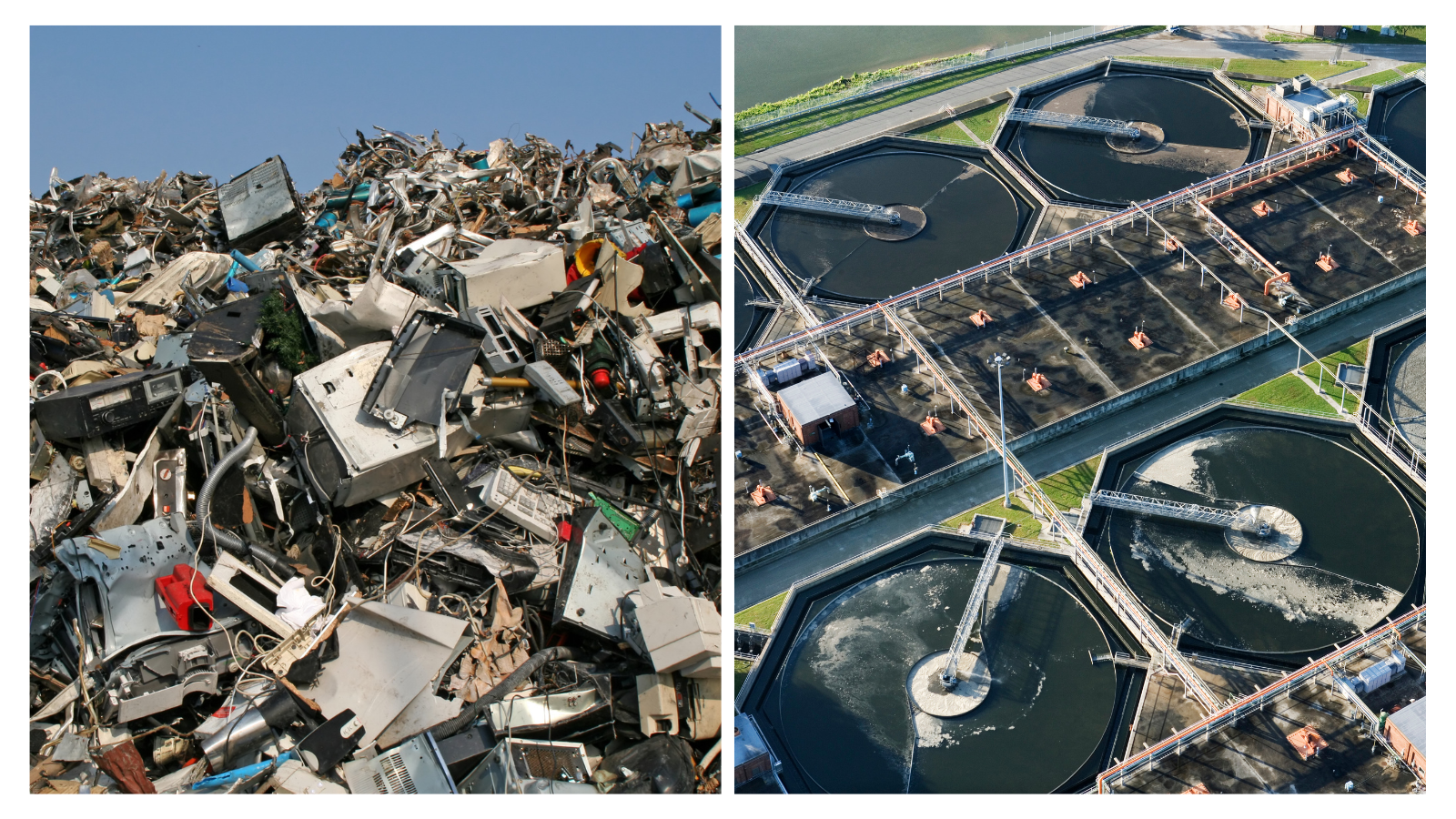
The U.S. Department of Energy’s Alternative Fuels and Feedstocks Office (AFFO), formerly known as the Bioenergy Technologies Office, and the National Laboratory of the Rockies (NLR) are launching the 2026 Waste to Energy and Materials Technical Assistance Program for state, local, and Tribal governments. The scope of this year’s program has been expanded to include additional municipal solid waste materials such as electronics, industrial wastewater, and other byproducts.  U.S. waste streams present significant logistical and economic challenges for states, counties, municipalities, and Tribal governments. However, waste is also a resource that can be used as an unconventional additional source of energy, advanced materials, and critical minerals. This program provides no-cost technical assistance to states, counties, municipalities, and Tribal governments with the most relevant data to guide decision-making—providing local solutions to the various aspects of waste management, taking into consideration current handling practices, costs, and infrastructure. It is designed to help officials evaluate the most sensible end uses for their waste, whether repurposing it for on-site heat and power, upgrading it into transportation fuels, or using it for material and mineral recovery. Program technical assistance includes: Waste resource information Infrastructure considerations Techno-economic comparison of energy, material, and mineral recovery options Evaluation and sharing of case studies (to the extent possible) from similar communities/projects The 2026 Waste to Energy and Materials Technical Assistance application portal is now open and applications will be accepted through May 30, 2026. For information on applicant eligibility and how to apply, please visit NLR’s technical assistance webpage. Timeline for Technical Assistance Opportunity Date Action April 15, 2026 Application Portal Opens May 30, 2026 Application Portal Closes  July – August 2026 Selections Made and Recipients Informed  Learn more about AFFO-supported waste to energy and materials technical assistance. If you have further questions, please see frequently asked questions or contact the Waste to

Read More »

Energy Deputy Secretary Danly Commends FERC Action on Large Load Interconnection Reform

WASHINGTON—U.S. Deputy Secretary of Energy James P. Danly issued the following statement after the Federal Energy Regulatory Commission (FERC or Commission) announced it will take action by June 2026 on the large load interconnection proceeding initiated at the direction of U.S. Secretary of Energy Chris Wright: “FERC’s announcement today demonstrates Chairman Swett’s commitment to implement Secretary Wright’s directive that the Commission ensure the timely and orderly integration of large electric loads that deliver on President Trump’s goal of American energy dominance. “I expect that the Commission will act quickly and decisively to improve interconnection processes, support the co-location of load and generation, and accelerate the addition of new generation to ensure that supply is built alongside demand—delivering affordable, reliable, and secure energy for all Americans. “Having served at FERC as commissioner and chairman, I understand FERC’s role in ensuring the reliability of the nation’s bulk power system, and I commend Chairman Swett for focusing on affordability and reliability.”                                                                                               ###  

Read More »

Petrobras discovers hydrocarbons in Campos basin presalt offshore Brazil

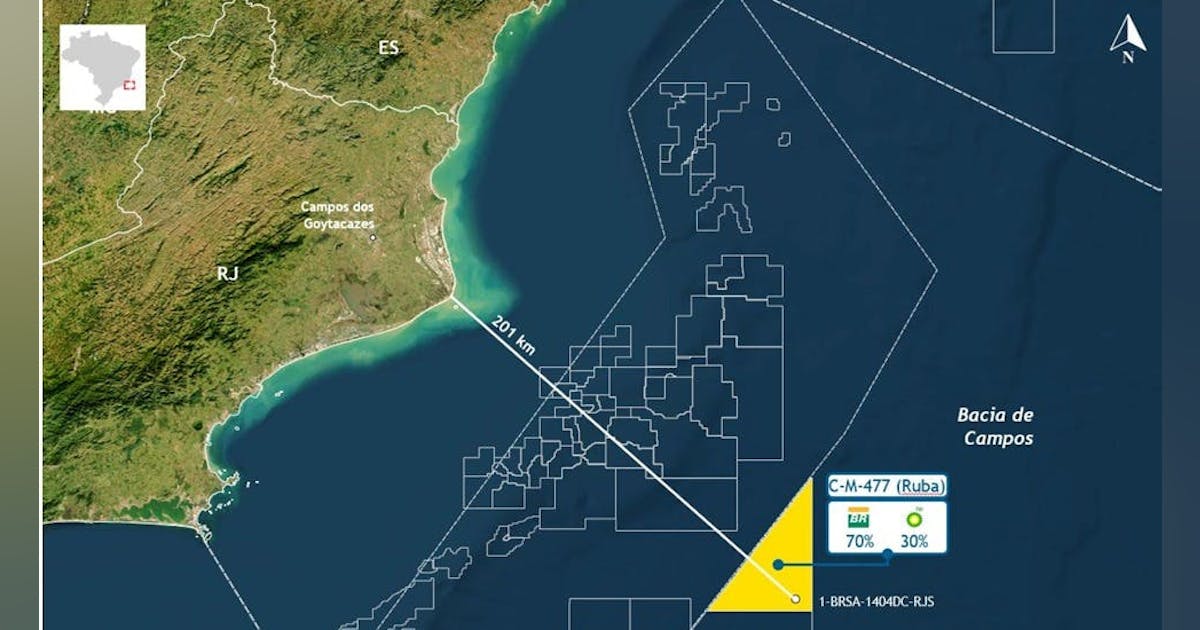
@import url(‘https://fonts.googleapis.com/css2?family=Inter:[email protected]&display=swap’); .ebm-page__main h1, .ebm-page__main h2, .ebm-page__main h3, .ebm-page__main h4, .ebm-page__main h5, .ebm-page__main h6 { font-family: Inter; } body { line-height: 150%; letter-spacing: 0.025em; } button, .ebm-button-wrapper { font-family: Inter; } .label-style { text-transform: uppercase; color: var(–color-grey); font-weight: 600; font-size: 0.75rem; } .caption-style { font-size: 0.75rem; opacity: .6; } #onetrust-pc-sdk [id*=btn-handler], #onetrust-pc-sdk [class*=btn-handler] { background-color: #c19a06 !important; border-color: #c19a06 !important; } #onetrust-policy a, #onetrust-pc-sdk a, #ot-pc-content a { color: #c19a06 !important; } #onetrust-consent-sdk #onetrust-pc-sdk .ot-active-menu { border-color: #c19a06 !important; } #onetrust-consent-sdk #onetrust-accept-btn-handler, #onetrust-banner-sdk #onetrust-reject-all-handler, #onetrust-consent-sdk #onetrust-pc-btn-handler.cookie-setting-link { background-color: #c19a06 !important; border-color: #c19a06 !important; } #onetrust-consent-sdk .onetrust-pc-btn-handler { color: #c19a06 !important; border-color: #c19a06 !important; } Petrobras has discovered presence in the Campos basin presalt offshore Brazil during exploration in sector SC-AP4, block CM-477. Samples taken from the well, 1-BRSA-1404DC-RJS, will be sent for laboratory analysis with the aim of characterizing the conditions of the reservoirs and fluids found to enable continued evaluation of the area’s potential, the company said in a release Apr. 13. The discovery well was drilled 201 km off the coast of the state of Rio de Janeiro in water depth of 2,984 m. The hydrocarbon-bearing interval was confirmed through electrical profiles, gas evidence, and fluid sampling. Petrobras is the operator of block CM-477 with 70% interest. bp plc holds the remaining 30%.

Read More »

bp to operate blocks offshore Namibia through acquisition

@import url(‘https://fonts.googleapis.com/css2?family=Inter:[email protected]&display=swap’); .ebm-page__main h1, .ebm-page__main h2, .ebm-page__main h3, .ebm-page__main h4, .ebm-page__main h5, .ebm-page__main h6 { font-family: Inter; } body { line-height: 150%; letter-spacing: 0.025em; } button, .ebm-button-wrapper { font-family: Inter; } .label-style { text-transform: uppercase; color: var(–color-grey); font-weight: 600; font-size: 0.75rem; } .caption-style { font-size: 0.75rem; opacity: .6; } #onetrust-pc-sdk [id*=btn-handler], #onetrust-pc-sdk [class*=btn-handler] { background-color: #c19a06 !important; border-color: #c19a06 !important; } #onetrust-policy a, #onetrust-pc-sdk a, #ot-pc-content a { color: #c19a06 !important; } #onetrust-consent-sdk #onetrust-pc-sdk .ot-active-menu { border-color: #c19a06 !important; } #onetrust-consent-sdk #onetrust-accept-btn-handler, #onetrust-banner-sdk #onetrust-reject-all-handler, #onetrust-consent-sdk #onetrust-pc-btn-handler.cookie-setting-link { background-color: #c19a06 !important; border-color: #c19a06 !important; } #onetrust-consent-sdk .onetrust-pc-btn-handler { color: #c19a06 !important; border-color: #c19a06 !important; } Map from bp plc <!–> –> bp plc aims to become operator of three exploration blocks offshore Namibia through acquisition of a 60% interest from Eco Atlantic Oil & Gas. Subject to Namibian government and joint venture partner approvals, bp will operate blocks PEL97, PEL99, and PEL100 in Walvis basin.   In a release Apr. 13, bp said entering the blocks builds on its recent exploration successes in Namibia through Azule Energy, a 50-50 joint venture between bp and Eni. Eco Atlantic will remain a partner, along with Namibia’s national oil company NAMCOR, following the deal’s closing, which is subject to closing conditions.

Read More »

ConocoPhillips sends team to Venezuela to evaluate oil, gas opportunities

ConocoPhillips sent a team to Venezuela to evaluate oil and gas opportunities, the company confirmed to Oil & Gas Journal Apr. 13. In an email to OGJ, a company spokesperson said “ConocoPhillips can confirm that we sent a small evaluation team to Venezuela during the week of Apr. 6 to better understand the potential for in-country oil and gas opportunities.” Asked what clarity the company seeks, the spokesperson said the team “will evaluate Venezuela against other international opportunities as part of our disciplined investment framework.” The operator left Venezuela in 2007 after then-President Hugo Chavez’s government reverted privately run oil fields to state control. ConocoPhillips, along with ExxonMobil, refused the government’s terms and took claims to the World Bank’s International Centre for the Settlement of Investment Disputes (ICSID). ConocoPhillips is owed about $12 billion following two judgements, an amount still sought by the company, which, prior to the expropriation of its interests, held a 50.1% interest in Petrozuata, a 40% interest in Hamaca, and a 32.5% interest in Corocoro heavy oil projects in Venezuela. In January, following the removal of Venezuela’s leader Nicolas Maduro, US President Donald Trump urged oil and gas companies to spend billions to rebuild Venezuela’s energy sector. ExxonMobil, which also exited the country in 2007, ​sent a technical team to Venezuela in March to ⁠evaluate the infrastructure and investment opportunities. In a discussion at CERAWeek by S&P Global in Houston in March, ConocoPhillips’ chief executive officer, Ryan Lance, said Venezuela needs to “completely rewire” ​its fiscal system to attract new ‌investment. The South American country holds a large cache of proven oil reserves, but has faced decades of production challenges due to mismanagement, underinvestment, and sanctions.

Read More »

TotalEnergies, TPAO sign MoU to assess exploration opportunities

@import url(‘https://fonts.googleapis.com/css2?family=Inter:[email protected]&display=swap’); .ebm-page__main h1, .ebm-page__main h2, .ebm-page__main h3, .ebm-page__main h4, .ebm-page__main h5, .ebm-page__main h6 { font-family: Inter; } body { line-height: 150%; letter-spacing: 0.025em; } button, .ebm-button-wrapper { font-family: Inter; } .label-style { text-transform: uppercase; color: var(–color-grey); font-weight: 600; font-size: 0.75rem; } .caption-style { font-size: 0.75rem; opacity: .6; } #onetrust-pc-sdk [id*=btn-handler], #onetrust-pc-sdk [class*=btn-handler] { background-color: #c19a06 !important; border-color: #c19a06 !important; } #onetrust-policy a, #onetrust-pc-sdk a, #ot-pc-content a { color: #c19a06 !important; } #onetrust-consent-sdk #onetrust-pc-sdk .ot-active-menu { border-color: #c19a06 !important; } #onetrust-consent-sdk #onetrust-accept-btn-handler, #onetrust-banner-sdk #onetrust-reject-all-handler, #onetrust-consent-sdk #onetrust-pc-btn-handler.cookie-setting-link { background-color: #c19a06 !important; border-color: #c19a06 !important; } #onetrust-consent-sdk .onetrust-pc-btn-handler { color: #c19a06 !important; border-color: #c19a06 !important; } TotalEnergies EP New Ventures SA has signed a memorandum of understanding (MoU) with Türkiye Petrolleri Anonim Ortaklığı (TPAO) for potential collaboration. The MoU provides a framework for technical collaboration, including a joint assessment of hydrocarbon exploration opportunities in the Black Sea region of Türkiye as well as internationally. In February of this year, TPAO signed an MoU with Chevron Business Development EMEA Ltd., a subsidiary of Chevron, providing an opportunity to “identify and evaluate cooperation opportunities that may arise in international projects and in oil exploration and production license areas in onshore and offshore fields in Türkiye.”

Read More »

Blue Owl Builds a Capital Platform for the Hyperscale AI Era

Capital as a Service: The Hyperscaler Shift This is not just another project financing. It points to a model in which hyperscalers can externalize a significant portion of the capital required for AI campuses while retaining operational control. Under the Hyperion structure, Meta provides construction and property management, while Blue Owl supplies capital at scale alongside infrastructure expertise. Reuters described the transaction as Meta’s largest private capital deal to date, with the campus projected to exceed 2 gigawatts of capacity. For Blue Owl, it marks a shift in role: from backing developers serving hyperscalers to working directly with a hyperscaler to structure ownership more efficiently at scale. Hyperion also helps explain why this model is gaining traction. Hyperscalers are now deploying capital at a pace that makes flexibility a strategic priority. Structures like the Meta–Blue Owl JV allow them to continue expanding infrastructure without fully absorbing the balance-sheet impact of each new campus. Analyst commentary cited by Reuters suggested the arrangement could help Meta mitigate risk and avoid concentrating too much capital in land, buildings, and long-lived infrastructure, preserving capacity for additional facilities and ongoing AI investment. That is the service Blue Owl is effectively providing. Not just capital, but balance-sheet flexibility at a time when AI infrastructure demand is stretching even the largest technology companies. With major tech firms projected to spend hundreds of billions annually on AI infrastructure, that capability is becoming central to how the next generation of campuses gets built. The Capital Baseline Resets In early 2026, hyperscalers effectively reset the capital baseline for the sector. Alphabet projected $175 billion to $185 billion in annual capex, citing continued constraints across servers, data centers, and networking. Amazon pointed to roughly $200 billion, up from $131 billion the prior year, while noting persistent demand pressure in AWS. Meta

Read More »

OpenAI pulls out of a second Stargate data center deal

“OpenAI is embattled on several fronts. Anthropic has been doing very well in the enterprise, and OpenAI’s cash burn might be a problem if it wants to go public at an astronomical $800 billion+ valuation. This is especially true with higher energy prices due to geopolitics, and the public and regulators increasingly skeptical of AI companies, especially outside of the United States,” Roberts said. “I see these moves as OpenAI tightening its belt a bit and being more deliberate about spending as it moves past the interesting tech demo stage of its existence and is expected to provide a real return for investors.” He added, “I expect it’s a symptom of a broader problem, which is that OpenAI has thrown some good money after bad in bets that didn’t work out, like the Sora platform it just shut down, and it’s under increasing pressure to translate its first-mover advantage into real upside for its investors. Spending operational money instead of capital money might give it some flexibility in the short term, and perhaps that’s what this is about.” All in all, he noted, “on a scale of business-ending event to nothingburger, I would put it somewhere in the middle, maybe a little closer to nothingburger.” Acceligence CIO Yuri Goryunov agreed with Roberts, and said, “OpenAI has a problem with commercialization and runaway operating costs, for sure. They are trying to rightsize their commitments and make sure that they deliver on their core products before they run out of money.” Goryunov described OpenAI’s arrangement with Microsoft in Norway as “prudent financial engineering” that allows it to access the data center resources without having to tie up too much capital. “It’s financial discipline. OpenAI [executives] are starting to behave like grownups.” Forrester senior analyst Alvin Nguyen echoed those thoughts. 

Read More »

DCF Tours: SDC Manhattan, 375 Pearl St.

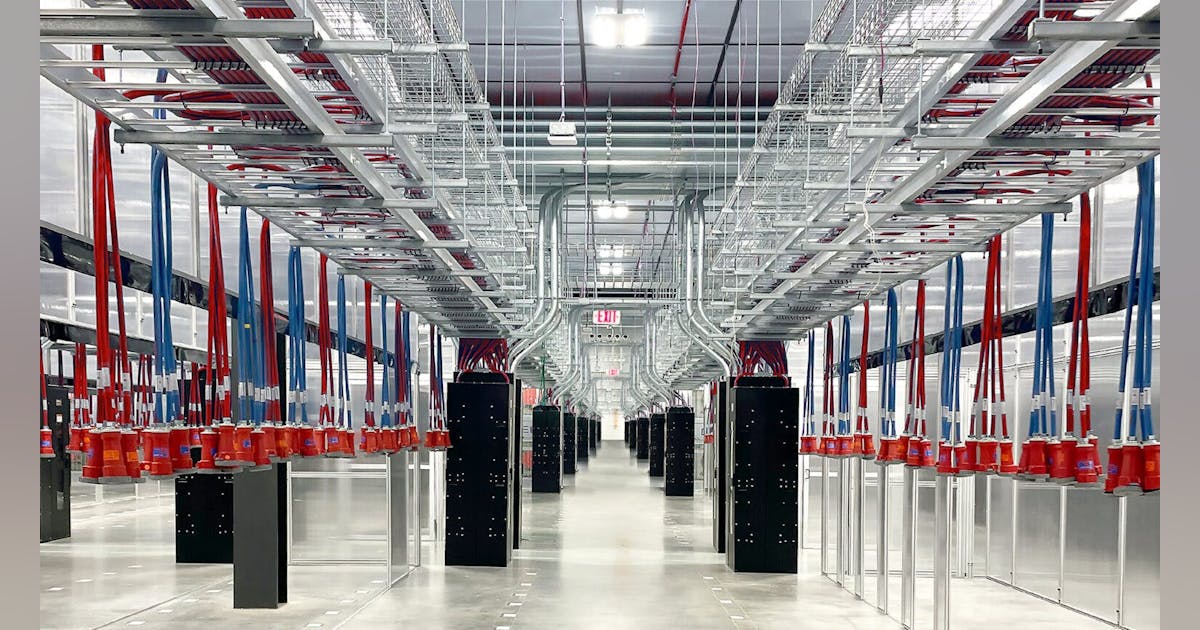
Power: Redundant utility design in a power-constrained market The tour made equally clear that in Manhattan, power is still the central gating factor. The brochure describes SDC Manhattan as offering 18MW of aggregate power delivered to the building, backed by redundant electrical and mechanical systems, backup generators, and Tier III-type concurrent maintainability. The December 2025 press release updated that picture in a more market-facing way, noting that Sabey is one of the only colocation providers in Manhattan with available power, including nearly a megawatt of turnkey power and 7MW of utility power across two powered shell spaces. Bajrushi’s explanation of the electrical topology helped show how Sabey has made that possible. Standing on the third floor, he described a ring bus tying together four Con Edison feeds. Bajrushi said the feeds all originate from the same substation but take different paths into the building, creating redundancy outside the building as well as within it. He added that if one feed fails, the ring bus remains unaffected, and that only one feed is needed to power everything currently in operation. He also noted that Sabey has the ability to add two more feeds in the future if expansion calls for it. That matters in a city where available utility capacity is hard to come by and where many data center conversations end not with square footage but with a megawatt number. Bajrushi also noted that physical space is not the core constraint at 375 Pearl. He said the building still has plenty of room for future buildouts, including open areas that could become additional white space, chiller capacity, or other infrastructure. The bigger question, he suggested, is how and when power and supporting systems get installed. That observation aligns neatly with Sabey’s press release. The company is effectively arguing that SDC

Read More »

Maine to put brakes on big data centers as AI expansion collides with power limits

Mills has pushed for an exemption protecting a proposed $550 million project at the former Androscoggin paper mill in Jay, arguing it would reuse existing infrastructure without straining the grid. Lawmakers rejected that exemption. Mills’ office did not immediately respond to a request for comment. A national wave, an unanswered federal question Maine is one of at least 12 states now weighing moratorium or restraint legislation, alongside more than 300 data center bills filed across 30-plus states in the current session, according to legislative tracking firm MultiState. The shared concern is energy cost. Data centers could consume up to 12% of total US electricity by 2028, according to the US Department of Energy. On March 25, Senator Bernie Sanders and Alexandria Ocasio-Cortez introduced the AI Data Center Moratorium Act in Congress, which would impose a nationwide freeze on all new data center construction until Congress passes AI safety legislation. The Trump administration has pursued a different path from the legislative approach being taken in states. On March 4, Amazon, Google, Meta, Microsoft, OpenAI, Oracle, and xAI signed the White House’s Ratepayer Protection Pledge, a voluntary commitment by hyperscalers to fund their own power generation rather than pass grid costs to ratepayers. The pledge, published in the Federal Register on March 9, carries no penalties for noncompliance or auditing requirements.

Read More »

Cisco just made two moves to own the AI infrastructure stack

In a world of autonomous agents, identity and access become the de facto safety rails. Astrix is designed to inventory these non-human identities, map their permissions, detect toxic combinations, and remediate overprivileged access before it becomes an exploit or a data leak. That capability integrates directly with Cisco’s broader zero-trust and identity-centric security strategy, in which the network enforces policy based on who or what the entity is, not on which subnet it resides in. How this strengthens Cisco’s secure networking story Cisco has positioned itself as the vendor that can deliver “AI-ready, secure networks” spanning campus, data center, cloud, and edge. Galileo and Astrix extend that narrative from infrastructure into AI behavior and identity governance: The network becomes the high‑performance, policy‑enforcing substrate for AI traffic and data. Splunk plus Galileo becomes the observability plane for AI agents, linking AI incidents to network and application signals. Security plus Astrix becomes the identity and permission-control layer that constrains what AI agents can actually do within the environment. This is the core of Cisco’s emerging “Secure AI” posture: not just using AI to improve security but securing AI itself as it is embedded across every workflow, API, and device. For customers, that means AI initiatives can be brought under the same operational and compliance disciplines already used for networks and apps, rather than existing as unmanaged risk islands. Why this matters to Cisco customers Most large Cisco accounts are exactly the enterprises now experimenting with AI agents in contact centers, IT operations, and business workflows. They face three practical problems: They cannot see what agents are doing end‑to‑end, or measure quality beyond offline benchmarks. They lack a coherent model for managing the identities, secrets, and permissions those agents depend on. Their security and networking teams are often disconnected from AI projects happening in lines of business.

Read More »

From Buildings to Token Factories: Compu Dynamics CEO Steve Altizer On Why AI Is Rewriting the Data Center Design Playbook

Not Falling Short—Just Not Optimized Altizer drew a clear distinction. Traditional data centers can run AI workloads, but they weren’t built for them. “We’re not falling short much, we’re just not optimizing.” The gap shows up most clearly in density. Legacy facilities were designed for roughly 300 to 400 watts per square foot. AI pushes that to 2,000 to 4,000 watts per square foot—changing not just rack design, but the logic of the entire facility. For Altizer, AI-ready infrastructure starts with fundamentals: access to water for heat rejection, significantly higher power density, and in some cases specific redundancy topologies favored by chip makers. It also requires liquid cooling loops extended to the rack and, critically, flexibility in the white space. That last point is the hardest to reconcile with traditional design. “The GPUs change… your power requirements change… your liquid cooling requirements change. The data center needs to change with it.” Buildings are static. AI is not. Rethinking Modular: From Containers to Systems “Modular” has been part of the data center vocabulary for years, but Altizer argues most of the industry is still thinking about it the wrong way. The old model centered on ISO containers. The emerging model focuses on modularizing the white space itself. “We’re not building buildings—we’re building assemblies of equipment.” Compu Dynamics is pushing toward factory-built IT modules that can be delivered and assembled on-site. A standard 5 MW block consists of 10 modules, stacked into a two-story configuration and designed for transport by trailer across the U.S. From there, scale becomes repeatable. Blocks can be placed adjacent or connected to create larger deployments, moving from 5 MW to 10 MW and beyond. The point is not just scalability; it’s repeatability and speed. Altizer ties this directly to a broader shift in how data centers are

Read More »

Microsoft will invest $80B in AI data centers in fiscal 2025

And Microsoft isn’t the only one that is ramping up its investments into AI-enabled data centers. Rival cloud service providers are all investing in either upgrading or opening new data centers to capture a larger chunk of business from developers and users of large language models (LLMs).  In a report published in October 2024, Bloomberg Intelligence estimated that demand for generative AI would push Microsoft, AWS, Google, Oracle, Meta, and Apple would between them devote $200 billion to capex in 2025, up from $110 billion in 2023. Microsoft is one of the biggest spenders, followed closely by Google and AWS, Bloomberg Intelligence said. Its estimate of Microsoft’s capital spending on AI, at $62.4 billion for calendar 2025, is lower than Smith’s claim that the company will invest $80 billion in the fiscal year to June 30, 2025. Both figures, though, are way higher than Microsoft’s 2020 capital expenditure of “just” $17.6 billion. The majority of the increased spending is tied to cloud services and the expansion of AI infrastructure needed to provide compute capacity for OpenAI workloads. Separately, last October Amazon CEO Andy Jassy said his company planned total capex spend of $75 billion in 2024 and even more in 2025, with much of it going to AWS, its cloud computing division.

Read More »

John Deere unveils more autonomous farm machines to address skill labor shortage

Join our daily and weekly newsletters for the latest updates and exclusive content on industry-leading AI coverage. Learn More Self-driving tractors might be the path to self-driving cars. John Deere has revealed a new line of autonomous machines and tech across agriculture, construction and commercial landscaping. The Moline, Illinois-based John Deere has been in business for 187 years, yet it’s been a regular as a non-tech company showing off technology at the big tech trade show in Las Vegas and is back at CES 2025 with more autonomous tractors and other vehicles. This is not something we usually cover, but John Deere has a lot of data that is interesting in the big picture of tech. The message from the company is that there aren’t enough skilled farm laborers to do the work that its customers need. It’s been a challenge for most of the last two decades, said Jahmy Hindman, CTO at John Deere, in a briefing. Much of the tech will come this fall and after that. He noted that the average farmer in the U.S. is over 58 and works 12 to 18 hours a day to grow food for us. And he said the American Farm Bureau Federation estimates there are roughly 2.4 million farm jobs that need to be filled annually; and the agricultural work force continues to shrink. (This is my hint to the anti-immigration crowd). John Deere’s autonomous 9RX Tractor. Farmers can oversee it using an app. While each of these industries experiences their own set of challenges, a commonality across all is skilled labor availability. In construction, about 80% percent of contractors struggle to find skilled labor. And in commercial landscaping, 86% of landscaping business owners can’t find labor to fill open positions, he said. “They have to figure out how to do

Read More »

2025 playbook for enterprise AI success, from agents to evals

Join our daily and weekly newsletters for the latest updates and exclusive content on industry-leading AI coverage. Learn More 2025 is poised to be a pivotal year for enterprise AI. The past year has seen rapid innovation, and this year will see the same. This has made it more critical than ever to revisit your AI strategy to stay competitive and create value for your customers. From scaling AI agents to optimizing costs, here are the five critical areas enterprises should prioritize for their AI strategy this year. 1. Agents: the next generation of automation AI agents are no longer theoretical. In 2025, they’re indispensable tools for enterprises looking to streamline operations and enhance customer interactions. Unlike traditional software, agents powered by large language models (LLMs) can make nuanced decisions, navigate complex multi-step tasks, and integrate seamlessly with tools and APIs. At the start of 2024, agents were not ready for prime time, making frustrating mistakes like hallucinating URLs. They started getting better as frontier large language models themselves improved. “Let me put it this way,” said Sam Witteveen, cofounder of Red Dragon, a company that develops agents for companies, and that recently reviewed the 48 agents it built last year. “Interestingly, the ones that we built at the start of the year, a lot of those worked way better at the end of the year just because the models got better.” Witteveen shared this in the video podcast we filmed to discuss these five big trends in detail. Models are getting better and hallucinating less, and they’re also being trained to do agentic tasks. Another feature that the model providers are researching is a way to use the LLM as a judge, and as models get cheaper (something we’ll cover below), companies can use three or more models to

Read More »

OpenAI’s red teaming innovations define new essentials for security leaders in the AI era

Join our daily and weekly newsletters for the latest updates and exclusive content on industry-leading AI coverage. Learn More OpenAI has taken a more aggressive approach to red teaming than its AI competitors, demonstrating its security teams’ advanced capabilities in two areas: multi-step reinforcement and external red teaming. OpenAI recently released two papers that set a new competitive standard for improving the quality, reliability and safety of AI models in these two techniques and more. The first paper, “OpenAI’s Approach to External Red Teaming for AI Models and Systems,” reports that specialized teams outside the company have proven effective in uncovering vulnerabilities that might otherwise have made it into a released model because in-house testing techniques may have missed them. In the second paper, “Diverse and Effective Red Teaming with Auto-Generated Rewards and Multi-Step Reinforcement Learning,” OpenAI introduces an automated framework that relies on iterative reinforcement learning to generate a broad spectrum of novel, wide-ranging attacks. Going all-in on red teaming pays practical, competitive dividends It’s encouraging to see competitive intensity in red teaming growing among AI companies. When Anthropic released its AI red team guidelines in June of last year, it joined AI providers including Google, Microsoft, Nvidia, OpenAI, and even the U.S.’s National Institute of Standards and Technology (NIST), which all had released red teaming frameworks. Investing heavily in red teaming yields tangible benefits for security leaders in any organization. OpenAI’s paper on external red teaming provides a detailed analysis of how the company strives to create specialized external teams that include cybersecurity and subject matter experts. The goal is to see if knowledgeable external teams can defeat models’ security perimeters and find gaps in their security, biases and controls that prompt-based testing couldn’t find. What makes OpenAI’s recent papers noteworthy is how well they define using human-in-the-middle

Read More »