Stay Ahead, Stay ONMINE

Community service

The bird is a beautiful silver-gray, and as she dies twitching in the lasernet I’m grateful for two things: First, that she didn’t make a sound. Second, that this will be the very last time.  They’re called corpse doves—because the darkest part of their gray plumage surrounds the lighter part, giving the impression that skeleton faces are peeking out from behind trash cans and bushes—and their crime is having the ability to carry diseases that would be compatible with humans. I open my hand, triggering the display from my imprinted handheld, and record an image to verify the elimination. A ding from my palm lets me know I’ve reached my quota for the day and, with that, the year. I’m tempted to give this one a send-off, a real burial with holy words and some flowers, but then I hear a pack of streetrats hooting beside me. My city-issued vest is reflective and nanopainted so it projects a slight glow. I don’t know if it’s to keep us safe like they say, or if it’s just that so many of us are ex-cons working court-ordered labor, and civilians want to be able to keep an eye on us. Either way, everyone treats us like we’re invisible—everyone except children. I switch the lasernet on the bird from electrocute to incinerate and watch as what already looked like a corpse becomes ashes. “Hey, executioner!” says a girl. “Executioner” is not my official title. The branch of city government we work for is called the Department of Mercy, and we’re only ever called technicians. But that doesn’t matter to the child, who can’t be more than eight but has the authority of a judge as she holds up a finger to point me out to her friends. HENRY HORENSTEIN “Guys, look!” she says, then turns her attention to me. “You hunting something big?” I shake my head, slowly packing up my things. “Something small?” she asks. Then her eyes darken. “You’re not a cat killer, are you?” “No,” I say quickly. “I do horseflies.” I don’t know why I lied, but as the suspicion leaves her face and a smile returns, I’m glad I did. “You should come down by the docks. We’ve got flies! Make your quota in a day.” The girl tosses her hair, making the tinfoil charms she’s wrapped around her braids tinkle like wind chimes.  “It’s my last day. But if I get flies again for next year, I’ll swing by.” Another lie, because we both know the city would never send anyone to the docks for flies. Flies are killed because they are a nuisance, which means people only care about clearing them out of suburbs and financial districts. They’d only send a tech down to the docks to kill something that put the city proper at risk through disease, or by using up more resources than they wanted to spare. LeeLee is expecting me home to sit through the reassignments with her and it’s already late, so I hand out a couple of the combination warming and light sticks I get for winter to the pack of children with nowhere to go. As I walk away, the children are laughing so loud it sounds like screaming. They toss the sticks in the air like signal flares, small bright cries for help that no one will see. LeeLee’s anxiety takes the form of caretaking, and as soon as I’ve stepped through the door I can smell bread warming and soup on the stove. I take off my muffling boots. Another day, I’d leave them on and sneak up on her just to be irritating, and she’d turn and threaten me with whatever kitchen utensil was at hand. But she’ll be extra nervous today, so I remove the shoes that let me catch nervous birds, and step hard on my way in. Sometimes it seems impossible that I can spend a year killing every fragile and defenseless thing I’ve encountered but still take such care with Lee. But I tell myself that the killing isn’t me—it’s just my sentence, and what I do when I have a choice is the only thing that really says anything about me. For the first six months and 400 birds, I believed it. LeeLee flicks on a smile that lasts a whole three seconds when she sees me, then clouds over again. “Soup’s too thin. There wasn’t enough powder for a real broth.” “I like thin soup,” I say. “Not like this. It doesn’t even cover up the taste of the water.” “I like the taste of the water,” I say, which breaks her out of her spiraling enough to roll her eyes. I put my hands on her shoulder to stop her fussing.  “The soup is going to be fine,” I say. “So will the reassignment.” I’m not much taller than she is, but when we met in juvie she hadn’t hit her last growth spurt yet, so she still tilts her head back to look me in the eyes. “What if it’s not?” “It will—” “What if you get whatever assignment Jordan got?” There it is. Because two of us didn’t leave juvie together to start community service—three of us did. But Jordan didn’t last three weeks into his assignment before he turned his implements inward. I notice she doesn’t say What if  I get what Jordan got? Because LeeLee is more afraid of being left alone than of having to kill something innocent. “We don’t know what his assignment was,” I say. It’s true, but we do know it was bad. Two weeks into our first stretch, a drug meant to sterilize the city’s feral cat population accidentally had the opposite effect. Everyone was pulled off their assigned duty for three days to murder litters of new kittens instead. It nearly broke me and Lee, but Jordan seemed almost grateful. “Besides, we don’t know if his assignment had anything to do with … what he did. You’re borrowing trouble. Worry in”—I check my palm—“an hour, when you actually know there’s something to worry about.” You’d think it would hover over us too insistently to be ignored, but after we sit down and talk about our day I’m at ease, basking in the warmth of her storytelling and the bread that’s more beige than gray today. When the notification comes in, I am well and truly happy, and I can only hope it isn’t for the last time. We both stiffen when we hear the alert. She looks at me, and I give her a smile and a nod, and then we look down. In the time between hearing the notification and checking it, I imagine all kinds of horrors that could be in my assignment slot. I imagine a picture of kittens, reason enough for the girl I met earlier to condemn me. For a moment, just a flash, I imagine looking down and seeing my own face as my target, or LeeLee’s. But when I finally see the file, the relief that comes over me softens my spine. It’s a plant. Faceless, and bloodless.  I look up, and LeeLee’s eyes are dark as she leans forward, studying my face, looking for whatever crack she failed to see in Jordan. I force myself to smile wide for her. “It’s a plant. I got a plant, Lee.” She reaches forward and squeezes my hands. Hers are shaking. “What did you get?” I ask. She waves away my question. “I got rats. I can handle it. I was just worried about you.” I spend the rest of the night unbelievably happy. For the next year, I get to kill a thing that does not scream. “You get all that?” the man behind the desk asks, and I nod even though I didn’t. I’ve traded in my boots and lasernet for a hazmat suit and a handheld mister with two different solutions. The man had been talking to me about how to use the solutions, but I can’t process verbal information very well. The whole reason I was sent to the correctional facility as a teen was that too many teachers mistook my processing delays for behavioral infractions. I’m planning to read the manual on my own time before I start in a few hours, but when I pick up the mister and look down the barrel, the equipment guy freaks out. “They were supposed to add sulfur to this batch, but they didn’t. So you won’t smell it. It won’t make you cough or your eyes water. It’ll just be lights out. Good night. You got me?” “Did you not hear me? Don’t even look at that thing without your mask on.” He takes a breath, calmer now that I’ve lowered my hands. “Look, the first solution—it’s fine. It’s keyed to the plant itself and just opens its cells up for whatever solution we put on it. You could drink the stuff. But that second? The orange vial? Don’t even put it in the mister without your mask on. It dissipates quickly, so you’re good once you’re done spraying, but not a second before.” He looks around, then leans in. “They were supposed to add sulfur to this batch, but they didn’t. So you won’t smell it. It won’t make you cough or your eyes water. It’ll just be lights out. Good night. You got me?” I nod again as I grab the mask I hadn’t noticed before. This time when I thank him, I mean it. It takes me an hour to find the first plant, and when I do it’s beautiful. Lush pink on the inside and dark green on the outside, it looks hearty and primitive. Almost Jurassic. I can see why it’s only in the sewers now: it would be too easy to spot and destroy aboveground in the sea of concrete. After putting on my mask, I activate the mister and then stand back as it sprays the plant with poison. Nothing happens. I remember the prepping solution and switch the cartridges to coat it in that first. The next time I try the poison, the plant wilts instantly, browning and shrinking like a tire deflating. I was wrong. Plants this size don’t die silently. It makes a wheezing sound, a deep sigh. By the third time I’ve heard it, I swear I can make out the word Please. HENRY HORENSTEIN When I get home, LeeLee’s locked herself in the bathroom, which doesn’t surprise me. I heard that they moved to acid for rats, and the smell of a corpse dissolving is impossible to get used to and even harder to get out of your hair. I eat dinner, read, change for bed, and she’s still in the bathroom. I brush my teeth in the kitchen. The next morning, I have to take a transport to the plant’s habitat on the other end of the city, so I spend the time looking through the file that came with the assignment. Under “Characteristics,” some city government scientist has written, “Large, dark. Resource-intensive. Stubborn.” I stare at the last word. Its own sentence, tacked on like an afterthought. Stubborn. The same word that was written in my file when I got sent from school to the facility where I met LeeLee and Jordan. Large, dark, stubborn, and condemned. I’ve never been called resource-intensive. But I have been called a waste. And maybe that’s why I do it. When I get to my last plant of the day, I don’t reach for the mister. This one is small, young, the green still neon-bright and the teeth at the edges still soft. I pick it up, careful with its roots, and carry it home. I find a discarded water container along the way and place it inside. When I get home I knock on LeeLee’s door. She doesn’t answer, so I leave the plant on the floor as an offering. They aren’t proper flowers, but they smell nice and earthy. It might keep the residual odor from melted organs, fur, and bones from taking over her room. “Killing things is a dumb job,” says the girl. After a week of hearing the death cries of its cousins, I was moved to use some of my allowance to buy cheap fertilizer and growth serum for my plant. The girl and her friends, fewer than before, were panhandling at the megastore across the way. She ran over, braids jingling, as soon as she saw me. I thought she’d leave once I gave her more glowsticks for her friends, but she stayed in step and kept following me. “It’s not a dumb job,” I say, even though it is.  “What’s the point?” I shift my bag to point at the bottom of my vest. Beneath “Mercy Dept.” the department’s slogan is written in cursive: Killing to Save!  “See?” She sees the text but doesn’t register it, and I have to remind myself that even getting kicked out of school is a privilege. The city had decided to stop wasting educational resources on me. They’d never even tried with her or the other streetrats. “It just means we kill to help.” “That doesn’t make sense.” Suddenly, all I can think about is Jordan. “Maybe they don’t mind.” “What?” I think of the plants. Maybe they hadn’t been pleading. Maybe they’d been sighing with relief. I think of the birds that eventually stopped running away. “Maybe they’re tired. The city’s right, and their existence isn’t compatible with the world we made. And that’s our fault for being stupid and cruel, but it makes their lives so hard. We’ve made it so they can only live half a life. Maybe the least we can do is finish the job.” It’s a terrible thing to say—even worse to a kid. Her eyes go hard. “What are you killing now, executioner?” The question surprises me. “Sewer plants. Why?” “I don’t believe you.” I’d wanted her to leave me alone, but when she runs away I feel suddenly empty. I have an issue at work when I can’t find my poison vial. I tell them it rolled away in the sewer and I couldn’t catch it in time, because I don’t want to tell them I was unobservant enough to let a street kid steal from me. After a stern warning and a mountain of forms, they issue a new vial and don’t add to my service time. Pulling overtime to make up for the day I didn’t have my poison means it’s days before I get to fertilize my houseplant. LeeLee’s door is open, so I bring in the fertilizer and serum. She’s put the plant on her windowsill, but it prefers indirect sunlight, so I move it to the shelf next to her boxes of knickknacks and trinkets. I add the fertilizer to its soil and am about to spray it with the growth serum when I get an idea. I get the mister from my kit and set it up to spray the prepping solution on the little plant to prime it. I open the window and put on my mask, just in case, but I’m sure the man was telling the truth when he called the first liquid harmless. After its cells are open, I spray it with my store-bought growth serum. I’m halfway through making dinner when I hear the crash and run into LeeLee’s room. “Shit!” The plant has grown huge, turning adult instantly, and its new weight has taken down LeeLee’s shelf. Dainty keepsake boxes are shattered on our concrete floor. I bend to my knees quickly, so focused on fixing my mistake that I don’t register the oddness of the items I’m picking up—jacks, kids’ toys, a bow—until my fingers touch something small and shimmering. It’s a scrap of silver, still rounded in the shape of the braids it was taken from. I got rats. I can handle it. I’d forgotten the city has more than one kind. I’m waiting up when Lee gets home. I don’t make her tell me. I just grab her kit and rummage through it. Where my kit has a hazmat suit, hers has a stealth mesh to render her invisible. Where I keep my mister, she has a gun loaded with vials too large for rats. I have a mini-vac to suck up excess plant matter to prevent seeds from sprouting. She has zip ties. By the time I’m done, she’s already cracking under the weight of everything she tried to protect me from. Within moments she’s sobbing on the floor. I carry her to her bed and get in beside her. I try not to listen too closely as she recounts every horrible moment, but I’m listening at the end, when she tells me she can’t do it anymore. When she confesses that she’s the one who stole my poison, and has only been waiting to take it because she didn’t have the stomach to do to me what Jordan did to us. I tell her how we’ll make playgrounds of dead data centers and use hoses to fill the holes where skyscrapers were, and kids will play Marco Polo swimming over a CEO’s sunken office. I leave her for just a moment, but by the time I lie back in bed beside her I’ve figured it out. I tell her that she won’t have to take her shift tomorrow. I tell her I’m going to go around the city with my mister and my growth serum. That I’ll move plants from sewers to the yards around City Hall and every public space and the support pylons of important people’s companies, and then spray them so they become huge. The city will freak. I tell her it will be like the kittens, but this time we’ll all be pulled off our assignments to kill plants. And maybe the serum will work too well. Maybe the city was right to fear these plants, and they will grow and grow and eat our concrete while the roots crack our foundations and cut our electricity and everything will crumble. And the people with something to lose might suffer, but the rest of us will just laugh at the perfection of rubble. I tell her how we’ll make playgrounds of dead data centers and use hoses to fill the holes where skyscrapers were, and kids will play Marco Polo swimming over a CEO’s sunken office.  She asks if I’ll put any at our old detention center. I tell her, Hundreds. I talk long enough that her eyes close, and loud enough that neither of us can hear the sound of my mister blowing. The man who gave it to me was right. Even without the mask, it doesn’t smell like sulfur. It doesn’t smell like anything.  Micaiah Johnson’s debut novel, The Space Between Worlds, a Sunday Times bestseller and New York Times Editors’ Choice pick, was named one of the best books of 2020 and one of the best science fiction books of the last decade by NPR. Her first horror novel, The Unhaunting, is due out in fall 2026.

The bird is a beautiful silver-gray, and as she dies twitching in the lasernet I’m grateful for two things: First, that she didn’t make a sound. Second, that this will be the very last time. 

They’re called corpse doves—because the darkest part of their gray plumage surrounds the lighter part, giving the impression that skeleton faces are peeking out from behind trash cans and bushes—and their crime is having the ability to carry diseases that would be compatible with humans. I open my hand, triggering the display from my imprinted handheld, and record an image to verify the elimination. A ding from my palm lets me know I’ve reached my quota for the day and, with that, the year.

I’m tempted to give this one a send-off, a real burial with holy words and some flowers, but then I hear a pack of streetrats hooting beside me. My city-issued vest is reflective and nanopainted so it projects a slight glow. I don’t know if it’s to keep us safe like they say, or if it’s just that so many of us are ex-cons working court-ordered labor, and civilians want to be able to keep an eye on us. Either way, everyone treats us like we’re invisible—everyone except children.

I switch the lasernet on the bird from electrocute to incinerate and watch as what already looked like a corpse becomes ashes.

“Hey, executioner!” says a girl.

“Executioner” is not my official title. The branch of city government we work for is called the Department of Mercy, and we’re only ever called technicians. But that doesn’t matter to the child, who can’t be more than eight but has the authority of a judge as she holds up a finger to point me out to her friends.

bird talon

HENRY HORENSTEIN

“Guys, look!” she says, then turns her attention to me. “You hunting something big?”

I shake my head, slowly packing up my things.

“Something small?” she asks. Then her eyes darken. “You’re not a cat killer, are you?”

“No,” I say quickly. “I do horseflies.”

I don’t know why I lied, but as the suspicion leaves her face and a smile returns, I’m glad I did.

“You should come down by the docks. We’ve got flies! Make your quota in a day.”

The girl tosses her hair, making the tinfoil charms she’s wrapped around her braids tinkle like wind chimes. 

“It’s my last day. But if I get flies again for next year, I’ll swing by.”

Another lie, because we both know the city would never send anyone to the docks for flies. Flies are killed because they are a nuisance, which means people only care about clearing them out of suburbs and financial districts. They’d only send a tech down to the docks to kill something that put the city proper at risk through disease, or by using up more resources than they wanted to spare.

LeeLee is expecting me home to sit through the reassignments with her and it’s already late, so I hand out a couple of the combination warming and light sticks I get for winter to the pack of children with nowhere to go. As I walk away, the children are laughing so loud it sounds like screaming. They toss the sticks in the air like signal flares, small bright cries for help that no one will see.


LeeLee’s anxiety takes the form of caretaking, and as soon as I’ve stepped through the door I can smell bread warming and soup on the stove. I take off my muffling boots. Another day, I’d leave them on and sneak up on her just to be irritating, and she’d turn and threaten me with whatever kitchen utensil was at hand. But she’ll be extra nervous today, so I remove the shoes that let me catch nervous birds, and step hard on my way in.

Sometimes it seems impossible that I can spend a year killing every fragile and defenseless thing I’ve encountered but still take such care with Lee. But I tell myself that the killing isn’t me—it’s just my sentence, and what I do when I have a choice is the only thing that really says anything about me. For the first six months and 400 birds, I believed it.

LeeLee flicks on a smile that lasts a whole three seconds when she sees me, then clouds over again.

“Soup’s too thin. There wasn’t enough powder for a real broth.”

“I like thin soup,” I say.

“Not like this. It doesn’t even cover up the taste of the water.”

“I like the taste of the water,” I say, which breaks her out of her spiraling enough to roll her eyes.

I put my hands on her shoulder to stop her fussing. 

“The soup is going to be fine,” I say. “So will the reassignment.”

I’m not much taller than she is, but when we met in juvie she hadn’t hit her last growth spurt yet, so she still tilts her head back to look me in the eyes. “What if it’s not?”

“It will—”

“What if you get whatever assignment Jordan got?”

There it is. Because two of us didn’t leave juvie together to start community service—three of us did. But Jordan didn’t last three weeks into his assignment before he turned his implements inward.

I notice she doesn’t say What if  I get what Jordan got? Because LeeLee is more afraid of being left alone than of having to kill something innocent.

“We don’t know what his assignment was,” I say.

It’s true, but we do know it was bad. Two weeks into our first stretch, a drug meant to sterilize the city’s feral cat population accidentally had the opposite effect. Everyone was pulled off their assigned duty for three days to murder litters of new kittens instead. It nearly broke me and Lee, but Jordan seemed almost grateful.

“Besides, we don’t know if his assignment had anything to do with … what he did. You’re borrowing trouble. Worry in”—I check my palm—“an hour, when you actually know there’s something to worry about.”

You’d think it would hover over us too insistently to be ignored, but after we sit down and talk about our day I’m at ease, basking in the warmth of her storytelling and the bread that’s more beige than gray today. When the notification comes in, I am well and truly happy, and I can only hope it isn’t for the last time.

We both stiffen when we hear the alert. She looks at me, and I give her a smile and a nod, and then we look down. In the time between hearing the notification and checking it, I imagine all kinds of horrors that could be in my assignment slot. I imagine a picture of kittens, reason enough for the girl I met earlier to condemn me. For a moment, just a flash, I imagine looking down and seeing my own face as my target, or LeeLee’s.

But when I finally see the file, the relief that comes over me softens my spine. It’s a plant. Faceless, and bloodless. 

I look up, and LeeLee’s eyes are dark as she leans forward, studying my face, looking for whatever crack she failed to see in Jordan. I force myself to smile wide for her.

“It’s a plant. I got a plant, Lee.”

She reaches forward and squeezes my hands. Hers are shaking.

“What did you get?” I ask.

She waves away my question. “I got rats. I can handle it. I was just worried about you.”

I spend the rest of the night unbelievably happy. For the next year, I get to kill a thing that does not scream.


“You get all that?” the man behind the desk asks, and I nod even though I didn’t.

I’ve traded in my boots and lasernet for a hazmat suit and a handheld mister with two different solutions. The man had been talking to me about how to use the solutions, but I can’t process verbal information very well. The whole reason I was sent to the correctional facility as a teen was that too many teachers mistook my processing delays for behavioral infractions. I’m planning to read the manual on my own time before I start in a few hours, but when I pick up the mister and look down the barrel, the equipment guy freaks out.

“They were supposed to add sulfur to this batch, but they didn’t. So you won’t smell it. It won’t make you cough or your eyes water. It’ll just be lights out. Good night. You got me?”

“Did you not hear me? Don’t even look at that thing without your mask on.” He takes a breath, calmer now that I’ve lowered my hands. “Look, the first solution—it’s fine. It’s keyed to the plant itself and just opens its cells up for whatever solution we put on it. You could drink the stuff. But that second? The orange vial? Don’t even put it in the mister without your mask on. It dissipates quickly, so you’re good once you’re done spraying, but not a second before.”

He looks around, then leans in. “They were supposed to add sulfur to this batch, but they didn’t. So you won’t smell it. It won’t make you cough or your eyes water. It’ll just be lights out. Good night. You got me?”

I nod again as I grab the mask I hadn’t noticed before. This time when I thank him, I mean it.


It takes me an hour to find the first plant, and when I do it’s beautiful. Lush pink on the inside and dark green on the outside, it looks hearty and primitive. Almost Jurassic. I can see why it’s only in the sewers now: it would be too easy to spot and destroy aboveground in the sea of concrete.

After putting on my mask, I activate the mister and then stand back as it sprays the plant with poison. Nothing happens. I remember the prepping solution and switch the cartridges to coat it in that first. The next time I try the poison, the plant wilts instantly, browning and shrinking like a tire deflating. I was wrong. Plants this size don’t die silently. It makes a wheezing sound, a deep sigh. By the third time I’ve heard it, I swear I can make out the word Please.

sprout

HENRY HORENSTEIN

When I get home, LeeLee’s locked herself in the bathroom, which doesn’t surprise me. I heard that they moved to acid for rats, and the smell of a corpse dissolving is impossible to get used to and even harder to get out of your hair. I eat dinner, read, change for bed, and she’s still in the bathroom. I brush my teeth in the kitchen.


The next morning, I have to take a transport to the plant’s habitat on the other end of the city, so I spend the time looking through the file that came with the assignment. Under “Characteristics,” some city government scientist has written, “Large, dark. Resource-intensive. Stubborn.”

I stare at the last word. Its own sentence, tacked on like an afterthought. Stubborn. The same word that was written in my file when I got sent from school to the facility where I met LeeLee and Jordan. Large, dark, stubborn, and condemned. I’ve never been called resource-intensive. But I have been called a waste.

And maybe that’s why I do it.

When I get to my last plant of the day, I don’t reach for the mister. This one is small, young, the green still neon-bright and the teeth at the edges still soft. I pick it up, careful with its roots, and carry it home. I find a discarded water container along the way and place it inside. When I get home I knock on LeeLee’s door. She doesn’t answer, so I leave the plant on the floor as an offering. They aren’t proper flowers, but they smell nice and earthy. It might keep the residual odor from melted organs, fur, and bones from taking over her room.


“Killing things is a dumb job,” says the girl.

After a week of hearing the death cries of its cousins, I was moved to use some of my allowance to buy cheap fertilizer and growth serum for my plant. The girl and her friends, fewer than before, were panhandling at the megastore across the way. She ran over, braids jingling, as soon as she saw me. I thought she’d leave once I gave her more glowsticks for her friends, but she stayed in step and kept following me.

“It’s not a dumb job,” I say, even though it is. 

“What’s the point?”

I shift my bag to point at the bottom of my vest. Beneath “Mercy Dept.” the department’s slogan is written in cursive: Killing to Save! 

“See?”

She sees the text but doesn’t register it, and I have to remind myself that even getting kicked out of school is a privilege. The city had decided to stop wasting educational resources on me. They’d never even tried with her or the other streetrats.

“It just means we kill to help.”

“That doesn’t make sense.”

Suddenly, all I can think about is Jordan. “Maybe they don’t mind.”

“What?”

I think of the plants. Maybe they hadn’t been pleading. Maybe they’d been sighing with relief. I think of the birds that eventually stopped running away.

“Maybe they’re tired. The city’s right, and their existence isn’t compatible with the world we made. And that’s our fault for being stupid and cruel, but it makes their lives so hard. We’ve made it so they can only live half a life. Maybe the least we can do is finish the job.”

It’s a terrible thing to say—even worse to a kid.

Her eyes go hard. “What are you killing now, executioner?”

The question surprises me. “Sewer plants. Why?”

“I don’t believe you.”

I’d wanted her to leave me alone, but when she runs away I feel suddenly empty.


I have an issue at work when I can’t find my poison vial. I tell them it rolled away in the sewer and I couldn’t catch it in time, because I don’t want to tell them I was unobservant enough to let a street kid steal from me. After a stern warning and a mountain of forms, they issue a new vial and don’t add to my service time.

Pulling overtime to make up for the day I didn’t have my poison means it’s days before I get to fertilize my houseplant. LeeLee’s door is open, so I bring in the fertilizer and serum. She’s put the plant on her windowsill, but it prefers indirect sunlight, so I move it to the shelf next to her boxes of knickknacks and trinkets. I add the fertilizer to its soil and am about to spray it with the growth serum when I get an idea. I get the mister from my kit and set it up to spray the prepping solution on the little plant to prime it. I open the window and put on my mask, just in case, but I’m sure the man was telling the truth when he called the first liquid harmless. After its cells are open, I spray it with my store-bought growth serum.

I’m halfway through making dinner when I hear the crash and run into LeeLee’s room.

“Shit!”

The plant has grown huge, turning adult instantly, and its new weight has taken down LeeLee’s shelf. Dainty keepsake boxes are shattered on our concrete floor.

I bend to my knees quickly, so focused on fixing my mistake that I don’t register the oddness of the items I’m picking up—jacks, kids’ toys, a bow—until my fingers touch something small and shimmering. It’s a scrap of silver, still rounded in the shape of the braids it was taken from.

I got rats. I can handle it.

I’d forgotten the city has more than one kind.


I’m waiting up when Lee gets home. I don’t make her tell me. I just grab her kit and rummage through it. Where my kit has a hazmat suit, hers has a stealth mesh to render her invisible. Where I keep my mister, she has a gun loaded with vials too large for rats. I have a mini-vac to suck up excess plant matter to prevent seeds from sprouting. She has zip ties.

By the time I’m done, she’s already cracking under the weight of everything she tried to protect me from. Within moments she’s sobbing on the floor. I carry her to her bed and get in beside her. I try not to listen too closely as she recounts every horrible moment, but I’m listening at the end, when she tells me she can’t do it anymore. When she confesses that she’s the one who stole my poison, and has only been waiting to take it because she didn’t have the stomach to do to me what Jordan did to us.

I tell her how we’ll make playgrounds of dead data centers and use hoses to fill the holes where skyscrapers were, and kids will play Marco Polo swimming over a CEO’s sunken office.

I leave her for just a moment, but by the time I lie back in bed beside her I’ve figured it out.

I tell her that she won’t have to take her shift tomorrow. I tell her I’m going to go around the city with my mister and my growth serum. That I’ll move plants from sewers to the yards around City Hall and every public space and the support pylons of important people’s companies, and then spray them so they become huge. The city will freak. I tell her it will be like the kittens, but this time we’ll all be pulled off our assignments to kill plants. And maybe the serum will work too well. Maybe the city was right to fear these plants, and they will grow and grow and eat our concrete while the roots crack our foundations and cut our electricity and everything will crumble. And the people with something to lose might suffer, but the rest of us will just laugh at the perfection of rubble. I tell her how we’ll make playgrounds of dead data centers and use hoses to fill the holes where skyscrapers were, and kids will play Marco Polo swimming over a CEO’s sunken office. 

She asks if I’ll put any at our old detention center.

I tell her, Hundreds.

I talk long enough that her eyes close, and loud enough that neither of us can hear the sound of my mister blowing. The man who gave it to me was right. Even without the mask, it doesn’t smell like sulfur. It doesn’t smell like anything. 


Micaiah Johnson’s debut novel, The Space Between Worlds, a Sunday Times bestseller and New York Times Editors’ Choice pick, was named one of the best books of 2020 and one of the best science fiction books of the last decade by NPR. Her first horror novel, The Unhaunting, is due out in fall 2026.


Shape
Shape
Stay Ahead

Explore More Insights

Stay ahead with more perspectives on cutting-edge power, infrastructure, energy,  bitcoin and AI solutions. Explore these articles to uncover strategies and insights shaping the future of industries.

Shape

CERT-EU blames Trivy supply chain attack for Europa.eu data breach

Back door credentials The Trivy compromise dates to February, when TeamPCP exploited a misconfiguration in Trivy’s GitHub Actions environment, now identified as CVE-2026-33634, to establish a foothold via a privileged access token, according to Aqua Security. Discovering this, Aqua Security rotated credentials but, because some credentials remain valid during this

Read More »

French government take Bull by horns for €404 million

It’s the second time that Bull has been nationalized: The first time, in 1982 was to save it from bankruptcy. Atos, has had financial troubles of its own. In August 2024, it tried — and failed — to sell its legacy infrastructure management business. The company had already staved off

Read More »

Cisco fixes critical IMC auth bypass present in many products

Cisco has released patches for a critical vulnerability in its out-of-band management solution, present in many of its servers and appliances. The flaw allows unauthenticated remote attackers to gain admin access to the Cisco Integrated Management Controller (IMC), which gives administrators remote control over servers even when the main OS

Read More »

Kyndryl service targets AI agent automation, security

Understand agents, serving as a single source of truth to help mitigate the risks associated with shadow AI. Validate each agent before launch by testing for security, resilience, and policy compliance to ensure they meet your standards before going live. Maintain control with real-time guardrails that keep agents operating within

Read More »

Energy Department Authorizes Additional Exports of LNG from Elba Island Terminal, Strengthening Global Energy Supply with U.S. LNG

WASHINGTON—U.S. Secretary of Energy Chris Wright today authorized an immediate 22% increase in exports of liquefied natural gas (LNG) from the Elba Island Terminal in Chatham County, Georgia. With today’s order, Kinder Morgan subsidiary Southern LNG Company L.L.C., operator of the Elba Island LNG Terminal, is now authorized to export up to an additional 28.25 (Bcf/yr) to non-free trade agreement countries, strengthening global natural gas supplies with reliable U.S. LNG. Elba Island was previously authorized to export up to 130 billion cubic feet per year (Bcf/yr) of natural gas as LNG to non-free trade agreement countries and has been exporting U.S. LNG since 2019. The project is positioned to export the additional approved volumes immediately.  “At a time when global energy supply routes face disruption, the United States remains a reliable energy partner to our allies and trading partners,” said DOE Assistant Secretary of the Hydrocarbons and Geothermal Energy Office, Kyle Haustveit. “DOE is using all available authorities to ensure American energy can reach global markets when it is needed most, supporting energy security and helping stabilize global energy supplies.”  The action comes as global oil and LNG supply routes face disruption from tensions in the Middle East and attacks carried out by Iran and its proxies, threatening the reliable flow of energy through critical maritime corridors. The Department will continue to act, using its full set of authorities, to ensure U.S. LNG remains a dependable energy source in global energy markets and a stabilizing presence in times of disruption.  Thanks to President Trump’s leadership and American innovation, the United States is the world’s largest natural gas producer and exporter, with exports reaching all-time highs in March 2026. Since President Trump ended the previous administration’s LNG export approval ban, the Department has approved more than 19 Bcf/d of LNG export authorizations. With recent final investment decisions for additional export capacity, U.S. LNG exports are set

Read More »

Energy Department Initiates Additional Strategic Petroleum Reserve Emergency Exchange to Stabilize Global Oil Supply

WASHINGTON—The U.S. Department of Energy (DOE) issued a Request for Proposal (RFP) today for an emergency exchange of 10-million-barrels from the Strategic Petroleum Reserve (SPR). This action is part of the coordinated release of 400-million-barrels from IEA member nations’ strategic reserves President Trump previously announced. The United States continues to deliver on its 172-million-barrel release commitment.  The crude oil will originate from the Strategic Petroleum Reserve’s (SPR) Bryan Mound site. Today’s action builds on the initial phase of the Emergency Exchange, which moved quickly to award 45.2 million barrels from the Bayou Choctaw, Bryan Mound, and West Hackberry SPR sites. The 10-million-barrel exchange leverages the full capabilities of the SPR, alongside the President’s limited Jones Act waiver, to accelerate critical near-term oil flows into the market.  “Today’s action furthers the United States’ efforts to move oil quickly to the market and mitigate short-term supply disruptions,” said DOE Assistant Secretary of the Hydrocarbons and Geothermal Energy Office Kyle Haustveit. “Thanks to President Trump, America is managing our national security assets responsibly again. Through this exchange, we will continue to refill the Strategic Petroleum Reserve by bringing additional barrels back at a later date through this pragmatic exchange structure, strengthening its long-term readiness and all at no cost to the American taxpayer.”  Under DOE’s exchange authority, participating companies will return the borrowed 10 million barrels with additional premium barrels by next year. This exchange delivers immediate crude to refiners and the market while generating additional barrels for the American people at no cost to taxpayers.   Bids for the solicitation are due no later than 11:00 A.M. CT on Monday, April 6, 2026.    For more information on the SPR, please visit DOE’s website.   

Read More »

Trump Administration Keeps Colorado Coal Plant Open to Ensure Affordable, Reliable and Secure Power in Colorado

WASHINGTON—U.S. Secretary of Energy Chris Wright today issued an emergency order to keep a Colorado coal plant operational to ensure Americans maintain access to affordable, reliable and secure electricity. The order directs Tri-State Generation and Transmission Association (Tri-State), Platte River Power Authority, Salt River Project, PacifiCorp, and Public Service Company of Colorado (Xcel Energy), in coordination with the Western Area Power Administration (WAPA) Rocky Mountain Region and Southwest Power Pool (SPP), to take all measures necessary to ensure that Unit 1 at the Craig Station in Craig, Colorado is available to operate. Unit One of the coal plant was scheduled to shut down at the end of 2025 but on December 30, 2025, Secretary Wright issued an emergency order directing Tri-State and the co-owners to ensure that Unit 1 at the Craig Station remains available to operate. “The last administration’s energy subtraction policies threatened America’s energy security and positioned our nation to likely experience significantly more blackouts in the coming years—thankfully, President Trump won’t let that happen,” said Energy Secretary Wright. “The Trump Administration will continue taking action to ensure we don’t lose critical generation sources. Americans deserve access to affordable, reliable, and secure energy to power their homes all the time, regardless of whether the wind is blowing or the sun is shining.” Thanks to President Trump’s leadership, coal plants across the country are reversing plans to shut down. In 2025, more than 17 gigawatts (GW) of coal-power electricity generation were saved. On April 1, once Tri-State and the WAPA Rocky Mountain Region join the SPP RTO West expansion, SPP is directed to take every step to employ economic dispatch to minimize costs to ratepayers. According to DOE’s Resource Adequacy Report, blackouts were on track to potentially increase 100 times by 2030 if the U.S. continued to take reliable

Read More »

NextDecade contractor Bechtel awards ABB more Rio Grande LNG automation work

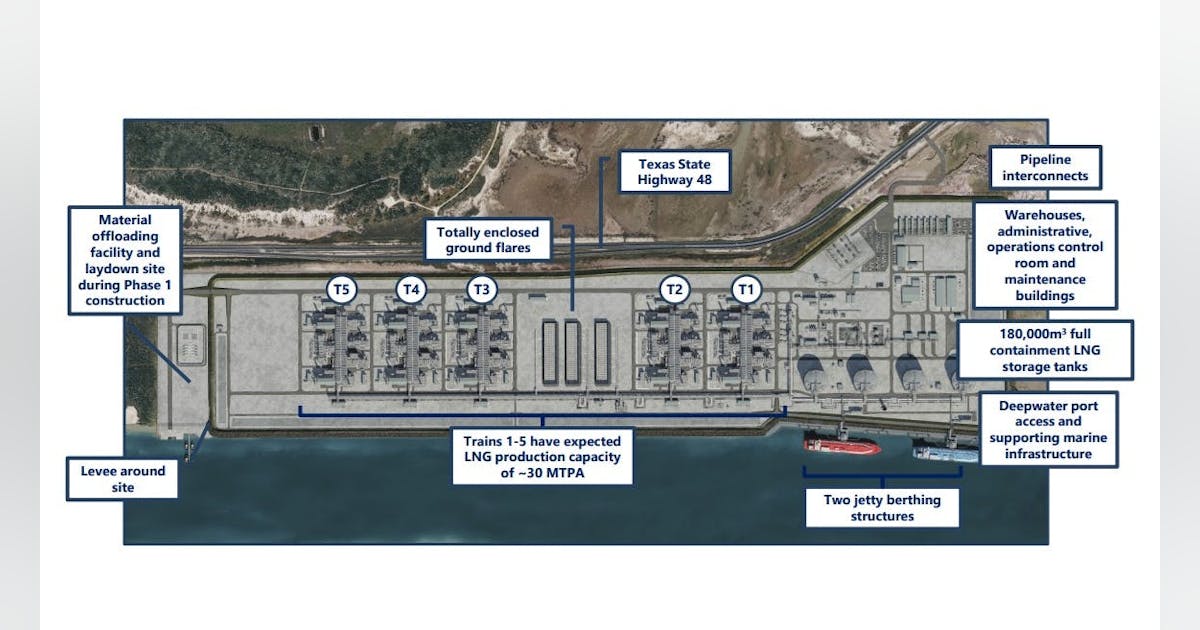
NextDecade Corp. contractor Bechtel Corp. has awarded ABB Ltd. additional integrated automation and electrical solution orders, extending its scope to Trains 4 and 5 of NextDecade’s 30-million tonne/year (tpy)  Rio Grande LNG (RGLNG) plant in Brownsville, Tex. The orders were booked in third- and fourth-quarters 2025 and build on ABB’s Phase 1 work with Trains 1-3, totaling 17 million tpy.  The scope for RGLNG Trains 4 and 5 includes deployment of an integrated control and safety system consisting of a distributed control system, emergency shutdown, and fire and gas systems. An electrical controls and monitoring system will provide unified visibility of the plant’s electrical infrastructure. These two overarching solutions will provide a common automation platform. ABB will also supply medium-voltage drives, synchronous motors, transformers, motor controllers and switchgear.  The orders also include local equipment buildings—two for Train 4 and one for Train 5— housing critical control and electrical systems in prefabricated modules to streamline installation and commissioning on site. The solutions being delivered to Bechtel use ABB adaptive execution, a methodology for capital projects designed to optimize engineering work and reduce delivery timelines. Phase 1 of RGLNG is under construction and expected to begin operations in 2027. Operations at Train 4 are expected in 2030 and Train 5 in 2031. ABB’s senior vice-president for the Americas, Scott McCay, confirmed to Oil & Gas Journal at CERAWeek by S&P Global in Houston that the company is doing similar work through Tecnimont for Argent LNG’s planned 25-million tpy plant in Port Fourchon, La.; 10-million tpy Phase 1 and 15-million tpy Phase 2. Argent is targeting 2030 completion for its plant.

Read More »

Persistent oil flow imbalances drive Enverus to increase crude price forecast

Citing impacts from the Iran war, near-zero flows through the Strait of Hormuz, accelerating global stock draws, and expectations for a muted US production response despite higher prices, Enverus Intelligence Research (EIR) raised its Brent crude oil price forecast. EIR now expects Brent to average $95/bbl for the remainder of 2026 and $100/bbl in 2027, reflecting what it described as a persistent global oil flow imbalance that continues to draw down inventories. “The world has an oil flow problem that is draining stocks,” said Al Salazar, director of research at EIR. “Whenever that oil flow problem is resolved, the world is left with low stocks. That’s what drives our oil price outlook higher for longer.” The outlook assumes the Strait of Hormuz remains largely closed for 3 months. EIR estimates that each month of constrained flows shifts the price outlook by about $10–15/bbl, underscoring the scale of the disruption and uncertainty around its duration. Despite West Texas Intermediate (WTI) prices of $90–100/bbl, EIR does not expect US producers to materially increase output. The firm forecasts US liquids production growth of 370,000 b/d by end-2026 and 580,000 b/d by end-2027, citing drilling-to-production lags, industry consolidation, and continued capital discipline. Global oil demand growth for 2026 has been reduced to about 500,000 b/d from 1.0 million b/d as higher energy prices and anticipated supply disruptions weigh on economic activity. Cumulative global oil stock draws are estimated at roughly 1 billion bbl through 2027, with non-OECD inventories—particularly in Asia—absorbing nearly half of the impact. A 60-day Jones Act waiver may provide limited short-term US shipping flexibility, but EIR said the measure is unlikely to materially affect global oil prices given broader market forces.

Read More »

Equinor begins drilling $9-billion natural gas development project offshore Brazil

Equinor has started drilling the Raia natural gas project in the Campos basin presalt offshore Brazil. The $9-billion project is Equinor’s largest international investment, its largest project under execution, and marks the deepest water depth operation in its portfolio. The drilling campaign, which began Mar. 24 with the Valaris DS‑17 drillship, includes six wells in the Raia area 200 km offshore in water depths of around 2,900 m. The area is expected to hold recoverable natural gas and condensate reserves of over 1 billion boe. Raia’s development concept is based on production through wells connected to a 126,000-b/d floating production, storage and offloading unit (FPSO), which will treat produced oil/condensate and gas. Natural gas will be transported through a 200‑km pipeline from the FPSO to Cabiúnas, in the city of Macaé, Rio de Janeiro state. Once in operation, expected in 2028, the project will have the capacity to export up to 16 million cu m/day of natural gas, which could represent 15% of Brazil’s natural gas demand, the company said in a release Mar. 24. “While drilling takes place, integration and commissioning activities on the FPSO are progressing well putting us on track towards a safe start of operations in 2028,” said Geir Tungesvik, executive vice-president, projects, drilling and procurement, Equinor. The Raia project is operated by Equinor (35%), in partnership with Repsol Sinopec Brasil (35%) and Petrobras (30%).

Read More »

Nscale Expands AI Factory Strategy With Power, Platform, and Scale

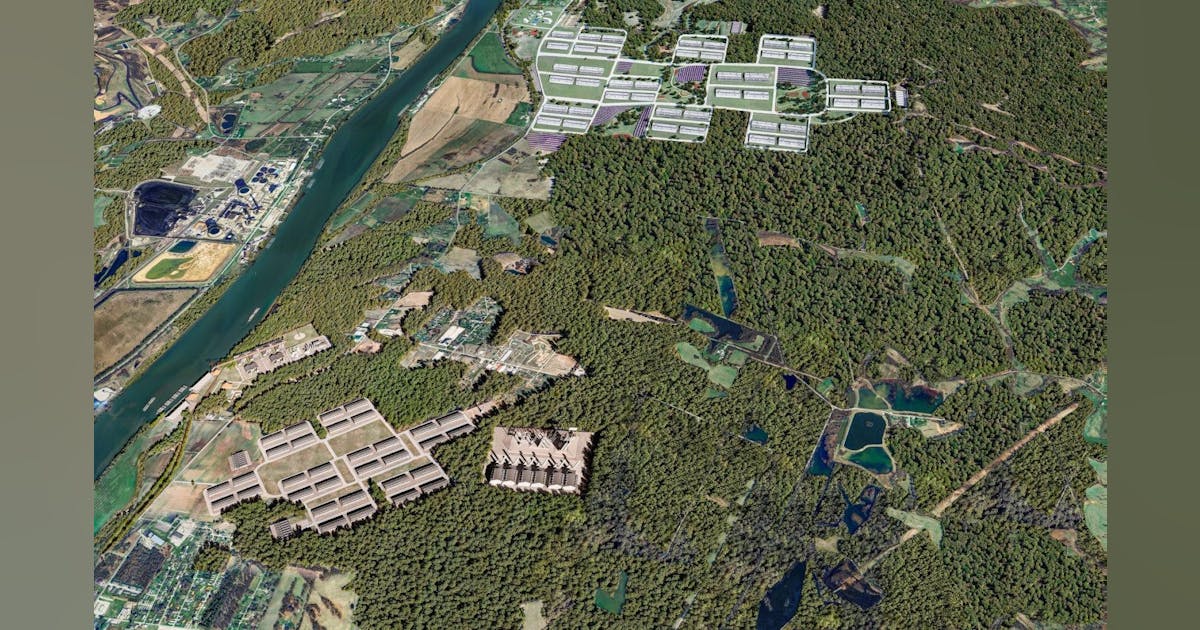
Nscale has moved quickly from startup to serious contender in the race to build infrastructure for the AI era. Founded in 2024, the company has positioned itself as a vertically integrated “neocloud” operator, combining data center development, GPU fleet ownership, and a software stack designed to deliver large-scale AI compute. That model has helped it attract backing from investors including Nvidia, and in early March 2026 the company raised another $2 billion at a reported $14.6 billion valuation. Reuters has described Nscale’s approach as owning and operating its own data centers, GPUs, and software stack to support major customers including Microsoft and OpenAI. What makes Nscale especially relevant now is that it is no longer content to operate as a cloud intermediary or capacity provider. Over the past year, the company has increasingly framed itself as an AI hyperscaler and AI factory builder, seeking to combine land, power, data center shells, GPU procurement, customer offtake, and software services into a single integrated platform. Its acquisition of American Intelligence & Power Corporation, or AIPCorp, is the clearest signal yet of that shift, bringing energy infrastructure directly into the center of Nscale’s business model. The AIPCorp transaction is significant because it gives Nscale more than additional development capacity. The company said the deal includes the Monarch Compute Campus in Mason County, West Virginia, a site of up to 2,250 acres with a state-certified AI microgrid and a power runway it says can scale beyond 8 gigawatts. Nscale also said the acquisition establishes a new division, Nscale Energy & Power, headquartered in Houston, extending its platform further into power development. That positioning reflects a broader shift in the AI infrastructure market. The central bottleneck is no longer simply access to GPUs. It is the ability to assemble power, cooling, land, permits, data center

Read More »

Google Research touts memory-compression breakthrough for AI processing

The last time the market witnessed a shakeup like this was China’s DeepSeek, but doubts emerged quickly about its efficacy. Developers found DeepSeek’s efficiency gains required deep architectural decisions that had to be built in from the start. TurboQuant requires no retraining or fine-tuning. You just drop it straight into existing inference pipelines, at least in theory. If it works in production systems with no retrofitting, then data center operators will get tremendous performance gains on existing hardware. Data center operators won’t have to throw hardware at the performance problem. However, analysts urge caution before jumping to conclusions. “This is a research breakthrough, not a shipping product,” said Alex Cordovil, research director for physical infrastructure at The Dell’Oro Group. “There’s often a meaningful gap between a published paper and real-world inference workloads.” Also, Dell’Oro notes that efficiency gains in AI compute tend to get consumed by more demand, known as the Jevons paradox. “Any freed-up capacity would likely be absorbed by frontier models expanding their capabilities rather than reducing their hardware footprint.” Jim Handy, president of Objective Analysis, agrees on that second part. “Hyperscalers won’t cut their spending – they’ll just spend the same amount and get more bang for their buck,” he said. “Data centers aren’t looking to reach a certain performance level and subsequently stop spending on AI. They’re looking to out-spend each other to gain market dominance. This won’t change that.” Google plans to present a paper outlining TurboQuant at the ICLR conference in Rio de Janeiro running from April 23 through April 27.

Read More »

Amazon Middle East datacenter suffers second drone hit as Iran steps up attacks

Amazon was contacted for comment on the latest Bahrain drone incident, but said it had nothing to add beyond the statement in its current advisory. Denial of infrastructure Doing the damage is the Shaheed 136, a small and unsophisticated drone designed to overwhelm defenders with numbers. If only one in twenty reaches its target, the price-performance still exceeds that of more expensive systems. When aimed at critical infrastructure such as datacenters, the effect is also psychological; the threat of an attack on its own can be enough to make it difficult for organizations to continue using an at-risk facility.  Iran’s targeting of the Bahrain datacenter is unlikely to be random. Amazon opened its ME-SOUTH-1 AWS presence in 2019, and it is still believed to be the company’s largest site in the Middle East. Earlier this week, the Islamic Revolutionary Guard Corps (IRGC) Telegram channel explicitly threatened to target at least 18 US companies operating in the region, including Microsoft, Google, Nvidia, and Apple. This follows similar threats to an even longer list of US companies made on the IRGC-affiliated Tasnim News Agency in recent weeks. That strategy doesn’t bode well for US companies that have made large investments in Middle Eastern datacenter infrastructure in recent years, drawn by the growing wealth and influence of countries in the region. This includes Amazon, which has announced plans to build a $5.3 billion datacenter in Saudi Arabia, due to become available in 2026. If this is now under threat, whether by warfare or the hypothetical possibility of attack, that will create uncertainty.

Read More »

Data Center Jobs: Engineering, Construction, Commissioning, Sales, Field Service and Facility Tech Jobs Available in Major Data Center Hotspots

Each month Data Center Frontier, in partnership with Pkaza, posts some of the hottest data center career opportunities in the market. Here’s a look at some of the latest data center jobs posted on the Data Center Frontier jobs board, powered by Pkaza Critical Facilities Recruiting. Looking for Data Center Candidates? Check out Pkaza’s Active Candidate / Featured Candidate Hotlist Power Applications Engineer Pittsburgh, PA This position is also available in: Denver, CO and Andrews, SC.  Our client is a leading provider and manufacturer of industrial electrical power equipment used in industrial applications for mission critical operations. They help their customers save money by reducing energy and operating costs and provide solutions for modernizing their customer’s existing electrical infrastructure. This company provides cooling solutions to many of the world’s largest organizations and government facilities and enterprise clients, colocation providers and hyperscale companies. This career-growth minded opportunity offers exciting projects with leading-edge technology and innovation as well as competitive salaries and benefits. Electrical Commissioning Engineer Ashburn, VA This traveling position is also available in: New York, NY; White Plains, NY;  Dallas, TX; Richmond, VA; Montvale, NJ; Charlotte, NC; Atlanta, GA; Hampton, GA; New Albany, OH; Cedar Rapids, IA; Phoenix, AZ; Salt Lake City, UT;  Kansas City, MO; Omaha, NE; Chesterton, IN or Chicago, IL. *** ALSO looking for a LEAD EE and ME CxA Agents and CxA PMs. ***  Our client is an engineering design and commissioning company that has a national footprint and specializes in MEP critical facilities design. They provide design, commissioning, consulting and management expertise in the critical facilities space. They have a mindset to provide reliability, energy efficiency, sustainable design and LEED expertise when providing these consulting services for enterprise, colocation and hyperscale companies. This career-growth minded opportunity offers exciting projects with leading-edge technology and innovation as well as competitive

Read More »

No joke: data centers are warming the planet

The researchers also made use of a database provided by the International Energy Agency (IEA) that the authors pointed out contains more than 11,000 locations worldwide, of which 8,472 have been detected to dwell outside of highly dense urban areas. The latter locations were then used to “quantify the effect of data centers on the environment in terms of the LST gradient that could be measured on the areas surrounding each data center.” Asking the wrong question Asked if AI data centers are really causing local warming, or if this phenomenon is overstated, Sanchit Vir Gogia, chief analyst at Greyhound Research, said, “the signal is real, but the industry is asking the wrong question. The research shows a consistent rise in land surface temperature of around 2°C  following the establishment of large data centre facilities.” The debate, however, “has quickly shifted to causality: whether this is driven by operational heat from compute, or by land transformation during construction. That distinction matters scientifically, but it does not change the strategic implication.” Land surface temperature, said Gogia, is not the same as air temperature, and that gap will be used to challenge the findings. “But dismissing the signal on that basis would be a mistake,” he noted. “Data centers concentrate energy use, replace natural surfaces with heat-retaining materials, and continuously reject heat into the environment. Those are known drivers of thermal change.” He added, “the uncomfortable truth is this: Even if the exact mechanism is debated, the outcome aligns with first principles. Infrastructure at this scale alters its surroundings. The industry does not yet have a clean way to separate construction impact from operational impact, and that ambiguity makes the risk harder to model, not easier. This is not overstated, it is under-interpreted.” Location strategy must change But will the findings change

Read More »

Schneider Electric Maps the AI Data Center’s Next Design Era

The coming shift to higher-voltage DC That internal power challenge led Simonelli to one of the most consequential architectural topics in the interview: the likely transition toward higher-voltage DC distribution at very high rack densities. He framed it pragmatically. At current density levels, the industry knows how to get power into racks at 200 or 300 kilowatts. But as densities rise toward 400 kilowatts and beyond, conventional AC approaches start to run into physical limits. Too much cable, too much copper, too much conversion equipment, and too much space consumed by power infrastructure rather than GPUs. At that point, he said, higher-voltage DC becomes attractive not for philosophical reasons, but because it reduces current, shrinks conductor size, saves space, and leaves more room for revenue-generating compute. “It is again a paradigm shift,” Simonelli said of DC power at these densities. “But it won’t be everywhere.” That is probably right. The transition will not be universal, and the exact thresholds will evolve. But his underlying point is powerful. As rack densities climb, electrical architecture starts to matter not only for efficiency and reliability, but for physical space allocation inside the rack. Put differently, power distribution becomes a compute-enablement issue. Distance between accelerators matters, too. The closer GPUs and TPUs can be kept together, the better they perform. If power infrastructure can be compacted, more of the rack can be devoted to dense compute, improving the economics and performance of the system. That is a strong example of how AI is collapsing traditional boundaries between facility engineering and compute architecture. The two are no longer cleanly separable. Gas now, renewables over time On onsite power, Simonelli was refreshingly direct. If the goal is dispatchable onsite generation at the scale now being contemplated for AI facilities, he said, “there really isn’t an alternative

Read More »

Microsoft will invest $80B in AI data centers in fiscal 2025

And Microsoft isn’t the only one that is ramping up its investments into AI-enabled data centers. Rival cloud service providers are all investing in either upgrading or opening new data centers to capture a larger chunk of business from developers and users of large language models (LLMs).  In a report published in October 2024, Bloomberg Intelligence estimated that demand for generative AI would push Microsoft, AWS, Google, Oracle, Meta, and Apple would between them devote $200 billion to capex in 2025, up from $110 billion in 2023. Microsoft is one of the biggest spenders, followed closely by Google and AWS, Bloomberg Intelligence said. Its estimate of Microsoft’s capital spending on AI, at $62.4 billion for calendar 2025, is lower than Smith’s claim that the company will invest $80 billion in the fiscal year to June 30, 2025. Both figures, though, are way higher than Microsoft’s 2020 capital expenditure of “just” $17.6 billion. The majority of the increased spending is tied to cloud services and the expansion of AI infrastructure needed to provide compute capacity for OpenAI workloads. Separately, last October Amazon CEO Andy Jassy said his company planned total capex spend of $75 billion in 2024 and even more in 2025, with much of it going to AWS, its cloud computing division.

Read More »

John Deere unveils more autonomous farm machines to address skill labor shortage

Join our daily and weekly newsletters for the latest updates and exclusive content on industry-leading AI coverage. Learn More Self-driving tractors might be the path to self-driving cars. John Deere has revealed a new line of autonomous machines and tech across agriculture, construction and commercial landscaping. The Moline, Illinois-based John Deere has been in business for 187 years, yet it’s been a regular as a non-tech company showing off technology at the big tech trade show in Las Vegas and is back at CES 2025 with more autonomous tractors and other vehicles. This is not something we usually cover, but John Deere has a lot of data that is interesting in the big picture of tech. The message from the company is that there aren’t enough skilled farm laborers to do the work that its customers need. It’s been a challenge for most of the last two decades, said Jahmy Hindman, CTO at John Deere, in a briefing. Much of the tech will come this fall and after that. He noted that the average farmer in the U.S. is over 58 and works 12 to 18 hours a day to grow food for us. And he said the American Farm Bureau Federation estimates there are roughly 2.4 million farm jobs that need to be filled annually; and the agricultural work force continues to shrink. (This is my hint to the anti-immigration crowd). John Deere’s autonomous 9RX Tractor. Farmers can oversee it using an app. While each of these industries experiences their own set of challenges, a commonality across all is skilled labor availability. In construction, about 80% percent of contractors struggle to find skilled labor. And in commercial landscaping, 86% of landscaping business owners can’t find labor to fill open positions, he said. “They have to figure out how to do

Read More »

2025 playbook for enterprise AI success, from agents to evals

Join our daily and weekly newsletters for the latest updates and exclusive content on industry-leading AI coverage. Learn More 2025 is poised to be a pivotal year for enterprise AI. The past year has seen rapid innovation, and this year will see the same. This has made it more critical than ever to revisit your AI strategy to stay competitive and create value for your customers. From scaling AI agents to optimizing costs, here are the five critical areas enterprises should prioritize for their AI strategy this year. 1. Agents: the next generation of automation AI agents are no longer theoretical. In 2025, they’re indispensable tools for enterprises looking to streamline operations and enhance customer interactions. Unlike traditional software, agents powered by large language models (LLMs) can make nuanced decisions, navigate complex multi-step tasks, and integrate seamlessly with tools and APIs. At the start of 2024, agents were not ready for prime time, making frustrating mistakes like hallucinating URLs. They started getting better as frontier large language models themselves improved. “Let me put it this way,” said Sam Witteveen, cofounder of Red Dragon, a company that develops agents for companies, and that recently reviewed the 48 agents it built last year. “Interestingly, the ones that we built at the start of the year, a lot of those worked way better at the end of the year just because the models got better.” Witteveen shared this in the video podcast we filmed to discuss these five big trends in detail. Models are getting better and hallucinating less, and they’re also being trained to do agentic tasks. Another feature that the model providers are researching is a way to use the LLM as a judge, and as models get cheaper (something we’ll cover below), companies can use three or more models to

Read More »

OpenAI’s red teaming innovations define new essentials for security leaders in the AI era

Join our daily and weekly newsletters for the latest updates and exclusive content on industry-leading AI coverage. Learn More OpenAI has taken a more aggressive approach to red teaming than its AI competitors, demonstrating its security teams’ advanced capabilities in two areas: multi-step reinforcement and external red teaming. OpenAI recently released two papers that set a new competitive standard for improving the quality, reliability and safety of AI models in these two techniques and more. The first paper, “OpenAI’s Approach to External Red Teaming for AI Models and Systems,” reports that specialized teams outside the company have proven effective in uncovering vulnerabilities that might otherwise have made it into a released model because in-house testing techniques may have missed them. In the second paper, “Diverse and Effective Red Teaming with Auto-Generated Rewards and Multi-Step Reinforcement Learning,” OpenAI introduces an automated framework that relies on iterative reinforcement learning to generate a broad spectrum of novel, wide-ranging attacks. Going all-in on red teaming pays practical, competitive dividends It’s encouraging to see competitive intensity in red teaming growing among AI companies. When Anthropic released its AI red team guidelines in June of last year, it joined AI providers including Google, Microsoft, Nvidia, OpenAI, and even the U.S.’s National Institute of Standards and Technology (NIST), which all had released red teaming frameworks. Investing heavily in red teaming yields tangible benefits for security leaders in any organization. OpenAI’s paper on external red teaming provides a detailed analysis of how the company strives to create specialized external teams that include cybersecurity and subject matter experts. The goal is to see if knowledgeable external teams can defeat models’ security perimeters and find gaps in their security, biases and controls that prompt-based testing couldn’t find. What makes OpenAI’s recent papers noteworthy is how well they define using human-in-the-middle

Read More »